
ガサラキ
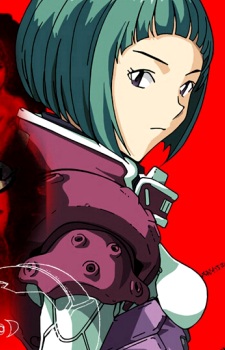
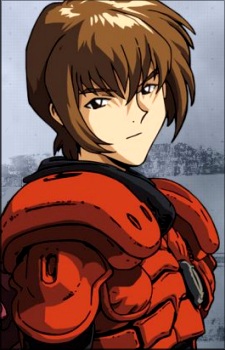
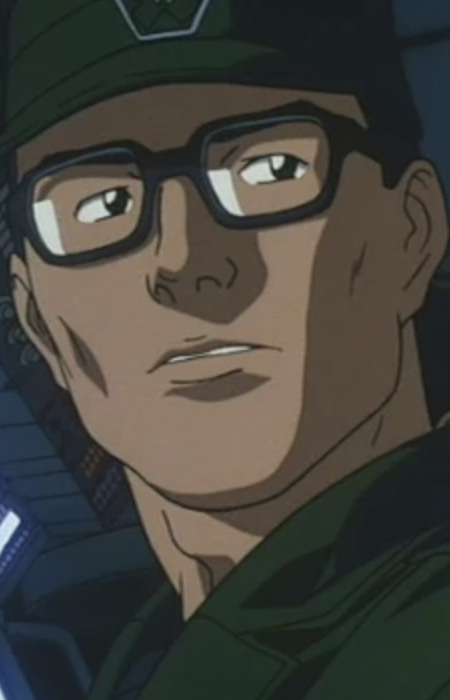
At the start of the 21st century, Japan plunges into a state of financial and political decline. In an attempt to revitalize their nation, the army develops the next generation of battlefield weapons in the form of tactical suits known as Tactical Armor (TA). Despite giving a significant advantage in mobility, TAs place a heavy strain on their pilots, and few people are capable of handling them. Yuushirou Gouwa is one such talented pilot who is unusually adept at steering these new machines. As the fourth son of the esteemed Gouwa family, Yuushirou is no stranger to the influence of powerful authority. His abilities and knowledge of the TAs are soon tested, as other geopolitical entities are also attempting to develop their own combat-ready versions. Things take a dire turn when Yuushirou encounters a mysterious girl, who cautions him of the future that awaits them should he revive a "terror." While he tries to heed the warning, Yuushirou's family may be more involved in the rising conflict than they let on. [Written by MAL Rewrite]
Main
Main
Supporting
Supporting
Supporting
Supporting
Supporting
Supporting
Supporting
Supporting
Washi
December 15, 2007
Where Evangelion revolutionised the mecha genre, and perhaps inspired melodramatic experimentalism in modern anime, Gasaraki made a quieter step in a different direction for mecha. From the very outset, I’ll just say that one of the main draw points for this series is the mecha design, and the high degree of thought that was put into the functionality of the bipedal machines as effective tools of war in near-future combat. But there is a lot more to the show than that; Gasaraki is one of those rare anime that manage to rise above what could easily have become a convoluted mess of a plot. Withelements of military, romance, supernatural, sci-fi, mecha, history, and politics, Gasaraki is the product of an amalgamation of a whole slew of genres and plot-lines that manages to work. But it doesn’t work as well as it could have, and the constant juggling of its many characters and stories result in some elements being underplayed and others over-stressed. The character of Misuzu and her endearment to her brother seems to be almost completely redundant at times, and quite often you end up wishing one storyline was given more attention than others. But the hectic plot also means that the show manages to be engaging for the majority of its run without ever resorting to an episodic format, which is a bit of a rarity in anime. One of the show’s biggest flaws is its characterisation, largely in the first half of the series. The series has a very large cast, and as such, it struggles early on in giving any one character enough attention to establish them as a believable, human individual. For far too long, the protagonists of the series are sidelined to a seemingly inconsequential role of feeling sorry for themselves, and most of the rest of the cast are like talking clichés. This results in a disappointing, flat beginning. But the show does eventually manage to pull in the viewers when things start to come together and the characters are faced with hardship after hardship, the way they handle each obstacle a contribution to their depth of character. By the end of the series I felt a strong affection for many of the characters, and the villains prove to be very satisfying in their antagonistic roles, with Gouda-esque scheming and cunning. The almost iconic Nishida was one of the more interesting characters, a tactical genius and a man of honour and strong values, he provided the backbone for the idealistic elements of the series. Unfortunately, Miharu is never quite granted enough development to make her anything beyond blatantly sympathetic, and Yushiro is often terminally quiet. The more outgoing members of the TA crew proved to be the best source of characterisation from the whole show. I’m not usually a fan of mecha at all, in fact the mere concept of creating bipedal weapons that dwarf other combatants or transform into jets is just impractical. A man-made bipedal weaponry would not only be incredibly hard and costly to create (just look at how long it took them to get ASIMO waddling about), but it would serve no purpose, having no benefit over existing vehicles of war such as tanks and aircraft. Not to mention, hominoid designs for mecha are only possible to a certain height, whereupon the sheer weight of the mecha would cause its legs and joints to crumble. Gasaraki, however, is the one and only mecha anime where the mecha is both feasible and logically designed. Rather than trying to sell them as useful all-purpose weapons, the “Tactical Armours” or TAs, are portrayed as being optimised for urban combat, where the mobility of tanks is severely limited. They are not oversized, instead built with a stock frame that is able to hold a large array of equipment, ammunition and some missiles. The thought that was put into them is quite impressive, exemplified by the fact that they, realistically, are not flawless super-powered machines. In one of the earlier episodes, for instance, the functionality of the TAs are severely impaired by sand getting into their systems when they enter combat in a desert area. Also, the piloting of a TA is shown to be quite a taxing experience, with the use of drugs to manipulate the pilot’s physical condition being a common occurrence (quite an adept foresight into the direction of warfare). In combat, their mobility is significantly better than alternative vehicles (especially as they are able to hoist themselves up the sides of buildings), but they are not overly dextrous or agile. This down-to-earth, believable portrayal of mecha is something I hadn’t seen done before (or since), and so I give the show credit for its pioneering mecha conception. However, with that appraisal out of the way, the fact that they are more realistic also means that the action scenes are often slightly subdued and slow, not as exciting as the fast-paced fisticuffs of your usual clichéd mecha. There are a number of action highlights, such as Symbol’s TAs taking out a unit of tanks in Belgistan, and the battle following the awakening of the Kugutsu, but all in all, the action scenes are relatively bland, and sometimes the animation budget clearly isn’t there to support them (such as when the rioting takes place later in the series). A few times, they are made more interesting by the ingenious use of the TAs many functions to escape a tight situation. The show maintains a relatively fast pace right the way through, so it isn’t lacking in excitement, but don’t expect to be blown away with intense action sequences. On the whole, the production values get the job done but do not excel. The character designs are different, but, with the exclusion of the Gowa family, also uite unappealing. There are a number of reused cels and shortcuts in the animation are apparent at times. The music, on the other hand, is remarkable, with an ethereal clash of archaic Japanese and modern, militaristic sounds. This melding of sounds is exemplified best by the OP, which I consider a musical accomplishment, and quite possibly my favourite anime OP ever. The soundtrack is fittingly haunting and refreshingly innovative. So, where the characters and the production are the sources of most of the show’s flaws, the plot is an understated success, crafting a complex mythos for the gasaraki, as well as deftly utilising the global economy as the stage for a truly modernistic conflict. The way the series balances, or rather, collides the old and the new through its exploration of multiple timelines, one set in archaic Japan and the other in the near-future, is clever and engaging. It mirrors the thematic core of the series, which is all about the conflict between traditional and modern values, and the resultant direction of human civilisation. I especially love the story behind the Gasaraki, and their plight was a nice way to cap off the themes of the show in a thought-provoking manner. I will also attest to the fact that Gasaraki truly nails the fragile balance between mystery and explanation; where many anime leave frustrating plotholes, Gasaraki leaves a hazy sense of unknown which compliments the new-age mythical tone of the show. It helps that I’m a great fan of political espionage and conspiracy, as a good portion of the show is spent scheming and plotting, as well as exposition interestingly delivered through news reports. There is a lot of dialogue, and the story is quite involved, so it’s not a show you can casually skip through. That’s not to say it becomes bogged down in pointless dialogue; there should be enough going on to keep anyone interested. All in all, Gasaraki is a series that should be applauded for trying something new and interesting with the mecha genre, and for the amount of thought that went into its complex story, but is one that failed to live up to its potential through unexceptional production and often poorly written characters. It’s a series that will be highly enjoyed by anyone with the fortitude to watch past its opening episodes, and for anyone who really appreciates innovation and a creative story. Those who simply must have strong dramatic elements to their anime, or who are likely to be apathetic toward the cool mecha designs may find the show very disappointing. In any case, its milestone treatment of mecha as more than a fanciful superweapon, is one that no other anime has put in the effort to match, and its plot is several cuts above the cliché that plagues the mecha genre.
Huntsman
October 30, 2007
A different kind of Mecha anime. Gasaraki is a relatively unknown anime series. Instead of concentrating on battles in their machines, it revolves more around family politics and politics. The story revolves around Yushiro Gowa, the fourth son in the Gowa family. The largest company in Japan. His family puts him in the volunteer part of the experimental Mecha unit. Then things erupt in the Middle East, and a Nato/UN is sent in, and are pushed back by a unknown force. The Gowa family learns that there is another Mecha unit and send in theirs without UN permission. Things get really complicated then, Yushiro meets the leaderof the other Mecha unit Miharu and things begin to come clear in Yushiro's life. After the UN forces defeat the Middle East country, the United States finds out about the Mecha units and tries to take them for them selfs. That's just story through the first ten episodes. Like I said a lot of political intrigue. I'm not going to go much further let's just say it puts the United States and Japan a odds, and maybe that's what some people want inside Japan to shake it up, because they feel Japan is America's slave. I know this came out before the Iraq war, but there are is a lot of similarities to what's going on right now, and it's doesn't show a good impression of the United States, Japan, and the UN. The story was captivating, the Mecha battles were believable, nothing over the top. The character's seemed real, and believable. The only thing that kept it getting a 10 was the ending. It was a little anti climatic, other wise the show was great.
syncrogazer
June 26, 2016
I could start off by saying that Gasaraki has a criminally low rating on this site. However, it makes sense that such a heady series wouldn't win over the hearts of wide-eyed mecha anime consumers who expect fight scenes to actually be mech fight scenes, and not the economic and diplomatic warfare that takes precedent in this anime. The attitude as expressed by raters here on MAL parallels the tension that defines the main theme of the series: the eternal and (probably) identical movement of progress and destruction. Gasaraki takes place in a not-so-distant sci-fi future. Illegal immigration is a (seemingly) huge problem in Japandue to the effects of globalist economics, which has built up the illusion of economic superiority in developed, globalist economies. On the minds of the Japanese people (or so we're told) is the desire for consumption, luxury, and the satisfaction of immediate desires. The interconnected international community, of course, is highly sensitive to huge changes, and an upstart in the Middle East (where else?) has created a problem that needs to be taken care of by all those with interests in keeping the Progress moving. Enter the TAs. What better way to show-off your cool new mechs than going to the Middle East and hopefully (but is it really even necessary?) kick some ass. The first thing that one will take note of is the incredibly realistic mech designs. Their grittiness perfectly fits in to the muted, militaristic color tones present throughout the series' design. A design that even extends into the past (hey, it fits into the theme!) The mechs (TAs) themselves aren't really the main focus in the grand scheme of things, although you'll get a nice bit of detail into how they work, and it's great that they're realistic enough that it seems probably that they could work as portrayed. Instead, we have the spotlight shining on a whole mess of characters. Like the TAs, we get a sense that most of these people are simply cogs in a political/militaristic machine, that has been turning for centuries. There are those, it seems, that can gain control of this machine (the 'terror' ?) and our main character Yuushirou is one who has the ability to control some crazy thing in order to get closer to that power. Of course, with a power like that, who wouldn't want to use him as a means to their end? His own powerful family isn't going to sit by and let someone else harness his ability, so they do what they're supposed to do, be 'mean' to him... In my opinion this anime shines in its literal discussion (not just exploration) of themes that define the will of human beings to take control of themselves, create civilization, and steer its progress. Therefore, it t is no surprise that politics and the military play such an important role in the anime because it is through these channels that modern man is able to accomplish change. The narrative mirrors this in a way I can only describe as ingenious: the content of the narrative becomes the movement of the narrative itself. What we see happening on the micro level (this story) has been occurring in a much grander scale throughout all of human history. So, what is it that Gasaraki is trying to say? Up until the very end there doesn't seem to be any overarching morality that the show is trying to espouse. Instead we have individuals ompeting to force their own vision onto the whole of human civilization. And at the end, well it's something.... Something I find most interesting is the portrayal of the TAs/kugai as vessels which contain the gods humans want to keep closest to them. Those gods really being a certain ambition within us all. That these vessels, in both instances, would also be weapons is quite telling. (see also: swords) One of the individuals I find most interesting is Nishida, a scholar with the hope of rejecting the progress that has been made and instead descend into a more pure and idealized system. Another is the eldest (?) Gowa brother who does the opposite. The focus is on these big-shots , regulating even our main characters to the level of small-timers. This dichotomy between the big-shots and the small-fries becomes an important part of the series. Big-shots hope to shape the world with their ideals, become fate, while small-fries simply want to see fate as something not etched in stone but forever changing, and live their lives according to their own much smaller and more ephemeral dreams. This difference of perspective is really the only way we can gauge good vs evil, for the most part what is right and wrong gets lost in the force of those attempting to control the narrative. That our main characters struggle with one perspective, may be a clue as to the moral direction this series wants to take. In terms of thematic content we have: the TA/kugai, pilot/kai parallel, the theater stage and the stage of fate, the eternal conflicts of civilizations and the eternal conflicts of ideas, chaos on the small and grand scale, mortality and immortality, human-ness and anti-human-ness, progress that leads to destruction and the destruction that leads to progress, the sapling that grows among the rubble and the husk that topples under its own weight, the personification of history/fate, the oppressiveness of fate and the rejection of fate, human monkey-ness and human being-ness..and many more. The anime is also executed well. I think the direction, pacing is spot on. Opening and ending themes are incredible. Gasaraki is a slow-moving, dialogue-heavy, dark, and realistic anime that asks some of the most important and relevant questions about ourselves and our desires as human beings, especially of those human beings who have power over all others. It also serves as a decent predictor of what has happened since 1998. 8/10.
lawlmartz
June 6, 2016
The Evangelion Inspiration Saga Part 2: Not Really A Rip This Time "He who would move the world cannot concern himself over the placement of pebbles. A god worries not over the cries of individual men. He must be detached, disinterested. That is why I can move this world." - Kazukiyo Gowa At long last, my journey through anime inspired by (or directly ripping off) Evangelion continues with Gasaraki- an original Sunrise anime produced by Ryosuke Takahashi (creator of Blue Gender, assistant directed Ruroni Kenshin and has worked on many Sunrise mecha shows) and Gorou Taniguchi, who would later create and direct a little anime known asCode Geass. Let me start by saying that Gasaraki is not for the every-man anime watcher. The show is a dense sociopolitical drama, drenched in hard science fiction and with an added spice of some ancient Japanese traditionalism and mythology. This may sound a rather strange assortment of themes, but through careful navigation of them, it makes a complete product that I found to be quite enjoyable. The cast of Gasaraki is quite large, given that there are multiple military, government, and civilian factions, all working against each other- so learning the names and getting intimate characterization is largely pushed to the wayside through the first half or so. However, as the plot thickens, the importance of a smaller group of characters is distilled, and they're able to develop beyond feeling sorry for themselves and throwing pity parties every other episode. The basic plot is that Yushiro Gowa, a nearly mindless, slavish, young man who's pushed into military service by his incredibly wealthy and politically powerful family for the purpose of testing a new armament for the Japanese military- is used and abused for the advancement of this new technology. These prototype Tactical Armors (bipedal war machines designed for urban combat, in places that tanks and warplanes would be at a severe disadvantage) are produced by the Gowa family (based on ancient war machines used in Feudal Japan, that were like enormous, living samurai) in an attempt to garner more political power by ingratiating themselves to the government with their new weapons. Little does the government know, Kazukiyo Gowa, the eldest of the family of 5- 4 brothers, including Yushiro, and a teenage sister- Misuzu (played by the excellent Hilary Haag) has a plan to upend the Japanese government, and become a puppeteer from the shadows in an egomaniacal quest for power. What ensues is a complex, realistic drama of economic manipulation of the stock market and commodities to cause panic and trigger an invasion of Japan by the US under the guise of a terrorist attack to ensure that the Japanese government does not withdraw its assets from global markets, causing a severe depression and crashing other economies worldwide. Kazukiyo intends to use this as his golden ticket to catapult himself and the handful of his assembled idealistic and coldly passionate individuals into the heart of the Japanese government and world economy. Kazukiyo is the embodiment of a completely realistic, lawful evil character.-something that is extraordinarily rare in anime, and by far the most interesting character. To me, his machinations were the most intriguing and exciting thing about the show- how he managed to manipulate the government, military, and became so detached from humanity that he would find his own family as disposable as yesterday's trash in order to gain power. What's interesting about Gasaraki is that for having some top-billed cast members like Chris Patton (Yushiro) and Monica Rial (Miharu) as the two main characters- they have probably the least number of lines in the entire show, and are probably the least interesting characters overall as well, which was honestly, a waste of their talents. Once Yushiro and Miharu find some purpose in life though, their characters finally work their way out of the dreary, drab colors they're rendered in, and feel a bit more alive, but this is in the very final act of the show, unfortunately. However, I found Andy McAvin's Oeufcoque, Mardock Scramble) performance nearly mesmerizing in his delivery of the snakelike, ambitious, and sociopathic role of the eldest brother Kazukiyo Gowa. This dub was done by ADV- and is a very solid piece of work with a good handful of well known voice actors, but anchored by outstanding performances by the supporting cast. The other, possibly most important part about Gasaraki, is how much effort went into the design of the mechs and the backdrop against which the plot is set. The story begins in Belgistan, an oil rich middle eastern country headed by a not so benevolent dictator who looks and acts nothing like Saddam Hussein, with the introduction of the aforementioned TA's (Tactical Armor). Unlike anything the world has ever seen- the conniving Gowa family has, unbeknownst the world, produced a bipedal tank replacement that is far superior in urban combat, and has been selling them to this dictator. When the NATO forces invade Belgistan to topple the regime, not at all like Desert Storm, they are summarily defeated by these new mechanical monstrosities- which triggers interest in them by the world's governments. The TA's are designed modularly- with each limb and torso part being replaceable if damaged- and having many types of armaments available for attachment, easily changed out, unlike tanks. They're also capable of climbing, with the usage of two launchable grappling hooks and angled jet propulsion systems on the legs and chest to enable them to clamber up concrete/rock structures, like buildings without horribly damaging or toppling them. Each TA is piloted by a single soldier, who is hooked up to an array of medical equipment and can be injected with different compounds to increase reaction rates, be awoken from an unconscious state, or to ease pain due to combat, all in order to increase effectiveness. These are not completely infallible killing machines, as many mecha anime would have you believe however. In the desert sand, several of the TA's are damaged by the gritty dust getting into the actuators- and later, in the swamp, a pair of them sink. Given that they're on legs, they can also be damaged and rendered nearly useless if they are removed. In short, they're very functionally designed, but have the same drawbacks that a walking tank would have in real life. Great thought was put into the lore behind the design of these- which I appreciated. If one has seen Code Geass, they can also spot many similarities to the knightmare frames- which draw direct influence from Gasaraki's TA's. Since I've been rambling on way too long here, I'll wrap this up quickly with the animation and final comments: the animation is average at best. It's easy to tell that this show did not have a great budget, even in 1998- but it's never so awful that it's unwatchable, though there are a few moments where frames are reused and a good amount of stillframe while people are talking or sitting in a room is used- but it doesn't hamper the overall experience too much. The music is quite good, though- with a good composition of orchestral themes and a mix of traditional Japanese music thrown in when appropriate. The worst part about the show is probably the underutilized main characters (and their voice actors)- but otherwise it's a very mature, complex, and well thought out political/war drama that is a rarity in anime for how realistically it was put together, and how grounded it stays throughout. The first half is quite slow, but it picks up a fair amount in the second act. Final rating: 7.5 "If human feelings are what must be sacrificed to become a god, then I would rather remain humbled by sorrow!" -Yushiro Gowa
case649
February 6, 2010
Out of all the anime I've seen over the years that fall in and around the mecha genre, Gasaraki definitely has one thing going for it: Style. The show is a fusion of unlikely elements: Gritty mechanized warfare that's so real it's almost boring with its endless chatter about maintenance and data collection. Elaborately costumed and choreographed traditional performing arts. Classical Japanese history. War in the Middle East. Trans-Pacific diplomacy. Somehow Sunrise manages to fit all these individual pieces together into a nice-looking whole with a muted but satisfying color palette, consistent but not-too-formulaic episode pacing, and well selected musical choices that compliment the military and spiritualaspects of the show equally well, creating this harmonious whole that mecha fanatics can't help but lose themselves in if they're not trying to follow the story too closely. Unfortunately, if a person does try to follow along with the nebulous twists and turns of Gasaraki's storyline, major flaws become apparent that seriously detract from the brownie points the series collects on style: While Gasaraki does manage to stitch all the genres and tropes I mentioned above into one cloth that's largely believable, fitting that many elements into 25 episodes forces the plot to weave all over the road as far as the characters' motivations are concerned, and leave you a little dazed at the end wondering what the purpose of all the warfare was supposed to be from the beginning. SPOILERS THIS PARAGRAPH: Yushiro started out the series as some kind of spiritual medium who could perform the dance of Gasaraki for Gowa. Then he also turned out to be the lead test pilot for Gowa's state-of-the-art mobile weapons program. Then these other mobile weapons appear in Belgistan (making Gowa no longer state-of-the-art?), and Yushiro goes there and meets Miharu, which in a roundabout way reveals that he is both a 1000-year-old reincarnated soul AND not the real Yushiro Gowa. Then, while Yushiro and Miharu are AWOL from their respective militias to "find themselves" in Kyoto, and hear the story of the kai and kugai from a man who's just conveniently waiting there for them, the JSSDF randomly decides that the Japanese population needs to be purged of modern materialistic greed (and taking the United States down with it?) provoking Miharu's former comrades to attack Gowa/JSSDF headquarters so Yushiro can return from Kyoto right in the nick of time and save the day? It reminds of a Tsubasa Reservoir Chronicle in a way, with reincarnated clones coming back from the dead to have incest babies that will eventually challenge their own incest parents to a duel to the death in another dimension in the future. (Just teasing Tsubasa fans.) It's hard to care anymore who lives or dies when the story has become so complicated that you lose sight of why winning the war is important? MORE SPOILERS THIS PARAGRAPH: The height of the illogical insanity for me, was in the last episode when the American President calls Mr. Nishida on the phone at Gowa headquarters to concede defeat, telling Mr. Nishida that he regretted being the first American President in history to surrender, and that he wished he could have met Mr. Nishida. That didn't make any sense at all, because Mr. Nishida was not the Prime Minister or any sort of official Japanese government official at all? He's just some crazy old military advisor obsessed with Japanese swords who knew the Gasaraki legend and managed to convince Kazukiyo Gowa and the JSSDF guy that the kugai's revival was some kind of divine message. How did the US President even have Mr. Nishida's direct phone number? Is it possible that even Gasaraki's own writers had lost track of what was going on by the last episode? After finishing the first four episodes of Gasaraki, I had really high hopes for where the end of the series was going to go. I really thought it was going to turn out like Evangelion, or Lain, or xxxHolic, and have some kind of deep-but-vague conclusion that I could kick back and think about for a while. I kept suspending judgment as I watched one episode after the next, holding out hope, waiting for the end when something unexpected would happen that would tie everything together and make it all make sense... But that validating moment never came, and there was just massive disappointment waiting for me as the power of the Gasaraki faded away leaving Yushiro and Miharu smilingly gazing into the sunrise with all their friends, like the end of some fluffy Pixar movie, so easily seeming to forget everything that happened to them in the last 24 episodes.
Rank
#6676
Popularity
#4812
Members
27,323
Favorites
75
Episodes
25