Dear Brother
おにいさまへ…
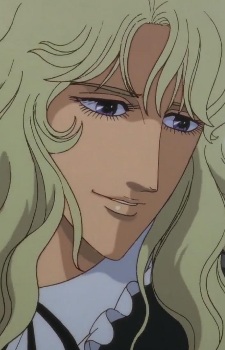
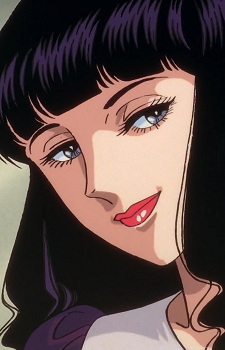
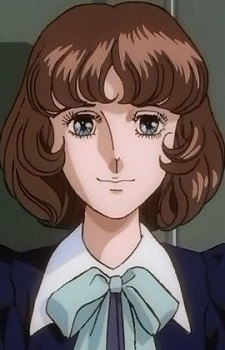
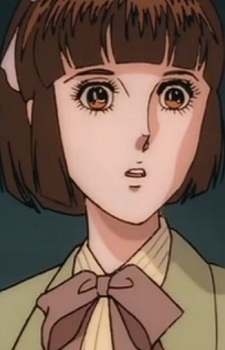
When 16-year-old Nanako Misonoo enters the prestigious all-girls Seiran Academy, she believes a bright future awaits her. Instead, the unlucky girl finds herself dragged into a web of deceit, misery, and jealousy. On top of that, she is chosen as the newest inductee of the Sorority, an elite group whose members are the envy of the entire school. Having none of the grace, wealth, or talent of the other members, Nanako quickly draws the ire of her jealous classmates—especially the fierce Aya Misaki. To cope with her increasingly difficult school life, Nanako recalls her days through letters to her former teacher, Takehiko Henmi, whom she affectionately calls "onii-sama" (big brother). She also finds comfort with her four closest friends: her childhood friend Tomoko Arikura, the sociable but erratic Mariko Shinobu, the troubled musician Rei Asaka, and the athletic tomboy Kaoru Orihara. An impassioned drama about the hardships of bullying, Oniisama e... chronicles a young girl's harsh life at her new school, as she endures cruel rumours, heartless classmates, and countless social trials. [Written by MAL Rewrite]
Main
Main
Main
Main
Main
Supporting
Supporting
Supporting
Supporting
Supporting
Supporting
Meiling
June 10, 2008
This early 90's anime addresses several controversial issues (especially considering the original manga was published in the 1970's) including drug abuse, homosexuality, bullying, incest and suicide. The story is set in a prestigious girls' highschool where the student body is obsessed with the school's Sorority and its leading members, dubbed "The Magnificent Three". The main character, Nanako, is a new student who became caught up in the affairs of the three most popular girls on campus and, with the help of her best friends, unlocks the secrets of their past as well as that of her own family. The title refers to the letters thatshe writes to her "brother" throughout the series, sharing with him the trials and tribulations of her highschool life. While this series can be dark and depressing at times, it is not without its comedic moments. I felt the ending was uplifting and very satisfying, and I warmly recommend this series.
AvalonKnight
July 17, 2014
Supporting
Some people see narration as an outdated storytelling tool which shows that the creators were either too lazy or too inexperienced to provide the audience with different clues to the characters' thoughts and feelings. This show, however, is a great example of narration used creatively and to great success. It is prominently provided by Nanako, the main character, in the form of letters written to her titular elder brother, which gives it a unique structure and allows for a set of disjointed questions and thoughts about nearly all significant events. It all feels natural in a young girl's letter. As you might expect with sucha storytelling tool, this particular anime is mostly centered on Nanako and her emotions. Thankfully, she is a very appealing character from the start and does evolve throughout the series, which is acknowledged and focused on. Personally, I love seeing characters not only react to events going on around them but also learn from their experience and change through it, and this is one of the show's greatest strengths. Even people you would think are completely stereotypical in the end come out as real people. Misguided, troubled, horrible but still people with believable motivations. All of them are young, most of them are school students, though not all of them are your typical teenage girls exploring life, as you would expect, some are surprisingly and convincingly mature. This allows for a great many of conversations and different relationships, many of which are used to the show's advantage. There is not much, if any, story here, which I honestly don't mind as long as character development provided feels genuine, which is exactly the case. To be fair, though, things do seem to move forward, which mostly means learning more about character motivations, some of them being built up from the begging till the very end. There are not that many meaningful, by which I mean at the very least named, people here but all of them are given their own arcs and backstories, and at some point I found myself feeling some kind of emotion for each one of them. At no point did I feel ignorant about any of them, even those who are meant to be villains, and pretty generic at that, are able to invoke hatred or at least irritation, they are never boring. This is mainly thanks to smart writing, which does a great job touching matters which most people can relate to and doing so in quite an intelligent manner, rarely taking the easy way out of the situations presented. Some topics are as typical and timeless as you can get: divorces and other family issues, bullying, suicide, others were surprising to see, like say, rebellion and its effect on both parties. All the dialogues are interesting to listen to, partly because of the superb voice acting, partly because of it using metaphors and allegories in a way that I noticed myself thinking "Yes, that was a good line!" quite a lot of times. Being a visual media, anime also relays on its art to convey emotions and story elements. "Onii-sama e..." uses a peculiar style I am yet to see in another title. Admittedly, this may be due to me mostly having seen newer ones but still this is pretty far from what people generally t consider anime to be like. It also uses a lot of still-shots but manages to do that just enough for it to pass as an artistic decision rather than an annoyance, mostly used to put additional weight into certain moments. Sometimes the art did feel strange, for example, in the beginning I was unable to tell whether one of the characters was supposed to be male or female; then again, it might be intentional, since she is later often compared to a man. Music is actually very important for any kind of visual media, since it can dramatically change emotions felt by the audience. I felt it to be more than effective in this show, sometimes being enough to express what the characters feel. Not once did it feel out of place or badly composed, in fact, all of it was recorded using classical musical instruments, none of it electronic, which seems appropriate for the show mostly dealing with timeless experiences of youth. Overall, I enjoyed every second of it. It was dramatic and intense but also felt quiet when it needed to be. The characters, particularly Nanako, were interesting, fun to watch and felt real. Can't think of anything I thought was bad here.
JuneNephthys
September 6, 2018
Oniisama e… is an anime that I really wanted to like. Aesthetically, it’s right up my alley. ○ Beautiful flowers! ○ Musically talented and proper young women! ○ Lady Prince archetypes! ○ Creepy dolls? ○ Riyoko Ikeda's fabulous OG shoujo style! ○ Sexually ambiguous and lesbian overtones! ○ While my reasons for wanting to indulge seem terribly vapid, these are things that I have really enjoyed in the past. An example in anime is Maria-sama ga Miteru: a very simplistic, platonic, and elegant TV series about ordinary girls coming to terms with their blossoming sexual preferences and just generally being an adolescent.○ Before I digress too much into insipid hatefulness, let me clarify the main hinderance to my enjoyment of Dear Brother was that I didn't really understand where the story wanted to go, and once I thought I knew, it was derailed from what it had spend thirty episodes preparing for. ○ The story is full of nightmare fuel (I felt seriously horrified during a few moments) and most of the characters should be checked into an insane asylum, (seriouslyーbitches are fucked up and crazy) all the while focusing on the prestige of the academy and the sorority's notoriety. So, I thought, 'Sure, this anime makes sense! It's deconstructing the usually beautiful, wealthy all-girl school fantasy. Now, all of these potentially pick ax-wielding psychopaths have a purpose! This anime might be the best shoujo deconstruction I've ever seen!' ○ After Episode 32: the build-up, drama, and horror is all diminished with a random tragedy that is reminiscent of an after school special, but there is absolutely no foreshadowing or build-up to it. THE TWIST CAME COMPLETELY OUT OF LEFT FIELD! Like, all of the anime fans who were complaining about Re:Zero's asspull tragedy, this is exactly the same! ○ In my opinion, if any of the sorority’s horrifying antics and murder attempts had actually lead to the climaxーit would have been fine, but it didn’t go that route at all. ○ I haven't read the manga, so I don't know if it has the same ending as the anime, but the ending seemed retconned to Hell and back. The anime came out in 1991, the same year as the infamous Midori: Shoujo Tsubaki, and THAT got banned in Japan and the creator was denied a production team, so I'm guessing that the same could have happened with Oniisama e… but this is pure speculation about things I don't know. It's like they told the script writer, "Um, this is getting a little too dark and controversial. Let's make it have a Dead Poet’s Society ending where all of the characters are suddenly straight!" ○ Another problem that I had is that the main character (Nanako) is so wide-eyed and bushy tailed that you would think that the second or third time someone tried to kill or rape her, she would have had some sort of trauma. Or at least had a different demeanor, but she keeps the unrealistic stance of a typical mahou shoujo protagonist, and is like, "Hey! Person A (name is withheld for the sake of spoilers) tried to drown me at their family's estate! I'm going to continue to talk to them because I see the absolute best in everyone behest my own life!" Or something stupidly forgiving. Really! She should have been filing a restraining order and transferring to a different school. The random death of one of her friends is the only thing that phases her, and even then she's overshadowed by an off-screen character screaming and crying at their funeral and seems to get over it rather quickly. I get that she's a sheltered, upper-middle class girl, but this is beyond unrealistic! Annotation: See Miaka Yuuki from Fushigi Yugi to learn how "realistic" shoujo heroines can be (I had to add a bit of sarcasm to this completely serious and professional review). ○ While the anime addresses a few real topics, such as: drug abuse, bullying, incest, divorce/affairs, and suicide (actually quite a lot). It doesn't save itself from the car crash of an ending that burrows into you like a disgusting pill bug. An ending that undermines the entire point of ever watching the damned anime to begin with! I mean, why were all of these romantic ties sewn, why all of the development? I'm going to leave off there and let you watch the show if you ACTUALLY insist on knowing after all of my regurgitated hatred, but I can’t even begin to fully voice my discontent at the unresolved relations and story arcs. ○ I think that the visual style is really the only reason for watching; I thought the surrealism in conveying certain scenes was very visually appealing. The animation is choppy, and there are action scenes that have the same frame repeated three or four times to compensate for the production team not being able to animate something due to the lack of budget or time, but because of the stop-motion style animation, all of the stills look gorgeous and none of them suffer from a deformed face, a qualm that many have with modern shows. ○ Overall, Oniisama e… is about mentally unstable lesbians (who really aren't lesbians, I guessーwith the exception of Rei), pointless melodrama, and a plot that could have gone somewhere but leaves you high, dry, and bereft of any long-lasting modicum of something called meaning. This is not a good series, I feel like I wasted time watching thirty-nine episodes of a gross exaggeration of female issues and adolescence, just to be left by the roadside with nothing. My rating: 4/10.
Midori-tan
September 12, 2009
Oniisama e (Brother, Dear Brother) is about a girl named Nanako who enters high school and be selected as a member of the schools best community The Sorority, which makes other students hate, and try to get her out of there any way they can. Nanako writes letters to her older brother telling him about what is happening with her life. Not only that, but the story revolves around how Nanako gets to know and meet a lot of other people and learns about them and their lives. This anime is an old anime; there is no CG what so ever, and nothing to be impressedby. However; the animation is detailed and colored beautifully. It had a realistic feeling to it, and the backgrounds were done beautifully that you won’t even notice how old it is. The OP and the ED are beautiful, simple yet heartwarming songs. The inserted music was also nice, the right musical piece in the right situation. We even get to hear some of the characters playing on musical instruments, like a piano and a violin. Great voice actors that portrayed their characters in spectacular ways, the background sounds were captivating as well, from the birds’ kippering to the train tracks to the cars’ horns. Perhaps, the characters are the strongest point of this anime. There is a big cast of characters, but they were all introduced in a way that makes them all unforgettable. Each and every character has some problems going on in her life, be it a life threatening disease, a parents divorce, or being rejected by one’s own family. This nime has drama, romance, slice of life, and school life. It is an angst anime, there is crying, and there is laughing. There is love and hate. There is family, how one deal with their family situations, be it a divorced parents, a loving parents. There are relationships in this anime, there are close friends, there are lovers, and there are haters. Oniisama e is a great anime that is suitable for everyone. Not only does it provide a great entertainment, but it also teaches about life, how it is full of hardships and that we have to try to go on, no matter how hard it seems.
Hatul
September 19, 2014
Onii-sama e.. is probably the most serious slice of life anime I've seen to date. It is also another major work from the same creator as the well known classic, Rose of Versailles. So people who liked that show should definitely give this one a shot. This is a spoiler free review. *Story and Characters* The story is very simple, it's about a girl going to an all girls' school who ends up joining a sorority, a group for only the elite girls in the school (some girly crap, I don't know)... And that's pretty much all there is to it. How interesting could that be? Despite thesimple slice of life set up, there's a lot of conflict in this series and it deals with a lot of heavy subjects, everything from drug abuse to suicide, to misandry. The story is told through the narration of the main character through her letters to her pen pal "Oniisama" who she so admires. The story is structured in a way that make some interesting chains of events that transpire when one dispute leads to another or one decision a character makes would lead to a dispute with another and so on. It does rely partially on circumstance and convenience, but it's nothing to throw a fit about (I just tend to over think things). It's generally paced in a slow manner, but does fill the episode count fairly well and it ends in a satisfying way. It might be a little hard to get in to though, because of how dead serious it is. A few significant aspects in the story seem to parallel the French Revolution in a way. You have the sorority that seem to parallel the royalty and a few characters that are against its very existence paralleling the rebels. One character is even named after a French rebel and other characters acknowledge it directly. If you pay attention you'll notice that the conflict between the characters almost always revolves around the sorority, whether directly or indirectly. This is no surprise since Rose of Versailles was an anime that centered on the French revolution. So I'm pretty that was the author's intention. The main character is a bit of a Mary Sue. She does nothing wrong, always has the best of intentions and yet somehow she's always able to be in the wrong place at the wrong time and many girls in her school end up either hating her or taking advantage of her for seemingly petty reasons. And before you ask, yes, this show is overly dramatic at first glance and it feels very mean spirited from time to time. Normally I can't stand shows like this but this is an exception to the rule because the show itself is trying to convey that these people are out of their minds (some of them anyway). It doesn't frame these overly dramatic people as normal and that basically what makes the drama unavoidable and separates this show from other melodramas. And when you discover what their life is like and what their backgrounds are, you start to understand why they're all crazy and their behavior starts to add up. You can easily mistake this all girls school for a mental ward. Another great thing about them is that even the mentally challenged ones develop a great deal over time and keep learning lessons to the point where they become more self aware. Even many of the girls' parents get fleshed out to the point you get to know exactly what kind of family some characters are coming from. Unlike in many anime, the parents here actually exist (heaven forbid) and do play a significant role in their children's upbringing and behavior at school. In other words, the show goes out of its way to excuse its own melodramatic nature. Okay, It's not terribly realistic, since there are one too many suicide attempts and the teachers are useless, but hey, it has no magic nonsense either. *Art and Sound* Visually, It's fairly minimalistic. Since the manga came out in the 70s it has the same artstyle from that time period that was updated quite well to the 90s, particularly the skinny looking character designs with big eyelashes. But the production values are quite low and the animation itself is pretty stiff and contains somewhere between 3-7 static images in nearly every episode. Granted, some of those are well placed, but it does get a bit distracting at points. On the plus side, the backgrounds look very nice and there is a greater attention to detail in that area even if there isn't as much variety and the artwork in general is great. It's just filled stunning imagery and great cinematography. The entirety of the ost is rather quiet and might be boring for some people, but it never felt like it was out of place. Even some of the tracks are the exact same ones that were used in Rose of Versailles which is pretty cool. The sound effects are kinda lacking though and sometimes there isn't a sound effect at all where there should be one. The voice acting is a little over the top, but it blends very well with the dramatic nature of the series. *Enjoyment/Overall* 8/10 It might feel a little tedious at times, but compared to other slice of life and melodramas, it's a great hidden gem for its characterization and themes.
Rank
#935
Popularity
#3332
Members
56,009
Favorites
1,317
Episodes
39