And Yet the Town Moves
それでも町は廻っている
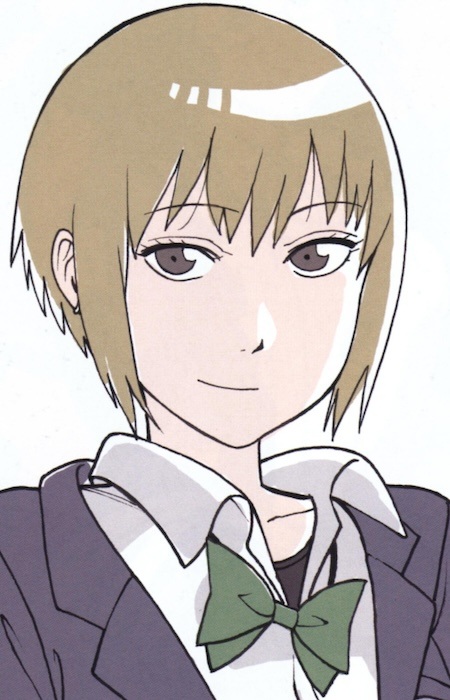
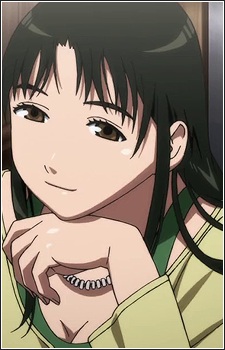
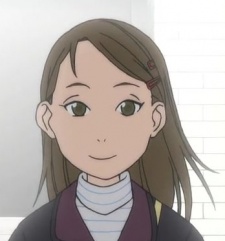
Seaside Cafe is hardly what comes to mind when one thinks of a maid cafe. Hastily rebranded to jump in on the maid trend, Seaside Cafe carries no tea, offers very little in the way of service, and only gets customers from the local shopping district. Despite the cafe's humble offerings, this is where Hotori Arashiyama chooses to secretly work after school. Balancing high school, work, family, and a love life can be difficult, and Hotori manages to stumble through without the slightest bit of grace. With the help of her friends and family, she tries to navigate her way through the wild world of adolescence where barely anything normal occurs. [Written by MAL Rewrite]
Main
Main
Main
Main
Main
Supporting
Supporting
Supporting
Supporting
Supporting
Supporting
Salsk
December 24, 2010
To be honest, I didn't know what to expect from this adaption. I was familiar with the source material, but since the production was in the hands of Shaft, yeah. For the unitiated: If Japan's anime industry was a party, and the studios were the invited, Shaft would be the high guy smoking joints on your favourite couch while eating all your snacks. They're just completely unpredictable. Some times they'll create excellent animation and sharply delivered dialogue, other times they'll churn out something that looks more like a slideshow and the boring, endless monologues which are associated with them. I was pleasantly surprised. The plot ofSoredemo Machi wa Mawatteiru is fairly straightforward. Enter Hotori, a quirky high school student whose dreams is to become a teenage Sherlock Holmes. After school she works in Seaside, the maid cafe owned by her grandmother, together with her classmate Tatsuno. Throw in a large cast of interesting characters, a bunch of puns, some lateral thinking puzzles, a couple of love triangles/squares and you've got yourself a winner. The story is slice-of-life style, with two chapters from the manga adapted into each episode, keeping things fairly fast-paced and never boring in any sense of the word. It's all very simple, but due to Shaft's style of blowing simple things up to bizarre proportions, it works. One thing that was unexpected was the quality of the animation. It was very fluid and quite detailed, and not only during the first episode, it kept the quality level relatively uniform during the whole series. This is REALLY uncommon for this studio's shows, usually featuring big dips in animation quality throughout. I guess their budget might be bigger this time due to Bakemonogatari's success, but I digress. The typical eye close-ups and large amounts of on-screen text which the studio is rather infamous for were also mostly absent. I'm not complaining. The black and white "I'm in despair!"-animation from the Sayonara Zetsubou Sensei-series is still there though, if anybody is wondering. Both wide-angle and extreme frog-perspective shots see frequent use (or abuse, depending on your opinion), which brings a nice sense of Shaft-flair to the scenes. When you think Shaft, you think great OP animations (well, at least I do). Soremachi is no exception, I don't think I'm going too far by saying it's the best OP of 2010. But to be fair, when combining the sweet sounds of ROUND TABLE with the OP animation of Shaft, you wouldn't expect anything less. Which brings me to the soundtrack of the series. I wouldn't call it amazing or anything, but it's pretty good and it serves it purpose well. The ED is also great by the way, maid rock! Oh, and while we're in the sound section of the review... The voice-acting cast is fairly strong. You have both established voice-actors like Sugita Tomokazu and more unknown ones like the voice of the main character, Omigawa Chiaki. I gotta hand it to Omigawa though, she really brings out the essence of Hotori in her voice. Anyways, the thing that I really liked with the show wasn't animation or OP or anything like that. It was atmosphere. When it comes to the general mood of Soremachi, it feels like a more energetic, more silly version of such classics as Aria or Kamichu. This is just one of those nice relaxing series you can wind down to. If you enjoy shows like that, you're in for a real treat; if not, well just try watching it anyway. This is not the best thing to come out this year, but that doesn't mean it's not a worthwhile watch.
Supporting
8thSin
December 27, 2010
'Soredemo Machi wa Mawatteiru (The World Still Turns)' is about a dull maid café in a small shopping district, and the daily lives of its employees and customers. It sounds like just another slice-of-life comedy, but it is one of the most thought-provoking comedy series I've ever encountered. The town is a microcosm of the world. Conversely, 'SoreMachi' attempts to explain the way things work by studying the lives of ordinary citizens in an ordinary town. The protagonist of the show is Arashiyama Hotori, a carefree, clumsy, and air-headed, yet very proactive girl who works in the maid café. Her irresponsible and unpredictable actions gets her into allsorts of strange situations and irregularities (such as aliens, ghosts, and time travelers) seem to be attracted to her as well. A walking chaos in otherwise orderly town in Tokyo. The more I write about the main character Arashiyama Hotori, the more she reminds me of Suzumiya Haruhi, whose competency and power is the polar opposite, but practically identical existence to those around her. Other characters in the town are ordinary people who could easily be one of our neighbors and friends, but all have colorful personalities that spice up the show. These characters often pose as obstacles for Hotori, which she overcomes through comical means. All the characters are very likable and easy to connect with. Every episode consists of one theme and two chapters from Manga. Almost all chapters begins and ends with a narration, stating a fact of life, philosophical viewpoint, moral dilemma, or random trivia about to be explored by the characters in the town. Some of these themes are quite serious, such as what is happiness? What do we value? World being a mirror that reflects one's mental condition, acceptance of the supernatural and technology, the human desire to cling on to the belief of supreme being, one's futility in the face of fate, and death. Others are rather simple observations, like personality showing in writing, eyes speaking the truth, flawed logic within myths, how the scenery changes at different time of the day, how bad things seem to come in strings, women as being mysterious creatures, and how talking to the girl you like is the biggest concern when you're in high school. The stories revolve around extraordinary events within the ordinary life. Continuity of the story is mediocre as an episodic comedy, but many of the themes are about seeing ordinary things from different perspectives, which we might find to be quite humorous or thought-provoking. Character development is also lacking, but all the random little events form together to show how one person can influence the surrounding environment. Just like 'Sayonara Zetsubou Sensei' or 'Bakemonogatari', the comedy in 'SoreMachi' is very quirky, and non-Japanese speakers will miss a lot of humor in this show as it relies heavily on wordplay and references. However, there are many concepts or ordinary events taken to the extremes to show the ridiculousness of common things in life, and the show is absolutely hilarious. The insight into the way of life, philosophy, human psyche, and morality are also universal. The first thing you will notice in animation is the extreme fluidity of characters, especially when assisted with slow motion, but the frame rate is a suspect at times. Character design is excellent, everyone is memorable and distinct. In addition, none of the characters seemed beautified as typical series and seemed real. The angle-based panchira prevention was also pretty cool. Unfortunately, 3D CGI were horrible and sometimes distracting. SHAFT's signature cuts and zoom-ins are used as heavily as 'Sayonara Zetsubou Sensei' or 'Bakemonogatari', but there is a sense of awkwardness to the presentation at times. This is probably because the animation for the show is more than just visual support for verbal performance, it's actually vital to storytelling. Perhaps the show would flow better if the unconventional style was toned down to the level of 'Dance in the Vampire Bund' or 'Arakawa Under the Bridge' series. However, it magnified the surrealism in some scenes and I believe no other studio could've presented the atmosphere in this show as well as SHAFT. BGM was really wonderfully done, with wide range of sounds enhancing the atmosphere in every scene. It's also noticeably different from generic music score in anime. Hotori's voice was done by Omigawa Chiaki, the same seiyuu who played Maka from 'Soul Eater'. Her voice is distinct and raspy, but sounds very natural as the troublemaker Hotori. It's a perfect fit that you will never forget or imagine to be replaceable. Everyone else sounded like they should, and especially shined in comedy scenes with passionate voicing. The ED was especially interesting in that it is an "Ondo", traditional folk music style song, and also has solo parts. Having heard of considerable amount of enka and Japanese folk songs, I can tell you that the lackluster vocal skill cannot be covered up like pop or techno, as done in typical seiyuu-sang anime songs. The gap in vocal prowess is apparent from a single verse by each seiyuu. The newcomer Yazawa Rieka (Futaba) comes off too soft (and worst of the four), Omigawa Chiaki (Hotori) tries to cover up by using jovial tone, Yuuki Aoi (Toshiko) shows off her versatility despite being only 18 years old, and the veteran Shiraishi Ryouko (Harue) is practically indistinguishable from real folk song singers. The ED is pretty funny with ridiculous lyrics and explicit "kanchou". 'SoreMachi' is very inconsistent, having great and horrible moments in just about everything from animation, comedy, to values. But such is life, full of ups and downs. Every chapter is a hit or miss, but it's always interesting that it views everyday objects from different angles, from new perspectives. All episodes present these concept in a hilarious and engaging manner, only scratching the surface for us to think further into the subject. I'm sure everyone's interpretation of the series will be different, but to me, the show conveys the message that every person is an insignificant existence to the society as a whole, but an individual has the power to change the world. Similarly, the town will keep functioning and the world will continue to turn without one person, but it will not be complete without her. 'SoreMachi' has everything... comedy, drama, romance, value, suspense, and fantasy.All summed up well in 1 season.
johnbradshaw
July 19, 2015
Somehow, from very the first episode, strange story settings, head tilt, weird camera angles, i talked to myself: "My god, this show is made by SHAFT". The studio that is both hated and loved for their unique approach to directing anime (thanks to Akiyuki Shinbou). Many times, they actually improved the anime but many times, they just created a disaster. So what about this show ? Is it lucky enough ? Very Fortunately, it is. In fact, SHAFT has directed many great shows : Monogatari Series, Madoka Magica, Sayonara Zetsubou Sensei,... And even among those famous shows, Soredemo Machi wa Mawatteiru or And Yet The TownMoves is quite a stand-out anime, one of the most joyful experiences i had with a show made by SHAFT. The story follows the exploits of whiny Hotori Arashiyama, her friends, family, neighbors, shopkeepers and colleagues at the local maid cafe. The typical slice of life format is occasionally interspersed with stories dealing with aliens, ghosts and the paranormal. With the directing of Shinbou, this anime is surely a success. It made the show rather strange and interesting, refreshing and never getting bored. It does not try some over-the-top reactions to get us laugh. Everything funny coming from the nature of the characters and the whinny heroine. If you love animes of SHAFT, this is a must-watch. If you're a slice of life fan, this is a must-watch too. Enjoy.
foxnewsnetwork
July 16, 2011
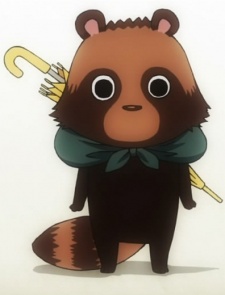
It's no secret that Akiyuki Shinbou and the usual suspects at SHAFT productions tend to produce avaunt-garde shows with weird intros, strange camera angles, odd positioning, and artsy flares. Yet, even amongst the veritable flood of Shaft shows (actually, all anime in general), Soremachi stands out. It has become a rare example of when good source material meets good animation production. Everything from the loosely connected story-line, to the elegantly constructed setting, to the personalities and interconnections between all the characters spin perfectly into one gem of an anime. People often argue that a "good" anime must have a "good" story; such an all-encompassing statement issimply not true. Lucky Star, Hidamari Sketch, GA, K-On, etc. did not bother with trying to tell an "epic" tale and yet all ended up being amazing. Meanwhile, Ichiban ushiro no dai maou, Shana, to aru, seikon no qwaser, etc. were all deep stories that floundered upon the rocks of poor scripting, stupid characters, and pathetic presentation. A good anime, instead, should be engaging and entertaining - Soremachi does this with its rapier wit and clever lines. And a great anime should seamlessly and effortlessly mix brief moments of poignant depth with an usual atmosphere of the playful, heartwarming, and or mysterious - Soremachi does all of this too with its skillfully planned scenes and ever lovable characters. And the characters of Soremachi - the residents of their particular Tokyo suburb - strike me as particular real and loveable. Unlike the millions of other high school animes where the main character, claiming to be the "average high school kid" is actually a tsundere sword-wielding warrior with major personality issues living by herself because her parents are somewhere overseas involved in top-secret research (or something similar), Arashiyama Hotori is a 16 year old girl living in a upper-middle class suburb of Tokyo with her mother, father, two younger siblings, and the family dog (which looks like a raccoon). Her parents count on her to look out for her siblings, she gets in trouble when her little sister cries or when her brother tattles on her, she goes and hangs out with her friends from school when she tires of dealing with the kids, etc. Actual normal, realistic, stuff! Yet, through expertly done scripting and directing, the normal everyday lives of the residents around the Maruko shopping district is heartwarming and charming to the audience. Be it Hotori's misadventures with math, Kon's tomboyish rowdiness, Shizuka's sci-fi fantasy search for rainbow delights, or "mourning for Sanada", the viewer finds himself drawn into town coupled with happy fanfare and cheerful folk music. And for a too-short 12 episodes, the viewer not just watches but lives the conflict, conversation, witticisms, tiny victories, and hilarious defeats of Hotori, Hotori's friends, family, teachers, and environment. Soremachi manages to convey its wit through timeless humor, its history through poignant moments, and its charming magic through good fun and cheer. Its many messages are bold where it needs to be an subtle where appropriate. Its character art-forms are delicate and beautiful when appropriate, and refreshingly (and realistically) ugly (fat, old, bald, etc.) when called for. The pace presses to presto-allegro to skip over the dull droning moments, and slows down to lively vivace to highlight the vibrant lives of the citizenry. The source is skillfully written, the anime masterfully produced, the music expertly scored, and leaves the viewer delighted at being able to watch such a sparkling jewel of a show.
HetakuSoda
October 10, 2023
SoreMachi taught me that an electric bass, a drum set, a violin, and an accordion go surprisingly well in a band together. I wasn't impressed at the start, with the pretty basic SHAFT comedy setup and multiple characters having deliberately unappealing designs, but the more I watched the more I appreciated how charming and loveable SoreMachi is. Compared to shows like Paniponi Dash or Maria Holic, it's much more restrained and doesn't have many references, but it's still goofy and rowdy compared to something like Hidamari Sketch. And the closer you get to the end, the more the show will surprise you with unexpectedly touchingmoments, and they hit harder thanks to the show's normally grounded, silly nature. It all culminates in a really memorable finale that reminded me of Disappearance. It's a shame that the show has been forgotten, but that makes it all the more satisfying to discover and watch all the way through.
Rank
#2251
Popularity
#2932
Members
70,996
Favorites
316
Episodes
12