Dream Eater Merry
夢喰いメリー
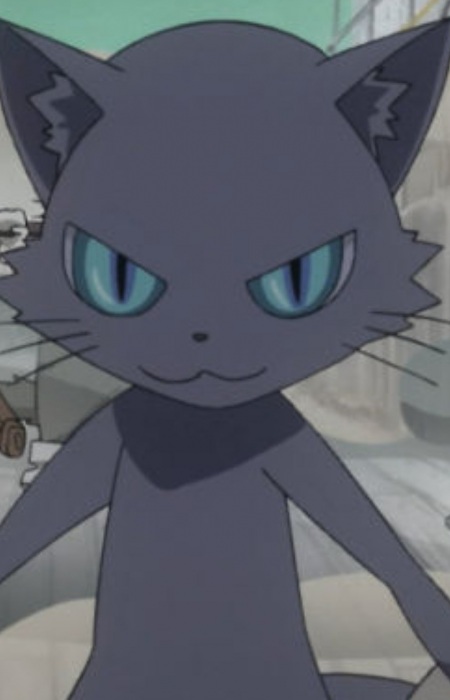
High school student Yumeji Fujiwara has the ability to see people's dreams. Despite the visions never appearing clear or concrete, he is able to predict them by sensing the person's "aura." Normally, this skill is a fun trick to play on his classmates, but Yumeji only ever sees himself having the same nightmare every night. To his surprise, the nightmare continues in the middle of the day even before Yumeji has fallen asleep. The unexpected event was triggered by a dream demon—an inhabitant of the world of dreams who wants to use Yumeji's body as a vessel to fully enter the real world. However, Yumeji is saved by the timely arrival of Merry Nightmare, another dream demon who can somehow physically manifest without a host and is instead trying to return to her own realm. As more dream demons continue to push into reality, it is up to Yumeji and Merry to fight back against the invasion before everyone's nightmares materialize. [Written by MAL Rewrite]
Main
Main
Supporting
Supporting
Supporting
Supporting
Supporting
Supporting
Supporting
Supporting
Archaeon
May 18, 2011
They say that variety is the spice of life, but if that's true, then why is there such a lack of it in anime and manga? Part of the problem stems from the fact that there seems to be a certain number of themes that can be considered the "bread and butter" of the industry, but the subject of dreams is surprisingly not one of them. This is more than a little odd as Eastern folklore is littered with stories about dreams, and one has to wonder why such a rich and varied theme tends to be ignored. So what is a dream? There are those whobelieve they are nothing more than one's subconscious mind doing a bit of "housecleaning", whilst others claim that there is a supernatural element that can be defined and translated to provide a message to an individual. Many people believe that dreams are simply flights of fancy that occur while one is asleep, and almost everyone has used the term in reference to personal goals. The common misconception though, is that while they are often weird, and maybe a little unnerving (this includes some real life ambitions), they are also harmless. What people tend to forget is that a nightmare is also a dream. But what happens when dreams and reality merge, and just how important are they to a person? Based on the manga byYoshitaka Ushiki, Yumekui Merry (Dream Eater Merry), tells the story of Fujiwara Yumeji, a high school student who has the ability to see auras around people that allow him to predict what kind of dream they will have. Unfortunately his own dreams involve him being chased by armed cats, but all of that changes when he meets the mysterious Merry Nightmare. The story features several interesting dream related elements that offer some food for thought, and while there are a few rather lacklustre attempts at comedy, the series manages to retain a reasonably serious atmosphere. That said, the cliche manner in which the two leads meet does a good job of negating the generally forthright approach to character introductions, and shattering the illusion of seriousness. Granted the two have to meet in some way, but did it really have to be that? In addition to this the plot contains several typically shounen themes that act as a foundation for development of the story, which is a bit of a shame as while there are some explanations on offer about certain events, there are also a few glaring omissions that can leave viewers wondering how everything fits together. Yumekui Merry also suffers from the fact that all of the action takes place in a particular area, and generally involves people in a particular age range, which immediately raises several questions that are never answered. The design poses an interesting dichotomy as on the one hand the series adopts a very typical formula with regards to characters and environs, yet on the other there is a degree of imagination and innovation on display, in particular where supernatural characters and otherworldly realms are concerned. While this is obviously a purposeful move to highlight the difference between reality and dreams, J.C. Staff haven't really made the effort to break new ground (and seem overly addicted to Merry's navel), and because of this Yumekui Merry retains a humdrum quality that makes it difficult to take seriously. As for the animation itself, the series does achieve a very high standard, especially during a few action set pieces, but there's no real consistency to the quality so these high points are more the exception than the norm. There are many scenes where things could have been timed better and movements could have been sharper, so it's somewhat annoying to find that the effort hasn't been made to raise the bar in any way. The opening sequence features the typical character introduction montage blended with some action that never appears in the anime proper, all against the J-rock/pop stylings of Daydream Syndrome by Fujiwara Marina. That said, the ending theme attempts to keep things simple with a boppy little J-pop track (Dreams And Hopes And The Me Of Tomorrow by Sakura Ayane), set against an image of Merry that is gradually being revealed from underneath flower petals. Unfortunately one of the biggest problem areas is the background music as there are a number of tracks that don't seem to mesh well with the on screen action or appear to be completely unnecessary. In addition to this there are also issues with the levels, and all too often whatever track is playing will lay the foundations of a veritable cacophony when large audio effects kick in or characters begin speaking loudly. Unfortunately these issues could have been easily rectified during the recording process, so one has to wonder if there has been a poorly executed attempt to enhance the atmosphere of particular scenes, or simply a continuous oversight during production. That said, there is some decent performances from Okamoto Nobuhito (Fujiwara Yumji), and Sakura Ayane (Merry Nightmare), but this is only in comparison to the rest of the cast. A large portion of the acting is nothing more than lines by rote which can be attributed to a script that's more than a tad juvenile, and this truly is a shame as the cast are a talented bunch for the most part. Yumekui Merry features a variety of personalities that one might find in any number of highschool anime, yet while there is a certain amount of depth applied to several prominent characters, this never really feels like true development. It seems as though the producers have decided to follow a method that attempts to define the characters rather than make them grow, which is unfortunate as this approach can only really yield good results when there is a decent amount of characterisation from the start. Sadly, there isn't. Aside from the generic looks and routine personas, it's only Yumeji who appears to have any sort of detail at the start of the story, and part of that stems from the manner of his introduction into the tale. While one might argue that Merry's introduction also constitutes definition of sorts, nothing substantial is done with her until the latter half of the series. Most of the characters are apportioned a certain amount of screen time to tell a highly abbreviated version of their personal history or future goals, but there's very little emotion involved in this and the story can sometimes feel like more of a writing exercise than anything else. Even with the flaws there's still something to this anime that manages to raise it from mediocrity, and that's the interesting ideas it can spark about dreams and how important they are to a person. While the explanations of cause and effect are a bit on the simplistic side, they can also be somewhat original and unusual, and this helps to retain the viewer's interest in the story. In addition to this the main thrust of the narrative is well conceived, even if the execution is lacking, and the generally serious tone of the story helps to offset the fact that Yumekui Merry can be a chore from time to time. One thing that should be pointed out is that the series has a very clear "kids versus adults" mentality that seems more a convenience for its own sake than an outright declaration that everyone over a certain age is "evil", which makes it pretty obvious who the target audience is for this show (as if the highschool wasn't already a dead giveaway). The ending also lacks a degree of substance due to its slightly hurried nature, and many of the concepts in Yumekui Merry aren't fully realised, but given that the manga is ongoing it will be interesting to see where things go from here. While the series barely manages to hold it's own against the likes of Yume Tsukai (which isn't really all that impressive to be honest), there's an earnestness that appears from time to time that really should have been more prominent as it would have offset the lethargic productions values.
DangoSadge
February 19, 2011
So what are dreams? "a series of mental images and emotions occurring during sleep" Pfft.. Don't just give me the definition from the first thing you googled... Anyways, Yumekui Merry, or "Dream Eater Merry is an anime based on a manga by... Christopher Nolan??? Hah, I wish, but then the story would get more complicated than it is. In fact, the anime series was directed by Shigeyasu Yamauchi, produced by Hideki Shirane and written by Ushiki Yoshitaka. Yeah, I know all of you Nolan fanboys (or girls) are going like, "YEAH!! Christopher Nolan was director, producer and writer but the japanese needed 3 guys to make a show about dreams.." Wellmy friend, thats a failed analogy to compare movies and animes. I can't believe you just did that... I mean... Seriously?? Before I proceed with the story review, let me clarify with some of you the terms used that may help you understand more about the story (For those who haven't watch) SPOILER: To those who wish to enjoy the series by figuring out themselves what this anime is all about, please skip the story section. Dream World: The other dimensions where the habitants consists of mumas. Mumas = Dream demon who wish to possess human to use them as a vessel. They can either take over their host, or co-exist with them Day Dream: Is the process where the Mumas extend their territory by bringing their host or vessel into their domain while they are still conscious Wet Dream: Nocturnal Emissions a.k.a j**zing in your pants while you sleep. So I quite like the story because they did not bombard us with the entire plot by the first few episodes. Quite many enjoy this series for their way of slowly letting the audience discover what this anime is all about. And the plot isn't too cliched as well. This is infact the first anime series I've watch in the Spring/Winter 2010/2011 line up that doesn't have a male harem lead character eventhough it clearly have the potential! However, the story about other dimensions and different creatures with different types of powers living in those dimensions feels all too familiar. So I can't give any points for this one. Now of course, if this was a dream anime you would expect the art too be all abstract like you dreams right? Well true it does have its charms but I got the feeling that the fighting sequence was getting lazy as the story progressed. I dont know, maybe the animators haven't been getting any good dreams lately. What about sound? Well I dont remember background music playing during my dream session but this anime had their BGM well under wraps. I especially loved the opening theme song, then I noticed that IOSYS was responsible. Hah, no surprise there.. Characters! Eventhough I only enjoy reviewing harem characters, but I'll make this one an exception. Why? Cause I know you guys love skipping to the character part and ignore every other parts of my review. Yumeji Fujiwara. Has the awesomest power ever!!! He can detect if a person is going to have a certain dream on that night! Isn't that cool?? And he can even do that to himself as well! That was you can sleep longer when there he detects a wet dream and don't sleep when there is a nightmare.. Ok yeah... So I was trying to make it sound cool but it seems you guys didn't buy it. Oh darn, I was stupid trying to fool otakus whom clearly wish for better powers like the ability to manipulate vectors or something pfft... Anyways, like any typical japanese anime character, he has a childhood friend who is yet again a GIRL named Isana Tachibana. Seriously Japan? Can anyone in Japan actually confirm this with me that it's so easy to get a childhood friend who is the opposite sex? I mean maybe because I never had one that made me so envious of them. Someone to be a love interest but is gonna get friendzoned anyways.. Sigh.. So Yumeji's been living alone and in no circumstances they told us what happened to his parent or I don't remember because too many male characters are deprived from their parents. He is a lazy, yet strong-willed and determined person with a heart of gold, who is always ready to help others. He is also a member of a writing club at his high school, and is a big fan of the superhero called Sprain? Who sprains himself each time he acts in the name of justice? Wow why would he even become a hero then if it hurts him?? Yumeji meets Merry when she falls on top of him as he comes back from his errands, (You know the typical cliched scene) He has firmly decided to help Merry to come back in the Dreamworld, and eventually becomes her partner, using his ability to scout out nightmares so Merry can hunt them Now I wont explain much about Merry because that would take the thrill away from discovering what she is for thos who haven't watch the series. Let's just say she enjoys eating doughnuts and playing video games. "OMFG!! MY DREAM GIRL!!!" Get it? Because she's from a dreamworld? and she's a girl which also means..... Oh c'mon can't a guy tell a lame joke without getting dissed? Anyways, Merry is your typical female heroine which is quite popular in the anime scene right now. Wussy guys + Powerful girls = Homosexuals Wait that ain't right.. The enjoyment in this anime for me was as mentioned above, slowly discovering what the whole story is about. At the same time we see the bond of friendship developed between Yumeji and Merry. There is a possibility of this going into deeper feelings but please, not every anime have to be about love... And since this is based off a seinen manga, kiddies are not recommended to watch this anime. No, Im not saying this because there are sex scenes! What you dont believe me?? Fine go ahead and watch... And prepare for your MIND TO BE BLOWN... Seriously, kids, if you scratched your heads until it bleeds when you watched Inception, I doubt you would enjoy this one. Fighting sequence isn't that impressive but it's still above average and does compliment the anime well Overall, watching this anime changes my perception of dreams. They're not recollection of memories, they're actually other dimensions and dream creatures are trying to take over our bodies! So those voices I hear in my head are real and Im not crazy! Oh wait, false alarm, that's just me thinking to myself. And it's telling me to click Submit Review without Previewing it first. Must resist urge. Resistance Failed.
shuffleair
May 8, 2011
When Yumekui Merry started at the beginning of the Winter 11 season I felt it was going to be good show. It had an interesting art style, the characters were likable, and the production was done by JCStaff. An animation studio that I adore for making previous works such as Kaichou wa Maid-sama and the Index series. But something went wrong. Everything fell apart by the end. Plot holes, ruined characters, inconsistent art, and one of the worst finales I’ve seen in a long time. And, yes, I have seen a LOT of anime. Animation wise, Yumekui Merry had an interesting approach during the dreamsegments for the first few episodes. I was really intrigued. The watercolor approach worked well for the series and the character designs were charming. The show was full of stills (meaning no movement or very minimal amounts kind of like a slideshow), but hey they were at least pretty stills. Sort of. Then the art lost all its style at the end. Gone were the interesting art choices and the art became inconsistent during the last few episodes. Misty’s face during the last episode comes to mind. The OP/ED were good. The ED animations were nice. It had some dang midriff. I like me some midriff. The soundtrack was glaring. It was an awful strange choice to choose orchestra music for the more intense fight scenes. I don’t know... it felt really out of place. I mean come on. Why would you put bassoons in a fight scene? The voice acting was okay. Nothing to complain there. Merry's VA is totally new and it was her debut role. And Okamoto Nobuhiko always makes me go crazy as Yumeji. (Okamoto is personally one of my favorite voice actors, so I'm biased.) The plot is where everything falls apart though. You’re lead into the first episode with a dream demon who can survive in the human world. Wonderful. Our main character has the power to see what people will be dreaming the next night by making a circle with his fingers. Uh weird, but uh interesting. Throughout the first half it was really formulaic. I mean it was basically fight dream demons and send them back to the dreammmm world. It gets boring. So the anime studio then decides that during the second half the plot gets more of a direction, but loses all plans to keep a coherent plot. The ending was awful. Things are developed, but never really mentioned again. Kawanami's character, John Doe, and that one dude that got possessed by a dream demon. And some nonsensical things happen as well. (Yui playing her invisible trumpet comes to mind. What the heck? Why? Did she bump her head? Did she suddenly decide that she was in a band? Is she the one playing the dang bassoon. Dang it Yui. Dang it.) Mistletine was a good evil villain. Her back story was basically that she likes to be evil and does evil things. Alright, that’s fine. There’s just one thing I have on her. And that is that Misty (Mistletine) has a severe case of ADD. She's fighting the heroes of the anime and then she just gets up and leaves them, so she can enjoy them next episode? What? Why? That makes no sense? Did she get bored? Did she get tired? No, it looked like she had enough energy to insult them. Why? Oh yeah. It’s not the last episode. We can’t have you guys finish each other off till the last episode. Silly me. That’s a perfectly reasonable answer. Also the teacher (Who I can’t remember his name for some reason. And all I remember about him was that he wears the ugliest striped pants I’ve ever seen.) was kind of bleh. I do like his facially expressions though. They were hawt. Kawanami was the worst character in the series. She felt soooo tacked on. Was her only purpose in the story was so Isana could make friends? Isana has plenty of friends. She has Merry and she has her brother. Well, I guess that isn't much, but still. Kawanami was an anime-original character (same with stripped pants sensei and Misty) but she felt like she had no purpose in the plot. JCSTAFF WE NEED SOME FOCUS IF YOU ARE GOING TO INTRODUCE ANIME-ORIGINAL CHARACTERS. I mean having an anime-original plot is fine if you do a good job with it. Having anime-original character is fine if you develop them well, but JCStaff didn't. Did JCStaff suddenly decide that the manga wasn’t good enough? If it wasn’t good enough, then why did they choose to adapt this series? I like John Doe. (John Doooooo) I seriously do. I like his name. I especially love how the other characters call him John Dooooo when his named is spelled John Doe. He was cool. Too bad he like totally disappeared, so the anime-original characters can appear. I feel like there is so much wasted potential here, plot holes, useless anime-original characters, inconsistent art, and Yui playing her imaginary trumpet. I do feel that there are a few good parts in this show, but there are far too few in a sea of bleh. As in my case it’s very hard to recommend this anime. It might be good, maybe, after in taking some alcohol. But whatever. It’s done. JCStaff please do a good job on your next series. I don’t want to see no anime-original characters or plot, unless you can develop them properly, and I definitely don’t want to see your next main character play an imaginary trumpet. * Nothing is as frustrating as writing a review twice; due to my laptop crashing down right when I click submit. Review is also on AnimeNfo.com
imjustjk
August 5, 2012
There are many ways to interpret the definition of a dream. Is it the manifested world of our imaginations? Is it the parallel world that we live in while we sleep? Or is it the final goal, the end of the path that all of our goals and motives lead to? Yumekui Merry implicitly engage us in an intriguing tale of dreams; of dreams that are reached and dreams that are shattered. Of friendship and contracted promises, and of betrayal and wily deception. Yumekui Merry narrates a scenario that can be enjoyed by all people alike, by people with dreams that may have come true,or of people with dreams that lie in wait for the day that they may be manifested. -= --- Story --- =- From the producers of Blood + and Dragon ball Z, Yumekui Merry starts with bang. Yumekui Merry is certainly not one of those animes that lags around in the beginning; rather, grabs our attention immediately by giving the protagonist an unexpected disaster from above that ends in a very special acquaintance. All in all, Yumekui Merry narrates the pivot point of the life of Fujiwara Yumeji, who can see the inner atmosphere of the people around him, and can predict the type of dream the person will have that night based on this inner aura. The story pivots sharply as Yumeji meets a strange girl called Merry Nightmare. The story is one of the most original plots that have been made yet, incorporating concepts of that not unlike the movie “Inception”. In addition, the plot goes through many interesting twists that keep us guessing the next turn of the plot. -= --- Animation --- =- I found the drawings of Yumekui Merry extremely interesting and contrary to the usual graphics of contemporary anime. Although Yumekui Merry incorporates essentially the same type of portrayal of the outward appearance of characters as other animes, with the same background in the “normal” world, the graphics of scenes in the dream worlds are wholly different. Not only do objects not follow the laws of physics, what we would normally conceive as the effect of one action differs completely from the actual effect that is shown. Despite others who argue that the art of anime is not particularly appetizing to watch, I see it as part of the twists that make Yumekui Merry the attracting anime it is, that’s quickly rising through the board. -= --- Sound --- =- The soundtrack of Yumekui Merry is also part of the twist that makes up its personality. One of the aspects is that it defies the basic rule of using clashing dissonance of die-hard rock music and screaming guitars; instead, Yumekui Merry surprisingly chooses to use the romantic building sounds of a group quintet orchestra consisted solely of violins and violas. This effect makes the fight all the more enjoyable. From an unexpected transcribing, the fight shifts its position. As the music builds into more intense chords and arpeggios, the fight climbs to its climax. The experience is particularly exhilarating as the violins play in sync together in a strangely baroque tone to build up the rising action as the fight leads to its climax. I found that other reviewers also criticize the producer for giving the anime such an unfitting soundtrack, but as we will see while watching Yumekui Merry, the experience proves otherwise. -= --- Character --- =- There character development is the one weakness of the anime. Although it is clearly marked that a few characters progress and change throughout the anime significantly, the relatively minor characters (not to say that they aren’t important) do not have such a change. Although there exist flat characters, we grow to be fond of the protagonist and cheer them onwards throughout the anime. The protagonist Merry is especially lovable due to her engaging character and her nonchalance and ignorance to everyday things such as video games and groceries. Besides the protagonists, the minor characters, despite that they remain the same throughout the anime, are very interesting. I especially appreciated the character of Takateru Akiyanagi, the boy who constantly expresses his feelings and thoughts as through haiku; this shows an extremely keen sense of creativity that is parallel even to Angel Beat’s T.K. -= ---Enjoyment --- =- Yumekui Merry is especially enjoyable. Not only does it make the everyday aspects of school life as interesting as it can be by creating character development, but it also has many enjoyable fighting scenes that gives ecstatic feelings of greatness. As the anime progresses, we will be enthralled by the ever thickening plot as we try to guess the next possible action that the protagonists will take. -= --- Overall --- =- Yumekui Merry is an extremely underrated anime, not because it lacks charm and glamour – it has an abundance of those – but very few people know of its existence. Do not be motivated to skip this opportunity of inspiration just because no one recommended it. Yumekui Merry is actually a very interesting anime, and it does not take long to find out. Reviewer’s note: Thanks you VERY much for reading this especially long review. I purposefully did not add ratings to this review. I feel that reviewer’s ratings never appeal to the reader, and who even cares about how I feel about the anime right? Regardless, I tried to revise this (my second) to create an effective review that will not only encourage the reader to watch Yumekui Merry, but also have a realistic idea of Yumekui Merry. If you did not like this review, please give me advice so that I can improve my horrible writing skills, and write a better review next time.
Inushinde
April 10, 2011
Watching Yumekui Merry was like riding a jeep down a long, bumpy road spanning several steep hills. When it was good, it was pretty compelling. When it was bad, it was almost impossible to slog through. Though the good outweighed the bad enough to not make me dread the next episode. Now, I don't expect anyone was especially thrilled to see another show that used every shounen trope to its fullest extent, with a bland male lead, an unstoppable and infuriating lead villain, and a plucky tsundere sidekick. The story, which isn't properly divulged in the synopsis, is as such: Yumeji is your standard shounen protagonistwith the ability to read peoples' dreams by making a circle with his thumb and index finger. He meets a mysterious and flamboyantly dressed woman while experiencing a trippy dream sequence, and the two build a friendship that withstands any and all obstacles. That's about it. In the beginning, there's nothing at all wrong with the story. The problem with it is, quite a few plot threads are introduced, toyed with for an episode or two, and never brought up again. Just a warning, possible spoilers ahead. If you want this to remain as spoiler free as possible, skip down past the dotted line. The first plot introduced is Yumeji's conflict with a dream demon who wants to use his body as a vessel. Okay, that's a good plot. And the demon can infiltrate his mind at anytime and plunge him into that dream state. Alright, that works. And the girl who he meets in there one day tries to help him out. Okay, excellent. Sounds like a good, semi-compelling series. But nope, a few episodes later it's dropped and only paid lip service less than halfway through, where it's resolved in an incredibly anticlimactic manner. And for the rest of the series, this entire plot is forgotten, which makes the synopsis utterly useless. Not a problem though, because a second plot is brought up by Merry, the plucky sidekick. She's also a dream demon, but all she wants is to return home to her world, and for that she needs to vanquish a few demons and use the portals that send them back to send herself back. Not nearly as interesting as the first, but it's still serviceable, and would allow for more freedom with character development. And thankfully character does develop... right up until the last third. Unlike the first, this isn't forgotten, but just completely shoved aside for the standard plot. The main plot, of course, being the need to vanquish an unstoppable evil through the power of friendship. You all know how this is going to go, so nothing needs explaining. -------------------------------------------------------------------------- The story is somewhat redeemed by a twist at about the halfway mark, and another at the two thirds mark, that's somewhat unexpected and casts what Merry does in an entirely new light. It would've been decent if they had just stuck with the main plot, without introducing all those abandoned subplots. The characters are, for the most part, bland and uninteresting. Merry's the only one not of a cookie cutter design, but her personality is as standard for tsundere characters as it gets. Really, there's nothing here you haven't seen before. Heroes are likable, if somewhat dimwitted, and the villains are despicable in a way that you like them to be. Again, standard fare. Sound-wise, Yumekui Merry employs a somewhat catchy OP and a pretty good ED, but otherwise unremarkable music. The characters are usually appropriately voiced. Not much worth mentioning either for or against the music or VAs. Aside from the boring character designs, I must admit that the art of the various dream worlds used is quite excellent. Each world is haunting and surreal, from a moonlit wheat field swaying gently in the twilight breeze, to a warped town bathed in a bluish-green glow, surrounded by levitating fish skeletons. Otherwise, it gets the job done, and nothing more. The animation is fluid, the fights are fun to watch, and I was never left bored during the action scenes. Yumekui Merry breaks no ground, preferring to tread water under pseudo-philosophical debates and questionable handling of the story. I understand that 13 episodes limits the schedule somewhat, but if the subplots were going to be underutilized like that, they should've been left on the cutting room floor. Otherwise, it's more than watchable. Just don't expect to be wowed or walk away having felt richer for the experience. It's stupid, short fun, and sometimes that's what you need in life.
Rank
#5213
Popularity
#1831
Members
142,420
Favorites
290
Episodes
13