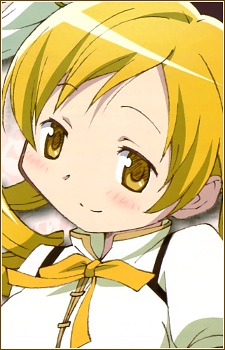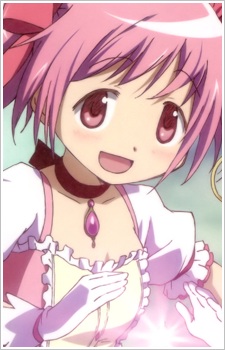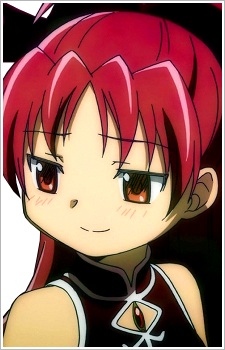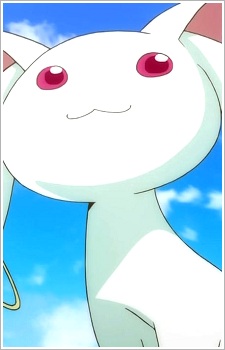

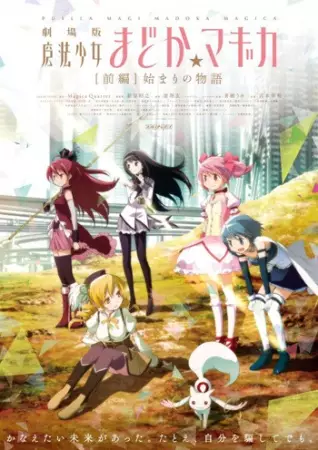
Puella Magi Madoka Magica
魔法少女まどか★マギカ
Madoka Kaname and Sayaka Miki are regular middle school girls with regular lives, but all that changes when they encounter Kyuubey, a cat-like magical familiar, and Homura Akemi, the new transfer student. Kyuubey offers them a proposition: he will grant any one of their wishes and in exchange, they will each become a magical girl, gaining enough power to fulfill their dreams. However, Homura Akemi, a magical girl herself, urges them not to accept the offer, stating that everything is not what it seems. A story of hope, despair, and friendship, Mahou Shoujo Madoka★Magica deals with the difficulties of being a magical girl and the price one has to pay to make a dream come true. [Written by MAL Rewrite]
Main
Main
Main
Main
Main
Main
Supporting
Supporting
Supporting
Supporting
Supporting
Kalypze
July 23, 2013
What does it take for a series to become a masterpiece? Take a look at Mahou Shoujo Madoka Magica, and you might find the answer to that question. I'll start this review by pointing out that I was not expecting much from this show. I didn't really want to watch it, either. The Mahou Shoujo genre has never interested me, so when a friend of mine, who in the past suggested things like Mirai Nikki, Deadman Wonderland, Death Note and Psycho-Pass to me, told me to watch Madoka Magica, I thought he was kidding and I ignored the series for a while. Once a month hadpassed, my friend insisted, and I ended up watching the first episode with my sister. Throwing all my prejucide aside, I sat quietly and watched the first episode. I found it oddly entertaining, so I proceeded to watch the 2nd episode, and then the 3rd. After the 3rd episode ended, I was completely hooked. And by the end of the 12th episode (or the last episode, if you prefer), I was blown away. Gen Urobuchi had done it again. [Story] – “Make a contract with me, and become a magical girl!” The main character, Kaname Madoka, is a normal 8th grader. Albeit very shy, she is happy, and her family and friends love her exactly the way she is. However, her life takes a dramatic turn when, on a trip to the mall, she rescues Kyuubei, a cat-like being that was being chased by a mysterious black-haired girl. Kyuubei, as a reward, offers Madoka and Sayaka (one of Madoka's friends) a unique deal: he'd make any of their wishes come true, and in exchange, they would become Magical Girls. And that is how Madoka, and the viewers, are introduced to a world of magic and witches. Not much else can be said about the story without spoiling anything. However, I have to point that this is NOT your typical Mahou Shoujo, and it's target audience is NOT little girls. Mahou Shoujo Madoka Magica is a very dark anime, please keep that in mind. The way the plot begins to unveil is simply magnificent. The build-up of tension, the plot twists, the drama, the (really heavy) psychological atmosphere-- all contribute to create a story that will keep you on your toes at all times. [Characters] – “If someone says it’s wrong to hope, I will tell them that they’re wrong every time. I could tell them that countless times!” Mahou Shoujo Madoka Magica has a pretty small cast of characters. Because of this, each relevant character grows and changes throughout the series in ways you wouldn't expect. We get to know a lot about the past of some characters, the reasons behind their actions, their feelings, amongst other things, and that makes each character feel unique-- they don't follow any usual patterns. [Art & Sound] – "Is she some kind of anime character or something?" As usual with Shaft (Bakemonogatari, Maria Holic, Sayonara Zetsubou Sensei), Madoka Magica has a very original/weird style of animation. The design of the characters is rather simple and features very light colors. However, the animations are good and fluid, specially during action scenes (more on that in a bit). Buildings, on the other hand, are very futuristic and look pretty cool. The use of glass and fluid decorations makes me think of a very peaceful futuristic world. Nature, on the other hand, doesn't stick out of the norm, but the mixture of green + the futuristic monochromatic buildings is a very neat contrast. However, this wouldn't be one of Shaft's best works if they didn't add their “touch”. When Kaname Madoka and her friends enter the realm of the witches, one of the coolest styles of animation I have seen in anime to this day steals the spotlight. It's very hard to explain, since it varies from witch to witch, but it's definitly intriguing. And of course, Shaft's signature: weird cam angles during dramatic scenes. Both of these add to the overall chaotic feel of the series, so I have to applaud their use. Madoka Magica's opening is “Connect”, by ClariS. Although it's nothing out of this world, I feel that it fits the “Mahou Shoujo” theme perfectly. The show has 4 different ending songs, but “Magia”, by Kalafina, is regarded as the “real” ending, since it plays in the most episodes, and denotes the dark nature of the anime. As for the background music, everything fits right into the scenes; whether it's to add intensity to fights or dramatic moments, the music helps and doesn't feel out of place. [Overall] – “With kindness comes naïveté. Courage becomes foolhardiness. And dedication has no reward. If you can't accept any of that, you are not fit to be a magical girl.” Mahou Shoujo Madoka Magica has got to be the best anime I have ever watched. The way the producers trick the viewers into thinking that this anime is just another Mahou Shoujo is simply brilliant. The characters are interesting, the art managed to catch my attention, and the music is good, but this series' biggest selling point is definitly the plot. Plot twists, drama, heartbreaking AND heartwarming moments... all of these converge into a brilliant plot with a really good ending. PS: Do not judge a book by its cover! [Final score: 10/10]
Supporting

Supporting

Supporting
Ghostalker
June 7, 2011
It's been a long while since I watched and completed a magical girl series. So when I first read about SHAFT's first original anime production entitled "Puella Magi Madoka Magica" I was a bit skeptical at first, seeing how I usually don't watched the genre but at the same time curious on how SHAFT and Shinbou Akiyuki will gonna make one with their very unique visual style that defines SHAFT animated works. After watching their previous magical and supernatural series like Bakemonogatari, Dance in The Vampire Bund, Negima, and Natsu no Arashi, I'm convinced that I should at least try the series. It’s a magicalgirl series by definition that for quite some time I’ve been avoiding because frilly clothes and magic wands is not something a young adult should be watching or so I believe. But after completing it, I felt fortunate and privileged that I tried it, rarely is a series that can be considered a game-changer, at least in my viewing experience as it convinced me that the magical girl genre can still be enjoyed by young adults like me. The end result is that I’m willing to watch more of this kind of animated works from the past and future. It all begun with a strange dream followed by the introduction of the main character and the world she lives in. Then it was the usual setup in most anime, a new transfer student in the class that will call the attention of the main heroine, followed by a setup that will lead her to a world that she never dreamt existing – the world of magical girls and witches. The subsequent episodes will document the heroine’s journey meeting people, experiencing different events, journeying bizarre worlds, discovering the truth of the magical girl system and its purpose – all that will cultivate the one wish she will want granted. The story is introduced into the audience in a well planned and carefully executed series of events that will reveal important elements of the plot to move the story forward. Every time it is done, it leads the viewers in the edge of their sit as they ponder what exactly is going on. New characters are eventually introduced along the way, each has an important role; their back story examined and will have their very own moments in the series. The pacing is excellent, never a dull moment in here as each episode is packed with excitement and the right amount of details to keep the viewers looking forward the next episode. It doesn’t help that some episodes ended in a cliffhanger, which lead the viewers particularly me dying from wanting to watch the next episode immediately and hope that it is already the next week. The series ended with a satisfying conclusion; it feels complete but still leaves the viewers wanting for more. Knowing SHAFT’s notorious past regarding their animation works, in Madoka Magica there is a welcome change, no longer is the “NO-ANIMATION” as very evident in Bakemonogatari episode 10 will be seen in here, or the character only animation and simple colored background as seen in Hidamari Sketch. For this particular series, SHAFT has produced a world that is engaging with a futuristic approach in their architectural designs from the very spacious, technologically sophisticated, modern design of the main character’s house and the school where she study completely devoid of tight physical space. The background animation is superb, very detailed and probably rivals their other previous best background works in Bakemonogatari (provided there is an actual animation, not the random flashing wallpaper text thing). The color tones are dark and sometimes movie quality indicating how SHAFT probably gave everything they got to animate this one. The modern architectural structures some of which are based on real life building designs used to create the cityscape of Mitakihara are very imaginative. The witch’s realm showcases a different kind of creativity in background designs, each realms are carefully designed to evoke emotions from the viewers. “Bizarre and surreal” are the proper terms in describing those otherworldly places which offers a hint of the witch’s past before being consumed by despair. As for the characters, I like Aoki Ume’s “wide face” designs which gave the characters these “nice and cute” facial features, at the same time able to evoke such powerful expressions e.g. when the characters are sad, happy, annoyed, or worried, the wide face design allows the viewers to clearly see those expressions making it possible for them to relate and feel attached to the characters. The character designs used for the witches is a different matter, some look cute and very stylish (e.g. Witch Charlotte), some looked terrible and will give this unsettling feeling of being too real compare to its surroundings (e.g. Witch Gertrud), while some simply look too ugly and has a design that probably only a mother can love (e.g. Witch Oktavia von Seckendorff). The transformation sequence are something to look forward also, Tomoe Mami’s transformation sequences are probably the most impressive transformation sequences I have seen to date, thanks mostly to the beautiful soundtrack that accompanies it. The transformation sequence from the other magical girls is all unique looking but not as equally impressive as the one above. The fight animation is also something worth mentioning about since the animators doesn’t cut corners on this one; the fighting scenes are very good and pleasing to the eyes. Lastly, while I say a lot of very good things about the animation, it comes with minor flaws, one is about the character faces specifically the animation of the eyes appearing a bit off or distorted in distant camera shots and the animation in general is not very smooth for motion. There are also some production errors that are worth noting. Overall, despite the noticeable changes in the animation of Madoka Magica, the series still retains many characteristics that define the unique visual style done by SHAFT like the head tilts, close facial shots, and creative camera angles among others. Music is one of the highlights of Madoka Magica. The OP theme “Connect” by ClariS is very catchy and pleasant to the ears, makes you want to become a magical girl and currently one of my favorite OPs. The ED theme “Magia” by Kalafina, meanwhile has this very eerie feel on it which is very good in expressing the dark undertones of the story. The soundtracks created by the much famed “Kaijura Yuki” (which is also the behind the awesome soundtracks of Kara no Kyoukai, Gundam SEED/SEED Destiny, and Tsubasa Chronicle) confirmed that feelings I have, that when you listened to it, the music simply gets into you and all you can think about are magical girls, frilly costumes, and awesome transformation sequences. All the soundtracks are so memorable that I can immediately associate those to the events in the series where it is used as the background theme. My personal favorites in vol.1 and vol.2 are the “Sis Puella Magica!” (You Should Be a Magical Girl!) from the scene where Madoka finally said her wish, “Decretum” (Decision) Sayaka’s main theme, and “Credens Justitiam” (Believing in Justice) which is played during Mami’s transformation sequences. Equally impressive though are the soundtracks in vol.3 that are present in the final two episode of the series, the “Surgam Identidem” (I Shall Always Rise) during the battle of the hour, and the “Sagitta Luminis” (Arrow of Light) which can also be called the Goddess soundtrack, it is a very heartwarming theme created specifically for the events in the final episode. Featuring the voices of Yuuki Aoi as the heroine Kaname Madoka, with Saitou Chiwa, Mizuhashi Kaori, Kitamura Eri, and Katou Emiri as support characters, the voices behind the characters in Madoka Magica is an all-star cast that made the overall viewing experience much fun just listening to everyone speaking. Madoka Magica has a small amount of characters, mostly girls that are very cute in my opinion. Kaname Madoka, the heroine of the series is very convincing as a female lead, her struggles that results from the events leading up to her finally saying her wish as well as the measures that she used to counter it are very well portrayed. The other main character that is really well portrayed is Akemi Homura, just like Madoka, her descent to what she have become up to the very end is very well told, her actions justified. Tomoe Mami’s appearance is short but has a very lasting appeal, I always remember her as the “What a Magical Girl should be”, her performance, confidence, and graceful movements especially in her fights are very elegant to watch. Then, there is Miki Sayaka, whose story is just sad to watch. The other main character that is introduce late in the series is Sakura Kyouko, initially I hate her character only seeing her as a jerk and a warmonger, but as the episode progress and her past eventually revealed, I believe her actions are justified and I eventually liked her character. Lastly amongst the main characters, I’ll talk about Kyuubey, as a familiar, he is like no other, his performance as the acting villain is really a very wild ride, his words are very evil at the same time not really evil, and his trickery into convincing the girls to make a contract with him makes you want to curse him and shot him with weapons till his body broke into smithereens deserves a high praise and probably an award for doing so. In the end, when all is said and done, especially when he explain the purpose of his existence, I eventually seen him in a good light. The minor characters which represents the rest of the cast like Madoka’s parents, brother, teacher, as well as Sayaka’s love interest and rival also added very important contributions that leads to the development of the main characters. Worth noting is Madoka’s mother Kaname Junko, her conversations and closeness to Madoka as mother-and-daughter is very touching and very refreshing to watch. Also is Shizuki Hitomi, as she did an important role in the middle part of the story. The Witches, while having no real character, with the only hints given about them concerning their past is the design of their realm also added a different form of storytelling. Puella Magi Madoka Magica is one of the most outstanding series I have seen in recent times. Rarely is a series that has its contents in the form of story, visuals, music, and characterization that are all equally impressive that results in me enjoying the series so much. Even more impressive is the fact that Madoka Magica is a “magical girl genre,” something I already avoided years ago thinking that there is nothing about the genre that will interest me anymore. After all, the notion about the genre is that it’s “too girly” and a “kid’s show”, this series proves that it is not, that it can touch audiences outside its main target audience. It also assures that the genre is something I will be looking forward with enthusiasm and eagerness. Appropriate also to say is that Madoka Magica is the kind of series that appears once every few years that really hit the right marks, the things that makes an anime very great. As for my final note, I would recommend this series for viewers who like anime in general. Most recommended to individuals who like a magical girl theme anime that is geared towards the more mature young audiences as the series contains drama and dark themes that is not really very unusual to the genre, it’s just that the series used it correctly, and intricacies that could either make the viewers like or dislike the series. Note: Updated, added additional impressions after completing BD release
Detective
January 6, 2011
I am the juice of my acid. SHAFT is my body, and drugs are my blood. I have created over a thousand seizures. Unknown to DVD sales. Nor known to stream on time. Have withstood food to create many anime. Yet, those hands will never hold money. So as I pray, “UNLIMITED SHAFT WORKS” -a rewrite inspired by those thousand freaking awesome muskets shooting at moustachioed dandelions during the end sequence of the first episode.You have just stumbled upon the ultimate Mahou Shoujo, one that doesn't care if it's morally ambiguous or not, one with no stock footage, and one where the magic used substitutes candy for bloodbaths. Story: Magical Girl overtones combined with the trance-like aesthetics of SHAFT and the glorious character designs by a small green man who lives on top of an all-girls Japanese high schools dormitory (see Hidamari Sketch). The script is written by Urobuchi Gen, known for his work on Fate/Zero (hence the poem) and the highly-acclaimed (and crazy good) visual novel Saya no Uta. He's also noted for making me rub out to a pile of sludge. I really like Mr. Urobuchi. The story is a dark Mahou Shoujo. Not like Nanoha at all. Nanoha had some seinen elements in it, but Madoka is a seinen. It takes all the elements of Mahou Shoujo, chucks them in the trash, and completely rewrites the genre. I should note that I have watched a fair amount of anime tagged Horror here on MAL, and not a single one has actually instilled fear in me like Madoka has. This is the only Mahou Shoujo I have come across that actually covers events like suicide, murder, and death in a serious manner and keeps them believable. There is a heavy amount of psychological elements in this anime, too, I should warn. In congruence, I want to laud how the characters mental states and characterization pushes the plot forward unlike many productions. The psychological aspect is so crucial to the story, that without it, the story would be nonexistent. A slight digression on becoming a magical girl: (minimal spoilers) Even after a couple of episodes Madoka does not become a Mahou Shoujo. I've heard a lot of complaints that "she isn't even a magical girl yet, this is stupid" etc. If you're part of this group, please enlighten yourself with this knowledge; Madoka takes a spin on many magical girl aspects. Thus, gaining magical powers, which usually occurs in the first or second episodes of most magical girl series is an event that is pushed farther off in Madoka. Don't get me wrong, the anime doesn't just do this to be nonconformist. Madoka utilizes the obtainment of power as a driving part of the story and character development. What Madoka factors into it's execution that other magical girl anime don't is the risk of death, and how gaining powers makes you even more susceptible to it. That is why I believe the anime didn't just give the girls powers very early in the series, and I hope this short blurb clears up this little misunderstanding. Art: SHAFT WAS HERE (insert every other company name here) IS A LOSER The dreamscapes in this anime are stupendous and the frightening nightmarish worlds that appear are undeniably scary. The expansive frontier that the cast is thrown into really delivers the sense of isolation that I believe the staff wanted to present. As for the normal world, SHAFT works it's magic on the buildings and rooms - applying an almost futuristic setting while still within the boundaries of reason. The skyline shots and the pans over wide areas are notably beautiful and quite reminiscent of Ef - a tale of memories (another SHAFT work). There has been some complaint about the character designs, but I would say that they're used in this anime the same way Higurashi used theirs. With the lure of a peaceful and happy scenario, fleshed out with a goofy looking set of characters, the anime seems so innocent. That is until you watch a little of it. Don't create a predisposition on this anime by it's naive appearance, this is one scary anime. I would also like to praise the transformation scenes. They are never extensively erotic, as that aspect tends to be abused in anime such as Moetan or Nurse Witch Komugi, and they are always different. The second time a transformation scene happened I double took the scene and watched it again to make sure that my eyes weren't deceiving me (so I guess I ended up watching the animation twice anyways, but regardless). That's right, a magical girl transformation sequence that is different every time and isn't overused to consume air time. Sound: The opening is like this fabulously intense orchestration that just makes you feel LARGE. The opening animation accompanying the sound definitely contributes to the song and I find it very fitting. One thing to note about the OP is that there's a larger portion of crying than there is of laughter, which should be hint enough to prepare you for an experience that doesn't want to make friends. The ending preformed by Kalafina (Kara no Kyoukai, Sora no Woto) is eargasmic. It has a brutal and rough distorted sound, and isn't full shown until the ending of the third episode. It's stark contrast with the opening really works. The animation set to the ending is a bit spooky if anything, and the hard angry vocals of Kalafina make it all the more intense. The sound track throws in some "acid music" (there's not a word for what SHAFT has done here) so just watch out for that music. Word on the street is that side effects include chronic arousal and aviator application. I can personally vouch though, that the soundtrack is varied and creative, and that it's hard to remove your sick shades for more than a few seconds while watching. Character: Madoka Kaname is the average personality-less protagonist who is best described (by herself) as "kinda dumb" and "has no special skills." She leads an average life with a loving family. Her friends are a tomboy and aradere that at first prospect have no impressive qualities. Then Madoka learns about Mahou Shoujo who fight in secret to defend society. They fight entities called "Witches" that spread distress and anxiety. If you're expecting a happy-bubbly slice-of-life, you couldn't be anywhere further away from the mark. Mahou Shoujo Magica Madoka is a very dark anime. It quickly shifts from drinking tea to suicide's with unsettling skill. The characters are a whole lot more complex than the average Mahou Shoujo - where the characters often don't develop at all, within the first few episodes so much development occurs that you might be wondering if you're watching the same anime (and the development is presented incredibly believable). With Urobuchi Gen on staff mind shattering moments are abundant. Gen has even come out straight and said this is an anime that can be understood even better re-watched. The characters are a lot more in depth than you would expect from a Mahou Shoujo, and are surprisingly realistic. If you want moe~moe~ magical girls, then please refrain from watching Mahou Shoujo Magika Madoka, because Madoka deals a lot more with relationships and human issues than it does try to be cute and funny. Yoshinoya-Sensei also plays a cameo (but she's wearing a wig so watch carefully). Enjoyment: This is your brain on drugs. Cue Freezepop's song Brainpower. Overall: Madoka has an uncanny knack for going from quaint to disturbing incredibly fast. It also has the ability to BLOW YOUR MIND. So go watch it, okay? After the final episodes have aired, I can say with confidence, if you're willing to brave through the first three episodes that totter between "cliche Magic Girl anime" and "mysteriously dark" then you'll be pleasantly surprised that the latter is what you'll receive throughout. Madoka ranks with very few anime. It is one that start with a whimper and ends with a whimper, but is packed with bangs throughout. The following are notes I added after each episode aired between January 7th, 2011 and April 22nd, 2011: PS: I WISH MY MOM GAVE HI FIVES LIKE MADOKAS DOES WHAT AN EXECUTIVE PS2: GIGA MUSKETTT BUREEAKKKKERRRRRRRR... and imma sip some tea now. PS3: Needs a hardware update. PS4: I cry out of fear watching this. PS5: fat chicks yum PS6: DON'T PLAY WITH MY EMOTIONS LIKE THAT HOMG PS7: I can see Kyouko being all like "GIMME ALL YO FOOD, OR I WILL EAT YOU" PS8: Fried Kyubey on a Stick - A southern American delicacy PS9: I think I'm watching a Darren Aronofsky production PS10: I liked this episode because they explained Homura's hair. PS11: Battler would approve of this end
Archaeon
April 30, 2011
It's long been the case that specific genres of anime are often intensely focused on certain genders and age groups, and this fact is most apparent when one considers the mahou shoujo category. From Sailor Moon and Tokyo Mew Mew to Pretty Cure and Shugo Chara, the titles on offer that feature the exploits of one or more magical girls all seem to have several things in common - cute characters, cute outfits, cute sidekicks, "cute" costume changes, twinkly/sparkly/sugary atmospheres, and a penchant for appealing to the sensibilities of 7 to 14 year old girls. Then there are the anomalous titles that deviate from the triedand tested approach as they attempt to broaden the horizons of the genre, the most successful example being Mahou Shoujo Lyrical Nanoha. The franchise gave audiences a chance to see Takamichi Nanoha grow from a very young and naive magical girl into the Ace of Aces for the Time-Space Administration Bureau, and combat instructor to the next generation of heroes. The surprising thing though, is that somewhere along the way the series managed to successfully bridge the shoujo-shounen divide, which is a difficult thing to do in a genre that's generally aimed at girls who still think bright (sometimes almost fluorescent), pink is a good colour to wear. Unfortunately there are only a few good titles on offer that have broken with the traditional mahou shoujo mould, which isn't surprising if one considers the difficulty of the task in question - take something for young girls and make it appeal to as broad a fan base as possible. Then again, Shaft seem to relish that sort of challenge, and while their take on magical girl anime retains a certain "fluffiness" that is prevalent in the more stereotypical shows, Puella Magi Madoka★Magica is an altogether different beast. The story begins with a young girl looking for and exit with which she can escape a strange black and white checkered area, but instead of finding the outside world she finds that surreal destruction has come to Mitakihara City as a dark haired girl fights a very odd creature in the sky. A small white animal named Kyuubey advises her that she has the power to help the dark haired girl, to change this fate of grief and destruction, to be granted her heart's desire. All she has to do is make a contract and become a Puella Magi ... And then she wakes up. After the rather dramatic first few minutes the storyline takes on a fairly staid measure as the main plot is laid out and the characters are introduced, but while the narrative is relatively well constructed, it's not without its flaws. The series has a tendency towards melodrama that can sometimes slow the pace of events, and this brings into focus certain aspects of the plot which are very clearly designed to evoke a sympathetic reaction from the audience. In addition to this, while the rather obvious influence from Buddhism (the whole deal with maintaining balance, karma, etc), is prevalent for much of the show, the decision to broadcast the final episode on a specific date only serves to highlight the reference to Christian beliefs that forms the grand finale. That said, it's easy to overlook these as the main thrust of the storyline is entertaining , and much darker than one might initially expect, especially when one considers the character design and everyday scenery. One thing that is interesting is the manner in which the writing team have tied in the importance of the third wish to the whole concept of resurrection (ask me if you want an explanation), which may sounds a bit strange at first but it actually works rather well, especially as the traditional "deal with the devil" scenario generally doesn't have any kind of achievable escape clause. Unfortunately there are two problems with the storyline, both of which aren't immediately obvious. The first is the assumption that only girls of a certain age are ideal for becoming Puella Magi, with all that entails. The justification for this is debatable, and brings up the whole idea that "boys don't cry". The storyline is built upon the concept that adolescent girls are more emotionally unstable than boys of that age, yet this is an untrue statement for two reasons, the first one being that boys are also undergoing physical and emotional changes. The second reason is that boys are taught from a very young age that they shouldn't cry or show certain emotions, and the continuous bottling up of all those feelings more often than not manifests itself during the adolescent years. The simple fact is that a race as advanced and intelligent as the one in Madoka★Magica would have known this, and would have experimented with male Puella Magi as well, yet the story makes no reference to this. Quite the opposite in fact, and the explanation given states very clearly that all Puella Magi throughout history have been female. And before you ask, there are such things as male witches in the realm of the occult. They're called Warlocks. The second flaw is the explanation given as to why Kaname Madoka has more potential than anyone else, which again makes a major, yet highly debatable assumption. The simple fact is that if one follows the idea to its rather logical conclusion, the most powerful Puella Magi should actually be Akemi Homura. It's a far more conceptual plot hole, but given the usage of the many worlds theory, especially at the end, it quickly becomes a major issue that could destroy the foundation of the story. So it's a good thing the series is as entertaining as it is. Now given that this is an anime by Shaft one might well expect a degree of experimentation with the visuals, and the opening sequence gives viewers some very clear signs of things to come. The character design is very similar to that of Hidamari Sketch, and while this adds a degree of cuteness to the show, it also emphasises the stark difference between the Puella Magi and the witches, especially in terms of their humanity. The experimental nature of the series is prevalent during the combat sequences, and Shaft really have gone to town in creating surreal, mind bending environments that serve as a home for the witches, and the arena in which the Puella Magi must fight. The mixture of animation techniques on display during these scenes is surprising, not only in terms of application but also in quality, which is why it's somewhat disappointing that there are occasions where entire frames have been left out of the animation during everyday events. That said, Madoka★Magica is a good looking anime for the most part, even though much of the effort has been expended on crafting imaginatively unusual other world settings and surreal enemies for the girls to fight. Strangely, this may actually be purposeful as while the everyday environments are colourful yet mundane, like the character design these emphasise the difference between the real world and the one in which the Puella Magi must combat the witches. The opening theme, Connect by ClariS, is a fairly uplifting J-pop song that's set against a surprisingly routine (for mahou shoujo anime), sequence, all of which belies the darkness of the story proper. Thankfully the ending theme, Magia by Kalafina, is more in keeping with the atmosphere of the anime, especially with the ephemeral approach to visuals. The series is also littered with a variety of background tracks that are generally appropriate in their usage, and one of the high points of Madoka★Magica is the quality of the audio choreography. As for the acting, the cast is made up of experienced seiyuu who add depth and nuance to proceedings, for example Kato Emiri's role as the amorally enigmatic Kyuubey really is something to see, especially with her off hand explanations and her ability to make the character sound devoid of emotion. The rest of the cast also perform very well, except for one, but the issue isn't actually with her skills. Yuuki Aoi (Kaname Madoka), generally works well with the other seiyuu and delivers her lines with a decent amount of passion, but she's unable to express the true depth of emotion that the character feels because the script simply does not allow for it, which is a shame as it's a minor blemish on a very good performance. Scripting issues aside, it's interesting to note that the series seems a bit lacking in core characterisation, especially as Madoka, Sayaka, and Mami have personalities that verge on the mundane. It's this averageness that makes the story that little bit more accessible to audiences, even though some rather fantastic back stories have been used to justify the actions of one character or another. Which brings up an interesting issue with the developmental process as rather than try for an intuitive approach, Shaft and Aniplex have applied the "growth by numbers" method. Each character is given the opportunity to adversely affect Madoka in some way, and the order in which this occurs is dependent on the relationship between the two. The problem is that this methodical approach is in clear conflict with the experimental nature of the series, and while it can easily be overlooked or forgiven due to the entertaining nature of the story, it's still not what one would expect from a studio like Shaft. Now I will admit that at first I was expecting nothing more than another cutesy mahou shoujo anime, so finding something that was more to my tastes was a bonus. That said, the series isn't without its flaws, but these can either be ignored outright or forgiven as the story is a very interesting and unusual take on what it means to be a magical girl. It's just not as groundbreaking as some might believe. While Madoka★Magica may at first seem like a totally unique concept, it should be remembered that the Nanoha franchise possessed some dark themes, Black Rock Shooter featured a young girl's alter ego fighting strange creatures in a surreal other world, and Uta Kata tried to show the breakdown of a person who becomes controlled by their power. There are other shows that explore some of the themes of the series, sometimes in more detail, but in truth these are only minor niggles as Shaft have managed to create a mahou shoujo anime that, like those that came before, successfully displays the true potential of the genre. Which leaves only two questions. If Shaft wanted to experiment with the genre, then why not go the whole hog and have a mahou shounen? Why leave that sort of thing to comedy anime like Kore wa Zombie Desu-ka?
Balibuli
February 21, 2011
Puella Magi Madoka☆Magica managed to do what I thought was impossible - took over the position of my favorite TV anime series from the first Suzumiya Haruhi series, while still airing. And my rating of was only rising with every subsequent episode. Even though the story starts like any typical magical girl anime, you can clearly see it is going to be different from the very beginning - it is the girls' choice, not fate, to go on the path of magic. Being a magical girl is rather a cold business deal rather than a divine blessing. And magic is not a perfect cure for everything- using it can cause a strong and hard-to-predict backlash. All that is there as early as in the first two episodes. And then episode 3 happens, and while trying not to spoil the story, I must say that all hope of this series being a normal magical girl show is lost since then. Beginning with episode 3, Madoka★Magica follows the Hitchcockian principles of storytelling - with every following episode there is some unpleasant surprise, we can't wait to see what happens next - oh, how convenient it will be for all those watching Madoka after the whole series' original airing... I can't really decide if I should call the story predictable or not. As you may know, the show has spawned an enormous amount of speculation and discussion on 2ch, 4chan and throughout the anime fandom in general. As the story went on, many of these speculations turned out to be true. When following the discussions on the Web, it's hard to tell if the story would be predictable to a lone viewer or not. But one thing is certain - Urobuchi and Shinbou managed to tell the story in such a way that even when you know what's going to happen, everything is still exciting and makes a huge emotional impact. All of us fans were anticipating the finale, with much speculation about the ending going on. Since the actual last episode aired, opinion about the ending varies greatly between the fans - but my personal opinion is that the ending is as great as the whole show. Of course I won't go as far as to explain the ending, but what actually makes the ending good is its... well, I'd say ambiguity, but it's on a meta-level. There are ongoing discussions even whether the ending is ambiguous or not! It makes you think, interpret it your own way, and no thought is better than any other - but at the same time, it is not an open ending, the story is completely concluded. It is truly a sign of very good writing by Urobuchi Gen. It's often said that Madoka is the same to the magical girls genre what Evangelion was to the mecha genre years ago. And I won't be surprised if it'll end up becoming a cult classic of comparable caliber. The story is heavily character-driven, with many events happening because of the characters revealing their feelings to each other. Even though many characters are quite clear from the beginning, nothing is certain, as the world - and other characters - constantly turn out to be different than we all thought. There is no white and black, characters are deep and believable, which is certainly one of the key factors of this show's enjoyability. This show is quite unusual for Shaft, because it is very serious in atmosphere. There is not much comedy, and when there is, it's very subtle and natural in tone. This also means we won't be seeing Shaft's signature walls of flashing text and pushy creative typography (it's still there, though, in much less obtrusive form of runes). The art still manages to be very "Shafty" in tone, however. Slightly futuristic backgrounds, heavily inspired by recent architecture of the real world, look quite similar to what we've seen in Bakemonogatari - but are usually less symbolic and significantly more polished. The characters were designed by Aoki Ume of Hidamari Sketch fame, and bear significant resemblance to that series. Such bright and happy character designs may feel out of place for a series so dark in tone, but it's aiming for an effect much similar to what Higurashi did few years ago - and it actually works here, too. Unusual proportions of Aoki's drawings feel a bit strange at the beginning, but it's easy to get used to it after an episode or two, and then both background and foreground art blend well together. The closed worlds where witches reside, deserve a separate paragraph. Shaft employed Gekidan Inu Curry for this part, and their creative potential truly shines there. The art is very abstract, animated with stop-motion and similar techniques, feeling considerably out of place, while still working out well. These visuals are often compared to opening animations of Sayonara Zetsubou-sensei seasons by fans, and Shaft's fans should recall this kind of art in other works of this studio, too. Talking about voice acting is not really much necessary - there are many well-known and popular names in the cast, which alone gives some degree of warranty for the quality. The voices match respective characters' personalities well, too. There's nothing much more I can say about that. The music, on the other hand - it really adds up to the overall feel. The opening theme by ClariS (known for OreImo OP) builds up a nice innocent atmosphere... soon to be brutally broken by the plot and BGM, composed by Kajiura Yuki, best known as the founder of Kalafina - who also performs the outstanding ending theme - and for Kara no Kyoukai's soundtrack. Her instantly recognizable style fits astonishingly well with Madoka's atmosphere, and builds both a considerable tension and atmosphere of mystery. The BGMs, though well-fitting, didn't stand out much for me at first. But with the progress of the story, with the mood getting darker and story more absorbing, the music also started to make more impact and I can even say that it has become catchy. The style of the soudtrack also shifts significantly during the finale, which makes it feel even more epic. Overall, I don't know if the whole OST will be worth owning, but there are few tunes which I'd really like to have is my music collection. To sum up, Puella Magi Madoka☆Magica has got everything a good visual entertainment should have. I can only deplore that anime is somewhat looked down on outside the otaku community, because I truly believe that anime non-fans would also enjoy it. And the title sounds somewhat embarassing, too - but it's a perfect proof for that you shouldn't judge a book by its cover. Edits: March 12th - updated after episode 10. March 14th - reworded some fragments according to a reader's notes. April 23rd - updated after the final episodes.
Rank
#240
Popularity
#104
Members
1,399,488
Favorites
59,971
Episodes
12