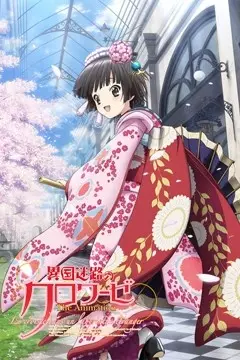

Croisée in a Foreign Labyrinth The Animation
異国迷路のクロワーゼ The Animation
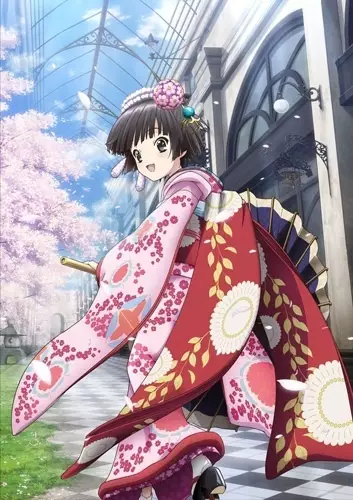
In 19th century Paris, Claude Claudel and his grandfather Oscar run a metalworking shop tucked away in the Galerie du Roy shopping arcade. Back home from his recent travels, Oscar appears with a young Japanese girl—Yune—by his side. Although he is initially against it, Claude comes to accept Oscar's announcement that Yune will live and work with them going forward. Bewildered by Yune's foreign customs, Claude must balance looking after her and managing the shop. But over time, as she settles into her new role as a live-in maid, Claude slowly shows interest in learning to understand Yune and the vastly different world she comes from. [Written by MAL Rewrite]

Main
Main
Supporting
Supporting
Supporting
Supporting
Supporting
Supporting
Supporting
Supporting
Archaeon
December 22, 2011
There has long been a mutual fascination between Eastern and Western cultures, and although modern technology and tourism have made it easier to explore the mysteries of other lands, things were very different during the latter part of the 19th century. At that time, travel was still relatively dangerous, and the cost of the undertaking meant that it was generally reserved for royalty, the upper and middle classes, and well-to-do merchants or craftsmen. Journeying to a foreign land (and returning to spin tall tales of exotic things), was considered a mark of one's status, and aside from choosing life as a sailor or joining themilitary, the working classes had very few options when it came to visiting other countries. The generally accepted method was emigration, but even though port cities across the world became hotbeds of ethnic diversity and multiculturalism, newcomers also ran the risk of racially motivated assaults, propaganda, and worse. Another method was for a person to be "sponsored" by a citizen of another nation, and while this allowed them to live and work in that country, they also had to abide by certain strict "rules". Like any system it was open to abuse, but many people were also granted a better start in life than they would have had in their homeland. The biggest difference between this method and emigration though, was the perception of the native populace. Many of those who were sponsored didn't live as part of an existing ethnic community, and because of this they were often tolerated as novelties rather than a threat. Okay, that's a bit of a heavy beginning for a light-hearted slice of life anime, but a bit of context may help with certain aspects of Ikoku Meiro no Croisée. Based on the manga by Takeda Hinata, the story follows the lives of Claude Claudel - an ironmonger living and working in Paris, and Yune - a young Japanese girl who has been sponsored by Claude's grandfather, Oscar, to come and live with them for a time. Unfortunately they have very little understanding of each other's cultures or histories, so every day is an opportunity to learn something new ... Now many people will immediately pass this series off as nothing more than inane, lighthearted fluff with no real story, and in all honesty that's a pretty fair assessment. The episodic plot is rather straightforward and progresses in the relaxed manner that is so common in slice-of-life shows. In addition to this, there's an element of whimsy to the narrative that can make it difficult to take certain events seriously, and the whole show can often seem like it's trying very hard decide what it should be. That said, there is a charm to proceedings that comes from a cast of surprisingly earnest characters, and there are flashes of a much deeper story hidden within the sugar-coated exterior. Unfortunately these undertones are rarely allowed to surface, but when they do, the series gains an intensity that can sometimes be at odds with the relaxed atmosphere, and it can often seem as though there is a purposeful avoidance of certain topics. As far as appearances go, there's a nice uniformity to the predominantly European design, and everything from the buildings to the clothing are reflective of the period. Unfortunately there's also one glaring irregularity that may have been purposeful, but seems rather unnecessary, and that is Yune. The major problem is that she has been designed to be petite and tooth-achingly cute, and it's because of her looks that people automatically assume that the series is nothing more than a big ball of moe fluff. It's probable that this was an attempt to highlight just how different she looks to everyone around her, but there's an element of tastelessness to it - even though it does fit the 19th Century European vision of a typical girl/woman from the Far East. That said, the characters are surprisingly expressive, both facially and in their behaviour, and the show makes good use of this factor. In addition to this the animation is pretty decent throughout, but it's also rather placid, which is why the art style sometimes changes for events that are meant to be charmingly amusing. In a very real sense it's a visual form of the much hated "canned laughter", and while it's supposed to "encourage" viewers to chuckle, thankfully it's not used enough for it to become anything more than a diversion. Ikoku Meiro no Croisée has a rather interesting set of characters that can sometimes play very well off each other, but because this is a slice-of-life tale the focus is less on developing them as individuals, and more on nurturing their bonds with the people around them. Now it may seem like splitting hairs, but it's actually a rather important distinction as this type of growth rarely occurs in other genres. Although the series isn't on the same level as Aria in this department, it does manage to hold its own for the majority of the show, and Yune's earnest habits and mannerisms may cause some viewers to make comparisons between her and Mizunashi Akari or Binchou-tan. Now while there's a lack of obvious development, there are attempts to add definition to the characters and explain why they think and behave the way they do. Although the reasons are often retrospective, they're also logical and fit into the class system of the period, but viewers may sometimes find themselves frustrated by the fact that they ultimately don't lead anywhere. Because this is a "Stranger in a Strange Land" type of story, the script takes a simpler, more explanatory approach than normal. Surprisingly, this seems to have allowed the voice actors more freedom rather than restricting them, and much of the dialogue is delivered with the kind of warmth and sensitivity one would expect from a slice-of-life show. Touyama Nao manages to capture Yune's shy earnestness rather well, and her performance is balanced by Kondo Takashi's seriousness as Claude, and Yuuki Aoi's rather madcap portrayal of the show's resident Japanophile - Alice Blanche. The opening theme, "Sekai wa Odoru yo, Kimi to" by Youmou to Ohana, is a rather cheerful song with a continental flavour that fits very well with the accompanying animation showing Yune, Claude and Oscar on a day out in Paris. Strangely, the ending sequence features Yune waking up on a bed in the middle of a forested park (how this fits into the show is anybody's guess), while Touyama Nao sings "Koko Kara Hajimaru Monogatari", a slightly melancholy ballad that doesn't quite fit her breathy, high-pitched voice. There are also two additional closing songs, "Tooku Kimi e" by Nakajima Megumi and Touyama Nao, and "Tomorrow's Smile" by A.m.u.. Both are very similar to the main ending theme in terms of emotion, but neither has a dedicated animated sequence, instead using the episode itself to give context to the track. The background music ranges from sombre to the more common lighthearted pieces, but there's a surprising subtlety to it that may not be obvious at first. As the series progresses, it gradually becomes apparent that different primary instruments (violins, pianos, harps, clarinets, etc), have been used throughout in order to add dimension to particular scenes, and enhance the overall tone of the anime. Although the series does have its problems, Ikoku Meiro no Croisée also retains a fair amount of entertainment value. Much of this comes from the relationship between Yune, Claude and Oscar, but one can't deny that some of Alice's ideas about Japanese clothes and objects can be worth a chuckle. The series maintains a lighthearted atmosphere for the majority of the story, and although there is a banality about particular events, it's not really enough to discourage those who enjoy this type of anime. On the other hand, while the undercurrent of tension between certain characters can sometimes shed new light on the relationship dynamics, it can also place an unnecessary burden on the narrative as the issues beg to be explored, but very few are actually resolved. Ikoku Meiro no Croisée tries very hard to avoid being categorised as nothing more than 19th Century moe fluff, and in several small ways it manages to achieve its goal. Unfortunately the rest of the show is a bit too sugary-sweet, and while it can be charming, it studiously avoids addressing any of the real issues that someone in Yune's position would have faced. It's idealistic escapism, which is okay up to a point, but it's also far too nice for its own good.
Detective
October 3, 2011
Croisée in a Foreign Labyrinth was mostly overlooked last season due to it's overlapping qualities with the third season of Natsume and the Book of Friends. If you were watching Natsume, then you already know that they are two very different anime despite them sharing similar pacing and atmosphere. Natsume on one hand received tons of praise, but Croisée mostly ended up getting flack. I was quite upset when I was reading through reviews that quickly disregard Croisée as "moe-trash" and simple pandering. Yes, the show does have a little girl in it, and yes she is adorable. That does not mean the show ismoe, and more importantly it does not mean the show is trash. I hope this review clarifies some points on the show, and in turn convinces you to pick up this anime. It is well worth your time for many reasons. The setting is late nineteenth century, France. If you're interested in European art, then I strongly recommend this anime, as the backgrounds and clothing are all very realistic. Many times, I was captured by the scenery and it is a very strong suit Croisée has that many anime simply leave out. Immediately, the characters are what will jump out at you. There's an old man, a boy in his late teens, and a young girl. Now this set up could have gone horribly wrong and turned into something perverse and offensive, but it did not. The old man, Oscar, was one of my favorite characters in the show. He's an important father figure to both Claude and Yune, and he brings interesting wisdom, making the show worthwhile to think on even after finishing. Claude Claudel is the protagonist of the series alongside the small Japonaise, Yune. The show is about how Yune adapts to her new environment and how Claude adapts to a foreigner living with him in his deceased father's failing sign shop. The characters work off of each other very interestingly, and I felt it was very easy to sympathize with both of them as their problems were more mundane than extreme. This may lead some to think that the show is very melodramatic, but it is in fact the opposite. The execution here is done very well , and all problems are solved in a way that develops the characters in a believable manner. There are two other characters that are very much the opposite of our protagonists though, Alice and Camille. They are part of one of the richest families in Paris at this time, and they both have unique relationships with Yune and Claude respectively. Alice is very obsessive with the Japanese culture, which at the time, was highly intriguing to the people of Paris. Her relationship with Yune is somewhat one-sided but very interesting and even complex as the show completely unfolds. Camille's relationship with Claude was very interesting as well, but I do not wish to spoil it for those who haven't seen it yet. I digress but I must include this. Alice supplies an anachronism - the only one in the show - and whilst it was unnecessary, I don't think it should soil the reputation of the show. Alice says "moe" despite the show being set more than one-hundred years before the word came into history. This joke is used more as a 4th wall joke in my opinion, so it shouldn't be too heavily stressed upon. The sound contributes greatly to the setting and I found it adding to an already wonderful experience. Even the opening is an instrumental piece. The show could have abused the setting and sound to create a very pop soundtrack to sell to the masses, but it didn't and I have great respect for that. The one thing I regret this anime did not do, was include more French words into the script. Though that is understandable, as there is a large challenge in overcoming linguistic barriers. Luckily, as a side-effect, choking strange words down the audiences throat is not what happens either. Croisée in a Foreign Labyrinth is a piece resistant to much of the failings that can be found in both historical and slice-of-life anime. There's not an over-abundance of fanservice yet it is still incredibly enjoyable to watch. Yune is not sold as sexual, and unlike many shows focusing around little girls, she has great characterization, as does the rest of the cast. The show is slow, but if you're willing to try out a new experience then this may be a good place to start. If you're hesitant to pick this anime up, then I hope this review has encouraged you to do so. I was too, hesitant to continue this show beyond it's first episode, but I am glad that I did, as it became a very memorable anime. It is certainly worth watching, especially since it is very short. If you enjoyed any of these anime, then you might also enjoy Croisée in a Foreign Labyrinth: Victorian Romance Emma, Usagi Drop, and Aria the Animation.
Jeffrey-sama
December 16, 2011
Cultural differences can make it difficult for one to understand and get along with a stranger. But when two people are able to make it past this obstacle, their eyes become opened to the wonders and marvels of the other's world. Ikoku Meiro no Croisée is the story about a young Japanese girl adapting to life in the boisterous city of Paris in the second half of the 19th century. Art (8/10) This category is generally the hardest one for me to score given my usual lack of attention to fine, artistic details in the animation. Anyhow, the animation is on par with today's standards which,in my opinion, is enough to satisfy the mass majority of the audience. I also appreciated the fact that foreigners (i.e. the Parisians) were not shown to be "different" in terms of physical appearance. Since I haven't been to Paris, I can't really say anything about the accuracy, but I must say that the buildings and surroundings are quite detailed. Characters (7/10) Right from the start, it was obvious that character development would largely focus on Yune, the Japanese girl adjusting to life in Paris. Although she was not used to living the life of a Parisian at first, as time went on, it was evident that she learned to accept and adapt to her new surroundings. In turn, the other Parisians also got to know her better and worked on accepting this unique girl into their family. The difference between Yune's interactions with the people in the first and last episode is truly astounding. But aside from Yune, the other characters were more or less poorly developed (e.g. Even after the whole series, Oscar didn't really change that much). Sound (7/10) A slightly upbeat, country-style OP to ready you for an episode and a calm, soothing ED to end it - a great combination for a show of this genre. BGM was average and fit in well, though none of the soundtracks were particularly memorable. And even though there weren't any big-name seiyūs involved, the voice acting was done quite well. Don't expect anything grand and you'll be satisfied. Story (7/10) The story is honestly quite interesting. Although it seemed a bit slow (and slightly confusing) for the first two-thirds of the series, the last third picked up the pace and tied up all the loose ends, making the series as a whole enjoyable to say the least. The idea of a young girl travelling to and living in a foreign country by herself is intriguing, and is what caught my attention when looking through the plethora of anime series for Summer 2011. Although, at first, she faced many difficulties, most obvious of which was the transition from Japanese to French culture, Yune was soon able to enjoy her new life with the help of the other residents. Looking back, it is truly heartwarming to see how she came lonely and empty-handed but ended being so deeply cared for by others. Overall (7/10) While Ikoku Meiro no Croisée does appeal to a wide audience, it is not for everyone. Those who enjoy slice-of-life anime would most likely be more entertained by this than those who look for action-packed or psychological anime, for example. Nonetheless, it doesn't hurt to give this series a try; I'm glad I did. As a whole, it's not particularly outstanding but the story and characters make it a worthwhile watch.
Jigoku-n3ko
September 30, 2011
IMnC is one pink fluffy cloud of a BBC documentary. This is one of those soothing anime that delivers a slice of life where the drama is kept to a minimum and all is nice and soft and sweet. Story: A tiny teenage Japanese girl in the 1900s leaves her home and sails away to Paris to live with two grown men and keep house for them. Now, at first this sounds like it was written by Pedobear but nothing could be further from the truth. There is no fanservice and no pervy stuff, which can only be counted as a blessing. The story deals mainly withculture shock on both sides of the equation and comes to the inevitable conclusion that no matter how different we seem to be we can still find common ground. Don't read any romance into this, there is none. In general, the story is refreshingly innocent and all sorts of sweet. Characters: Yune is the diminutive Japanese expatriate. She is a sweet presence and in a miraculous manner she has been saved from the moe-tard stain. She may be soft-spoken but she's not an airhead and she has a will of her own. She is infinitely more charming this way and she does not need any cutesy antics to make us like her. I do wish more anime paid attention to this carefully balanced female character creation. Claude is one part of the French host family. He is a good sort of guy, if a little too broody at times. He is abrupt and outspoken and these elements play off nicely against Yune’s more reserved and polite Japanese nature. Oscar is the other part of the French host family and Claude’s grandfather. Always in the grip of wanderlust and a total flirt, he is nevertheless the sort of grandfather anyone would want. Kind, insightful and gentle. He is a sort of bridge between the two worlds, France and Japan. Alice is a spoiled rich brat with a fetish for Japan and determined to make Yune into her pet. A truly obnoxious character but who nevertheless adds an extra layer of comparison for Yune. There is the French-Japanese and then there is the rich-poor layer to the story. Necessary, I admit in retrospect, but that doesn't mean that I wouldn't gladly bludgeon her to death with any convenient spiky object so I could have the pleasure of seeing blood and brain bits flying…ahem, back on topic, back on topic. Animation: Simple yet above average. There is some repetition and most frames don't need any extravagant angles that would complicate things. The backgrounds are pretty and surprisingly accurate for the period and place. It so happens that Japanese animators are often baffled by the architecture of European houses and end up drawing a generic box with a generic roof and generic windows. This has been mostly avoided here since it is apparent the studio worked with references. Where references were not available the generic box makes a slight appearance. Character animation is soft and beautiful. Sound: Cheerful and fluffily melancholic. Feels like being in a French bistro so I guess it was spot-on. OP & ED: The OP is a very pretty travelogue of Paris 1900 and the ED is just pretty nonsense which I mostly skipped. Overview: This was a nice anime, a soothing slice of life. There are no stellar characters or elaborate plot twists; if you are to enjoy this you enjoy it for the simple sweetness and innocence. If you are fed up with the borderline hentai crap and moe-tard gimmicks and are in need of something genuinely sweet, pick this up.
Inushinde
September 21, 2011
At times a show will just grab you at the hip, pull you close for one hell of a tango, and let you go only when you begin clamoring for more. These are the shows that make the most impact on you, the likes of Serial Experiments Lain, Neon Genesis Evangelion, and for me, Aria the Animation/Natural/Origination. So after reading the first two chapters of the manga and watching the entirety of this, I can comfortably say that Ikoku Meiro no Croisee does not belong in this category at all. Rather than giving the tango of a lifetime, it lethargically has the audience lead, draggingits feet while begging for a brief reprieve so it can look at itself in the mirror. Ikoku Meiro no Croisee is the newest slice of life series to grace the fruitful realm of manga-to-anime adaptations, centering on a young Japanese girl and her move to Paris to experience the culture. She moves in with Oscar and Claude, a lecherous old man and a blacksmith respectively, who help carry the struggling shopping district that they inhabit through means of sign making and drinking copious amounts of wine. Yune laughs, she cries, she acts cute, and she takes up half of the show’s length with each and every one of these antics. So if you were expecting the culture shock to set in and bring to light several of the historical differences that make up the divide between French and Japanese cultures (So steep a divide that many Japanese visiting Paris suffer from adverse effects for a time), you will leave slightly disappointed. If you just want to see a 19th Century Japanese girl barely into the double digits frolic about, this is your kind of show, and I doubt any of the criticism I can levy against it will change that for you. Many issues stand in her way as she attempts to settle into the Parisian lifestyle, including one of a bratty, blonde nature who seems just a little too enamored with her to have her fascination be called platonic. Early on, Claude sells a prized belonging of Yune’s without knowing how important it was, and vows to get it back. While this is occasionally touched on in later episodes, it’s hastily resolved in time for, you guessed it, more of Yune’s faffing about. And thus the collective IQ of the anime watching public goes down another 30 points. If my slightly repetitious dance metaphor didn’t clue you in, IkoMeiro drags its feet quite a bit. It isn’t a story intensive show by any means, but there is still no discernable progress in the show’s run beyond the occasional nod toward a prior event. It isn’t a deal breaker, but at times getting through the series can be quite the slog. Many times, it seems more interested in primping itself than it does in putting on a good show. Despite being occasionally touted as the next Aria, the similarities are very few, beyond taking place in a European-esque (Actually European in this) city. The characters are different, the “conflicts” are different, the tone and atmosphere are way different… suffice it to say, I just don’t see what the point of IkoMeiro is. Aria was an overly-sugary, optimistic love letter to everyday life that just happened to take place on a terraformed Mars. It had one of the most uplifting, soothing soundtracks I’ve ever heard, a deep appreciation for Venice, and very charming characters that get more than their fair share of screen time. Ikoku Meiro no Croisee, on the other hand, doesn’t so much revel in its setting as it does loosely acknowledge it through half baked “Look how different Japan and France are!” montages that end up more groan-inducing than funny. I get that the audience is supposed to laugh at characters not using utensils correctly or misinterpreting various myths from the other side of the cultural fissure, but it’s all for naught, swiftly neglected to watch Yune prance around for half the episode or have Alice molest her at every given opportunity. It may sound like I found these scenes to be absolutely abhorrent, but I just ended up not caring more times than outright thinking that the show could be better. It’s nothing terribly objectionable, but I wouldn’t laud IkoMeiro for it either. The episodes that center on Yune’s culture shock fall flat as a result, especially the one where she’s told not to talk to strangers. She runs in a panicked fury in an attempt to find her way back to Claude’s shop, ignoring the people who have been nothing but friendly to her in the past. However, one thing I will praise it for is the occasional, subtle nod toward class differences at the time. The fashions, the meals, the more insular nature of the top crust of the Parisian citizenry, all of these are touched on at some point, proving that the wealthy of the time had their own urgent sort of problems to deal with. While it isn’t dwelled on, it’s made well known that money hasn’t bought the children of the rich happiness in any way. Yet, rather than cast pity on them, the series opts to show them in their daily life to be normal people, not so different from the common folk. The characters are nothing special, Claude being your standard jerk with a heart of gold and Yune assuming the role of poster child of both the smithy and the show. Alice and Oscar are given their fair share of screen time, but all of them pale in comparison to Yune. None of them are particularly interesting, but the relationship between Alice and Yune is quite the treat at times. Ugh… what else… The city is well animated, I suppose, but it comes across as more of a lifeless prop than a living, breathing city. The music is alright, the character designs are certainly distinctive and almost storybook-like… I think that’s all I can say. When taking into consideration whether you’ll enjoy this, ask yourself what drew you in: The vague plot synopsis, peer recommendations, or that cute girl in the kimono that everyone keeps raving about. The people in the third camp are much more likely to sit through it than those in the first two. With that said, despite my criticism, I had no problem watching Ikoku Meiro no Croisee. It’s enjoyable, relaxing fluff I likely won’t remember much a year from now, but sometimes that’s all a show needs to do in order to be enjoyed.
Rank
#2474
Popularity
#3162
Members
61,946
Favorites
167
Episodes
12