
Space Pirate Captain Harlock
宇宙海賊・キャプテンハーロック
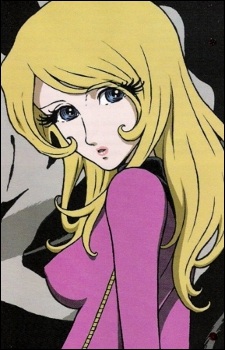
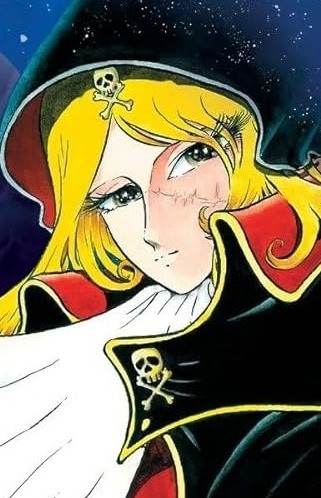
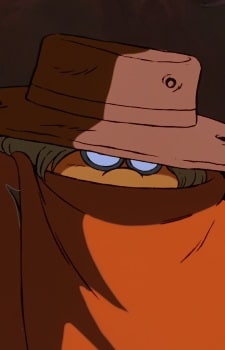
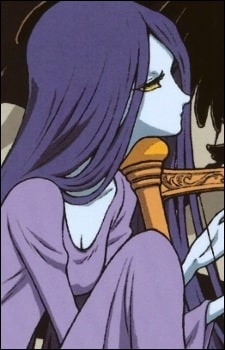
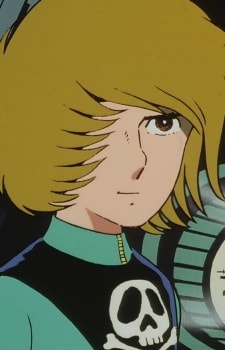
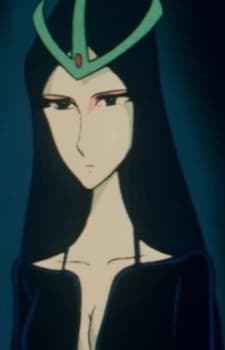
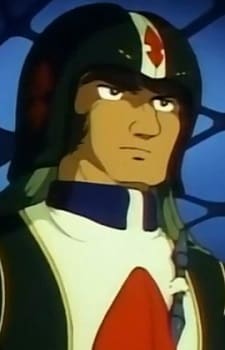
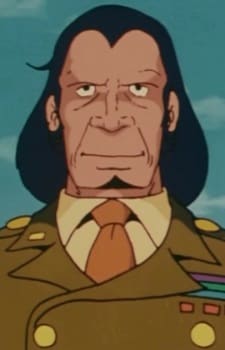
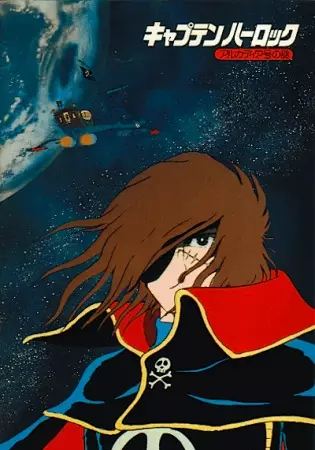
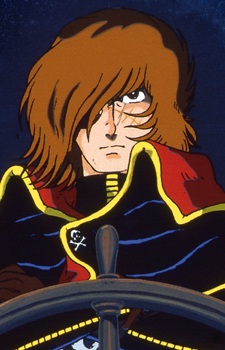
It is 2977 AD and mankind has become stagnant. Robots do all the work, the masses are kept tranquil by subliminal messages, and government officials are lazy, caring only about recreational activities like golf and horse racing. Captain Herlock has defied this insipid mentality, leading a group of like-minded rebels to a more adventurous life aboard the spaceship Arcadia. A mysterious force known as the Mazone has invaded the Earth, taking the form of mysterious cloaked women that kill anyone who suspect their nefarious doings, such as Tadashi Daiba who is now on their hit-list. After his scientist father is ignored by the government and killed by the Mazone, he joins Captain Herlock and his ragtag group of pirates to assist them as they try to save humanity from the impending alien threat. [Written by MAL Rewrite]
Главный
Главный
Главный
Главный
Второстепенный
Второстепенный
Второстепенный
Второстепенный
Второстепенный
Второстепенный
Второстепенный
S_Yellow
September 3, 2016
"UNDER THIS FLAG WE SHALL LIVE IN ULTIMATE FREEDOM!" "Only real men can understand stuff like this." Ah yes, the reason why I tend to watch ANYTHING with the name Leiji Matsumoto attached. Let me first say that my five star rating is biased as I have happy childhood memories attached to this property and it was great to finish it after 30 years. What more could we want than the stoic badass known as Captain Harlock sailing the sea of stars fight evil and injustice with only his guts, moxie, and wits. For 36 years the space pirate has inspired hope and instilled fear in auniverse corrupt with hedonism and sloth. And here is where you get to see the birth of it all, this is what inspired sequel and spinoff after sequel and spin off and rightly so! How could this series end, and not leave you wanting more? Has any show been more inspirational to anime than Harlock? When I watch this show, I'm five years old again watching my dream unfold. So much so I can barely write a coherent review. I want to put, "WATCH IT IT'S GREAT!!! WATCH IT IT'S GREAT!!!" a thousand times and call it a review. but for the benefit of those who've never encountered Harlock I'll try harder. It's about fighting with honor and conviction, for what you believe in; about taking up the reins of destiny yourself, answering to no one. Yes, I love it so much because I dream of being Captain Harlock. I wish for such as his. Now excuse me while I sip some (beer) and stare longingly at the sea of stars. "The sea of stars shall be our home, our only home!"
Второстепенный
BowlingJD
June 11, 2015
To me, 1978 is a special year in anime. We got so many good anime; I just have to watch them all. Of course, when someone says there is an anime about space pirates and by Leiji Matsumoto (Yamato series), shut up and take my money. It was also directed by Rin Taro, whom has directed many shows from Astro Boy Brave in Space to the 1999 X Movie. Basically, his stuff is a coin flip. Luckily this anime did not disappoint. Set in 2977, this is a world where technology does most of the work like in The Jetsons, and humans have become so lazyand relaxed like in Disney’s Wall-E. However, when a foreign “blue” alien invading race is bent on conquering Earth for their own reasons (sounds familiar), there stands only one man and his crew... Captain Harlock with his “strange” crew on the massive battleship Arcadia. Much like in Yamato, the alien invader is incredibly interesting. However, unlike in Yamato, the characters are also fairly interesting with some development and decent enough back stories. However, when it came to deep explanations, deep back stories, deep anything, this is where the anime lacked the most. The viewer always felt like some episodes that became “destroy the alien ship of week” could have easily been replaced with more explanations towards almost anything or just left out completely. This was a real shame, but still manages to not take too much away from the action and story progression. One example of this is Harlock’s closest companion, the alien Miime. We are shown in one episode of Miime’s total backstory that tries to explain everything. It feels rushed and you want more. This is how the anime works. You will get answers, but they are extremely simplistic and are never touched on again. The artwork, writing, story, and more are very similar to Yamato with some improvement, but there is no problem there and to be expected in Matsumoto’s work. Be prepared. This show has multiple side stories, a sequel that came out 20 years later, and a 2013 movie. This is a slower paced 42 episode anime. There are the occasional deep-gripping moments which were a real surprise, and had me fall in love with the show more. All-in-all, give the Space Pirate a try and if the first six or so episodes don’t convince you, then maybe it just isn’t for you.
Solemnmind
July 14, 2012
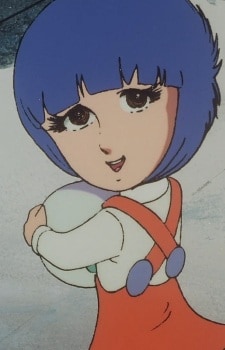
The seemingly endless afternoon I spent reading an Anime encyclopedia a few months ago did not only provide me with more insight on glorified child pornography than I would have ever imagined: it also displayed a mysterious picture of a woman under the title "Queen Emeraldas." Somehow fascinated by a few passages describing the Leijiverse, I spent some time researching Leiji Matsumoto on the internet and eventually ended up seeing Captain Harlock. I approached this, by comparison to most other anime, antiquity with high expectations. It turned out to differ quite fundamentally from my personal vision of warfare and human drama, but by no meansdid it disappoint me. In this review I explain why. Story: 8/10 After a quick narration that introduces earth, which has developed for 900 years from our time into a state of apathy and corruption, the story initiates with a form of episodic nature. The protagonist captain Harlock finds himself in trouble every time he visits Mayu, the daughter of one of his past comrades. As he is an outlaw, the prime minister on earth is determined to use Mayu in order to trap the infamous space pirate, but fails each time. Meanwhile we're introduced to other characters who eventually come to complement the crew on Arcadia; Harlock's space ship. The story takes its time to pick up, but by the time you grow attached to the characters and the real point of the narration reveals itself, watching the show turns into an addiction. As an extraterrestrial race attempts to invade earth, Harlock and his crew sets out to protect the very planet they've abandoned. Known as the Mazone, their enemies engage in psychological and biological warfare in the name of their beloved but merciless queen Rafflesia. Turbulent space battles are combined with a profound sense of melancholia in an epic adventure that reaches admirable heights of quality. It relies more heavily on characterization than plot progression, but with plenty of twists up its sleeve, the story of Captain Harlock quickly leaves behind its initially boring episodes and blasts off towards awesomeness. Animation: 5/10 Though not below standard for its time, Captain Harlock is still unable to reach equal heights of splendor when it comes to animation that contemporary contestants like Rose of Versailles and Mobile Suit Gundam did. Movement tends to be awkward and the numbers of mistakes you find throughout the series are far too many to list. Admittedly though, the character designs of Leiji Matsumoto are what make the show stand out. Minor characters are usually subdued to a state of cartoonism but Harlock and other various noble characters we meet later on are somewhat detailed and well made. Women tend to have long beautiful hair and slender bodies and overall there's something unique over the proportions and the eyes of the characters that the otherwise poor animation benefits heavily from. Unfortunately, the space battles are unable to reach compelling levels as the animation does not allow that to happen. This is not a particularly big loss as the primary focus on the show lies within the characters and dialogue. It might put some people off though. Sound: 7/10 The soundtrack is equipped with a large variety of instruments and several songs designed specifically to fit the content of the story. As such, the opening theme is a direct reference to Harlock's dedication to protect earth despite its corrupted state. A usual occurrence is that the characters themselves grab an instrument to play in a sudden state of melancholia. Whether it's Mayu playing on her ocarina or the mysterious extraterrestrial female Miime diligently using her harp, it's an interesting thing to see such a large portion of the soundtrack comprised of their melodies. Another memorable scene is when Harlock and his crew (SPOILERSPOILERSPOILERSPOILER) face to face. Mysterious voices that reminded me of Suspiria dominated the soundtrack at that moment and truly emphasized what mysterious creatures the Mazone are. Voice acting deserves some praise as well, in particular that of Captain Harlock. Characters: 8/10 I realized it sooner than I thought, but during the 42 episodes I fell in love with the characters. Somewhat detailed characterization is a very big priority in the show, and most of the crewmembers aboard the Arcadia get their moments under the spotlight in the form of monologues or flashbacks. United by their inability to find their places in life on earth, as well as their common enemy, they all have harrowing stories of sorrow and agony to tell. Perhaps most memorable among the crewmembers is the mysterious and melancholic Miime. As the sole survivor of her kind she suffers from a grand feeling of alienation and loneliness. She swears to follow the man who saved her (Harlock) whether he chooses to roam the sea of space throughout the remainder of his life or venture deep into the pits of hell. Even amongst the vicious Mazone there are several interesting characters to follow; Queen Rafflesia being the most prominent one. Bewildered over Harlock's dedication to protect the very earth he despises she tries hard to understand her enemy. We also get to witness her initially prideful and strong persona undergo a gruesome metamorphosis to the point of desperation and cruelty. The one thing that's for sure though is that Leiji Matsumoto remains somewhat neutral in his depiction of humans and the Mazone. He makes sure to emphasize both virtues and corruption on both opposing sides, and even though the Mazone in general are depicted as malicious, their actions and feelings succeed at generating sympathy. Overall: 8/10 It only hints the grandeur within the Leijiverse, but Captain Harlock is a rewarding experience not only because of the excellent and loveable characters, but also thanks to its well applied soundtrack and narration. It also introduces a character whom I know little of, but who I find absolutely fascinating, a woman named Emeraldas who seems to be a female equivalent of Harlock. There's still a long way to go but I plan to continue exploring the Leijiverse, and hopefully I'll have the time and energy to review other titles as well.
SCLFI
December 31, 2024
"Let the superior man never fail reverentially to order his own conduct, and let him be respectful to others and observant of propriety – then all within the four seas will be his brothers." – Analects 12.5 Often, when trying to interpret anime, explaining it through the framework of pre-existing -isms or specific artistic styles is something that may be useful as an immediately understandable way to explain the feeling of a work, but rarely does it facilitate the sort of in-depth thought that would make that work interesting and worth thinking about critically. Space Pirate Captain Harlock marks an exception to this rule, it indisputablyand comprehensively carries the DNA of the Romanticist movement in every aspect of its design, tonally and ideologically. Popular thought may have moved past Romanticism and many of its underlying ideas, but Captain Harlock manages to firstly demonstrate their relevance into a modern context, while also expounding upon them with an originality that leaves it incomparable to even the most ideologically and philosophically minded of anime. Especially for something to have come from the 1970s, Captain Harlock is unprecedentedly evocative and audacious in its editing. Being mindful of Osamu Tezuka’s comments that he disliked the ‘aesthetic of stillness’ created through the cost-saving techniques he personally introduced, Captain Harlock demonstrates that, while making use of these techniques due to inevitable budgetary constraints, the presence of stillness does not have any currency when it comes to making an immersive and emotionally powerful work that uses every point of visual characterisation and metaphor to convey its ideas. In fact, the reason Tezuka’s aesthetic of stillness works is for the specific reason that the editing process, not the number of keyframes in animation, is the defining element in making a work engaging and visually memorable. As concerns the editing process, Captain Harlock’s is its own unique specimen, one that grows in response to its own environment, accepting and embracing warmth, and retreating when it sees the cold. The real schwerpunkt that comes through in this stylised form of editing is that it manages to be ingrained into psychedelia and its heightened sensations, but not to a distortive effect. In terms of visual direction, it is deeply unlike Tetsuya Nakashima, whose method appears vaguely similar on a surface level, but Nakashima sets out to produce an extra layer of hyperreality on the visual plane to create a further degree of separation between character, viewer, and narrative. Captain Harlock’s editing engages with different motives, creating a coalescent sense of poetics that comes from experience, using the hyperrealised form of editing that brings attention to itself, to remove alienation and disparity between character and setting, rather than to enhance it. This also extends to smaller scenes, even the opening episode titles are put against an episode-specific background of movement and music that ensures it is kept interesting. Even in the most celebrated of anime, the opening title cards are almost always put onto a simple black background, but Captain Harlock moves beyond this arbitrary simplicity, which is representative of its editing process as a whole – they could have gone for a more standard ‘invisible’ continuity editing, but as they have demonstrated, it creates a far more poignant experience when they choose not to. Even still, it is not an overbearing part of the visual production, but it is always there, and each episode manages to make itself distinct by ensuring the editing maintains a field of visual layering and poetics that prevent it from feeling formulaic. Likewise, the sound design in the series manages to be of the utmost quality, whether through the ambient soundscapes, or the layered tones of screams and deoxygenated flames that appear when the Mazone are killed (which is itself complemented by a dissociative and hyperrealised visual accompaniment of sharp, coloured lighting), creating a pronounced and poignant effect on the viewer. The same is true of the orchestral soundtrack, which appear both in diegetic and non-diegetic forms on a regular basis, conveying the operatic scale of action. Rather than using straightforwardly bombastic and high-energy tracks, its action sequences use music evocative of Samuel Barber, conveying the sense of danger and scale, but also the underlying sadness that permeates it. That is really the point that makes Captain Harlock exemplary, it may nominally be a space opera series about fighting alien invaders, but it retains an emotional core that is uncharacteristic of the genre – one episode ends with Harlock sitting at the oceanside as Kei plays the shamisen, a moment that carries distinct feelings to Harlock, Kei, and the viewer alike, but all of whom manage to recognise the sublimity in the distinctiveness and individuality from that one moment and experience. As a character himself, Harlock is deeply elusive. A melancholic and Byronic hero, at least only in certain respects, he doesn’t adhere to the standard template of the Byronic hero, nor the more classical image of a hero (he may be on a nautical odyssey, but there is nothing Homeric in his character), and he has perhaps even less commonality with the more modern concept of a morally ambiguous anti-hero one may expect from his outlaw status. Ideologically, the series chooses to invoke nostalgia, taking place in a future in which “the impostume of wealth and peace that inward breaks” (as was once conveyed by an earlier writer) has prevailed, leading to an Earth which has been gripped by a Hobbesian conception of all the ills and insecurities of a pre-societal state, doubled with all the worst elements of corporate and government control that characterise a more contemporary life experience. Put up against this background, Harlock is questioned on why he would even choose to fight for an Earth that is so corrupt and hostile to his own existence, and though he gives various answers at intermittent periods, none of them are ever comprehensive. To return to the earlier conception of Romanticism, that is what Harlock is, as a series, and as a character. Harlock fights against modernity and technology, his ship carries a mixture of features of vintage, ancient, and new. It has all the futuristic radar and laser missiles necessary for its own survival, but no more, with other parts of the ship being made from wood, and carrying a similar triple turret formation to the IJN Yamato. Further, seeing as his enemy, the Mazone, is an alien race that may be characterised by two major traits, being an invading foreign force, and consisting entirely of women (tall women with hime cuts, to be exact), it can be extrapolated that the series also stands as an affirmation of pre-Showa social attitudes in this respect. Harlock is ultimately concerned with the sentimentality of Romanticism, in all its forms, fighting for one’s self, purely for its own sake, there is reference to his crew “fighting under the flag of freedom”, but the ship’s flag is a Jolly Roger, a symbol of death, not freedom. As a sort of ronin, Harlock is compelled to fight, not for an allegiance to Earth, but for an inherent Romanticist notion of fighting for its own sake, and for the love of the poignancy that being freed of all obligation and allegiance manages to carry, on its own terms. In its very structure, Harlock manages to show the impact of the loss of the grand narrative found in a deeply corrupt humanity, in which only the self may remain, and the series manages to demonstrate both the great sublimity that comes from a space-faring outlaw life, and the implicit melancholy, and longing sadness that comes from that very situation.
brandotendie
February 7, 2019
Swashbuckling schlock at its very finest, Captain Harlock is fucking badass. It’s a type of anime that overcomes its dated animation and production quality with heaps of stylistic flair. I found myself shocked at all the mile-a-minute editing techniques, flashy 70sesque shots, the ballsy scene compositions, the dazzling colors. Sure, the frame rates are pretty bad and the art doesn’t compare to the gloss of the modern industry, but again, it’s an example of direction trumping production quality, and that flashiness is enough to be visually engaging throughout its 42 episode run. The funky and symphonic score really bolsters that eclectic style of the show, injectinga layer of adventure and epicness that makes all the space battles, duels, and moments of peril that much accentuated. But as much as I can harp on about the audio/visual style of Harlock, I have to take a moment to commend this show’s writing. In stark contrast to Galaxy Express 999, this show is ANYTHING but formulaic. Schlocky, sure, but every episode, hell, the entire show, is unpredictable. That fact lends itself from the character of the enigmatic titular character, Harlock, who is the crux of this entire journey from beginning to end. We never know truly who he is, why he’s willing to die for people who hate him, why he fights with all his show. We eventually see peeks into that shell of his, but even at the end of the show, the dude is still as unreadable as he is badass. Of course, the side characters were also really great too, albeit not being too fleshed out (though you could blame this on the short runtime of the show). Most interestingly tho, what impressed me most about the writing was just...the vibe I got, going from episode to episode. There’s an air of maturity to these characters that I can’t really put a finger on. Most member of the crew feels like an actual adult onstead of a walking bundle of tropes. Everyone in the series has a past with regrets, all of them have pain that they’ve experienced, but no matter what it is, they all move forward and fight forward for the sake of their freedom, and freedom of others. Death happens, sadness takes over for a bit, but they move on. They remember, internalize the loss, but they don’t dwell on it, and rarely even seek revenge. When there’s a choice to be made between a personal love and “the greater good” it’s usually always the personal choice, because your own good IS the greater good. I know it was just a kid’s show, but it’s such a refreshing thing to see characters like this when nowadays, all these shonens have characters that are just so...I don’t know man, vapid? Always about friendship triumphing, always about how war is bad and killing is evil, always about trying to gain something that was lost in the past, blahblah. Again, I can’t put my finger on it, but it’s just different and really mature, something I never expected from a show about a space pirate fighting screaming plant girls. In thhe end, I got way more out of Harlock than I ever could have expected, and I can totally see why it’s regarded as one of the best anime ever made.
Ранг
#1422
Популярность
#3881
Участники
43,083
В избранном
379
Эпизоды
42