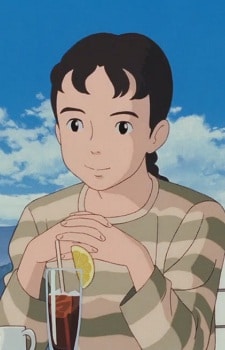

Only Yesterday
おもひでぽろぽろ
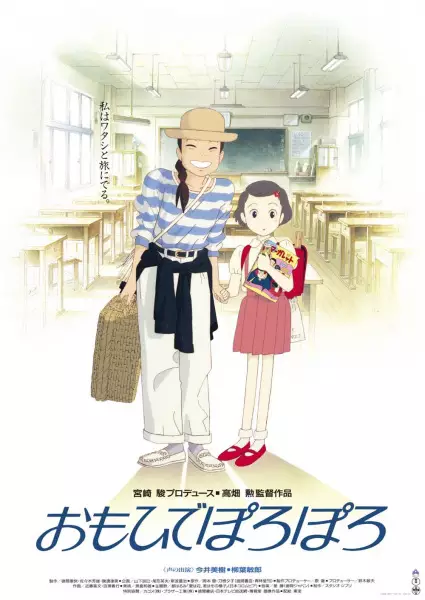
Taeko Okajima is a 27-year-old, independent woman who spent her entire life in Tokyo. Looking to unwind from the rush of the big city, she decides to visit her family in the country to help out during the harvest. On the train there, Taeko vividly recalls her memories as a schoolgirl in the initial stages of puberty, as if she is on a trip with her childhood self. A young farmer named Toshio picks her up at the station, and they quickly develop a friendship. During her stay, Taeko forms strong bonds with family and friends, learning the contrasts between urban and rural life, as well as the struggles and joys of farming. Nostalgic and bittersweet, Omoide Poroporo takes on Taeko's journey as an adult woman coming to terms with her childhood dreams compared to the person she is today. [Written by MAL Rewrite]
Главный
Главный
Второстепенный
Второстепенный
Второстепенный
Второстепенный
Второстепенный
Второстепенный
Второстепенный
Второстепенный
YourMessageHere
September 27, 2007
Now and again, I find I'm being asked why I like anime, and what's so special about it. One answer you hear given quite often to questions like this is "it's not just for kids, anime is for grownups too". I used to say this too, but in the case of much of what's out there, after much thought I realised that's not really accurate. Sure, there's anime out there that's full of sex and/or death and/or 'mature themes', and a lot of things that are more complex than children are thought to be able to deal with, but not much anime,if we're being honest, deals with proper complex issues. Or at least, not in any more complex a way than your average US live action TV series like 24 or Star Trek; anime might not all be for kids, but precious little isn't primarily aimed at teenagers (which is an observation, not a criticism, of course). However, there are a handful that are; the odd thing that really stands out and can be held up as an example of how mature and subtle and truly notable anime as a medium, a style or a genre (call it what you will) can be. I'm happy to now be able to add Only Yesterday to that exclusive group. First of all, Ghibli. I don't really believe in brand names as a rule, but if there's one name that I feel like I can safely and consistently associate with the highest standards and best quality, it's Studio Ghibli. In this case, the famous Hayao Miyazaki is producer rather than in charge, and Isao Takahata (Grave of the Fireflies) is director. In this combination, they are as good as one can expect, but not quite in the way one expects. The resulting film isn't really as child-friendly as other Ghibli films, in that it's not full of the fun characters and exciting situations that kids will love as they do My Neighbour Totoro or Nausicaa of the Valley of the Winds. A glance at the tags area will show you that "slice of life" is the most popular description of this film, and this is even more accurate than the label usually is; it's simply 27-year-old office worker Taeko's mixing of her working holiday on a farm with her reminiscence of her 10-year-old self, and the way this experience makes her question the direction her life is taking. It's also among the best implementations of such an approach I can think of; this slice of life is gripping, and pulls no punches, in its own domesticated but quietly gut-wrenching way. But it's a rare child that appreciates the drama of family relationships, and will stay glued to explorations of the niceties of urban versus rural ways of life and adult versus child ways of thinking. What I'm trying to say is, you may well bore your kids if you mistake this for typical Ghibli and stick them in front of it, but you yourself may be too wrapped up in it to notice. For those who are striving to convince a sceptic that anime isn't just huge-eyed, twinkling Majikal Girls, spiky-haired swordsmen, giant robots, cutesy animal caricatures and the odd smattering of tentacled obscenity, this is a prime counter-example of "for grown-ups" anime. The acting is superb; Miki Imai as the adult Taeko, Toshiro Yanagiba as her friend Toshio, and Youko Honna as the young Taeko are all natural, believable and thoroughly excellent, and the rest of the cast all just about as talented. The script is possibly the best I've ever encountered in anime, one that's so good it makes scriptwriting look easy. It manages to use naturalistic dialogue to communicate a masterful grasp of the power and impact of memory, of the way tiny things stick in your mind like thorns years down the line, of the way things you learn now can change your personal history utterly at a stroke. This is very much a film that strikes a chord for me; I may be male, English and hate gardening, but as a 26-year-old, I see myself in Taeko, in that I too have memories of childhood that, for some reason, just won't go away sometimes - I think everyone with a little life experience does. The visuals, too, are of a usual stellar Ghibli standard, with an interesting twist. As I watched, I was partly slightly bothered and partly wondering at the faces of the characters; there's something different, something out of the ordinary, just a bit odd about their depiction, and it wasn't until I watched the DVD's 'making of' extra that it fell into place. What Takahata and crew have done is concentrate on muscles; all the adult characters have realistically sculpted cheekbones and other facial contours that aren't usually present even in the most exactingly drawn anime. It manages to pick up tiny nuances of facial expression that give characters a much wider and finer emotional range than normal. The effect is one of hyperrealism; in this very rare instance, I found I was able to read faces as if I were watching live action, and I was forgetting this was hand-animated. Other details, such as the incredibly fine use of colour, are more like standard fare for Ghibli but none the less impressive for this. One standout scene is a sunrise over the field in which Taeko is working, which is both gorgeous and technically amazing. The slight but notable use of faded earthy colours and reds for scenes from Taeko's past and the bright, predominantly green-blue scenes of the present-day are very well executed; it's never unclear when we are seeing. Music by Masaru Hoshi is, while not astounding, entirely pleasing, peaceful, and highly appropriate, but here to steal the scene from left field, please welcome the Hungarian folk choir! This odd, odd choice is...just right. It's haunting stuff, full of undertones implying the hidden, benign but huge power of nature (another often-encountered Studio Ghibli calling card) and even though it's not really relevant in any logical way, it simply works. The ending song by Harumi Miyako is a lovely bit of music, and for once, it really fits the film it's attached to. You could conceivably criticise the film simply for being anime; even in 1991, making a live-action Only Yesterday would not be hard; there's no fantastic landscapes or technology, no gravity defying costumes or hair, nothing out of the ordinary in the film at all. But once again, part of the reason that this is impressive is because it's something of a risk that was taken and which paid off; because it would be easy to do as live-action doesn't necessarily make that a better stylistic choice, but that it works as animation by showcasing novel animation ideas mixed with great talent can do nothing but improve it. Also, the way anime creates its entire world gives an animation some advantages. Firstly, a story like this, all about details, draws attention to those details more effectively if you're watching with half an eye on the look out for art style, as many anime fans do - film a woman picking a flower and it's pretty, but animate one that truly compares, and it's stunning. Also, the way viewers suspend their disbelief constantly for animation allows the impossible to seamlessly integrate into the commonplace. This only happens once, at the end, but in practice it's so naturally and gracefully done, and so basically right, that instead of going "yeah, that was a nice idea", the impact of the scene and the emotional lift it gives you are much more pronounced. If the film has any weaknesses, it would be pacing; for a film that's by it's nature leisurely and gradual, it is perhaps a touch too leisurely and gradual in places, and while almost all of Taeko's recollections are relevant, perhaps one or two are a bit spare and peripheral. While I'll admit I am sort of blown away by it, I also recognise that it's not perfect, hence a mark knocked off; and yes, you need to be in the right mood to get the most from this film. I've been waiting months since I got it for the right moment; this morning was finally it, and it delivered. Other than that, well, the only way you'll have any criticisms of the film is if, having read this, you decide it's not your sort of thing, then watch it anyway, expecting explosions, car chases or gritty hard-boiled action. That's not this film's brief. What Only Yesterday does is subtlety and maturity and real, proper grown-up drama in anime.
Fabio
August 20, 2013
If you want in any way, to see a family eating a pineapple and simply have an intense emotional reaction, almost cry by quietly staring at the characters just moving, if you are tired of the laziness among animators these days in general then I cannot recommend anything other than the remarkable underrated masterpiece: Only Yesterday. The reason why Only Yesterday might be the most realistic anime movie of all time is that, they did, care about the smallest things, the characters' movements, their eyes, their mouths, how the whole cast reacts to an action, how they gave everyone enough space to experience their opinions without beingrepetitive, how they completed the puzzle and at the same time they focused on our protagonist herself, this is important simply because it prevents predictability, generally helps you breathe with the characters, and doesn't make you feel -disconnected- with their world. Another important reason, if not the most important one, something you might find surprising and was barely done, is that, the audio was recorded before the animation itself which means the movements of the characters would fit their speeches perfectly. The script itself was, without any doubt written by someone who clearly put his soul on this project, to give such attention to the responses and interactions, you might ask what are you talking about but I find it rather simple that scriptwriters these days are lackadaisical. The movie defines the word "seriousness" in a higher new level, there might be no movie as serious as Only Yesterday, no matter how they try to be, they'll never achieve its level because the most essential way to make a great movie is to never try to be what you want to be, in other words, Only Yesterday's story is so simple, a story about a young girl who travels to the countryside and recalls her memory while she's surrounded with people who love her. The concept is straightforward, but the idea is how to use every detail you have to create something far greater from what you initially started with. The nostalgic and heart-breaking movie knows how to draw the characters very well with a variety of lines, colors and shades, if you could take a second from your life to stare at one of the characters' faces, I think that would be great and even though I noticed the movie has received countless criticisms about how in some way or another the characters look very similar except for their hairstyles and colors, look no further, to how 'us' look identical, and so I say that the movie has yet achieved another level of realism. Only Yesterday has never failed to draw a smile on my face the whole two hours thanks to Isao Takahata's great directing skills. The movie is very mature and was released when the word "mature" had no meaning in such films, most anime were filled with blood and action or family oriented or purely directed to kids, I don't think you can give this film to a child expecting to see him knocking at your door the day after explaining how the film has changed his life or anything like that or even expect him to even like it, this was different from Isao Takahata's other works including "Akage no Anne" or "Heidi" for instance cus here, our protagonist is old and in that case, kids didn't get it or appreciate it as much as we did, it was very risky and the idea could have easily been done as life-action. This movie has realized that it's a butterfly and finally found its wings, but looking back now, maybe it was just flexing them pointlessly. Only Yesterday, for the people who want to realize that the movies they're watching nowadays are utter shit. Story/Plot: 8/10 Animation/Art: 9/10 Sound: 10/10 Character: 9/10 Enjoyment: 10/10 Overall: 10/10 Thank you, Isao Takahata.
Valwin
April 19, 2009
We can notice that there is a tendency to overrate average productions when it comes to their true value. It is probably caused by TV and the fact that the best selling anime are being watched by kids raised on sex and violence occuring in the Internet. Anime based on those two things (sex & violence) shows that it is much easier to make such anime insted of trying to show people something important and valuable. Only Yesterday is one of those "depper" and underrated productions, which can appear on endangered species list soon if that tendecy mentioned before won't be stopped. First, I have saythat I simply love that kind of storyline. Not only that. The tempo of action is great (in my opinion). Main character (Taeko, if I'm not mistaken) starts her travel (which is actually a travel to reach and understad her real needs and feelings). She is in her 30s, probably. At that piont in life, one must recollect his/her hopes and choose his/her path in life. So, Taeko decided to have a break and go to country. All movie is filled with her remembrances from her childhood. Her younger self (which often appears in her mind, as the action goes on) is personification of her apprehensions and also her childhood dreams filled with innocent and simple thoughts about world, and herself. Story is going slowly but it's just like the way normal life is moving forward, so it's ok. The best thing about the plot is that it's peaceful (but not boring - don't get it wrong) and belivable at the same time. Landscapes are qutie artistic. Move was aired in 1991, so don't expect graphics on Makoto Shinkai's level. Characters appearance is simple along with all visual aspects, but you can feel this Ghibli magic till the last minute of movie. All I can say, is that my eyes were satisfied. I have to admit that I don't remember any of background music. So it must have been good (I think I would remember if it was awful). Voice acting is on above-average level. The same when it comes to the ending theme. It summarizes the whole fellings you get while watching this movie. (hint: remember to watch anime till the last chord of ending song !). Characters are complex, but like everything in Only Yesterday, not too much. Just like they should be. Taeko motives are belivable and you can fell that you fully understand her childhood problems - first love, test results, and all this grwoing-up struggle while she is still a kid. Everyone had to go through those things. Other thing - nowadays we often deal with people who live till 8am to 8pm. Work absorbs all of our strength and youhtful passion. Taeko decided to take a break. What about you? Don't you feel the same way? In the end, I have to say that we don't have so many animes that we can truly rely on. Only Yesterday shows us the simple matter, but beutifully executed. Daily life with it's problems and enjoyments. Only Yesterday impressed me with it simplicy and serenity. We have a romance motive in here, but it is not a heroic and "die-for" emotion (which we saw sooo many times already) but simple affection that is froming between two people in relationship. For me, it is the most artistic vision of our daily life. No guns, no swords, but remembrances and uncertainty about tomorrow. I enjoyed every minute spent with this magical production, and I reccomend it to everyone who look for some great piece of anime, which Only Tommorow undoubtedly is.
Optigisa
September 22, 2019
Omoide Poroporo, otherwise known as Only Yesterday, is one of the most underrated movies to have ever come out of Studio Ghibli’s discography. It is easily the best made movie in Ghibli’s history when it comes to the visual presentation, and Takahata here showcased how he was a master of both color and visuals. Omoide Poroporo was a movie that was made to be targeted towards women upon it’s release, but due to Isao Takahata’s brilliant directing, the movie managed to become a success around men and women alike. The story surrounds Taiko, a twenty seven year old woman who leaves the city and herwork for ten days to go on a vacation in the rural areas and relax her mind. What really sets this movie apart from the rest of the others is the fact that on the way to her destination, her little self from when she was younger comes along on the trip, and from there on the woman starts to remember all of the nostalgic bits and pieces from her past, both the good and the bad of her childhood. The movie’s narrative transitions seamlessly from twenty seven year old Taiko to the young and innocent Taiko, often with the use of phone calls to convey that the movie has transitioned from past to present and vice versa. The dangerous thing about this film is that the two sides, her young self and her old self, are contrasting in tone and color, to the point where one would naturally care for a side and not the other, or find themselves caring for one more than the other. Luckily, this movie tried to make the chances of that happening slim. Taiko’s adult persona is very interesting with her introspective demeanor, and her longing for a better life. She finds herself in a place that many young adults her age find themselves in, and that is to still be holding onto the dreams of the youth while trying to work towards her goals of taking care of a family and living up to society’s expectations. That, in turn, makes the child brimming within her to not go unnoticed and makes her all the more relatable towards people who are in the same age gap as her and facing the same issues she is facing. The most interesting part of her family is her father, who seems like he looks down on himself in shame due to the fact that he didn’t achieve his dreams while young. He cannot let go of the past, which contrasts with Taiko letting go of the past while also valuing how it shaped one up to be, and embracing all those moments in life, both the good and the bad. Every character in this movie felt like a real person, and it was very interesting to see a slow paced, coming of age, female driven drama Anime. You don’t see those often, especially in an Anime, and that is the thing which made this movie all the more of a unique and enjoyable ride. The audiovisuals are some of the most unique out there, if not the most unique for a Ghibli movie. The contrast of visuals between the life of young Taiko and her life when she is all grown up is interesting and worked on very well. The most striking aspect about Only Yesterday is it’s use of color and visual design to achieve it’s themes about self-discovery through re-discovery, and to grab the viewer into both old and young Taiko’s perspectives of the world around them. Only Yesterday operates on two time periods, those being the past and the present, and Takahata managed to infuse each separate time period with a distinct personality and a life of it’s own. For example, Taiko’s past is filled to the brim with simplistic usage of colors and light colors, and the most used color is the color white, which seeps into the edges of the screen. The past has this nostalgic feel working for it, which creates a striking contrast with Taiko’s present, a present that contains very complex and colorful colors, and very realistic details in both characters and setting. The reason for that is that Taiko’s past is, intentionally made blurry and less detailed, due to her not being able to recollect her full memory on what had happened during certain events of her life. This is not necessarily to say that one part of her life is better than another part, as both of them are equally as good as each other, while providing thematic depth and more insight into the main character’s life. The settings are also affected by the visual decisions as well, since the skies are more clear and white in the past, providing for a nostalgic feel, while the skies in the present are more lively and in-the-moment due to the bright blue colors used. Moreover, what distinguishes past from present in Taiko’s life is the usage of the color red, where everything she wears and uses is red in the past, and red disappears in the present. That is not to say that the red has disappeared completely from her life, but more so that she doesn’t completely let go of the past all the while still holding value to it, which is while she still uses red things, she barely does as often as she did during her younger days. Taiko now mostly wears blue, and her present is surrounded by blue and green lively colors. That is not to say that she has rejected that past, because her hair tie, for example, is still of the color red, just that it is behind her back, which is to show that she still acknowledges the past while not letting it interfere with her present life. On the journey of her discovering herself though, she finds plenty of red. The plant that Taiko is picking is a flower that is used as a red dye, her love interest wears red and his final scene, and the transport vehicles that she uses during the final scenes are colored red. I can rave on and on about why this is Studio Ghibli’s visual landmark, but I think you get the gist. The main musical theme used here is not as striking as some other Ghibli ones out there, though still good on it’s own nonetheless and conveys the mood of nostalgia and melancholy quite successfully. The end scene is one of the best scenes in all of Anime, and how it ends, and how the credit roll is displayed, is one of the most brilliant uses of a credit roll in Anime history. If you are a person who is interested in a coming of age story from a female perspective, then this one is a must watch. This is one of the best visually directed Anime movies ever made, and is easily the best the top one in the Ghibli discography, and that is due to the fact that Isao Takahata took a mundane concept such as the life of a young girl and her maturing into a female adult, and turned it into such an amazing and visceral self-discovery journey.
AnnoKano
March 20, 2014
There are plenty of films that can impress you the first time you watch them, but there are only a few that impress you more and more with every subsequent viewing. Only Yesterday is just such a movie, one so rich in depth that the first viewing is only as good as a passing glance at the painting of an old master. Taeko Okajima is a twenty seven year old office worker in Tokyo. Summer holidays are fast approaching and Taeko is doing what she normally does, and will travel to work on a farm in the countryside. During the course of her journey she experiencesan overwhelming sense of nostalgia and memories of her childhood. It is an effective plot device that allows us to witness two characters developing simultaneously and the influence one has in the formation of the other. Neither are exceptional in the conventional sense either; both of them are quite ordinary and on the face of it, unremarkable. However they are portrayed in such detail that they become fascinating. The careful selection of a few key moments in a lifetime, many quite mundane in themselves, and weaving them into a solid depiction of a person that could be real and yet still maintaining the intrigue and direction of a complete story is an incredible achievement. One example is a scene in which the family gather to try Pineapples for the first time: on the face of it an unremarkable experience which most wouldn't care to mention. Yet in this one sequence we can learn so much about the characters: Taeko's father merely sighs, completely isolated from the rest of the family (of which he is the only male). Finding the taste bitter, Taeko and her sisters express their disgust. It symbolises the extinguishing of youthful optimism as one enters the stream of disappointments in adulthood. The transition into puberty is the driving theme behind Taeko's younger self, and the pineapple scene is only one of many illustrations of that difficult period of life. Even though as adults we have all gone through that stage of life, when it is depicted in cinema it is often hard to take it seriously, and often characters of that age come across as simply bratty. Taeko’s character has these traits too but there is a balance to her character that prevents them from becoming overwhelming. When contrasted with the difficulties one faces as an adult, the problems of pre-teens seem inconsequential; so dwelling on them in cinema usually comes across as insignificant or even worse, just meaningless whining. This problem is alleviated in Only Yesterday by having Taeko’s older self to put them into balance, with her downplaying them after her reminiscence. What is truly masterful though is the way the audience can see their significance to the grown up Taeko, despite her modesty and our internal prejudices. This is what gives her character a sense of realness which I consider unmatched in film. The overarching plot of the film is a fairly simple love story, unremarkable in itself, but built up by so much and portrayed so convincingly that one cannot help but weep at the beauty of it. Taeko meets a farmer called Toshio and feels quite smitten by his quaint, country ways; his eccentric taste in music, his dutiful politeness that exceeds into awkwardness. He is a representation of what Taeko finds so endearing about country life without being a crass characterisation of it. Yet as her time in the country goes on and her return to Tokyo looms, Taeko is faced with an internal crisis about whether the realities of the country life can match what she has fantasised about for so long, and if she really has what it takes to leave the comforts of Tokyo office life for one which, as she gradually begins to realise, faces a great deal more hardship for much less material reward. The love story is a touching and satisfying one, and it manages to achieve this for its own sake while still having a complexity which is often lacking in romance stories. While one would be content to say nothing more about this film than the fantastic story and characters, it feels unfair to avoid discussion of the animation and artwork, which is also astoundingly innovative. Studio Ghibli of course have a reputation for the very high quality of the animation they produce, but one can’t help but think of their work as a touch conservative. Beautiful though it is, it often lacks the experimentation one can find in other animation studios. Only Yesterday is an exception to this in two regards- first the difference in styles between the past and the present and the seamless integration of the two, and the clever approach to speech animation. To provide a visual clue as to the era portrayed in a particular scene, the animation style changes. Taeko’s childhood is depicted in a style similar to a manga of that period- cheerful, simplistic and less defined. Not only does this seem fitting for the time period it also emphasises that these scenes are memories. Areas that Taeko is very familiar with, such as her family home, are depicted more clearly than the places that lack any special significance, like streets in the area. Yet this is subtle, and something one only notices if paying close attention. On the other hand the present day is portrayed in a well defined and realistic manner, with an eye to portraying even the most seemingly trivial details in a true to life form. The animation of speech in Only Yesterday reversed the typical process, and instead of attempting to match the dialogue to movement of the mouths of the characters, the voice actors recorded the speech first, and animation staff paid close attention to the mouth movements of the voice actors as they recited their lines. This means the characters facial expressions are far more representative of real human emotions than in other animated works, and are not exaggerated or comical. It is further testimony to the realism of the picture that its producers went to such great lengths to integrate these qualities into areas, even defying convention in the process. Only Yesterday is a work of fiction, with animated characters instead of actors. Yet there is more humanity here than in most cinematic works. It is a work of such wonder and intellect, that it is impossible to escape an overwhelming sense of awe every time you retrace your steps along this magnificent journey into the countryside, and to feel the tears welling up inside when it comes to an end. It is the very essence of all that is beautiful.
#2341
Популярность
#1637
Участники
164,057
В избранном
1,383
Эпизоды
1