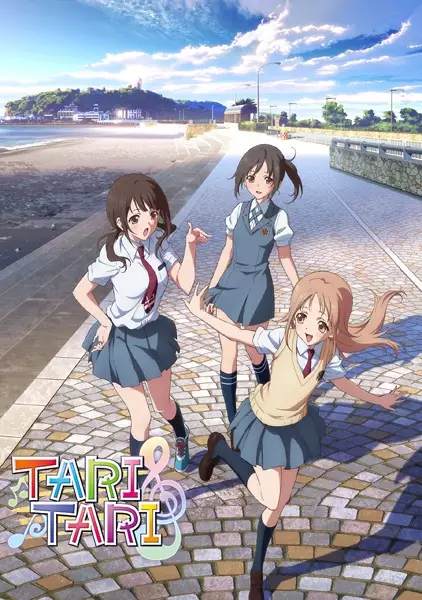

TARI TARI
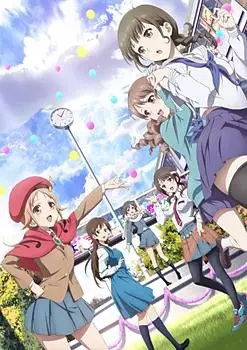
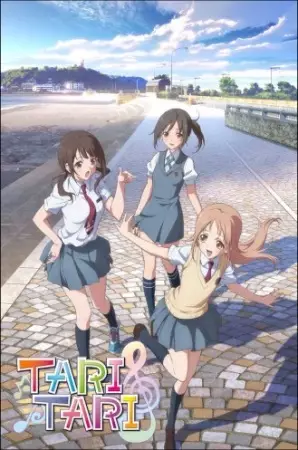
At Shirahamazaka High School, a special recital is held every year in which music students are able to showcase their talents in front of professionals and other prestigious guests. Third-year Konatsu Miyamoto desperately wants to sing in her last high school recital, but because she screwed up the year before, the vice principal has barred her from participating. That's when Konatsu comes up with a new plan to get involved; instead of joining the official choir, she'll form her own singing club with her friends! Unfortunately this proves to be harder than she imagined. Her friend Wakana Sakai has given up on singing, for one, and Konatsu needs more than just two members. With only a month left until the recital, will Konatsu be able to find enough members for her club and actually be ready to sing at one of the most important events of the school year and graduate without regrets?
Главный
Главный
Главный
Главный
Главный
Второстепенный
Второстепенный
Второстепенный
Второстепенный
Второстепенный
Второстепенный
Veronin
October 15, 2012
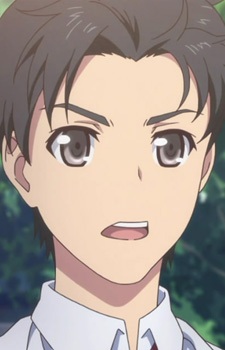
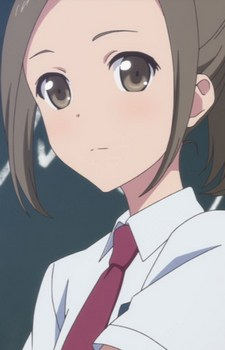
For a long time, people have argued whether originality truly plays a role into the quality of a title. In any media where there is an audience and a profit to be made, it's natural for many writers and artists to take inspiration from a tried and true formula. Though they may take steps to break from the circle of homogeneity and establish their own identity, deriving elements from other successful titles is inevitable. Being a part of the conventional genre of high school drama, Tari Tari is certainly no stranger to this pattern. The story takes place during the final year of high school for Wakanaand her friends Sawa and Konatsu. Immediately after receiving a scolding from the strict vice principal, Konatsu decides to quit the choir club and start a new one by herself with the aid of her friends, as well as the later addition of two male characters: Taichi, a diligent badminton player, and "Wien", a peculiar transfer student from Austria. Of course, things don't go as smoothly for Konatsu as she was hoping they would, receiving an initially hostile reaction from Wakana who accuses her of fooling around and treating music as a game. In an attempt to show overcome her stress, Konatsu sings outdoors in public and gathers the attention of her aforementioned friends - finally assembling enough members to establish the club and push forward with her ambitions. On the surface, Tari Tari seems like a standard coming of age story with a musical focus. Though the music remains a principal aspect of the anime, it primarily serves as the catalyst to bring the characters together and force them to overcome their own individual issues. For Wakana, these issues involve the regret surrounding her deceased mother, an accomplished musician who taught her how to sing and play piano. For Sawa, it involves her equestrian passions and love for horseback riding, much to the disagreement and discord with her parents. For Taichi it follows his ambition for badminton, while for Wien it is about his desire to preserve justice. While the series is focused on teenage drama, what it excels at is making each character's issue relevant and believable by using the strengths and weaknesses of the characters to evoke emotion from the viewer, instead of relying on the tired routine of melodrama. Much of the episodes focus on Wakana's previous passion for music, with her past and the relationship between her mother being explored as her story arc progresses. Her avoidance of music is given explanation and reason, while the revival of her passion feels meaningful as she comes to terms with the past and begins to see things in a new, positive light. Each question is answered and each issue is resolved, while new ones are carefully set to take their place and give reason for the viewer to be interested in subsequent episodes. A frequent problem with teenage drama in fiction has always been the reliance on trite dialogue and melodrama instead of a coherent narrative, but Tari Tari manages to feel realistic while capturing the important stage in one's life between adolescence and adulthood. The 13 episodes here have been used in a highly productive fashion which succeeds in giving each character substance. Sadly, the same amount of detail and depth isn't given to all of the characters. Taichi in particular receives very little growth over the course of the series, resulting in his own passions and issues being seldom explored. Aside from filling the necessary role as the fifth member of the club, Taichi ultimately adds very little to the story aside from developing a romantic interest in Sawa that is only vaguely hinted towards. Other issues in the characterization come from Wien's backstory and story arc, and while he's given sufficient character development in the later episodes, the resolution is surprisingly trivial given the amount of foreshadowing earlier in the series. His childish desire to defend justice is sympathetic but the lack of consistency obstructs his story arc from wrapping up in a satisfying manner. It's fortunate that Wien himself is a unique and exciting character, being an amusing transfer student that frequently misuses and exaggerates Japanese gestures, often with comedic results. It's hard not to grow attached to him over the course of the series. Another common element in Tari Tari is the presence of an antagonist: the vice principal, who strongly opposes the club for what she perceives as them simply fooling around. As with most stories, she's initially portrayed as being cold and unlikeable to build up conflict, though remarkably her character is given just as much growth and backstory as any of the main cast. By the end of the story, her cold behavior makes full sense and she herself learns to overcome her past issues as a result of another character's own growth. Rather than simply serving as a plot device, the vice principal develops into a realistic and believable as well, which makes her cooperation with the main characters during the final episode all the more significant and meaningful. Being that Tari Tari is an anime focused on music, it's a bit disappointing that the quality of the music itself is nothing outstanding or noteworthy. The background music is rarely noticeable and the songs that the characters perform are all fairly juvenile and amateur, though the emotionally-driven "Kokoro no Senritsu" is a great addition to the soundtrack. The climactic song performed in the final episode is also well-executed, having full instrumentation to back it up and give it a more professional approach. A clever trick is also used during the ending track, with Wakana pensively sitting apart from the rest of the main cast until her passion for music is revived in the later episodes. Though not visually superb, Tari Tari benefits from its complex and detailed scenery which is based and modeled upon real locations. The school and the area in which the characters all live in feels very much authentic and distinctive, with impressive lighting and many dynamic camera tricks used to further accentuate the scenery. Many titles involve a high school setting but Tari Tari is one of the few that effectively build the school environment. For an anime that focuses on realistic characters, a realistic depiction of the setting is paramount, and luckily this important detail is not forgotten. The end result is an anime that looks and feels polished, with very few off-model scenes. Tari Tari is a title that stands out not for its setting, nor its story, or even its well-developed characters. What sets it apart from the multitude of other similar titles is how it manages to synthesize all of these elements and convey a story with eloquence and reason. It exemplifies exactly how teenage drama should be conducted in a story. When so many series subscribe to the notion of "the more crying and yelling, the better", a title such as this is a breath of fresh air and proof of how effective this genre can be when executed efficiently. It certainly has its share of mis-steps and doesn't achieve excellence in any one aspect, but it would be hard not to recommend Tari Tari as a solid title and one of the more noteworthy in recent times. Why not cast aside the preconceptions and enjoy the ride?
Второстепенный
Skadi
September 25, 2012
The drama based on the school club is about as tried and true of an anime theme as giant robots and beach episodes. In that case, Tari Tari certainly doesn’t break any new ground. It doesn’t particularly do anything amazingly well or put a new spin on the genre or feature memorable characters or scenes that will stand the test of time. But despite it all, it managed to still be a fun, fully enjoyable, and worthy investment of my time. Tari Tari revolves around a group of five high schooler's who even though they all have very different goals in life doshare a common interest, music. Singing, in particular. They all find themselves in a newly formed club to sing together, for the joy of singing, and not under the structured rules of the other related clubs. As expected we have plenty of drama and squabbling with the power that be as they try to crush our little upstarts at every chance. But despite the clichéd sounding themes of the main plot it does manage to deliver an overall story that is pretty well rounded and within the realm of reality. Probably what Tari Tari does best is give us five believable protagonists who all struggle with their own problems, mostly typical of your average teenager on the cusp of adulthood. They have realistic and achievable dreams and goals that I think the average viewer can relate to, unlike many of the fantastical settings most anime are based in. Not to say this is a bad thing in all cases, I just think that it’s refreshing now and then to have more down to earth characters. The storylines featuring Wakana and Sawa were clearly the highlight of the series, and even though some of the smaller subplots weren’t really adequately wrapped up I found myself with little to complain about overall. Because it doesn’t allow itself to get buried underneath a girth of over exposed side characters, Tari Tari's cast really shines. I would challenge anyone to find even one of the main cast that they couldn't like. Even though the show does not really have any one character in which the story is told through, the majority is seen, not unexpectedly through our three female leads. Mostly because of the strength of their own personal arcs, Wakana and Sawa really stand out from the rest. In particular I found myself drawn to Wakana who has the most heart-wrenching back-story. The whole dead parent plot device has been done to death but I felt her story was very moving and powerful. Of the series antagonists and side characters really only stands out, the vocal club advisor and Vice Principal Naoko Takakura. While she is at first glance just you’re run of the mill constipated anime bitch, she has a humanity about her that makes you feel for her. Too be honest I felt her story was just as interesting as any of the main characters, perhaps because it was also tied to Wakana's story. The vocal cast features a good mix of seiyuu veterans and newcomers. While I enjoy hearing some new voices, it’s always nice to hear a couple of my favorites such as Saori Hayami and Ayahi Takagaki and a great deal of my overall enjoyment of Wakana’s and Sawa's characters was due to their performances. As a show about music you would also expect a great deal of songs, which there are. Most of these are performed by the cast. The ED theme in particular was my favorite and never found myself growing tired of it. The OP, sung by AiRI is a veteran of many other anime/game projects people are likely to be familiar with but this was best song I have heard from her yet. I loved all the character designs for the main cast, as they all had believable body types and mostly looked their ages. Konatsu looked a tad young but a pretty minor complaint. The backgrounds and settings were gorgeous; however some of the animation looked a little stiff and awkward (Such as Konatsu's running). Some of the adult characters looked pretty strange and unappealing to me as well, particularly the adult characters that all had some really creepy looking lips. It's just a style that generally does not appeal to me. So despite my high rating of Tari Tari is it a really amazing anime? No it isn't. But it is very good. In a year that really hasn’t featured a lot of really great shows, Tari Tari stands out as one of the years' better ones. If you’re in the mood for light hearted school drama, you should find plenty to enjoy with this one.
quadnia
August 6, 2012
At first look, Tari Tari seems to be one of those animes that completely focuses on School life, that applies comedy in certain areas, with a cultural festival to wrap everything up or something. But I was wrong Tari Tari is one of those animes where it focuses heavily on the drama of each main character, with slight comical scenes and is also a slice of life. For people who compare this to K-ON there stupid, there a completely different genre, K-ON is more comedy oriented while Tari Tari is more drama. Just because they both have music involved there not the same, you wontexactly call Code Geass similar to any of the Gundam anime just because they have mecha in.... Story 8 The story is 5 high school kids forming the choir club due to the main character Konatsu unable to "Shine" in the music club. The main story involves around each of the main characters story providing a very nice slice of life drama that involves the characters family, individual problems or simply just friends hanging out and having fun. Although there is another main story that involves the choir club's activity and their fight against the schools music club or something along those lines. But really its just jealously. Art 8 Tari Tari is very well animated, the animation is fairly modern and is very similar to Hanasaku Iroha for those familiar with that anime. Each character design is done fairly well and is realistic unlike some animes that provide a simple sketch with not a lot of detailed. I especially like Konatsu character design, i find it pretty cool and modern especially the bits when she has her headphones on. I know for a fact to many people comment on the size of Sawa's tits, its big but for some reason everyone keeps commenting some very "disturbing comments" about them. The background is pretty well animated, its to be expected from an anime that came out in 2012. Sound 9 The concept of Music was quite special in this anime, the music and sound itself was part of the Story rather than just trying to make scenes better. The OST is quite well done, they use the song's which the character made as OST which is pretty cool. Also the ending song video changes when each character situation changes, not a lot of anime's does this although its only minor changes. Character 9 Each character have their own difficulties whether its family problems or problems associated with their dreams. Each of the character story is detailed to the point where it is rare to find bits undeveloped and it often gives you a heart warming feeling/tear jerking moment once it ended, making you think " Ah that was unexpected but i'm happy for them". The personality of each character also often provides some drama, Wakana's personality for one, often causes quite a lot of drama/difficulties at the start of the anime when she wasn't close with everyone. But it gets better as it progresses. Enjoyment 9 Tari Tari was one of those few animes that have actually made me laughed and cried, the other anime that made me do that was Clannad. While this anime focuses on slice of life drama, its comical moments are pretty good especially the ones focus around messing with Maeda, ah you can't but laugh at how gullible he is =P or his "vocal training" with Taichi. Or there market ranger cosplay, Konatsu's "Curry punch!" =P. Overall 9 Overall Tari Tari pretty much has everything you can ask for from a slice of life anime, from drama to comedy. If your one of those viewers that want something with modern animation, great sound and a amazing story that doesn't make you want to pull your hair out at every plot twist then Tari Tari is definitely something for you. It is quite possibly one of the top 3 best animes in this current season alongside Sword art online and Kokoro Connect. (For readers who might say "Hyouka is better!" Hyouka was last season not this season!)
Satire
November 30, 2013
It is said that music soothes the soul. There is always at least one song that can send shivers down our spine and play games with our fragile hearts; it can be interpreted in various ways depending on the individual. The way music plays our heartstrings can be beautiful and majestic, yet also painstakingly depressing. It tickles our souls nonetheless. The story of Tari Tari is best described as arc based plots. While overall the story is very enjoyable, I also believe it takes a very safe approach with regards to adhering to common tropes rather than striving for the something new and interesting. Thisisn't necessarily a bad thing considering that the story is presented in a satisfying, coherent fashion, but playing it safe also creates a lack of remembrance. While the show revolves around the choir (and sometimes badminton) club, there are also many issues addressed outside of the club that the audience can relate to. One of the strongest qualities that Tari Tari has is that it doesn’t try to be something it’s not. It’s not a part of the romance genre and it strictly stays that way. It also doesn’t utilize fan service as a cheap gimmick to attract an audience because that isn't what the series is about. Despite appearances of being a run-of-the-mill moe slice of life, Tari Tari grasps strong themes and articulates them pleasantly. It’s a heartfelt story about coming of age and dealing with the struggles of life. The art and animation for Tari Tari are nothing too exceptional, but still good in my opinion. I really enjoy the quality that P.A. Works brings to the table, and I've enjoyed many other works by them. From the characters to the setting, and the animation itself, Tari Tari is visually pleasing. The sound portion of Tari Tari caused me a slight bit of confusion. Given that the series is of the musical genre, I figured there would be more music involved in the sense of frequency versus actual quality. Instead what I got was quite a bit of the opposite, which I was perfectly content with. While there is a feeling of a lack of musical performances, Tari Tari's quality of music was exceptional. Something unusual, yet intriguing about Tari Tari is the lack of a real main character. It's not required for a series to necessarily have a main character, however, in this case, the lack of one causes a slight impairment to the series. Supposedly the main characters are the members of the choir (and sometimes badminton) club, but realistically the differences in amount of character development is drastic. Wakana's story arc expands throughout nearly the whole series, whereas the other characters get substantially less time to develop. While the characters themselves are entertaining and likable, with Wien as a notable mention, it's a bit of a shame that they don't get much of their own story. On the contrary, side characters such as the principle and vice-principle get a bit of unexpected character development as well. There is a sense of realism depicted by the characters of Tari Tari; they each have charm, individual problems and aspirations, strengths, and weaknesses. It makes them a likable bunch. With all things said and done, I thought Tari Tari was nothing short of impressive. It was remarkably refreshing to watch a series that doesn't capitalize on fan service (of the sexual manner). Hopefully more anime in the near future will keep an open mind and adapt this mindset. Sadly, I doubt it. The beauty of music is that there is no good or bad, better or worse. Each and every song is just right for someone out there; it just may take a while for the right person to listen. While Tari Tari doesn't perfectly hit all the right notes, it certainly stirs the melody of the heart. If you enjoy slice of life with a dash of drama and music, Tari Tari just might be the right song for you.
Stark700
September 23, 2012
High school. Ya, we've all been there (or at least most people have). Some people likes it, some people are indifferent about it, and some people hates it with a passion. The times we spent at high school may be a different experience for everyone but it is because of these experiences that we learn more about friendship, life, and most importantly, about ourselves. This series explores the life of what a final year of high school in the minds of several friends in the “Choir and sometimes Badminton Club” as they prepare their journey of their adulthood and into the future. TariTari is one of those unexpected series of the season. In one way, there's not much action or excitement watching a bunch of cute girls doing cute things. In another way, it's a lighthearted school drama that details a story driven by friendship between a group of students who have their dreams, goals, ambitions, and mostly importantly, each other. That's right, Tari Tari is the rare gem of this season and one you can't buy into your heads without embracing its styles and themes that brings to its viewers. The series is relatively new that is adapted from the manga written by Evergreen. Tari Tari is tagged with music, slice of life, as well as school life so guess what, the series takes place at a school setting. Some of you might feel less enthusiastic about a series regarding to school life. After all, we got like a million of those already and who needs more. Yet, Tari Tari here presents a sweet tale of music melancholy that has a charming cast and a refreshing drama that is memorable. There are five main characters in the series that all debuts in its pilot episode. Count them with a hand. Five characters and all of them have identical shaped heads but different personalities. First up, we got Wakana Sakai. She is what I would call the stubborn young lady. Despite having a strong voice with real talent, she refuses to sing. However, after certain circumstances, Wakana learns more about the true values of family and dedicates herself for the mother that she loves so dearly. Then, we got Sawa Okita who wishes to turn her dream of becoming a professional jockey into a reality. She's what I can see as probably the Yamato Nadeshiko of the club. Yet, below that outer shell hides an intensity that has vibes which can invoke much drama. Finally, we got Konatsu Miyamoto who makes up the balance of the group and seems to be the cheerful type of girl who likes to get involved with others but truly wants to help her friends. These three girls here all spice things up in the series with their conflicting personalities and ideologies. The boys in the series are also noticeable at different stances. They won't let the girls walk all over them especially Taichi Tanaka who wishes to expand his badminton club. He is on a level of stubbornness with Wakana but deep down has a kind heart. His best friend, Atsuhiro "Wien" Maeda is there for him even though the duo has nearly completely opposite personalities. So, here we are, the Choir and Sometimes Badminton Club. It's hard to say who is the leader as all of them have different parts in the story. They all have their dreams whether becoming a jockey, a professional tennis player, or finishing a song for a person they love. It's like high school you know, especially during the senior year when you start wondering about your future. The series' episodes sometimes shifts focus and maintains on a specific character of the club. Yet, it brings out a sense of realistic feeling that we can relate. Tari Tari is a series that is character driven and all the members of the Choir and Sometimes Badminton Club gets their chance to shine whether individually or as a whole. The circumstances that leaves some of these characters as who they are is also entertaining to watch. Weird huh? Slice of life series often seems like reading a book where we watch a characters' life develop and their every day circumstances. Yet here, Tari Tari presents some sense of entertainment that allows us to taste a bit of realism of what the final year of high school feels like. (even for those who's already been there) P.A Works (Angel Beats!, True Tears, Hanasaku Iroha) is involved in the series. Thus, you can expect some similarities if you're familiar with the studio. Hanasaku Iroha is especially the case here considering the various similarities and that slice of life nostologia. The visuals of the series is also similar that brings simple school life artwork to life. Some of the episodes are deeply colored but overall retains that simple yet realistic image that gives off the slice of life feeling. There are times some childish yet cute animation sequences with miniature version of some of the characters. Overall though, the artwork visuals are above average. The overall soundtrack coordination and music in the series brings out a general lighthearted melody in the series. Jin Aketagawa (Hatsukoi Limited, Honey and Clover, Toradora!) presents his skills into Tari Tari with his experiences involving school life melancholy. The OP song "Dreamer" by AiRI is a symbolic term that reflects what people can do when they try hard and with the help of their friends, can make dreams come true. The ED songs here though are much more interesting to look at. In the first few sequences, there's not much development with only a lonely girl (Konatsu). As the episodes progresses and as the club grows, the ED songs features more ensembles with the cast. The fact that the series is also tagged as “music”, you can expect some talented tunes beating into your ears. Unfortunately from my respective, I can't really agree with such a real talent coming out the mouths of the characters. It's just fairly average but with their ambitions, the club can make it quite far. Later on though, they bring more amusement into the show and their inner hero awakens within them bringing forth more drama. Speaking of which, there is definitely drama in the series despite not being explicit detailed. Drama takes place into the eyes of the vice principal who has a grudging attitude. It reminds me of this guy I met during high school. He would berate students for the tiniest of mistakes and hands out detention slips like free samples at Costco. Yet, as the series progresses, we can see some reflection of the vice principal's past and what she's been through. Although not the most likable character in the series, it's interesting to see her development involving the members of the cast. Ultimately, this series is a rare gem of this season that takes slice of life to a different level. It is a school drama with a likeable cast of characters of different personalities. They bring forth joy, entertainment, drama, but at times also emotions that we all feel as part of being human. The series artwork has realism and is natural like the way a high school experience should be. The soundtrack orchestrated fits within the lighthearted mood of a typical slice of life series. The story itself focuses on the individual characters as well as the Choir and Sometimes Badminton Club as a whole. It's dramatic and entertaining to watch even though. Still though, don't expect much surprise as the series does follow with some cliches and can be repetitive at times. Additionally, the series has many borrowed themes from other school life series so don't expect the unexpected. So, what do you think? Still want to watch Tari Tari? I know high school has a different view in the minds of different people but it's an experience that most of us have or will explore in our lives. During that final year, it's time to think about the future and with friends as well as a strong ambition, there's nothing we can't accomplish.
Ранг
#3139
Популярность
#1616
Участники
167,335
В избранном
547
Эпизоды
13