
バブルガムクライシス
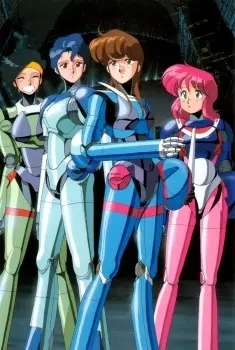
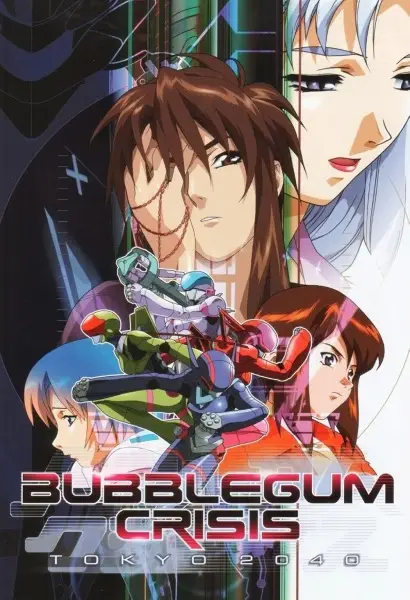
The year is 2032, seven years after the Second Great Kanto Earthquake decimated Tokyo. Now, the city is reborn as MegaTokyo, built from the labors of mechanical beasts known as "Boomers." Originally created to benefit humanity, the mysterious corporation known as Genom now produces Boomers with incredible destructive power as a new type of advanced weaponry, capable of disguising themselves as humans. The AD Police is a new special unit to counter the ever-increasing Boomer-related crimes. Overwhelmed by the sheer amount of crimes and disparity in strength, the AD Police poses little opposition to the Boomers. A mysterious vigilante force known as the Knight Sabers, wearing powersuits more advanced than the military, is the citizens' only hope for protection. Led by Sylia Stingray, Priscilla "Priss" Asagiri, Nene Romanova, and Linna Yamazaki, these beautiful girls take out any Boomer that steps out of line. [Written by MAL Rewrite]
Главный
Главный
Главный
Главный
Главный
Второстепенный
Второстепенный
Второстепенный
Второстепенный
Второстепенный
Второстепенный
YourMessageHere
August 8, 2007
Given that this is Bubblegum Crisis\' 20th anniversary year, I\'m going to start with some historic background. In 1987, amid the boomtimes in the west, the rise of Japanese industrial and corporate power appeared to be potentially endless and the west seemed unable to match it. Japan, and much of the first world was getting rich quick and advancing technologically in leaps and bounds; but at the same time, other countries were still stuck in a past age, unable to keep up. For the first time socioeconomic concepts like the multinational corporation and the global market became realities, and the division betweenthe first and third world had never seemed wider. While some revelled in the abundance, others feared it. Science fiction, ever the barometer of public fear, reflected this in books and film. Alien, in 1979, brought the world a vision of space travel in the future that for once was filthy and corrupt and run by giant corporations with no morals. The seminal Blade Runner stunned 1982 with the visually amazing concept of a huge, grimy neon tech-sprawl future LA of totally mixed ethnicity and robots that behave more like humans than humans do. And William Gibson’s famed 1984 novel Neuromancer gave the world a fevered, lavish nightmare of clashing technology and humanity embroiled in a tale of global tech businesses up to no good, in the process giving this burgeoning genre a name: cyberpunk. Where one media succeeds, others will follow. Cyberpunk anime was as inevitable then as live action western versions of anime have become now. Bubblegum Crisis was the leading edge of that cyberpunk anime, taking the elements that worked for the rest and expertly marrying it with many of the elements that make anime unique. Today, Bubblegum Crisis is one of those \'classic\' titles that anime fans need to know about, a Terminator or Star Wars of the anime canon. Even though its popularity in Japan was only a fraction of the reception it enjoyed overseas, it’s my contention that without Bubblegum Crisis there’d have been no Akira film. But is it any good? On one hand, detractors can say that this is a messy blending of many things that have already been done; a Blade Runner city with a flavour of Neuromancer-come-Alien-come-Aliens dystopian griminess and high-tech evil and full of Terminators and Robocops, filtered through that anime staple, mecha. This is largely true, but doesn’t matter. Outside anime, nothing so ambitious could ever work; but within the totally created universe that’s only possible in animation or CGI, and only really practical in animation, it not only works but excels. Originally planned as a series of 13 OVA episodes, it eventually ran to only 8 episodes, and some key plot points were altered because of this. Another 3 episodes were released later in an OVA series called Bubblegum Crash, using elements of the 5 unmade episodes that never made it originally. Each is largely self contained, but both multi-episode arcs of storyline and a loose overall plotline are also present. Being an OVA, the time period and hence staff is not as fixed as can be seen with a TV series, the net effect of which being that pretty much every episode is different from each of the others, with different emphases and different priorities. On top of this, half way through, some key decisions were reversed about the planned death in episode 5 of a character who, in hindsight, clearly stands out as the main protagonist. Plus, the eventual premature demise of the series stemmed from the two owners of the franchise, Artmic and Youmex, taking each other to court. DVD releases nowadays seem so snarled in legalities that the horrendous dubtitling is almost forgivable. So, it’s a total mess, basically. But like I say, this doesn’t really matter. What Bubblegum Crisis does so well, well enough that it relegates these things to positions of secondary importance, is cool. BGC may not have a very sure idea of what it wants to be and do, in a general sense, but it does it with irrepressable style; everything about BGC is very cool. Kenichi Sonoda, who went on to be the man behind Gunsmith Cats, designed the characters impeccably, including their incredible sleek hardsuit armour, which look like what Lamborghinis and Ferraris would look like if they were shaped like women. Various other mechanical designs, by Aramaki Shinji, later to be mechanical designer for Evangelion and director of Appleseed 2004, largely borrows from much of early \'80s sci-fi, and frankly looks fantastic. There’s a very brash, colourful, in-your-face ‘80s vibe also driving the general design ethos, which might sound ghastly but is in fact perfect for crumbling, self-digesting neon dystopias. Much of the visuals are, as mentioned, lifted from Blade Runner and run through a series of anime design quirks. Animation is by no means stunning generally, but gets the job done, and when you factor in the fact that this is from 1987, it really has some very nice touches. No review of Bubblegum Crisis is remotely complete without mention of the music. BGC is famous for its music almost as much as it is famous for popularising women kicking arse. Synth-rock songs that are as artificial and processed as the nutrasweet in diet coke, tunes painstakingly designed to be catchy and memorable, are the order of the day; it is hard to express how much raw fun it is. It\'s also archetypally \'80s, overblown and brash - and outside of BGC, I generally hate \'80s stuff. The songs especially manage to encapsulate that B-movie feeling; like the irrelevant pop songs at the end of a film that was cheesy but still really entertaining, they are driving, infectious ballads with amazing powers of mood-lightening. Many have noted the similarity between the opening of the first episode and the start of the 1984 film Streets of Fire; but the integration of the music into the story in BGC is much smoother. And, while I love the music, it\'s immediately obvious it\'s the kind of thing that\'s likely to provoke strong responses that won\'t be positive for everyone - a gamble any series that relies so heavily on music must make. Even if you\'re not keen on the sound, though, there\'s no mistaking the skill, high production values and copious amounts of effort behind it. By having the rock singer character as one of its toughest protagonists is a move that trumps Streets of Fire\'s equivalent role in every way. BGC\'s other characters are far from original by modern standards, but it\'s worth remembering that they set many of those standards themselves. These are archetypes, not stereotypes; those that set the trend, not those who follow them. No-one looks down on Dirty Harry, just because he spawned a thousand maveric cop characters. It can\'t be denied that there are some fairly major things wrong with BGC. For one, it\'s almost totally episodic, with no real overarching plot and little other than the strong, well rounded characters to link one episode to another. For another, the characters may be strong and extremely charismatic, but they don\'t really change much or develop like they should. For a third, it suffers from the lack of an ending; the last story just stops like any other, and you reach for the last disc...and it\'s just music videos (also real fun). These problems are at least addressed in the 1999 remake, Bubblegum Crisis Tokyo 2040, but at the expense of design, music and general coolness. What the remake did not fix, however, is the basic implausibility of the whole thing. Bloodsucking robots, transforming motorbikes and mecha-tentacle beasts strain one\'s suspension of disbelief unpleasantly at times. Nonetheless, Bubblegum Crisis, or, to give it its full title, \'Bubblegum Crisis MegaTokyo 2032: the story of Knight Sabers\' (yes, BGC was in fact the origin of the now-common phrase MegaTokyo - another example of its wide influence), remains immensely enjoyable popcorn anime, and remains fascinating for anyone interested in the history of anime. After 20 years, that\'s pretty damn impressive.
Второстепенный
Beatnik
January 27, 2009
Containing what might be one of the best opening 7 minutes of an anime ever, this OVA opens with a montage of the future, a dark sprawling Mega-Tokyo. Immediately Ghost in the Shell comes to mind, some scenes look almost identical, the Oshii vibe so thick, the possible influence on the man (and even Shirow himself) is made more and more questionable throughout the OVA with many stylistic choices bringing the GitS franchise to mind. After the introduction of the various comings and goings of the city, a concert suddenly begins, introducing a blonde wigged character Priss, and is intercut with the appearance of a boomer wreckinghavoc. The direction and editing, and hell even the music are all excellent and ensure the OVA gets off to a cracking start. 80's cyberpunk at its best! The story follows four plucky young women with nothing better to do in their spare time than to don cyber-outfits and blow crap up, preferably those pesky rogue boomers who keep appearing all over the city. The combined IQ of these four women finally figures out that Genom corporation, which apparently "accounts for 68% of the world's cars", might have something to do with these incidents and so Bubblegum Crisis delivers 8 episodes of pure unadulterated fun in a way only 80's anime can. Mega-Tokyo, 2032. This is the future, but seen from the eyes of the 80's. Each decade's vision of the future is idiosyncratic, and so each decade produces strange and brilliant works of genius or garbage, with Bubblegum Crisis firmly in the strange and brilliant camp, albeit lacking both genius and garbage, though still retaining quality production and vision. Plenty of great directorial choices, POV shots, pans, zooms, it's all dynamic and makes up for the dated, yet still decent, animation. No matter the humour or clunky dialogue or 80's sprinkled aesthetics in hair styles and clothing, this is cyberpunk at its peak. Everything associated with the genre is present, the connective nature of society, the paranoia of having satellites hovering above your head with the capability of blowing you up, biotech suits, corporate power run amok. In a sense Bubblegum Crisis is more cyberpunk than a lot of cyberpunk anime out there which sometimes jettison a lot of the genre's traits and settle for dystopic hijinks with the occasional robot AI thrown in. Bubblegum Crisis revels in the genre and doesn’t leave anything out. The anime came out at what might be seen as cyberpunk's peak of influence and exposure in the mainstream, and as such is worth a watch for its historical significance, in terms of impacting the genre of cyberpunk in anime and also being a window to the time. It's so classy it even has time to throw a shout out to The Third Man! It's flawed, but packed with so much creative ideas and flair, you can't help but bop along to the 80's tunes. Each episode starts with a cinematic musical montage of 80's soft rock/pop and narrative-advancing imagery. This isn't on-par with cyberpunk like GitS, you have to accept the humour and gaping plot-holes as part of the charm, or you'll just not be involved and will tune out. The AD Police are written as what a 12 year old imagines the NYPD are like, complete with the gruff black police captain arguing with the rookie cop. There's lots of subtle visual flair in this OVA, the directors knew what they were doing. (Except for episode 5 and 6. That director probably went to the school of Koichi Mashimo, though he wasn't helped by the screenwriter for those episodes either) Too often in post-millennium anime there are tons of 'arty' shots that are meaningless and the camera either flies around the place like a steadicam-operator on crack, or pans laboriously across the screen as if directed by an old age pensioner, but back in the 80's/90's they knew how to pace episodes just fine while choosing narrative-coherent viewpoints to the action. I guess I'm harping on about that old cliché of modern day anime being too shallow with emphasis on looks rather than content, but considering that this anime is packed with very clichéd jokes that were old even back when this was released, the argument is kind of moot. If you want to go extra deep you could propose that Bubblegum Crisis is yet another exploration of the relationship between man and machine and clearly veers on the side of external mechanics and views bio-implementation, or to be simple about it: cyborgs, as a threat to the world. Even though boomers are technically robots, though the distinction is rarely made clear especially when they all have such charming personalities, their humanoid form isn't a random creative decision. Boomers, anyone associated to them, and augmentation in general are clearly bad for your health and the only way to make the world a better place is to jump into exoskeleton mecha-suits and be a master of cybernetics, not a slave to them. It's possibly an archaic almost Luddite philosophy, especially in the 21st century where bio and nano-technology is getting more and more traction. Yep, I just analysed an anime with 'bubblegum' in the title. But you get the gist, Bubblegum Crisis is consistently entertaining and has very good direction to boot, and its shortcomings can be seen as part of the package; a conscious decision and not a by-product. You're meant to laugh at the ridiculousness of the entire premise, especially the glorious last episode's tribute to the character of Nene, and you're meant to lap up the universe presented because you're a cyberpunk fan. The damn anime's called Bubblegum Crisis! If you're not grinning while watching this, you're in a crisis of your own and I suggest you chew some gum to get over it.
BGCLeonK12
May 27, 2015
I didnt want to write a review of the series for a long time since im clearly a fan and anything i write might be seen as having bias towards rating BGC too highly. However at the same time, being a fan I think i can give you a true reflection of the series, being able to mention things that other reviews are missing because they glossed over the series and did not give it the attention it deserved. I think in some ways a review that the reader can relate to can sometimes improve their watching/re-watching of a series. So onto the matter at hand BubbleCrisis 2032, an OVA series which 3 top notch studios (AIC, Artmic and Youmex) gave their all towards in the 80s and in my opinion really raised the bar when it came to what you could achieve in animation and also among all of these talented people was none other than legendary designer Kenichi Sonoda. Unfortunately the downside of having so many good chefs, is the inevitable arguments over who owns what, which in the end was the downfall of BGC. First lets talk about story, BGC gets a lot of flak over its story, many arguing that it is poor or lacks any real overbearing plot. Now i have a problem with this, yes you could say that if you're comparing it to syndicated series which run with week by week episodes and are produced much quicker, but BGC was not produced in that manner and was never intended to be, its release of 8 episodes was staggered over 4 years due to the amount of work it required to do it to the level of technical quality wanted. At the time most of us never were able to see all episodes back to back like people now get to do, the producers knew this and focused on trying to convey EMOTIONS in each episode. The dying of a loved one, loyalty and vengeance for a friend, saying goodbye for a last time, fighting a losing battle, all of these concepts were tried to be portrayed using a situation and an fitting background song, right up to the end credits music and background image the directors were trying to convey a feeling with their story above all else. And i think that was a good approach, since the episodes had more impact on me and i was not simply waiting to see the next episode like i do with anime nowdays, i was instead thinking about the episode i just watched, which was a very good thing since the next episode was likely weeks if not months away. A lot of money was put into this series, and it was risky even for the time but im grateful they decided to do it this way as it leaves a lasting impression on most that watch it, sometimes subconsciously. The characters themselves were a revelation, they were a new breed of tough woman leading the fight in mechanized combat suits. That was barely common to have only woman as leads in the action genre. Though with only 8 out of the 13 episodes completed they did what they could with depth, but its what the characters represented that was most special. They covered a broad spectrum of female heroines, Priss a tough, bike riding, battle hardened fighter who happens to be a singer, Linna the represented average aerobics girl of the 80s but with the ability to be able to tranform that athletism into fighting prowess, Sylia a smart weathly elite who isnt a afraid to drop the high class lady act and dirty her hands when she needs to, and lastly Nene a computer and electronics specialist willing to put herself in the battle zone. What made them even more special though was they all had their weaknesses, and the designers wanted us to know they were not perfect individuals and this added something to the characters that was largely absent in other action movies of the time. Priss is poor and has had a rough life, its also implied that she never was well educated but she does what she can to get by and enjoy her life and improve the life of people she knows...or at least exact justice on their behalf. Sylia is seen as the cool headed leader, but secretly she has an immense hatred for Genom Corp inside her which is strong enough to impair her judgement and cause her to lash out at others. Linna although generally up beat is not living the life she wants, she would love a glamourous life and a great boyfriend but she is stuck in the mediocrity of being a below middle class person in Megatokyo, a cycle she cannot break out of. Then theres Nene, she desperately wants to be more physically imposing and it frustrates her that she isnt given much respect, she doesnt just want to be known as a computer geek at a police department and really would like people to know what shes really capable of. Art and character design, I think the series gets its deserved ratings here. Personally i think its a masterpiece of its era, using methods an approaches that will never been done again since they would be unfeasible today. Its a testament to what human artists are capable with just simple tools and hundreds of hours of painstaking work that they simply poured to their hearts into. If you're an artist or have ever worked with professional artists you will understand it and appreciate it for the true paramount achievement that it was. If you're not an artist, just look at it like this, BGCs artwork is very much like a Ferrari F40, its not the best car ever made, but its a representation of what was achievable by the experts of that era, and for that it will never be replicated again because the technology changed, people have changed and the mindsets have changed. For that reason its look will always be unique and special. The sound, for me the music production was the best id ever come across, in both English and Japanese the production quality was supreme, the musical ability of the producers and the vocal ability of the singers is as good as it got for any form of entertainment in the 80s, and that's saying a lot considering how great an era for music and movies the 80s is considered as being. Lets talk about the english version music first, since for me its unbelievable to say there are some tracks that are actually better in English (Rock me & Don't Forget). Now if any of you are familiar with older anime, you'll know that how botched english versions can be, but with BGC they really gave excellent attention to it so it could stand alone as an equal in quality. Though the Japanese version is better overall as expected, Ohmori Kinuko really giving a vocal performance that's as good as it gets. Voice acting though is just average for both English and Japanese versions. Nowadays we have near Hollywood quality (or Japanese film industry quality) voice acting in games and anime. So BGCs voice acting is a couple notches below, it just lacks the substance that you get with newer productions that really drive home the characters intentions. The relative background silence you get during speaking is typical of the sound production of the time, that is one area I am glad is gone these days. In terms of enjoyment, if you're a person of the era there is no way you would say this is anything less than a 9 (i say 10), because you simply hadnt seen anything like this at the time, especially if you were outside of Japan. Taking nostalgia out of it and looking at it just as an Anime fan...a knowledgeable anime fan would certainly understand what was achieved here and in that case its an 8 or even 9 still. (If you got this far i want to thank you for reading this rather long review) Overall, its a 9/10 for me and if you grew up in the 80s and are an anime watcher you absolutely must watch Bubblegum Crisis.
STMPD
October 19, 2020
Okay, so Bubblegum Crisis isn’t the greatest anime of all time. It’s not even the greatest cyberpunk anime of all time. It’s not even the greatest cyberpunk anime of the eighties, because critical opinion placed that crown firmly on Akira’s head long, long ago. And yet Bubblegum Crisis, not Akira, or Ghost in the Shell, or even Evangelion, is far and away my *favorite* anime out there - nothing else even comes close. Admittedly, I’m something of an obsessive person. I’ve been latching onto sea-tossed fandoms like a memetic lamprey for years. But why BGC? Because it’s fucking awesome, that’s why. Because it’s a synthesis ofthings that I like in this point in time. Because its open-endedness, its willingness to focus on action and put all the existential stuff in the backseat, the sense of what BGC could have been rather than what it is, make it more than the sum of its parts. But that’s a fairly vague reason. Let’s ignore the sum and focus on the parts first. Story: There’s admittedly not a lot of story or super-deep psychoanalytic shit going on in BGC. There are Boomers, which are like Terminators with big meaty muscles. There is a megacorporation that produces them. There are some cute anime girls who don cuter power-armor to wreck their shit. There are some Miami-Vice-meets-Robocop police dudes who dick around and get their shit kicked in by the Boomers. Of course, the synthesis of these disparate elements could have all gone together in a very bad way (Lookin’ at you BGC 2040). But each episode - there are only eight, and three of them are barely TV-episode length - generally does its best to not require deep viewing and following the plot to enjoy the spectacle. There is a metaplot running between episodes, but it’s diluted by the fact that the creators clearly had no idea what they were doing at first, and the fact that the director’s seat kept changing after the original trilogy of videos. You have to dig into wacky fan speculation to get mileage out of the plot, and that’s fun don’t get me wrong, but it’s not as engaging overall as, say, Stand Alone Complex, which in my mind sets a high bar for thrilling conspiracies and weird cyberpunk shit mixed together. But plot is only one half of a compelling narrative, which brings us to the... Characters: Some may say that the original four Knight Sabers are all to some degree stereotypes. I think there was another review awhile back that argued that they were more archetypes, more forerunners for the character molds that have become so essential to anime nowadays. (Supposedly a proposal for a BGC ‘Hot Springs’ episode mutated into Tenchi Muyo, the godfather of harem anime. Wacky, eh?). And indeed each main character has their own thing going on - a distinctive voice, distinctive character design, distinctive behavior. They play roles, yes, but those roles are always interesting and compelling and aren’t as shallow as they seem to be at first glance. In particular I love the character of Sylia Stingray, the cool-beauty ‘big sister’ of the Sabers. Her voice is Yoshiko Sakakibara at her best, somehow warm and loving yet stone-cold cool at the same time, not the brutal villainess of Haman Karn nor the resignation of Shinobu Nagumo. No, Sylia Stingray is sort of what happens when you cross James Bond, a Bond Girl, and a Bond Villain all in one package. She’s beautiful, capable, knows what’s going on for the most part, is implied to be some sort of cyborg, and isn’t afraid to stab her enemies in the throat. Also she runs a lingerie shop as her secret identity. There’re very few other characters like her in anime and that’s a pity. Also Priss is fun to watch smash her way through obstacles and occasionally get her shit kicked in. All told BGC’s characters may not be vividly realized portraits of pain or emotional melodrama, but they have depth to them. It’s like how a few choice strokes can be a landscape in the human mind as much as a photorealistic painting can be. The characters of BGC work because they are a few strokes placed very well. Art: 80’s cel-shaded awesomeness - explosions and lighting and lasers and color mixed in with urban grunge, the kind of stuff it takes a real budget to show off. Mecha range from simple yet elegant (hardsuits) to hideously baroque (the Hyperboomers from Episode 6) but for the most part they all feel like they’re inhabiting the same high-tech high-octane universe. Sure, Megatokyo goes from being a gritty Streets of Fire-y hellhole to a brighter, cleaner urban sprawl over the series. Sure, the art style changes to reflect which director is in the seat this time around. But, again, each episode mostly stands on its own as a collection of awesome set pieces, plot be dammed. They don’t make em’ like this anymore. Sound: Okay, so the sound effects aren’t necessarily memorable. But BGC indulges itself in the style of 80’s MTV music videos, especially in the iconic opening sequence of the first episode. Hardcore 80’s J-Rock, some of it using the vocals of the Sabers themselves, pops and crackles through the beginning and end credits of every episode, each time a selection of unique songs. You can tell that part of the revenue from the OVA was trying to get people to buy the soundtrack on tape. Hell, the voice of Priss ended up being a real singer instead of a voice Actress. You haven’t lived until you’ve listened to her belt out ‘Konya Wa Hurricane’ intercut with a Combat Boomer wrecking the shit out of a whole bunch of cops. If nothing else, watch that sequence, you’ll be surprised how much it makes you want to watch the rest. Enjoyment: This is an awfully vague category, so I’ll use it to talk about the BGC fandom - or what’s left of it. See, BGC was a big deal in the 90’s, especially during the hot times of the VHS boom. Even after Sailor Moon took the West by storm, even after Evangelion upended weeb’s conceptions of what anime was capable of, people still wrote a good deal of BGC fanfiction and posted it on their Geocities or Usenet forums. Much of it is bad, yes, but there’s so little of it compared to the vast seas of shit that dominate fanfiction today, that the good stuff floats to the top easily. And that good stuff is usually consistently good, because it was written by adults who got weirdly into the series’ metaplot and tried to wrap up its unexplored threads to varying degrees of effectiveness. Really, though, the reason BGC is so good for fandom is because it builds its world and its plot in those same broad strokes. It’s up to readers and writers to interpret, elaborate, accentuate what’s there to make more comprehensive stories, ones that aren’t just mashing two characters together to make them kiss. (By comparison, say, Ghost in the Shell is a more complete work, yes, but it doesn’t have the same spark of manic vitality that lends itself to writing fanfic (at least I think so). No wacky mecha, no melodrama, no flawed characters, just Tom Clancyesque cyberespionage and tactical combat.) What else is there to say? Bubblegum Crisis is a product of its time, yes, that’s why the Vaporwave gif makers of the internet have latched onto it without appreciating it, but it still holds up remarkably well today. It has the stuff hobbyist fandom used to look for in anime, and seems to have forgotten today, as our collective taste is drowned in a sea of VTubers and gacha games. It’ s lightning in a bottle, a cool concept backed up by cooler design work to make a series that, like many of the action movies of the eighties, has a sort of iconic feel to it, something that, once you put in Konya Wa Hurricane, cannot be denied.
RobdeFR
October 4, 2009
Finally I watched this cyberpunk classic which was lacking in my list. This anime (more than Gall Force) was considered something like a groundbreaking for opening the way for groups of female heroines. The story is set in Megatokyo year 2032, a blade runneresque society where androids are quite developed to even look like normal humans, except that they do not have the hability to speak. Our heroines are an secret and independent force called the Knight Sabers, with some high developed suits and they do the work that the cops, in this case the special force of the police, the AD Police, can't do. Which is mainlyto fight the androids that went berserk and the other kind of special cases just like Rick Deckard did in it's Blade Runner Universe. We have four main girls here; Stylia, the calm intelligent and founder of the group, Priss, which is also a popular singer in bars and it's the "action" girl of the group, Nene, the infiltrated girl in the police but pretty coward and annoying in the action field and Linna, the average girl. We also have Leon McNichol, the AD Police detective which is interested in Priss the singer and he turns out to be a pretty dependable and interesting character (thus leading into his own OVA series). The overall mood of the series runs smoothly ranging from comedy to dramatic and cyber punk obscure scenes and the story flows without much relation from one episode to the other making the series quite episodic, there are indeed some episodes that are stronger than others, but in the end they tend to be a "Case of the Day" alone episode type of stores with just small links between them. We have either good characters like Priss Leion and Styllia and annoying characters like good for nothing Nene, though she redeems herself in the last episode which was also a nice way of putting things. Oh yeah, the opening scene of the first OVA is simply great, with Priss singing her popish 80's cheesy songs and showing some police scenes in between. Classic. Hearing that music these days sounds pretty nostalgic. It is definitive a classic anime sci-fi of the 80's and a must watch nevertheless. The classic Blade Runner atmosphere just can't be ignored. Recommended. Rate; 7.2/10
#3005
Популярность
#3103
Участники
64,240
В избранном
614
Эпизоды
8