ささみさん@がんばらない
The Japanese call them hikikomori—people who've become so withdrawn socially that they refuse to leave their homes for weeks and even months at a time. For Sasami Tsukuyomi, who's attempting to pass her first year of high school despite being a shut in, it's more than just a word. Fortunately though, she lives with her older brother Kamiomi, who just happens to be a teacher at the school Sasami is supposed to attend. Not to mention, her "Brother Surveillance Tool" which lets her view the outside world via her computer and will, theoretically, allow her to readjust to interfacing with people again. What it mainly does, however, is let her view her brother's interactions with the three very odd Yagami sisters, who inexplicably seem to have had their ages reversed and have various types of "interest" in Kamiomi. And then things start to get really weird... Magical powers? Everything turning into chocolate? Is life via the web warping Sasami's brain, or is it the universe that's going crazy? (Source: Sentai Filmworks)
Главный
Главный
Главный
Главный
Главный
Второстепенный
Второстепенный
Второстепенный
Второстепенный
Второстепенный
Второстепенный
raritydash
May 30, 2013
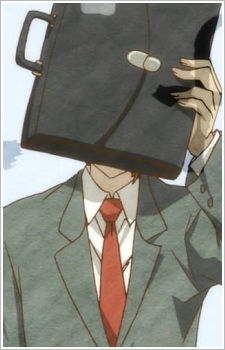
Anime auteur Akiyuki Shinbo has with Studio Shaft directed a number of highly interesting, willfully off-kilter and generally amusing series. His work is always bold, with visual flair beyond the norm and he usually chooses to direct works with morbid or bizarre sensibilities and humor. Sasami-san@Gabaranai does not break the Shaft mold in the slightest, but it does reaffirm how well it can work. It's a very strange but thoroughly fun ride. Shaft's knack for good visuals keeps the series looking strong. Perhaps some of the tricks used are there to keep the costs down; it doesn't matter, the anime looks distinctive and often beautiful. Thecharacters are attractive, the action fluid. The actors also play their parts well and the music is kept fittingly quirky. The opening theme is energetic and kinda catchy, though not quite as memorable as some Shaft themes. The ending theme sequences are kinda fun, and the song itself kinda cute. Sasami-san isn't just good on the technical end though, it also tells a wonderfully odd and interesting story. Going into the series, it's kind of hard to tell what it is at first. The first two episodes are really goofy and make it seem like another weird Shaft comedy (which it is to an extent). Then the third and fourth episode are just strange. The fifth episode is where it all gets pulled back some and we see earnest character development and the real clues that they might be taking this more serious than it first appeared. Then episode six comes and turns it all in on itself; where there was a ridiculous and bizarre school comedy with supernatural elements there is now a character driven supernatural adventure with an oddball sense of humor. What was at first diverting, whimsical fun becomes an actually evocative character piece. Character pieces need good characters and Sasami-san has great ones, though it doesn't seem so at first. Sasami herself is an odd character to figure out since she seems so weird and detached initialy. She's actually a strong, willful lead who grows as she comes to make new friends while being just quirky enough to make the comedy work. Her brother on the other hand, while seeming critical to the show at first does not get developed very much, yet he does remain interesting and kind of fun for his silliness; he's a weirdo who does nothing of importance and seems only to be there to creep on his sister and get smacked around by the characters who matter. He hides his face, which adds mystery, but nothing of substance about him is particularly resolved. Aside from Sasami, the other real stars of the series are the three Yagami sisters. At first glance these are characters invented entirely for humor; you got a young girl with an adult body, an adult with a young girl's body and a robot girl. They do certainly lend themselves well to the madcap comedy of the series, but to my surprise they turned out to actually be characters as well. The adult-bodied child, Tama, is ridiculous but still comes across as a sweet, innocent child and also as an earnest, affecting and strong willed presence; she has some very strong scenes and becomes quite likable. Eldest sister Tsurugi meanwhile is cool and competent (while still being silly enough) and works in the mentor/guardian role. Middle sister Kagami is probably my favorite character though, as the arc involving her and Sasami's blossoming frienship is handled beautifully and in a way that makes it gratifying to see her open up. She's also amusing and her fight sequences are always cool. Beyond the main cast, Sasami-San has a small number of other interesting characters,mostly serving as antagonists. Sasami's mother is a standout and the arc spent with her is an exciting one. The show isn't left much time to develop the antagonist for the last little arc, but it convincingly builds her relationship with Sasami and succeeds in making her a fun and interesting enough character. A few other noticeable characters don't get a chance to do much, which makes one wonder if sequels are planned. Given Shaft's record, it's certainly possible and for me at least would be welcomed. Sasami-san is an interesting show to follow. It switches between moods a lot and perhaps it seems a little scattered and weird for the first third. Depending on anime tastes it might be impenetrable or it might just be flat unfunny for some, but, for me, as it kept going it became a thorough delight. Is it another perfect 10 masterwork from the director who brought us Madoka Magica? No, but falling short of that mark--and with excellent style, humor and well defined characters--isn't really failing at all.
Второстепенный
QuietDiscourse
January 3, 2014
In a dull season plagued by the predictable, describing this newest series as "different" would be a severe understatement. Enter Sasami-san@Ganbaranai, the front-runner for absurdity—playing the seductress, the shrew, the madwoman fueled by crack cocaine. Be forewarned. This is a genuine concoction of the bizarre, lacking any sense of direction, and indeed, having no concern for it. Sheer bewilderment becomes Sasami-san's very forte. Yet, this eccentricity is a double-edged sword, and considering the shallowness of Sasami-san's loony design, we're unfortunately left with a show that is plain disappointing. Both a strength and a weakness, the plot is all over the place. In the first episode forexample, Sasami spends her idle time stalking her brother from home via some unexplained form of ultra-computer technobabble, mixing in Haruhi references (oh the boldness) on the way; then Sasami purchases some Valentine's Day chocolate for her brother, which suddenly transforms the world into...chocolate. Now if this weren't enough, we have some wacky screenplay done in eroge style, a whole 30 seconds spent watching Sasami undress; cue jazz-fusion music, concurrent with tumultuous action scenes: missile-endowed breasts, chocolate dragons, magical powers, mechanical wings, and sensual cannibalism—all to save the world from becoming a permanent Willy Wonka factory. While we're offered nothing of the underlying plot, we're so bemused by its over-the-top direction, disoriented into excitement by the story and art direction's compounded nonsense. Yet, the underlying problem is that we're offered nothing related to the real plot. Instead we're served a bowl of shallow eccentricity, leaving a cloyingly sour taste as we're still wondering what the heck is going on (!). This is a real shame given that some of the more unique eccentricities are intrinsically linked to the Shinto doctrine. Sasami's brother Kamiomi perpetually hides his face under the presence of his sister, a testament to the humility of servants under deities; and the brooding incest between the two—while a common SHAFT delicacy—is canonically supported by the historical myths behind Shinto creationism. These are the occasional subtleties, the acts of brilliance overshadowed by heavy-handed symbols and writing: Sasami's mother inserting an awfully phallic totem into her daughter's stomach, festering into tangible bloat, and then Sasami birthing her own mother through some Freudian version of catharsis. Better yet, Takamagahara mythology even details this very method as the cycle of creation. Am I overreaching somewhere? Yes, a bit. Unfortunately, Sasami-san clouds itself with so many absurdities (much of the time for fanservice) that it becomes impossible to determine what actually warrants in-depth discussion. It would be too convenient to suppose all of it is just pandering eroticism, especially with the more detailed source material in mind. Yet, this potential existence for merit does not make Sasami-san's diluted symbology any more comprehensible from the start, overshadowed by the show's refusal to expand upon its elusive—and unfortunately, fleeting—strengths. At the show's core we're left with nothing but soppy melodrama—a direction that the show initially tried to avoid. This is where Sasami-san truly unhinges itself. While once entranced by the subtleties within the Shinto doctrine, the story takes a jarring left turn, yanking us out of the rabbit hole and placing us into a different tale: one of happiness versus responsibility, an introspective battle between Sasami's self-indulgent desires and her shrine maiden duties. Yet, the story forgets what previously distinguished Sasami-san, substituting eccentricity for intense manipulation (and boy is it an emotional roller coaster). Spending time with a zombie mother, only to be handled with a glop of melodrama by the end, simply does not compute. To have such a jarring turn of events (and an awfully serious one at that) alienates viewers from any meaningful connection to the characters. This dramatic venture is only exacerbated as many of the events are unnaturally spontaneous, pulling away from any sense of realism in the story. These are the scenes full of hilarious spunk when the show doesn't take itself seriously, but when deus ex machina are integrated with the drama, it's difficult to consider any of it to be sincere writing. How unfortunate that the only savior from a time-traveling golem (which just happens to have waited an entire decade in hibernation) is some awkward plot device tantamount to going Super Saiyan. Unfortunately, the narrative lends no favors to the cast either, as all the intriguing characters are offered little substance beneath their eccentric guises. Sasami Tsukuyomi is a hikikomori who also happens to be something of a goddess, and is queerly characterized by opposites: antisocial hikikism and a gooey moe personality. Sadly, her character is inconsistent, and constantly swaps between the two at the flick of a switch, a poor trait for a lead character aiming to pull off realistic drama. As for other cast members, Kamiomi plays the lustful brother, Tsurugi the frivolous red-head, Kagami the cold-hearted robot, and Tama the well-endowed moeblob with the brain age of a nymphet. While we are offered the occasional dynamic cleverly (word)played among these personalities, it is regrettable then that they never amount to anything more than that; the plot simply refrains from developing them past farcical melodrama. Moreover, the show even introduces more quirky characters three-quarters of the way through its 12 episodes, which only seems to confirm that the writers are looking more for gimmicky shells than ripened fruit. In the end, Sasami-san concludes as the devil child that it is. The show's dynamics lends itself into an air of ravenous hilarity, pumping out the rare cheekiness reminiscent of more successful shows of its kind. But unfortunately, Sasami-san is so all over the place, and weighed down by its bloated melodrama, that these breadcrumbs are unsavory—ephemeral loaves expanding into excessively sour ones. Worth the watch? LSD's better. ------------------------------------------------------------------------------- This review is written by members of the club Quiet Discourse. For more details, please see the club frontpage.
Kyouko_Ayase
February 3, 2014
I recently had the pleasure of rewatching Sasami-san@Ganbaranai, and I think my view on this show is now more balanced than it used to be. I loved every episode save for the last three, and wanted to see if I would feel the same way again. Was Sasami-san@Ganbaranai as good as I thought it was? Read on to find out. Now, I noticed this the first time I watched it, and it’s worth pointing out: the show isn’t deep. Though the story uses a lot of lore from Japanese mythos, it’s just a backdrop and reason for everything that happens in the show. Maybe it takesa few liberties with its source, and maybe it’ll annoy Japanese mythos junkies, but that would be missing the show’s true focus: a simple story about Sasami the shut-in as she’s watched by the three Yagami sisters—Tsurugi, Kagami, and Tama—to stop her God-like power from making mass chaos in the world. With entertaining results. Cities will turn to chocolate, video games will come to life, clones will run loose, vengeful spirits will arise, and that’s only the problems Sasami makes, and not the chaos caused by the people protecting her and the people who want to use her. But no matter how insane the story gets, it never break its own rules. If a weapon is described as being defensive, the way it shatters another weapon is very clever. If God-like power is useless against one character but strong against three others, it’s because that one character has anti-God abilities. If a character’s power is inconsistent, it’s from a lack of experience using it. Save for one line of dialog, the consistency in the setting’s in-universe rules is perfect; quite a feat considering how easily an insane show like this can break them. The story’s progress is solid in the first nine episodes thanks to its decent characters. Sasami doesn’t have much in the way of personality, but her story of responsibility VS freedom is handled well. The reasons for her being a shut-in make sense when thinking about her back story, though it can be hard to catch from the show’s insanity. On the other hand, her bad friend-making skills make sense since she’s a shut-in, though her friendship with Kagami and a later character is rushed. Kagami herself starts as the show’s resident quiet girl, but soon shows a lot of emotion, smiling and snarking and showing embarrassment this way and that. Unfortunately, the rushed friendship with Sasami can make Kagami hard to take seriously, especially in the show’s last three episodes where Kagami’s back story is explained a bit more, but that back story never comes to play in full force. On the other hand, what she deals with in her spotlight episode is a sign of the story’s growing seriousness. But the story’s serious side starts with Tsurugi. She starts as the pervert but becomes the protector, the mentor of sorts to Sasami, and the Yagami Sister’s de-facto leader. She doesn’t have much in the way of development, but her role in the story doesn’t need it. It just needs personality. And it’s a personality that’s believably serious when it shows itself for the first time in an early episode, considering who Tsurugi is. Starting with her serious side, the show moves nicely from light-hearted to serious in the first several episodes, even as the show’s insanity rises. That said, the last sister, Tama, causes two bad scenes in the show. The first scene being after the show gets really serious, where she starts talking about her bond with Tsurugi, Kagami, and Sasami, except none of what she says makes any sense at all, because the show never shows the crucial part of what she’s talking about. The second scene is in the climax of the first several episodes, where a chance to develop her character meaningfully is wasted for humor. Otherwise, she’s little more than a childlike plot device. Despite that, the show moves well in the first nine episodes, shaky character development aside, though after the first several episodes there are two things about the story that make no sense; no, the show doesn’t break its own in-universe rules, but it involves Sasami, Tsurugi, and a new character. The first problem is the new character, and no, this isn’t the one Sasami befriends. Anyway, this new character has a big role in the story, a believable relationship with Sasami, and quite a bit of personality. This is all well and good, but her behavior after the first several episodes is such a big change from what she was before, it’s jarring; Tsurugi hints to the reason for this, but that’s all it is. A hint. The second problem is the kind of hot potato game Sasami, Tsurugi, and the new character have. At one point it looks like one character will carry it, then it looks like another character will carry it until the other character is ready to take it, then it turns out it’s this character who carries it. Confused yet? So am I. But these two story problems are nothing compared to the mess of the last three episodes, and no, the show still doesn’t break its own rules and it never does. The problem with the last three episodes is it makes no sense, even for a show as insane as this. To explain, it’s a world domination plot by a new character—the one who Sasami befriends—and her reason for this plot makes no sense. Second, this character knows the second story problem, so it makes even less sense for her to bring in Sasami and the Yagami Sisters. The last three episodes are a mess, but at least the insanity continues to rise with the music and visuals to carry it. The music would be better if I counted the opening song, Alteration, but I’m not. The in-show music isn’t anything that can stand on its own, but it does deserve credit for its variety. It uses—or at least, sounds like it uses—the flute, piano, fast techno, epic orchestra, guitar, game show, elevator, blues, suspense chords, jazz, uplifting; it throws everything at the show. And while it doesn’t have a unique identity, the chaotic music lends itself to the show’s insanity, though not at as well as the visuals. The character designs are brightly colored and their faces are expressive, especially with Tsurugi and Kagami. The abstract backgrounds, such as Sasami’s room, stand out because of how scarce they are compared to the normal backgrounds. Strangely enough, most of the show’s chaos happens in the normal backgrounds, making the well-animated chaos stand out even more. The music and visuals carry the insanity, which I know is a word I’ve used a thousand times here, but there’s something crucial about it I need to mention. While the show’s insanity is one of its main strengths, it can also be one of its flaws. To explain, it can be hard to look past the show’s chaos to find any substance, and the substance is a good if flawed story, but that might not be enough for some people. To put it another way, watching this show makes people choose between two options: finding a good if flawed story, or letting themselves be whisked away by the show’s insanity. Of those two options, I first watched this show with the second choice. I remember being wowed by all of the chaos, and called the story and character development unlike nothing I’ve ever seen. But as I might have pointed out, rewatching it made me see it wasn’t as good as I thought it was. That said, I will say with all my heart that I still personally LOVE Sasami-san@Ganbaranai, but this show is definitely a few motivations short of being @the top.
Growler
March 31, 2013
An excellent lesson of Japanese mythology presented in the form of a lazy girls attempt at a normal life. The story follows Tsukuyomi Sasami which I'm sure you thought was a normal girl at first glance but it turns out she has quite the story in her past which she is trying to bury inside her. I was impressed by the nonchalance which some characters in the series treat problems. I enjoyed it very much due to the fact that I am a fan of history and Japan's history is a subject of great interest to me as well as its mythology which I knew nothinguntil I've watched this series and found out a lot of fascinating things by doing some research. I will say this, its a very complex series for those of you with a slim attention span. It has comedy scenes, fighting scenes as well as interesting forms of mythology interpretation. I reckon people who have read some books in their lives should have no problems following the storyline(I meant no offense).
Suratu
January 4, 2014
Following the massive successes of the Madoka and Monogatari franchises, Shaft found itself a sizable new fanbase, awaiting with bated breath, eager to bear witness to their next big hit. This eagerness was answered with the adaption of the light novel Sasami-san@Ganbaranai. Were these new fans sated by their new weekly dosage of still frames and headtilts? Let’s just say that these fans are still holding their breaths. Unfortunately for Shaft, the reception was quite the contrary. To call Sasami-san merely a disappointment would be an unforgivable understatement. Perhaps the main problem of Sasami-san, much like Hataraku Maou-sama, is that itsuffers from an enormous identity crisis. Is it an ecchi comedy? Is it an introspective commentary on hikkikomori shut-ins? Is it a dark, plot-centric epic battle between the gods? All and none of the above. There are certainly points where it tries to be humorous and then inexplicably and suddenly decides to take itself seriously and somehow expect us to do so as well, particularly during the mother arc. And, occasionally, it will mix the two—rather inappropriately, I might add. As just one example, the art and animation shifts into a comedic style during what was supposed to be the tense, climactic finale. If this show was more decisive and chose SOME direction with the plot, either as a full-blown ecchi comedy or a dark and edgy conflict of gods and secret organizations, it would have fared much better. Some shows can handle having serious elements sprinkled with comedic relief, but Sasami-san clearly showed an utter incapacity to do so. Like most Shaft works, the art is consistently inconsistent. At times I cannot help but marvel at the sheer beauty and creativity of the way some things are portrayed, such as the light filtering in Sasami’s room which makes it look like it’s done entirely by watercolors (I’m a sucker for Shaft backgrounds); yet, I can’t help but laugh at the utterly lazy and uninspired art and animation that occasionally found their way into some scenes. This brings me to my next point: the characters. While the character designs themselves are not necessarily bad, I would not call them “good,” either. Most look average at best, while the worst offenders are dull blobs. Not only are characters superficially unremarkable, but the personalities underneath are nothing to write home about either. You can immediately guess the personality of each character simply by their designs. Some might consider this to be a success; however, I disagree in this case because, frankly, the personalities are disappointingly stale. Most characters are not original or interesting in the least, almost every single one being a generic rehash of established archetypes we see in every other anime. If you can predict a character’s every decision simply because of a strict adherence to their archetype, something is wrong. Beauty is not merely skin deep here. Sasami-san is a show easily forgotten with virtually nothing special about it. It makes me worry about Shaft's upcoming attempt at the manga Nisekoi. Will it become a Monogatari, or will it, like Sasami-san and Dance in the Vampire Bund, join Shaft’s ranks of mediocre anime adaptions? Let’s cross our fingers and hope it’s the former.
Ранг
#6558
Популярность
#2608
Участники
85,833
В избранном
147
Эпизоды
12