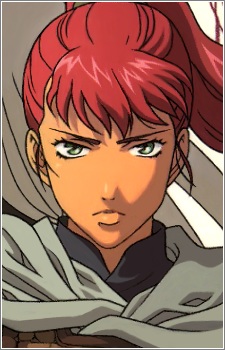

The Twelve Kingdoms
十二国記
Youko Nakajima has only ever wanted to be normal. She does what she is asked, gets good grades, is the class president, and even helps her classmates whenever she can—but because of her red hair, she has never fit in. With her pushover attitude, Youko lets classmates take advantage of her, so she has nobody she can really call a friend. But on an otherwise ordinary day, a man who claims to be from another world barges into Youko's classroom and bows before her. This elegant blond-haired man, Keiki, claims that Youko is his master and belongs on the throne of his kingdom. However, their first meeting is cut short as Keiki has been followed by otherworldly beasts called youma. He is able to escape with Youko into his own realm, but two other classmates—Ikuya Asano and Yuka Sugimoto—are caught up in the madness as well. Unfortunately, their troubles have only just begun, as the youma attack leaves them separated from Keiki. Alone in this strange new land, these ordinary students must learn to fend for themselves or die. [Written by MAL Rewrite]
Главный
Главный
Второстепенный
Второстепенный
Второстепенный
Второстепенный
Второстепенный
Второстепенный
Второстепенный
Второстепенный
Stormy_77
April 27, 2007
This series is so good that when it ends at episode 45 you'll find yourself wishing for more, I know most who have seen it feel like this. It starts off innocently with Yoko being accosted at school by a handsome man with long blonde hair who wants to swear allegiance to her. Before she knows it, monsters?!? are attacking her, she's being defended by Keiki, she won't leave her friends and suddenly Yoko and the 2 friends she won't leave have been sucked into another world. Thus begins our journey into the magical land of the 12 kingdoms. I admit, after the dramatic beginning, I wasexpecting this to be like the Escaflowne/El-Hazard type of series. That impression was swept away in under 10 minutes. Escaflowne is a good anime, but 12 Kingdoms is a Great anime. What sets 12 Kingdoms apart is the detailed explanation of the political, social, economic and philosophical aspects of the kingdom. As the episodes progress, you learn how the kingdoms are organized, why they are structured the way they are, and the good and bad things about each type of government. I've never heard it explained better in any other anime. The story and characters really suck you in. The more they reveal, the more you want to know and you're eagerly looking forward to each episode to see how the character's will react, secretly hoping for some of them to "grow up", others to "snap out of it", and actually even hoping for a few to "just die". At the beginning, I really wanted to slap Yoko a few times while shouting "deal with it". But by the end of the series Yoko has become the heroine that people identify with and they root for her. There are pivotal scenes that make you stand up and cheer in joy. There aren't any extraneous "filler" secondary characters. While the motivations of some aren't revealed till much later, for the most part you can understand and sympathize with the "good" secondary characters and grow to hate the "bad guys". The fantasy world created by the writer is capable of much more exploration via this anime. The plot has many other directions it can go in. Even though the series ended at 45 episodes, I know a lot of us 12 Kingdoms fans would be really happy if they made another 45 episodes as there is still a ton of unused potential - including all the other "unexplored" kingdoms, not to mention the rest of the black kirin story. Watch this great anime but be prepared to feel sad at the end because there isn't any more to watch! The only flaw it has is that it ended too early.
Washi
February 7, 2008
I decided to start watching the anime The Twelve Kingdoms more out of convenience than genuine enthusiasm - the character designs and the general look of the show lulled me into dismissing it as a generic fantasy anime - an uncharming mix of demon-slaying and silliness (like the terminally unwatchable Orphen). But I was proved wrong, as the show quickly enthralled me, with a beginning that may not have promised a sophisticated story, but which was loaded with hooks to capture its audience: immediately interesting characterisation, a sense of urgency and bewildered excitement, and some original fantasy ideas and elements. Firmly hooked, I embarked ona story that proved to be rapidly expansive, emotionally gripping, and unrelentingly interesting. Not only was I affected by the gritty profundity of the characters’ plights but I was consistently impressed by the many fascinating details that were woven into the story to bring the fantasy world to life, especially things that the fantasy genre often overlooks. Much like I found the overlapping worlds of Seirei no Moribito to be an interesting concept, I really enjoyed the way this world of The Twelve Kingdoms was mythically linked to our own - and how the cultural response to the kaikyaku (people from our world who fall into theirs with the passing of a mystical storm) is handled. Although the world has its fantastical oddities and mysteries, the peoples that populate it, their trials and tribulations, their feelings of animosity and companionship, are inescapably human, bringing the creative setting to life with a sense of believability and depth. This is when fantasy is at its best as far as I’m concerned - you can shove as many wizards and dragons into a story as you like and it’ll fall flat without an edge of humanness. For example, I loved the fact that the world had its own language, and that the language barrier between Kaikyaku and the native populace was of great significance, and that the world is filled with as many people eager to take advantage of you as there are apt to be helpful and friendly. The differences in ideologies and cultural outlooks from one kingdom to the next also lend the world a greater sense of realism. All these things combine to create a setting that is alive and vibrant, and easy to become attached to, as one becomes attached to a real city or country with personality. Unfortunately, the dialogue is often stilted and seemingly unnatural (apparently every character is perfectly able to slip into a casual introspective monologue at the drop of a hat), and at the micro level, there are several small inconsistencies and poorly handled plot points dotted throughout the series which are sometimes distracting. Overall though, the story is woven together with deft hands. The series always has a strong sense of direction and an epic scope, with a story that deals with countless characters across many kingdoms, and yet which never seems bogged down, convoluted or tangential. Many anime series with fantastic plot seem to be unable to write it in a way so that the characters become emotionally involved in a profound way - but The Twelve Kingdoms really stands out from the crowd in this respect. Perhaps this is even more of an achievement given the length of the series - whereas most anime seem drawn out at 26 episodes, this show charges its way veraciously through its plot, with almost no filler to be seen. The only thing I could call filler would be the too frequent use of recapping. Perhaps it’s just because I watched the series in such quick succession, but it really did seem that there was too much time spent showing bits of previous episodes over again. The single biggest gaping flaw in the story is the lack of conclusion in Taiki’s story (leaving me looking to the novels). But for this, the story is wrapped up nicely, even without the originally planned continuation pending further novel releases. The production on the series is very well done - far from perfect but, given the length of the series and the scale of the story, I think the studio (Studio Pierrot) did a good job at producing it. The character designs are all very well detailed and attractive, and the battle scenes (excluding the bigger army battles, which would be impossible to animate properly on a tv budget) look really good, occasionally exceptional with brutal choreography and fluid animation. As was typical of this vintage, there are numerous shortcuts taken in the animation and many imperfections, but some leeway has to be given unless one wants to declare all tv anime before digicel to be badly done excluding Bebop. The background art fits the bill, with nice and detailed scenery and a sense of exoticness to the landscape. Beyond a satisfactory visual render for the show, there isn’t much more of note to the production elements, other than perhaps some of the music, which is used sparingly but to good effect. The main theme, which plays in the opening is a great little piece, with an inviting sense of heroism and adventure to it. The voice acting shouldn’t be overlooked, with some voices well and truly making their characters; the sympathetic Taiki, the soft-spoken elegance of the Mt Hou sages, the unbashful heroism of Shoryu, and the earnest performance for the lead character, Youko, whose transformation from an insincere and insecure high school girl to a battle-worn Empress is handled with impressive believability. Enhanced, no doubt, by these performances, the characterisation and character development in The Twelve Kingdoms is another of its triumphs. With one of the most memorable young heroines in anime, Yoko Nakajima, who is simultaneously easy to relate to and awe inspiring, and a large cast of supporting characters, each of whom have a distinct and interesting personality, this series is a joy to watch for those of us who love stories that flesh out their characters. You’ll swing from feeling pride at your favourite characters’ triumphs, to heart-wrench as they endure hardship and persecution, and lots in between. At the end of the series, you’ll be sad to see the curtains close because it will mean saying goodbye to a cast you have become attached to, whether because they are just likable or because you’ve empathised with them and watched them grow emotionally. I know I finished the series just wishing there’d be more so I could see what happens to Taiki, and what kind of rule Youko will uphold as a full-fledged Empress. In conclusion, the series is good wholesome entertainment, with strengths in the most important fields of storytelling: plot, and character. The production won’t make your eyes widen, but it keeps up with the rest of the series. Every now and then, things feel a bit disjointed or the writing seems a little forced or unnatural, but with 45 episodes there’s plenty of content to redeem its missteps. Some arcs are more consistently gripping than others, but none of them should ever bore, and all of them had me on the edge of my seat at their climax. When I say arcs, there are only 3 major arcs, and each of them overlap, so don’t think it’s “episodic” in any way. I recommend it to anyone who likes fantasy or who is just in search of an anime they can really sink their teeth into: a good old fashioned tale which is neither frivolous nor pretentious.
PeachPieWaffle
May 8, 2008
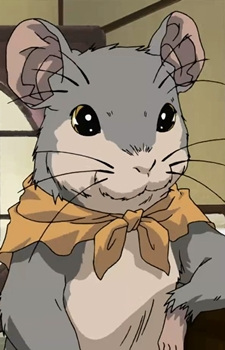
I started watching this series because so many people said it was like "Saiunkoku Monogatari" (which I love). But, it isn't. In fact, it's nothing like it. Sure they are both Fantasy, with Historical setting. But that's about it as far as comparisons. At the start I was pretty turned off by the series. I found the lead character, Youko Nakajima, to be utterly annoying. It didn't help any that she cried and cried for like the first 12 episodes straight (okay, maybe 7). But when that was done with, and the new world that we are presented with is explored and explained, things started tolook up. The characters for the most part are pretty interesting. I especially liked Keiki (Youko's Kerin - think man that can turn into what looks like a unicorn), Shouryuu ( King En), Rokuta ( Shouryu's Kerin), Rakushun (a guy that's really a rat) and many more. The characters all have some sort of substance, a majority of them have experienced some kind of hardship. You get to see most of them achieve such sincere growth that I for one couldn't help but to smile at how they turned out after their individual journeys. The plot of the story is pretty good as well, and the ideas that went into developing the backdrop are to be commended - the author was very imaginative - it works. However, this series was far too long than was necessary. A few episodes were nothing but recaps of previous episodes, and when i say a few I mean more than 1,2,3,4.... That was annoying and really a waste. There were quite a few side stories in the entire series (which is good) except one of the most major stories was never resolved. It was simply left...open..I kept wondering if somehow it flew past me and I didn't realize, but after looking back thoroughly, I can say nothing came of it. I am talking about Taiki, the Kirin who disappeared along with his King. This was the start of a great side story, and it was disappointing to see that it wasn't followed through. Instead of wasting so much film to recap past episodes, surely it could have been used to do better justice to the novel and resolve Taiki's story. And to conclude, the very last episode was by far the worst episode of them all. All it did was pretty much recap the previous 2 episodes...word for word, picture for picture. If you watch episode 43 and 44, you've watched episode 45. Keiki, who is a very instrumental character, was pretty much left out of a majority of the episodes, and wasn't even granted the respect of being shown at the end. So, while this was a good story, with awesome characters, it's not a show that I would be inclined to watch again, nor can i say it was enjoyable. On a good note, I've decided to go out and get the novel. So I guess the anime has done it's job to get me interested in the original source.
YourMessageHere
November 19, 2008
Juuni Kokuki If an anime is cancelled before it finishes, can you still hold its lack of completeness against it? This is a question that I am groping for an answer for. The thing is, I can see a huge spread of problems with Juuni Kokuki but I can also see some real plus points too. For a series in which a character says “half of life is hardship, the other half happiness”, it certainly lives by its word. An oft-repeated phrase when you look at any halfway decent review of this series is ‘character development’, and to a certain extent this istrue. The extent to which the characters change across the series, and the difference between them when they enter and when they leave the story, is in truth fairly striking compared to most other anime. However it seems a little bit like a mistake to call it development in all cases. With unfortunate frequency, characters stumble from one hitch to another and simply have total changes of their emotional alignment. First a character wants to meet the queen, then she decides that’s a daft idea, then she wants the queen to heal her friend, then she wants to kill her, then she decides she’s OK after all and supports her. All of this is very sudden and pretty much lacking in a rational grounding, meaning most of the characters come across as reactionary, incredibly irresolute and lacking in anything like consistency. Youko’s an exception to this, for the lamentably common reason that, since she’s the main character, everything revolves around her. Sadly this means it takes her the entire third story arc to finally decide to do several things that were such obvious solutions to her problems that I felt compelled to shout them at her when she failed to do them in the first episode of that story. This development is also somewhat undermined when certain characters develop nicely, others develop and then abruptly fall out of the overall story permanently, still others have believable characterisation become a victim of storytelling convenience, and a pivotal supporting character throughout the entire series completely fails to develop at all, remaining resolutely reticent and daft in a way that I suspected (and was later proven correct in my suspicions) was occuring solely to make the story happen. Nonetheless, despite the problems, the development of many of the characters, especially Youko, is compelling, and remains so throughout the series. Juuni Kokuki has four story arcs; the first and best is broadly a setup arc, but the second, while interesting, is not only almost entirely unrelated but also incomplete. The third picks up events shortly after the first arc by dint of transforming the story into a novel but tortuous take on the ‘unskilled outsider suddenly gains power, learns to deal with it’ type of story, and the fourth is both unrelated to the main plot and largely uninteresting, not to mention short. This basically means that filler episodes are avoided entirely, in favour of entire filler arcs, and seems a pretty unconventional treatment of narrative. This is of course not a bad thing per se, but given the huge gaps in subjective time for the audience, waiting as they are to find out how the story all fits together and ultimately not actually finding out, this comes across as a failed experiment, and the second and fourth arcs seem in retrospect to just be in the way of the ‘real’ plot. In actual fact, this is faithful to the novels, in which Youko takes a smaller role - for the anime she, along with many other characters, was promoted in importance. However you can't have it both ways, and in trying I feel the series suffers somewhat. One further impediment to the series’ ability to connect with the audience is its shotgun approach to language. Most characters have two names at least (some several more), many names and terms are apparently established, then apparently discarded for large tracts of time, and suddenly reclaimed for use just as unexpectedly, and the audience is expected to keep up with this. Presumably this is why it was decided to make the first recap episode take the form of one character teaching the protagonist the meaning of many of these. Not only that, but most of these names and terms are Chinese-derived, so they sound and feel significantly different from Japanese and, since I have somewhat developed an ear for Japanese thanks to anime, for me at least, they completely fail to stick in the mind. So when the Taiki sends a Kaikyaku through a Shoku from Kei to Wa because they are Taika (or something), you might have to give up on understanding and just say “whatever” to yourself. I’m sure this is a brilliant way to paper over logical cracks. If you find yourself loving this series, you might want to seek out Wikipedia’s list of Juuni Kokuki terminology and use it as a cheat sheet – I certainly wish I had. Narrative structure is further toyed with by Juuni Kokuki in the unusual way it adapts a long story to an episodic format, in that it doesn’t. That is to say, at the end of the episode, the scene simply ends and the ending credits play; no attempt to create a climax or cliffhanger is made for the majority of the series. Next episode, the opening credits play, a small recap plays and the story picks up where it left off. This makes it pretty good for marathons or binge watches, and tends to instill that ‘just one more episode…’ feeling in a way that narrative buildups, which fairly often end up cumbersome and obvious, fail to, at least for me. Fantasy fiction is hard to do well, and in my view requires a very solid systematic vision of the stories’ universe and how it all interrelates to actually work well. This generally is why I like fantasy novels but detest games with fantasy settings – narrative in games may be improving greatly, but it still has many a country mile to go to catch up with literature. The biggest problem fantasy game narrative has is its tendency to deus ex machina their way out of every problem with a combination of magic and arbitrary rules, while those are generally impossible to pull off without committing obvious fail in print. That Juuni Kokuki comes from novels, I thought, would work in its favour. This is indeed true for maybe the first ten or so episodes, the best part of the series in my opinion, until the giant deus ex machina silliness appears. This is fundamental to both the story and my opinion of it, so the next paragraph will discuss this in terms that cannot exist outside spoiler warnings. The inhabitants of the Twelve Kingdoms do not have children like us. There’s basically a kind of tree that grows them whenever a couple make a formal wish. Yes, babies grow on trees. Animals too. The people, therefore, do not have babies, or make love in any way – yet there is still marriage and parentage, and the family seems to function in a very familiar way. There are even brothels for some reason. Procreation is such a giant part of living creatures behaviour, not to mention biology, that I just can’t let this go. When this appeared in the story, it was like a giant flashing caption saying THIS IS JUST A STORY had appeared; I knew then that whatever else this series did, by asking the audience to swallow this ill-conceived (ahem), wholly unnecessary and, frankly, bullshit story device, it wasn’t going to be able to dig itself out of the pit of Just Plain Ridiculous that it had dug itself. All the subsequent explanation of this as a world in which the gods take a much more active role than ours falls flat for me, coming across as an excuse, plain and simple. I first began to suspect that this would happen when I saw the world map, but until this deus ex machina bombing occurred, I had some hope for this being credible. That being said, by comparison with most people I think I’m pretty harsh about stuff like this, so don’t necessarily take this as unequivocally bad. Perhaps I’m just closeminded in some ways. If you can tolerate outlandish ideas easily, you are far more likely to greatly enjoy this series, because it is fairly serious about telling an involved, interesting and gripping story, it simply hangs it on some pretty peculiar premises. One thing that struck me while watching this is the lack of concentration on action in the traditional ‘clashing swords, crashing cars’ showpiece sense, in opposition to pretty much every other fantasy series I can think of. Juuni Kokuki is a commendably grown up series in this sense – it does have a fair amount of fighting in it, but it never becomes either a huge focus of the series, nor does attention become so diverted from it that it becomes a bore to watch. Instead the relationships between the characters, their ideologies, and their own opinion of themselves, as evidenced by their development, are the point. Being produced by NHK, Japan’s public service channel, the prominence of ethical decisions over action is somewhat explicable, even predictable. The thoroughness with which this is covered, however, is beyond most such fare in both ambition and realisation, and thus a major point in its favour. The script is one way in which this series manages to score a major coup, especially in later parts where the story finally begins to flag. The phrase "I don't need a scabbard for my mind" in particular, struck a chord for me. Voice talent (Japanese; I have no idea about the English cast) is as good as I have come to expect from anime, particularly the ever-dependable Aya Hisakawa as our heroine Youko. I was somewhat surprised when, during my research for this review, I realised that Juuni Kokuki animators Studio Pierrot’s best known works are called Naruto and Bleach, a couple of little-known shows you may just have heard of. This at least explains the look of the show, which is not very impressive, and appears far older than its 2002-3 airing dates might lead one to expect (it also explains the reliance on a massive web of obscure terminology, like both of those two long running shows, in all their Bankai-no-jutsu glory). Design philosophy focuses rather rigidly and uncreatively on the Chinese mythological aspect of the story, with a few fairly generic fantasy addons, some lacklustre creatures and what seems to me a very garish choice of colour palette. However, unless prettiness is of paramount importance to you, given that the focus is on narrative rather than visual aspects of the programme anyway, this is not as important as one might think and ought not to be a real disrecommendation. I have heard some praise for the series music, and that in my view is totally undeserved. I found it generic, intrusive and overly bombastic generally, with an uninspired classical style plus some token chinese overtones and inexplicable electronica from time to time (some of which I’m certain was sampled by Kajiura Yuki for her Xenosaga II soundtrack - but that’s another article entirely), a lamentable fully orchestral opening and an intrusive ending theme that grew from merely irritating to fully hateful over my watching period. While I first gradually became interested in and then gradually fell out with the story as I plodded my way through it, to a point where I was actually moderately glad it was over, I can’t say it wasn’t an enjoyable journey. On balance, I am glad I watched it more than I am sorry, but not by an enormous margin. Action-lovers should steer clear, drama lovers should ask themselves how much preposterousness tolerance they possess, and fantasy enthusiasts should dive right in and enjoy the rather refreshing change of emphasis. However, prospective watchers should bear in mind that this is essentially an uncompleted story.
Fear_the_Reefer
October 21, 2014
Yoko Nakajima is a timid, proper high school student with a lot of expectations on her plate. In her home life, her parents are strict, with nothing but the highest standards for her. Her school life is even worse, as she’s the class president, with teachers breathing down her neck and an entire class room looking up to her with equal parts pride and scrutiny. One day, a tall, mysterious stranger appears right in the middle of class, and kneels before her, proclaiming her to be his queen! Before she can explain this to her bewildered homeroom, a demon attacks, andchases the two of them to the school roof, where Yoko... Along with two of her supposed friends... are ripped from the world they know, and transported to a parallel world known as The Twelve Kingdoms! Now, with a darker complexion and an altered face,Yoko is alone in a dangerous and unfamiliar world. Will she ever be able to find her friends, return home, or even figure out what in the world happened to her? I haven’t really talked about Studio Pierrot before, at least not by name, but I’ve seen enough of their work to know that they have an abysmal track record when it comes to animation. They did Saiyuki, a show whose animation quality I blasted over a year ago, and if that’s not enough to deter you, they’re the company who produced Naruto. Yes, The Twelve Kingdoms comes from the same stock as the ugly, ugly ninja show where people jumping from tree to tree look like cardboard cut-outs on popsicle sticks. They’ve proven with Yuyu Hakusho that they DO know how to manage a low budget, and in 2014, they’ve proven with Tokyo Ghoul that they can, in fact, look amazing. Well, Twelve Kingdoms is no Tokyo Ghoul, but Thank God, it’s no Naruto, either. The animation is definitely cheap, and there are some moments where the character artwork is so clumsy it will make you cringe, but for the most part, it looks passable. Passable, of course, does not mean good... Movements are stiff and seldom look natural, key frames are constant, characters frequently appear off model, and a lot of action scenes are dominated by speed lines. It’s a series from the early 2000s, but it looks like it’s from the mid nineties, is what I’m trying to say. It’s not all bad, though... There are several combat scenes that are solidly animated, but they’re the exception that proves the rule. Thoughtful angles and exquisite lighting are used to beautiful effect, however, and unlike several other shows I’ve seen, this never feels like the obvious compensation that it is. Great care was clearly taken with every shot, taking what could have been a jarring visual experience and making it a lot easier to swallow. An equal amount of care was clearly taken with the dub, which is a surprise, since it was done by the infamous Media Blasters. Even their good dubs are tolerable at best, with some notable examples being Berserk and Squidgirl, so it may not be entirely a stretch to say that the dub for The Twelve Kingdoms could be their masterpiece. Taking liberally from the Pioneer stable of actors, they went with a grounded, natural sound, without a single ridiculous or exaggerated performance in sight. Our main character is played by Dorothy Elias-Fahn, a prolific character voice actor who’s probably most well known for her performance of Meryl Strife from Trigun. Yoko is by far the most important role she’s ever had in any single project, and with that, it’s also likely the most screen time her voice has ever had. They couldn’t have cast her better, as Fahn carries every single stage of Yoko’s development with depth and sincerity, from a whimpering pushover all the way to the strong warrior she eventually becomes. While the rest of the cast doesn’t perform quite as amazingly as Fahn, they’re still pretty much all outstanding. Much like His and Her Circumstances, Twelve Kingdoms’s dub is a veritable who’s who of classic actors, with some very well known names from Wendee Lee to Michael McConnohie popping up not only in named roles, but frequently in the background, as well. Karen Strassmen, Kate Higgins and Mela Lee play at their very best in complex supporting roles throughout the majority of the story, and their respective dynamics with Fahn are portrayed remarkably. Now, the premise of this show isn’t exactly unique. High school girl gets magically transported to another world(resembling feudal Japan, of course) by a mysterious handsome stranger... Honestly, even I hesitated when I read it, and while the tone of the first few episodes had me hooked, I was still worried that all the familiar details would eventually lead down a path to the same old tropes that similar shows like Inuyasha, Fushigi Yugi, and Escaflowne have already trodden. But Twelve Kingdoms distinguishes itself from these titles by how stone cold serious it takes it’s content, wasting absolutely zero time trying to entice the viewer through any other means. There’s no romance or bishounen to attract female viewers, and there’s no robots or nudity to attract male viewers. There’s basically no fanservice whatsoever, except possibly for the furry extremists out there, and even then, I don’t think that was intentional. No, this series places all of it’s bets on it’s own story, a bold move that it’s more than capable of backing up. The story, for the most part, follows Yoko as she adjusts to this new world as well as to her destiny within it. This makes room not only for some smoothly executed world-building, which i’ll get to later, but for some truly inspired character development for not only Yoko, but for three other prominent supporting characters, all of whom have their own lessons to learn and flaws to face. All four of them start out as pathetic, arrogant, self-pitying little shells, only to be gradually molded by the hells they go through, both internal and external, into much more competent and likable people. They get worse before they get better, because that’s life, but as they travel, they gain perspective by interacting with those far less fortunate than themselves... one of whom is Rakushun, the most loveable anthropomorphic rodent since Mickey Mouse. And yet, unlike most action shows where a character faces their flaw and immediately overcomes it, the flaws our heroines face never really go away... They can never be truly conquered, only admitted and dealt with, especially in the case of Yoko herself. No matter how far you think she’s grown, an old demon is never far away, just waiting for her to waver so he can rear his ugly head once more. And when I say these characters go through hell, I mean it. This show can get really dark when it wants to... Scratch that, this show can get freaking bleak, often with little to no hope in sight. It explores topics like famine, tyranny, corruption and Draconian law, peppered with the occasional slaughter of men, women and children alike. The only pulled punch in sight is the fact that you don’t actually see the executions on screen. You don’t need to see them, after all... With the right tone, a field of gravestones or the look of despair amongst an exhausted population can carry more weight than a million bloody dismemberings, and Twelve Kingdoms understands this perfectly well, as the effects of tyrannical leadership on an unfortunate community are thoroughly portrayed, in both figurative and very literal ways. In short, The Twelve Kingdoms has the makings of an epic, with everything you’d look for within one... The themes of leadership, responsibility, and perserverence are played masterfully, and the heavily spiritual world steeped in Chinese mythology always has new details to offer both the characters as well as the viewer. World-building is at it’s best when it’s being explained to the viewer and a character at the same time, and in this case, every new detail... From the King’s connection to the very land he rules all the way down to the way babies are born... is given to us at the exact time it needs to, with consistent relevance to the plot, and with clues to the bigger reveals being offered every so often in the seemingly innocuous dialogue between the world’s residents. However, that’s not to say the story is without it’s flaws... It’s adapted from an old novel series, and in addition to the novels containing the main story, they also decided to adapt two of the side stories... Neither of which cast our heroine as anything other than the listener. These little detours are nicely told, very enjoyable stories in their own rights, and I’m sure they would have made a couple of decent OVAs... But no, they’re right there in the story, and while they’re really fine on their own, they offer nothing to justify the damage they do to the pacing of the series. They don’t reveal any important plot-related information that couldn’t have been delivered otherwise, and they could have easily just been left out without hurting the series at all, especially when you consider the fact that only one of the characters within them ever shows up again. And since I brought them up, I also have to bring up the way the series ends. I won’t reveal any important details, such as whether the ending is a happy or tragic one, but what I will tell you is that out of this 45 episode anime, episodes 39 and 40 bring the series to the most satisfying conclusion you could hope for. So, with five episodes left, I was kind of hoping they’d tie up some old loose ends, show how the conclusion effected various characters, and maybe bring the story itself to a nice, tight close. Nope! Episodes 41-44 contain the second detour story, and while it’s a perfectly fine story in it’s own right, but it was glaringly out of place. And the final episode? I kid you not... The final episode, 45, is a recap of what happened in episode 41-44. Yes, an episode-long recap of the previous four episodes. I’ve heard rumors that this series was intended to continue past episode 45, which would make sense since the novels are still being released to this day, but even if that was the case, you don’t spend an entire episode recapping a story arc right after finishing it. With a show like this one, the viewers are not that stupid, and the material is not that forgettable, making this a very tacky move, especially for an ending. It’s an unfortunate blemish on what could have otherwise been a near-masterpiece. The Twelve Kingdoms is available in the United States from Media Blasters. You can find it on both Blu-ray and DVD, pretty much exclusively online and in used FYE racks, with the latter being far more affordable than the former. The first four novels are also available in English from Tokyo Pop, and if you go on ebay, you can find a handful of beautiful artbooks and fan-made doujinshi at varying prices. There are also some Playstation games, but to my utter disappointment, they’re not available stateside. To be perfectly honest, I’ve never really been a fan of feudal-type shows. Much like the insanely popular Giant Robot fare, it’s a genre that often leaves me bored with my eyes glazed over. Twelve Kingdoms is held in high regard... At least among those people privileged enough to have heard of it... As a pinnacle of the ‘modern girl spirited away to Feudal Times’ genre. And it’s not hard to see why. While I may have let my attention shift away from the screen a few times during the detour story arcs, the truth is that I never felt bored during this series. The characters are deep and relatable, the conflicts between them are genuinely exciting, and the mythical world it all takes place in is constantly offering one wonder after another. The animation is noticeably cheap, but it’s rarely ever bad in it’s management and execution... Unlike the episodic structure of the series, which wasn’t thought out or handled nearly as well as it deserved. The extra stories may have worked in the novels, but in televised format, they leave a lot to be desired. It’s not a perfect show, but the good far outweighs the bad. I give The Twelve Kingdoms an 8/10.
Ранг
#720
Популярность
#1585
Участники
171,484
В избранном
2,651
Эпизоды
45