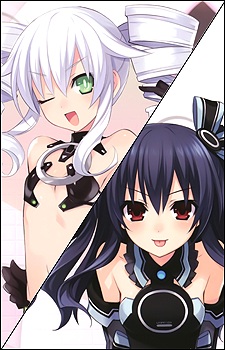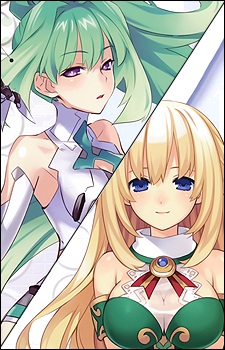


Hyperdimension Neptunia
超次元ゲイム ネプテューヌ THE ANIMATION
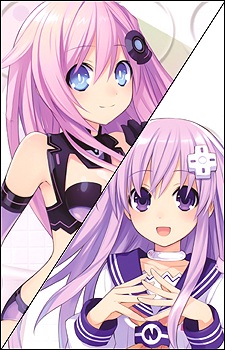
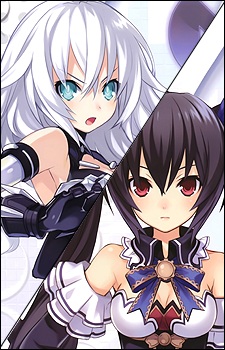
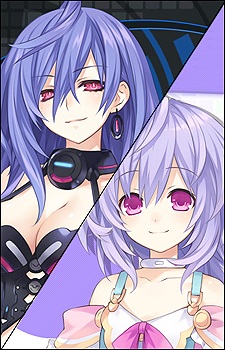
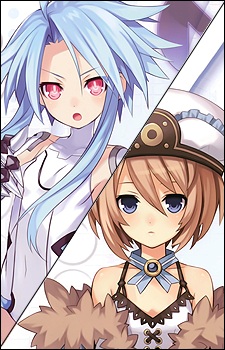
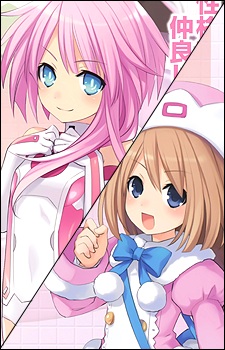
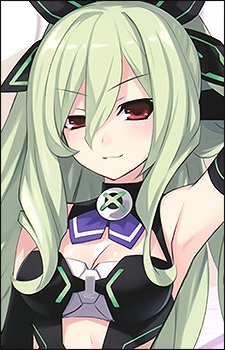
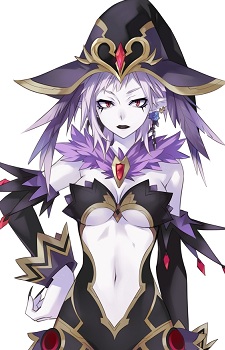
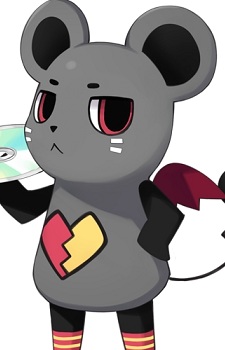
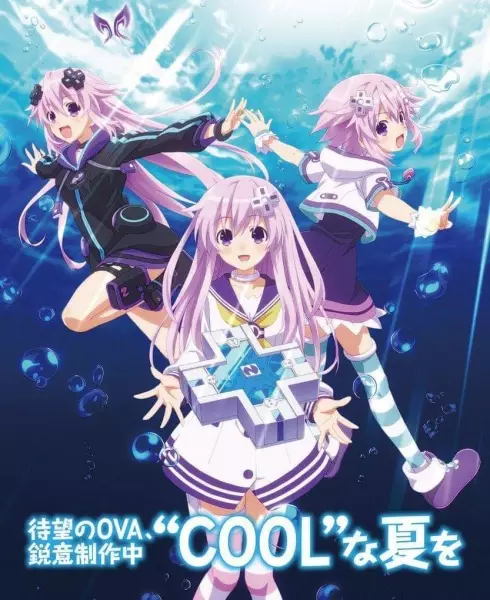
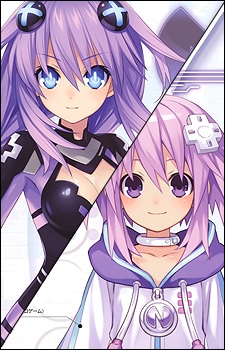
After years of fruitless war between the four realms of Gamindustri (Planeptune, Lastation, Lowee and Leanbox) over Share energy, the source of their strength based on how much their people have faith in their goddesses, the four CPUs that rule over them have finally signed a friendship treaty. The treaty bans any attempt at claiming Share energy through military force, in hopes of bringing peace and prosperity to their worlds. Yet, a month after the treaty, Neptune, the CPU Goddess of Planeptune, spends her time goofing off and playing games rather than doing her job, leaving her land's Shares plummeting. Choujigen Game Neptune The Animation follows Neptune and her friends' attempts at raising Shares, while dealing with an external threat that could spell the end of both the Goddesses and Gamindustri itself...
Главный
Главный
Главный
Главный
Второстепенный
Второстепенный
Второстепенный
Второстепенный
Второстепенный
Второстепенный
Второстепенный
LuckyKrystal
October 5, 2013
As a big, humungous, obnoxious fan of the Hyperdimension Neptunia video games, I was overjoyed to hear that it was getting an anime adaption. Studio David had us believing that they were going to do pretty well by this adaption. And in the first few episodes, that’s the impression you get. But from there on, it all goes downhill. It’s unfortunate, but the end product turned out to be a bit of a rushed mess that only captured a fraction of what was so loveable about the games. The first thing that’s noticeably off about this adaption is the character designs. Tsunako, the original characterdesigner, is practically the master of detailed and attractive moe character designs. These designs don’t translate too well into this anime. The designs just don’t look as good as Tsunako’s. There were even some shots where the characters looked sloppy, uneven, and oddly proportioned. To be fair, it can be difficult to adapt designs from a game into an anime using a completely different character designer. But it isn’t as if it’s impossible. The anime adaptions of Tales of the Abyss and Persona 4 are two in particular that succeeded in looking very close to their original character designs. And AIC did a much better job of adapting Tsunako’s designs in the Date a Live anime. The animation is not bad, but nothing spectacular. There are some flashy transformation scenes that we’re treated with that are never to be seen in the later episodes. The backgrounds are bright and colorful, fitting with the spirit of the series. The fight scenes are very minimal, not serving as much excitement in terms of action. Another gripe I had with this adaption is how they portrayed the characters. The girls of Hyperdimension Neptunia are loveable and hilarious. There’s a girl out there for everyone to love: the tsundere, the yandere, the genki girl, the little sister character, the rich girl, and much much more. It’s true, they are typical anime archetypes that we’ve seen time and time again. But what made them fun was the comedic banter and playful interactions between the characters. In the anime, these interactions aren’t always as fun or funny as they were in the game. Not only that, but Studio David literally shoved two games worth of characters into a twelve episode anime. Yes, over twenty characters had to duke it out for screen time in an incredibly short show. So to remedy this, they gave the most popular characters, Noire, Neptune, and Nepgear the most screentime, while neglecting and sometimes outright ignoring other characters. Fans of the three most popular characters won’t mind at all, but it sucks for those of us who are bigger fans of the other characters. In the game, the girls may have been typical archetypes but they rocked it and even made fun of it several times. There’s no self-awareness in the anime so they just seem like generic characters, and to make it even worse the anime sometimes wants us to actually take it seriously. What is this sorcery!? The Neptunia games have always been about jokes, good fun, parody, and humor. But here we go with the melodrama in this anime. Cringeworthy melodrama at that. The Neptunia games have never been about being serious. Even in moments that seemed serious, someone would crack a joke or do something silly to remind us “Hey! This is a parody you know!” The melodramatic moments aren’t handled well, and they stand awkwardly next to whole episodes that involve silly humor and jokes. It’s off putting and it’s just not Neptunia. Here’s a fun fact: One possible ending in the second game was one that was incredibly shocking, dramatic, way too serious, and a bit disturbing. The fans hated it so much that Compile Heart chose not to include anything like it in the third game. Okay. So it’s been established that the fans don’t like that sort of thing. So what made Studio David think it was a good idea to put seriousness in the anime as well? My last gripe with this adaption is the overall execution. It’s a mostly original story, only loosely following the events of the second and third game while adding some new scenarios. This gave the story an enormous amount of potential. Unfortunately, as stated above, this story had no flipping clue what it wanted to do with itself. It jumps from serious to silly at the drop of a dime. It can’t decide if it wants to be an action anime or a slice of life anime. Characters are severely neglected to give the three most popular characters screen time. In turn, we get characters who we meet for one or (if they’re lucky) a few episodes and then quickly forget about, such as CFW Trick, Linda, Abnes, and Anonydeath, who were hilarious characters in the game. Their origins don’t resemble what they were in the game; in fact, they are sometimes not even mentioned at all. So they appear then disappear and we aren’t supposed to care or even notice. Good god, I could have directed this anime while drunk. Now despite my harsh criticisms, I did enjoy this anime a little bit. And it does have some redeeming qualities. The voice acting is as good as it’s ever been, with most of the voice actors reprising their roles from the game. The soundtrack is a mix of original tracks with the splendid music from the game. The transformations, though only appearing a few times in the beginning are flashy and much nicer than the simple transformations they introduced in the second and third game. There is a small sliver of the Neptunia spirit in the episodes that focus on parody and silliness. The video game references and jokes are still there and although the animation is subpar, it is nice to see your favorite Neptunia characters up and at ‘em. After all, the cutscenes in the games were mostly visual novel-esque scenes. Overall, this adaption is not good but not terrible either. It’s hard to recommend this to anyone who isn’t already a diehard fan of Neptunia. One who is just being introduced to the series through the anime might not have a positive impression of the series at the end. The second and third games would be an ideal starting place if you’re looking to get in to Hyperdimension Neptunia and experience it in its original, silly, over the top glory. If you’re going to watch the anime first anyway, it’s imperative that you keep an open mind and not write off the entire franchise due to this anime. Studio David really did try, but the end product just wasn’t as good as it could have been.
Второстепенный
GonzyChan
October 20, 2013
It’s one thing when you are a fan of a video game that all of a sudden has been confirmed to have an anime adaptation and feel nothing but contempt and frustration in the reasoning why they would bother. However, when your game is already one that acts like an anime, you think to yourself that this will already be a slam dunk based on how it was born to become an anime show in the first place. So likewise, I was in the same mindset going into this. What I got in the end for Neptunia the Animation was nothing but partial disappointment thatcan only be described as a wasted potential for a series that had a lot going for it in terms of comedy and parody. Neptunia plays off as your typical moe show with cute girls in suggestive positions. I can understand people passing it off as another generic moe show—not knowing that the Neptunia games themselves are parodying those types of moe tropes. The parody included in this adaptation is just as charming and lovable in portraying the girls as consoles of past generations. However, given how the Neptunia games have endless hours of non-stop comedy in their fun dialogue, understandably, the show is limited due to its 13-episode running time. This points to the show’s main problem: It doesn’t go as far as the games in terms of quality comedy. It is nice to see the girls in full animation instead of just slightly animated portraits on-screen in your typical Visual Novel fashion. Still, sadly it doesn’t come off as underwhelming and average at best. When you compare the art to the show and the original game’s art done masterfully and beautifully by Tsunako, it’s not what you would call a great transition. The show's art can almost compare to Saturday morning cartoons where the colors look too bright and hardly have any excellent lush drawings like in the games. Calling the art to be “horrendous” or “terrible,” on the other hand, would be a stretch because, for what they’re worth, the fighting scenes are done relatively decent, and there are some moments where the art indeed does add to the humor. As any fan of Neptunia can all agree, every single character is funny and charming to look at and listen to their witty dialogues with one another. Neptune is an absolute joy to listen to, as always, with her hilarious and sarcastic personality that initially annoyed me. Eventually, I grew fond of it after a while. The tsundere princess herself, Noire, has some great laughs in her hilarious attempts to hide her side. One scene involving her stalker and showing many pictures of her alone was enough to send me howling on the ground and laughing. Our other main CPU, Goddesses Blanc and Vert are great together in how they always argue over such silly things. The side characters, which are the CPU candidates, have equal enough screen time to bolster some memorable scenes together, though really, could they have at least given us more of Rom and Ram? And finally, Plutia and her rather exciting alter-ego once again never fails to be as sadistically hilarious as usual with her perverted antics. You can’t go wrong with Hanazawa mixed with sadomasochism. This department has one crucial problem with the gushing about the characters themselves. There are hardly any other characters in the Neptunia universe that either don’t appear or aren’t shown very often. One of the best characters in the 2nd Neptunia game was NISA. Unfortunately, she is nowhere to be found, not even in a cameo appearance which is quite unfair considering that at least 5pb is shown only twice. The only reason for this is that they wanted to hold them off for a sequel because they haven’t appeared chronologically where the show is adapting, right? The plot for the show follows nearly every single game that has come out. The writers honestly try to put different spins on it by placing characters in various roles that they were initially suited for another one, i.e., Neptune doesn’t get transported to an extra dimension like in Victory. Yet, she still falls on Noire amusingly enough, and this time Plutia gets transported into their world instead of the other way around. At this point, it’s clear that the writers didn’t want to put their time and effort into fitting all 300+ hours combined of all three of the games and wanted to make one show that isn’t trying to be a point to point adaptation but instead represents the entire series as a whole in spirit. So with this in mind, many plot points in previous games aren’t shown or bothered with, which isn’t bothersome considering how some aren’t needed. Unfortunately, there are some points in the show where the rushed plots could’ve worked for the better. What makes the Neptunia series addictive and fun to play and experience? If you ask any fans, including myself, it sure isn’t for drama or profound moments in any of the games. Not only did they have the will and power to make a show into anything they wanted based on the core concept, but they decided to put in their effort in putting two or three episodes devoted to those two aspects I mentioned before. First off, the drama wasn’t very well-handled anyway in the previous games before Victory, which is by far the least serious of the bunch. Second, if you want to put drama into your moe comedy show, at least try to put more effort into making it believable and somewhat endearing. Granted, the episodes devoted to this aren’t that many, but it can leave a sour taste in your mouth regardless of the quantity of uninvolved drama thrown into you and expects us to be invested in it. Hell, there aren’t that many newly added comedic scenes that have not been seen before in any games, with only a select few that are somewhat amusing. Thankfully, all original voice actresses from the games are here and fill in their respective roles with the same amount of chemistry as in fun. Amai Isumi, once again, never fails to embark into dangerous territory in becoming the next queen of Tsundere voice acting. Rie Tanaka has perfect charisma whenever she works as Neptune and successfully fulfills Neptune as a larger-than-life character. With our two leading ladies getting out of the way, our supporting cast consists of Yui Horie, Kana Asumi, Rina Satou, Yui Ogura, Kaori Ishihara, Kana Hanazawa, and Eri Kitamura. All of them make for a terrific ensemble cast. You couldn’t have asked for better casting than all of them combined. To conclude my thoughts, Neptunia the Animation isn’t a terrible show to sit through. It’s one of the better video game adaptations out there, whether or not how much you care a lot for the medium in general. It is not something you would recommend to your friend if he wanted to get into the Neptunia universe firsthand. They’ll most likely think of it as nothing but pure moe pandering at its purest if they aren’t into that whole thing already. It is nothing more than pure fan service to the people who play the games to see the static portraits come to life before their eyes, even if the result isn’t as mind-blowing as previously expected. If you are a fan like me by chance, you could probably try to see what is in store and how it is taken in animation. You’re better off just firing off another new game, plus my fellow Neptunia brethren. Grade: C
Stark700
October 2, 2013
Have you ever wanted to wake up in an anime world? Ever thought of going to a world where there's cute girls, cool technology, and having fun nearly all day every day? I'm not talking about dreaming about it but rather going into one. If I had a choice to journey to any world, it would be Gamindustri, a futuristic world where the fun almost never ends. Well, that's all fiction but there's one thing that came to reality...and that's the fact Hyperdimension Neptunia finally gets its own anime adaptation! The anime is based off of the game of the same name that debuted in 2010as a role-playing game developed by Idea Factory. Apparently, it takes place in the world of Gamindustri where its land is dominated by cute girls who are able to transform into gorgeous young ladies in order to fight off enemies to their homeland. As for the series itself, it is composed of mainly a female cast with all sorts of character designs and personalities. The series takes place in Gamindustri that is divided by four regions - Planeptune, Lastation, Lowee, and Leanbox. Apparently, there's a region goddess that rules its region. There used to be conflicts between each region but lately, they have reached a truce and now settles for peace. Yes, that means goodbye to war and hello to happiness. The show's title follows a main female character named Neptune (same name as the planet of the Solar System). She is the goddess of Planeptune. However, at most occasions, we see her as a cute and innocent child that is quite cheerful with her friends. At other times, she is also naïve, clueless, and seems to jump straight into action without thinking. In other words, she's the type of girl who rushes into action without a plan. (usually) Her transformation as Purple Heart though gives more much more mature appearance both physically and mentally. That's just one quarter of the iceberg though. There's also the tsundere Noire (Black Heart). Representing a more independent character, she often hide her cute side when people are not watching. And furthermore, she represents perhaps a perfect tsundere with her personality throughout the show. There's also Blanc as someone whom possesses a short temper with a foul mouth. At many occasions, she seems to only care about what's going around her but deep down truly does care about her friends. Finally, last but not least is Vert, a guardian of the land Leanbox whom is considered more of a mature lady. She can be seen as calm as well as being polite to many people. As now we have the four Goddeses in check, they are the central characters that makes Gamindustri as what it is today. As they are now at peace, their relationship are much better than what is assumed previously. The slight problem here might be what happened in the past that seems to be omitted from the series altogether. I have not played the games before but it would be nice to get a deeper insight on the planet's origins and backgrounds. However, the show makes it up with its lighthearted humor and relationships. Among its many characters, there's a sense of sisterly bond. Despite the fact that many of the characters sometimes gets into fights over pity things, it's clear that they deeply care for each other at important situations. A clear evidence of this is seen in the aftermath of one of the earlier battles and more so later on against more dangerous adversaries. Although most of the characters are appealing, they lack any sort of progression. The character interactions feels real though but sometimes leaves it off in ways that are too simple. Choujigen Game Neptune: The Animation follows more of a fantasy format so expect fantasy elements like the various creatures involved throughout each episode. Some of them are simple child's play while other brings more of a threat to the main characters. This can be seen in the earlier episodes when the Goddesses finds themselves in a complicated situation. Everyone tries to be a hero but not everything goes according to plan at first. Sometimes though, they have to rely on the younger generations to get them out of that sticky end. Even though some of these conflicts are presented as dangerous to the characters, there's also a sense of parody that crosses the line in them. This can be interpreted by the positions the characters gets stuck in with their lascivious figures shown at various camera angles. One other episode involving a 'torture' like scene can be viewed as a parody as one of the Goddesses gets a taste of her worst nightmare. The story involves the main characters but often times follows no direct linear story. There's some episodes connected together as a form of mini arc but most of them gets resolved rather quickly. Perhaps the pacing is a problem here at only 12 episodes but it often feels like the show is rushing into ideas. These ideas involves the girls doing battle against enemies, having fun, and interacting with one another mostly in a playful manner. After all, war between the regions are over and it's all peace now. As the series is dominated by a female cast, there's that sense of fan service coming in. Even the younger characters gets their own spotlights. These usually comes from the transformation scenes. The transformation sequences are designed and animated as being plastered with fan service. The scenes usually depict the girls torn to their underwear with their bodies glowing as their curves are focused at various camera angles. The aftermath of the transformation presents an outfit with much skin showing in a dangerous way. Of course, shows like Neptunia isn't the first show to follow these type of style in transformation sequences. Other series such as Sailor Moon, Tokyo Mew Mew, and Shugo Chara also follows a similar format in which young girls are destined with a gift. Just be aware though that if you're coming into the show fresh, get ready to be showered with fan service. It's not pervasive but can definitely raise some eyebrows. Surprisingly enough, some of the action scenes are impressive in the beginning. Perhaps this could involve the the threat of a certain antagonist in its earlier stages. However, this doesn't last too long because what follows later are a more degrading level of what originally was presented. Here I thought villains gets stronger and more dangerous in fantasy shows. Otherwise, the show traces this a bit backwards. The action itself in the show has some intense movements though. It's clear to see a large gap in power difference between the girls' regular selves and their transformation versions. The way they fight shows that they are capable of defending themselves and protect what they treasure. Each of them seems to have a different ability that matches their characters. Even the younger characters are capable of displaying their own powers with a dangerous outlook. It tells a story of 'don't judge a book by its cover'. In this case, that story comes true especially when the younger girls plays on the role of heroines themselves. Being labeled as a parody, expect plenty of comedy. There's the various cosplays, the humorous dialogues (some of them refer to a more suggestive way of speaking), and other gags. Fourth walls are also sometimes broken here and there. There's also a feast of moe and cutey moments involving the younger characters. A certain character in the show also has a cute hobby that she tries to hide from others but is discovered later on involving references to other shows such as Steins;Gate and K-On tracing back to the idea of various cosplaying. There's even a case of food feeding that can be seen as both humorous and also a bit erotic. The ending of almost every episode plays on a parody for a entertaining way of previewing. And as previously mentioned before, prepare for fan service as the series doesn't omit the beach episode complete with the curves and swimsuits. Overall, expect parody on top of parody like pouring ketchup. The animation gives off a very fantasy like theme. Gamindustri is designed to look futuristic and is exactly as that with its technology. The beasts and lands are colored with rich visuals and often or not makes it seem like a dream to be there. As this review mentioned before, I wouldn't mind going into this world and live out such a dream. The character designs are also created to give each character a different outlook of diversity. Furthermore, the characters after transformation presents that mature way in which we can instantly see after going through the sequences. Although everything looks and fits right, the series' craftsmanship in the art department feels quite generic and not too stable. If you have headphones, I would only plug them in for battle scenes and more touching moments. Otherwise, the OP song fits too much for a girly tone. Then, there's the various shutouts throughout some episodes. I find some characters' voices a bit itchy to the ears with their high pitched voices. Additionally, the OST of the comedy scenes sometimes is looked past with the repetitive comedy itself. However, do enjoy the battle OST though as they give a more intense sequence. The ED song can also raise some eyebrows with its animated scenes. Ultimately, Neptunia is a show that can attract you in an odd way. What I mean though is in a way that makes you want to forget but sometimes come back to remember what you've watched. There are occasions during the show where I hope to forget what I just saw but then later realize how fun it is. However, the repetitive comedy and fan service sometimes becomes a dull to watch. Furthermore, the story itself can turn down some folks if they are into a more concrete written plots. But still, if entertainment is your aim, then give Neptunia a shot. For me, this show is a fun ride; not an entirely memorable ride but had its fun moments. Ah, I would like to buy some ticket to a space rocket to fly to Gamindustri someday. If only....
Kasumi_Mamiko
June 2, 2015
I am a HUGE overzealous fan of the Hyperdimension Neptunia games, and have even garnered myself a bit of a reptutation on DeviantART by creating "Custom Canvas Textures for use within the second and third games in the console series. (mk-2 & Victory) I LOVE this anime, i think they did a great job mixing the plots of the games together to create a comprehensive story line for an anime that i believe is probably only ever going to have this one season. The art is beautiful and vibrant, and the character designs are as close to the game as possible without Tsunako doing theanimation alone. The sound quality is great and it's very funny and entertaining. As for the drawbacks, there are only 2 that really stand out to me. This is NOT a series you can just pick up just because....because the characters personalities and the humor don't make a lot of sense without playing the games. The second Drawback is the English dub....at least for me, as a fan of the games. Because, They replaced 4 different characters actresses, and they chose to do an English dub for a song, which is one of my pet peeves when it comes to anime. the fact that that song also happens to be the song for the opening sequence of one of the games, makes it even more annoying to me. And lastly, the first thing i thought when i watched the English dub of the anime was "wow, i just noticed that the more Purple Heart talks, the less cool she sounds." Because in the games, she doesn't talk all that much, and when she does, she's usually doling out either a good passive-aggressive insult, or passing on a few words of friendship and wisdom. So hearing her talk so much in the anime took some getting used to, but i understand why she talks more, it would be boring if The main character who by all standards, in her human form, is a regular chatty Cathy, were to stop talking when she transformed into her Goddess form. Altogether, i give it a 9/10 for fans of the game, and a 8 out of 10 for others.
Smashking
September 29, 2013
*This review comes from a fan of the video games.* When an anime of Hyperdimension Neptunia was announced, I got excited. I’m a fan of the series (except for the first game; that game was terrible) so naturally I was really looking forward to the anime. The games played well, the dialogue scenes had great graphics, and the characters were likeable for the most part. Depending on if you’re a fan of moe or not, you can even say the voice acting is a strong point. However, the gameplay is what truly kept me playing the games. Western reviewers even praised the RPG gameplay ofthe latest game, Victory, when Western reviewers are usually very critical of Japanese RPGs. So how would the anime turn out without one of the core aspects? What we got was what the fans wanted, but it may alienate those who are unfamiliar with the series. Story: The series itself is a parody of the video game industry. There are 4 goddesses who rule over 4 countries: Planeptune, Lastation, Lowee, and Leanbox. Those countries represent the video game companies Sega, Sony, Nintendo, and Microsoft. With the exception of Sega, these companies fight the modern day “console wars”. The console wars formed the basis of the first Hyperdimension Neptunia game, but in the anime, they chose to focus on the second game, mk2, and Victory, the third game. At the start of the anime, the 4 countries sign a peace treaty that prevents the taking of Shares (the source of power in the world) by force. So you can say that the story of the anime is split into mk2’s arc and Victory’s arc. Story has never been the game’s strongest point and, unfortunately, the same goes true for the anime. The series is at its best when its being what it’s supposed to be: a parody. So drama does not fit well into the series and that’s where my problem with the story lies. At times, it’s too serious when it really shouldn’t be. A couple of times the drama does work, but for the most part, it really doesn’t fit in. The series is actually at its best when there is no story and the characters are just messing about and making references to the video game industry. The overall story the anime tells is half-decent but it’s certainly not the best story ever. Characters: The characters can either make or break the series. Depending on taste, you can love the cast, or hate it. The 4 main characters: Neptune (Planeptune), Noire (Lastation), Blanc (Lowee), and Vert (Leanbox) are the goddesses who rule over their respective countries. The three former goddesses have younger sisters who are also a big part of the plot. The main characters don’t get a ton of character development in the games and the same runs true in the anime. If you don’t like them at face value, then the chances of them growing on you are pretty low. The characters who actually get the most development are the aforementioned younger sisters. The series’ most popular characters are Neptune, Noire, and Nepgear, Neptune’s younger sister. It was clear that they focused a lot on these three characters throughout the show while putting the other characters aside. Although Blanc and Vert are main characters, they get less screen time than Nepgear, who’s a supporting character. Standout characters from the anime are Nepgear and Plutia/Pururut who make big impacts in the show. The other characters are hit or miss depending on what kind of characters you like. Art: The art style is an appropriate moe type. The characters are well-drawn and designed. The games do look significantly better though. I was initially disappointed with the art style but it grew on me over time. The animation is average for most of the show but more focus is put on the action scenes. Sound: The soundtrack does a decent job in being appropriate in their scenes. There are a couple of standout tracks like “Ryuusei no Bifrost”, which played during the fight scene of the first episode, and “Kirihirake! Glazy Star!” which played at the beginning of the third episode. These two themes are the openings from the first and second game respectively. The series is known for its great opening songs and “Dimension tripper!!” does a good job living up to expectations. The voice acting cast is quite prestigious, featuring big names like Rie Tanaka, Yui Horie, Eri Kitamura, and Kana Hanazawa. You may or may not like their performances though; it all depends on how much you like moe voices. If I had to choose standout roles, it would be Asami Imai as Noire, Yui Horie as Nepgear, and Yuu Kobayashi as Rei Ryghts. They handle their roles appropriately and are believable. The sound effects are nothing too special for an action anime. Enjoyment: How much you enjoy this anime will likely depend on if you like moe, have knowledge of the video game industry, and if you have played the games. If you said yes to all three, then you’ll probably like what you watch. That’s the best way to get the most enjoyment out of this show. One thing I do need to point out is that this series does contain quite a bit of fanservice throughout. Fanservice is old news to fans of the games but seeing them animated instead of CG scenes gives them new meaning. Fanservice is something you need to factor in as well. I tried to be as unbiased as possible when I wrote this review. This is not the perfect adaptation of the games that I was hoping it would be but it represents the series faithfully. It was still an enjoyable watch for a fan of the series even without gameplay. As a fan of the series you’re going to see a different score on my list. But this is the score I’m giving for this review. Story: 5/10 Characters: 7/10 Art: 8/10 Sound: 8/10 Enjoyment: Dependent on a variety of factors. Personally: 8/10 Overall: 7/10
Ранг
#5172
Популярность
#1675
Участники
158,656
В избранном
1,203
Эпизоды
12