
のだめカンタービレ
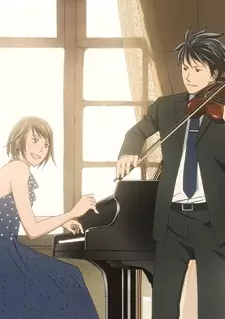
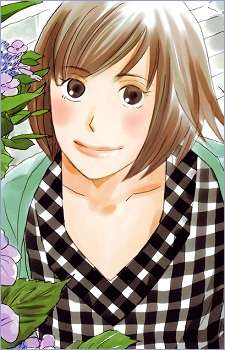
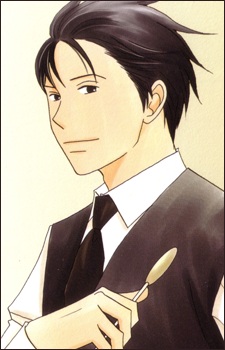
Shinichi Chiaki is a first class musician whose dream is to play among the elites in Europe. Coming from a distinguished family, he is an infamous perfectionist—not only is he highly critical of himself, but of others as well. The only thing stopping Shinichi from leaving for Europe is his fear of flying. As a result, he's grounded in Japan. During his fourth year at Japan's top music university, Shinichi happens to meet Megumi Noda or, as she refers to herself, Nodame. On the surface, she seems to be an unkempt girl with no direction in life. However, when Shinichi hears Nodame play the piano for the first time, he is in awe of the kind of music she creates. Nevertheless, Shinichi is dismayed to discover that Nodame is his neighbor, and worse, she ends up falling head over heels in love with him. [Written by MAL Rewrite]
Главный
Главный
Второстепенный
Второстепенный
Второстепенный
Второстепенный
Второстепенный
Второстепенный
Второстепенный
Второстепенный
Archaeon
July 20, 2010
Gyabo! I'm not sure why, but for some reason I've found myself reviewing certain franchises in reverse order. Then again, given the nature of Nodame Cantabile and its heroine Noda Megumi, maybe doing things in a not so normal manner is the way to go. For those of you who don't know the series, Nodame Cantabile is based on the bestselling manga of the same name by Ninomiya Tomoko, and while I do like that particular work, the anime is a little bit special in that it's one of the rare occasions where the adaptation is as good as, or in this case better than, the original. We'lltalk about that in a moment though. Now, many people have been raving about the current Full Metal Alchemist: Brotherhood series because of how faithful it is to the manga, but what many people seem to have forgotten is that there were already a few shows around that were almost completely true to their manga counterparts (and that didn't include much in the way of filler episodes) - Genshiken, Air Gear, History's Strongest Disciple and Nodame Cantabile to name but a few. In addition to this, many of the long running shounen franchises like Bleach, Naruto, One Piece, etc, generally stay true to the manga for much of the main story, but have a tendency to provide "anime original" tales and filler episodes too. Regardless of what one may think of a given show though, the surprising thing is that many faithful reproductions of the original manga are pretty decent, especially if the source material is good. When the tale is something like Nodame Cantabile though, then something special happens, something that doesn't happen very often in anime. As with the manga, the story follows the "adventures" of the eccentric musical genius Noda Megumi, and her love interest, the handsome Chiaki Shinichi. The two meet by complete accident and Nodame quickly falls in love. What follows is, well, a roller coaster of laughs, many of which you won't see coming. Unlike many other romantic comedy anime, the action in Nodame Cantabile doesn't take place in a high school but instead centres around Momogaoka College of Music, and the difference in not only the mentality and personality of the characters, but the overall approach to the story and plot, is actually quite telling. When one watches the series, it becomes obvious that the characters are no longer children, and while they may not yet be out of full time education, their attitudes to life, the world, and to other people, are actually very different from what one encounters in the hordes of high school romantic comedies around. Now one of the main issues when it comes to adapting a manga is that of pacing, in particular how the plot flows from one episode to the next, and from one story arc to the next. With manga, as with anything written, the pacing is dictated by the reader, whereas with anime the pacing is already there, and it's up to the director to find the balance so that viewers and fans of the original work will warm to the adaptation. Thankfully, Kasai Kenichi (Honey & Clover, KimiKiss Pure Rouge, Major), managed to get the formula very close to what many viewers find acceptable. Okay, some of you may be confused by all this talk about pacing issues, but there's actually a good reason for bringing it up. Many shows can get by when the pacing is a little bit off from what you would prefer (Bleach, for example, with it's annoying recaps at the beginning of each episode), however Nodame Cantabile is a special case as problems with pacing and timing would have had disastrous effects on one's enjoyment of the show, and the reason for this is because the series lives, and dies, by its music. Earlier I mentioned that this anime is one of the rare occasions where the adaptation is better than the mange, and the reason for this is because of the music. Where the manga made do with track names and examples of written scores, actually hearing the music played in the anime brings the whole series to a new level. While there are a number of thematic tracks on offer, the heart and soul of Nodame Cantabile are the various pieces of classical music that are played throughout the series, whether it be solo or with an orchestra. In addition to this, unlike other classical music based anime like La Corda D'Oro ~Primo Passo~ and Piano no Mori, as well as the more pop/rock style shows like K-On, Beck, etc, one of the things that sets this series, indeed the whole franchise, apart is the aspect of musical appreciation. Confused? Well it's fairly easy to explain. One of the aspects of Nodame Cantabile that can heavily influence whether one enjoys the series or not is whether you, the viewer, actually listen to, and appreciate, the music itself. People may find that in order to better understand the character's passion for music, they will in turn listen to the track in a way that they may not have done with other shows, and while this may not seem obvious to most at first, a good question to ask come the end of the series is whether your opinion of classical music has improved over the course of the series. Nodame's antics may help things along with a good dose of comic relief, but the music is the glue that holds everything together. Given the heavy musical emphasis, one would be forgiven for thinking that something was sacrificed in order for the whole thing to work. It's surprising then that Nodame Cantabile is actually pretty close to the manga in terms of plot and story, and although some alterations to the tale do occur, these are barely noticeable as they don't really contribute to any major changes in the plot or characters. Now, while the music is a hugely important factor when deciding if one will enjoy Nodame Cantabile, one other aspect will determine whether you love the series or not - the characters. Unlike many other romantic comedies the show has opted for a slightly more whimsical approach to love, life and relationships, and the characters are generally the epitome of this ethos. Noda Megumi (the titular Nodame), is not simply an eccentric musical genius, she is also thoroughly otaku, has a tendency to stalk her love interest, and hates cleaning. Chiaki, on the other hand, is a talented but arrogant musician who is widely regarded as the "prince" of the college. What sets this series apart from other romantic comedies is the manner in which the characters are used. While the two leads may be the focus of the show, there is considerable development on the part of several other supporting characters as they strive to become better musicians, and in keeping with the sentiments of the franchise, this never really occurs in the way one expects. Actually, at heart Nodame Cantabile is simply a different take on the "Beauty and the Beast" format, with classical music and a bit of role reversal thrown in for good measure. That said, there's nothing beastly about the looks, although there is a slight "cartoon" element to the facial features of the characters, something which is used to good effect during the funny moments. The overall design of the characters however, errs on the side of realism in respect of their movements, and while there's an over-the-top element to the actual animation of their movements during certain scenes, the majority of the time the characters move how one would expect a normal person to move. The backdrops and settings are pretty well realised for the most part, although there is a watercolour feel to some of the scenery, and the colour palette seems more understated than in most other anime. The combination is strangely elegant in its own way, and makes the visual comedy and parodies of typical shoujo manga scenes funnier for some reason (but that may just be me). The one issue I do have with the animation is this - why on earth choose such bad CG for the orchestrral scenes. Granted the animation is technically astute when it comes to finger movements and hand positions, but the overall execution is poor, and does not mesh well with the general feel of the show. One of the reasons why I was attracted to this series is because I like classical music, however even I was surprised by how much I enjoyed Nodame Cantabile. The series plays fast and loose with the typical perception that such music is staid and proper, and the comedy is often surprising in both its accuracy and its execution. Much of the humour is easily accessible to those with no knowledge of music, especially Nodame's notorious "Fart Song" and "Moja Moja Suite". This strange but well executed combination of classical music and comedy is a far cry from other shows, and the approach is far more tongue in cheek than one might initially expect. In addition to this, the depiction of student life is easily on a par with the like of Moyashimon and Genshiken, with everything that entails too. It's nice to see students doing things that students would actually do (like going out as a group and getting hammered). Given the current glut of high school romantic comedies, Nodame Cantabile is a breath of fresh air because of its more mature yet whimsical take on love and life.
Touka
February 18, 2009
"Let's go have some fun by playing some music." Nodame Cantabile follows the lives of Chiaki, Nodame and an assortment of other musically talented characters attending Japan's top music university. Throughout their studies they encounter any number of trials and tribulations as their undying passion for the art grows evermore, and through each other they learn to appreciate music and performance in a whole different light, while also discovering true romance and what it is they want out of life. The story is handled in such a mature, hard-hitting, ever so relatable way. A romantic, musically-focused plot about ardour in and outside of a relationship, Nodame Cantabileis not just for instrumentalists, romantics and music fans, but for doubters, dramatics and anyone who has ever had a passion. It's a relatable series with realistic characters, thoughtful dialogue and worldly themes of uncertainty, struggle and infatuation; as enjoyable and funny as it is heartbreaking and frank. It's well structured, wonderfully written and superbly developed. The plot has a real sense of purpose, there's genuine progress in the characters and just as many light-hearted, warm, fuzzy, humorous and loveable moments to be had as there is dramatic twists, heart-wrenching drama and eye-popping musical set pieces. As with the plot, this exceptional quality and superb writing - which I should attribute a great deal to Tomoko Ninomiya as the author of the source material, along with the anime staff - is ever-present in the characters. The main characters - Chiaki and Nodame - are an always-interesting duo, and certain members of the supporting cast are extremely well matured; there's large amounts of progression not only in terms of their personality, but also in their actions and motivations. The characters feel very 'real' - even Nodame's sometimes outlandish behaviour never wears thin - they're down-to-earth, relatable, likeable and memorable creations, flawlessly complementing the story. As a series focused on classical music, the sound department utulise many of the famous maestros, from Rachmaninoff to Bach. When the characters aren't performing or practicing, Matsutani Suguru provides the score, which blends seamlessly with the vintage classical tone of the famous compositions, while also adding a variety of more up-tempo, lighthearted tracks for comedic scenes. It's of particular note that, as the series progresses and introduces orchestras and large scale performances, the staff don't shy away from committing lengthy compositions to the screen. An episode of Nodame Cantabile has a run-time of twenty-two minutes, but during episodes which feature an orchestral performance, often nearly half or a third of that time the backing track will consist solely of a single arrangement. The staffs dedication and reluctance to cut corners with the music is admirable. Allowing the compositions to play for so long offers audiences a beauty and experience a sample would fail to execute. The music is Nodame Cantabile is handled with care and executed to perfection. One of the series' only let-downs is in the animation. Despite committing to such lengthy compositions that beautifully eat away at a large portion of an episodes run-time, the animation becomes very stagnant and disappointing during the performance sequences. An orchestra is usually extremely lively, the conductor is filled with energy and there are constant bursts of movement, but this is often not depicted in Nodame Cantabile. Instead, audiences are presented with many panning shots of still frames, with only a small number of animated sequences in-between; this sadly sucks much of the life and excitement out of the performances. The rest of the animation is generally very fluid, however, and the sequences that do depict the motions of an instrument are beautifully done. The art style evokes well Niniomiya's manga; it has a very soft tone, pleasing to the eye. Nodame Cantabile is a sensational, all-around compelling watch, not only for its masterful depictions of love, life and the beauty of music, but also for its comedic aspects. It's at times a lighthearted series, full of laughs and humour with precise comedic timing and intelligent punchlines. The hilarity never overstays its welcome, however, as the drama often takes the reins with full force, creating an abundance of memorable, affecting and emotive television. Nodame Cantabile is an ultimately moving series, with a completely fascinating story and spellbinding characters, depicting romance - in more ways than one - as beautiful as the classics themselves. It's an extremely admirable creation; certainly one of the genres best and an absolutely outstanding anime production.
kiriska
December 2, 2008
I've seen my fair share of music anime, but this is the first time the musical genre has been my first love: classical music. STORY - "Work hard and you'll achieve your dream!" It's a very cliche and often-used storyline, right? Well, yes. Yes, it is, but that hardly means that the subsequent series has to be old and tiresome. I've said before that the best stories take something that's been done a thousand times already and somehow manage to tell it in a way that's better and more interesting. In a genre dominated by high school drama, Nodame Cantabile steps it up and uses collegestudents, something I'd love to see happen more often. The storytelling happens in a mostly slice-of-life format, but it doesn't shy away from progressing significantly in time -- weeks pass, months pass, whole seasons and school years pass, and it's great to be able to follow the characters for these longer periods of time, especially since it emphasizes the fact that change and progress take both hard work and time. Nodame Cantabile is very focused for a slice-of-life series in that almost all of the characters are very serious and motivated by their goals; there are notably few subplots that veer away from the main points. I think this can make it a bit more attractive to people that are generally bored by a wandering plotline, but it's pretty easy to get engaged in this series regardless. Reading summaries for Nodame Cantabile can only bring skepticism and doubt considering the frequency of the main plot, but watching it? I was charmed by episode one. CHARACTER - Without a doubt, most of Nodame Cantabile's appeal is in its characters. Though it feels a little odd to use the adjective on him, Shinichi Chiaki is definitely gar: all the girls want him, and all the guys want to be him (actually, wait, some of the guys want him too). This most likely includes the members of the audience! He's a genius at what he does and furiously motivated; everywhere he goes, people throw themselves at his feet and do everything in their power to push him forward. You're compelled to cheer for him every step of the way. It's funny sometimes how that much charisma can make it through the screen, but it's there, and it's because despite Chiaki's exceeding excellence at everything, he remains a very accessible character. His weaknesses are just as glaring and significant as his strengths, and they're what balance him out. It's easy to imagine yourself in Chiaki's shoes. Nodame, strangely enough, is very much the same. She's crazy, quirky, wild, and questionable, but once again, she's very human. Her antics are never so over-the-top that they're utterly unbelievable, and her hopes and dreams are notably muddled alongside her classmates' -- something a lot of people can also relate to. The differences between Nodame and Chiaki made them perfect foils, and it was really fun watching all the drama and interaction between the two. Despite the frequency of Nodame's claims on Chiaki, I really felt like this was one of the least forced-feeling romances I've ever seen. At no point did their relationship feel cheap, contrived, or overly convenient. Because so much time passes during the series, the relationship felt like it progressed at a much more natural place; it was great (and adorable). All of the support characters are nice in their own way, and I don't think there was a single one I disliked. One of the reasons I loved that this series features college-aged students is the fact that they can all drink, smoke, and have sex and it isn't shocking or scandalous! It also added a nice bit of insight into the lives of Japanese college students and their hilarious nightlifes (clubs, arcades, and karaoke!) when they aren't busy studying. ARTSTYLE & ANIMATION - Nodame Cantabile has a pretty damn simple and generic art style, but in that simplicity, it's hard to find anything to pick at. The only thing that stands out for me in the character design is that many characters look like they're perpetually blushing, which is a little confusing at times -- once I got used to it though, it really wasn't that big of a deal. The most obvious critique of the animation in this series comes from the numerous still-frames used in the dozens of playing and concert montages. As an anime about music, there's obviously a lot of music-playing involved. Especially in scenes involving entire orchestras, the animation is minimal to none -- nine out of ten times you see a flute, a clarinet, an oboe, a french horn, or a cello, the players' arms and fingers aren't moving. The ratio is slightly improved for violin, and the piano gets the most attention with moving fingers maybe 40% of the time. It's understandable though; after all, animating individual fingers playing instruments with many keys is incredibly difficult, especially for the piano, when they make a huge effort to animate the actual notes that are being played. Aside from piano, where we're sometimes lucky enough to get ten to twenty measures of music at a time, most instruments are only shown being played for seconds at a time, and it's often CG. This makes the rendering of the instrument perfectly accurate and shiny (especially the clarinets and oboes), and I loved catching those sniplets of action in between the panning shots. There are a lot of still shots, but I do think what they do show us is worth it. There is one concert near the beginning of the series that's about half an episode's worth of still montages, but that's the worst of it -- as the series progresses, there's gradually more and more actual playing. :3 MUSIC - Ah, classical music! And of such a nice variety too! I was happy to see that the selection of music in Nodame Cantabile represented more than just the select few scores and piano pieces known by the general public. Most of the composers are still familiar, but there are also lesser-known names such as Debussy, Ravel and Sarasate. Unfortunately, as much as I do love classical music, I don't have a trained enough ear to be able to tell whether or not the music played in the series was tailored specifically for it -- for example, when characters supposedly play a piece poorly, I really can't tell. When characters supposedly improvise and don't play exactly what the piece dictates, I can't tell. I would think that a vast majority of the pieces would be professionally recorded pieces borrowed for the series though, and that they're all free of glaring errors. (I just can't imagine that they'd budget the money required to hire an entire orchestra to mess up.) Still, at least some of the piano solos (the Moja Moja Suite? The improvised piano version of some made-up show?) had to have been recorded for the show. Overall, all of the music is very pleasing to listen to and well-performed. Maybe you don't be moved to tears like the characters are, but if you're even a mild fan of classical music, you'll be fine. :) VOICE ACTING - Seki Tomokazu and Ayako Kawasumi both do a great job with their leads. As both characters go through a full range of emotions, their voices had to match up appropriately, and they did! Especially for a character like Nodame, who habitually puts up one front while fostering other thoughts and feelings inside, it was really important that she have a good voice. The rest of the characters all had pretty nice voices as well, though no others really stood out to me as being particularly notable. OVERALL - As a longtime fan of classical music, an amateur pianist, and a former clarinetist, Nodame Cantabile was both inspiring and nostalgic. It made me want to play more piano, and it made me really miss playing the school band or orchestra. It was educational, giving insight into the world and careers of classical musicians, and it was touching, allowing for a window in the lives of some very believable characters. It was hilarious and very silly at times, but I don't think it ever crossed the line into over-the-top territory. Even for those who aren't huge, huge fans of classical music, I think this series has enough merit to warrant a taste, and for those who are fans, you definitely don't want to miss this series. I already can't wait to move onto the sequel. :3
lowell
August 16, 2007
Personally, I think Nodame Cantabile is in a league by itself when it comes to chemistry between characters. You can compare it to tons of anime that has that general theme of "practice hard and keep trying and reach for your goals"... but that wouldn't give you the whole picture. Each person of the central core of characters is so unique and distinct and finely tuned that it brings the idea of knowing a character to a whole new level. By the end of the series, you know their goals, their motivations, their attitude, their style, their history... and at the center of allthese rich, amazing characters are Nodame and Chiaki: the child-like, natural savant without an iota of discipline and the despairing, rigid genius of music royalty who has lost the forest for the trees. Once you buy into the premise that they're both incredibly talented, you find out that they've both been pushed to opposing extremes -- somewhat by choice, somewhat by circumstance -- and over the course of 23 episodes, you can see how they slowly influence each other's lives and music in a way that's realistic and beautiful and charming and heartwarming... how they bring out the best in each other. It's also really refreshing to have main characters in a romance who aren't your typical strong-assertive-type meets meek-pushover-type. Nodame and Chiaki each have their individual strengths and weaknesses. He's incredibly arrogant and impatient and rigid and controlling. And she's so hapless and quirky and irresponsible and oblivious and... dirty. They both are very attached to their own way of doing things and they both kind of just... bulldoze over each other. When you put them in a room together, sparks just fly. ...And it's really, really fun to watch. I'm kind of a sucker for guys like Chiaki anyway, but I don't think I'd be the only one to find his relationships with everyone funny and endearing... for some reason, the way he takes care of Nodame is just really funny. The other thing I really liked about the show was the music. Just amazing music; amazing understanding of music and amazing use of music. I really enjoyed getting to see the development of certain pieces of music from the first run-through to the final performance. I'm not a musician myself and I know next to nothing about classical music or orchestras, so I thought it was a fascinating look at the work and the dedication and everything that goes into the performances. And to my layman's eyes, the imagery that they use to illustrate the feel and the flavor of the individual pieces was incredibly lovely and insightful (see: the ripples at the beginning of the Rachmaninoff piece and the pink flower petals during the oboe concerto). It made me feel like I had been missing out on something amazing all my life -- that's how good of a job they do in expressing the passion and devotion to music in these characters. I have to say, visually, I got a little tired of the pans across the stunned audience member shots... but most of those scenes was about listening to the piece more than anything anyway. They also tend to do a lot of panning over stills in general, but the pros far, far, far outweigh any cons, so it's pretty easy to not care about that sort of thing. I could probably nitpick a little about the plot and such if those things bothered me at all while watching the show... but they really didn't, mainly because... well, did the show even have a plot? The "action" of the story is so... inconsequential, that complaining about how something happens is like... missing the whole point of the show. So it's probably enough to say that if you're looking for something that's about what happened or what to do next, Nodame Cantabile might not interest you so much. Frankly, almost nothing actually "happens" except for the mundane or the completely to-be-expected. If you're looking for a show that really seems to enjoy getting to know this group of people and the passion they have in common... this is something you absolutely cannot miss. I really can't say enough good things about this show; just watch it!! =) =) =)
jimbo1023
July 10, 2007
What can I say about Nodame Cantobile? It was one of those anime that you can\'t help but enjoy. It managed to tell a fun story in which each of the characters try to accomplish what they want out of life with a careful mix of humor and drama. One of the main draws, I felt, is the believability of the characters. You will not find a perfect guy surrounded by other perfect people with wild personalities. You will, instead, find people who you could probably relate to. Each has his or her own strengths and weaknesses. The character drawings are also top notch. Again, theyjust have a sense of realism to them that often goes unnoticed. Even the animations and setting gel well together (though I think they overused the "vertical blue lines" expression). The story was a nice break from other anime I have seen. All of the characters are trying to make their way in the world of music. They all struggle for success, which is a good lesson to viewers. Even the romance between the two main characters, Chiaki and Noda, integrates itself well. Nothing is overdone to the point of boredom, and each character has his or her role to play. The ending makes you wish for more, but it does it well enough so that you would not complain. The comedy in it is great. The character interactions will make you chuckle more than a few times, especially between Noda and Chiaki. Their relationship is almost a mockery. The sounds are great, as is to be expected in an anime about classical music. The full orchestra pieces sound fantastic, and it is not uncommon for me to have Nodame Cantobile running in the background of my computer just for the music, especially in the last few episodes. The character voices are also well picked and never get annoying. Ultimately, I thought this anime came pretty darn close to perfect. I rather wish they would have used more than just the "blue lines" as the embodiment of sickness and had more movement during the musical pieces, but these are minor trifles. This anime was great and I recommend it to almost everyone (except maybe those who revel in blood and violence. You will see none of that in Nodame Cantobile.)
Ранг
#369
Популярность
#837
Участники
331,122
В избранном
4,991
Эпизоды
23