
The Eccentric Family
有頂天家族
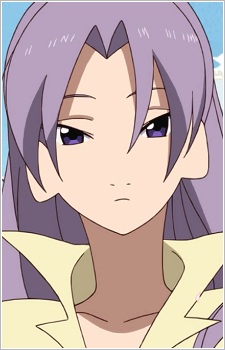
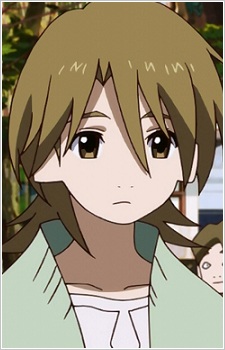
Kyoto has been populated by groups of tanuki and tengu for years, living alongside humans who are oblivious to the existence of these creatures. Yasaburou Shimogamo is the third son of an influential tanuki family who spends his carefree days taking care of an old tengu, observing humans through his ability to shapeshift, and dealing with the mysterious woman named Benten. Behind the peace and tranquility, however, is a painful memory from long ago as Yasaburou's father, head of the tanuki community, was killed and eaten by a group of humans known as the Friday Fellows. Uchouten Kazoku follows the trials and tribulations of the Shimogamo brothers as they struggle to avoid their own grisly demise while coming ever closer to unraveling the truth behind their father's death. [Written by MAL Rewrite]
Главный
Главный
Главный
Главный
Второстепенный
Второстепенный
Второстепенный
Второстепенный
Второстепенный
Второстепенный
Второстепенный
Stark700
September 29, 2013
Among the many stars in the sky, there's always one that shines brilliantly. But from this summer 2013 lineup, there's also series that shines among the group as well. Perhaps one series that might of slipped under some people's radar is Uchoten Kazoku. (also known as the Eccentric Family) From P.A. Works comes forth a new anime this summer. Based on a novel written by Tomihiko Morimi (The Tatemi Galaxy), Uchoten Kazoku takes the setting to Kyoto with an eccentric family. Why is the family eccentric? Perhaps one of the reason is that none of them are not actually human. Rather, they are unique or morespecifically categorized as tanuki. The series details the family, and in particular one child by the name of Yasaburō Shimogamo - the main character and the third son of the Shimogamo. To start off, the setting of the show takes place in Kyoto. As such, expect an old fashioned and traditional city in a modern life setting. There's the Japanese like atmosphere but combines that with elements of fantasy. That's because the characters of the show are tanuki; Japanese raccoon dog beings native to Japan. But in this story, we have this child named Yasaburo Shimogamo who stars as the main character. He has the ability to shape-shift and plays on a gender bender role in the some of the episodes. Even when we first meet him, he is in the clothes and body of a girl. Oddly enough, Yasaburo plays the role of an ordinary boy with abnormal powers. We also find out that exactly how he lives his daily lives ranging from observing human behavior, engaging in extended conversations with others, and even to warming his butt. Now, that is abnormal. It's hard to be original these days in the anime industry. Many ideas have been explored but I find this show to be quite refreshing. It takes the Kyoto setting and transform it into an urban fantasy without violence, shounen battles, or a guy being the hero to save the day. Rather, we have dynamic character relationships with the eccentric family being a center of the plot. As for the plot itself, the majority of the series takes on an approach similar to a narrative. Yasaburo is the main character so naturally, we get to see his life from his point of view. The relationships he has with the other family and characters are explored throughout the series. Among one of these relationship that is most noticeable involves with Benten, a member of Friday Fellows. This relationship can be described as very peculiar as maybe on the lines of love/hate. From the surface, we can assume that Yasaburo has a crush on Benten even from the very beginning. On the other hand, Benten is a woman with a mischievous personality and hard to read. Most of the time, viewers will have a hard time figuring out what she's thinking. In one particular moment, she teases that Yasaburo will be her dinner all the while putting on a poker-like face with a noticeable 'smile'. The show explores the eccentric family so naturally, we get to see their backgrounds as well as their past stories. Some of these stories could spawn emotions especially later on when some truth is revealed regarding Yaichirou and his generation. Perhaps most importantly though is how the characters deal with revelations. Eccentric Family takes on the approach of sadness and presents in a way that seems to be more natural. It's obvious that there are moments when characters wishes something that has happened never happened. However, it's too late now to change anything. Instead, the characters moves forward and accepts the truth but with a silent tone. As with most family goes, there's also fun and comedy as well. Tomhiko Morimi's Tatemi Galaxy had plenty of comedy presented in an absurd yet very entertaining way. As for this show, it similarly has that style of comedy but presents it in a more sensational way. Yasaburo indeed has character relationships with many of the characters, some more striking than others such as Benten. On the comedy side though, Akadama is perhaps the guy that makes up one half of that duo with Yasaburo. The silliness can also be traced with the family origins in regards to their shapeshifting abilities. Yasaburo can shapeshift and takes form of a girl effectively making him a trap. But more figuratively, he likes to do so especially when visiting Akadama as a way of teasing. Speaking of Akadama, he also sometimes denies what's really there. It's silly in the way of comedy rather than being forced. There's no random scenes of awkwardness in terms of compromising positions to present its comedy. Instead, it's natural and fun. Now, that is effective comedy. If we talk about dialogues though, this show has what it takes. The dialogues in this series can be taken in as impressive in the way of its style. The words being spoken can be taken with both a sense of realism and also fantasy. It also mixes in the a sort of complexity as family origins are explored that details to their generations. As such, viewers should absorb and take these dialogues for granted as they can be important to recall later on. Finally, the dialogues has a sense of maturity to it. At times, it might come out as silly but its presentation makes it dramatic to listen to. The term 'fantasy' spells out many ideas. In recent years, anime series have taken on the fantasy to the virtual world, to ghost haunted schools, or to a dark age when Titans are the dominance of its land. However, Uchoten Kazoku takes on the fantasy theme and conveys it in a more traditional way. The tanuki is just one prominent example relating to traditional Japanese folktale based on its raccoons possessing the ability to shapeshift. In such legends, the tanuki uses such ability to cause mischief. This folktale legend can be seen as parallel to this series in the case of Yasaburo. Then, there's also Benten whose character spells out mischievous all over her face. There are also other mystical creatures such as youkai and tengu. Though the show has an impressive stance and presentation, there are sometimes I scratch my head and wondering what's really going on. The drama around the show sometimes also becomes almost overdramatic and focuses too much on Yasaburo. Additionally, there's a certain lack of diversity in terms of its mythological creatures. Along with that, some of purpose relating to the characters are also vague as a narrative often explores them in concrete details. In this case, narrative takes on a more textbook approach where we sometimes have to go deeper with what Yasaburo sees the modern world as. Finally, there's bits of fan service showing in the case of Benten as a form of tease. Heh, maybe she' just a femme fatale or something but good luck reading her. She's not a textbook with an answer key. Uchoten Kazoku is adapted from P.A. Works. As a production studio, fans should be aware of their works by now. Their most recent project, Red Data Girl also takes on some Japanese traditional themes and transformed it into anime form in modern era. As for this series, P.A. Works once again puts their talents at work. It does look a bit different though with the character designs looking more simple with nothing breathtaking. The raccoons of the show has an innocence to them while Benten is designed with a mischievous figure. Masayuki Yoshihara's direction of the series also takes on that narrative style so some characters talking might give them a more direct way of speaking; sometimes as if conveying to the audience of their feelings. The backgrounds looks interesting enough though to convey the modern setting of a Japanese folktale lore. A less noticeable factor of the series could be the soundtrack. As far as music goes, Uchoten Kazoku takes on a natural style of tone with its smooth OST. Yoshiaki Fujisawa coordinates the music and makes it calm to listen to but at the times forgotten since the dialogues and comedy dominates the music base. The OP song also presents an odd feature of an opening while the ED song ("Qué Será, Será) has a more catchy tone. But for all else being said, I give praise to Yasaburo's VA Takahiro Sakurai for voicing the main character. With over a decade of experience, we can clearly see a talent in his character as Yasaburo as whether being a guy or a girl. Additionally, Benten's VA Mamiko Noto gives her character that mischievous tone of voice. Overall, I would describe this series as fascinating in the sense of its narrative. It's not every day where we see raccoons running around in a human community. But more importantly, we can see a main character's point of view in a modern Japanese city. The dialogues spoken in this series may be difficult at times to interpret or absorb. However, make no mistake as they tie in with a lot of the themes together. As one of the underrated series, I definitely recommend giving Uchoten Kazoku a try especially if you're a fan of comedy-drama or if you've previously enjoyed The Tatemi Galaxy. It's a tale of family fun, storytelling, relationships, and brilliance.
Второстепенный
yuridice
November 25, 2013
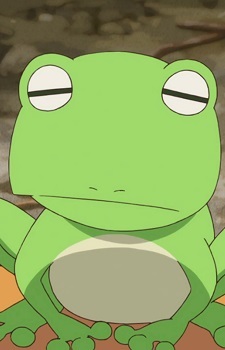
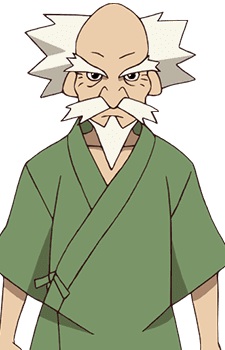
Uchouten Kazoku opens with Shimogamo Yasaburou, an energetically laid-back shape-shifting tanuki, giving us a quick rundown of his hometown of Kyoto. This is a city with a storied history of mostly-regular humans, proud tengu magicians, and oh, playful tanuki shape-shifters, of course and here, he tells us, there are endless quantities of amusement to be had. As the camera follows him deftly navigating the beautiful cityscape, he declares with conviction that while he is a tanuki, he's far too proud to be a mere tanuki and is instead one who passes his days admiring tengu and imitating humans. He assures us that he is sobusy that he doesn't even have time to be bored. The introduction now complete, the opening theme plays. And with that, the frenetically paced Uchouten Kazoku is now over. As if to drag the show back down to earth, his younger brother appears and bestows upon our main character that which is most dreaded by every magical shape-shifting bohemian, a responsibility—and one from his mother, no less! It quickly becomes apparent that although he neglected to make mention of this in the introduction, he is in fact the third of the four sons of a once-prestigious and close-knit family of tanuki. Although you might suspect, due to the now-conspicuous absence of this little bit of important information in his introduction or simply just due to his nature, that he is somehow resentful of this, he in fact makes no real effort to escape from these bonds. And so we have settled into the basic premise of this series. Though not without frequent bursts of excitement, this is now a much slower show and its many strengths begin to reveal themselves to the viewer. With its vivid reds and yellows that perfectly capture the fall season, saturated yet earthy greens, and fantastic nighttime blues, this show likely has the best color palette of any anime from 2013. (The doubtful are invited to consider episode 6, titled "Taking in Fall Colors," which is about just that: taking in fall colors.) Combined with the excellent way that texture is used in the visuals of this show, this makes for amazing backgrounds; as the viewer may have already noticed during the introduction, Uchouten Kazoku's Kyoto is an inspired city of lively streets, fanciful props, and amazing interiors. Also worth noting is the way that the animators expressively use the body language of the whimsically designed and deceptively minimal characters. For an obvious example of this, you could watch the way that Yasaburou moves even after taking a female form in the first episode, although it's really something that deserves your attention throughout the entire series. The strongest aspect of all, however, is the writing, and as such Uchouten Kazoku features an amazing cast of characters. While Yasaburou doesn't completely embrace his familial obligations—certainly not to the degree of the eldest Shimogamo brother—his relationships with his immediate kin are shown early on to be his most significant and enduring ties and as they should be, they are all great characters, from the eldest—the comically severe Yaichirou, to the youngest—the endearing Yashirou. But the best non-Yasaburou member of the Shimogamo family might just be the unnamed matriarch, who plays many roles over the course of the series but is always a fun character due both her quirkiness and her naturally likable demeanor. All of the main characters are given the development that they deserve, and Uchouten Kazoku deserves credit for doing so in such a way that it feels like part of a natural progression where the viewer is increasingly drawn into the lives of its characters. Although this can be mostly attributed to the thoughtful way in which the story progresses, some credit should be given to the production for the excellent way in which all of the flashback scenes were executed. Flashbacks can easily feel tacked-on and tacky, especially when silly effects, bad transitions, and other such missteps are involved, but the flashbacks in Uchouten Kazoku are not only well-integrated, but also executed to a standard that is higher than much of the rest of the show, lending them emotional impact and narrative strength. The main characters aren't the only fun and interesting ones, however, as almost any given supporting character from the scheming Ebisugawa brothers to the perpetually grumpy Akadama-sensei has the ability to steal the spotlight for entire scenes. Both the writing and the production deserve to share the credit here, as the supporting characters are not only written in a way that makes them instantly likeable, but are depicted on screen in a lively and colorful way that is on par with the main cast. (If you've been keeping count, you may have noticed that I've neglected to mention one of the four brothers. Well, he's currently a frog in a well and for the purposes of this review, there isn't too much more that I should say about that, but I suppose that it should be noted that he is both one of the funniest and most interesting characters.) Arguably even more impressive than it's cast, however, is the way that the it can effortlessly evoke meaning from absurdity. For example, I did not expect to truly feel bad for a frog in a well—that is to not just have a meaningless emotional response due to some cheap puppy-kicking, but to actually really truly feel bad for a frog in a well. Though Uchouten Kazoku presents itself as a slice of life comedy with whimsical supernatural elements, it flexes its storytelling muscles in a big way on an episode-to-episode basis, so is not only thematically rich, but crafts a meaningful emotional narrative over the course of its thirteen episodes. The key to this is perhaps the way that elements of the story are quietly and thoughtfully built up over the course of the slice of life portions of each episode, leading to catharsis much more naturally than is obvious to the viewer. I want to finish by talking about yet one more important character that I've intentionally avoided even making a passing reference to thus far, and that is the cryptically beautiful figure who is now only referred to by the name of the god Benten. Though she makes appearances as early as the very first episode—the world of Uchouten Kazoku is a small one after all—she remains an enigma for much of the series. This is largely due to the fact that as much is said about Benten by the other characters in the show than is said by Benten herself, which leads me to why I chose only now to bring her up: Benten frequently serves as the focal point of all of the strongest elements of this series. Captivatingly beautiful to almost every character in the show, the impassioned moments that she inspires are many (but not all) of the most powerful scenes of the series. But Benten isn't just your archetypal muse character who sits around looking pretty while legitimately interesting characters swarm around her and do legitimately interesting things. She herself has a hand in almost every single major plot event of the series and is furthermore the main actor in, or at least an active participant of, many of the best scenes, so while her appearances are sometimes infrequent, they are always memorable. The best aspects of Uchouten Kazoku just seem to become even more apparent whenever Benten is involved. Indeed, everything from the quality of the writing to the quiet strength of the soundtrack and the ability of P.A. Works to deliver sublime visuals seems to be on display during moments like late in episode 3 when Benten waves her fan, and as if on-command, everything immediately comes together to create one of the best scenes of the entire show. As something with no significant flaws that come to mind, I wholeheartedly recommend Uchouten Kazoku to anyone whose interest is even slightly piqued by this review. Though often restrained in its pacing and contemplative in tone, the show is much more engaging than you might think. Even if you think that you will find it difficult to appreciate the writing or the humor, P.A. Works does a great job of creating an immersive experience for the viewer with the superbly-crafted setting and soundtrack lending the series strong atmospheric qualities as well. Just watch it—I'm sure that you won't be lacking in things to appreciate.
post_human
September 29, 2013
In this day & age it's sometimes very hard to find something original, the anime as a form of art has now become so generic & predictable with typical shounen & typical ecchi spewing around us from all direction that it is really hard to remember sometimes that this is not only a form of entertainment (or rather shameless fan service) but it is also a form of art. And fortunately there are still anime's like "Uchouten Kazoku" still being made to remind us just that. Story This was actually based on a novel by Tomihiko Morimi which is the story of a family, of a certainpeculiar family at that, cause the members of this family aren't human. This is a story of a "Tanuki" family. Early on our protagonist tells us about the world he lives in, a fictional version of modern Kyoto, where Tanuki, Tengu & Humans co-habit, humans are obviously at the head of the food chain, and Tengu's are creatures that can fly. So what are Tanuki's? They are shape-shifting raccoon dogs (bet you didn't see that one coming). This is the story of four brothers of a tanuki family , their mothers & their friends; the head of the family that is their father was eaten by a group of human called "Friday Fellows" who eat tanuki every year as a tradition in their year end bash. I know this seems confusing so far, but believe me under this weird exterior there is a really beautiful story. We get to observe the life of this family through the eye of one of the brother's, our main character Yasaburo. We get to know this beautifully imagined fantasy world, face the challenges you have to face by being a shape-shifting tanuki, and get to know the truth behind how the head of the Shimogamo family really died. From the small little funny bits like Yasaburo warming his butt (or else he will catch could); to his weird shape-shifting practices; to all the allegory about an actual loving family-life, the nature of humans & the corruption in our political circle now-a-days everything is written in a almost flawless way. There is layer upon layer of details on every scene & intelligent dialogues throughout the show. The story is almost flawless in what it tries to achieve, it gets 9 out of 10 from me. Characters The characters are so meticulously imagined by the writer that it really shows the amount of dedication & care he really gave his work. From the responsible yet too much trying older brother Yaichiro, to the carefree yet guilt ridden Yajiro, to the "most idiotic of the blood" Yasaburo, to the timid and shy Yashirou all the brothers are so well developed characters. There is their loving mother (who is one of the most realistic mother figures I have seen in an anime); the mysterious & unpredictable Benten (who you will be constantly wondering about, if you should love her or hate her); their angry & irritable sensei Prof. Akadama; the loveable Kaisei; and many other artistically written characters. Most of the characters are so well written & well developed that is really unique in this times cause now-a-days most of the animes have 90% generic characters (even some good ones do lack in this department). It gets another 9 out of 10. Art/Animation This anime also features very unique art, all the character designs are delicate and drawn with style, the backgrounds are colorful, all in all it does portray the wacky & weird image we get from the story quite nicely. Occasionally there are some scenes which are a bit flawed or feels out of place but overall the art & animations fits the nature of the theme that the writer tries to convey almost perfectly. It gets 8.5 out of 10. Sound The opening theme is "Uchouten Jinsei" by milktubIt & the ending theme is "Qué Será, Será" by fhána,. I really like the opening song which fits nicely with the sense of wackiness this anime first tries to establish in its viewers, I get where the ending song is coming from, it was definitely aiming to get in touch with the other side of the story that was the beauty of it but I don't think the song does add that much on the total experience. It might seem a bit unusual but I liked the sound effects used in the actual anime much better than the actual opening and ending theme, there is a bit of keyboard (or other instrument) piece in some of the intense sequences which is quite beautiful, and the other bits used on emotion sequences were quite exceptional to me too. The sound gets on the whole solid 9 out of 10. This is the kind of anime that reminds me of why I am still sticking with this genre of entertainment. Just when the anime world is filled with generic hero fights endlessly to save the world or a girl or closet pervert hero gets caught in between lots of big breasted & scantily clothed females if you really look hard enough you find gems like this. This kinds of stories rejuvenates the believer in me (on a side note it also makes me sad that I don't know Japanese, or I could have read the original book). This is a must watch anime & one of the best of the season and of 2013. Don't waste your time reading this review just go watch it. Overall score - 9 out of 10.
Flawfinder
January 27, 2015
I've been meaning to revisit Uchouten Kazoku aka The Eccentric Family for a while now. See, when I wrote my first review, I was going through a phase where my tastes were sine-waving between exploitation lover and dirty elitist, which didn't go over well with a lot of my readers at the time. And by Christ was that phase bad. I mean did I really say the show sucked by comparing it to Utena? That's like saying Texhnolyze sucked by comparing it to Legend of the Galactic Heroes. My views on the show haven't changed since then, but now that I've mostly embraced some sortof middle ground between enjoying Ingmar Bergman and Russ Meyer at the same time, I thought I'd give a second shot at describing why I wasn't into PA Works first "good" anime, as most people call it. Let me just reiterate before I start that I by no means hated the show when it was finished and that I was exaggerating for comedic effect as well as to counteract all the unanimous praise regarding an anime that I desperately wanted to like and yet it failed me more than a racing horse that kept farting tires out of its ass whenever it ran half a mile (don't think too much about that metaphor. I certainly didn't). With original source material written by the man behind The Tatami Galaxy and an artstyle completely different from PA Works' usual stuff, something that not even PA Work's second elitist-bait show could get away from, you'd think nothing could go wrong. Well this show and Kyoukai no Kanata sure showed me. Sometime around the show's end, I read an excerpt that stated that Uchouten was adapted from a book that was actually the first part of a planned trilogy that hasn't been completed yet. And by Christ did that show, because the way this anime played out was like Durarara channeling Ghost Hound in every single negative way imaginable. The anime starts off by throwing you into its fantastical world with no explanation and letting the character interactions do the talking; which sounds cool at first until you realize that by the end of the premiere, they forgot to give you a reason to care and expect the audience to just go along with the whimsy with the promise of paying off at the end. See, I'm really opposed to this style of storytelling. Just because a good groundwork is required to make an engaging show doesn't mean you're supposed to rely on said groundwork for said engagement. Because more often that not, said groundwork isn't actually as good as it wants you to think and by the end of the show, you realized you got hoodwinked and all you can do is cry whilst Stephen King laughs at you. Every scene should have momentum. It should have a point. And hopefully at the end, said point is actually interesting. This problem is that you need a plot to have an interesting point and when I realized by the second episode that Uchouten is all story and no plot at all, it just lost me. I know it's a style of storytelling that a lot of people seem to not mind considering the stuff that makes it onto MAL's top 30, but I personally tolerate said style at best and despise it at worst. Characters talk with each other in an attempt to build something up, but they forgot to give me a concrete reason regarding why I should care about the build-up in the first place. And no, I didn't dislike any of the characters or anything. But as much as I like the cast of Rocky, that doesn't change the fact that the fifth film was a giant dull turd. The show never really gave the tanukis, the Friday Fellows, and especially not Benten anything to do besides talking about their lives whilst building up to a story that doesn't seem to be in service of anything really meaty. Sure Benten riding on a dolphin whilst nude before participating in a fireworks battle is cool to look at, but to what end? Well the end is revealed in the last stretch. It's just that said end is predictable as fuck, and it doesn't even conclude in a satisfactory way, coming across more as sequel-bait to something that hasn't even been written yet. So even if you were into this show for the pure storytelling, Rage of Bahamut-style, I'd argue that the show still falls flat. Did we really need thirteen episodes dedicated to a fizzled climax and family themes are the same standard "family must always stick together no matter what" stuff you see everywhere? I personally don't think so. Yeah, the dialogue is nice and the presentation is good, but they should inform a plot. Not be the plot. Even the "good" animation showcases have more going on in them underneath "yes, this guy can direct". I mean take Cat Soup (the OVA) for example. It also had great aesthetics and a subtle storytelling method, but in addition to being much shorter, what really makes it stand out as one of the best anime short films in the medium is that the story was about how if you screw with the universe, it'll screw you back. That's an interesting message. That's something I can't learn from high school. "Fun things are fun" is neither of those things - unless you apply said message to something really ironic like Jake Gyllenhal's "I screw people to get the story that'll allow me to obtain money, women, and power" character in Nightcrawler or something. But we're delving too far into subjective territory even by my standards right now, so I should probably wrap things up before I end up trapped in a black hole of no escape. All in all, the reason I didn't like Uchouten wasn't because it didn't make anything exciting happen week after week (well okay that is the reason, but I didn't necessarily need sword fights occurring on a sinking ship to keep my attention). The reason I didn't like the show is because for all the creativity going into the aesthetics, the actual core is just too safe in its goals to really be filling. It's comfort food anime at the end of the day, and in my screwed-up universe, comfort food anime is about as comforting as anesthesia. You'll feel better after waking up, but you were supposed to pick up your girlfriend an hour ago.
mha_hater_No1
January 25, 2021
I was onboard with this anime at first. I "got it", the tanuki are carefree, and they accept being eaten by humans. I understand that people adapt to the realities of their lives if it is all normalized by their society. I got all that. HOWEVER, I stopped getting it when they Tanuki react to their trials and tribulations as would any normal human being, except when it comes to being vengeful or hateful. I understand that many Japanese people believe that being hateful is wrong, but hatred and vengeance is a staple of human society, the reason is purely evolutionary. It exists in all creatures,not just humans. When someone does you wrong, you hate them because they hurt you of course, but the evolutionary reason you hate them and want to harm them is to PREVENT MORE harm being done to you or your family again in the future. As antagonist and protagonists go in this show, you have to turn off your brain to watch this anime. In many cases, you have no idea what goes through their minds at times. I will not post spoilers but I'll give you a story. Imagine your brother gets mutilated and skinned alive by someone in your city, then you go out for a walk with that guy knowing that he might go and mutilate more people, forevermore, and you treat him as a friend, including all the people who help him, or try to push you down to get ahead in life. I am down with Tanuki being accepting of being eaten, but I am then not down with you trying to make me feel sorry for an organism that has the defense mechanism of grass. There is so much cognitive dissonance in this show I feel that the people who wrote this show were smoking lead fumes when they wrote the story. This truly has so much potential and yet it is an infuriatingly frustrating show. The first few episodes were fine and by the end watching more episodes was like pulling teeth. If anyone you know liked this show, just never speak to them again. They might be walking next to you as you get mugged and then they might want to go get a few beers with your mugger.
Ранг
#1078
Популярность
#1446
Участники
189,111
В избранном
1,539
Эпизоды
13