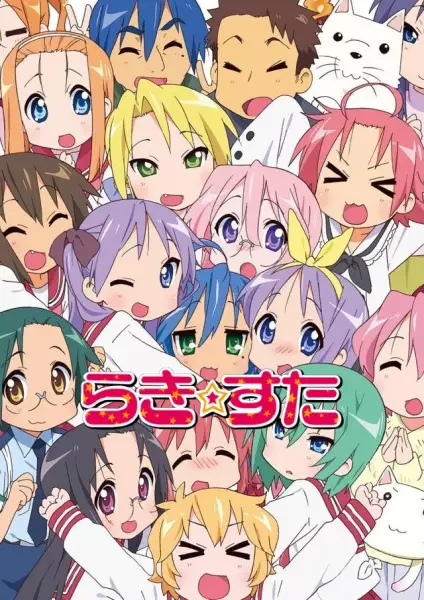




らき☆すた
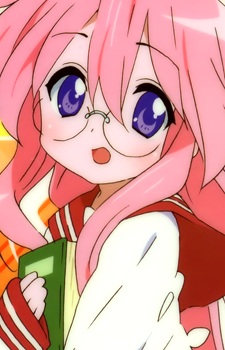
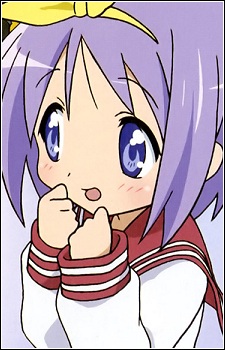
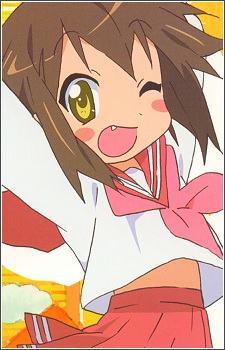
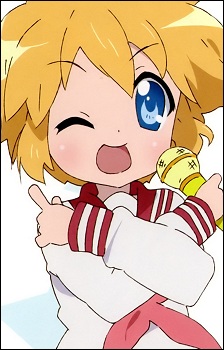
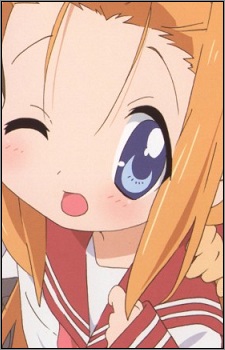
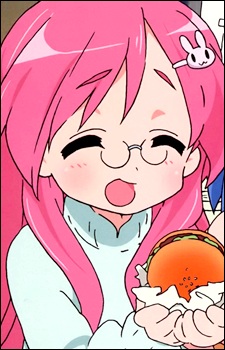
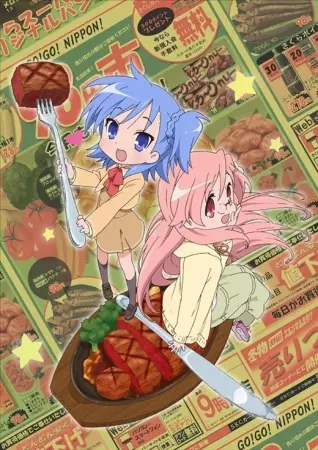
Lucky☆Star follows the daily lives of four cute high school girls—Konata Izumi, the lazy otaku; the Hiiragi twins, Tsukasa and Kagami (sugar and spice, respectively); and the smart and well-mannered Miyuki Takara. As they go about their lives at school and beyond, they develop their eccentric and lively friendship and making humorous observations about the world around them. Be it Japanese tradition, the intricacies of otaku culture, academics, or the correct way of preparing and eating various foods—no subject is safe from their musings. [Written by MAL Rewrite]
Главный
Главный
Главный
Главный
Второстепенный
Второстепенный
Второстепенный
Второстепенный
Второстепенный
Второстепенный
Второстепенный
FireBallsDJ
March 4, 2013
"This is so BORING!" is what most of you will say if you watch it. I'll admit, that is what I thought at first, and I stopped watching on the first episode when they were talking about which side is the head of a "chocolate cornet bread"... But after a while, I gave it another try, and this time, I watched patiently and watched through the entire first episode. I was still not impressed, and still bored. I moved on to the next episode, and as you can tell by my over-all rating of a 10, I loved the rest. Now here is why: The story, isnon-existent (as I will put no emphasis on story in this review). But that was one of the main reasons I loved it. There was no tension, no fighting, no drama, no heart-breaks. Just pure comedy. Comedy? Well, there's nothing that will make you roll over. But, there are countless moments where it makes you smile, many times even chuckles if you get the jokes. The comedy works in this anime by having the characters go through moments where you go like, "OH I feel you!", "I totally know what you mean!, or "Ah so glad I am not the only one who does that!". That's why it's really funny in a way, making this the most accurate "slice of life" I have ever viewed. The English dub for this anime is pretty amazing (for once), the voice actor for Konata, the main character, does a wonderful job of bring her to life. The characters are all likable, but Konata is one of the best characters I have seen, and she manages to do all that without geass powers or sword skills, too. I don't want to spoil anything, so I will leave it up to you to find out more about why I find Konata so great. Also, it's a huge plus if you are exposed to Japanese culture (real life), because many of the jokes is about the daily life there and you will only get the jokes if you have experienced it (there aren't that many, so don't worry). To sum it up, Lucky Star is about the daily life of the girls, there won't be any conflicts like there are in many slice of life anime, this anime is very peaceful, and you can relate to many of the characters. Give it a try! Watch a few clips of it! Type in "Funny Lucky Star Moments" on Youtube and see for yourself! If you like it, WATCH IT. Don't marathon it, in fact, watch an episode after a long day, or better yet, watch it to calm your nerves after something like Code Geass/Death Note. Thank you
Второстепенный
immortalrite
July 4, 2010
There is nothing in entertainment worse than bad comedy. Bad drama, horror, romance, or action at least has the possibility of being amusing, if only for purely ironical purposes, and watching something which is intended to be serious completely fail can be surprisingly fun (see MST3K). However, watching something try to be funny and fail is hardly ever amusing in the slightest, and amounts, for me at least, to the epitome of nauseating boredom. In the anime world, Lucky Star is perhaps the best (and at the very least the most popular) example of bad comedy ever made. Now, it is more or less universally agreed uponamongst Lucky Star's detractors that the show is, quite simply, "unfunny." At the same time however, it is not always explained in detail why or how it is unfunny. But before delving into the specifics, I will freely admit from the outset that comedy is probably the most subjective and difficult of all genres (I myself have some bizarre comedic tastes) to review. Nevertheless, I believe Lucky Star merits special attention, along with a special place in Hell, for how unprecedentedly unfunny it is. This is also why I chose it for my inaugural anime review. Basically, the "humor" of Lucky Star is derived from two sources: 1) Discussions about everyday life experience (e.g. food, homework, clothes), and 2) References (either verbal or visual) to other anime franchises and various anime-related tropes. As for the first, Lucky Star makes the awful mistake of assuming that simply because something is true or commonly experienced, it is funny. Thus the episodes are crammed with inane, excruciatingly detailed conversational gems like Person 1: "You know how when it's cold outside, you want to stay inside for longer?" Person 2: "Haha yeah, I've totally been there!" or Person 1: "You know how when you have a lot of stuff to do, you clean your room instead?" Person 2: "Haha yeah, I've done that before!" You get the idea. The whole "funny because it's true" thing in my experience only works if it is comingled with an adequate amount of absurdity or exaggeration (for an example, see Mike Judge's films). Lucky Star, on the other hand, aims for pure realism in all its dullness. With this "comedic" logic, they may as well assume that simply because I have eaten food before, I will think that watching people eat food is funny; furthermore, I will think that people talking about eating food is also funny. What makes this method even more ridiculous for Lucky Star is the fact that one must be rather extensively versed in Japanese culture to even "get" a lot of these "jokes," let alone find them funny. As for the anime references, this is where the annoyance factor truly rears its ugly head. Typically, an outside reference to another anime is funny because it is unexpected and well-timed. Lucky Star on the other hand, crams in as many references as it possibly can, many of which are to other works from Kyoto Animation. As one might imagine, this not only gets incredibly dull, but also unbearably irritating as the show progresses. By far the most frequent and most facepalm-inducing are the references to the Melancholy of Haruhi Suzumiya. Granted, this trick was somewhat amusing the first time, but by the end of the series, the Haruhi references become so frequent, so bland, and so obvious that I literally began slamming my head into my desk. Thus like the reference to "everyday life," the references to anime make the assumption that just because we have seen the shows referenced, that we will find the references funny. Are we really supposed to pat ourselves on the back and quietly snicker to ourselves for being "in the know"? It seems like the real reason for all these anime references is a) a clever form of product-placement and b) riding on the success of vastly superior franchises (Full Metal Panic, Haruhi Suzumiya, the Key-game shows). The only reference that actually made me chuckle a bit (and not immediately roll my eyes or want to punch my computer screen) was the part in episode 13 where one of the shop employees uses his "Geass" on Konata to get her to buy a DVD, only to find that she is three yen short. Now typically, in order to use reference-parodies like this successfully, one ought to find a way to integrate them in a creative and subtle way, and there are many examples of this in anime alone. Lucky Star, on the other hand, particularly when parodying well-known anime tropes, squanders its comedic potential by feeling the need to tell you exactly what they are parodying. Therefore, whenever Miyuki trips or turns off the light by accident, or Yutaka mentions that she is frail and "sick all the time," we are sure to have Konata not far off to immediately comment how incredibly "moe" she is. Ha. Ha. Ha. There is a similar delivery style with "tsundere," "fanservice," and other related terms and cliches. Watching this is like listening to someone tell a joke only to quickly explain the punchline before the audience even has a chance to laugh. Aesthetically, there is not terribly much to say other than I find it amazing that even here Lucky Star manages to add yet another layer of annoyance. The characters were clearly designed to resemble the (equally unfunny) manga as closely as possible, and the result is not pleasing. The foreground and background art is lackluster and totally generic, not to mention the core girls all look waaaay too young (and not just in a typical "moe" way) for being in high school. Such failure in this department is all the more surprising knowing that this show was produced by Kyoto Animation, a studio which, among other things, is particularly well known for its beautiful and groundbreaking visual styling. In Lucky Star, there is no such evidence whatsoever that this is the same company who did Full Metal Panic: The Second Raid, Air, or Kanon. I suspect the real reason Kyoto took this project on was because of potential legal issues surrounding the ludicrous amounts of references to their other works. Other than that, the music consists of bland, forgettable five-note pieces typical for this kind of show. Except worse. Setting aside for a moment what Lucky Star has brings up the important issue of what it does not have. In fact, one of Lucky Star's most subtle and yet most serious detriments is the almost complete absence of visual humor of any kind (the stock anime-facial-expressions aside). The show is quite simply a bunch of talking heads, and as something in the medium of animation, Lucky Star feels incredibly out of place; 99% of the show consist of dialogue and dialogue only. Suffice it to say, this show was a complete and unfortunate waste of Kyoto's talent. All in all, my biggest problem with Lucky Star, and the reason why I have been compelled to write this review, is that it basically gives slice of life comedy a bad name--something which is all the more compounded by its rabid popularity. It is not at all unlikely that someone who has never seen a slice of life show will first see Lucky Star and then assume that the entire genre is of similar quality. After all, comments like "nothing happens" and "there's no plot" are fairly common amongst complaints from Lucky Star haters. Unfortunately, I believe people may be missing out on a lot of great, funny, clever slice of life shows "where there's no plot" (Fumoffu, Azumanga Daioh, Minami-ke) if Lucky Star does indeed manage to taint them so severely. It is interesting to note that Lucky Star is perhaps most often mentioned along with the classic Azumanga Daioh, and the comparison is not at all unmerited: both shows are based off of a four-panel manga about a group of quirky high school girls and their antics. However, once the stylistic similarities are brushed aside, you are left with two anime which could not be more diametrically opposed. That is, whereas Azumanga Daioh represents the pinnacle of comedy done right, Lucky Star represent the pinnacle of comedy done wrong; whereas Azumanga Daioh uses "random conversations about food" in a broader, situational context to give them humorous contrast, Lucky Star takes this device to a ridiculous extreme--it makes an entire show out of it to the expense of nearly everything else. The difference between Azumanga's Osaka and Lucky Star's Konata is that the former is one character amongst many, whereas the latter is only an otaku-pandering, watered-down Osaka amongst many other watered-down Osaka's, without any significant personality contrast. In Lucky Star, there is no one to sarcastically say "wow, you have a really vivid imagination..." but rather the one-note "joke" of "randomness" continues on into senseless oblivion. If Azumanga Daioh is a bright beacon of joyful, energetic laughter, Lucky Star is a dark pit of disparaging, cynical boredom (if you'll excuse the melodramatic language). It basically takes the slice of life genre but does not fill it with any real content, leaving naught but an empty husk. In conclusion, if you want a creative, genuine, funny slice-of-life comedy and not simply a long otaku in-joke set on repeat, avoid Lucky Star like the plague.
MoWriter
March 21, 2010
When I first looked into Lucky Star, I thought I was going to be impressed. People in the anime club I help run wanted to watch this series so bad and it ended up in 4th place, so we weren't able to show it this semester. Still, I wanted to know what the appeal of Lucky Star was. The chibi art made the anime look unique and interesting, and I thought that I couldn't go wrong with an anime series that was so popular. This is where "looks can be deceiving" really comes into play. Despite the cute art, which got annoying very quickly, Lucky Starreally fell on its face form the get-go. The story had nothing to offer. Basically, you spend twenty-four episodes watching a group of high school girls run around, talk to each other, make jokes, and dance. I have completely summarized the entire series for you in that last sentence, and I'm not kidding. Each episode was a repeat as the last, except for character problems and issues, and after every episode I said, "Alright, it still has to get better from here," and it never did. The only thing that ever improved was the Lucky Channel, but that was because I didn't have to hear Akira's annoying squeaking in the last three or so episodes. I know that the story is suppose to be based around a comedic high school cast, but to be honest, the comedy was terrible. In order to get most of the jokes, one would have to know a lot in video games, anime, and Japanese puns. Now, I don't know a lot of video games or Japanese puns, so those jokes failed, and the anime jokes that I did get surfaced once in a while, and that type of comedy was absolutely terrible. I think I snickered maybe once or twice during the entire series. Yes, the entire series. Along with Lucky Star's terrible story and comedy choice, I found myself hating most of the characters. The only half-way decent characters were shown in the last half of the anime, and those characters really weren't anything special. Most of the weren't dynamic, lacking originality, and went along with the same thing over and over again. When those sparks of originality were shown, they were quickly covered by the same old, bland things that happened through out the entire series. A great example comes from Konata, the main girl with blue hair and green eyes. She runs around every episode, talks about food, anime, video games, and how she was late or tired because she stayed up all night playing video games. Kagami, one of the lavender haired twins, is exactly the same way - smart, angered easily, and is very poor at house chores. Miyuki, the pink haired girl with glasses, is klutsy, "moe", intelligent, and formal with her speech. I could go on and on, but I don't think it's needed. With the characters, art, and story quickly falling apart, I turned to something I thought would work - the music. I learned quickly, however, that the music was only a little better than everything else. Some of the songs sounded like they were recorded on a cellphone and then placed into the show. It wasn't that the quality was bad, but rather than the music used was very bland, unoriginal, and lacked dynamic, not that the story had any of those or anything. The music fit the series alright, but by itself, the music would just be a waste of space on whatever drive you would be listening to it on. Even the opening theme was annoying. So, with all of these things said, I'm surprised that I made it to the last episode. Now, it's safe to say that just because I didn't enjoy it doesn't mean that others won't. Obviously, the MAL rating for Lucky Star fights any point that I've made against the series. However, I will not be recommending Lucky Star to any of my friends. Ever. In fact, I will tell them to avoid it, and to be fair in my fight, I don't think it deserves the popularity it has. Sure it's cute, but that's about it.
DaBigD
January 6, 2008
Erm...So i have now re-watched it for second time...This is my first time doing something like that. Raki ☆ Suta! Story: Most common mistake people make is that they say Lucky Star doesn't have a story. It has! "The daily lives of 4 high school girls." Understood? Good. Can't say much here, because of the randomness of "slice of life" genre. Still, I like how the story progress, except for the first few episodes which people usually don't understand what the series is about - which is director's fault. *shrugs* He got fired after the first four episodes anyway. If you think this story isbad, wait 'till you see Mars of Destruction. 8/10 Art: Yeah, I know that the art is nothing compared to KyoAni's usual productions, but is far better than them in one aspect, cuteness. Anyone who have watched the series can tell that how cute Konata is. Most of the scenes aren't really detailed, you usually see the upper parts of the characters, but that doesn't change how well cuteness goes with Miyuki's 'ultimade moe-ness', Konata's children-like personality and Tsukasa's 'little sister-ish' figure. BTW, background is detailed, proof (was) here, now destroyed with the absence of BBCodes. 8/10 Sound: This one varies a lot, depending on how many animes you've seen. The OP is catchy, and goes with the cuteness of the anime. The different endings were a good addition to anime, but if you haven't heard the songs before, you may think that a single ending theme would be better. And for the second part of the EDs, Shiraishi Minoru does awesome job. You still may not know some of the songs sung by him, but just watching him is entertaining too. I love how KyoAni toys with their own songs. The sound effects and OST isn't really obvious, but I can say that how it goes with the flow and is "cute" really enhances the dialogues. Especially when Kona-chan is about to start saying a funny comment about Kagami, the way music stops right before it and you can guess it coming. 8/10 Characters: Probably you can't learn their personalities in just one episode, but as the time goes on, you learn more and more about their personality. Even in the second half of the anime where they introduce new characters, no character gets more screentime than another. If they do, well, KyoAni is sure to make a joke about them! They are so unique and easy to remember. OK, not really unique (Kagami as you typical tsundere and Miyuki as you typical moe) but they are unique in their own ways. No wait! According to Shiraishi, Kagami isn't tsundere! Oh well, I don't care about what he thinks. Kagami is tsundere. 9/10 Enjoyment: What can someone give this part anything besides 10 out of 10? Great jokes, mainly based Suzumiya Haruhi and everyday problems of the world and Japan. Again, if you haven't watched Haruhi yet, you won't be able to get even the half of the jokes. That said, if you have watched it, you'll probably love the jokes. Azumanga Daioh is pretty much the same as Lucky Star, both having jokes based on pure randomness. School Rumble is more romance oriented, but still on par with them. If I had to pick one of them, it'd definitely be Lucky Star. 10/10 Overall: This series is a definitely a must-see for someone who has some anime knowledge and interested in slice of life/comedy genre. Lucky Star is a win or lose situation. Either you hate it, or you love it. If you like it, it will probably certainly be one of your favourite animes. If you don't like the slice of life/comedy genre and don't have fun finding all those references, I suggest that you don't watch it. Be sure to watch Haruhi beforehand, if you are going to watch Lucky Star. 10/10
Yukariki
January 4, 2012
I may be considered as a Lucky Star hater. The previous sentence is for people who click the "Not Helpful" button just because they disagree with the review instead of how well constructed the review is; I do not wish to waste their precious time as inhumane and insensitive beings to destroy other people's lives as reviewers. Even if I do talk about the good aspects of the work that I enjoyed, I expect about 10 of 1,500 people to find this review helpful so Lucky Star fans, make me proud. To everyone else considering this show and reading reviews because of how well-constructed theyare, I implore you to continue reading. I am a big fan of slice-of-life shows. It is a genre that plays with the mundaneness of life and family; there is very little concrete story and shows tend to be driven either by comedy, moe, or relationship dynamics. Lucky Star is not a slice-of-life show, but a show that panders to otakus with a considerable amount of fanservice and random anime references that makes Family Guy cry in his bed and call for mommy. I do not wish to call such works terrible just because they do that; Pani Poni Dash does this as well and it's way funner to watch even if you don't get all the references because it feels like a sitcom. Lucky Star is not a sitcom. The show itself is inconsistent. Episode 1 is infamous because it is plain boring. In the Studio Shaft anime, Sayonara, Zetsubou Sensei, the characters criticized episode 1's coronet scene for just being plain boring. Episode 1 is almost unwatchable. It makes FLCL's quotable line, "Nothing amazing happens here. Everything is ordinary.", feel so true with the anime medium. People who plan to watch this show should note the actual work only starts at about episode 2. Other episodes involve the "cute girls doing cute things" mantra. I'm pretty cool with this -- as I said, I'm a big fan of slice-of-life works --; however, the main character cast is almost a letdown from the beginning. Konata, played by Aya Hirano, references to Haruhi and other famous shows from the past. If you know Hokuto no Ken/Fist of the North Star and Initial D, then you are in luck. Most people don't; however, this show can still be watched without knowing the references. It's just that you'll be missing 80% of the show's "appeal", unlike Pani Poni Dash's which only amounts about 40%. Kagami is a tsundere who plays the straight man role. Tsukasa is moe and clumsy. Miyuki is moe and smart because she has glasses. If we judge them by character models, I think they're all pretty cute. As characters, they are terrible, bland, and boring. They don't offer a lot of interesting dynamics and they just feel flat as characters. Miyuki is one of the worst flat characters, changing very little throughout the show. Other episodes fared better with the addition of supporting characters. I enjoyed the supporting characters more than the main cast. Konata's dad, Izumi, is a perverted man who enjoys taking pictures of little girls and often asks his daughter to find the flag to get into the h-scene in eroges. Anime Tenchou is one of the most memorable characters and his over-the-top antics leave something to desire in the show itself. Akira Kogami's and Minoru Shiraishi's dynamics are just fun to look at; I look forward to their Lucky Channel segment a lot. There is an episode that I remember being actually good. It's about Konata's mother. To me, that's actually pretty good slice-of-life drama. Why the show doesn't follow this formula of success and go into moe pandering confuses me. While I am negative about the characters, the modeling as I said are great. The puni plush style is gorgeous and the backgrounds, as expected from KyoAni, are beautiful and photorealistic. If I view this as an art piece, it might get a B+ from me. The OP is one of those catchy atrocious tunes; the lyrics make little sense at all. Animation in the OP is pretty dynamic and wacky, unlike the show itself. I'm more of a "meh" when it comes to the OP. To call the show polarizing is an understatement; it's either a show that you love or hate. I am clearly at the "hate" part, but I see some good aspects of the work. However, there are too many problems that causes me to dislike and hate the work. I admit that this work is influential, but for the wrong reasons. People should not just watch for the work's influence, but whether they enjoyed it or not. That's how you rate and review a work.
Ранг
#1218
Популярность
#343
Участники
692,987
В избранном
13,292
Эпизоды
24