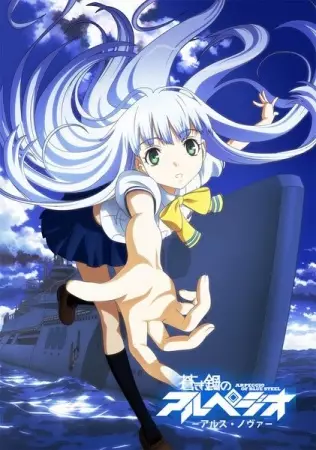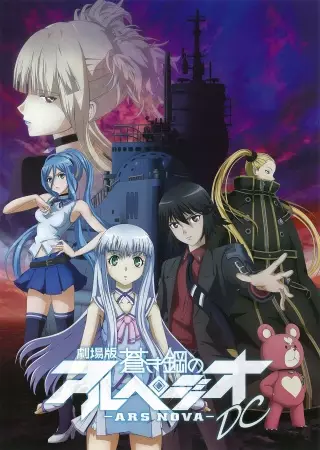




Arpeggio of Blue Steel -Ars Nova-
蒼き鋼のアルペジオ ‐アルス・ノヴァ‐
In the year 2039, the drastic effects of global warming have caused sea levels to rise, resulting in major loss of land. To ensure humanity learns its lesson, a fleet of powerful warships equipped with advanced weaponry emerges, causing overwhelming defeat for naval forces throughout the world. Calling themselves the Fleet of Fog, each ship has a "Mental Model," a humanoid avatar which represents the ship's heart, its "Union Core." Each model has a different personality but all follow an unknown authority known as the Admiralty Code, who have implemented a blockade to prevent humans from traveling across the sea. Seventeen years after the blockade, Gunzou Chihaya, a National Marine Academy alumnus, stumbles upon I-401 and its Mental Model, Iona, who sides with mankind for unknown reasons. Utilizing this newfound hope of achieving peace for humanity, Gunzou and his friends form a group of privateers, known as the Blue Steel, as they set out on a dangerous journey. [Written by MAL Rewrite]
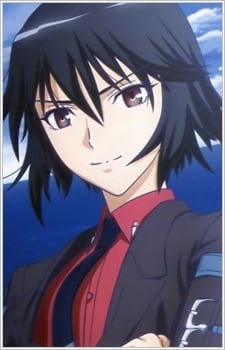
Главный
Главный
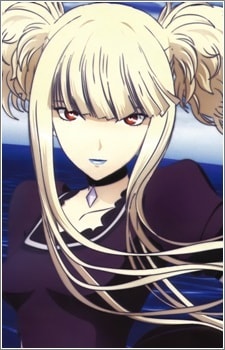
Второстепенный
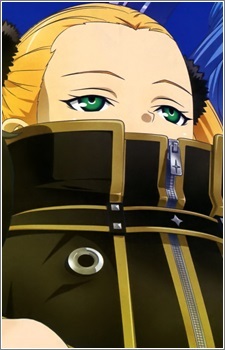
Второстепенный
Второстепенный
Второстепенный
Второстепенный
Второстепенный
Второстепенный
Второстепенный
Stark700
December 23, 2013
Before deciding if you should watch Aoki Hagane no Arpeggio: Ars Nova, you should probably ask yourself if military science fiction is your type of anime. Military science fiction often takes the idea of military but also fuses it with supernatural themes with flavors of science and artificial warfare. There are a lot of ideas that plays around with military sci-fi including alien invasions, mecha, or space wars. So what happens when you take a bunch of mental models that resembles the characteristics of female characters and puts them into total warfare? Simple. You get Arpeggio of Blue Steel: Arsa Nova. The series itself is basedoff of the manga of the same name written by Ark Performance. The premise sets takes place in a setting of an alternate history although there are many similar paths crossed. For one, that path involves the Japanese attempting to recover their nation through engaging trades. Unfortunately, its enemy forces have powerful weapons of war known as the “Fleet of the Flog”. These are essentially weapons that has turned the tides in battle and pushed back its adversaries to the brink of despair. Luckily, there is some hope because of a certain naval group that is capable of dealing with this threat. They are called the Blue Steel and this series chronicles their journey. Arpeggio of Blue Steel might be a series that people would sway their heads away at first. The idea is hardly original as demonstrated in previous sci-fi war theme series such as Strike Witches, Tactical Roar, Blue Submarine No. 6, and Full Metal Panic. Potential viewers for the series might also sway their heads away as lead director Seiji Kishi is in charge of this adaptation. His mediocre direction of recent anime series based on adaptations such as Devil Survivor 2: The Animation and Persona 4 had numerous problems. Therefore, this show might initially be met with some controversy. For me, the series has its ups and downs. To call it a scientific masterpiece would be over exaggerating but it’s also not a waste of time to watch either. Because of its premise, this show itself does set itself differently with its cast of characters and brings the military science fiction theme in a different light. Taking place in the future of 2056, technology has far advanced than our modern world. Just imagine in over 40 years what our world would be like. For the characters in this series, they’re not living at home relaxing but are on the war zone to carry out an important mission. That mission is no walk in the park because of the obstacles ahead. Taken from an objective standards, the obstacles comes into two forms. The most obvious involves the ‘Fleet of Fog’, fictional avatars named after non-fictional battleships. The other obstacle involves also dealing with humans and corrupt governments that wants to achieve various goals with their own deeds. It’s a bloody revolution and no one wants to play nice. The main characters from this series includes the captain of the Blue Steel, Chihaya Gonzou. He can be described as a serious man with tactical mind of a leader with the ability to lead his crew through obstacles. However, he can’t do this alone without the help of his crew members. Among this group is a prominent avatar with code name 104 that also goes by the name “Iona”. Throughout the series, she describes herself as a weapon born to fight with no other purpose. Ever since she joined the human side, the government and various factions has their eyes set on her. Iona can be easily described as a giant killer. She may be have a small body structure but Iona’s abilities shines in battle many times thanks to her initiate ability to eradicate emotions and fight. This is proven early on when the crew takes on Takao, another human avatar of a Fog cruiser. Unfortunately, there’s hardly anything we can bring out from Iona. She’s a character that is surrounded in mystery with her stoic behavior. Her relationship with Gonzou and the crew can be described as professional although throughout the series, she questions herself exactly who or what she is. And that also brings another point. The concept of more human behaviors. Later on in the series, other Fog Ships are introduced that becomes a threatening factor to Blue Steel. Their purpose is set on destroying the privateers. However, it’s noticeable that they later on question their own purpose. This doesn’t just include Iona but also other Fog ships especially after they encounter a human girl. The encounter brings out a variety of human behavior including responsibility, guardianship, and even friendship. It’s questionable whether the characters in this series can truly establish a bond between Fog Ships and humans. Humans seems to fear Fog Battleships while the latter seems to despise humans for weaknesses. On the other hand, some of them clearly demonstrates human behavior ranging from love, care, jealousy, and even betrayal. The plot itself follows the premise well with its journey but does derive from the manga quite a bit with certain omitted scenes. It cuts out parts with this adaptation involving some of the comedic dialogues/scenes. Most importantly though is perhaps character development during the journey that is minimized in this series. Being a one-cour show, this anime suffers problems with rushing. Therefore, expect certain factors that might not match up in the end. There’s also a lack of exploration in terms of characters’ backgrounds. Most of them are vaguely expressed by whom they are presently. The lack of background histories can become a problem as viewers might have more questions with no concrete answers. The main protagonists (crews of the Blue Steel) are also difficult to get attached because they hardly get any development. In fact, most of the Fog ships gets more development than Gonzou and his crew which is a down factor for Blue Steel. However, one certain main character also has a highlight purpose because of who she is. In fact, it brings out the human vs Fog ships’ personality that tests new boundaries of these artificial weapons of war. For the Fog ships, some of them learns from these behaviors and demonstrates their own ideologies. Action wise, the series makes sense although the CGI might take awhile to get used to. As the series takes mostly in a naval environment, most of the battle takes place at sea. The battleships themselves are modeled after real life naval ships. Hence, they are designed with devastating firepower that proves itself in battle. Most of the Fog ships possesses different personalities that reflects their designs. The weapons used throughout the series often includes missiles, force shields and wave motion cannons that clearly outshines our modern world’s technology. The spectacular results of these weapons bring can be pleasing to the eye especially when the Fog ships themselves becomes what they are designed for - annihilation. On the other hand, there is also comedy present throughout the series whether it’s obsessive love, yuri-like fantasies, or the awkwardness in the form of a stuffed animal. Some dialogues are also mixed with words that can bring out laughter with its implications of suggestive factors involving “engines” and little misunderstandings. What isn’t pleasing though should again be addressed to the overall adaptation. The way it is constructed omits very important details involving Gonzou. The lack of exploration involving his parents or past is a serious drawback that is hard to redeem itself. Most characters from the original Blue Steel barely get any of their own spotlights. It turns out that Iona would be the ace despite her soulless personality. But without a clear background or exploration of her past, Iona also becomes a poorly constructed character. It’s a shame that our main characters just doesn’t shine as much as one would hope... Judging by art standards, Arpeggio of Blue Steel matches well by science fiction means. The way most of the characters are designed given them an impression that they are weapons of war (Fog Ships) or humans whom stands up against what comes at them. (Blue Steel) The animation studio SANZIGEN is not well known though in the anime industry. They are known for only a few science fiction theme series including 009: RE: Cyborg and Black Rock Shooter; the latter that received very mixed reactions. Fortunately, the background of the series redeems itself with glorious naval features, explosive battles, and science fiction aesthetics. The drawback would be the CGI that makes the show itself less powerful with its computer generated graphics. There’s also some fan service usually featuring the Fog Ships that might generate some reactions of eye rolling especially with the way camera angles are pointed at. The soundtrack is pretty well done by OST standards. Most battle scenes are accompanied with a dynamic beat and dominant intensity. It brings out the intense environment that exists in this alternate historical world. The OP song “Savior of Song” is well performed by Nano (Btooom!, Phi Brain: Puzzle of God 2, Ark IX) with vibrations of energy. The ED song on the other hand provides feedback of a more calm atmosphere similar to some of the comedic scenes in the series. All in all, this show can be a mixed bag depending on your experience with science fiction anime. The idea of a scientific mission sounds engaging but the plot itself is unimpressive as result of its poor adaptation. This is mentioned before because the way it cuts itself out that omits several important factors. It destroys the development of our main characters and where they came from. However, there are themes that are explored that can be interesting to take note of. The problem might be that the answer is for viewers to decide in the end with its ambiguous nature. Luckily, the action, powerful OST, and comedy will definitely leave you with impressions. Some characters (especially the Fog ships) do get development so expect moments where you’ll get to like them more. The fact remains ultimately is that military science fiction anime can take different turns and angles. For Arppegio of Blue Steel, it steered in a path that defines warfare in its own way.
mahoganycow
December 28, 2013
In the year 2039, the combined naval forces of humanity suffer a crushing defeat at the hands of a military force with weapons technology that far surpasses their own. The fearsome assailants? A group of heavy warships, termed “The Fleet of Fog,” who are commanded by “mental models,” robot-like representations of the minds of the battleships that take the physical form of little girls dressed in frilly clothing. Fast-forward seventeen years, and one of these mental models, named Iona, approaches a human naval cadet named Gunzou out of the blue, offering herself (and, by extension, the advanced Fog submarine she represents) to Gunzou to command.Gunzou accepts the offer, and embarks on a mission, piloting the Fog submarine to defend humanity using the very weapons that almost brought about its end. Meanwhile, Iona and several of the other Fog mental models appear to be warming up to Gunzou and developing emotions, which mental models are not supposed to possess. It's almost impossible to not note that this entire premise seems like a very elaborate way of creating a scenario in which scantily-clad girls say things along the lines of “you're my captain, please pilot me.” Judging a book by its cover is, of course, wrong, but having thought about Arpeggio of Blue Steel for longer than I ever really wanted to, I don't feel too bad about saying that that initial impression was ultimately pretty close to the money. Perhaps fitting for a story that's partially about machines coming to terms with life, the world of Arpeggio seems to be constructed from the ground up using pure CGI. Everything about it, from characters to ships, bears the obvious stamp of computer generation, and this, unfortunately, is CG of a cheap-looking and ugly breed. If there's one thing the show consistently gets right, it's light—explosions, lasers, computer displays and the like look good more often than not, but that's about the only visual aspect that I can genuinely compliment, and I'm reaching pretty far for that one. Backgrounds and other such niceties don't look so nice, with the ocean in particular often being rendered as a noxious purple-black cloud which bears shockingly little resemblance to a body of water. The design and color choices are poor—the characters all have the same pale, waxy complexion and widely spaced eyes. Add some otherworldly hair and wardrobe malfunctions, and everyone starts to look pretty ridiculous. Add some extraordinarily stiff animation (all characters move with an awkward, jerking hobble, all ships move at a stuttering crawl), and, frankly, you'd be hard-pressed to tell who is supposed to be a human and who is supposed to be a member of the more robotic Fog; they all look equally like paste-colored marionettes. This condition is only worsened by the show's repeated attempts to force its decidedly mechanical characters to do something sexy; it's like watching aliens awkwardly attempt to imitate aspects of human sex appeal, and something about it is strangely disquieting. The core of the show's aesthetic is thoroughly repulsive to no real artistic or thematic end. The music, mostly a mix of cheesy techno and uninspired string/horn compositions that seem tailored to fit the seafaring nature of the series, soars to mediocre heights. Okay, cheesy techno aside, some of it actually isn't too bad, but variety is an issue; this is one of those shows that have two or three songs for battle, two or three songs for dramatic moments, and a few minutes' worth of atmospheric noises that get recycled over and over again. The music direction is sub-par, with tracks often starting too late to have any impact on a given scene, or starting too early and overriding dialogue. Sound certainly isn't the show's worst department—actually, by simple process of elimination, it might be the best—but suffice to say it doesn't excel or help cover the show's weaknesses, as good music sometimes can. Looking at Arpeggio's story in a “big picture” light reveals interesting results in that, at the end of the day, there's really no detail to it whatsoever. The world-building is virtually nonexistent, to the point where I'd venture to say there's little that you couldn't learn about the world of Arpeggio from reading a three-sentence plot synopsis. The show proffers a fairly elaborate premise, but it stubbornly refuses to answer any questions about its overarching plot or setting—not the ones that will naturally occur to you, and, perhaps worse, not even the ones that it explicitly raises. Among the former will be perfectly logical ponderings, the answers to which would be required to achieve a minimum amount of richness in the setting, like: In a war where both sides have advanced futuristic technology, why aren't there any airplanes? If the Fog mental models are nearly indestructible and visually indistinguishable from human beings, why don't the Fog just send them ashore to covertly destroy vital targets? And so on. Among the latter will be vital, should-really-be-answered queries along the lines of “what are the Fog?” No, seriously, they never even attempt to address that. The Fog battleships repeatedly refer to themselves as “just weapons” that are “programmed to obey the Admirality Code” (the Admirality Code being an ill-defined set of rules, first mentioned three-quarters of the way into the show, that governs the actions of the battleships). This leads to the assumption that the Fleet of Fog are just tools, and the true masterminds behind the Fog invasion lie elsewhere; weapons require weapons designers, and programs require programmers. The show hints at human interactions with the Fog—it's suggested that the main character's father defected to the side of the Fog—but the idea lies abandoned and utterly unexplored. The mysteries are never solved. Much of the show is spent fighting a shadow enemy whose nature, origin, and motivations remain completely veiled. Several episodes of the series even have the audacity to end with a taunting overlay of text which reads (presumably referring to the Fog): “Where do we come from? What are we? Where are we going?” Even after the credits rolled at the end of the final episode, I could still only answer all three with “I don't know,” which spells trouble. All of that might be forgivable if the setting and war were only a backdrop used to stimulate some excellent characterization—such tactics have been known to work. And, honestly, that might be what the series is going for. Whatever else might be wrong with it, it does expend a fair bit of effort (largely wasted effort, but genuine effort nonetheless) trying to explore its characters. Sometimes it comes within arm's reach of the right notes. Like Haruna, an especially cold and vicious Fog mental model, forming a bond with a perceptive young girl who emotionally disarms her, or Iona's struggle to obey Gunzou's orders while knowing that obeying could potentially cause his death. Those aren't bad ideas at all. The show wants, desperately, to have characters who change, and change they do. It's telegraphed at us, and not very subtle, but it's there. The problem is that the impetus for change is missing. The series has flawed internal logic—it presents the Fog mental models as thoughtless machines, explicitly stating that they are governed by programs that cannot learn from past mistakes, adapt, or feel. There is never a convincing reason given regarding why they suddenly adopt emotions and human values. And that's kind of a big deal. I don't care how heartwarming the story of a little girl is, or how charismatic a sailor is—if you put robots who have no capacity for emotion next to them, the robots will not suddenly be moved to tears and love. No amount of emotion can overwhelm something that is literally incapable of feeling emotion. Talk to a wall for a little while and you're likely to notice that, no matter how much and how loud you talk, the wall does not respond. This is because your voice's volume does not alter the complete and utter inability of the wall to comprehend and reproduce your language of choice. Same difference here; the presence of emotion in the outside world can't simply inspire emotion in the void of a computer. That's deeply flawed thinking which would require a workaround within the context of the series. If there were some sort of external explanation provided, even a cheap one like “turns out there was a hidden emotion switch in the Fog after all,” some sense might be made of the situation, but, predictably, there's nothing. Which sucks, because that means that half of the equation is missing. If a character changes, I'd like to know why it's happening, or it's just as bad as having a character who is static and unmoving. If you present characters as machines, and then they suddenly sprout the mindset of normal human beings for no real reason, it defeats the entire narrative purpose of presenting them as machines in the first place. It essentially strips the characters of their distinguishing features, and adds a big tint of insincerity to everything that they go through. The last thing that might have saved Arpeggio would be the battles. It sounds next to impossible to screw up “giant sentient battleships blow each other to hell,” and while good execution of that concept would not necessarily result in a good series, it would at least provide an audience with one reason, lacking any others, to watch it. But even this somehow manages to go awry. Never has large-scale warfare been so boring. The battles, though sometimes as long as ten or fifteen minutes, are dreadfully uneventful, usually consisting of a lot of technobabble about force fields and gravitron cannons and the like. The more strategy-focused crowd will be glad to know that our fearless captain, Gunzou, is the proud creator of such novel naval warfare tactics as “wait for the enemy to fire a bunch of torpedoes at us, then dodge them, then fire back and hope it works.” Battles are regularly concluded with routine and anticlimactic solutions, such as the above, or solutions that appear out of nowhere, such as Gunzou realizing that he can just use some weapon or defensive feature of the submarine that the audience didn't even know existed. Even when things do get dire for all of those aboard, the lack of emotional resonance in the writing assures that the tension level remains at zero. What I'm getting at is that this show consists of misstep after misstep, and they often work together to form seamless spans of pointlessness which would be a waste of time for anyone to endure of their own free will. The lack of world-building and knowledge about the Fog coincides nicely with the characterization issues to form a gaping hole where the compelling internals should be. The dreadful animation and boring battles sync up all too well, affording the audience a chance to stare at a low-stakes game of chicken that isn't even produced well enough to serve as an eye-candy distraction. When all was said and done, I came away with the impression that I had basically watched a show about things who look like girls that do stuff for some reason. And I wouldn't wish that experience on anyone.
Zee530
January 1, 2014
On the surface Arpeggio has a few detractors but if you allow people to finish airing their subjective complaints about how CG never blends well with anime, the harem genre is overused and how they don’t want to be made to remember complicated words like Super gravity Cannon and Klein’s field, you’ll find that Arpeggio has a decent story, a setting with rich possibilities heavily untapped by the anime world, interesting characters and an all but obvious moral lesson at the end. For 7 years the Fleet of Fog, an armada of highly advance naval vessels have taken over earthly waters, with every attempt to reclaimback the waters by humanity crushed. Chihaya Gunzou is a student at a naval academy who one day is approached by a girl named Iona who introduces herself as a member of the Fog. The first episode isn’t kind to those looking for a subtle introduction as it is packed full of content, the series sense of immediacy may overwhelm some as in only the first episode it entails storyline, introductions, info dumps and even flash backs, all this equals to the series greatest weakness, its length, which I’ll talk about later. Chihaya Gunzou’s fleet is tasked with delivering a new weapon to America soon after with the Fog in his path leading to naval confrontations. The series can also be praised for its sound sense of tactical warfare as the battles take a balanced approach between stratagem and action orientation, the chemistry of Gunzo and his crewmates also deserve praise as everybody is well aware of their objectives and every line a character speaks out deserves just cause and not just for the sake of a seiyuu getting lines, however this is only in combat. The fleet of the Fog being all AIs have a set of logical reasoning they follow called the Admiralty code, which a few of the fog members later on start to question, the series takes a very nice new dimension when this new plot element comes into play that suddenly give these formerly one dimensional characters a lot of depth, all of a sudden characters who one might think were nothing more than opponents the main cast might hurdle over, suddenly are given meaning and purpose, and the storyline sees a vast change mostly for the better. Although some people might complain about the existence of the mental models, the way the battleships take human form, keep in mind that without this the members of the fog would be nothing more than your casual unknown evil group trying to take over the world, their presentation to the physical gives Arpeggio much room to express itself as something much more than a simple war story, the mental model may seem to translate to a light hearted and subtle theme but Arpeggio is quite serious and even takes darker routes towards its conclusion, but as to why the fog members decided to all pick up female archetypes is still something up for debate. A lot of Arpeggio’s issues can be traced back to its length, 12 episodes was not enough for it to truly present itself, the result of this is several holes in explanations and lack of enough back story to keep the series standing firm. A very obvious element that the series should definitely have covered was the origins of the fog, because as it stands “sudden appearance” is not enough a reason to justify their existence, but as its source material is still ongoing, this might be something we can willingly forgive. The presentation of the fog can also be considered underwhelming, a regiment vast enough to conquer all of earth’s waters should at least number in the ten thousands’, the anime does very little to reflect the fog as the dominant force it should be and unfortunately only concentrates on 9 members, larger numbers would have gone a long way in stating the anime’s intent as something to be taken very seriously. The only thing to say about the art style is, CG and cute girls were made for each other, haters be damned. As opposed to most CG you see in anime these days, Arpeggio boasts some extremely high quality rendering, the coloring blends well and they hit the brightness level just perfectly and that’s not even counting in the outstanding character designs. The CG actually compliments the world of Arpeggio so well that it’s honestly hard to imagine the series without it. Also given the ease CG gives animators they rightfully ‘flexed their muscles’, colorful sceneries, radical movements and flamboyant naval combats are all present and executed fluidly. The opening theme ‘Savior of Song’ by Nano is nothing short of sublime, an absolutely riveting and exciting high beat Pop-rock that highly deserves more than one viewing an episode, the part with character montages striking the most interest. The ending ‘Blue Field’ by Trident is an ever so alluring slow and somber beat that melded well with the slow animation of its sequence. The approach the author did in characterization here was actually presenting characters with several diverse personalities, enough personalities that viewers would undoubtedly find a favorite quite easily. The MC Chihaya Gunzou really impresses when in his Command Center, even though you hold no military knowledge watching the way he assesses situations and gives out orders accordingly with commanding presence makes the naval battles so much more interesting, his leadership skills and tactical know how are one of Arpeggio’s brightest aspects, however outside of his CC he’s kind of a dud. Iona on the other hand has very little to give to the viewer, from start to finish all she does is receive, process and carry out her captain’s orders, her apathic nature although going perfectly with the nature of the series still made her hard to like and the show of ‘will’ she performs at the end did very little to refute her. The real joy however you’ll find are with the different Girls of the Fog, AI or not, how they chose to present themselves was both alluring and dazzling and their interactions are a joy to watch, most of this will stem from your initial knowledge of how strict the workings of the fog is but seeing how their characters change really brings a great sense of joy for them. The vast possibilities Arpeggio could have produced or explored if it wasn’t rushed are nearly endless, however Arpeggio should not be viewed as a simple tale of Man Vs. Machine as it incorporates so much more, it is a battle to find out and discovers one true self and meaning of existence, searching for answers to the all-important questions, how coexistence is an important value and Sentient is more than enough of a reason for us all to live together in peace.
lemski07
October 29, 2013
Story 8 This anime is about 20 to 30 years into the future where the oceans and seas are impassable because of the ghost fleet that are terrorizing it which consist of pretty girls that controls there each is her own ship that are in a fleet that have access to unparallelled technology which consist of very gigantic guns, array of missiles, powerful laser turrets. and one of the previous captains son got on hold a very powerful sub which originated from the ghost fleet. art 9 the art is fantastic for under/above water naval battles, it sometimes in cg, specially the pretty battleships and u-boats sound 8 whatcomes next to great battles is great battle effects, those metallic explosions... gunpowder smells.. lol character 8 your MC is your typical hero, where if the conflict arises he answered the call. but what makes it interesting is your girlships, different types of ships/subs , tsundereship, loliship/sub, emoship, moeship/sub, orientalship, germanship, europeanship, bossship, cosplayership, maidship, sistership, twinship, cloneship, ghostship, sunkenship, which have each own female avatar. you got a fleet of girls.. ehem ship. enjoyment 9 I enjoyed this anime honestly because of the different personality of each ship on how they discover their self. it is you to find out. overall 9 I picked up this anime first because I planned watching all anime this fall 2013. Im kinda surprised at first because the enemies are pretty ladies with different cloths different styles and different personalities. there are also unanswered questions on each individual characters also. It also got me interested what if the mc captured all of the enemy ships, he would have a harem party of pretty lady ships lololol. you could try the manga also because they give a quite different PLOT but after watching the episode then stop where the episode stopped so you wont spoil the fun. =D
ChargedCoin
December 23, 2013
Aoki Hagane no Arpeggio: Ars Nova Full Review I would say that Aoki Hagane is one of those dark horse anime this season. Not many people watched it, maybe because they didn’t like the art style or maybe just the idea behind battleships. So, is this a worthy investment of your time? Let’s take a look! Note: There will be minor spoilers. Story (9/10): The story of Aoki Hagane is broken up into two parts. First, is the battle between humans and the forces of the Fog. This is basically the universe it is set in, and our hero, Chihaya Gunzou, somehow manages to obtain the powerof one of the Fog’s submarine, Iona 401, which turns the tide of the battle. What’s great about this is that it Gunzou and Iona are sort of the neutral party. Yes, they are fighting against the Fog, but the army is also hostile towards them because they are afraid Gunzou would use Iona’s power against them, or that Iona might go berserk and attack them instead. This brings about a much more interesting storyline and more tension. Imagine the whole world is against you, and just how intense that would be? Second part of the story is how members of the Fog with Mental Models develop human characteristics such as emotions, logical thinking and relationships, and these lead to them questioning the basis of their actions. It’s this internal struggle between to do what you’re made to do (as weapons), or to follow your heart’s desire. While the development in this aspect is a little cliche, it’s still an awesome story device that makes the story filled with so much more depth, rather than just battles between ships. Let me discuss a little about the battles. These battles are one of the most intense and well made scenes I’ve ever seen, and it thoroughly reminds me of Code Geass, such that battles are not won with sheer power and might, but with logic and strategic thinking to outsmart the enemy. Aoki Hagane does this extremely well, immersing the viewers in that amazing experience. If you liked the battles in Code Geass, expect to find the same epicness here. Characters (8/10) Aoki Hagane is weird such that its supporting characters (with the exception of Iona) get plenty of development. In which case, we see the Mental Models of the fog undergo character developments as they are more exposed to humans. No longer are they just weapons, but more... Human. It is interesting to see how each of them transforms based on different reasons and experiences. The issue here is that some of their transformations, or rather, developments, are not as justified or too sudden.Though, it was really interesting to see these characters interact, because they are not your typical stereotypes such as Tsundere or Kuudere or whatever other deres, as such, their personalities were different.What I would’ve liked to see was perhaps even more development for them. While they did have developments, it felt a little lacking when the story was centered on them. Chihaya Gunzou pretty much remains the same throughout the show. That doesn’t make him bad in anyway, though. He’s an extremely interesting character with the wit of Lelouch and the nobility of the other characters such as Kamijou Touma(putting others before himself). In other words, you get a character that is smart, witty and puts others before him. What more can you want? The only problem I have with the characters is perhaps of the other crew members. They have so little screentime and development that I can’t even remember what their names are. What is their purpose of joining Gunzou, or what is their personality like, it’s really hard to tell. It’s as if they were there for the sole purpose of operating Iona 401. However, this is not that big of an issue because it doesn’t really hurt the story that much. Sound (9/10) The soundtrack for this anime is amazing. Special credits to nano’s Saviour of Song, the opening for this anime. Not only is it catchy, but every time you listen to it, it is as if you’re ready for a naval battle. The instrumental just fits the anime so well. The ending song, Blue Field, also has that “sea feel” if you get what I’m going at. Additionally, the instruments played especially during the battle scenes fits it so well. Adding so much more tension that really makes you feel as if you’re in that battle itself. Animation (9/10) The animation for this anime is interesting such that it’s done with CGI. As such, you would notice that the characters movements look a bit as though it’s a game. It’s the first time an anime has applied this technique, and I must say it was done quite well. It might put you off at first, but once you get used to it, you’ll notice just how good it actually looks. The animations for the battle scenes are especially well done. Throughout the entire scene, the battles flow smoothly. The explosions are especially well done. It can be split into two parts, Corrosion Impact and High Explosive. Both look just as beautiful when they impact the target. Enjoyment (9.5/10) Initially I dropped this anime because of the art style, but I’m very glad I picked it up again. I absolutely loved Code Geass, as an anime that is not just about battles. Aoki Hagane manages to do the same thing, though not as well as Code Geass (due to lack of episodes) but I’m able to feel that same type of enjoyment. I think I could’ve found a new love for battleships because of this anime... Anyway, every episode is interesting because of the battles and the characters. I especially enjoyed the opening theme, having always listen to it and sing along just because its that catchy. Overall (8.5/10) As much as I like Aoki Hagane, from a reviewer’s standpoint, I would have to give it an 8.5/10. Characters could definitely been developed a little bit more. If that was the case, I would defintely give it a 9/10 or even a 10/10. That being said, I still highly recommend Aoki Hagane no Arpeggio; you will not be disappointed.
Ранг
#2833
Популярность
#1691
Участники
156,595
В избранном
976
Эпизоды
12