Nisekoi: False Love
ニセコイ
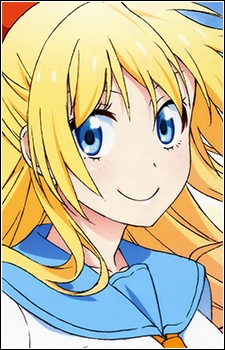
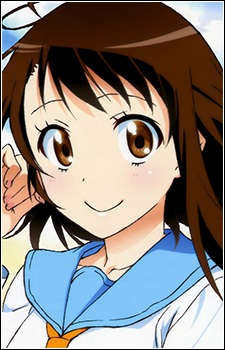
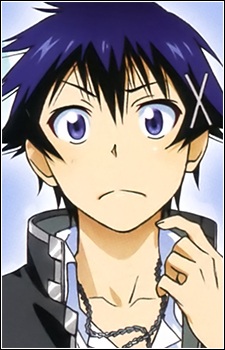
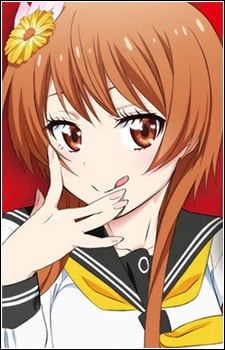
Raku Ichijou, a first-year student at Bonyari High School, is the sole heir to an intimidating yakuza family. Ten years ago, Raku made a promise to his childhood friend. Now, all he has to go on is a pendant with a lock, which can only be unlocked with the key which the girl took with her when they parted. Now, years later, Raku has grown into a typical teenager, and all he wants is to remain as uninvolved in his yakuza background as possible while spending his school days alongside his middle school crush Kosaki Onodera. However, when the American Bee Hive Gang invades his family's turf, Raku's idyllic romantic dreams are sent for a toss as he is dragged into a frustrating conflict: Raku is to pretend that he is in a romantic relationship with Chitoge Kirisaki, the beautiful daughter of the Bee Hive's chief, so as to reduce the friction between the two groups. Unfortunately, reality could not be farther from this whopping lie—Raku and Chitoge fall in hate at first sight, as the girl is convinced he is a pathetic pushover, and in Raku's eyes, Chitoge is about as attractive as a savage gorilla. Nisekoi follows the daily antics of this mismatched couple who have been forced to get along for the sake of maintaining the city's peace. With many more girls popping up his life, all involved with Raku's past somehow, his search for the girl who holds his heart and his promise leads him in more unexpected directions than he expects. [Written by MAL Rewrite]
Главный
Главный
Главный
Второстепенный
Второстепенный
Второстепенный
Второстепенный
Второстепенный
Второстепенный
Второстепенный
Второстепенный
Suratu
May 24, 2014
Is it possible to like something that is completely unoriginal? According to Nisekoi, yes, it is. When Nisekoi was slated for an anime production by studio Shaft, the fans of the manga were torn between elation that it was actually being adapted and complete terror that Shaft would be doing it. If you’re not aware with the common stereotypes of anime studios, a frank description of Shaft would be, “They do whatever they want.” Shaft has never been shy of putting their own... unique spin on their adaptions. And, hey, whatta ya know, it actually works. The Shaft visuals are capable of turning afew heads, but they’re never overpowering as they are in many of their other shows, and the story and setting have an inexplicable charm to them despite the fact that literally every character and literally every situation has been done before. Story: 6/10 The story of Nisekoi is not one of its strong points. I don't think anybody but the most diehard fans would even bother offering any sort of rebuttal here. It plays on almost every cliché in the book, from the childhood promise, to the fated encounter, to the downright absurd misunderstandings, even to the freaking beach episode, that I can’t help but think that this is all some elaborate parody of the harem genre. If it is, then the author did a damn good job because it certainly feels like one. If you're looking for something believable, you won't find anything of the sort here. I realize that this is fiction, but there is a line up to where I'm willing to suspend my disbelief and Nisekoi clearly crosses it. I understand that we don't remember that much from our childhood, but do you really expect me to believe that a person would completely forget nearly every friend he had—not just their faces and names, but their actual existence? Is this where the “main character gets amnesia from an injury” cliché comes in? I know every harem can get a little ridiculous, and I'm going to criticize it every time. Art & Animation: 9/10 Typically there's not a whole lot of action going on in high school romantic comedies and harems, so the “Art & Animation” category is really just an “Art & Waifus” rating. Are the girls waifu material? (Alternatively, are the boys husbando material?) If so, 10/10, anime of the year, etc. Jokes aside, it's true that there really isn't much to say other than the art is pleasant. Everything is just solid and complement the scenes well. However, I think this section deserves more discussion however simply due to the fact that Shaft is at work. As I've stated, many fans of the manga were worried that Shaft would take their style too far and that it would detract heavily from the source material, which many believe to be too inherently “normal” to be deflowered by Shaft's hands, but fortunately that was not the case here. Sure, you've got Shinbo's signature camera angles and a few strangely elaborate backgrounds (and some intentionally simple ones), but these don't define the show as they might have in Bakemonogatari or Madoka Magica. Nisekoi is a Shaft show, sure, but it is not definitively so, which comes as a great relief to many, I'd imagine. Sound: 7/10 The voices are perfect. That's all that needs to be said. There was not a single voice that didn't fit a character to the tee. The soundtrack is neither great nor distracting. To be honest, I can't really pick out more than one song that I'd actually remember being played, and I usually am a huge fan of background music and pay a lot of attention to it. It all sort of blended in, and I'm frankly not sure whether that's a good or bad thing. My only genuine complaint is that the opening and ending songs are just so generic. Though, now that I think about it, maybe that was the whole point. Regardless, I didn't really find myself liking any of them. ClariS didn't really try to make their tracks stand out from any of their others, and some harsher critics might say that none of theirs are ever original-sounding. As for the character songs: it's always nice to hear the characters sing, but the songs just weren't that great. Characters: 7/10 If the story is cliché and generic, could it be possible that the characters rise to the occasion and present themselves as deep, fleshed out vessels complete with compelling motivations and relatable desires and realistic decisions? Nope. The tsundere main girl? Check. The “good girl” (a.k.a. the Yamato nadeshiko)? Check. The perverted best friend that gets his ass handed to him every episode? Check. There is literally no character that isn't a practically a carbon copy of a past character or at the very least a blending of two. On top of that, the main characters are dense as dense can be, which makes it so easy for the ridiculous misunderstandings to manifest. So why would I give this an acceptable score of 7/10? See the next section. Enjoyment: 9/10 All of my complaining might actually convince someone that I dislike this anime because of how generic it is. On the contrary; I find all of the enjoyment in reveling in just how cliché nearly every moment is. If you've seen even 2 or 3 harems (and I've probably seen dozens), you can call out just about everything that is going to happen in each episode and in each scene. It's that predictable. Yet, there is an inexplicable charm which pervades the series. Yes, I was literally facepalming at nearly every scene in the show, but underneath that palm was a gigantic smile that I just couldn't hold back. Overall: 7/10 Nisekoi is not a groundbreaking anime by any means, but if it has proven one thing, it’s that originality is extremely overrated. All you need is a little charm, solid execution, and, of course, waifus. There's a reason that this story and these characters have been done before, and that's because they're enjoyable. Perhaps some of us are just in denial. Here's for the inevitable season 2.
Raku Ichijou, a first-year student at Bonyari High School, is the sole heir to an intimidating yakuza family. Ten years ago, Raku made a promise to his childhood friend. Now, all he has to go on is a pendant with a lock, which can only be unlocked with the key which the girl took with her when they parted. Now, years later, Raku has grown into a typical teenager, and all he wants is to remain as uninvolved in his yakuza background as possible while spending his school days alongside his middle school crush Kosaki Onodera. However, when the American Bee Hive Gang invades his family's turf, Raku's idyllic romantic dreams are sent for a toss as he is dragged into a frustrating conflict: Raku is to pretend that he is in a romantic relationship with Chitoge Kirisaki, the beautiful daughter of the Bee Hive's chief, so as to reduce the friction between the two groups. Unfortunately, reality could not be farther from this whopping lie—Raku and Chitoge fall in hate at first sight, as the girl is convinced he is a pathetic pushover, and in Raku's eyes, Chitoge is about as attractive as a savage gorilla. Nisekoi follows the daily antics of this mismatched couple who have been forced to get along for the sake of maintaining the city's peace. With many more girls popping up his life, all involved with Raku's past somehow, his search for the girl who holds his heart and his promise leads him in more unexpected directions than he expects. [Written by MAL Rewrite]
yogotah
May 27, 2014
It is a delightment to be able to write a review for Nisekoi, though the anime was not perfect, it has provided me with significant entertainment during the last few months. Even if my review may seem negative, it is just because I am analyzing an anime by parts and category. As a whole, I thoroughly enjoyed Nisekoi. Story: (30%) The plot of Nisekoi is rather mediocre. With a redundant premise, Nisekoi has nothing new to contribute to the rom-com genre. The creativity of the story and its complexity is minimal at best, non-existent at least. Do no expect to be blown away by the story line,in fact, the plot will leave you wanting in most of the episodes. There are the standardized anime episodes such the festival, the school play, and the beach episodes. None of them adds anything unique to the template, it is just a repetition from what we have traditionally seen. It is not as if the premise is weak, though not original, the premise of a MC looking for the girl of his past to open his locket has potentiality for a lot of complexity and twist. This, however, was not done in Nisekoi, and of course this is not directly the anime's fault but rather a representation of the manga. Even when the chance for legit development appeared, the event was squandered by a random, indescribable, improbable set of circumstances. An example would be a girl sitting next to her crush, with her gathering up all the courage to tell her crush that she wants to kiss him....and actually does say it!! Then it turns out that the guy fell asleep seconds before her confession, and wakes up seconds after the end of statement. One event like this may fly past the radar, but the agglomeration of these types of events prevents anyone from taking the plot and story line of this anime seriously. Even a young child would face-palm at the irritable progression of the plot. Art: (90%) I did not feel like an episode was lacking in art. Sure, there were some frames that were reused, and the animation wasn't super fluid every scene, but overall the art was good. Since Shaft produced Nisekoi, there is a lot of similarity between this anime's art and previous anime of theirs. I didn't even know Shaft produced this before watching the anime, but a few seconds into the first episode, I could just tell. It wouldn't be true that the art style is done better in Nisekoi than in other of Shaft's works, but it was a great fit for Nisekoi. I enjoyed the close ups, the quick glances, and the over dramatization of emotions. I'm really into experiencing the story, and this art style especially focuses on characters more than background. I think this can be weird to some at first, but it really brings the point home that its' the characters that one should be paying attention to the most. Nisekoi did a great job in making the character design shine. I can vividly recall scenes where I felt enamored by some of female design and how they fit. Nisekoi did a great job of letting us see them THROUGH the eyes of Raku. Sound: (100%) Marvelous soundtrack. Soundtracks can make or break a scene, and in Nisekoi, every scene was amply elevated by its choice of bgm. I'm highly receptive to visual and auditory stimulants, so I found myself captivated by a lot of events ,that were poor plot wise, but were done so beautifully that it captured my attention away from the plot but into the art, and even emotions of the characters involved. I think that this is the telos of any soundtrack, to make scenes even more riveting that it would have been otherwise. Excellent soundtrack. Characters: (80%) The strength of Nisekoi may not be its storyline or plot complexity, but instead lies within its characters. Nisekoi has the ability to make all of its characters likable, and this is a very RARE element to have. At the end of the anime, I didn't find myself hating any characters. I do have my preference of who I would like Raku to be with, but this is more of my own personal taste than any loathing that I feel for the rest of the female cast. Of course, this may be due to the lack of complexity of the story, and the author playing it safe with everyone, but there have been anime done with poor plot progression along with horrible and unlikable characters. Nisekoi should applauded for its characters. The main character, Raku, at first glance seems to be our typical dense lead. He's an average looking person with no particular exceeding talent( maybe besides cooking, but this wasn't developed). He seems to be average in school, his attitude is average of someone of his type, and his character design is slightly different. He has the will to protect his friends, but to be utterly oblivious to obvious signs. He also seems to have the ability to fall asleep in matter of mini seconds, and to wake up just as fast. His redeeming point is that when Raku WANTS to, he can be astute in his observation. There are monologues of his where if given more time, and more info, he would have cracked this mystery surrounding him. Raku is not a stupid generic character, he does have a girl that he is mainly interested in. He acts according to this preference, but again due to poor plot, none of these actions are actualized into substantive events. This is more of a plot issue than a character issue. Chitoge, the blonde bombshell, is the eccentric vivacious main girl. She's loud and obnoxious, and can be unreasonable at times. However, she also have her redeeming qualities. She grew up without having too many friends, and she longs for sisterly companionship. On the inside, she is a compassionate person, that probably has had to put on up a tough mask due to the teasing done to her back in America. It is surprising that she is a strong student considering the shortcomings of the educational system of the U.S, but that is besides the point. If given enough time, Chitoge does become lovely and likable in her own way. Kosaki Onodera seems to correlate with the cute nice shy template. She's not as vivacious as Chitoge, and is too timid to assert herself in the middle of a big crowd. This is not to say that Onodera is complacent, she has willed herself to reveal her feelings numerous times, but again due to improbable and reaching circumstances, these confessions have fell to deaf ears. This is not a character flaw of Onodera, but again a shortcoming of the plot. The remaining cast , in my opinion, just serves to spice up the dynamic between the three characters mentioned above. Tsugumi is a personal favorite of mine, but she doesn't bring any relevance to the plot except for minor details. Maiko is invisible and obscure, besides his sexual tangents, he just brings slight humor. Marika makes a late appearance, however, the appearance is so late that it makes it hard to emphasize with her. Ruri is funny and spices the plot in a good way, but her will cannot beat the incomprehensible twist of Nisekoi. Enjoyment: (100%) With Nisekoi, the parts doesn't equal the whole. There were a lot of details that left me wanting in the first season of Nisekoi, but overall, the anime was quite intriguing and enjoyable. The art and sound compliments each other so well, the characters have an excellent dynamic to leave you laughing and caring for them. There is fan service, but is tastefully done relative to other anime of the same genre. I do recommend this anime to anyone looking for a strong romantic comedy. Overall: (90%) With this anime, the categories does not hold the same weight. I am eagerly waiting for a second season.
Stark700
May 24, 2014
Childhood memories, a gorilla girl, and Shaft. What do you get when you mix all three together? Nisekoi, or rather False Love by what’s known based on the manga of the same name written by Naoshi Komi. For what’s worth, the title is exactly as it implies – a love based on illusions. But in a way, it’s not exactly what you think. The main male protagonist Raku isn’t after Chitoge, the girl that accidentally kneed him in the morning during his walk to school. Rather, they are bound together in a seemingly contract-esque direction. With the two rival gangs making a truce in theexchange that their children would be a couple, Nisekoi is a show that crafts love with everything that is fake. The concept of a fake relationship is nothing new in the anime world. Taking a closer look, their relationship has little chemistry in it, at first anyways. Raku and Chitoge aren’t compatible and neither can they stand each other. But nonetheless, they are forced to become a couple or otherwise risk all hell break loose between the two blood thirsty families. Yet, the show does complicate their relationship by introducing all type of challenges. On the innocent side, we have Raku who has a puppy love crush on his classmate, Onodera. Yet unknown to him, we can easily tell that she also shares similar feelings. But what she doesn’t know is where Raku’s true origins lie, and that is with Yuzuka ancestry for the majority of the show. Coming together as a whole, Nisekoi engineers its plot points with multiple angles. There’s a silly outlook on Raku and Chitoge’s relationship as they are constantly trying to avoid their secret being found out. They even avoid each other at times. At the same time, there’s a curious degree coming out of their interactions. The story develops both characters through their interactions with a seemingly genuine commitment. While both partners seems to dislike each other at first, they show their warmer sides on occasions. Furthermore, complicated situations are solved by both of them in elaborate ways. It may be cliché but has a stylish way to the whole trope. One other flagship of the story involves a mysterious locket that Raku wears. Or maybe I should correct that and say..used to wear. That’s because he loses it when Chitoge accidentally knees him in the face during one faithful morning. Despite being executed as cliché with the whole ‘running in the morning with a bread in the mouth’ concept, it does set up a driving factor for Raku. He is motivated to find the locket not just because it’s something he treasures but also for a promise involving a girl in his past. The show continuously focuses on this point with its various flashbacks dealing with Raku and his present self. What the show does right here is through its various focal points with a number of candidates who can be the true potential key bearer. This brings about a mystery that fans may be anticipating themselves for when the true bearer is finally revealed. But what it doesn’t illustrate correctly is the purpose, as to why Raku made that promise. It will feel like an arduous trip at times with all the misunderstandings and parts when the mystery becomes so close being solved, yet then seemingly goes back to square one. The show also neglects to reveal its secret with its 2 cour run. In fact, some of the episodes feels fillerish that seemingly focuses another daily life of Raku, as the son from an yakuza. Character directional wise, the show offers a diversity with its cast. And of course, it’s a harem show so expect most of the main characters to be the opposite sex of Raku with a keen interest in him. Love triangles are imminent with characters such as Onodera, Tsugumi, and Marika. They do have different personalities but doesn’t escape the usual gags as seen in harem series. It’s a formulaic throwback with the way the characters progression for most of them. But even as feelings deepen, we don’t see much change in Raku. The only eyes he seemingly have for throughout the series is Onodera and the two often find themselves in awkward situations thanks to a girl named Ruri. It doesn’t help by the fact that his classmate Shu plays almost a partner in crime with the schemes. Other characters often play roles with the misunderstandings and slight progress between our fake couple. But most times, Raku is dense as a rock and his characterization is frozen stone cold. There’s also a staggering predictability for fans that might have been thought up in the beginning. That would be the realization of perhaps a ‘false’ love becoming perhaps, real. In fact, the developing aspects of Raku and Chitoge is a prominent feature. Despite disliking each other for their circumstances, Raku shows Chitoge genuine kindness and offers her help when she needs it the most. This in return causes Chitoge to question her own feelings. Tossing the cliché aside, there is actual development between the duo and furthermore ties together the plot involving the locket. Unfortunately, there is no escape of the jealousy, tsundere reactions, and blander misunderstandings you’ll see in typical harem shows. For what’s worth, Nisekoi demonstrates this in a more violent way with the way the premise is set up. The ‘transfer student’ gag is still there but has a more edgy taste to it. It’s presented as intentionally silly with nickname calling such as Chitoge being labeled as the “gorilla woman”. A noticeable census coming with Nisekoi is the way director Akiyuki Shinobo pinpoints the various scenes of this show. The romantic comedy side is obviously presented but he shapes it in a way that is unorthodox. It’s the way the character shifts their heads, the star shape coloring during weird scenes, and recreational subsidies of parodies in the backgrounds during more climatically crafted scenes. Having previously worked on shows such as Bakemonogatari, Arakawa Under the Bridge, and Puella Magi Madoka Magica, it’s easy to tell his innovative ideas here. This can come as a mixed bag as not all fans appreciate this stylish coordination. Given the fact that the show is a romantic comedy also might stir up some mixed reactions. But nonetheless, it can be distracting yet feels creative. As a romantic comedy, the other half comes with the fun and laughter. Given the direction of Nisekoi, the show tries its comedy in a variety of ways. With Shaft being the brainchild, expect colorful gags, avant-garde, and a bit of hyperactivity with each episode. Then, there’s the misunderstandings that will draw out both laughs and frustrations with its repetitiveness. The mastermind is usually Ruri that becomes involved since Raku is too shy to make his own move on most occasions. The dialogues can also feel cheesy with the trollish moments the various characters tries to induce. Artwork should be labeled as unique, not different but a specialty. Shaft handles the production and it’s fairly easy to spot its artistic gags. The head tilts, background cinematic, and even character designs have an innovative way for this rom-com. But for what’s worth, there’s nothing really that stands out with the way Raku looks. As the main male protagonist, he looks just like the average high school student. But for Chitoge, she comes off as a beauty with foreign blood pumping in her veins along with that scarlet ribbon. Then, there’s also Onodera with her cute innocence that serves more as the antithesis of Chitoge. Other characters’ designs also defines their personalities from the surface with their words and actions. In particular, Marika and Onodera are designed with innocent beauty and elegance. Some of the trollish expressions and scenes are also decorated with silliness. But as usual for most harem series, you should expect bits of fan service with the classic onsen and beach episodes. Bring out the fun in the sun, right? The soundtrack is noticeable but also feels silly. By silly, it’s exaggerated sometimes with its amateurish tone along with its goofy coordination. But despite this, it mixes with well with comical scenes, which most of the time is as result of a domino effect. Sound director Toshiki Kameyama, known for directing numerous shows of different genres performs the overall OST with balance. Similarly, the OP and ED songs are made well with strengths in its tones. On the other hand, character voices can come off sometimes as irritating in particular with Raku and his stubbornness. The bitter chatter between him and Chitoge will feel repetitive as if they are a married couple already. On the other hand, Onodera’s voice can be sweet thanks to Kana Hanazawa and her performance with more innocent characters. It counterbalances the Yakuza theme with the gangs and trifling violence going on. Marika’s kansai accent can also raise a few eyebrows during climatic scenes. Nisekoi is a show that is hard to fully appreciate. This is probably because of the premise and what fans may expect. And you’re not wrong either because it has the harem gags, fan service bits, and non-sensational dialogues that are easily forgettable. Yet, it does have a plot, one that invites questions and theories. With its small cast of characters, they also become actors and actresses in the story with each of their role holding some meaning. At the same time, the colorful Shaft style will be something that will be memorable. Put yourself into Raku’s shoes and the image will come more clearly. It’s not easy living a life with a yakuza background you know.
GodlyKyon
January 3, 2015
[WARNING: Slightly long review ahead. You can get by by reading the "In short" sections] I was not interested in this show. The manga was the epitome of "Generic Harem." I don't think there isn't one cliche that hasn't happened in the series yet. From the characters' reactions to the actual settings of events, everything gave me a sense of Deja vu on the scale of the Endless Eight (only 2000s kids would get this reference!). So I anticipated this adaptation to bring exactly nothing new. It would be another bland series to add to every season's list of bland Harem Anime. But then something happened. Ifyou head over to the Nisekoi Anime announcement news article (you can find it here on MAL), you would discover that it began with soft squeals of excitement and nearly uniform cheers by manga fans. As you scrolled along, you would find a chorus-like echo of horror at the studio choice: Shaft. Looking at the thread might even feel like discovering the death of a civilization. IT felt almost as if I were looking at an ancient species discovering a cure to some disease, only to find that very cure would end their entire race. But even then, I wasn't interested in this series. After chapter 60 of the manga (when my marathon ended), it felt like a slowly eroding cluster of repetition of cliches and never progressing plot. It wasn't until a whole year after it began did I start watching it. I finished it in two, no, three days after downloading from Nyaa. Nisekoi, despite all of its cliches, is probably the best Harem series in recent years. It is also probably the purest example of the Harem genre. Should harem series ever go out of fashion and end in production, this should be the one harem series to show your grand kids what a "Harem" Anime was (I'm sure by then Japan's population will explode to overtake China's). The show is a paradox. Its strength is the sheer attention the creators paid to subtle details. Even if you didn't like the manga, you might still find this series enjoyable. And if you haven't been keen on Harem series before, this could be your gateway series. let's examine the aspects of the series and whether you will enjoy it. Characters: Undoubtedly the most important aspect of a Harem Anime is its cast. And you know the show has done it well when it's know as "Battle of the Best Girls" among the online community. The character of this series are generic in a sense of the word. All of them are "Tsunderes" in various doses of "Tsun." However, there's clear character progression and backstory giving. This is most prominently seen in Chitoge, whose changes in behavior is most apparent. From her discovery of her connection to the main character to her treatment of the main character, all are subtly altered as events unfold. While they can all be labeled with a name from TvTropes, the other characters are no slouches either. Marika, Tsugumi, and Onodera each have their own respective charm and characterizations. Unlike most harem series, the characters were clearly not a mash of cliches and actually felt like they EXISTED. Even the main character, who can be wrote off as the typical "indecisive and dense male tsundere," has his own characterization. His motivations and actions are consistent with his initial personality, and he has enough "tsun" to not come off as a bitch (granted, some views might still experience frustrations with him). Perhaps the greatest touch in characterizing the cast is the addition of monologues when they think about something. When their hands touch, when the MC gets horny, they're all given reasons and detailed descriptions on why the character feels that way (which is strengthened by the visuals). Also, the girls are often depicted as Moe. The Studio avoided flaunting their bodies and turning show into another Harem-ecchi show where "characters" are poor excuses to show off the body designs (they know their audience!). In short: the attention to detail, as well as balance of screen time between the girls give the cast vivid characterization(and not to mention more significant side characters compared to the spiritual predecessors). Plot/Story/Whatever: Having a mandatory "story" rating is probably the rating system's greatest flaw. The story of Nisekoi is not epic. It's not something that you'd expect to find on Gurren Lagann's level. However, not emphasizing on the "plot" is its exact strength. With modern Anime often taking the form of 1 cour short series (to lower cost), time is often squeezed. Sometimes, this is worsened by the existence of other sub-plots that don't necessarily help characterize. Even worse is when producers choose to forgo characterization and instead stuff a bundle of cliches into character, taking up more time and reducing the quality of characterization. Thankfully, Nisekoi has no such problem. It's story is simple: Raku Ichijou, the protagonist, made a vague promise with a girl 10 years ago in which they promise to fulfill when the meet. They would verify each other's identities with a locket that Raku keeps, and a key the the girl keeps. As a subplot, powerful family members (mobs, police, etc) of the girls are kept in check by Raku having a precarious balance of relationship with all of the girls. That was the synopsis, but how did they handle the story? The show never takes its subplot too seriously. The story focuses on Raku and the mystery from 10 years ago with the family problems occasionally pushing the characters to interact. The subplot, however, is never taken "on a bus." It's always there, never too neglected nor too concentrated on. The side characters are given screen time to a certain extent, never to the point where we forget that they exist. They add a wonderful touch. In short: The handling of the story is pretty much spot on. It is used to advance the character interaction and never too central as to detract character growth, but also never taken for granted. Events flew smoothly and felt as if they were REAL. Audio: Probably the weakest department, yet still well matched to the series. There's no specific style that can be heard from the BGM. Everything felt like they fit the scene and made them better experiences. The OPs are sang by ClariS. I didn't feel too moved by them. The tunes and themes sounded about the same as many other Anime OPs. Very cheerful, harmonious sounds that borders boring (each to his own, you might like them). However, I have to add that is an ending theme song for each of the girls, so that's something to enjoy. The voice acting was perfect, spot on. Every character sounded exactly as I imagined them to sound. Chitoge with her bossy, slightly cheerful voice. Onodera voiced by KanaHana. Claude's authoritative, maniacal voice, and so on. Visuals: Probably the greatest concern for many manga fans. Famous from their Monogatari and Madoka Magicias series’, Shaft is known for their unique depictions of the series' world. Many feared (especially with the train wreck of Mekakucity Actors) that Shaft would render Nisekoi's world into unrecognizable Pseudo-spaces. Boy were they wrong. While the now-iconic Shaft “Spin around to do an action” and head tilt are still there, Nisekoi is a far cry from Nisekoi-monogatari. I would say this is probably the greatest improvement the manga has had (the manga’s backgrounds, from what I remember, might as well as have been drawn by Tite Kubo). The characters are animated fluidly. The motions sprinkled in by Shaft do nothing to detract the series. Far from it, the exaggerated nature of the source’s plotline (gangsters stop fighting thanks to teenage dating) actually made Shaft’s liberal interpretations appropriate. Tsugumi’s chase scenes are animated with multitudes of guns, a feat that melts into the world of Nisekoi’s surreal world of spins and tilts. Zoom-ins are appropriate, with barely any ecchi (or so it felt) and a lot of focus on character expression. The irrelevant background characters, deservedly, are at times animated as gray blocks similar to Durarara and Mawaru Penguindrum. And the backgrounds are EXTRAVAGANT. I’m talking about 1920s Gatsby-style parties extravagance here. Though this is oddly appropriate due to the nature of the girls (Ojou-samas and generally influential girls). If not extravagant, the backgrounds are detailed and suit the theme. Everythign was beautiful, essentially, and much better compared to the manga. Characters are sometimes animated in chibi style, amplifying their moe-ness and comical relief factor. Many of the backgrounds (such as the forest) are drawn with detail. Shaft certainly didn't cheap out on their background. In short: All of these touches made Nisekoi’s world (as much as I hate this word) unforgettable. it stands far and above many other Harem series in atmosphere due to the willingness to be exaggerate the world boldly. Last Words: With a consistent and well characterized cast, as well as vivid yet realistic depiction of the world, good enough sound (great voice acting), and a story that recognizes its strengths and but never mistreated, Shaft’s Nisekoi adaptation paints a surreal world that’s grounded in reality by character interaction. It is surely the standard bearer for Harem Anime to come. If they come at all (hint, look at next season’s list). Now, if you’ll excuse me, I think it’s time for me to hit the bookshelves and download some chapters of Nisekoi. Edit: After I started to read the manga, I remembered that after the 50 chapters or so, the manga regresses and turns into something close to a CSI TV show: plotless, digestable, short, weekly chapters. For a WHILE. Just saying, the first portion of the manga IS the Anime, but the successive portions are very different. Hopefully it gets better.
GonzyChan
June 16, 2014
It is that time of the season again. Where that legendary anime studio that every anime fan and their mother knows the name of, Shaft, comes with another adaptation where they put their technical chops into. Regardless of whatever manga or light novel they want to adapt, especially when Akiyuki Shinbo is the head of the production, they always want to shift their spin to make it their unique vision. The results are either really good or very mediocre. Thankfully, Shaft’s recent show, Nisekoi, is one of those on their filmography that deserves to be on the firmer side of the spectrum. There is nothing muchto criticize or praise about Nisekoi’s plot, under the premise that there’s not much that you could regard as a significant plot. While it isn’t magnificent, the show doesn’t try to build it up as anything but silly and frivolous in its storytelling, which leads to its comedic writing. Even when Nisekoi decides to be serious and heartwarming, it still has an edge where it comes across as pandering silliness to it, too, to the point where it comes off almost like a parody. What does save the show from being terrible from this angle is the comedic writing being very spot-on and sharp in its dialogue and how the show presents it in its pacing. Shaft’s idea of comedy comes from Shinbo’s excellent direction, with his recognizable camera angles and his obsession with putting it directly at a character’s face whenever a significant comedic moment happens. The comedic timing has a great hook to it as well. The experimental editing makes the comedic timing and its pacing stand out very nicely. The characters are directly in conjunction with the comedy, making Nisekoi appealing to watch. All are very diverse in their personalities, based on the archetype that they fill in for the plot. Right away, you can see how these roles seem very similar in tropes; the loud-mouthed tsundere, the long-time childhood friend who has a crush on the protagonist, the protagonist’s perverted friend, etc. Like I said before, the self-parodied way Shaft implements its comedy doesn’t necessarily put down the characters from having these cliched tropes, except for the perverted friend who doesn’t leave much of an impression. Most of them still have enormous charm and charisma in their personalities, making them worthwhile to laugh out loud. What makes a harem cast exceptionally well done is that you find all of the characters likable, and in that respect, you wouldn’t mind whoever the protagonist goes out with. I could consider Nisekoi, along with Sora no Otoshimono and Boku wa Tomodachi, one of the few that fulfills this aspect quite nicely. To start picking out characters individually, our main protagonist, Ichijou, actually proves to be a likable character despite what many might point out how he never seems to bat an eye at how girls might see him. Chitoge, the beautiful blonde girl and our main heroine, is a ton of fun to see in many hilarious attempts at being entertaining from her charming personality and intellectual stature, despite being fragile underneath it. Our childhood friend character, Onodera, might seem like the most uninteresting out of the rest at first. Still, as she grows onto you, she is in no shortage of getting a lot of laughs and cuteness, thanks in part to Kana Hanazawa’s exceptional performance. The tomboy of this lovely harem is named Tsumugi, who has less screen time than most girls. This shouldn’t knock down the powerful aura she ushers in Nisekoi, that and I’m a sucker for tomboys. Finally, we have Marika, the haughty and conniving girl that promised marriage from a childhood oath to our protagonist. Even though I wouldn’t call her out as being dull and overly conniving in too many places, the writers all did a decent job of adding in some twists here and there to make her stand out to the crowd. The quality of animation brought by Shaft in Nisekoi is absurd and almost incomprehensible in some places described from how they portray certain comedic situations. However, whether it goes through those hilarious situations, the animation still has that same spark of creativity that Shaft has been known for. Their ability to transcend all of the characters’ art designs into deformed designs creates a very visceral outlook on the insane amount of wacky humor in Nisekoi. On the technical side of things, there are no apparent signs of corners being cut with the budget that Shaft had to work around with. Characters flow fluidly enough to garner some recognition for the animators who worked hard on making the girls look adorable and funny in motion. The audio department is not short of brilliance for Nisekoi. Besides, the music is nothing too special from the usual synthesizer instrumentation that you typically hear in most anime shows. Nisekoi gathers some of the best voice actors in the business that all work well together, adding to the characters’ distinctive voices. Kana Hanazawa has redeemed herself after a couple of underwhelming shows these past two seasons by playing the lovable Onodera. Her attempts at being embarrassed are no short of hilarity and cuteness from her brilliant talent. The recent starlet, Nao Touyama, plays the heroine Chitoge, and she is having a ball playing her in what can be considered her first tsundere role. She needs to play more in her future career. The last one in the main cast is Kouki Uchiyama, who plays harem protagonists that can be hit or miss. Still, he does a pretty nice job with Ichijou, giving him an excellent needed level of sympathy and style for his comedic performance. Observing the overall basis for Nisekoi will leave people feeling that Nisekoi only adds more to the table of light romance shown in a harem on the drawing board. The strange truth is that it is, but the show doesn’t try to be what it’s not. It’s proud of being another generic harem show and proudly displays itself out of the rest. That might seem like a strange recommendation at first, but when you have the brilliant team behind Shaft that adds so many layers of depth to the show’s comedy and characters, there are very few things not to like about Nisekoi. Nisekoi is proof that you can guarantee Shaft's talent in creating a story that is seemingly done before but adds fresh twists to it to make it feel exciting enough to sit down and watch it from beginning to end. Grade: A-
Ранг
#1890
Популярность
#131
Участники
1,239,140
В избранном
11,007
Эпизоды
20