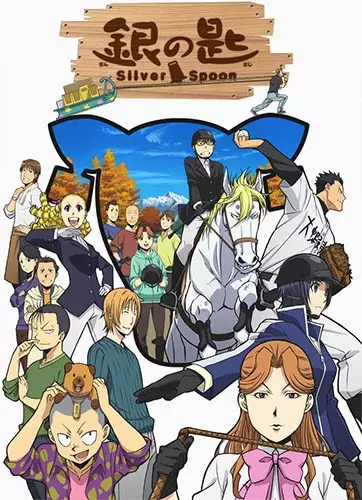
Silver Spoon 2nd Season
銀の匙
Now accustomed to his life at Ooezo Agricultural High School, Yuugo Hachiken explores the deeper aspects of what school life really means. As Hachiken learns more about himself and earns the skills necessary for his everyday tasks, he is even offered the position of the Equestrian Club's vice-president. The new semester brings a variety of agricultural dilemmas and personal conflicts, but, nevertheless, Hachiken perseveres in order to discover his dream and continue working together with his friends. [Written by MAL Rewrite]
Главный
Главный
Второстепенный
Второстепенный
Второстепенный
Второстепенный
Второстепенный
Второстепенный
Второстепенный
Второстепенный
Veronin
April 12, 2014
Popular media tends to reflect the urban and suburban lifestyle. The life of the farmer has been nearly forgotten, and with the rise of technology, agriculture is often treated as a thing of the past. While we do not normally think about the meat and vegetables sitting in our fridge, the life we know might cease to exist if these everyday products were suddenly taken away from us. Silver Spoon (known in rōmaji as "Gin no Saji") may serve as a reminder of what is taken for granted, but it also happens to be a highly enjoyable experience in its own right. It shows whya simple, tangible story is often more effective than one involving superpowers and end-of-the-world scenarios. There is little here that we couldn't find in our own lives, and that's precisely why it works. Silver Spoon shows there is beauty in an unremarkable life. "Beauty", perhaps, is not something that would normally be attributed to the handling of manure and the slaughtering of livestock. But Silver Spoon shows these issues under a different perspective. The farmers who let their livestock visit the slaughterhouse are not necessarily the heartless creatures the PETA tends to colour them as. More often, the farmers care for their animals; when they are given no choice but to send one of their pigs or horses to the slaughterhouse, the farmer feels regret. But they understand. They know that not every creature can be blessed with a long and happy life. There is a sort of bittersweet irony to human nature, and the protagonist, Hachiken, eventually grows to understand by the end of the story: things are not always black-or-white. A grey or a silver is maybe the most common. Silver Spoon is not preachy with its themes. It does not proselytise or portray farmers as saints. There is a strong sense of maturity and realism to the story, and often these themes are presented with light-hearted humour rather than excessive drama. The audience is never forced to feel a certain way; they don't even need to think about the themes if they would rather not. There is certainly a deeper meaning within Silver Spoon, but as simple entertainment it succeeds just as well. The protagonist, Hachiken, is where the story shines the brightest. He is rebellious, depressed, the epitome of the angst-filled teenager. Hachiken looks down on the activities of his peers; he finds the work tiresome and disgusting. The notion of cleaning a pig's cage or cutting apart an animal for food feels degrading and inhumane. But he matures. He does not learn to enjoy these activities, but he gains the ability to respect others' lifestyles. His internal world becomes less about himself and more about the people surrounding him. He understands that he felt alienated in the past as a result of focusing only on himself. Humans are a social creature that require cooperation to find peace... usually. Hachiken does not mature from melodrama or heavy-handed 'lessons'. He matures simply by living. The episodes of the show rarely contain any significant drama, and controversial topics (such as the slaughtering of livestock for food) are treated in a very down-to-earth, realistic manner. Silver Spoon could have easily become a sort of pro-slaughter propaganda, but it is not. Not in the slightest. It portrays both the good and the bad in equal measure. The only real issue with Hachiken's characterisation is that his stubbornness can get irritating, but even that seems a part of the point. The characters are not portrayed as inherently 'kind-hearted' or 'bad' people. They are human beings with their own traits and flaws. It's also nice to see an anime that actually focuses on the adult characters, too, instead of conveniently erasing them through the 'overseas trip' cliché. I've had quite enough of that. Silver Spoon is a joy to watch even if you have no interest in the agricultural lifestyle. The activities that the characters participate in is very insightful, and there's a good chance you will learn a few things about farming along the way (I certainly did). The only problem is that the comedy is very hit-or-miss. It is completely and utterly Japanese... filled with exaggerated reactions, slapstick, and other things that western audiences are unlikely to find amusing. It feels repetitive and uninspired, almost like the mangaka threw these jokes in simply to /have/ jokes. That said, the art is of a consistently high quality throughout. Even during the last third of the season when animators tend to make the most mistakes, Silver Spoon still manages to look just as clean as it did at the beginning. There is a sort of 'chiselled' look to the characters' faces which also gives the show a distinct visual style. Being the second major project from Hiromu Arakawa (of Fullmetal Alchemist fame), you will undoubtedly see some similarities between the two. Silver Spoon's anime adaptation may not have nearly the budget of Brotherhood, but it looks just fine on its own terms. There's hardly a reason to complain. The music verges from great to completely out-of-place. There are some beautiful tracks but they are hampered by poor usage. The last few episodes of the second season, for example, contain several scenes with sombre classical music playing while two major characters argue with each other. The piece itself is nice... but did it really have to be used in this particular scene? The more quiet tracks, the ones that are less noticeable are what carry the majority of the emotion. It truly feels like a slice-of-life. I can't imagine there would be a reason for any fan of anime to skip a series like Silver Spoon. If you are looking for teenagers screaming at Titans, I suppose, Silver Spoon might bore you with its lack of action scenes. But this lack of action is the series' greatest strength. It is introspective rather than epic, mature without ever forcing itself. The subtle drama feels meaningful; it works because it focuses on ordinary people rather than superheroes. You do not need a vested interest in the slice-of-life genre to appreciate Silver Spoon. It is a brilliant, heart-warming story that nearly anyone can enjoy. Silver Spoon may be the antithesis of what Fullmetal Alchemist represents, but Arakawa shows that an emotional story can also be told through the simplicity of everyday life. We don't always need superpowers and villains to be excited. A simple tale can be more than enough.
Stark700
March 28, 2014
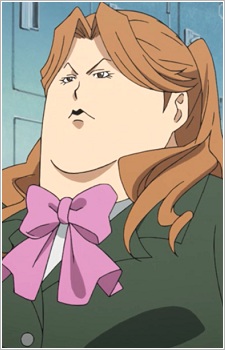
By expressionism and symbol, a silver spoon is symbolic for wealth. The phrase of “been born with a silver spoon in his mouth” is synonymous relating to an individual born from the rich family. But the series, Silver Spoon/Gin no Saji, stands on the opposite side of that symbol. Most of the characters aren’t rich and neither are any of them born from a wealthy family. However, what they do have is the talent and ambition that drives them to fulfill a dream. Making a dream into a reality is tough. Competitions and life itself becomes an obstacle. Gin no Saji/Silver Spoon delivers that veryidea of following a dream by heart. A journey into Gin no Saji is more than about following that dream. It’s about learning, discovery, and finding out the essence of themselves. Written by Hiromu Arakawa, best known for her work with Full Metal Alchemist, Gin no Saji depicts the life of a young boy named Yugo Hachiken. Season 2 sets off after the conclusion of the first arc. Needless to say, it’s imperative for one to complete the first season to fully appreciate season 2. The foundation of the first season revolved around farm aesthetics and just what’s like to be involved in the field of agriculture. It’s almost like opening the doors to a brand new world and realizing just how difficult it is to survive. In this season, more dynamics are explored beyond the farm jokes. What we learn about the characters impacts their future as they follow a dream, a road of inspiration to become someone they always wanted to be. To appreciate this series, one must first embrace the style of its portrayal relating to the agricultural field. The setting takes place at a farm, a place free of crime, discrimination, or corruption. It’s simple and realistic with the atmosphere along with the farm animals. Just picture yourself there on the field working with cows, chickens, and horses. For Hachiken, he truly learns what hardship is like as a farmer. But more importantly for him is about discovery, to venture out of the life he once was so used to. And honestly, that’s an important concept in life itself. When something changes in our life, we try to adjust, adapt, and eventually become part of the norm. Hachiken gets used to working on the field with others and make discoveries of what hardship is really all about. The anime that is adapted from the manga of the same name is written by the author based on her own experiences when she grew up in Hokkaido. In essence, it brings out what her childhood was like and is a strong influence with the themes in this series. But capturing those moments is difficult with a small cast of characters. Luckily, Hiromu’s writing cleverly brings out her characters to life with idiosyncratic attributes. She accomplishes that through a unique craftsmanship of these attributes to tie in with the story. Most of the characters follows their dreams and this becomes prominent later on as a major theme. In the early stages of the season, we already see the passion that they have for their dreams. Examples such as Mikage’s dream to care for horses as a profession, Ichiro’s inspiration to become a professional baseball player, or Hachiken’s older brother Shingo to become a chef. But life offers challenges. For Mikage, this comes as a burden for both her and the family. What we must understand is that there’s a difference between choosing one’s dreams and deciding who make those decisions for you. Obstacles limits these choices yet there is a profound way of how this show demonstrates ways to overcome them. With support and spirit, an inspiration is bought about that spreads influence. Hachiken on the other hand still wonders about what road he needs to take for his future. But from season 2, we find out quickly about his present position as the new vice president of the Equestrian Club. There’s an emphasis of responsibility to be placed on him as the future of the club lies with his hands. It’s acceptable for this season to put Hachiken in such a position to test him his skills as a person. Because being a leader, one must also demonstrate responsibility, the passion to hold a group together, and prove their self-worth. All this ties in together with building a future and following dreams by such emphasis. At the same time, we get to see relationships Hachiken builds with other characters. In particular, his relationship with Mikage is explored by friendship, respect, support, and potential romance. The way the two interact has a sense of unique dynamics as they talk about their family and struggles. In fact, the two are actually similar in many ways with their relationships with their families. Both families wants the best for their children yet they also have high hopes for them, placed at almost a burden expense. And while Mikage is an only child, Hachiken is often compared with his older brother Shingo that causes him to feel self-doubt. Nonetheless, the duo’s conversations throughout the season brings together both realism and is relatable. Ask yourself this: do you sometimes find yourself living in someone’s shadow when you’re compared to that person? Focusing on the main story is quite a driving factor but at the same time, this season also brings comedy and fun. The thought of working with animals firsthand to gain experience may seem like a daunting task at first. Yet, we see how much fun some of the characters have as they embrace the way of the farm life. Even Hachiken becomes accustomed to it. The comedy comes from the way Hachiken experiences how to deal with animals and the mistakes he makes. Yet, he learns from these mistakes (most of the time anyways). The result of some of these mistakes often brings embarrassing attention and humorous events. At the same time, there’s silliness with the way animals behave around the characters. In particular, Aki’s horse Maron plays a comical relief as a character that displays human traits such its egoistic behavior and even tsundere like tendencies. And on the human side, we have a new character named Ayame with a stylish fashion of her drill-like hair but colored by an aristocratic way of speaking. Looking carefully, the rivalry she has with Mikage can almost be interrupted as a joke by the results of their so-called “contests”. Rather, she does stand out more with the way ‘silver spoon’ is depicted as a wealthier individual; a contrast to where Mikage is coming from as in a normal family. With 11 episodes, there are some parts that are seemingly omitted or otherwise, left unresolved. In particular, the relationship between Mikage and Hachiken is explored but doesn’t seem to progress too far. There’s an obvious attraction with the two that are seemingly drawn by their similarities. Yet, the show chooses to ambiguously present this in a more platonic way. At the same time, more emphasis is still focused on aspects of the farm such as taking care of animals. It has been dealt with so many times before in the previous season that it feels repetitive by this point. Also, a lesser focus is on Hachiken’s character himself. Most of the other cast members gets emphasis on their future while he is still on the farm asking himself what he should do when he grows up. As a main character by this point, I find this slightly unattractive by such generalization and its setup. And speaking of unattractive, some of the jokes become stale to a point of being on a detached direction of diminishing effect. Artwork still retains the style of the first season. We get the natural feeling of how the agricultural field is depicted by its backgrounds. The animals are crafted with delicacy and with the intent to demonstrate realism. Characters are decorated with simplicity. Female characters aren’t designed with heavy makeup but rather to themselves. No stereotypes. No sexism. No stupidity. The show’s character cast feels real with a bond to the farm. As you watch this season, there’s a sense of attachment you may develop with the characters as well just by their outlooks. As far as soundtrack goes, the show is consistent although it’s nothing masterpiece worthy. The OST is smooth with a calm music tone. The OP and ED songs demonstrates degree of a countryside feeling. Most of the characters’ voices are presented well. In particular, Hachiken’s expressions of his voice mannerisms are demonstrated with realistic responsiveness. Whether this can be anger, fear, or anxiety, there’s credibility that makes Hachiken’s voice something to remember. We all have dreams. Whether you realize it or not, every single day that draws by takes you closer or further away from it. But for our characters in this show, they try to become closer to making their dreams into a reality every single day of their lives. Gin no Saji responds to the way of following dreams explicitly through demonstrative episodes with characterization. Dynamics are explored with a decent balance of humor and realism. It can also be relatable by the setting and just in general, real life itself. After all, life is a challenge because there’s no such thing as free lunch.
Ckan
March 28, 2014
The Silver Spoon is real, and even now yours for the taking. If there's something to be said about Gin no Saji (trans. Silver Spoon), we can probably boil it down to three core ingredients: Food, Agriculture, and Life. Those are no small matters, but Arakawa Hiromu has masterfully blended these hefty issues into an easily digestible, comforting, and befittingy resonant, intimate work. A coming-of-age slice-of-life school drama taking place in the remoteness of Hokkaido, Japan, this anime harvests its bounty from the wealth of its source material, but in the move from manga to anime, it augments and adapts it perfectly, adding garnish and spice tothe completed dish. As a second season, expectations and method have already been pre-set, familiar to the returnee viewer, but in this second series Gin no Saji (GnS) advances beyond those previously well-laid foundations. Once again, viewers are treated to those necessary daily hardships and mundane chores of farming life, but also its joys, pleasures, and novelties (oh food, so sacred!). Through that familiar trial of school-life, the varied cast of boarders share with us a glimpse of the agricultural world: the nuanced considerations of livestock-raising, the delicate handling of the horse by its rider, and that telling contradiction of love and necessity with which all live-stock animals are treated within the industry. The farming life and related rural community is lovingly portrayed, yet also, as one of Gin no Saji's good virtues, it is very much grounded in reality, and when events turn against our protagonists, there too, is meaningful realism. Our hero, Hachiken is a wonderful expy for the viewer. Now familiar (as we are) with the farming hours and various chores, he continues to learn through experience, mistake, and labour, of this huge-world, an industry and life so pertinent to the world-at-large, yet so taken for granted, its hardships forgotten. In his studies and adventure, Hachiken grows so very much, and this is the key to the genuinity and excellence of GnS: the fantastically crafted characters. Each character brings a necessary layer to the show, and while not all are developed as fully as our main characters, they each have something to add with their unique designs and endearingly comedic traits. But, ultimately, this is a show centred on Hachiken and his youthful negotiation through hardship, friendship, and expectation; it is here that we get Arakawa's sincere portrayal of the complexities of education, family, economic reality, and all the never-ending steps we take towards our future. Most gratifyingly, Hachiken is a character who battles his insecurities, and bull-headedly rises to those challenges. Visually, Gin no Saji requires fairly little portrayal of movement, but the animation team has done a great job in adapting the manga stills while maintaining the perception of action and dynamic change. This is most obviously combined with the quick-transfers and exaggerated character 'reactions', delivering both effective gag-comedy, and visual interest. Voice actor Kimura Ryouhei has done a suiting job as the worry-wart, yet hardy Hachiken, and his acting elevates the show, aided by the superb supporting cast. The soundtrack is fitting, if not too stand-out as expected of an easygoing drama, and the Opening/Ending themes are also properly welcoming and warm. In conclusion, Gin no Saji is a pertinent story, reminding us of the choices, indecision, and complexities of youth. The agricultural aspect gives a much-needed flavour, educating (never preachily), adorable, and scrumptious. There's drama, but never needlessly heavy, but fittingly serious and real. There are no cure-all solutions, there's nothing here outside the common experience, only a lifestyle unfamiliar to us. This is no stellar visual artwork, as its device is to adapt a brilliant story from paper to screen, and it does so flawlessly. The Silver Spoon that we all possess, that inheritance, that overlooked richness, or even literal wealth. It takes on countless meanings, and yet reminds us of our worth, our past, and what we are, that is, a coming future. All this contrast can be found in Arakawa's clever title and furthermore in this exellent adaptation. In watching this anime, you will find laughs, youth, the simple adversities, and also worldy realities. Like the myriad of animals in this world: companion, livestock, worker; this show will be a worthy support as you discover a new and different, yet charmingly familiar world.
swordstriker21
March 27, 2014
I really enjoyed the first season of Gin no Saji. It goes w/out saying that I had really high expectations for the second season. And for the most part it didn't disappoint. Story/Characters: The story picks up where the last season left off where Hachiken is slowly getting used to the life at Yezo high. He's made friends and is now relatively enjoying his school life. But his character will develop by leaps and bounds by the end of this season w/c was why I liked it as much as I did. The character development... This aspect was really prominent this season and I enjoyed it a lot.Hachiken, Mikage and Komaba all have their moments and all of them felt really genuine and real. The drama also escalated quite a bit and if someone told me I'd cry because of dairy cows before watching this series I'd have thought them to be crazy. The story really upped the ante this season and it was great. Art/Sound: I personally thought the new OP/ED weren't as catchy as last seasons but that's just me. A-1 remains consistent animation wise and still manages to give us really great backdrops. Overall: As much as I liked the last season I think season 2 trumped it by a fair margin. The story is moving along in really surprising ways and the roller coaster of emotions it takes you to is really enjoyable. Especially the last few eps. Hachiken and the gang are growing steadily and you feel all warm (but a little melancholic) inside seeing them go through all the things life throws at them. I'm pretty much up for a third season if ever. Another great SoL series to remember.
sCr4G
March 30, 2014
The Silver Spoon was real after all… Story/Plot: we have the story of Hachiken, a young high school boy who enrolled an agriculture school/college in order to escape his past and to find new opportunities along the career he is pursuing to. This follows up season 1 right off which is something I like about this series. Along his journey, Hachiken gets to meet many friends, many experiences, and the harshness he goes through facing reality which is something we all experience at some point in our lives. What I like about this, as the story goes on, is the viewer learns about agriculture environmentsuch as working in the field, how to make cheese, how to make bacon, dealing with the livestock, among others important things. The lessons this anime is bringing upon us is truly meaningful. (9.5) Characters: If there’s something I like the most in this is the dialogue and the character development. Every character has his/her own goal and each one of them got his/her own problem to take care of. We get to see how they grow up and learn according to the different tasks they get involved as well. The comedy approach always comes in the right moment and somehow that’s something I find important in a slice of life. (10) Animation: A-1 pictures delivers a great animation and quality for this series. The backgrounds, the animals and the characters seem to be in the right picture. Props to them. (9) Sound: Beautiful melodies and sound effects for the drama moments and all the characters. The Opening song was good and the ending song was lovely from my perspective. (9) Final thoughts: Gin no Saji is one of those series that should be on the top list. It’s a shame is considered an underrated anime having such a great story. Hopefully we’ll get to see a Third season…we need more anime like this. (9.5/ 10)
Ранг
#341
Популярность
#1710
Участники
154,639
В избранном
695
Эпизоды
11