サムライフラメンコ
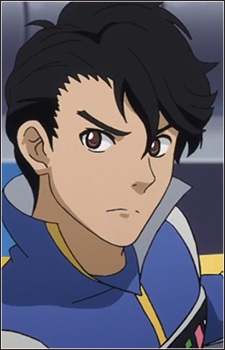
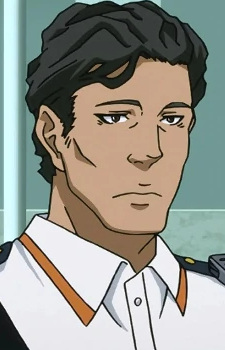
"A hero will never give up, never hide, never be defeated and never accept evil!" Firmly believing these words, Masayoshi Hazama has been obsessed with superhero shows since childhood. By day, he earns his living as a famous model, and by night, he becomes the gallant hero Samurai Flamenco. Armed with only his superhero costume, he seeks to bring justice to the city and faces anybody who tries to break the law—even rebellious juveniles and people who litter on the street. Masayoshi's heroic antics later catch the attention of the public, leading to the fateful discovery of his identity by policeman Hidenori Gotou. Although initially telling Masayoshi to leave the crime-busting activities to the police, Gotou ends up joining him in his antics. However, things soon escalate from preventing littering and petty thefts to bizarre adventures that involve even the fate of the world. Together with their newfound comrades, Masayoshi and Gotou embark on a battle with the world and themselves in order to find the true meaning of being a hero—with or without superpowers. [Written by MAL Rewrite]
Главный
Главный
Второстепенный
Второстепенный
Второстепенный
Второстепенный
Второстепенный
Второстепенный
Второстепенный
Второстепенный
SleepyBear
March 28, 2014
Samurai Flamenco is a strange animal. Despite its conventional appearance, it is full of twists and turns. Overall, Samumenco addresses its core themes very effectively, primarily the theme of heroism. It has likeable and developed characters with distinct personality traits. It also comments on general character/plot tropes, mainly involving heroes and villains, as well as the sentai/tokusatsu genres. (And doesn’t always take itself too seriously while doing so.) It’s hard to find a show like this where you truly don’t know what to expect. It may be for this very reason that this show received such widespread negative reception: it's a bit quirky, but itisn't initially apparent whether or not it's trying to be. Many would say that Samumenco isn't quite sure what it wants to be. But now that it’s over, I can say that I’m very glad I stuck with it and that the writers had a clear objective in mind, even though the execution of that vision wasn’t always apparent. Details: Story: 8 It starts out as a slice-of-life about an eccentric wannabe superhero, and proceeds to go through two major tone/plot shifts. The plot is paced somewhat erratically, and many might find the plot twists jarring. However, both of these shifts contribute to the overall themes of the story. Art: 6 At its best, Samumenco’s art and animation is solid. At its worst, the animation was pretty awkward. Unfortunately there were often moments where poor animation detracted from the experience as a whole. While this can be forgiven for background characters, there were some important moments that would have had more impact if not for the distraction of poor animation. I think it would have been interesting if Samumenco had a style of animation that mirrored its eccentricity, but for the most part, things are pretty conventional. Sound: 7 The OST itself wasn’t especially memorable. The BGM fit the mood well, but there were no standouts. The OPs are enjoyable and fit the tone. (Personally, I really liked them both and they got me excited for each episode.) Characters: 8 The characters range in development, but overall they were all believable and likeable. The eccentric main character, Masayoshi, is an upstanding young man with a strong vision of heroism. What he lacks in ability, he makes up for in spirit, which is pretty darn endearing. Another major standout was Maya Mari. The story starts out from the POV of the other male lead, Gotou, the "average joe" who gets fleshed out gradually, if not as thoroughly as some other main characters. Some of the characters had very distinct and often conflicting personalities, which made their interactions very entertaining to watch. (A good example being Masayoshi and Mari’s contrasting senses of justice.) Enjoyment: 9 Although there are a lot of fields that Samumenco could have improved in, I still enjoyed it thoroughly. There are both serious and humorous quoteable moments. I found myself crying and then laughing at some points. The humor varies from a little tongue-in-cheek to downright hammy and ridiculous. I really loved the initial concept of the show, and was a little sad to see the plot veer from the slice-of-life superheroes plot of the first segment. For a period of time I wasn’t sure what to feel, as the rapid plot and tone shifts made it seem as though the show was going through a rebellious teenage phase. However, after a certain point everything fell together (albeit somewhat messily), and I would recommend that anyone who is interested should give it a chance and stick with it.
ZephSilver
August 10, 2015
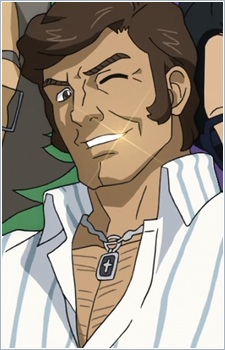
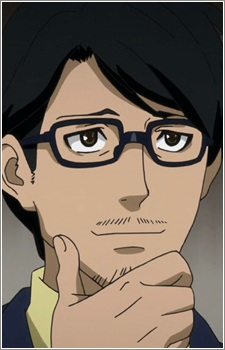
Some shows jump the shark, while others perform a Samurai Flamenco. Deconstructions are some of the most demanding and intricate kinds of stories to pull off. It requires the creator to have proper knowledge of the formula they're trying to deviate from by understanding how the tropes and trappings of said formula should be incorporated, in order for it to feel natural. With the right pedigree of writing and proper usage of the commonalities associated with the given formula needed, the creator is expected to build the illusion to the viewer that they're simply following the setup they've already experienced countless of times before. And duringthis stint of limbo, where the viewer is caught up in the illusion, the creator then proceeds to dismantle and "deconstruct" the formula that the viewer had grown accustomed to. While it may seem like a relatively simple process, all it takes are a few missteps for it to implode on itself. And more often than not, if the writing for the show is shoddy at best, the end result can be more of a trainwreck than anything noteworthy (School Days can attest to that). But perhaps the biggest reason that causes most deconstructions to fall flat on its face can often be something as simple as neglecting the fundamental building blocks of proper storytelling, more specifically, in this case, foreshadowing. Without it, things can come across as manipulated or just "ass-pulled" into the narrative. Proper foreshadowing is what allow the transition from following a formula to subverting it to feel natural. And when foreshadowing is non-existent, well..., we get things like episode 7 of Samurai Flamenco. Samurai Flamenco is a weird anime title, to say the very least. It's a satire, homage, parody, reconstruction, and deconstruction of the super sentai/superhero genre, all wrapped up in one. And if the idea of that sounds insanely convoluted to you, well, that's because it is. While the intentions it had was genuine, the presentation and overall direction it took to see its vision through fell short of the mark. And of course, many will simply single out the tonal/genre shift of the infamous 7th episode as their point of contention, but that was just one of many blunders the title made during its 22-episode run. At the end of the day, Flamenco just bit off more than it could chew. Brief history lesson: the Super Sentai phenomena have been something that has grown synonymous with Japanese culture with both live-action shows (Ultraman) and animated ones (Hurricane Polymar), for over 30 years. For the most part, it illustrates the fight between good and evil forces, and during its heyday, was a primary tool used to teach kids that "justice always prevail." Usually portraying a team of color-coded heroes, with the help of high-tech gadgets, they fight off evil forces that threaten the stability of mankind. Due to its kid-friendly programming, it didn't take long for it to gain success overseas, which eventually brought it stateside, most prominently with the cobbled together The Power Rangers franchise. The Super Sentai series are basically more kid-friendly versions of superhero shows (4Kids level if you will). As such, the super sentai genre has become a part of many people's childhood. And that's where a title like Samurai Flamenco comes in. Now with that out of the way, Flamenco can be split into two parts: the first being along the lines of a traditional coming of age story told through the setup of a superhero origin tale and the latter half being a super sentai show along the veins of Power Rangers. Following our protagonist Masayoshi Hazama, we see his journey from a petty enforcer of the law, tackling trivial matters like recycling and obeying traffic signs, to him being caught up in higher stakes that escalate as the story moves forward. Similar to movies like 2010's Kick-Ass and Super, the 1st half of the show is more of a satirical parody of what the traditional superhero story is generally comprised of. While possessing no real superpower or qualities of a superhero, to begin with, most of the charm of the 1st half is seeing an average Joe attempt to live up to the role of the TV-show superhero icon of his youth. The fact that his "heroics" was no different than what anyone else can do themselves went a long way in grounding the show in reality. He was simply a vigilantly running around in spandex and as such, we see the real-life repercussions of those actions. In real life, a guy running around a city with his underwear worn over his bodysuit "defending justice" would be viewed more like a lunatic and nuisance than an actual "hero," and the show knows that. In a way, it exposes the childish ideals that those super sentai/superhero shows were trying to feed kids growing up by treating situation realistically. It's an externalized reflection of the mentality of us as we grow past such juvenile ideas and "face the music" of what life is truly is. And to be honest, if the show had continued to take this approach, that would have been enough to make it a solid satirical parody, but that just wasn't the case. Now where the controversy comes into play is the show's 2nd half. It transitions from what was, to that point, a down-to-earth parody of a superhero story, to a show that turns into a full-fledged supernatural super sentai deconstruction. This shift from a grounded account to an "out of this world" supernatural one was done with no foreshadowing or build-up whatsoever, and as a result, caused a whiplash of adverse reactions among viewers that didn't see it coming. The negative backlash the show received was harsh and rightfully so. It isn't the viewers' fault, but rather the show for not handling the transition better. It didn't have to give away too much, but if it had simply dropped a few foretelling signs and hints throughout the narrative, its tonal shift would have been better received. Instead, it felt more like an out-of-place plot twist that had no business being there. While this was partially explained to those that finished the show, by that time, the damage was already done. This poorly handled decision was perhaps this show's biggest blunder. Not only was the tonal shift not handled well but the 2nd misstep was that the show crossed the line from being a parody to becoming the subject matter it was making fun of, to begin with. It would be like if someone were promoting equality but then turned around to proclaim themselves as a racist. It's contrived and defeats the purpose of the first action performed. While it still did an excellent job paying tribute to the super sentai genre, it did so with subtext that didn't match up with what was established in the show's 1st half. Tying back to what I was saying about this show taking on more than it can chew, the attempts at a deconstruction clashed with the narrative because of the already firm satirical stance the show had taken early on. Both the 1st half and the 2nd could have worked respectfully on their own, but when combined, they didn't have proper cohesion, and as a result, felt forcefully tact onto each other. It's like going from watching Neon Genesis Evangelion to the 2nd arc turning into Pokemon. Just because both titles have proxy battles, doesn't mean they should be bundled together as a single viewing experience. That's essentially what Flamenco did in a nutshell. This mismatched exhibition wasn't limited to just the narrative either. Like the show, the cast also ranged from down-to-earth to wacky. Some characters feel somewhat believable to what you'll find in the real world, like Hidenori Gotou, the show's person of reason and friend to our protagonist. But then, on the other side of the spectrum, the antagonists can range from street-level thugs to batshit crazy megalomaniacs akin to a Saturday morning cartoon. The further the show goes down the spiral of nonsense, the more ludicrous the characters involve becomes. Even our person of reason is shown to have a rather disturbing backstory revealed towards the latter half of the show, almost as if the writers wanted to take him down to coo-coo land with the rest of the nut jobs introduced. The lead protagonist, Masayoshi Hazama, was nothing more than a man-child, being an adult with the mindset of an adolescent. As such, most of his actions are done to counteract the rational mindset of Gotou in the show's beginning. This, of course, changes as the title progresses forward, but I'll leave that tidbit for you to discover yourself. There is also a handful of supporting characters that get caught up in the fray, but for the most part, Gotou and Hazama are the characters that take up most of the limelight and relevance in the story. The art and animation for Flamenco were a cut above average but nothing overly impressive. While the choreography of some of the action scenes was stiff at times, they still were serviceable enough to get a pass. The color palette of the 1st half is somewhat subdued and tamed, which fit quite well with the realistic tone it was aiming to serve. Later on, that was swapped out for a more schizophrenic display of color and elasticity, which helped in ramping things up a notch, matching the new up-tempo tone that the show took on. The sound department, for the most part, was an appropriate mix of rock, funk, latino and other superhero-esque flavoring used to add a nice punch to any given scene. It also doubled up as a means to establish atmosphere while also adding life where the animation couldn't perform on its own. The voice acting was also a cut above average with everyone involved delivering a satisfactory performance. Special mention for Juurouta Kosugi, who did a great job bringing the character of Jouji Kaname to life by providing a particular type of machismo hamminess to the way he talked. Now, with the general rundown out of the way, the best thing to take away from Flamenco is to understand what it was trying to do, rather than how its efforts panned out. The more you comprehend its intent, the more you could grow to appreciate it. The problems, however, stems deeper than that, and depending on how demanding of a viewer you are, might determine just how much you're able to tolerate from Flamenco to get those ideas tucked away inside it. While the show failed to deconstruct the super sentai genre accurately, it still did so in an entertaining and spectacular fiasco. It was so "out there" that I couldn't help but be entertained by its nonsense. It was certainly a unique experience that will stick with me, and despite not holding up as well as I was hoping it would, it was still something I was happy I watched. Samurai Flamenco is what happens when writers forget the importance of foreshadowing. It made a complete 180 in tone and genre without letting it gradually build up to that point, which in turn led to the notorious viewer backlash that's usually associated with those that hear of it. It was an interesting idea on paper but what we got instead was a failed attempt at a deconstruction that became the joke it was making fun of. Despite that, I suggest giving it a try, as it is an experience within itself that you can't honestly find anywhere else.
tsundines
August 5, 2014
Firstly, it's important to note that Samurai Flamenco is not exactly your typical anime. There are a few genre shifts and plot twists that can seem to come out of nowhere, and for that reason a lot of people dropped this anime after the first shift or the second and gave it a low rating. Even I was apprehensive at first at the sudden genre shifts. However, I stuck the anime out until the end to give it a 'fair try' and I am very glad that I did. The final arc wrapped up the story very nicely and the last episode left me comingaway from the whole thing feeling generally satisfied. However, this review is also a review spurred about by my third watch of the show, so I've had more time to fully grasp the story and come to love it for what it is. First of all, the most important thing and what really tied this anime together for me and made it so worthwhile - Characters - 10/10. Honestly, this show's story did sort of fall flat in a lot of ways. However, the characters were very genuine and fleshed out, and they felt real - some of the best characters I've seen in a recent anime. Masayoshi, Goto and Moe in particular will probably remain in my heart for a long time, as they just felt so genuine and really breathed a lot of life and enjoyment into the show that might not have been there otherwise. Story - 7/10 It's not bad, but it's definitely not the best story out there either. There are four arcs to Samurai Flamenco - and some of these arcs were better than others. Particularly I found the 1st and 4th arcs good, but this does not mean that the others were necessarily bad - they just felt out of place or oddly-paced at times. It was easy to forget what I was even 'supposed' to be watching, as the plot kept shifting so suddenly. Art - 7/10 Again, not bad, but not the best either. It's definitely not anything extraordinarily beautiful. However, it's well-animated and the art isn't glaringly bad or anything. Just your typical standard anime fare. The art style was particularly refreshing, however, in my personal opinion, as it seemed to look a little more 'realistic' than your usual anime (the proportions weren't as completely skewed as you usually see; it was more akin to FMA: Brotherhood in anatomy.) Sound - 9/10 The OST is very good and I find myself listening to it every now and then, especially the Flamengers theme and the opening "Just One Life." All in all nice though there were a few songs that stuck out as seeming a little out of place (Usankusai comes to mind, though it wasn't necessarily bad, just... out of place.) Enjoyment - 9/10 Keep in mind this is a rating upon rewatching the series and seeing it all really come together now that I understood what was happening. Depending on how well you can understand what's going on this may be lower. Overall - 8/10 The point with Samurai Flamenco is to go into it with a truly open mind. If you go in expecting a certain type of show, you are very likely to end up disappointed - as the genre shifts a few times. Overall, however, the characters really make the whole thing worthwhile, and this will probably remain one of my favorite anime for a very long time.
Stark700
April 16, 2014
The word ‘hero’ often tends to be stereotyped. When we see or hear the word ‘hero’, we tend to think of a guy in a flashy outfit, with extravagant poses, and dynamic entrance. To add on to this faction, they also make it a mission to protect the people and save the world. Why? Simply because it’s the right thing to do. Samurai Flamenco qualifies the title of being a sensation with this trend. What started out as a promising series later turned into a nightmare, one that I had hoped was just a dream. Unfortunately, it wasn’t and the horror plagued this series inways that is unimaginably absurd. Samurai Flamenco is an original series produced by Manglobe. The TV network Noitamina handles this anime that follows a trend of producing unique series as done in previous years. Samurai Flamenco is unique at first sense with its pattern. The concept of a hero trying to save people despite not having superpowers should be seen as an inspiration. Now, if only that was the trend with its initial set up. The first few episodes offers promise but that doesn’t last… For starters, this series is about heroes saving people. Naturally, you’ll expect to see action in the form of battles around the world. It isn’t a new trend in the anime industry since series such as Tiger & Bunny, Zetman, and the recently Gatchaman Crowds adapted similar themes. The major difference initially is that Samurai Flamenco’s characters (superheroes) possesses no supernatural powers. Despite this, they still strive to help their city and ensure the safety of its people. Initially, Samurai Flamenco is a symbol for a classic superhero theme series. The characters are there to do the job and the story moves smoothly with a slice of life like style. Furthermore, the characters can even been seen as relatable with the way they handle tasks whether it’s be helping retrieve an umbrella or stopping a bank robbery. It’s what normal people do to help others and characters such as Masayoshi Hazama does a realistic job at it. Not only that but as his hero adventure goes deeper and deeper, he finds himself in more trouble. Luckily, he also gets unlikely help in the form of his Samurai Flamenco girls made of idols. It defies the classic ‘female crying for damsels’ trope as they let out battle cries rather than fear. Everything seems like a strong promise for this series but the show decides to kill its logic.. The easiest way to describe this is the way Samurai Flamenco goes as a path that is literally unbelievable. By that, I don’t mean it just as surprise but also sets up a route of destruction to this show’s original premise. It obliterates realism in ways that is unimaginable, defiles logic that is overwhelming, and kills its set up in ways that not even a time machine will be able to take back; as if time was ever on the characters’ side in the first place. It doesn’t just challenge itself anymore with this execution but makes it seem like derailment is a natural word to present a new side of the story. Don’t get me wrong though. Stories with a huge shift such as time skip or travel can redeem and set itself back together again with everything back in normalcy. What Samurai Flamenco screwed up is more than just the story. It becomes the anti-establishment of what it has originally had so much to offer. It gets more and more ridiculous to a point where full on Sentai takes control and characters transform into Power Rangers formula with the whole get-up. (even with the damn robot) One positive characteristic about the show might be its characters. Most of them are adults so there’s no childish gags or take place in a generic school life setting. Unfortunately, most of them lacks depth in personalities and some of them come as shallow as it can be. Hazama is the typical young man with a big dream in a big city. There’s nothing new about that since young people often aims for high. It just so happens that he aims to be a superhero until he bites off more than he can chew. On the other hand is Goto, a more cynical man that lacks a sense of justice. If we put the two together, they come off as an incomparable pair. Even with the closeness between the duo, they seem so far apart. If we talk about unity however, then there are the Samurai Flamenco girls made up of Maya, Misawa, and Morita. Naturally, with a show like this, they also takes on a secret identity and trying to save the world before bedtime. Unfortunately, none of them really defines themselves in a unique way whether it’s Maya’s cop fetish or Morita’s yuri attractions towards her co-worker. Other characters also later join the ranks of the so called “Flamengers” that becomes abominable to watch. It’s not just change but rather a synergy of characters mixed in an unrealistic execution. If you were also expecting the unexpected, then action shouldn’t be one of those factors. There’s plenty of action whether you view them as a counter factor to what it initially presented. Perhaps it’s different but it is there. At the same time, Sentai vibes is reflexively presented with all the new gags. Villains comes as stereotyped as it can get with their ideologies. In particular, the big bad announces his intention to taking over the world with a grand master plan. Sound familiar? It doesn’t stop there with the cliches. Hazama goes through dramatically changes. Initially, he fails at a lot of his tasks but becomes more experienced later on. This was originally presented as a credible way for his character for development. We want to see Hazama succeed because of what he does. But as the show progresses, Hazama finds it more component to not only help others and literally annihilate the villains. He becomes hypocritical in more ways than one with his newfound powers. Again, the urge to discredit the change becomes unbearable. And the show itself takes on a more mature route with stomach-aching torture scenes and psychological despairs. Although it strives to communicate its message to the viewers, it becomes detrimental with its original premise. Artwork wise, Mangalobe handles its production and the style matches somewhat with its themes. Characters looks normal on most parts when they aren’t fighting the bad guys. But when they do put up that gear, then it’s where everything becomes surreal and generic. The outfits the characters dress up are flamboyant. But really, they look like a rip-off of power rangers and Kamen Rider. It’s not only has that but it also even come with robots, a gag that has been used for generations. Villains and monsters look like they are on steroids with their self-proclaimed ideologies. Some of them are mindless and no more presented than as action figures. On a more positive note, the female characters’ designs looks flashy and offers some credibility when they aren’t around town fighting. Overall, the artwork seems like a slow progressing tape running on an old machine. The soundtrack almost makes sense if it followed its original slice of life style. On most parts, we get to witness action packed tones because the show itself offers action. It delivers almost in consistency if it had its vision going. Most movements of the series has that Sentai rhythm so naturally, the music would have to match along with the style. The OP and ED songs matches on most terms with some touches of surrealism. Surprisingly enough, most of the characters’ voice mannerism does stand out. In particular, Hazama’s character (as Samurai Flamenco) can be seen as silly but credible when he makes his point. Reactions coming from the characters often voices their thought out that will reach to you with their delivery. Samurai Flamenco isn’t a total piece of trash to be tossed away into the garbage. However, it is a perfect example of a derailment of what it originally had to offer. You’ll be caught off guard more than ways than one.. It serves as a perfection for juxtaposition and the show writes off itself as a deconstruction of realism. Characters who we originally felt attached to become annihilated by their change while villains offer little more than stereotypes. On another note, there’s also hardly anything more unique by its later executions. Prior to what I had envisioned as a super promise becomes a soiled story. It’s unbecoming. But if you must, do give this show a try for some crazy fun.
Detective
March 31, 2014
Deconstruction is a word that has become as frequent as genre tags since Madoka finished airing. And with it has come miscommunication and ultimately disassociation. Deconstruction is to recreate cliches in meaningful and innovative ways, as opposed to be aware of one's own genre. The latter is usually what people mistake deconstruction for nowadays, and with Samurai Flamenco this couldn't be proven more rightly so. Samurai Flamenco is a failure on all fronts. It is not a parody but is aware of it's own genre. With it comes this misunderstanding by it's audience. Simply because a work is self-aware does not mean it is adeconstruction. To be a deconstruction Samurai Flamenco would have had to do something new. Something that would innovate the many genres it was all too often burdened with. Between it's goal to create a serious and inspiring vigilante-filled universe and it's majorly flawed execution, the most mediocre result is achieved. We have neither an entertaining superhero series nor a psychological exploration of vigilantism. Was Samurai Flamenco a buddy-cop series in the light of Tiger & Bunny? Was it an action-thriller like Darker Than Black? What was it and what is it? It's an unique work, but unique only because of how poorly the tone of the series shifts throughout. There's a difference between uniqueness and quality that Samurai Flamenco can't seem to separate. Samurai Flamenco is illogical. It creates and sets characters for a few episodes at a time to later remove all traits from them in a jolt of narrative-based absurdity. Full of "plot-twists" that are not properly foreshadowed or explained and then quickly disposed of, Samurai Flamenco comes across as extremely disingenuous. The series wants you to be shocked at how many curveballs it can throw you before landing on a classical Hollywood ending every time. Yes, Samurai Flamenco, "Hero will never give up, never hide, never be defeated" but sometimes it just doesn't make sense for him not to. When the writing collapses on top of it's flimsy groundwork the most unremarkable deus ex machinas occur ad nauseum. The characters are used merely as avatars to deliver uninspiring tripe about justice and mankind. The level of depth found in Samurai Flamenco's exploration rivals that of children's programming. All characters succumb to this boring dialogue and really just begs the question "what could have been?" Do not watch Samurai Flamenco. Despite it's offbeat premise and charmingly realistic character designs, Samurai Flamenco is an overindulgent children's series bereft of plot-development and bereft of a good idea.
Ранг
#5201
Популярность
#1890
Участники
137,436
В избранном
905
Эпизоды
22