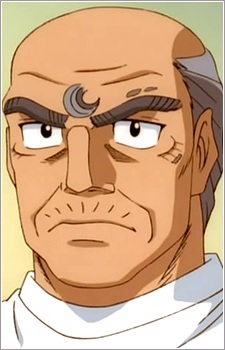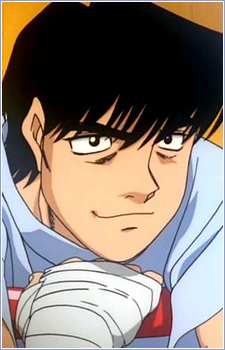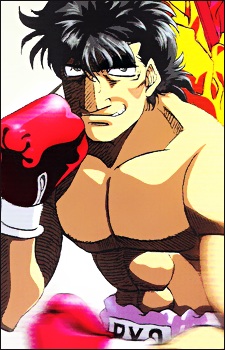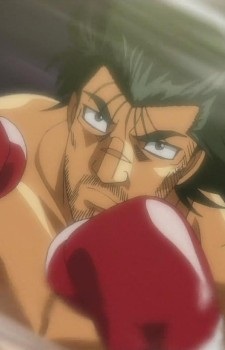

Fighting Spirit: Rising
はじめの一歩 Rising
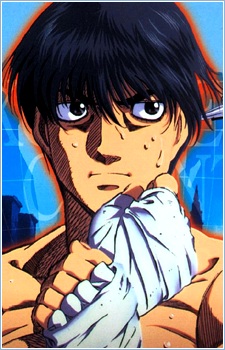
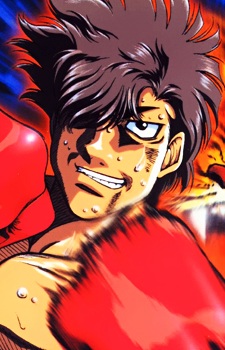
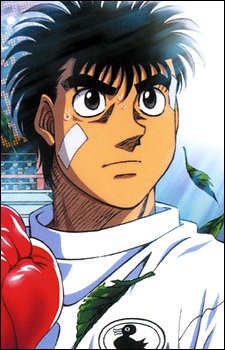
Japanese Featherweight Champion Makunouchi Ippo has defended his title belt once more with the help of his devastating signature move: the Dempsey Roll. However, new challengers are rising up left and right, claiming to have an answer for the move responsible for crushing his opponents. Will Ippo be able to step up to the challenge, or will the weight of his pride destroy him before he finds out just what it means to be strong? Meanwhile, fellow Kamogawa Gym mate Aoki Masaru is just a hop, skip, and a Frog Punch away from claiming his own belt, ready to take on the Japanese Lightweight Champion! Hajime no Ippo: Rising continues Ippo's quest to become stronger, featuring the same cast of loveable dimwits from Kamogawa Gym, as they put their bodies and hearts on the line to make their way in the harsh world of professional boxing. With a will of iron, Ippo steps into the ring once again. [Written by MAL Rewrite]
Главный
Главный
Главный
Главный
Главный
Главный
Второстепенный
Второстепенный
Второстепенный
Второстепенный
Второстепенный
Stark700
May 6, 2014
Representing a sports anime that have over two decades of history, Hajime no Ippo Rising returns in this third installation of its previous predecessors. It only takes one ring to bring together a collective cast of colorful characters, superstars of all shapes and sizes under one goal: to make a name of themselves and earn the respect of the world. Hajime no Ippo Rising accords for a perfect example of an anime based on the foundation of its theme not only in boxing but also in exploring the dynamics of its characters. It’s their time to rise and shine. Based off the manga of the samename, George Morikawa is famously known for his work known as Hajime no Ippo. The franchise has gained international attention for its exquisite presentation of the sports genre. Focusing on Ippo Makunouchi, the series has set itself as a leading paradigm to the development of his character. Not only does he get the spotlight but the show itself also explores its other cast members under one unity – the conception of boxing and its wonders. Being the holder of the Japanese Featherweight Champion holds a variety of meaning for Ippo. Responsibility comes as an archetypical word because top contenders will come after him. It’s his goal to defend his title, night after night, week after week, and possibly years after years. Ippo has already earned the respect of his peers but always strives to continuously aim for bigger heights. To do that, he faces off against powerful adversaries that truly tests his limits in the ring. Hajime no Ippo is known to explore characters both in and outside the ring for that matters. Well-developed stories also connects the characters together and formulates their development. For Ippo, it focuses both internally and externally on his character. This is extended by the clever usage of flashbacks involving his childhood. It’s a childhood that started out as pleasant but later turned cataclysmic after one faithful event relating to his father. We can feel Ippo’s emotions and what he’s been through that has left a painful scar in his mind. Whether in or outside the ring, Ippo identifies himself as a man of integrity – someone that stands out as a great example of a hardworking individual. The third season personifies his character in a way that is relatable and inspiring. Ippo isn’t the only character of this series though. Born from Tokyo, Japan, Takamura Mamoru returns to make his dream come true – to become the WBC champion of the world and eventually conquer all the other weight classes It’s no easy task with the opponents that he faces off such as David Eagle from America. In contrast with the brash boxer that Brian Hawk showed to the world, David stands out more as a motivator with an easygoing personality. There’s a sharp turn in this presentation as Takamura faces off an opponent that is respected for his mannerisms. At the same time, we witness first hand at how much Takamura improved since his most prominent matches from the previous season. No doubt too does Ippo improve with his abilities when he takes on opponents. It’s riveting to see how characters in this show make names for themselves by going through obstacles, battling their internal obstructions, and showing the world that anything can be achieved with purpose. Even Aoki Masuru gets his highlights in the series for his efforts. While largely downplayed as a mediocre competitor in the boxing world, Aoki’s development is almost instrumental thanks to his unorthodox skills. Despite being still presented as a comic relief on most occasions, Aoki learns the strenuous effort to make a name in the boxing world. He takes on opponents that puts him at the edge of struggling. However, it’s creative in this way to see Aoki in the ring from a different light. We tend to doubt Aoki’s skills but there’s no doubt the man has the guts to perform in front of an audience at his best. At the end of the day, Aoki is one of those guys that puts on a show you won’t forget whether it’s a win, loss, or draw. Even if he’s not the greatest sports entertainer in the world, Aoki represents a character of dignity for his efforts. Action returns as a classic style that Hajime no Ippo fans should be familiar with. From the moment the bell rings all the way until the last drop of sweat hits the ring stands for an intensely pushed match of integrity. Camera angles are aimed strategically in motions that focuses on every move the characters make. At the same time, the boxers show on their face the feelings of guts, boldness, audacity, courage, power, and experience. It defines these characters as visions of the future for their skill. After all, boxing is a difficult sport to master and perfect. It may take months, years, or a lifetime of training. Some of the characters may make the sport seem like easy but their guts shows more than just punching each other in the faces. It takes skill with various moves such as Ippo’s Dempsey Roll and risks too. Does anyone think becoming a champion is possible without taking a risk? Of course not. Character relationships still stands out as dynamic despite the intense focus on its competitions. In particular, we witness several cases of Ippo’s progression with his love interest, Mashiba Kumi. Unfortunately, the both of them doesn’t hit home base and their relationship doesn’t move forward much. Despite this, it’s clear that they share a mutual connection that can be bittersweet in a tough world of boxing. The Kamogawa Crew’s relationship also stands out as a promising connection between its members. At times, they can be interpreted as rivals. Other times, its members are like a brotherhood or even a family. Being without a father after coming out of childhood years, Ippo’s relationship with the crew becomes a prominent motivation for his character. The bromance and platonic closeness with its crew members stand out as team that unites each other despite some of their clashing ideologies. On most parts, Hajime no Ippo’s story classifies itself as development but some parts can also feel slow with its fillerish progression. A few episodes seems like a snooze in the breeze with little more than a typical slice-of-life value. While this isn’t entirely a drawback, it can be staggering and tests the patience of fans who are eagerly wants to watch what’s ahead. Romance doesn’t also hit anywhere in this third season so fans can give up the dreams of their ships. Some comedy bits also becomes stale or even a banality. Yet, there is also a different side to the third season featured prominently in the latter half of the show with its flashback dynamics. In essence, Hajime no Ippo Rising shines itself at best when it focuses on its characters and story. The other parts aren’t entirely back-stab but sometimes just doesn’t work out in this installation. The artwork stands out for its original design of the characters with improved artistic values. Most of the boxers classifies and distinguishing themselves with their styles. The battle scars and wounds serves as a proof of their journey as professional boxers. At the same time, there are characters that identity themselves as icons in the industry. Female characters aren’t a prominent feature but does offer credibility with their innocence, compassionate nature, and sometimes obsessiveness with certain factors. Soundtrack offers virtue that are defined by the characters with their abilities. Each of the characters’ voice mannerisms gives an impression of who they are. The OST matches well for every move, every match, and every episode with its instrumental score. Sound effects of connecting punches are vigorous and is dynamic with the results. The OP and ED song are coordinated with a parallelism with most of the characters’ journeys as a boxer. It gives a feeling of synergy between each match. The characters embraces their beliefs while trying to climbing to that ladder of world championship. Hajime no Ippo Rising isn’t this a show about throwing a punch into someone’s face. While you will witness a lot of that, the show explores characters in paths with compelling depth in a variety of ways. It’s amazing that in just a small ring that so much can be shown. Thanks to Hajime no Ippo, fans will not just see but learn about its concepts with its innovations. It’s not just experimental but inspiring to see how characters come so far with their dreams. That’s because boxing isn’t just a sport but also an art piece. The paintbrushes are the characters and the product represents its beauty for these rising superstars.
Второстепенный
jmoriarty84
March 29, 2014
Taking place where New Challenger leaves off, the series starts from Ippo vs Shimabukuro Iwao to the conclusion of the story of Kamogawa in his youth in Post World War II Japan. Naturally, a new anime installment of Hajime no Ippo did excite me. I mean, with New Challenger ending, the animators have nearly 60 volumes to catch up on as opposed to being 60 volumes ahead unlike a certain Studio Pierrot series which you can easily conclude is. For now, I would mostly like to focus my personal issues with this season as someone who actively reads the manga and is up to datewith the current chapters. Even though previous installments have skipped over parts from the manga (such as Aoki’s black face in season 1; omitting Hayami vs Kobashi before Ippo vs Sanada in Championship Road; taking out Okita’s under card fight before Date vs Martinez in New Challenger, etc), but this takes it a whole lot more and so much important information I thought was necessary to the story and the character development were entirely taken out. For example, there is no build up to the Shimabukuro fight and it takes away why is he such a distinct opponent. Plus, in the manga, when Shimabukuro and Ippo meet at the ocean near Ippo’s home, Ippo’s mother actually seems romantically interested in Shimabukuro until he reveals he is actually 22, a year older than Ippo which brought some comedy to their relationship and adds more to how they connect as "men of the sea" with their backgrounds. Two other major issues I have was taking out how Aoki developed the look away and VERY IMPORTANT elements of Sawamura’s back story. There was a story behind how Aoki developed his look away and I thought that was funny and how it was presented in the manga and the cut-scenes from the PS2 games. As for Sawamura, I felt the anime left out two of the more important aspects of his story; how he meets Sendo for the first time along with how deep the relationship between Sawamura and Kawabe goes. When Sendo meets Sawamura in the hospital in the manga, he actually reveals to Sawamura why Kawabe cares about him so much. I was upset that part was taken out because it was the very reason why Kawabe cares so much about Sawamura. For an anime so far behind in the manga, I just find it inexcusable to take all this important material out and rush it. But I am satisfied the series got around to animating the young Kamogawa and Nekota story arc, but I felt the placement made no sense to me not because it takes place much sooner in the manga, but that Anderson is not an appropriate character to compare with to Eagle as opposed to Hawk. Nishimura came back to direct the last four episodes and he did that those episode justice. Nothing was taken out and it really captured the emotion. But I feel this series deserves to be much longer as well. There are other great fights coming up and some shitty ones lol. Well, the quality and resolution is more in tune with New Challenger under Shishido Jun's direction and the fights are still awesome. What impressed me most was Takamura vs Eagle. I didn’t think the fight was that special in the manga but animated, it got me really interested and immersed and changed my mind about it. I felt Eagle’s fear and respect for Takamura and Takamura’s tenacity at the same time while watching it. I think Eagle’s white trunks from the games worked enough for me but the golden color does add the naturally appropriate compliments to his nickname, "Golden." I also loved how they colored his suit in the press conferences making him look like an American GTO in a way. If there is any reason to watch this season, it is most certainly for Ippo vs Sawamura, one of my top 3 favorite fights from the manga. Sawamura’s bullet was handled more realistically than I anticipated to how it is pulled off in the PS2 games despite the red effect. It is well paced and positioned as opposed to awkwardly angled in the games. This is just one of the few fights that I felt that scared me because of Sawamura’s mix of brain and brawn and this is one of the few times that Ippo came close to wanting to kill someone. Hawk may have been a maniac, but Sawamura is a whole different class of beast that crosses a line that Hawk didn’t. The only fight cut significant short is just the Shimabukuro one and I felt an important aspect in respect to the fight that pays some homage to the second Ippo/Miyata spar was taken out. I felt that quality was what would have made the Kazuo story arc, which wasn’t in the manga until after the Sawamura fight, would have been an effective first episode in context to the Shimabukuro fight. Also, the build up and the training was a very good story arc and Ippo builds up his muscles and cardio. I can understand cutting out the weigh-in (which was funny) but the training I thought could have been touched upon as well. Miyata’s fight with Medgoen Dachboy was excellently paced and is faithful to the manga. The fights are just simply still the same quality with the exception of Ippo vs Shimabukuro. And the animation of the Kamogawa arc is just amazing and brings back a certain distinction that Nishimura gave that you can only see in the first season. He brings a distinct sense of crisp and detail to his design and movement and I am glad he was selected to do this and it just brought me back to season 1 in a lot of ways. Well, I would like to open this review by saying that I do miss the performance of Utsumi Kenji as Kamogawa. God or whoever he may be with rest his soul. He was a great voice actor for Kamogawa along with his other iconic roles, most especially as Raoh from Hokuto no Ken. As Kamogawa, he had this great presence and authority in his voice. His new seiyuu, Iizuka Shozo, previously the voice of Miguel in New Challenger and most famous as Ryu Jose in the first Gundam series really captures his gruffness but has a different kind of tone, but works in terms of the character, but Utsumi will always be Kamogawa to me regardless. It is also sad that another seiyuu legend, Nagai Ichiro, who plays Nekota also has passed on but managed to record some lines prior to his passing and I always love how he ends his sentences in “da ni.” And he was also most famous as the voice of Happousai from Ranma 1/2. But my favorite performance this season was that of Miki Shinichiro as Sawamura, who you may know as the voice of Takumi from Initial D. I am used to Miki Shinichiro as a good guy, but as a bad guy he is excellent. Prior to this series, Hiyama Nobuyuki, the voice of Hiei from Yuu Yuu Hakusho was always my personal choice for Sawamura but Miki’s performance truly captures the character. What really made the character with his performance was this dry throat kind of tone he brings. It really represents more a “thirst” for his meat obsession as opposed to a “hunger,” and I think the “thirst” tone as opposed to a “hunger” tone really represents the sadistic tendencies of Sawamura. Because when he wants meat, he really wants blood and the portrayal really made me love the character more. Miyano Mamoru who is more famous for quieter characters such as Light from Death Note and Setsuna from Gundam 00 surprised me as Kamogawa who tends to be more of an intense character. He managed to capture both Light’s softness but also brings that gruffness as the old Kamogawa as well. The young Nekota also captures the characteristics and I can’t complain. Kosugi Jurota as Anderson was also awesome. He voiced Kujo Jotaro from Jojo’s Bizarre Adventure so you could never ask for a better seiyuu. And I thought Kiuchi Hidenobu, the voice of Tenma from Monster, was an interesting choice as Eagle. He brings out his "cheerfulness" and a silly accent at the same time that works for the character. I really had no expectation of who could play Eagle but he does the job. You gotta love how he says "Jesus." I just wish New Challenger kept more of Hawk's Engrish as well. The music is a great improvement and excellently uses tracks from the first season, second season, and has a great original one for this as well. I felt the tracks from season 2 were more properly used in this season. The songs for Sawamura are just perfect with his dark and sadistic character. The songs in the Takamura and Eagle fight were also great. Well, again, as a manga reader, my issues is that this series is too damn short and this series cut out some very important details that helps the story and development. I just felt this series is very incomplete. But the animation and the soundtrack and voice acting brings a different kind of completeness and satisfaction. I just hope they don't do this again for future anime installments.
amirhoss
April 4, 2014
First of all a big thanks to George Morikawa because he did something nearly impossible with Hajime no Ippo. He managed to keep his story interesting and his comedy fresh even after all these years. Sure it has it’s weaknesses(for example some short chapters in the manga plus some repeated stuff in the story etc) but it is still a great accomplishment that only a few are capable of. The story is about Ippo a kid without any purpose in his life and fate decides to make a boxer out of him. This season focuses on his challenges to keep his special move sharp and fresh,the Dempsey roll. in the manga the reason for the focus on the Dempsey Roll is explained better but since madhouse tried to handpick parts of the story there had to be some changes so they could fill it all in their schedule which is still no biggie since Ippo is not the best part of the story for me anyway(cause most of the times we know he is gonna win so it takes the tension away for me at least). His coach Kamogawa and his hero Takamura are the best parts and both get to shine in this season. Takamura aimed to rule 6 classes and his fights are always exciting and we get to see his second conquest in this season with a classier opponent this time, Eagle. A man that is exactly the opposite of Hawk, not just in style but also in personality. This is specially for American so mangaka could show better to them that he is not against Americans! Madhouse decided to put the best part at the end of the season of course and along with some changes they put the Kamogawa background story at the end of this season which is probably the best part of the whole story and it explains why Kamogawa and Nekota are in their current state(plus Dankichi). As for the other characters Aoki and Kimura are mostly for comical relief like most of the times (even Aoki’s serious fight was funny and unreal probably on purpose) and Manabu is yet to reach his best condition in the manga but he is not liked by many it seems so I guess it’s for the best. (I actually like his character specially his expressions during matches and his second fight with Imai but he seems to me just like an extra character just to extend the story and doesn't add anything meaningful. I get it that he is there to show the growth of next generation but if it is going to be the similar rivalry thing that happened in the previous generations then who cares?!...). as for female characters…sigh, Sport genre and good female characters usually don’t go hand to hand(there are some strong or useful ones in some stories still as characters they are not that interesting). also this season shows one of the key messages the manga has: the importance of rivals. The animation doesn’t seem too much improved to be honest specially when you watch Kuroko no baske’s second season and see the improvement there in the short time it had from it’s previous season(although they didn't keep it up till the end) but it still feels a little cleaner and sharper than before. voice acting is strong just like previous seasons although Kamogawa’s voice actor passed away (rest in peace) so they had to replace him. Sadly they replaced him with Miguel’s voice actor but many probably don’t even remember Miguel so who cares and they might not even adopt Wally’s story so he might not be needed since if there is going to be a fourth season they might go for another epic fight or something (Volg’s fight would be good if they could somehow include it too since they had to show Volg this time too so it would be cooler narrative-wise but guess for that reason they should go for Randy J too.). also Coach’s voice in his earlier days didn't fit him(it is done by Mamoru Miyano mostly famous for Light Yagami) it was obvious they were just trying to use a famous Voice actor cause he is an important character but to be honest the fact that it doesn't fit is not a bad thing cause not all characters should have voices that matches their faces or style and as long as voice actors do their job fine they are fine. As for OP and ED I didn’t enjoy them although they made a smart use of a front page of one of the chapters in the ED which I liked. 2013 was filled with great sport anime like Yowamushi pedal, Kuroko no Baske Season 2 and Diamond No Ace and sport fans are hopefully pleased. Hajime no Ippo Rising doesn't lose to those anime of course and it is a worthy adaptation. also Hopefully George Morikawa will start another Takamura fight soon or something as epic so Madhouse gets more tempted for another season.
PleasureMachine
December 18, 2017
This anime is by far my #1 favorite. In this review I will not just be reviewing Rising, but the entirety of the anime seasons (Hajime No Ippo, New Challenger, and Rising). The movies themselves are good, but will not be included here. Hajime No Ippo is a long running anime with about ~125-127 total. I first learned about it from a friend and this is probably the 3rd or 4th anime I've watched (the others were fairly short). At first I was apprehensive about watching this due to its length and it being only about boxing.. but now that I've finished it, I'm left wantingmore. This series is what really makes me appreciate anime and its last episodes are always on my mind, along with all the good moments I've had throughout watching its run. This anime has amazing storytelling, hilarious comedy, THE best character development I've ever seen, great action sequences, and the most importantly; this show has a lot of heart. While there are many animes out there with some of these good elements, none of them pull them off as perfectly as this one does. The funny thing is, most people find their favorite animes through their favorite characters (whom they relate to), and while there are certain characteristics of the characters that are relatable; there are none that I can truly relate to entirely. With that said, there is no bias here. This speaks for the entirety of the series. Since this is on the Hajime No Ippo: Rising section, I may as well review this season specifically a little bit. I'm not going to lie, the first 2 episodes were ok, they're nothing special. The real enjoyment begins at episode 3 and up. Its hard to say that this season is the best one given how long the first season is, but this one is definitely the most memorable due to the way it executed the story, allowing you to remember the whole season instead of chunks of it (like the first season, which may be because of its length). Something that may be considered negative is the fact that Ippo is only the center of the season through the first half of it (maybe up to ep17?). But it makes up for it by paying more attention to some of the characters who have had less development in the last 2 seasons. After Shimabukuro, all of the main fights are good... of Bryan Hawk quality. Finally, this season just had so much heart, especially at the end. This piece is a minor spoiler, but the last 2 episodes focus on the past with Coach Kamogawa/Nekota and it is a MUST watch. Out of all the episodes of the series, the last 2 are a strong mix of sadness/happiness that will leave a mark in the hearts of anyone whos followed the series from the beginning. Watch this anime.. its a: 10/10
YellowFlash32
June 3, 2020
I watched this straight after New Challenger, and it blew me away just as much. Story 10 - Following not just Makanouchi but Takamura and the others, each diverging path tells thrilling stories. Art 9 - Again a slight upgrade from the previous season, crisper, sharper. Sound 10 - Soundtrack once again was brilliant and magically fit the scenes. Character 10 - One of the best shows character wise I've ever seen, I might just buy the manga. Enjoyment 10 - Another 2 day binge, it was magnificent. Overall - If this is the end of the anime for good, then it was a fantastic ending, and leaves everything to theimagination of each individual viewer, as the manga is still ongoing, I'm not sure if this is the end or not but either way I am content.
Ранг
#101
Популярность
#932
Участники
296,021
В избранном
1,420
Эпизоды
25