
Spirited Away
千と千尋の神隠し
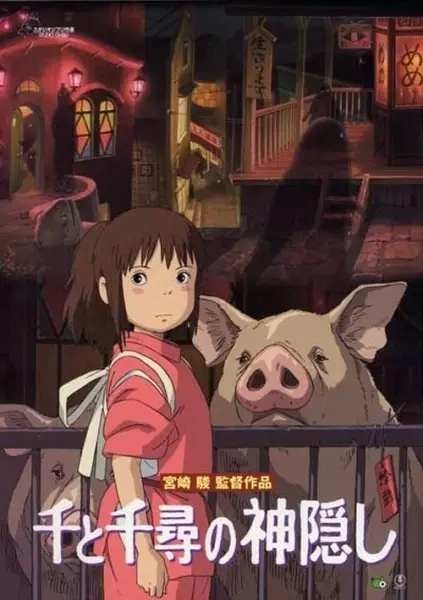
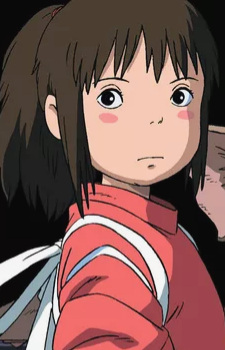
Stubborn, spoiled, and naïve, 10-year-old Chihiro Ogino is less than pleased when she and her parents discover an abandoned amusement park on the way to their new house. Cautiously venturing inside, she realizes that there is more to this place than meets the eye, as strange things begin to happen once dusk falls. Ghostly apparitions and food that turns her parents into pigs are just the start—Chihiro has unwittingly crossed over into the spirit world. Now trapped, she must summon the courage to live and work amongst spirits, with the help of the enigmatic Haku and the cast of unique characters she meets along the way. Vivid and intriguing, Sen to Chihiro no Kamikakushi tells the story of Chihiro's journey through an unfamiliar world as she strives to save her parents and return home. [Written by MAL Rewrite]
Главный
Главный
Второстепенный
Второстепенный
Второстепенный
Второстепенный
Второстепенный
Второстепенный
Второстепенный
Второстепенный
Valent1_
October 29, 2023
I didn't really like this film, I wasn't "transported" by the story and what was being told. I admit that there are some very good ideas, but they didn't interest me. The animation is very good, the general atmosphere is well exploited, which is remarkable (in all Miyazaki's films, apparently), and the music and sound design are good, but despite this I couldn't get hooked on Spirited Away and its magical world. That's just my opinion, because if you put aside my appreciation of the film, it objectively/honestly deserves a 9/10 or even a 10/10 for those who loved it, but I personally didn't enjoyit too much. For those who are interested, I think it's a must-see film, it's unique and worth the time to watch.
Aeterna
December 11, 2008
When I first saw the movie, I didn't see what the big deal was. All right, so a girl gets whisked away to a fantasy world? We've heard that story before. And, unlike many other movies, there's no dramatic love story or epic battles and action scenes to keep you at the edge of your seat. Consequently, I didn't think of it as being very exciting. Still, I watched it again and, for some reason, I got it the second time around. Spirited Away isn't meant to be anything grand, with all the bells and whistles. It has a quiet, subdued way of telling a simplestory about a simple girl in a very strange world. Instead of expecting something huge, just sit back, watch, and appreciate the world and story Miyazaki has finely crafted for us all to enjoy. To get to the technical aspects... The art is, of course, amazing. The colours are rich and the animation is fluid. When Chihiro and her family first walk into the spirit world, you can practically feel the breeze as you watch it whisk through the grass. The lights of the spirit world at night are breathtaking. And watching the train ride closer to the end of the movie, coupled with the amazing music score (the track is called "The Sixth Station"), remains one of my most favourite animation sequences out of anything I've seen. Which brings me to another point: the music. I will get this out of the way first - Joe Hisaishi is one of my favourite composers. His music style is very simple, but he makes every note count. Most of his music is quite subdued in nature and takes a careful ear to notice when your eyes are being captivated by what's going on in the screen, but do take notice if you have the chance. Or search on YouTube for videos of his live performances. His music is a joy to listen to. Like with Spirited Away, Hisaishi's music lacks all the "bells and whistles" per se, but it's beauty lies in its simplicity. Hisaishi has not failed here in Spirited Away. I dearly loved the characters. One of the best parts of this movie, for me, was that it lacked any clear good or evil characters. Everyone has a bit of both, though perhaps some allow the evil sides of them to come out a bit more obviously than others. In this way, it's very realistic. Granted, the characters were all quite predictable and Chihiro grated on my nerves at times, but overall, I enjoyed each and every one of the characters Miyazaki has create here. Overall, Spirited Away is one of my favourite movies and will always be a treasured item in my small DVD collection. It requires some patience to get through since it's not packed with action or drama, but it's a nice fairy tale to watch and enjoy.
jal90
January 11, 2011
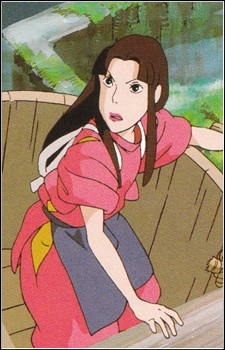
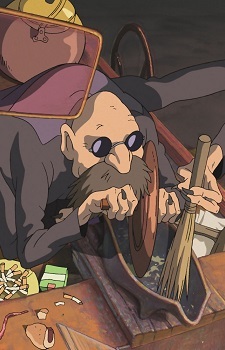
This is my first review in MyAnimeList, so I apologize in advance if you find the ideas I'll put forward here badly-written, explained or structured. I am going to talk about Spirited Away (yeah, obvious). It's been quite a long time since I watched it for the last time, more than a year in fact; but I became a really fascinating and influential piece for me at that time, far enough to define my current love for Miyazaki's works, the Studio Ghibli and animation in general as an art and a strong way of expression. Today it's still one of my favorite animated features of anysort, and not because of its lack of flaws than its amazing blend of concepts. The first thing that appeals the audience in this movie is its art and animation. I, as unexperienced and poor in technical knowledge about the subject, think it's utter fascinating, it manages to create a whole world out of nothing, and the use of lights and shades, the forms and colours make the overall experience a visual joy. And in addition to that I find the characters' gestures and movements extremely plastic and realistic, some other scenes have been mentioned in that aspect by other reviewers but I was particularly fond of that one where Chihiro is walking with her parents and she gradually moves away, only to come back to her position with a little run-up. These things don't happen, usually, in animation. In so far as they are unnecessary, easily ignorable and feel like a waste of resources, we hardly see characters making these little movements which in the end result in nothing relevant. Ghibli, however, animates them, and does it with such a mastery, a love for detail and a goddamn naturalism that I can't help but feel amazed. As if the visual aspect wasn't good enough, the movie is also a pleasure for our ears and has what I consider the best track of my heavily worshipped Joe Hisaishi, one of the best (if not the best) film composers I have ever heard. Spirited Away is exceptionally good at that aspect; I'd say it's one of the very few cases in which there is, at some scenes, such a strong fusion between story and music, that I can't conceive nor think of one without the other. But despite all of these beautiful qualities about its setting, the real substance of this movie is at its story. I apologize in advance, again, because as I'm going to develop some points I will give some free spoilers. If you haven't seen the movie I'd recommend to stop reading at this point. It has been said many times by critics that Spirited Away felt like a senseless blend of magic elements, just a simple story filled with many things the author introduced undiscriminatingly to drag out the experience. Well, I have a quite different point of view for that device. I just can't conceive that the animation, for example, is taken to such a high level of detail and, on the other hand, that doesn't happen with the story. And by rewatching it repeatedly in a short amount of time (once every two months, more or less), I began to develop some theories about the nature of the world that is depicted here. What must be considered at first is that all this magical world, with strange creatures and spells, is just an allegory for the always difficult transiton between childhood and the first steps of adulthood. It's the age you start dealing with responsibility, when you realize your acts have consequences and you have to make decisions that will affect your future; you define yourself and the course of your life. Miyazaki puts these simple concepts by transforming the need of finding an identity into a way to escape the wonderful yet cruel world where Chihiro is suddenly trapped. Its hostility imitates quite well the drama of the process, as it reinforces the need of an additional effort every one of us have to make at some point and reset our lives and our positions. Does this mean that Yubaba's world is an undeveloped blend of magic, hostile things that only serve as a situation that Chihiro has to overcome at some point? Well, I don't think so, as it seems to have a clear structure and hierarchy. One of the stories I see compared more often with this one is Alice in Wonderland. However, I would define that as a blend of unrelated events, a story whose main charm lies in its anarchic, nearly nightmarish, narrative. Spirited Away is not like that in any way. In fact I think there is an effort to transmit a strong sense of logic throughout, it tries to delimit the causes and consequences of every single case. The key character to understand how Yubaba's tyranny works is, in my opinion, Lin. She just happens to be the link between Chihiro and the rest of the magical creatures, just like somebody that is in some sort of intermediate level. Her physical appearance looks slightly transformed, but not as much as the rest. She is aware of the existence of another world outside of that one, the importance of remembering her name, her "identity"; and knowing that, she helps Chihiro and takes the role of a mother. I have the theory that every one of the creatures that live in Yubaba's world were once human, maybe little boys and girls like Chihiro who couldn't find the way to escape, or other people; and they ended up forgetting who they were, losing their "humanity" and becoming mere pieces of this world. Lin is a special case because it seems she's not lost her identity yet, at least not at all, but forgot at one point her name, the key to come back home, and knows her situation is irreversible. She maybe observed this in some of her companions when she arrived, and Chihiro reminds herself of that. Maybe because of that, because she knows and appreciates what she's doomed to lose, she decides to help her in an altruistic way. And what about Kamaji? Another key character in Chihiro's development in there; he seems to be quite aware of his situation too. I'd say he is a bit like the "sacrificed" individual, who Yubaba used to start his project and maybe the only one that didn't lose his identity at all. He's a slave in this world, he knows it but can't help it. So yes, I have a more "adult" and crude view of the overall concept. This definition of the magical public baths as a place were people are doomed to end up losing what makes them "special" is quite harsh and melancholic for a -as targeted and admitted by Miyazaki- kid's movie, and it might feel even weird, but that's how I interpreted it and I think it makes some sense. Does this mean Yubaba is a villain? Well, define villain. Somebody whose only objective in life is to harm people? That's hardly what Yubaba is. She, for better or for worse, created a world, and made it work. She imposed some rules. We could even say she created her own utopia (and that doesn't mean she is naturally "bad"), why not? And, most important, she has a strong sense of honor, she dictates and also OBEYS her rules. One of the (maybe) main reasons why she loses her battle against Chihiro, in fact, is that her weakness is shown eventually (giant baby); and reveals a hypocritical attitude, as she is protecting her lovely child from any influence while she's always preaching the exact contrary. As she knows it, it's a shameful thing to admit and maybe here is where her image of forcefulness starts to teeter. All in all, these examples just show that the real strength of this story lies in the characters, as they are always depicted in a detailed way. Yubaba not being the typical villain, or not even being a "villain" at all; Haku, the hero and the "positive" one here has also an overambitious side and is for the most part guilty of his situation... and Chihiro, of course. She is a spoiled brat who learns to appreciate some things, but in no way overreacting at these points, as she sounds real and relatable at every damn scene. It's quite easy to understand her, she's not made to be likeable but her portrayal is solid enough to make us join her development through the story. I could spend hours and hours talking about this precious anime and its many details, the enigmatic role of No Face, the negative influence of the parents in Chihiro's behaviour, and so much more... I love it. It breathes mastery at (almost) every one of its points, and I can enjoy it in many levels. My only grip would be the way things are resolved, which I have always found too rushed; reading Miyazaki's opinion on that ending I've come to understand the intention behind, but still I'd say the metaphor is made too subtle for the audience, and maybe the execution is also somewhat clumsy. But aside from this minor flaw, I can't help but admire this fascinating, eye-captivating piece of art, my second favorite anime behind Grave Of The Fireflies.
slpless
April 27, 2008
In many ways this is a difficult review to write. This is because I’m clearly not the target audience, as Spirited Away is a film that is clearly targeted towards children. In the end, I simply decided to review the film as I normally do and leave a disclaimer about not being the target audience. I first watched this film 5 years ago during my senior year in high school when a friend of mine was raving about it. Back then I found the film to be boring and feature a paper thin plot. Now 5 years later and a few hundredanime titles later I was compelled to review this. However, since it was 5 years since I viewed the film, I decided to re-watch Spirited Away in preparation for this review as my memory is a bit foggy. After watching it again, I discovered 2 things about Spirited Away. I now know why I forgotten many of the events, thus needed to re-watch it and my perspective about the film really hasn’t changed. Spirited Away begins with Chihiro’s family moving to their new home. Like any normal 10 years old girl she is quite sadden and angry about leaving her old life (hell anyone would feel this way). Chihiro’s father makes a wrong turn somewhere and decides to take a short cut through the forest. Ok, perfectly normal but what gets me is when they see an abandon building they decided to go in and explore. Next, they go, “oh look food that’s sitting out with no-one around” let eat. The events leading up to Chihiro getting trapped in the fantasy world are way too plot devicy for my taste. However, this isn’t my main complaint about the film, it’s just that the rest is so shallow I can’t really analyze it with much depth. The rest of the story can be summarized by Chihiro get a jobs, does a job, returns something, get freed and goes home. In fact, I’m quite dumfounded as to how they created a 2 hour movie with this plot line. Although, perhaps I’m being too critical with the story and story structure that Spirited Away takes. What I think Spirited Away tries to do is create a magical world in which the viewer can escape to. It tries to take us on an adventure to somewhere very different. That is does, studio Ghibli creates a worlds that is both imaginative and beautiful. I could go on and on about the world but words wouldn’t do it justice. However, something is very wrong when the only major praise I can give is about the fantasy world that is created. They spend way too much time creating and focusing on this world. When I analyze a few scenes I realize how drawn out Spirited Away makes each scene. They could have easily cut 30-40 minutes and have a more focused story. This is how they were able to stretch such a thin plot out for 2 hours. When reviewing anime I put the most weight on the plot and characters. I’ve already talked about how thin and weak the plot is in the above paragraphs. Sadly the characters don’t fare too much better. Chihiro does grow over the course of the movie and in the end she is a bit stronger and can now face new challenges (i.e. new school, neighborhood, etc). After going through what she went through, I don’t think a new school will faze her. However, there really isn’t much to Chihiro’s character, she’s simply a random girl that happens to go on an inadvertent adventure and becomes a little bit stronger in the end. She feels a bit like an empty shell for the audience to live through. In general, the characterization for the movie feels a bit weak, I mean do we really know these characters? If that’s all there is to these characters, then I have no choice but to conclude that most of them are extremely flat. Ok now on to the easy part of this review, the technical aspects. It should be no surprise that the animation and art is top notch. This is studio Ghibli and Spirited Away is also a movie so there should be no excuses when it comes to animation. The environments are beautiful and quite vibrant. Characters designs are extremely consistent but I don’t like the designs that Studio Ghibli uses. Not really a negative, just a personal preference. Music, really works to create and accent the magical world of Spirited Away. However, the music is nothing too note worthy, above average I guess. In contrast, the voice work, this is a meh for me in both the English and Japanese, nothing really outstanding or bad. However, there really wasn’t anything in the movie that would require the VAs to show their talent. As with any Miyazaki films there are themes of environmentalism along with others in particular, greed. Thankfully, these themes and ideas never become the focus or become too blatant. Also, I have to add another audience that Spirited Away may have been targeted to. That would be nostalgic Japanese adults that long for a more traditional setting away from the modern world. In that respects it does a great job however, I’m neither a child nor a Japanese adult disillusioned with the modern world. So it should be no surprise that I’m not very fond of this film, as none of the positives really appeal to me. Those would be the imaginative/magical or nostalgic world of Spirited Away. Spirited Away is an imaginative and magical world that child will most likely enjoy. In addition, its nostalgic feel will appeal to some Japanese adults. However, it also features a paper thin plot as well as weak characterization. Spirited Away is a nice watch if you want to get away for 2 hours and turn off your brain but it is ultimately shallow and forgettable. Even now after watching it a few hours ago I’m having a hard time remembering the details.
GonzyChan
November 15, 2013
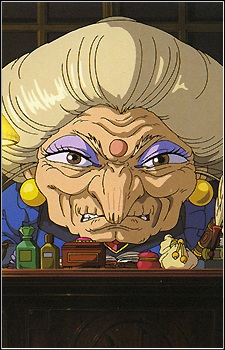
The very facet of childhood can be boiled down to the very definition of mysterious wonder and awe-inspiring imagination. We’ve all had those moments where we would go off into our little world of childlike imagination and try to experience an entirely new reality different from our own. Films have attempted to recapture the atmosphere that resembles this nostalgic feeling of going through the childhood journey that either succeeded or failed. It just takes a man like Miyazaki to do just that flawlessly. Miyazaki isn’t a stranger to making movies about childhood and things similar to its nature; Totoro would be an obvious example of thisfact. He certainly has an eye for making these kinds of stories that his movies could reflect everyday childhood experiences that we have since grown out of and are now living in a fantastical world. The fantasy elements that are a constant staple of the Miyazaki lore have made most of his movies unique to many people, including myself, because of their originality and inventive folklore. Now, that isn’t to say that I’m the biggest Miyazaki fan as much as the next person. However, if there is one film that could never lose its imaginative and beautiful vision in his filmography with each passing viewing, Spirited Away would win at no contest. In describing what kind of story Spirited Away follows, coming-of-age would be the most logical way of putting it. In that, we follow our main protagonist Chihiro and how she handles certain situations that would prove to be difficult for any other young person such as herself. When she first encounters this Spirit World, she is lost, hopeless, and confused. Not knowing what will happen to her or her parents after being turned into pigs, she finally finds help from other characters willing to help her be acquainted with this world, unlike her own. Once she is acquainted with the Spirit world, we now see her as a strong individual once she is more aware of her surroundings and can take care of herself without the help of Haku. It is by the end of the film an essential point to what makes not only Chihiro a fantastic character but also how Spirited Away paces its story structure. Art and animation are nothing but superb in Studio Ghibli’s legacy in how they incorporate more emphasis on impressionist-inspired backgrounds with traditional hand-drawn animation. The scope of Miyazaki’s artistic vision is vast and organic in each of his films, and some other Ghibli films not directed by him sometimes lack minimal detail. Spirited Away may not have the most extensive scope in terms of scale, such as his previous films Nausicaä or even Princess Mononoke. I would argue the minimal scope works magnificently with the show’s structure. From the wonderfully drawn buildings to the tiniest detail of rust and wood splinters to the hypnotic waters surrounding the spirit world, it complements Miyazaki’s ascetic vision and Ghibli’s artistic talents exceptionally well. Regarding the art, the one aspect of it that Spirited Away shines on the most is its creative art designs of the characters of each spirit you come across. They look original and not thought of from the previous animation, despite most of them being inspired by Japanese folklore. It’s not as if most of them are forgettable the minute after you see them. They all stick with you as you go along with the film, how impressive and imaginative the art design is even years after you finish it. To describe how the character Chihiro is treated, as in how she is portrayed in the film, it would be essential to realize how Miyazaki wrote her as to how a real child would act. You’ve probably seen kids that behave like Chihiro, or you may have been like here at her age, and that behavior would be considered “bratty” or “immature.” But these shouldn’t be seen as negatives since, realistically, kids are at her age, as you see Chihiro before she goes to the spirit world. We see Chihiro go through hardship when she arrives through the spirit world, and then we have this sense of hoping for her to succeed due to her bravery and strong courage to help her parents. It gives her a sense of humanity that could make you feel so much empathy for her as not only just some drawing in motion but as a human being in the flesh in some ways. Other characters such as Kamajii, Lin, Kaonishi, and Yubaba fill in the cast quite nicely. Kamajii and Lin fill in as likable slight comic relief characters giving Spirited Away an excellent needed level of charm from the voice acting and dialogue. Yubaba, at first, does seem like the main villain, but from how you see around it, there isn’t a villain in this movie. She’s nothing more than just a woman who wants to run her bathhouse in a very traditional way that has no ambition to do anything evil in nature. Kaonishi, the spirit that follows Chihiro in the bathhouse, gives the film a vulnerable side from his troubles of being alone, all through no dialogue at all, at least from his voice. Now we come to music. Composed by Joe Hisaishi, Miyazaki’s main collaborator in almost all of his films as a composer, it is pure excellence in Hisaishi’s backlog. This excellence shouldn’t be surprising, considering how he composes scores from listening to his songs, how they interact with what is going on, and how it leads the story from each scene to another. These aspects are accomplished by how Hisaishi makes the songs so vibrant. I guarantee that there is not one person in the world with a clear conscience who listens to “One Summer’s Day” and does not burst into tears. With utmost sincerity, Spirited Away is Hayao Miyazaki’s magnum opus. Though many will claim this to be his most “accessible” film in his filmography, especially the Miyazaki “purists,” it is the film with the most heart out of the rest. It’s the type of film that almost hurts to love. You feel so vulnerable watching this, yet you feel a sense of awe because you're mesmerized by how much Miyazaki put sublime creativity into making Spirited Away. From all of its likable characters, brilliant pacing, memorable score, and a great coming of age story, from what minor minimal flaws there are to be found in the film, it is all worthwhile to take in what is grandeur and admire it wholeheartedly. Like its atmosphere, nostalgia is part of how special Spirited Away is. Not nostalgia in the sense of how you were a kid when you first saw it, but from how it invokes nostalgia from the film’s ambiance of showcasing childhood curiosity and adventure. Something which more kids films need to learn from in future generations. Grade: A+
#43
Популярность
#44
Участники
2,014,307
В избранном
34,967
Эпизоды
1