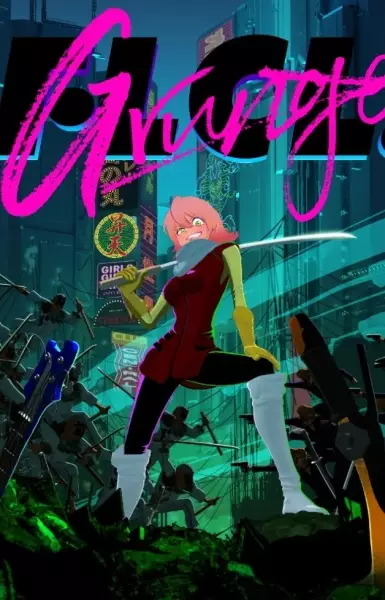

フリクリ
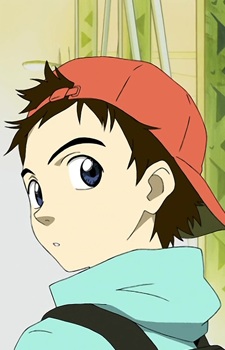
Naota Nandaba is an ordinary sixth grader living in a city where nothing amazing ever seems to happen. After his brother Tasuku leaves town to play baseball in America, Naota takes it upon himself to look after everything Tasuku left behind—from his top bunk bed to his ex-girlfriend Mamimi Samejima, who hasn't stopped clinging to Naota since Tasuku left. Little does Naota know, however, that his mundane existence is on the verge of being changed forever: enter Haruko Haruhara, a Vespa-riding, bass guitar-wielding, pink-haired psychopath whose first encounter with Naota leaves him with tire tracks on his back and a giant horn on his head. Though all he wants is some peace and quiet, when Haruko takes up residence at his parents' home, Naota finds himself dragged into the heart of the greatest battle for supremacy that Earth—and quite possibly the entire universe—has ever seen. [Written by MAL Rewrite]
Главный
Главный
Главный
Второстепенный
Второстепенный
Второстепенный
Второстепенный
Второстепенный
Второстепенный
Второстепенный
Второстепенный
Crofty
August 9, 2009
I've heard great things about this anime, seen reviews calling it a masterpiece, heard demands for sequels and more episodes. I'd seen the first episode a while back, and found it stupid. It had some vague promise of a plot, I'll give it that, with explanation of Noata's brother having left for America and his girlfriend becoming strangely attached to Noata, and the events that Haruko's arrival caused. Noata and Mamimi were portrayed quite well to begin with, with how Mamimi acted when talking about Noata's brother giving promise of development of the charachters and the relationship between them. So a promising start to theepisode, ruined upon Haruko's arrival, with the threat of a plot about Noata's brother was forgotten to be replaced by the question "what is that innuendo growing out of Noata's head?". So now the plot has been chucked out of the window, the episode becomes stupid, one moment changing to become a manga strip on a screen, the dialogue becoming senseless, with Haruko constantly spouting meaningless crap, Noata constantly asking what the hell is going on, and every single other charachter saying nothing to advance the plot, with Noata's family just accepting everything as normal and his friends just wondering why he is wearing a hat. The end of the episode redeemed itself with promise of a plot upon Canti's appearance, but that wasn't enough to make me want to watch more after the stupidity of the rest of the episode. So I stopped watching it. Since then I read the reviews mentioned earlier, seen forum posts praising it, and heard the demand for more episodes. A friend of mine told me not to judge it on one episode. So I gave it another chance, expecting it to improve after the first episode. It didn't. The next two episodes were just wondering what would come out of Noata's head, with no charachter development, no plot advancement, and plenty more meaningless talk from Haruko (whose voice I found quite annoying). From the fourth episode onwards, it promised plot, but very little was properly explained. The dialogue of the new charachters introduced in episode four at least had more to it than anything Haruko said, and at least explained they were trying to stop the 'Medical Mechanica" (a very misleading name, it never did anything medical), even if who they were, what the Medical Mechanica was, how they knew what it was, was never explained, or not explained in any way that was understandable. The final episode brought very little sense of a conclusion, with the only thing you get from the explanation of the Medical Mechanica is that it's purpose is to destroy things, and Haruko saying, in a lot more words, that she is only there for a man. The only actual change at the end of the episode from the way things were at the beginning of the series is that Canti is living with Noata, and Noata now has a bass guitar. Other problems with the plot include: Noata's insistence at the beginning that everything is ordinary and there is nothing wierd about the town, with the giant iron that is the Medical Mechanica in the background. That's not ordinary, the attempt at a plot later in the series is based on the fact that is is far from ordinary. Secondly, no one ever seriously questioned the existence of Canti. No one else in the series has a robot, yet the only response to Canti is "cool, a robot". Thirdly, why Canti obeys Noata yet everything else that comes out of his head or is related to the Medical Mechanica is trying to destroy things is never explained. We just have to accept that Canti is a good guy and every other robot is a bad guy. Finally, Haruko's bass. It's a bass, but it's a club, but it makes a noise like a chainsaw, but it's a gun, what the hell is it? For the first four episodes it's use is to hit things, then on episode five it suddenly becomes a gun, with no explanation offered. On a more positive note, the final fight scene was quite enjoyable, and a nice change from the practically identical fight scenes from previous episodes, which consisted of Canti absorbing Noata, and him and Haruko hitting the other robot, before Canti turned into a giant red cannon and shot it. The only redeeming quality of the series was the soundtrack. Each episode had some decent rock music in the background in what I have to assume were considered to be important scenes, and I intend to find a copy of the soundtrack. The artwork was good for the most part too, the robots looked great, however that was let down by the times it became a manga strip, and the occaisional stupid cliched unrealistic facial expressions/body language (such as people's faces changing shape or colour to show shock, anger etc) found in anime aimed at younger audiences that I must assume were meant to be funny. I must however praise the use of south park style animation in episode 5. While, like much of the rest of the series, it was completely pointless, it was a rare moment where the series parodied of something other than itself. So, to conclude, get the soundtrack if you enjoy some decent j-rock tunes, but don't waste your time watching the series, it's two hours of my life that I'd rather have back.
CottonCandyLover
August 13, 2011
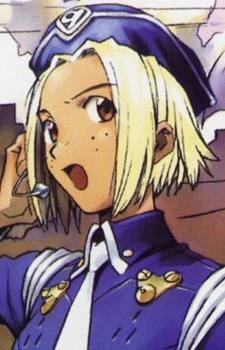
The definitive postmodern animated masterpiece that tells a heartwarming coming-of-age story while simultaneously redefining the boundaries of storytelling in 21st century anime ...or an incoherent stream of pretentious symbolism and innuendos hand-wrapped loosely in the name of a story by the self-pleasuring hands and narcissistic minds of Gainax? FLCL struck many as one of the more controversial anime series in the collective fandom at the time. The story didn’t seem so sequential, the characters were muddy and cryptic, plus, what EXACTLY was this anime even about? And the fact that this apparent “mess” was polished up in the best damn Japanese animation that the year 2000could produce made you sure that this wasn’t some low-budget shit cooked up at the last moment, so what the hell Gainax? It took itself seriously during the most ridiculous moments and it didn’t take itself seriously in the most serious of moments, this anime was self-aware. It wouldn’t take long before the viewer realized he/she was watching something incredible, it was an anime that was sincerely trying to break new ground, positive or negative, it didn’t matter; it was navigating through uncharted territory, a new territory that would become the foundation for much of 21st century anime. Of course, many newer anime viewers will watch FLCL and oftentimes ask themselves: why is this anime so controversial? After all, these newer fans have already been fed on a steady diet of unconventional anime of the 21st century (without a doubt, influenced directly or indirectly by FLCL) such as Tatami Galaxy and Bakemonogatari among many more, so it didn’t seem TOO weird to them, but it was still undeniably weird. Story: The story follows Naota as he lives his mundane school life with his irresponsible family and boring classmates in a generically uneventful Japanese town. This life, however, is disrupted when a pink-haired girl by the name of Haruko comes around and starts to turn Naota’s life upside down. Slowly, Naota’s viewpoints on adulthood, his family and friends, and life in general begin to change… The bare bones introduction of this story is very typical to say the least, and if you were to strip away the entire plot to the bare minimal level, you would realize FLCL’s story is childish and silly. But it’s layered, coated, and glazed with so many globs of symbolism, self-parody, innuendos, themes, and character development, the final product looks almost nothing like the starting point. And that’s the beauty of FLCL; the amount of ideas all packed in a loose story gives an extremely wide range of interpretations and analysis of the same show that you wouldn’t find in many other anime. FLCL, at heart though, is a coming-of-age story of a boy who tries so hard to be adult that he, ironically enough, comes off as a child. The main character is being surrounded by a world of conflicting emotions and it confuses the hell out of him, and the manner of FLCL’s storytelling reflects this mass of bottled up emotions inside Naota. The story is fragmented, but obviously done intentionally, and that kind of intentional randomness creates a very surrealistic atmosphere in the midst of careful doses of self-parody and deconstructions that makes FLCL witty and humorous. It’s not a straightforward story with a clear point A followed by point B, it’s a symbolic and innuendo-soaked story with a vague and muddled point A that may or may not lead to point B. It’s a story that needs to be re-watched for the viewer to notice many things that might fly over the first time (and they WILL fly over the first time). The story is admittedly confusing and seemingly incoherent, until a second viewing dawns upon the viewer that every single “irrelevant” detail was made, discussed, and done for a very precise reason of foreshadowing, characterization, etc. In a sense (and I say this half-jokingly), FLCL is like the anti-Evangelion, the symbolism isn’t just there for the sake of symbolism, it all ties in for a purpose, and that makes it a deceptive and intelligent show. Art: The show likes to experiment in its animation. Exemplified by the now famous “manga scene” and other examples such as a shaky scene in which the character outlines are wobbly to parodies of the bullet time visual effect popularized by the Matrix. This outburst of animation inconsistency further conveys the random and loose nature of the show and keeps mundane scenes exciting, a concept further explored nearly a decade later by the likes of anime such as Bakemonogatari. The unifying animation style is top-notch and high quality because, well, it’s a six episode OVA and it’s mainly produced by a Gainax blazing after the success of NGE. The palette of the animation is light-toned and the scenery is reminiscent of a watercolor; this creates a dream-like atmosphere to the whole story that ends up quite effectively suiting the surrealist tone of FLCL. The character designs are decent and individualistic in their appearance, which is a nice step-up from Evangelion where some characters look like palette swaps. Naota has a “cynical brat” look to him, Haruko is alluring and foreign (which is a theme in this show), and Ninamori is traditional and noble. Conceptually, the idea of a robot exploding out of someone’s head is both ridiculous and brilliant, and the robots seem to take their cues more from the designs of Gurren Lagann, which wouldn’t be released until 7 years later, or it’s the other way around. Nonetheless, the newer anime fans that have watched Gurren Lagann will definitely notice the striking similarities in terms of design and animation of Gurren Lagann to FLCL. Sound: One thing director Tsurumaki has emphasized in this show is breaking boundaries, and musically, the director did just that by recruiting contemporary Japanese rock band the Pillows to score the soundtrack. The band’s provided theme songs are jumpy and loud, furthermore tying in with the style of the show. One unique thing about the Pillows is that whereas most Japanese bands are content to play ballads and soft rock, the Pillows are distinct among even some western indie rock fans as having a sound reminiscent of 80’s alternative rock. This is especially refreshing considering most anime studios would rather play it safe and hire catchy bands such as UVERworld over the Pillows. As a Japanese rock band taking their cues from Dinosaur Jr. and the Pixies, the Pillows serve as the perfect composers for such a definitive and influential series such as FLCL. Aside from the contribution of the Pillows, Shinkichi Mitsumune writes the rest of the score, which, of those played in the show, consists mainly of rock instrumentals during the more intense scenes. This soundtrack accommodates the show well because really, what other music besides rock do you expect to be played in a show as unflinching as FLCL? Character: As much as the story is important, the characters of FLCL are even more important. For a show as short and abrupt as FLCL, the characterization is exceptionally a cut above most other anime. FLCL’s fantastical situations are completely not relatable, yet the characters themselves are some of the most three-dimensional I’ve ever seen in anime. The characterization of FLCL shows that even though some characters may change, in the end, they don’t change that much because ultimately, you are who you are. And that kind of development in the characters is risky but extremely rewarding if executed right. Whereas most anime series will have the protagonist or the heroine go through the story and emerge as a completely changed person, FLCL strikes that to the ground (with a bass guitar) and sends out the message that your viewpoints may change, but ultimately, you are the same person; but that doesn’t even matter, because it’s those tiny changes that will make it all better in the end, not the drastic ones. This message is communicated through Naota and Haruko. Naota MAY have been changed by the ordeals as you slowly see the boy change his outlook on life all while the bottle holding his emotions inside slowly crack, but in the end, he is still the furrowed-brow kid he was, albeit a happier, more optimistic one. But it’s FLCL’s characterization that shows you can only progress a little by little, and that in the end, you can’t change who you are, but you can definitely improve it. Haruko, likewise is the same. Throughout the series, she begins to develop a close bond with Naota, and it’s that relationship that morphs her from a manipulative person, to a human being (or alien) with a tiny sentiment for affection. All well until the end, you realize, that she STILL is the same manipulative person, though now slightly less manipulative and more caring. It’s the complexity of these characters that make FLCL a worthwhile 180 minutes. Other characters such as Mamimi symbolize the feeling of despair and loneliness without warmth in your life, while the mysterious older brother of Naota represents the abandonment of your roots. Every character is there for a reason, and though interpretation of their character is completely up to the viewer, every character is integral to the show (yes, even that blue cat with the big genitals). Ninamori is a specially well-written character used to show the confusion found in adolescence (even though she’s in 6th grade) and her development as a character is intensely subtle, but beautiful nonetheless. The FLCL cast is quite possibly one of the best casts in anime I have ever seen. The amount of symbolism, depth, and purpose in each character is incredible, even more amazing is that a 6 episode anime was able to develop its characters better than most full length 26 episode shows do. On a side note, there is a fascinating analysis somewhere online about Naota representing liminal Japan and the various characters around him acting as choices for the propelling nation. I would highly recommend reading it once you finish the series. Enjoyment: FLCL can be enjoyed on two levels, one level is the shallower level in which the viewer can enjoy the randomness and watch it as a heartwarming coming-of-age story. The second level is the one in which the viewer must be prepared to think, and really notice the tiny details of this extremely well written and well though-out story. With fantastic animation, a surreal story, a good sense of humor, and detailed characters, the idea is that FLCL will be enjoyable to anyone who enjoys watching good anime, and you do like good anime don’t you? Overall: FLCL is one of those shows that every new anime fan needs to watch; it’s a thoroughly engaging anime that sometimes seems as if it has a mind of its own, from constant parodies to breaking the 4th wall to pop culture references. It’s a humorous anime that also manages to be much more than just about humor and randomness, it’s a coming-of-age story filled with self-reflection. It’s also a metaphorical story about Japan. It’s a wet dream filled with symbolism and innuendo about sexuality. Or it’s an animated art piece summarizing the results of postmodernism. Whatever FLCL originally was about, it sure as hell has sprung out of control, and for once, maybe that isn’t a bad thing.
Darvus_Laan
October 19, 2007
This is somewhat of a head-trip. The story doesn't really make a whole lot of sense at first, but if you can pay attention (meaning no drugs or alcohol...trust me, you won't need them), you can start to understand it. Although there are few parallels in any real way, I have to compare it somewhat to "The Matrix" in that you can't really get a full grasp of the whole story and all the levels of metaphor in just one viewing. At least "The Matrix" sits you down and attempts to really explain things (at least plot-wise)...whereas this series does not. The only reason I ratethe story as low as I did was because of how hard it is to follow. There are so many elements that just seem random...and, I do believe, was probably intentional. From my understanding, this was basically the crew at Gainax (the production studio) just blowing off steam and not trying to make a serious attempt. Honestly, I wish they'd do that more often...the result was fantastic! I do rather love the real quick jabs they make at a few other popular anime series (of course, I believe Gainax produced those as well). The art was incredible in many areas...I LOVE the "3D rotating camera" effects they use in certain places. The sound is AMAZING. If you have surround-sound, it really does add an extra dimension to the action on-screen. The soundtrack is also VERY good. I actually bought the album for the series...it's all done by a Japanese rock band called "The Pillows". "Hybrid Rainbow" and "Ride on Shooting Star" (the end theme) are my favorites. Although there's not much time to get in character development, the writing is done very well in that you really get a feel for each character's distinct personality. The only thing that bugs me (and again, this goes back to my giving it a 7 for story) is that it seems to be part of a much bigger series or storyline, but I've not been able to come up with anything. Even the manga just basically recaps the anime. Luckily, there is a distinct beginning and conclusion, but it really does seem like there should be more...I wish there was! Between the surreality, bizarre metaphors, humor, music, and action, this is a series well worth watching. My advice? Watch it once with an open mind and enjoy it for its aesthetics both visually and aurally. Then, watch it again to catch the story and some of the metaphors. Otherwise, you might sprain your brain...I almost did! It really does make a lot more sense the second and third time through. I've seen it many times and will see it many more in the coming years. I highly recommend it!
allegrotime
March 22, 2010
Ah, Fooly Cooly. I was very excited to start watching this series, as I noticed it was from Gainax of Evangelion fame. There were some elements of this show that I thought were very well done, but for me the overall story and characterizations made me feel extremely disappointed after finishing the last episode. First I'll start off with what I really enjoyed about this series. The art design I truly thought was superb, I enjoyed it. What is also very unique and creative is how throughout the series different styles of animation emerge, such as bullet-time, manga panels, a South Park-esque style, and many more.I felt the art and animation was very fresh and exciting to watch. In addition, the music in this shows has a very cool, modern vibe to it. Expect to hear a lot of really awesome guitar and rock music. The visual and audio aspects of this show are what I really feel shines in this show. Now, as for the story... I for one will acknowledge that I tend to be very particular about my anime. My favorite shows are typically character driven, with less emphasis on plot. Unfortunately in this anime, I had a difficult time even following the plot. Perhaps this merits another watch-through, but I honestly did not enjoy the show enough to do that. To me the plot was very frazzled. I did not really understand Haruko's objectives, which I am sure is central to the show. Overall, I believe that the show may have been far too fast paced for my enjoyment. I do understand why it was fast paced, seeing as it is a six episode OVA. And I do feel as if there is a coming-of-age story buried in this hodge-podge of a show, but it is so unclear to me. In conclusion, I would recommend this show to anyone looking for some really well done Japanese ANIMATION, but not story. Stylistically this show is one of the most original I have ever seen, and it does score some points from me for that. And for those of you who enjoy this show, I think that is wonderful; I guess it just isn't my taste.
AzureEclipse
April 19, 2008
FLCL is as close to a piece of literature as you're ever going to get with an anime series. Fast paced as it may be, the story beautifully presents a theme of growing into maturity, and accompanies it with stunning visuals I've yet to see surpassed. Many comments have been made on how plot is very difficult to follow due to both its speed, and also because of all the symbols, motifs, and dialogue that doesn't reveal its meaning until the very end. Never in any anime have I seen foil characters like Amarao and Ninamori played as such a beautiful literarysupplement to the main character Naota's journey into adulthood. To me, this series is the perfect balance of seriousness and humour. It makes you laugh, it makes you think, it pumps you up, its aesthetics impress you, it tells an eloquent story with a great mixture of science fiction and real life, it does everything a good story should do. Add to the mixture a soundtrack comprised almost entirely of music by The Pillows, and you have yourself and incredible piece of film work. I highly recommend watching this series multiple times (it is short enough for sure - about the length of a movie all together). Each time I watch it, I start to pick up more subtleties, like pieces of foreshadowing dialogue, thematic development between characters and their foils, and witty humour. The director's commentary is also extremely insightful to the themes of the story, and I would definitely spend time watching that as well. Most importantly, I can't stress enough to not be quick to judge this work. If you don't understand everything (and you undoubtedly won't after the first viewing), it certainly does not mean FLCL is "random" or "plotless". It is in my opinion WELL worth a second and third watch in order to pick up as much as you can. I can't sing enough praise about FLCL. It holds a dear place in my heart, and I hope everyone that reads this can find a great enjoyment in it as well.
Ранг
#654
Популярность
#233
Участники
891,125
В избранном
32,986
Эпизоды
6