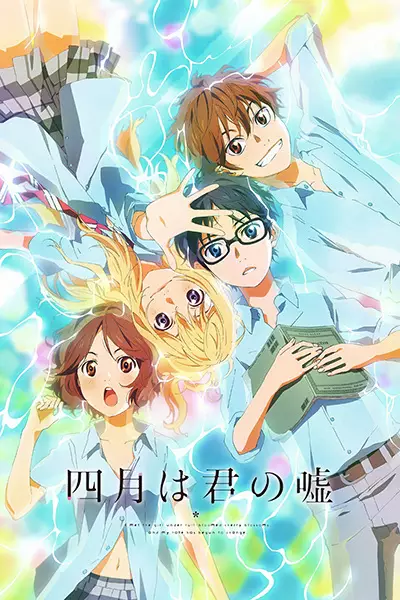
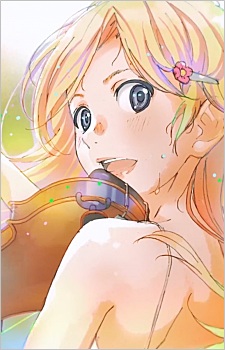

Your Lie in April
四月は君の嘘
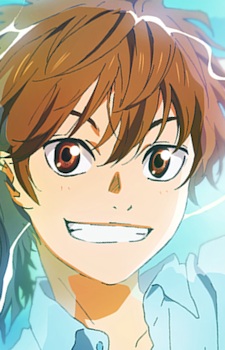
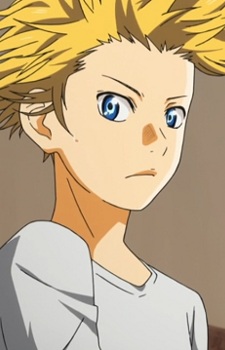
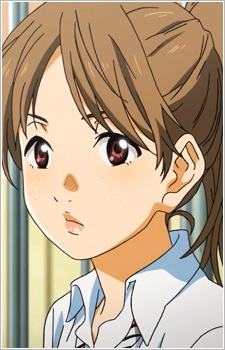
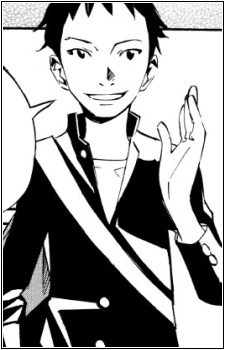
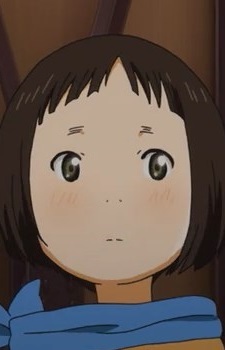
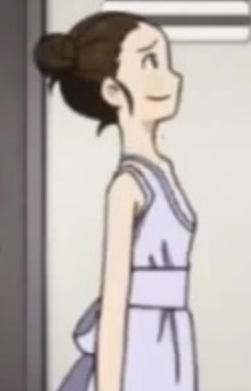
Kousei Arima is a child prodigy known as the "Human Metronome" for playing the piano with precision and perfection. Guided by a strict mother and rigorous training, Kousei dominates every competition he enters, earning the admiration of his musical peers and praise from audiences. When his mother suddenly passes away, the subsequent trauma makes him unable to hear the sound of a piano, and he never takes the stage thereafter. Nowadays, Kousei lives a quiet and unassuming life as a junior high school student alongside his friends Tsubaki Sawabe and Ryouta Watari. While struggling to get over his mother's death, he continues to cling to music. His monochrome life turns upside down the day he encounters the eccentric violinist Kaori Miyazono, who thrusts him back into the spotlight as her accompanist. Through a little lie, these two young musicians grow closer together as Kaori tries to fill Kousei's world with color. [Written by MAL Rewrite]
Главный
Главный
Главный
Главный
Второстепенный
Второстепенный
Второстепенный
Второстепенный
Второстепенный
Второстепенный
Второстепенный
LPGeneratorx
March 25, 2015
If you don't want to read, then there’s a tl;dr at the end, as well as a tl;dr for every section. Shigatsu wa Kimi no Uso, or Your Lie in April, is 24-episode anime that started airing in October 2014, and ended in March 2015. Since its end, it has been a subject of hot debate on this site. Usually there are 2 types of people for any controversial show, those who love it to no end, and those who flat out despise it. I personally am somewhere on the fence. Now is it the best anime ever? No. Is it bad? Definitely not. Then whatexactly is Shigatsu? Well, at its core Shigatsu is a story about a boy(Arima Kousei) who used to be a fantastic pianist at a young age. Unfortunately, during his growth, he lost his mother, something that left him unable to hear the piano ever again. Or at least until he met a violinist named Kaori Miyazono, who tries to help him return to music. Well, that’s the basis of the story. Now onto the review. Story:- 6/10 The story of Shigatsu has both good and bad sides to it. Before we delve into the bad, let’s take a look at the good. The story, as you would normally expect, has a lot of romance, which is done pretty well. The romance in Shigatsu, is very heartfelt at times and also very fun at other times. The story tries to maintain a perfect balance of comedy and real romance, which does work, most of the time. Unfortunately, this show is also a melodrama, which is the bad part. The drama in this show apparently got many people teary-eyed, but, I have a hard time believing that. The show tries way too hard to make you feel some “feels”, and pretty much drops flat on its face. The show constantly tries to shove its drama in your face, from episode 13 onwards, and it gets annoying at times. Before episode 13, it still had some dramatic moments, but those were much better done, showing Kousei’s inner fears. As I previously mentioned, the show is filled with comedy, romance, and now, drama. When you but all these in a blender what do you get? Well if the blender was a good one, then you might get something amazing. But this wasn’t a good blender. Instead what we got was a drink with a beautiful exterior, but a bad aftertaste. Since Shigatsu thinks it’s a drama, but also tries to make time for comedy and romance, we get painfully abrupt scenes of melodrama, followed closely by comedy, which does not fit at all. One second we might be seeing a person die, and the other we see Kousei getting kicked by his “not-girlfriend”, Tsubaki. Speaking of which, the romance aspect isn’t flawless either. Somewhere during the time that the show was trying to find what genre it belongs to, we got a love-triangle. Now, it really isn’t as bad as I make it sound, but it’s still a bit cliché at times. Boy A loves Girl A, Girl A loves Boy B, Girl B loves Boy A, and Boy B doesn’t give a shit. The romance isn’t complex but it still does get stale at times. But, for as much as I railed on the story, it has one saving grace. The ending. The final episode is probably the best part of this anime, in my opinion. It’s a simple monologue by the female lead, Kaori. But it’s so beautifully written that I couldn’t help but be engrossed by it. TL;DR for STORY : The story has pretty good romance, which gets slightly stale near the middle. The excess of melodrama mixed with the comedy is probably the biggest flaw of the story, since those are two genres that should be implemented far away from each other. But, no matter how many flaws it has, its ending is beautiful in every way possible. Great writing, good background music, very good voice acting, and beautiful art. Speaking of art, let’s move on to the next section. Art and Animation:- 9/10 The art of Shigatsu is probably the best part of it. It changes according to the mood of the scene, and fits the overall feel of the show. It’s very bright most of the time, and it everything ranging from the night sky to the school playground look gorgeous. The character designs for the main characters are well done, and easily recognizable. The adults were also very well designed, to a point that you could actually guess their age. The only flaw I see with the character design are the children. It might just be me, but it’s weird to see children who have buttons for eyes, which makes them stand out in comparison to the rest of the cast. Most of the time the animation is very fluent, and everything moves very nicely. The performance scenes are where the real budget went though. Accompanied with great music, it uses CGI for the piano, and extremely fluent animation for the violin. The CGI is a bit odd, and does stick out sometimes, but it did not distract from the focus of the scene, the performance. TL;DR for ART : The art in Shigatsu is the best part of it, with a hefty use of colors, and a very bright scenery which changes according to the mood and feel of the scene. Most of the character designs are pretty good, besides the children in the show. The animation is fluent for the most part, and the performance scenes were amazing. Even though the CGI piano was a bit jarring at times, it didn’t distract me from what really mattered in the scene, the music. Sound:- 8/10 Being an anime focused around music, one would normally think that the music of the show should be its strongest point, including me. But no, that’s sadly not the case. Towards the beginning the performances were all amazing with the focus remaining solely on the performance and nothing else. But this is soon forgotten in the latter half of the show. The music itself is very good, or at least as much of the music I could hear. The performances(in the latter half) are constantly interrupted by monologues, which are meant to bring up the drama, but instead come off as a distraction and an annoyance. Most of the performances I was yelling at the screen “Stop talking! I’m trying to listen to the brilliance that you’re playing!”. I personally am a fan of classical music, so when someone talks over it, I get very annoyed, and feel like punching a hole through the screen. That being said, the overall soundtrack of the show, excluding the performances, was pretty good. Although no song really stood out to me. The voice actors also do their jobs pretty well, with all of the voices fitting the characters. Especially Kaori and Kousei’s voice actors. But of course, nothing in the show can top it’s masterful opening. Opening 1(Hikaru Nara), is probably one of the best openings I’ve ever heard in a while. The second opening(Nanairo Symphony) while not as good, was still great. Both endings were also pretty well done, but the second ending(Orange) is the better of the two. TL;DR for MUSIC : The show should focus on music, but instead many of the performances are spoken over for the majority of the time. The show tried to bring drama into the mix again (by talking over the performances) but failed horribly in this case. The soundtrack of the show is pretty good, and the voice actors do the characters justice. Its openings and endings are few of the best of 2014, and Opening 1 is one of my favorite openings of all time. Characters:- 5/10 This is where Shigatsu really fails. It’s not that there isn’t any character development, but certain characters, who needed development, didn’t get any. I’ll start with the good. Kousei: He’s probably the character who is best developed throughout the entire show. After meeting Kaori, he starts to regain his will to play music, and starts to overcome his fears. Many other characters, including Kaori, act as foils in his development, like his friends, teacher, his rivals, and even his pupil. His development is the one that got the most focus in the entire story, but maybe even too much. Kaori: This is where I feel that the characters fail. Since I can’t talk too much about Kaori without spoilers, I’ll be as careful as possible to avoid spoiling anything. Kaori is probably the character who had the most potential to develop, but instead, she was used as a mere plot device. Something to simply be present to help Kousei grow. While I did praise Kousei’s development, it’s not worth sacrificing the development of another character that could’ve grown into so much more. In fact, she was probably the character who I loved the most in the entire show, so I was extremely disappointed to see her get sidelined as a plot device with no depth at all. Tsubaki: She’s the other main female lead, and the other love interest of Kousei. In other words Girl B. She also played a large role in Kousei’s development, but here, unlike Kaori, she also got some development. While she didn’t get a lot of development, she was still the second-most developed character in the show, which was a step in the right direction. Other Characters: Most of the other characters are just treated as side characters, but some of them are developed. In fact Kousei’s rivals and his pupil, all get some development, which was nice to see. TL;DR for CHARACTERS: The entire story of Shigatsu seems to focus on both Kousei and Kaori, but in fact it focuses just on Kousei. He is developed the most throughout the show, while Kaori gets the shortest possible end of the stick. Her development was expected, but it never came to be. The other characters sometimes got some development, and the other female love interest also got some development. Enjoyment:- 8/10 As much as I might rag on the show, and no matter how many flaws I point out in it, I still thoroughly enjoyed it. Yes, some characters got on my nerves, and the performances were really disappointing when someone talked over them, but even with all those flaws, I still enjoyed watching it. Most of the time I was engrossed by the beautiful exterior of the show, and at other times, I was yelling at the characters to stop talking over the music. But, it was still a fun ride. Pros: + Great animation. + Brilliant Openings and Endings + A beautiful ending + A well developed main lead, and a likable cast of characters. + Enjoyable, if you don’t try to notice the flaws. Cons: - Terribly developed female lead, with a ton of misused potential - Performances were often talked over - Story tries way too hard to be a drama, but in reality is just a mediocre melodrama TL;DR for OVERALL: Overall, the anime definitely isn’t bad, but it doesn’t know what it wants to be. It thinks it’s a drama and tries to act like one, but it had much more potential as a simple romance. If it wanted to be a drama, then it didn’t need to add so much comic relief at every second. It keeps trying to get tears out of you, but it tries way too hard to do so. The characters were also something that needed a lot of work, with Kaori being one of the most misused characters in the show. On the plus side, the anime looks gorgeous, and it has some of the best openings of all time, along with performances that could’ve been much better, but were still very well done. The final episode is also a very good part of the show, meaning that the show has a brilliant ending. In the end, it’s not a masterpiece, nor is it garbage. It’s a good experience, that I can recommend watching. Overall: 7.2/10
Второстепенный
Lancehot
March 24, 2015
TL;DR A not unenjoyable series with some fantastic musical performances, that unfortunately suffers from forced drama, shallow characters, a drawn out, surprisingly predictable story & a tendency to have characters talk at length about what the music being played expresses rather than let us listen & hear it for ourselves. If you're looking for a tearjerker that will do everything short of poke you in the eye to get those tears flowing, Your Lie in April (YliA) might be for you. If you're looking for something more, you might want tosearch elsewhere. Music is the food of love. Something like that, anyway. It is certainlyused by many as a means of expressing emotions in ways they cannot put into words. Indeed you'll find few things that people (at least teenagers) will identify so strongly with as a favourite song or a passion for playing. But what might it take to kill that passion in someone? & if you met someone who had lost their love for music, what would it take to bring it back? These are the questions YliA sets out to answer & asks you to come with it. (Note that while I don't consider anything discussed a meaningful spoiler, you may think otherwise) The boy for whom the music died is Kousei Arima, a gifted & renowned pianist as a child but having lost all passion or even the ability to play since the death of his (psychotic) mother. Now he just wiles away the days, transcribing sheet music & hanging out with his childhood friends Tsubaki Sawabe & Ryouta Watari, stuck in that awkward period when no longer a child but not yet ready to be an adult. Then one day, in a scene that pays homage to Laputa: Castle in the Sky, he meets Kaori Miyazono, the carefree girl who he can't take his eyes off & who quickly takes it upon herself to break Kousei out of his shell & bring back his passion for music, whether he wants to or not. If there is one rule that anime frustratingly breaks all too often, it's that of show, don't tell. Specifically, that it is better to show something through action rather than through exposition. YliA is full of this. Musical performances are an important part of the story & used as a means for the characters to work through internally whatever their “thing” at that point is, be it determination to prove that they're better than the competition or, often in Kousei's case, trying to overcome his personal demons so he can play. Musical performance, particularly of classical pieces with different sections & phrases that allow for the expression of different emotions, is a perfect for this. The actual performances in YliA are fantastic, with a range of Chopin & other classical pieces (although a little more variety or more well known pieces might have been appreciated) performed to a high standard but also in such a way that it mirrors the emotions of the performer, which is impressive considering we're watching cartoon characters play a cartoon piano. Indeed the music, both the original pieces & those by classical composers, is most certainly the strongest point of YliA. Unfortunately, in almost every performance the music plays for about 20-30 seconds before someone's internal monologue starts talking all over it, usually as a form of very long winded exposition explaining what the performer is feeling. This isn't always a bad thing. When it accompanies more surreal visual expressions of the performers emotional state, such as when Kousei is playing only to find himself apparently enveloped in water & unable to hear the music, having his inner thoughts accompany the scene can add to it. However, more often than not our listening is simply interrupted by a still shot of the someone's head while they talk in detail about what we'd be able to hear & see for ourselves if only we were allowed to. It's made all the more frustrating on the few occasions, such as the duet between Kousei & Nagi Aiza, where the exposition is kept to a relative minimum & the music allowed to just play, letting us see the two characters play off each other as they start with a fairly pedestrian rendition before gradually raising the tension in the scene as they both start to play off of & try to outdo the other. It just makes the scene that much more enjoyable to be allowed to just follow the performance without having someone talk over it to tell you what you could be listening to. Likewise the final performance, which I won't spoil, suffice to say that it is a nearly nine minute performance where everything comes together to produce a genuinely engrossing piece of animation. The high point is a nearly three minute part where no words are heard, with everything expressed simply by the facial expressions & body movements of Kousei & Kaori as they play together. If only the same could be said of all that came prior. This may well simply be due to a mixture of practical constraints (animating multiple 5-10minute performance at a consistent quality can't be easy or cheap) & a hangover from the manga where, of course, there's no music to accompany the panels. It would be more forgiveable if it wasn't for the additional problem that the scriptwriter/author/translator seem to have a false sense of their own literary prowess, writing with a “why say it in a sentence when a metaphor laden paragraph will do?” approach. The use of poetic language isn't a problem in itself, but the characters monologues just go on & on, spouting simile after metaphor, often to the point that it's hard not to be somewhat taken out of the moment. Kousei is a repeat offender of this, often unable to think about anything without employing multiple mixed metaphors. It doesn't help that despite all the words, the characters in YliA don't really think about much. Kousei monologues about his (abusive) mum & Kaori; Kaori about Kousei & music; Tsubaki about Kousei & childhood; & Watari about nothing because he's a plot device, not a character. In fact all the cast in YliA are surprisingly shallow characters considering all they have to say. Watari just exists so there is someone in the way of Kousei & Kaori having a romantic relationship (because she's gotta stay on that pedestal, after all), playing no meaningful role beyond that. Tsibaki is the childhood friend & third corner of the triangle that every romance must have, while her boyfriend/senior Saito & classmate Kashiwagi are just there so she can talk to someone about her feelings for Kousei other than the audience. Kousei's mum is just a (very abusive) albatross hanging around his neck that he needs to shed in order to move on from his childhood, & Kaori herself is ultimately only there to first encourage him out of his past & then her own misfortune to make him take the next steps into adulthood. Kousei of course bumbles fairly passively through all this, to the point that at times it feels more like watching the author kick a puppy than anything else. It doesn't help that on occasion the plot takes some ridiculous twists purely for the sake of melodrama at Kousei's expense. At one point, for example, he nearly drowns in a swimming pool because, rather than try to swim, he sinks to the bottom miming a piano because the water is what it feels like when he's trying to play. As examples of forced drama go, YliA has some pretty egregious ones. Indeed, on more than a few occasions the show takes an uncomfortable turn into outright cynical emotional manipulation of the audience. Kousei's childhood seems to exist purely for this purpose, as though you can hear the writer shouting “look at this child! Doesn't he make you feel sad? No? How about if his mother hits him over the head with a cane? Are you sad now? DO YOU FEEL!?” Yes, YliA, I do feel. Apparently, however, you don't, because despite all this clear abuse Kousei was put through everyone else just seemed to take a “not my problem, not my business” view to it. Kousei's mum is depicted as a psychotic child abuser, destroying her son's mental health so she can live vicariously through his success. Despite this, however, ultimately the show takes the view that it's okay because he's got over it now & she only did it so he'd have the musical talent to play after she died. Even cultural dissonance can't be an adequate explanation for why that was thought a good story arc or why Kousei's mum deserved the character redemption it tries to give her. All this is in contrast to the comparatively marginal b-plot, the competition between Kousei, Takeshi Aiza & Emi Igawa, where something akin to actual character progression takes place. They begin with Emi & Takeshi harbouring old grudges against Kousei, only for the trio to progress as Kousei rediscovers his passion for music while Aiza & Takeshi move on from simply wanting to stick it to their old rival to aspiring to greatness in their own rights. We get to see progression both through their thoughts & conversations & also their musical performances, not to mention that the more peripheral characters connected to this part of the story actually feel like they have a purpose beyond listening to Tsubaki's boy problems or the like. The main plot really doesn't have anything like that sort of dynamic, which makes sitting through episode after episode of Kousei thinking about his mum or Tsubaki thinking about Kousei all the harder to enjoy because it never feels like it's going anywhere meaningful. The ending doesn't help in that regard either. Without spoiling, it basically reveals that the whole journey we've been on was basically a “romantic” version of Cameron's b-plot in the “One day, One Room” episode of House. But I'm digressing now. Despite all the problems YliA has I can't say it wasn't watchable. Indeed, many of the problems I had with it are things you have to either take or leave with anime that share the same genre tags. As frustrating as it got, YliA never feels as dragged out as, say, Chihayafuru, & there were moments where the show really did shine as the romantic drama it is supposed to be. There are more episodes than were needed but the finale is both a highpoint & a definitive ending, which is always welcome. The art & animation were fine for the most part & were impressive when it counted, which is all one could ask for. Having reached the end of Kousei & company's journey, I can't say I'd want to watch it again, but nor would I say it wasn't worth watching either. All things considered, perhaps that's enough.
literaturenerd
April 26, 2015
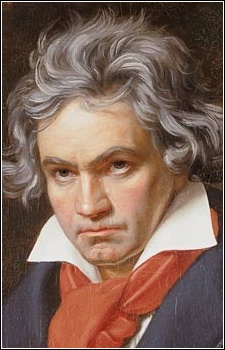
"To play a wrong note is insignificant; to play without passion is inexcusable." - Ludwig Van Beethoven Shigatsu wa Kimi no Uso is about a child prodigy classical pianist named Kosei Arima, who gave up playing due to crippling depression following the death of his mother. Even though he won many competitions back when he was still playing piano, his playing was always very "by the book", mechanical, and lacking in passion. This was because of the extremely strict way in which he was trained by his late mother. After hearing the very passionate and innovative performance of a brilliant young violinist named Kaori Miyazono,Kosei is able to rediscover his love for music and learn to play with heart. That sounds AMAZING right? An anime musical drama/romance that tells a heartwarming tale and introduces beautiful classical music to a new generation who otherwise wouldn't give it a chance. Why then didn't I rate it a 9 or 10?! I will sadly have to explain. Firstly, I must say that this series REALLY had potential! Especially for me, since I am a huge fan of classical music. Both of my parents were classical violinists who played in an orchestra. I went in with very high expectations, but unfortunately I was a bit disappointed. That isn't to say that I felt Shigatsu was a bad anime. Shigatsu is a fine anime, but I am saying it could have been a LOT better and it wasted a tragic amount of potential. Story: Although the basic premise of the story is the stuff of an award winning drama film, the execution was...not so much. Shigatsu has a LOT of really crappy comedy that never once made me laugh and constantly threw the mood out the window! This comedy is almost always accompanied by painfully obnoxious chibi style animation to save on the show's budget. I'm not saying that using tone jarring chibi out of nowhere instantly makes an anime bad. Hellsing Ultimate did it for comedy scenes, but Hellsing Ultimate never took itself seriously and never expected the audience to take it seriously. It is a show about Count Dracula fighting Nazi vampires! Shigatsu on the other hand, tries REALLY hard every 5 seconds to make the audience cry. Shigatsu DOES take itself quite seriously and wants to really emotionally move the audience, so the use of shitty comedy and random chibi in this context was a rather poor choice. The other most obvious problem in the show's execution was just how forced a lot of the tragedy felt. Shigatsu is a flat out melodrama. I'm not one of those critics who instantly hates on melodrama and condemns series just for using a writing style that is no longer in vogue. However, this story really didn't need to be a melodrama. It felt completely tacked on unnecessarily. Tragedies get more respect than comedies right? We better try REALLY hard to make this into a tragedy! I love a good tragedy, but Shigatsu in terms of its themes, message, and basic story isn't really crafted to be a tragedy. It feels like a comedy that was forcibly changed into a tragedy in post production because some jackass thought it would win more awards! Art: The art and animation is very inconsistent. During the scenes where an instrument is being played, the animation is gorgeous and accurately captures the movements of the musician. Then it goes to barely animated chibi garbage because...why? The art style is extremely "moe" which may piss off some viewers. Music: The selection of classical music is AWESOME! We get Beethoven, Chopin, Rachmaninoff, and basically lots of excellent pieces by amazing composers. The only problem is the quality of the playing used for the anime's soundtrack. We are told over and over again how Kosei is this AMAZING child prodigy and quite possibly developing into the greatest pianist of his day. Yet the piano playing we hear is...not THAT good. This wasn't a live action film. They could have used any recording since the invention of the phonograph and synced up the animation with the playing. Why not use a recording of a pianist who actually plays like ALL the characters describe Kosei? Vladimir Horowitz could play better than the dude from this soundtrack after 3 bottles of vodka, blindfolded, while being attacked by killer bees! Overall: Basically I just wanted to say that Shigatsu wasn't a bad anime, but it really wasn't a new masterpiece and actually squandered a ton of potential with extremely questionable choices in terms of execution. This actually isn't the first time I have seen a "moe" melodrama that mixed slapstick comedy with extremely forced tragedy. Angel Beats already accomplished that feat years ago. The difference is that the comedy in Angel Beats was actually funny! Angel Beats was also always supposed to be a comedy, but with some drama and tragedy thrown in. Shigatsu probably started out as a comedy, but was changed into a tragedy first, a romantic drama second, and a loveletter to classical music 3rd. The comedy in Shigatsu honestly feels WAY more out of place than the comedy in Angel Beats. Overall, I would still check it out if you really love classical music or wish to learn more about classical music, but if you are coming for the drama/romance, I would pick a better anime.
henyome
March 19, 2015
Hers was a white lie built on a grain of truth that snowballed as one lie after the other piled up. At first it was only hers, but then it became something that the two of them shared together – like a secret, a world upon which no other could encroach. He may have been “Friend A,” and she “the girl that loves my best friend,” but they were masquerading around a truth that neither one could openly admit because ultimately, the truth was much more painful. Your Lie in April is a deceitfully masterful series that initially appears light-hearted and colorful, its palette boasting pastelsthat lend to the idea of it being another romantic comedy. Yet the moment we step past the disillusionment that it casts upon us by its false prefaces, we quickly realize that what we have immersed ourselves in is actually a tragedy in the making. Tragic not because of a single element but because of all of its parts, and yet at the end of everything, this isn’t a series about tragedy. It is a series about learning to heal, learning to move on, and learning to accept the parts of ourselves that we’d rather pretend aren’t there. Part of that is accepting that sometimes we need a helping hand to take that first step. Part of it is learning to say goodbye when the time comes. What is so compelling about the storyline is that it’s not merely an adventure into first love, it delves into the reality of post-traumatic stress disorder, childhood abuse, and chronic illness. It doesn’t paint any of these as artistic or tragically beautiful—they are horrible, they twist people, they ruin the best moments, and they have a long-lasting impact. No one is completely black-and-white; everyone has their short-comings, fleshed out in full before our eyes. They have their hang-ups, their strengths, their struggles—and it’s in these characters that this series really takes off in full stride. It would be enough for them to be multifaceted with equal amounts of depth, but they take it a step further in painting the reality of youth. Older anime fans may critically analyze the series as an unrealistic approach to young teenagers, but that pessimism overlooks the reality of what it was like for us to be that age. We were all that point when we found our first love, when we thought it was forever, when we poured our passion into something that ultimately would not come to fruition or last. That’s what being young is about—and that’s what Your Lie in April gives us. Granted that it may veer a bit over-dramatic at times in its representation of youth; there are moments of symbolism or hyperbole so overt that the cheesiness makes you shift a little uncomfortably in your seat (but I promise it’s not enough to gag you). Given that this is, however, a rather common trope that runs in series with heavier themes, it’s not necessarily a huge setback for an otherwise solid series. In the end, it is intended to be a fictional representation that conveys more than just what can be summarized in a few sentences or less. The sound is completely on point, and the soundtrack artfully matches the emotions intended to be represented in each scene. From the actual classical music to the opening and ending, everything fits in like a jigsaw puzzle to give a full, satisfying final piece. When the characters analyze someone’s playing as harsh, rigid, and stilted, we can hear this—whether we are knowledgeable about music or not. Your Lie in April conveys emotion to us not just visually but aurally as well. The animation is wonderful with bright, vibrant colors that bring the characters fully to life. There is an amazing, visually perceivable transition for the characters as time passes, particularly in regards to Kaori as the series moves on. It occasionally has some stilted moments but nothing outrageously noticeable to detract from the overall quality. Ultimately, Your Lie in April is a story that starts out of the gates moving a bit slowly, but the pace matches the tone of the series. Structurally, it is a solid story of youth that dramatizes some aspects but never distracts from the intended message. On top of its other strong points, it’s aurally and visually a joy to the senses – and to anyone appreciative of a series willing to realistically approach the conflict of childhood abuse and the resulting trauma in a positive way. It’s not without a few setbacks, but in the end, Your Lie in April fashions itself to be a stand-out romance series that reminds us that while some relationships may be transient and brief, some people will come into our lives at just the right time for just long enough to touch us in a way we never thought possible.
Bikhal
March 23, 2015
"Did I reach you? I hope I did." I nearly skipped this gem just because of the music tag. Not really big into music anime but somehow the art dragged me into watching the first few episodes. First episode was an average episode with few interesting plot lines. But the second episode was the hook. Irony. The tag that made me nearly skip this anime was the one that kept me in it. The music, the music... THE MUSIC.. what can I say? It was just right down my taste. Never in my life did I thought of "oh hey let's listen to some classicalmusic" but this anime opened a new taste in music in me. And I'm grateful for that. The first half and second half have clear differences with a very smooth pacing and objectives in mind. Some may say the pacing was slow and sometimes it felt that a point is being dragged out for long. As much as I understand where they are coming from, I feel that this series took the right amount of time to build up for the many impact full moments that is present. The inner monologues that the series loves to do felt right to display the conflicts that our characters are fighting with. Also, the conflicts dealt with are very realistic and people can very much relate to them. I happen to be one of them being able to relate to our main male protagonist. The cast of characters in this show is pretty high. As a 22 episode anime, I think it did an excellent job portraying those characters. As most animes, not all the characters were fully fleshed out, and I didn't expect it to do so. The ones that mattered most were developed beautifully. Besides, nearly everyone's thought process were clear, motivations/purpose in tact and passion which shone through. Sound is something that I will not even talk about since it is subjective. The main reason, however, that I will not dive deeper is because for me, it was perfect. I couldn't have asked for anything more. Animation wise. Throughout the whole series, it was standard stuff from A-1 Pictures. It did have some drop from time to time, especially during the comedy segments, which I didn't find distracting but it wasn't great to say the least. Animation stood out where it counts. Those performances. I would have been really been disappointed if the animation was average in those moments, because of how beautiful the soundtracks are. But A-1 delivered, and they both complimented each other outstandingly. By the end of the series, I was just left in awe, and honestly a bit (extremely) emotional. To compare, the 'feels' in this series (my opinion) surpasses the highly praised Clannad: After Story for one simple reason. I was just slightly more attached to the relationship our main characters shared than I was with Clannad. But the story is not about tragedy. It's about inspiration, passion, moving forward, family, friendship, helping each other (many more). It is about life and how hard it can be to carry on, but you still gotta do it. You still gotta live your life to your fullest. "If you can't move with your hands then play with your feet! If you don't have enough fingers, then use your nose as well! Whether you're sad, you're a mess, or you've hit rock bottom, you still have to play! That's how people like us survive." - Kaori Miyazono. Overall 9.4/10.
Ранг
#83
Популярность
#24
Участники
2,401,315
В избранном
89,654
Эпизоды
22