
Eureka Seven
交響詩篇エウレカセブン
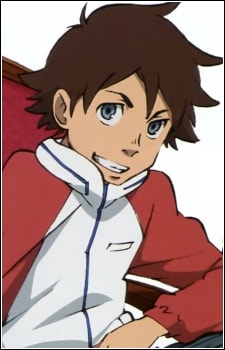
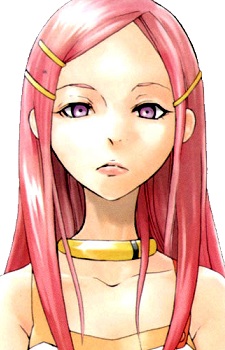
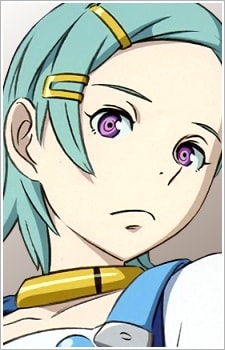
In the backwater town of Bellforest lives a 14-year-old boy named Renton Thurston. He desires to leave his home behind and join the mercenary group known as Gekkostate, hoping to find some adventure to brighten up his mundane life. However, stuck between his grandfather's insistence to become a mechanic like him and the pressure of his deceased father's legacy, the only excitement Renton finds is in his pastime of riding the Trapar wave particles that are dispersed throughout the air, an activity akin to surfing. Everything changes when an unknown object crashes through Renton's garage, discovered to be a Light Finding Operation—a robot capable of riding the Trapar waves—specifically known as the Nirvash typeZERO. Its pilot is a young girl named Eureka, a member of the Gekkostate, who requests a tune-up for the Nirvash. Their meeting sparks the beginning of Renton's involvement with the Gekkostate as he takes off alongside Eureka as the co-pilot of the Nirvash. [Written by MAL Rewrite]
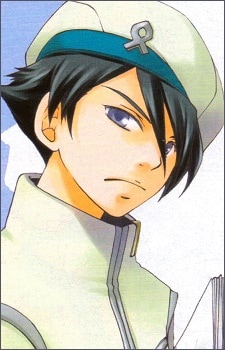
Главный
Главный
Главный
Главный
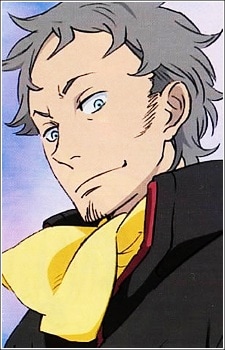
Второстепенный
Второстепенный
Второстепенный
Второстепенный
Второстепенный
Второстепенный
Второстепенный
kiriska
July 5, 2009
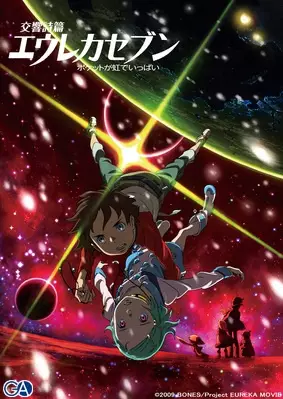
Eureka seveN is about saving the world! ...Eventually!! STORY - A strange girl and her mecha enter Renton’s life one day. He quickly develops a crush on her and decides to leaves his home and stay with her by joining Gekkostate, a group of outlaws and his childhood heroes. Shenanigans follow. There are vague and unclear plot developments that happen in the background, but the actual story will not really start to manifest for another twenty or thirty episodes, and even then, it’s difficult to figure out what exactly anyone’s try to do, much less how they intend to do it. Eureka seveN has some ofthe most frustrating and ridiculous pacing I’ve ever seen. Many of the first dozen or so episodes feel like filler — some characters are developed and some histories are uncovered, but you are pretty much following the Gekkostate around as they take odd jobs to pay for food. You know they are rebels, but you don’t know why they’re rebelling or what they hope to accomplish. People attack and they fight back. They investigate things, but there is no clear sense of purpose. As the series progresses, there are several high-tension and climatic moments, but again, thorough explanations are difficult to come by and many of the characters don’t seem to really know what’s going on either. They are just compelled to put themselves into situations without understanding why, and when each climax is over, life goes on… to even more filler-like episodes; it’s as if they’re trying to make you forget about any plot-relevant developments by inserting that pointless soccer episode. Instead of devoting time to the overall plot of the series, Eureka seveN spends a lot of time developing more general themes like religious discrimination, family relationships, responsibility, and identity. While that isn’t terrible in itself, it would have been infinitely better if plot progression (and explanation) didn’t have to be sacrificed for them (and if the characters involved were more sympathetic). Eventually, and by eventually, I mean like, the last ten episodes, things finally start falling into place and there is a lot of late exposition. Some of the overarching ideas could have been deduced from earlier clues, but a majority of the details couldn’t have been, further making the bulk of the series feel scattered and unimportant. There is also a lot of “surprise” revelations and character “development” near the end that feel incredibly cheap and unnecessary. The final plot of the series, when all is revealed, is actually pretty interesting. A lot of the concepts presented are thoughtful and unique, if a bit far-fetched in some regards. It’s a story with a lot of potential. Unfortunately, because of the insistent, terrible pacing leading up to the late explanation, my patience was completely gone and I couldn’t force myself to care about the story so late in the game. So I sat through the last few episodes just hoping for a good fight to wrap everything up. (But I got rainbows instead.) CHARACTER - Renton and Eureka both start off as pretty typical archetypes — the protagonist boy who wants adventure, and the mysterious girl that you know is special for one plot device reason or another. Neither of them interested me. Instead, it was the crew of the Gekko that initially attracted me and kept me going through those opening filler episodes. Since there is so little going on plot-wise for the first half of the series, most of the focus was on character interaction and relationships. Holland, the captain, quickly establishes himself as an interesting and sympathetic character; he is the one with the rough past and a goal, even if you have no idea what that goal is initially. Talho is also sympathetic, partially because it’s rare to see characters with established romantic relationships. The rest of the ship’s crew offers little beyond the basic support roles; now and again, there were be attempts to spotlight them, but it was never anything really meaningful. Unfortunately, as the series progressed, all of the characters got more and more irritating. For someone who is supposedly fourteen, Renton’s perspective and train of thought is incredibly juvenile most of the time and the idiocy of some of his thought processes frustrated me to no end. He chooses to leave his “boring” life behind in pursuit of a girl he just met and knows nothing about and is upset when things don’t go his way. Am I supposed to sympathize with that? He is absurdly naive (can’t even realize when the entire crew is trolling him) and sometimes seems forcibly ignorant, especially when it comes to fighting and his role aboard the Gekko. Eureka is similarly clueless, though she has the excuse of not being “normal,” for whatever reason. But the most aggravating thing about the pair of them is their relationship. To some extent, there is the illusion that their relationship actually develops and matures throughout the series, but the truth is that their relationship is completely idealistic from beginning to end. Renton’s attraction starts off as just infatuation, and yet he immediately decides that he wants to follow her and “be with her.” Eureka is more ignorant, but as soon as she starts to realize it, there are no longer any doubts. Their misunderstandings are grounded in stupidity and they don’t seem to feel much conviction in their fights, implying that they are too purely “in love” to have serious disagreements. The bumps in their road are superficial at best, including Eureka’s adopted children, who have little point or personality beyond (over-)emphasizing the familial themes present throughout the series. As the primary protagonists, Renton and Eureka’s failure to really make me care about them alongside the haphazard pacing of the story makes me wonder how I managed to finish the fifty episodes series at all, since unsympathetic characters is my #1 reason for dropping series. Meanwhile, Holland also falls down the immaturity path where many of his actions and views are decidedly juvenile and illogical. A believably character flaw, certainly, but as the story refuses to allow him to explain his conflicts and frustrations in detail, it’s difficult to sympathize with the way he acts, and he just gets annoying after a while. Talho was the last character I had any respect for; her jealousies and frustrations were the easiest to deduce and thus the easiest to sympathize with, especially since she actually confronted them now and again. Sadly, the maturity of her character seems to take her out of the spotlight during much of the latter half of the series. Dewey, the primary antagonist, takes his damn sweet time coming into direct relevance since he spends the entire first half of the series lurking in the shadows and vaguely putting together his grand plan. Even when those plans are put into motion though, his motivation remains unclear until the finale, so there’s no chance for understanding or sympathizing with what he’s trying to do. In the interim, Dominic never really presents himself as an enemy and never does anything particularly interesting or relevant; most of the focus is instead on his abusive relationship with Anemone, who, aside from being obviously tsundere for him the whole time, isn’t properly explained until the last five episodes or so (and even then, not very well at all). Additional characters include Charles and Raye, who are unnervingly creepy in their parental affection, and Norb, who is an expository plot device more than an actual character (though he does have an ironic personality). ARTSTYLE & ANIMATION – Eureka seveN has some really great battle scenes, but I wouldn’t expect anything less from BONES. Everything is smoothly animated and fun to watch, so even though I has very little emotional investment in the characters and subsequently, the actual outcomes of the battles — I still liked watching them. The mecha designs are a bit reminiscent of those from Evangelion, but there’s a lot more variety between the various suits, including the way they’re piloted (especially when you consider the typeZERO VS the typeTheEND). The giant boards and surfing parallel seemed kind of ridiculous at first, but it really grew on me after a while (besides, Code Geass had rollerblading mechas, though Eureka seveN debuted first). At the very least, the concept makes flying sequences much, much more interesting, and the added danger of a pilot losing their board mid-fight is fun. The character designs in the series are simple and attractive, and I really liked that a few of the characters made a point to change their appearances at certain points in the story, usually in correspondence with a significant change in their mindset and goals. More series should do this, if only to accentuate the fact that their characters actually mature over time. MUSIC - There’s obviously a ton of hiphop influence in this series, so it was no surprise to see it reflected in the music as well. It’s always nice to mix up the game a little by injecting some atypical genres into the soundtrack, and Eureka seveN does a good job here. Additionally, there is a ton of really, really epic music that is occasionally paired with a scene that’s quite a bit less than epic, which makes things feel out of place. — those tracks would probably sound better independent of the series so they don’t seem so pretentious. About halfway through the show, I finally noticed Naoki Sato’s name in the opening credits and had an “ahha! that’s why the music is awesome” moment. The last time I heard Sato’s work was in the X TV series, where the music was its single greatest asset. It’s not quite as true here, but it’s close. To be honest, I didn’t pay attention to most of the opening and ending themes in Eureka seveN. I enjoyed the rap in the second opening, “Shounen Heart,” by Home Made Kazoku, but most of the others were pretty forgettable, especially since I’m indifferent towards most of the involved artists. All the themes were also much shorter than usual — they hovered around thirty seconds in length, rather than the usual minute. VOICE ACTING – I saw this series dubbed, which probably further contributed to my lack of sympathy towards Renton. I didn’t realize that Johnny Yong Bosch was Renton for a long time since the voice was incredibly different from his other roles. Renton sounds (and acts) incredibly young, and his voice was both over-the-top earnest, naive, and whiny. On one hand, it’s actually an incredible fit for the character; on the other hand, it was annoying as hell, especially when coupled with lots of fail dialogue. Stephanie Sheh as Eureka was also rather fitting, but much less irritating. Honestly, the dub cast did a great job: each voice was distinct and unique, and every voice fit their character very well. Crispin Freeman as Holland was pretty badass in particular. Still, there was a quite a bit of awkward dialogue and word usage. A lot of lines were unnecessarily corny or just outright awkward (like, “Mm, smell that? That’s the smell of your Papa!” “…It smells good.”) though that can obviously be attributed to awkwardness in the original script. I found the use of “Mama” and “Papa” in place of “Mom” and “Dad” kind of strange though, and it sounded unnatural coming from a lot of the characters, especially Renton. Lastly, there are a handful of slips in the pronunciation of “Eureka” throughout the series. Most are by minor characters and not particularly notable, but it’s an indication of sloppiness all the same. OVERALL - Given all the positive recommendations I’d gotten for this series, I’m pretty damn disappointed with how things turned out, especially since the finale revealed that the story could have been ten times more interesting if presented in a more efficient manner. The pacing, along with the quick evaporation of my sympathies towards the cast, really destroyed the little enjoyment I was getting from technical aspects of the show. I really wanted to drop the series around the halfway point, but I figured I’d already invested so much time into it, I might as well finish it (what a stupid train of logic rarely does it reward you in the end). A recap movie of this series might work a lot better since it would, theoretically, cut out a lot of the excess filler crap and force the actual plot out into the open much faster. The recently released Eureka seveN movie, Pocketful of Rainbows, isn’t a recap movie though, so I’m not going to watch it. I’ve had enough of rainbows.
Второстепенный
Wyko
March 31, 2007
Thankfully, Infinity (the first reviewer) posted a wonderfully analytic review of this anime already, so I can forebear myself to post another. Instead, I just want to reinforce his review with a few short comments on my part. First of all, this anime is, without *any* reservation whatsoever, the best anime I have ever seen. The storyline is engrossing, the character development surpasses anything I have ever seen before (although, admittedly, I don't watch many pure dramas), the animation flows true and clear even through the most active fight scenes, and the sound is perfect. The anime begins with this immature kid we see expressing his'modest' dreams to be a great reffer (air surfer) like a great hero of his. Then as we follow this kid through the story, we see his development into a far more mature and responsible person. Similarly, we are introduced early on to a pretty little female character, looking for the world as the stereotypical innocent maiden. But again, as we go on, we learn that (surprise) she actually has a past, and a good story to tell about herself! Character depth is increased incredibly throughout the show! As for animation, as I stated before, its smooth and clear. I really like how this anime refuses to do the whole 'rinse and repeat' cycle with its scenes. We rarely see repetition, unless actually needed by the story. I'll finish this off now with a comment about the ending: It is one of the best endings I have ever seen in my life. I can say this openly; this is the *only* other anime aside from the Chrno Crusade that has ever made me cry. Trust me, I don't do that easily. This is a wonderful show. It has singlehandedly made a spot for itself on my list. After watching this, I moved every single other anime aside from Chrno Crusade down a point because it had set a new standard for quality.
llefvoid
December 11, 2012
If you fancy settings where great robots surf the skies in epic battles, rebels fight the government without knowing why, the underground magazine they publish is a popularity hit and military engineers help them because they're engineers first, soldiers second, then Eureka Seven might be your cup of tea. If not, consider skipping it. This anime has a couple of interesting ideas and moments, and it has some battle animations and a good soundtrack. It is, however, mostly riddled with problems, the first of which is its length. Running at 50 episodes you'd expect it would have a lot to tell. Well, it doesn't. For thefirst 10 episodes, after introducing the rebel force, Gekkostate, their ship and Renton, the kid who joins them, it goes about aimlessly, showing everyday situations of life aboard the ship. I suppose the point was to introduce the crew and establish character but the fact is that by the end of this part we still don't even know the names of most of them. Actually, the same could be said upon finishing episode 50; that's how fleshed out crew members other than Renton, Eureka, Holland and Talho are. Furthermore, the episodes from this arc definitely fail to realise what the first two promise. The introduction of the series presents us with LFOs, giant humanoid robots that both the rebels and the army use to fight and surf the sky (ok, technically the military use KLFs instead of LFOs), and Eureka, the strange girl piloting a rebel LFO, who doesn't seem very aware of social norms but somehow establishes a connection with Renton. Well, for the following 10 episodes all of that is thrown out of the window: battles are scarce and dull, and Eureka barely interacts with Renton (or shows up at all). During the middle chunk of the series stuff starts to happen but the presentation of things is mostly regarding inner conflicts and personal growth and the sorts, without an actual overarching plot gluing things together. Lastly, around the final 15 episodes, Eureka Seven does get a plot but, honestly, who still cares by then? But the length isn't the beginning and the end of Eureka's problems; many are there to be found. Like many mecha series, Eureka Seven draws a lot from Evangelion, and pretty much fails at it. This is not to say EVA is perfect or should be the benchmark for mecha series, but the fact is that Eureka Seven invites the comparison rather clearly. So, we have kids (but not only) driving some huge robots that are used for battle. Like in EVA these robots are not really man made: here they produced by the land and found in caves, almost like diamonds in mines. Interesting as this idea may be, it is never really explored much, which makes it little more than one of the weirdest super technology sources I've seen in science fiction. Some of these robots, the ones that are legendary and all that, seem to have some degree of sentience. That is, sometimes they go into a berserk mode of sorts and act on their own to protect the drivers. Unfortunately this is never really explained or explored; you're just left to accept that these machines move without input when they feel like it and no one worries about it. If this seems terribly similar to EVAs, that's because it is. But, if that's the source of the idea, I get the impression that the author didn't really realise what was happening in Evangelion. Furthermore, the LFOs need to have a thing called the Compac drive plugged in to work, but the berserk mode can stand on its own. Once again an EVA parallel, but the problem with this one comes from Eureka Seven doing too much rather than too little. At the beginning we're given the impression that Compac drives are very important objects, possibly even containing the key to the mysteries that the characters are later to face. Well, not really; they are just tools for the rest of the series. As for LFOs going berserk without the Compac drive, there's an egregious example when it happens as a result of the drive actually being pulled out from the Nirvash, Renton and Eureka's LFO. Basically, as the power source is cut the robot decides to get a mind of his own and walk away, and no one ever cares about why that happened or gives it five minutes of thought. As a last parallel, the Seventh Swell power that the Nirvash holds is deeply reminiscing of the Second Impact from EVA. At the beginning it is supposed to be a very big deal but after that, as usual, it is left on a shelf gathering dust. The previous exposition might give the impression of some underlying inconsistencies but, to tell the truth, they are much more widespread, and they show up almost as soon as the show begins. On the first episode Renton is told to deliver the Amita drive, which is a sort of expansion pack for the Compac drive, to Eureka because the Nirvash is not performing properly without it. This Amita drive was a one off thing made by Renton's father specifically for the Nirvash and seems to hold some deep significance. In this first instance it unlocks Nirvash's hidden powers and lets Eureka win the battle; after that it's all but forgotten and it's meaning and purpose never explain (at least they don't forget to draw it). Speaking of Renton's father, Adroc, he is another source of trouble. According to what we're told, he is some sort of hero that saved the world. Now, obviously, governments always make use of such martyrs for their own purposes and so they "adapted" his story to fit they view they wanted to convene. Problem: we're never told what was that the government made up about it. We do see, however, that Dewey, the generic big bad guy, uses this to great effect in controlling the masses and overthrowing the ruling Council of Sages. In fact the whole relationship between Dewey and the sages is odd at best. He is a former military leader that had been imprisoned for reasons never quite explained. The sages feared what he might do if he was free but decide to reinstate him in a top position of the army. From this point on, even if he was supposed to confront Gekkostate, all we see him doing basically amounts to plotting to overthrow the sages. This culminates with him giving a public speech that can be more or less summarised as: "People of the world, you don't know but we are being attacked by these things called coralians! But fear not, I, Dewey, will protect you. And for that I will overthrow the sages, who have been lying to us." And that's it, coup d'état done. Two sages die, one accepts Dewey as a leader. Obviously this one is quickly dusted under the carpet and forgotten. He also takes the chance during the speech to let people know on which planet they are living. Apparently the whole of humanity had relocated planets more than once in the last ten thousand years but forgot about it in the meantime. Dewey is as unconvincing a speaker as you get one, but then again the facts on which he is reporting aren't that convincing either. And, if inconsistencies plague the bad guys, they're also on the Gekkostate's main menu. Firstly, for a one ship rebel force they sure are eager to seek pointless battles. This just isn't a problem because they are the good guys and so they obviously always win. They win battles where they are ridiculously outnumbered and even if their LFOs are destroyed they are lucky and don't really die, and happen to have a spare, older robot for replacement. Sure, sometimes they suffer some damage, but when a single ship can blast through the imperial capital's defences, holding it's own against everyone and everything, to "buy time" for some crew members to go on a rescue mission that lasts from noon to dusk you know something is wrong. Given the sheer insanity of such mission it would appear that its necessity was beyond the obvious. Well, the rescued character, Norb, a high priest of the conveniently oppressed Vodarac religion, did become a major plot driver from that point on, but until then he had never even been mentioned and the reason given for the need of the rescue was something akin to "we must do it". From the rescue onwards the series does seem to get a plot, but it is as inconsistent as everything else. Discussions with Norb lead to the conclusion that the world is about to self-destruct because the number of sentient beings living on it has passed a certain limit. Why this limit exists is, naturally, never given much thought. However, it is explained that to avoid this Renton and Eureka will have to cross the Great Wall and enter the Zone and that to, in order to do this, they will have to meet Sakuya-sama. Lots of names, little explanations: the purpose of all of this is never given and everything is done in a "you must do it" basis. Though, to be fair to Norb, the rest of the cast was already aware of the importance of the Zone. They had seen an opening to it when they first contacted with a coralian and it was revealed that their grudge with the authorities had to do with the coralians. And revealed really is the right word, as most of the crew had no idea of what a coralian even was. As for the significance of the Zone, just because it was described as important it doesn't mean it was properly explained. The same goes for the dream sequence the coralian encounter triggered and that seemed to hint that Renton and Eureka's minds were somehow connected but that was, to retain the pattern, merrily ignored. Lastly, as the plot is finally about to take off after 40 episodes Norb insists that they take a day off to play football, in which is probably one of the lamest fillers ever. So, Eureka Seven's world is not very well designed and the plot doesn't add up. Is there any remission by looking at it as a character driven story? Not really, as most characters are both not very likeable and not very good characters anyway, of which Renton is a prime example. The whole series revolved around his development and learning and growth, a coming of age story. The issue is that he never really gets anywhere: he starts as an idiotic kid who acts without thinking, goes through many internal conflict and character development stages, where his supposed improvement is stressed by the storytelling, and after each of them manages to go back to square one and make an ill-considered move that hurts someone else. I don't know, but I believe that shouting "Any normal human would know that!" to a character that is not quite normal is not an episode 40 mark of a grown and mature character. Nor is hurting yourself in order to be "closer" to someone who is hurt. In this particular sequence his wounds got infected and he got seriously ill, almost dying; I just found myself hoping that he did (even if knowing he wouldn't). As for the rest of the cast, they are not much better. Eureka starts girl who is a little off but a distinguished fighter. After that her character development basically consists in making her a meek girl who is there almost solely to support Renton. It's true that her back story drives part of the events but she herself has little to offer. Even in fights, despite the fact that the Nirvash is supposedly a dual pilot unit (the workings are never explained), we never really see much of a team action. She simply gradually cedes her place as driver to Renton and starts supporting him the way he supported her before. Concerning other less prominent character development aspects, she also falls for the old cliché of trying to put on make-up to look prettier for Renton and ending horrible. That episode has such a predictable and beaten structure that it just triggers feelings of "Can we please skip this?". From the remaining characters, Talho seems to be the only half reasonable and likeable one. Holland behaves like a spoiled brat most of the time and is a major source of conflict, often taking out his frustrations on Renton, (though that's just a facade because he is oh so troubled deep inside) and the others are just stock characters with just one or two defining traits, or none at all. The only exception worthy of mention, but not for the best reasons, are the little kids to whom Eureka acts as guardian. They are probably one of the most annoying trios to ever have gone on screen, and putting up with them for 50 episodes is a real challenge. Straight of the bat they take a disliking of Renton and decided they are going to make his life hell. Kids as they are, they are very good at this, bullying him to no end. I guess the idea was to allow for them to grow fond of him during the course of the series but, even if they do so in words, their actions remain consistently annoying and dislikeable until the end, not to say actually dangerous to them and others. They also prompt what is probably the best example of Renton's inability to grow: in one of the first episodes he flies with them on Nirvash during a risky mission and gets a serious reprimand for endangering them; come the end of the series and he goes full circle, taking them with him and Eureka on an even more dangerous flight. It would be laughable if it weren't so pitiful. Adding it all up, Eureka Seven is a series with a few good ideas and lots of promise but that ultimately fails to live up to the expectations and instead just becomes painful to watch as it drags on and on. After all this only one question remains to ask: seven? Why seven? The series is called Eureka Seven but the number seven doesn't play a special role anywhere on the story. Was it introduced in the title without thought because it sounded cool? Quite likely it was, as that seems to have been the pattern for most of the elements anyway.
infinity
February 25, 2007
- - - [ Eureka Seven :: Eps: 50 :: Rating: 9.9/10 ] - - - - [ Intro ] - While enduring one of my anime-deprivation periods, I saw Eureka Seven with a high rating. I said why not and proceeded to get all of its 50 episodes. I started watching it only recently, after going through Ergo Proxy. Upon opening the first episode, I went o_0 then 0_0 instantly! Eureka Seven has a great OP and accompanying music! This promised to be a great anime. I could not resist going on after seeing the first episode. I can say I went through the episodes likea breeze, almost refusing to stop! So, let me just say it here, loud and clear: Eureka Seven is DEFINITELY THE BEST ANIME I HAVE SEEN! It was a total addiction to me, and it still is! Bear with me, this review will be quite lengthy! Eureka Seven (E7) really deserves it anyways! - [ Animation = Excellent = 10 ] - The animation of E7 is really, and I mean it, really impressive! The characters are extremely well drawn. Not your general, wide-eyed anime models but they are definitely well made. Their features are very well-detailed and their appearance is very good. Their clothes are futuristic and kinda cool in a way. E7 involves mechas, and as you could expect, they are quite stiff and roughly drawn. NO! They are the opposite! Their designs are well-polished and smoothly drawn. Here too, the features are very well-detailed. The motion of both characters and mechas are extremely smooth and not glitchy, specially considering that E7 involves something called "reffing" which resembles snowboarding. Even at the apex of fast-paceness, the motion is real smooth. The characters' movements are natural and not robotic and their poses are very human-like. Granted, the mechas look a bit like Evangelion's or perhaps even RahXephon's. But in E7, they are well coloured, and in my opinion, better designed. In a way, the way the characters were designed represent their personality. I'll leave it at that without elaboration. Go find out for yourself! Now, the backgrounds and sceneries of E7 are again impressive. Well detailed, well drawn, good play on lighting and atmosphere gives them a truly unique feel. You won't be seeing much scenery anyway, as most of the scenes will be above clouds. But when you do see real scenery, it's nice! They vary from the lively towns, to lush and wild nature and colourful flowers, to the dark and grungy industrial zones and to the dark, moody and emotional scenes. The transition between these scenes is so smooth that you rarely notice that you have suddenly changed decors! The light works was well done and will give more life and vividity to scenes. Notice the rock textures and how light is used to bring out the relief. The people at BONES have done something very good here. The greatest part of the animation lies in the battle and action scenes, particularly those involving the characters "reffing". The action is so smooth! There are no robotic movements, even when the action is at its climax and everything is going fast. No blurs, no glitches and no flaws! Great!! And also, there are almost no frame re-use except for flashbacks (there are not many). Take for example, in Shaman King. Yoh is always seen summonning Amidamaru and this scene is in most episodes. Here, you won't find such repeating scenes often. Even if there are some repeats, they are different in their own ways. - [ Sound = StoryWriter wins! = 10 ] - I don't usually pay much attention to sounds and music in animes. Story, characters and animation usually get my attention. With E7 however, things are different! The OST for Eureka Seven is much varied from hard rock to electronic music! The OP music was great and I really enjoyed the music. However, the best song according to me, remains Storywriter by Supercar! I long to hear it again and again, and it has made it to my top favourites! It makes a really great accompaniment for action scenes, trust me. Yeaaaahhhhhh! The techno beats you hear during fights or the rock you hear during major events are g.r.e.a.t!!!! E7 makes heavy use of music since there are lots of action scenes. However, for every scene, whatever it is (emotional or fast paced), the music chosen is right! It really highlights the scenes and make them so much more interesting! Definitely a good choice of music in E7, and definitely worth a listen! Sound effects too are present and nicely integrated into the scenes. Notice the wind "whoosshhh" when the chracters are reffing, and the sound of flapping clothes. It gives added realism to the scenes. Sometimes, you can hear accompanying explosions after a major bang! It's nice to note these, just for added realism. The voice actors did a pretty good job too! However, for some characters like Anemone or MoonDoggie, you can have some difficulty to understand them, due to their accents. Anyway, it's not a real problem if you got fansubbed episodes, or subbed DVDs. - [ Story = Complexity and Details = 9.9 ] - Eureka Seven starts with our main male character, Renton aged 14 in his hometown of Bellforest, enjoying his life, albeit 14 years of boredom as he mentions. One day, a huge robot (an LFO) crashes in his grand-father, Alex's workshop. Out of it emerges a beautiful young girl, our main female character, Eureka. Dumbfounded by her beauty and mysteriousness, Renton is immediately love-struck. However, the millitary was pursuing Eureka. Eureka is a member of GekkoState - a sort millitia/anti-government, non-conformist reffers group, led by Holland. Eureka must return to GekkoState at all costs. However, Holland had another mission - to get the Amita Drive from Alex, a device developed by Renton's late father and world hero, Adrock Thurston. To help in Eureka's escape, Renton grabs his reffing board and tries to deliver the Amita Drive to Eureka who is now escaping in her LFO, the Nirvash. Inspired by his all-time hero Holland, Renton would like to join GekkoState to train as a mechanic. Holland, accepts (although not very gladly), and so Renton becomes GekkoState's youngest member, and his adventures and romance now start. Some main characters are Talho, main pilot of GekkoGo. Holland, the commander. Ken-Goh, the weapons expert. Stoner, photographer and editor of Ray=Out magazine which is very anti-government and was hence banned. Hap, second commander and Holland's friend. Misha, the on-board doctor. Jobs and Woz, the ship engineers. MoonDoggie, catapult operator and secondary pilot. Gidget, communications operator. Hilda and Matthiew, LFO pilots. And Renton and Eureka, Nirvash pilots and main characters. And also, the Nirvash LFO can also be considered a character at the end of E7. Ok, my description is not very great but story is really one of the greatest strengths of E7. The plotline is really complex and deep. Agreed, you have one main plotline that runs through the entire series. However, what is interesting is the way that plotline is explored from various angles and according to various characters' point of view. This gives an added understanding of the plotline. You will also see many innovative things like Trappar Particles, LFO's, Reffing, Amita Drive, and Coralians! Indeed, it's a very elaborate plotline. Interestingly enough, you will sometimes find the plotline diverging to explore various side characters' stories eg. William B. Baxter's story. Don't worry, it's here for a purpose - that is of explaining the global situation from different people's perspective. The story runs very deep, exploring such things as war and conflicts between friends, companionship, unfaltering loyalty, indomitable will to protect, duty, love, sense of justice, and the loss of close-persons. Sometimes, the emotions get real heavy and the sensitive views might be moved to tears, no joke! It can become very heavy and emotional sometimes, specially scenes involving the above-mentioned. It's a very well detailed plotline, with many interesting twists that add spice to an already very interesting story. It's a good blend of romance, action, mecha and adventure. Definitely my type! Through the course of the story, you will have the opportunity to explore the characters' past and get to know them better. You won't find many loopholes or dark points here as everything is well explained. Expect emotional warfare, painful pasts, jealousy, self-sacrifice, the death of companions, inter-crewmate conflicts and resolutions of conflicts by various ways according to the characters, added to some good philosophies about love and the other things I mentioned! It's a nice lesson in a way. However, expect a major change of pace after Episode 26. You will be seeing more adult-related things, like blood and death more often. Just a warning. Mind you, many weird and frankly, strange things are awaiting you from Episode 31 and onwards! You would think you are in some kind of toon movie! :D The plotline offers no boredom since the characters constantly change and adapt, specially on the emotional level. I like the way the twists in emotions are introduced. It's subtle, but really present. E7 is really a great piece of work and you will see lots of unexpected things. Pay close attentions to the play on words. The GekkoState assault on Capital Hill really got me stuck. One thing to hate is the presence of Maeter, Linck and Maurice! Damn! These 3 kids know how to ruin the mood and atmosphere! In my opinion, they got no place in E7! Another is the complexity of some plots! You don't understand anything at first, but it's revealed after. Although there are some minor things which are left unexplained, or are not given enough elaboration, it cannot beat the greatness of E7. (Except only one which needed more elaboration). Anyways, if you use your brains a bit, it's not hard to figure out those un-explainations! :D Overall, E7 has a real smooth way for proceeding with the story, smooth and sweet! Just what I've been looking. No rush, no incessant/useless main character deaths, no plotholes, no fillers, just pure delight. Good job, E7! Frankly, it has the damn B.E.S.T ending I've ever seen so far, surpassing even my previous "favourite ending", Last Exile. Eureka Seven devoted almost one episode just for ending, a weird (and surreal) ending! Talk about a good finisher! :D And now, for a bit of selfishness (shared selfishness IMHO): I WANT EUREKA SEVEN MOVIE TO EXPLAIN EVERYBORY'S ENDINGS! :D P.s. Why 9.9 and not 10? Because some important events got left out of the explanations. You could guess what they were, but an explanantion would have been easier. That's why I substracted 0.1 marks! - [ Characters = I like the name "MoonDoggie" :p = 10 ] - Ok, it's not *just* because I like the name "MoonDoggie" but it's still a very hilarious name! The characters really deserve that 10. I've really seen such a diverse and complex cast of characters. So I think it's better that I introduce some of the main characters first. I can't do that for all of them since there are so many (25-like main characters! Sugoi! :S) Anyways, let's start by our main character, Renton. He's what you will call a normal guy. No super-powers a-la-Bleach here. No, he's just normal, leading a normal life. However, he is still the son of Adrock Thurston, the guy who saved the world. Quite a name to carry around. Renton gets accepted on GekkoGo (GekkoState's ship). Now, this is not what he expected. Holland is kind of a slave-master! He kinda get beaten up, get used as a.. duh slave, and things like that. Life's not all pleasant for him, all because Holland is... jealous! LOL! No joke! Anyways, E7 beautifully illustrates his development through it's 50 eps, going from a not-worth-anything to the.. (Spoiler. Cannot tell you!). He's got much ahead of him. I really cannot say more without spoiling major things. Eureka. Beautiful, quiet, mysterious. Love-at-first-sight for Renton, who would do anything to protect her. Her development is well-presented too. Mind you, strange things are awaiting you at the end of E7, be ready for it! This girl has many secrets and lots of potential. Although, she appears to lack emotions (which Renton teaches her), but she's an adept at LFO combat. Enough here, cuz spoilers are coming if I continue. On with Holland. The master of reffing and Renton (and all kids') all-time god (hero/idol) and commander of GekkoState. Holland appears to be a fun character, and somewhat stern. However, Renton was badly mistaken. Holland is just the opposite of what he seems to be. He is like a father for GekkoState, protecting everybody and self-sacrificing for the sake of others. Midway through E7, he undergoes dramatic changes, all for the best. Talho! The captain of Gekko-Go. She is the leash for Holland, restricting his impulses and setting him in the right direction. She has a secret (ok, not so secret) crush on Holland. Hap, the everything-doer. Not much to say, but he still has quite a role in E7. Similarly, Woz (strange hat man!), Jobs (Hitman's son?), Gonzy, Gidget, MoonDoggie (Doggie Nii-san! LOL!), Stoner and the others have their respective roles to play, but they are very diverse from each other, and each's development is well planned and well presented. Their emotional developments are very well introduced, smoothly and at the correct pace, giving the viewer time to digest the changes and appreciate them. There are characters on the other side (bad side) if you want, like Dominic, Anemone, the Sages the millitary and Dewey. But I can't explain about them without spoiling. Expect something Gundam Seed Destiny-like with Dewew. The others are not so bad, but take soooo long to realise it. The hierarchy is: Sages -> Dewew -> Millitary -> Dominic -> Anemone. Or something like that. As you can see, there are literally lots and lots of characters in E7, and that goes without mentioning important side characters like Diane Thurston, William B. Baxter and the others. They have important roles to play and are here to reveal parts of the E7 plot to us, in a subtle way. It allows the viewer to get a global view of E7 and from different perspectives. There is literally lots and lots to tell about E7's cast, but I leave their discovery to you. I can't spoil the fun furthur. - [ Value and Enjoyment = YEAH!!! = 10! ] - If you haven't guessed by now, Eureka Seven is just great and I really enjoyed my watching experience. I am now going to rewatch it, just to get a clearer view of it. In fact, Eureka Seven is one of the rare anime that I have ever rewatched. And frankly, it deserves it. I would rank the rewatch value as "Very High". At the end, you will want to rewatch it from the beginning, just to watch the characters and story's evolution again, from a new and enlightened perspective. And to gain a better understanding of E7's magnificent story of course! I really, really enjoyed Eureka Seven and it is now my top favourite. It deserves this space. Eureka Seven is a masterpiece, take it from a fellow fan. Now, E7 might have some plotholes and some things that weren't elaborated extensively, just as any other anime have. But the positive aspects of E7 fully compensate for these small (tiny) losses. You won't even feel them. Nothing is perfect, but I believe E7 approaches perfection up to its nose! As summary: Rewatch Value? Very High. Enjoyed myself? I kinda went overboard! Was E7 good? Na, no good. It is simply a masterpiece! - [ Conclusions ] - Go watch Eureka Seven!! That's all there is to say. You won't regret it. I know some people will be dissatisfied with my review, but I am just expressing my opinions. And I consider Eureka Seven to be a true success! Go watch it and draw your own conclusions. I do not think you would regret it. And I am not joking, it really deserves these "10"'s from me! Now, I sincerely await a movie. Not because was bad (in fact, it was great. Strange but great!). But because I really want to see more of Renton and Eureka, of Holland and Talho, of MoonDoggie and of Dominic and Anemone. I would like more about their endings, and what has become of them. The mere glances I got at the end is not enough to satisfy my hunger! I hope the creators of E7 can hear me! :D Thank you for reading my review. I know it was long. If something needs elaboration, contact me. I will amend the review where needed. Sayonara and go enjoy Eureka Seven!
BarnacleBlister
April 3, 2009
“Eureka 7” is definitely an entertaining series even if not a great one. The artistry oozing from the animation, designs, and music may help you overlook the story’s schizophrenic inanity. The show’s supreme craftsmanship provides the spoonful sugar for its less-than-tasty story. It’s easy to watch these fifty episodes when the characters and their world are as creative and eye-popping as “Eureka 7’s.” Bolstering the shows designs and animation is one of the best soundtracks to bless a show; most impressive is the music’s ability to capture each of the story’s emotions with a perfectly mellifluous track. “Eureka 7” suffers mainly from an identity crisis thatends up degrading the overall story. It begins as a really fun, rebels-versus-establishment adventure set in a world where skaters and hipsters reign as the supreme good guys. I wish they creators would have stuck with this tone; it’s original and fun and would have lent itself perfectly to a. However, the show soon veers toward a melancholy, internal drama, and, before the fifty episodes are over, “Eureka 7” takes another sharp turn toward silly romance. Maybe I’m too harsh, though. “Eureka 7” is targeted at teens, and if you can successfully put yourself into the mind of a naïve, romantic teen (see every teen), it’s easier to forgive the show for its flourishes. Less forgivable, however, is the fragmentation of the story and characters caused by the shifting focus from adventure to drama to romance. Running in so many directions causes “Eureka 7” to roll its ankle, and the show never achieves any emotional impact. This is particularly disappointing since many of the characters had great potential to connect with the audience. Unfortunately, with the changes, the characters lose their original luster, drastically degrade into one-dimensional stereotypes, or drop from the story entirely. As critical as I may be, please note that I watched “Eureka 7” nearly continually at every chance I got. It is, for the most part, an enjoyable series. To best enjoy this show, appreciate the audio-visual experience and always remember the target audience is young teenagers.
Ранг
#658
Популярность
#563
Участники
458,096
В избранном
9,342
Эпизоды
50