


Hi☆sCoool! セハガール
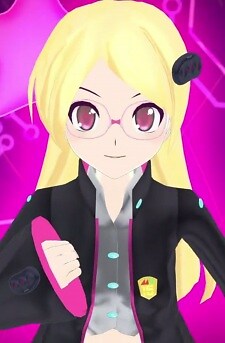
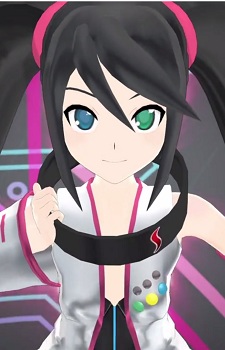
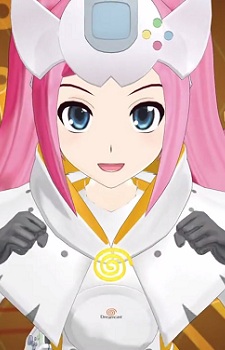
The story of the anime will revolve around Dreamcast, Sega Saturn, and Mega Drive, who have just enrolled in SeHaGaga Academy at Tokyo's Haneda Ōtorii station. They are given an assignment needed to graduate by a suspicious teacher, and to clear this assignment, the girls need to enter the world of Sega games. The girls must try their best to graduate without incident. (Source: ANN)
Главный
Главный
Главный
Главный
Главный
Главный
Главный
Главный
Второстепенный
Второстепенный
Второстепенный
prinn
January 2, 2015
2014 was a bit of a drought for me, so when I saw Hi☆sCoool! SeHa Girls, not only was it a surprise, it was probably my favorite anime of 2014. The episodes are 10 minute each, about the classic Sega systems, the Mega Drive (Genesis in U.S.), Sega Saturn, and Dreamcast, imagined as girls attending "Sega highschool," where they enter old skool Sega games and interact with other Sega characters from Virtual Fighter, Sonic, Golden Axe, Phantasy Star, etc. I think this show is particularly for the retro gamer. If the idea of knocking someone silly with a huge Dreamcast controller, or seeing the Sega systemsdreading to enter an iPhone in realization of their impending obsolescence is funny to you, just this may be your show. It's all very lighthearted, with cute game references of a bygone era, and still entertaining by its own right. The art designer for the series is Kei, who also designed the Vocaloids like Hastune Miku, which is a great plus. The Sega girls themselves have cute SD forms and normal-sized in-game forms, which would make excellent toy figures for nendoroid and figma lines (hint, hint). At the end of the series, you'll be glad you kept your old Genesis. You kept it...right?
BanjoTheBear
January 4, 2015
(This has been adapted from my reddit thread) As we all know, anime is a medium filled with a vast amount of ideas. From romantic-comedies involving "eighth grade middle school syndrome" to swiping at poetry cards, there is no shortage of shows willing to try something new. Another medium is exactly the same way: video games. Manly third-person shooters, plumbers jumping from platform to platform, and even intergalactic adventures are a small sampling of what video games have to offer. Some are hit or miss, and some even go down as legends. But in order to play these games, a game console is often required. InHi☆sCoool! SeHa Girls, a story of consoles, games, and medals is played out, and it's as awful as it sounds. STORY SeHa Girls stars Dreamcast, Sega Saturn, and Mega Drive, three anthropomorphized girls based on video game consoles of the same name. They attend Sehagaga Academy in the hopes of acquiring one-hundred medals in order to fully graduate. Where does one begin? If anything, SeHa Girls tries something different. Taking on a slice-of-life format, the three girls are constantly thrown from game to game, giving the audience a chance to relive some past experiences. Pastimes such as House of the Dead or Sonic are either looked at or are used as the next situation for the students to participate in. At this point, the show moves towards the comedy it touts as being. And so starts its downfall. As a comedy, SeHa Girls doesn't work. The predictability of the jokes, the same type of misinterpreted humor, and the repetitious nature of the scenarios the girls find themselves in makes the entire package quite unsavory. Sega Saturn always (always) getting the short end of the stick or Dreamcast usually taking things way too far are not funny after the first time it occurs. And it does so in the first episode. Meaning, what follows the beginning is the same, tired comedy from start to finish, with nary a laugh to be had because the show cannot produce enough hilarity given the context. This is mostly attributed to the characters being entirely one-dimensional; with weak characters, and a comedy relying on its characters for generating smiles, fun times are lost. SeHa Girls does something rather interesting when it comes to the games that are played. The show has the girls delving rather far into the past. Fighting the men and women of Virtua Fighter or dancing within Space Channel Five makes sense, as these games are found on the consoles that the girls represent. However, as if somehow running out of ideas, the girls are sometimes placed within more modern settings. Games such as "Chain Chronicle" or "Phantasy Star Online 2" are provided for them to explore, but this completely goes against what the show is mostly about. And that is showcasing nostalgic games that have not only shaped the gaming industry but also shaped the lives of the people who played them. Completely disregarding these older games (and subsequently the consoles they are attached to) creates a feeling of disconnect in what makes the show special. If any game from any era is able to be incorporated, then the girls and setting involved serve no purpose whatsoever. Now, the "twist" at the end is both morbid and laughable. The former because of what exactly happens and the latter because of the injected optimism despite what reality has demonstrated. That is to say, none of them (the Dreamcast, the Sega Saturn, or the Mega Drive) were as popular as what came during or after their creation. The show initiates the theme of togetherness, that despite what may come, true friendship stands the test of time and dimensions. But for the vast majority of the show, it focused entirely on comedy. Suddenly switching gears near the end and trying to shoehorn in deeper meaning behind what went on without prior pretext doesn't give the intended effect of making the viewer emotional. Instead, it comes off as rather insincere. ANIMATION As with the premise, SeHa Girls takes on quite the unique approach. This show prompts the following question: is CG considered "anime?" For the entire anime is done in CG. It can be argued one way or the other; anime is normally considered two-dimensional drawings (with CG used sparingly), but CG is three-dimensional animation. Assuming that it is, the art style is a mix of nostalgic settings and lackluster modern ones. The anime visits the locations of the different games included, providing familiar environments for those who remember them. When not in the games, though, the girls are confined to one or two rooms for the entirety of the season. These rooms contain some detail, but are neither given much focus nor are they appealing to look at. Lighting effects are nonexistent, and everything involved appears rather flat, making the show come off as less than modern. The character designs for the girls are simple and uninspired, despite them literally being consoles incarnate. Dreamcast's pink hair, Sega Saturn's off-colored eyes, and Mega Drive's glasses are cute but offer no sense of detail outside of making the girls seem different. Actual animation fares no better. Many times, the anime either reuses movements or refuses to show the girls onscreen at all. The show (seemingly) utilizes both body-capture and rendered animation, with the first one being more fluid than the often slow and awkward motions of the second. CHARACTERS The characters contained within SeHa are girls are minimal (obviously not counting cast members from the different video games investigated), and even then there isn't enough backing them to make them worthwhile. As the least funny person among the three, Mega Drive is more brains than brawn. Her intelligence is apparent, with her often making the more tactical and strategic maneuvers during the show. To further perpetuate her stereotype, she is severely uncoordinated, being unable to skate or even dance properly. Before attending the academy, she was rather reserved, refusing to relish in the rambunctious behavior of the other two. After a while, though, she realizes that the time she spent with the girls was a time she would never forget...but she had to, considering what happened. Sega Saturn is technically the most "normal" of the group. Well-rounded in all aspects, she more often than not is thrown under the bus. Wishing to find her one true love somewhere in the world, she is sometimes distracted by the prospect of a potential suitor. Usually taking events way too seriously, she learns through the other girls that it's best to just have fun from time to time. Always going about everyday life worrying about nothing but the issues one has, instead of enjoying what's around you, isn't the best way to live...if she actually "lived" in the first place. The best character -- though, that isn't saying much -- is Dreamcast. Cheerful, hopeful, and downright playful, her affable personality makes her very easy to like. Her ditsy behavior creates situations that jeopardize not only herself but the other girls and the mission at hand. Despite her immense ease when it comes to making friends, she has the hardest time letting go. And that's true for a lot of people; it's always tough to say goodbye, not knowing when or if they will see each other sometime in the future. People may come and go, but friendship is more than just a simple relationship...between non-inanimate objects. My constant use of ellipses was done to make a point: hard as it might, the SeHa girls cannot deliver their "heartfelt" messages to the audience for one reason. And that is that the girls are technically plastic products. There just isn't enough time or personification given to them to make their "human" representations meaningful. While they may look like everyday women, they're nothing more than game consoles to play games on, and the ending solidifies this notion. SOUND The OP is okay, at least in the beginning. Its fast tempo, trailing effects, and constant "Hi!"s actually fit with the overall atmosphere the show gives off. Again, the ED starts off well enough with the catchy clapping beat. The middle section contains the girls singing to drums, guitar, and bells, but it's never as nice as what the beginning part has to offer. The soundtrack mostly uses 8-bit sounding tracks, and the music of the games that they visit. Familiar sound-effects can be found as well, adding to the nostalgia that permeates much of the show. There is nothing worthwhile, but it is nice to hear some of the original pieces from back in the day. Voice-acting sees about average performances from all the cast members. As a side note, I very much couldn't stand Center-sensei's evil doppelgänger's voice. The less he was talking, the better. ENJOYMENT The only appeal that comes out of watching a show like this is in the nostalgia. Growing up on Donkey Kong Country 2: Diddy's Kong Quest and Banjo-Kazooie make my reminiscent levels nearly zero with this one. I don't believe there was a single game they showcased that I played as a kid. Watching the girls play Puyo-Puyo or even Sonic: The Hedgehog never made me think back to my childhood, simply because those games were never a part of it. The show tries to make the girls fun to watch, usually having Dreamcast act cute, Sega Saturn show some skin, and Mega Drive be unintentionally precious. None of them are attractive, hilarious, or even memorable, causing the entire trip to be a slog. Even the final episode omits material in favor of overlaid narration, removing any sort of struggle or hardship that the girls had to face to reach their ultimate goal. That seems harsh to point out, but it really came off as being too lazy to show anything pertaining to the final push. I don't believe Hi☆sCoool! SeHa Girls could have done anything more with what it was given. Bland design, boring characters, and repetitive humor make it unworthy to watch. In all honesty, it's probably for the best to hit that off switch. SUMMARY Story: Terrible, predictable humor, inconsistent era, shoehorned theme Animation: Bad, art is both sentimental and bland, character designs are weak, actual animation is lackluster Characters: Terrible, one-dimensional despite three-dimensional nature, not human enough Sound: Fine, okay OP, bad ED, okay soundtrack, average VA work Enjoyment: Terrible, the nostalgia, and the laughs, is non-existent Final Score: 1/10
literaturenerd
July 28, 2015
One of the great things about anime is that the story could be about absolutely anything! Unfortunately, this means that some anime choose some REALLY stupid subject matter. Sega Hard Girls is an anime about the different generations of Sega hardware undergoing anthropomorphism into little moe girls. The Sega systems must graduate from Sega High School in order to enter the real world as consoles. Yep! This is going to be an odd one. I think Sega rediscovered the same bag of drugs they used to make Toejam and Earl! The main characters are Mega Drive, Saturn, and Dreamcast. However, virtually every piece of hardware thatSega has ever made gets at least a cameo appearance. The girls play classic Sega games in order to receive points and graduate upon winning 100 points. This means that each episode will spoof a different Sega game and the art style will change to match the game in question. Unfortunately for non-Japanese audiences, a lot of the games spoofed in the show were either Japanese exclusive releases or games that were released internationally, but were only really popular in Japan. In other words, non-Japanese gamers are going to miss a LOT of the jokes and references. I will give the show credit for including dozens of different Sega characters and games, but I would have personally enjoyed it much more if I actually knew more than 1/5th of the games being referenced! I grew up with a Sega Genesis and I recognized: Dynamite Cop, Altered Beast, Sonic, Virtua Fighter, and Puyo Puyo (which was released in the US as Mean Bean Machine). The best spoof in the show by far is the Virtua Fighter episode in which they make fun of the horrible camera angles, ridiculous looking sprites, and terrible voice acting. That was actually funny for people who have played the first few Virtua Fighter games. Since Sega underwent a massive collapse and no longer makes hardware, the show predictably is ripe with self depreciating humor. Saturn is always getting screwed, Dreamcast is a nerd who always wants to show off her internet feature, but only has dial up. Gamegear has anemia and collapses from exhaustion every 5 seconds. Megadrive is constantly feuding with her self obsessed American clone Genesis, who is a redneck that only likes sports and beating people up as opposed to games featuring a plot. The greatest feature of Dreamcast is that her clunky, giant controller is basically indestructible. Some of the jokes are actually sort of funny, but "misses" are far more frequent with this show. That is of course assuming that you grew up as a Sega kid. If you weren't a Sega kid than ZERO of the jokes are funny. Overall, this was an unusual idea that could have perhaps worked with better direction and a bigger budget for the CGI effects. People who grew up with these old video games will appreciate some of the references and laugh at a few of Sega's little jabs at its own failures. However, I couldn't actually say that this show was excellent and you should try find it online immediately. Just watch Wreck-It Ralph instead. You'll be glad that you did.
Arqhea
February 11, 2015
Are you a SEGA fan? As in, a die-hard sega fan that knows a lot about the company's history and has played a lot of its excellent first party titles? If so, keep reading. Hi☆sCoool! SeHa Girls is a CG series based on the character designs of the antropomorphized versions of sega consoles released throughout the years (hence sega hard[ware] girls) made by KEI, of Vocaloid fame. While the artworks were done for the entirety of the hardware lineup, SeHa follows only the antics of mega drive, saturn and dreamcast, the flagship consoles for 4th, 5th and 6th generation respectively (while it does acknowledge the other girls' existence). Characterizinga piece of hardware may have been a daunting task but with the memorable designs behind them and some inside jokes about each girl's technical capabilities, this series manages to do so fairly well. Their characters are done quite decently and succeed in what they must do: they're cute, cheerful, naive at times and fun to look at, but unfortunately don't come off as too memorable or particularly likeable: they all seem quite stale and could have used a little bit more color in their personalities, but given the scope/budget of this project they're acceptable and manage to do their job fairly well. Environments are all taken from real games where they spend a few episodes in, same as the music, for the most part.The few actual academy shots are quite simplistic but nice to look at, and make for a good backdrop for events to unfold. The plot while episodic has a larger scope and manages a very heartfelt conclusion for anyone who is a fan of everything SEGA has done over the years. Some episodes are quite blatant advertising for other current SEGA videogames for modern platforms, but they're few in number and manage not to stick out like a sore thumb amid the countless references to old school software. It's a necessary "evil" given, again, what the actual budget was for something made clearly from fans, to fans. It's not a long series: it lasts little over an hour and possibly less than this review, so I'll jump straight to the point: is SeHa worth watching? It depends. Are you a SEGA fan? If you answered 'yes' to that question, my answer to yours is 'absolutely' If not, you will definitely not understand the appeal for this series, and honestly, there's nothing wrong with that. It's an extremely lighthearted series that is just pure and sweet fanservice for anyone in love, like many, with the memories collected during the years with one's own hardware. But for anyone else, it's just a mediocre title made with miku miku dance. Yes, I gave it a 6: it's mostly an objective score and speaks of the overall quality of the series that is not up to par to larger scale productions and has some issues related to its aformented small budget. It is however very enjoyable: it manages to make you smile, have some bittersweet nostalgia and get a little sad when it's over. It's not a life changing experience, but ever since i saw this, whenever i booted up my dreamcast to play, I found myself smiling.
Illikas
January 17, 2018
Okay, straight up: I love Sega, and I have done so since I was literally five years old. So, naturally, one day when I was playing "Dengeki Bunko: Fighting Climax" for PS3 for like the umpteenth billionth time, I realized that during story mode, the "Denshin" had assumed the form of a girl wearing Sega Dreamcast-themed clothing, complete with a controller strapped to her forehead. I was actually very intrigued. Who is this person? However, at the time, I had just shrugged her off as being a completely new character specifically for that game. So, after looking up the words Dengeki Bunko on the Steamapplication for PC one other day, I came across a DLC item called the Dengeki Bracelet, for a game titled, "Superdimension Neptune Vs. Sega Hard Girls". Upon investigating the actual game, one could imagine my shock when I found out that half the playable characters in the roster were physical embodiments of Sega. I was later in that same week compelled to see if there was an anime of these girls, similiar to that of Virtua Fighter's anime or Valkyria Chronicles' anime. And I was actually slightly taken aback when I found out there was. I won't lie, I had slight doubts about it at first, but the fact that the people who did certain art for Hatsune Miku also worked on the art for this series had me convinced the second I heard about it. This show was going to be good, and I hoped it would be fantastic. But I was vastly unprepared for the full truth. Hi Scool! SeHa girls is an anime following the school adventures (and sometimes misadventures) of three out of four main playable Sega Hard Girls in the previously mentioned video game, being Dreamcast, Saturn, and Mega Drive. I was at first a little disappointed that they had apparently forgotten about the existence of the vast numbers of the other Sega Hard girls, especially in the case of Game Gear, but later on, one of the episodes drops a F***ton of cameos and references to all the other Sega Hard Girls who, as it turns out, are all attending the exact same school as the three main ones, which completely amazed me, all things considered. And the fact that this show had SOOOO many other damn cameos and references galore to the rest of the Sega multiverse helped add to the overall charm of the show. This show, for a comedy anime, was actually as amazing as I was hoping it to be before I started watching it. And don't even get me STARTED on that amazing ending, despite this show only being 13 episodes long. I think the only major fault of this show, at least for me, was the characters mainly staying in their chibi forms for what felt like most of the show's run. I personally have never really had much love for Chibi forms, but I also have never really hated them either. I think it's just because of how often the tiny versions of characters in anime are associated with comedy and/or comedic jokes. That being said, the chibi versions actually didn't take away from the humor of the show almost at all, at least for me. However, one other issue with the show is pretty minor to me personally, but I still believe it should be said. I am an adequate judge of 2D and 2D/3D blended animation at best, but enter 3D animation exclusively such as with this show, and I am a terrible, terrible judge when it comes to judging it. I couldn't tell you if the animation quality is good or bad for sh**. In summary, this show is perfect for someone who actually cares deeply about Sega and/or someone who likes the Dengeki Bunko multiverse and likes checking other things out.
Ранг
#7510
Популярность
#6530
Участники
12,661
В избранном
51
Эпизоды
13