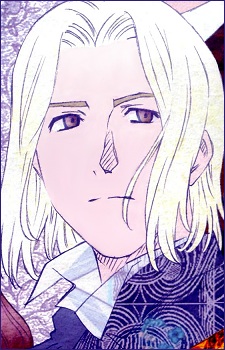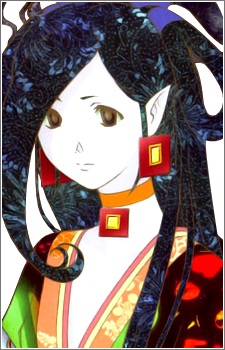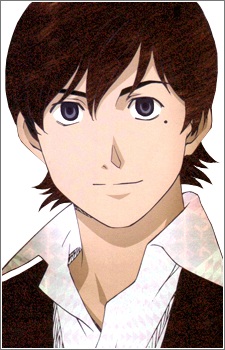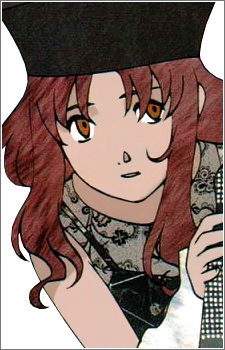

Gankutsuou: The Count of Monte Cristo
巌窟王
In the year 5053, French aristocrats Viscount Albert de Morcerf and Baron Franz d'Epinay attend the festival of Carnival on the moon city of Luna. While Franz is just looking to have fun, Albert is seeking something more to fill his life—but he finds more than he bargained for in The Count of Monte Cristo, a mysterious and charming self-made nobleman who meets his gaze during an opera performance. Through a few twists and turns, Albert befriends the Count and introduces him into French society. The Count, however, has more on his mind than just friendship; he plots to finally unleash his vengeance on those who wronged him years earlier. Gankutsuou follows Albert and the Count's intertwined destinies and the ultimate price paid for enacting revenge. [Written by MAL Rewrite]
Главный
Главный
Главный
Второстепенный
Второстепенный
Второстепенный
Второстепенный
Второстепенный
Второстепенный
Второстепенный
Второстепенный
Washi
September 16, 2007
Gankutsuou is one of those few series that I actually watched first on DVD. I started watching it when my friend decided to collect it on DVD as it was released, but before I had actually experienced the show, I already had high expectations, having heard so many people praising it as a masterpiece and the artistic style (which I had glimpsed in a number of promotional images) of the show promised innovation and quality. I try to avoid having expectations for a show before I start it, but sometimes they just cannot be quashed, and so I sat down to the first episode hopingfor something fantastic, but braced for a sense of disappointment. After sitting down to watch the final episode, many months later, I can say that Gankutsuou won me over in every way, and exceeded my realistic expectations. It is mystifying that this show was conceived and produced by GONZO, whose name, particularly in recent years has become synonymous with mediocrity or even outright poor production. Until now, Last Exile was easily the best thing I’d ever seen GONZO create, and I had begun to think it was all they were capable of. Gankutsuou raises the bar dramatically, and I honestly think referring to it as a masterpiece is entirely justified (and I’m not one to use words like that very often). It is an achievement in every department, and represents the pinnacle of the many genres it incorporates; romance, action, and revenge story, you won’t find much better of any of these than are in this show. At heart Gankutsuou is a tale of revenge, fuelled by betrayal and the remnants of a passionate love story, which delves deep into the human condition by weaving powerful emotion such as greed, and lust into its story. Touching at times, darkly melodramatic at others, it covers the full spectrum of emotions, and, unlike many other anime, it is not bogged down in redundant complexities or confusing fictional terminology, it is a straightforward story of epic scale and powerful depth. Of course, those who have read the Count of Monte Cristo will already be well aware of the nature of the story, but for those who haven’t (which includes me) the show has a gripping plot that is guaranteed to make you think and feel. The animation and artwork deserves special mention, because the story, as good as it was, cannot be fairly credited to GONZO. Gankutsuou utilises a visual style never used before in anime (as far as I know), and while it may be slightly jarring at first, the use of a palette of textures rather than solid colours ultimately elevates the aesthetics to a whole new level. Rather than just being a gimmick, the animation technique gives the show a distinct appearance that is fitting for its flamboyantly French-aristocratic setting. It would not be suitable for any anime, in fact very few, but Gankutsuou couldn’t have looked better, with its loosely poetic story complimented by the extravagant artwork. Other than this texture factor, the animation is actually rather basic, but that is never a concern. The cel animation lacks no flaws, but is not as detailed as it could have been (in fact, without the use of textures, they would look terribly simplistic), and the use of CG is a mixed bag, sometimes looking fantastic, other times a bit too pronounced. Ultimately, these are not problems at all, and you’d be hard-pressed to find another anime that looks this good. The music is excellent, although there is surprisingly little of it. The BGM is used sparingly to great effect, and although there are really only a few key BGM tracks, they have an amazingly powerful sound every time they are used, and they do not get old. It is a very mature score, with no obtrusive pop sounds, but it is not a conventional dreary stringed score either. The characters are memorable, and over the course of its 26 episodes, the show manages to build a great depth to each one, deriving sympathy and empathy in a tale infused with tragedy. When I referred to the show as a melodrama, I don’t mean Mai HiME 17-25 melodrama, I mean one that is intelligently manifested and stunningly executed. Rather than melodrama under the pretext of ‘someone does > causes grief’, each event, almost as a depiction of fate, contributes to the very core of the story, and each moment of loss or joy has a thoughtful cause and effect behind it as a part of the intricate plot. There was not one character I did not like, and there was not one character that lacked sufficient characterisation. One of the few anime that almost made me cry a number of times, the drama is remarkably poignant amidst a background of murder and betrayal. To top it all off, the end is basically perfect, although I felt the epilogue was slightly longer than it needed to be. If GONZO have to use a novel as reference in order to make a good anime and pace it out well, then I hope they acquire more novels! I have nearly run short of adjectives of praise, so I’ll wrap up my review now by suggesting that everyone watch (and buy) Gankutsuou as soon as humanly possible. A show that is practically without flaw, masterfully written and produced, and with a style you’ve never seen before, it deserves to be seen. If it wasn’t for my fetish for the sociologically inquisitiveness in Gits SAC, this would be my second favourite anime of all-time. Alas, it is my third.
Chelle
July 13, 2009
The story of "The Count of Monte Cristo" has always been one of my favorites. So, I went into this anime with just a little bit of trepidation. I wondered if I should watch it, because I had heard that it veered so much from the original story. But, because of my love for the story, I had to try. And I was very pleasantly surprised how much I enjoyed it. Story: Yes, it is an "adaptation." It strays way, far away from the original work. But the basic premises remains the same. Friendship. Love.Betrayal. Revenge. Hope. Everything you loved about the original Count of Monte Cristo is still there; but with a futuristic twist. In my opinion, they left in the best of the best. Art: For me, this was the only thing that brought my score down. As someone else had mentioned, the character designs were dull. The over-the-top backgrounds and unique way of animating the clothing and hair of the characters really took a lot of getting used to. Half-way through the series, it was still uncomfortable for me, but it did grow on me. The only reason, for me, that it brings the anime down at all, is because it is so distracting. I found myself concentrating on the patterns of the clothing and sometimes forgot to listen to what the characters were saying. Sound: Beautiful OP. Absolutely gorgeous. Among my favorites. The ED was good, but for me, nothing mind-blowing. Overall with the opening, the beautiful operatic scenes as well as Eugenia's piano playing made the sound of this series "pop" to me and capture me more, I think than any other series. Character: The character development in this series, for me, was outstanding. To watch Albert grow from the sniveling naive young boy at the beginning of the series, to the mature young man by the end (although he was still sniveling) made the series worthwhile. I also loved how they advanced his realization of his feelings for Eugenie. And Franz, probably my favorite character, gave me probably some of my favorite moments of the series. His love (whether it be a friendship type love or the romantic love that was hinted at through the entire series) for Albert pulled at my heartstrings every time. Enjoyment: As a fan of the original work, I surprisingly found myself really enjoying this adaptation. And I couldn't wait, episode to episode, to see how they were going to "change" or "keep" certain aspects of the story. It was difficult for me to take breaks between episodes. Overall: Almost a masterpiece. This part probably would have rated a perfect 10 from me, as would have the series, if I wasn't so uncomfortable with the art style. Fair? Maybe not. But this is my review and my opinion. I honestly do think I would have enjoyed it more, if they would have concentrated more on the character design and less on the flashy animation of the backgrounds and the clothing. But it was not enough of a let-down or a distraction from enjoying the truly unique telling of this story and the fantastic character development. So overall, this series gets a 9/10 from me.
AironicallyHuman
August 2, 2009
"My friend once muttered to me, 'Death is nothing but a release.' I asked: If death is a release, what is it that you wish to give them? My friend answered me succinctly: 'I will give them eternal suffering and remorse.' " There will never be another series quite like Gankutsuou. And that is why it depresses me to see the loosest yet greatest adaptation ever conceived, of *THE* quintessential tale of crime and punishment vengeance (as well as one of the most influential, contemporary classics of literature), so neglected by the anime fandom. Gonzo's masterpiece - complete with stunning CG-layered-on-2D clothing designs by Anna Sui - andone of a select few anime worthy of being regarded as such. Voice acting legend Nakata Jouji said it best: "Gankutsuou is one of two or three anime that will stay with viewers, long after its conclusion". Remember, remember not 'V for Vendetta' but instead its inspiration: The Count of Monte Cristo, Edmond Dantes. A charismatic avenger charming all with a persona crafted after being broken by an injustice so crushing that he was forced to remake himself anew, he inflicts karmic justice on those that stole everything from him. True vengeance has never been about cinematic, visceral violence, and The Count forces his captivated audience to remember, for revenge was a dish served warm before his fictional existence came to be. So synonymous with righteous vengeance is his name that I first came across it when watching 1998 romance anime (of all things!) 'Kare Kano'. Fearing that another character held a long lasting grudge, jokingly the heroine pointed at the character with a look of shock and exclaimed, 'Edmond Dantes!?' The reference went over my head then, but never again. ::::::::::::::::::::::::::::::::::::STORY:: 8.5-9/10:::::::::::::::::::::::::::::::::::: The Count of Monte Cristo has a fairly straightforward revenge narrative, yet the elaborate attention to detail and incredibly relatable examination of the human condition makes it so much more. A young man called Edmond Dantes loses his freedom, his love and almost his life because of the greed, jealousy and pride of three men. Then, after nearly two decades, he returns out of nowhere after having been thought long dead, posing as 'The Count of Monte Cristo': an enigmatic man of mystery who sends shockwaves through Paris with both his charm and riches. He then puts into action his plan to get the ultimate revenge on the three men that wronged him; all three now being prosperous members of the Parisian elite. After spending countless years suffering, rather than merely wanting to kill them, he wants to ruin them by throwing them into the same pit of despair he himself was once forced to endure. Gankutsuou differs from the original in one very jarring way: it is NOT told from Edmond's point of view, or in chronological order as a consequence. The first episode is titled 'At Journey's End, We Meet', and this is because the series begins some 300+ pages into the novel! In order to fit it into 24 episodes (rather than 100+!) and increase its anime appeal, the story is instead told from the perspective of Albert; the 15-year-old son of one of the three Edmond seeks vengeance against. This results in both positives AND negatives... the good being the addition of mystery to a previously linear narrative and a different angle on a classic, which allowed for the 'directional sleight of hand' required for large chunks of the source material being skipped entirely. The bad? Albert having the IQ of a dog. So naive/dumb was he that I wanted to slap him when he failed to work out that it was in fact Edmond pulling the strings behind the awful sequence of events occurring for the tenth time. Despite being warned repeatedly... even by Edmond himself! The oddly specific year 5053 setting will be quite a shock for anyone aware that it was originally set during the 1800's! Adapting a practically unadaptable tale of vengeance, without ANY violence, and moving it to the future with mecha sword duels highlights the suicidal ambition animation studio Gonzo had. It was a further surprise to discover that Gankutsuou begins during the Rome festival section of the novel (Albert's introduction); the only difference being that Rome was replaced with... a city on the moon called Luna!? Sci-fi settings are more attractive than period pieces lacking fantasy, but I would have preferred the story just to have occurred during the same period it did originally. Very few futuristic universe details are shared and it becomes something of a distraction. Clearly, Gonzo's fetish for robots overshadowed logic. In fact, French society and nobility function as if the past has been bizarrely thrown into the future! Even glove throwing to initiate legal duels to the death remained intact. But, for better or worse, it certainly made for an intriguing merger of the distant past and far future! Ignoring events not being shown in chronological order, one of the two things that might REALLY upset purists is Gankutsuou's story going in a different direction almost entirely after episode 18. With Edmond the narrative's key component, him only caring for vengeance was the reason behind this late change. He was actually persuaded in the novel by Albert's mother, Mercédès, to alter his plans... yet in the anime he turned a deaf ear and continued. This one seemingly minor alteration had a HUGE impact on progression beyond that point since, in the original version, Edmond eventually realised the folly of his actions as an anti-revenge gloss was added for closure. Thankfully, Gonzo handled the changes superbly--the series best episodes being in the final third, and the writers ultimately managed to - just about - retain the core themes; making the finale interesting even for fans of the source material... assuming they are able to overlook a deus ex machina huggle and a rather uninspiring epilogue, that is! All in all, the story was - and still is - a wonderful ride. An adaptation of a timeless classic with artistic differences, it was executed excellently considering only a fraction of the source material was used. HOWEVER, you do have to wait for everything to fall into place before being able to fully appreciate it, with the first half consisting largely of build up. Uneventful at times, perhaps, but always compelling and never does the narrative lose its grasp on the unsuspecting viewer. Most, if not all, of those not fully convinced prior to episode 15/16 will be by the end; when the series transitions from being very good to giving goosebumps. It is the sort of series where, once the dominoes are lined up, they all fall. After 20 episodes, 2/3 of the villains are taken down in ONE episode: that is the sort of series Gankutsuou is. The pay-off for enduring the 'downtime' is immense satisfaction. I share these words with those still in doubt: "Bide your time, and hold out hope." ::::::::::::::::::::::::CHARACTERISATION: 8.5-9/10:::::::::::::::::::::::: As I not-so-subtly hinted above, I liked pretty much the entire cast... aside from the lead, Albert. While I do understand that he had to be made somewhat stupid (originally, he was merely a side character, and neither a crybaby nor an idiot) for suspense purposes, his complete inability to see the obvious became a source of irritation. One would think anyone with a few brain cells would be able to put two and two together when Edmond randomly kept appearing AFTER telling Albert there were no coincidences! Thankfully, by the end he does mature and learn from his mistakes, but it was too little, too late for me. Easily the most intriguing aspect of Albert's characterisation is his bond with The Count: from fascinated admiration, to friendship... and perhaps something more to fujoshi! The lines become very blurred. Albert's best friend, Franz, shares a much closer bond with him than in the source material; the two being near enough inseparable. Franz is calm and highly intelligent, making him Albert's polar opposite and the outlet for my frustration. The pair fall out constantly over Edmond due to Franz's warnings about him not being all that he appears, and they do play off each other rather well as a result of their differences. Also, there are definite homosexual overtones in Gankutsuou that were not in the novel, with Franz making it clear on numerous occasions that he views Albert as more than just a friend; despite him, typically, remaining oblivious. Albert's fiancee, Eugenie (she was originally a lesbian!), traded sexuality with Franz so they could both be closer to Albert. The trio also received oh-so-Japanese childhood friend edits. These alterations proved to be by far the best changes the anime writers made since the emotional turmoil of the chaos surrounding Albert was allowed to consume him completely. Edmond, The Count of Monte Cristo himself, remains a mystery for much of the series. His screen presence and charisma is such that the anime depicts his arrival in Paris as something akin to a storm. He acts kind, yet he is clearly hiding a horrible truth underneath his mask of faux identity. His character differs considerably from the one seen in the source material because, where as in that he views himself as a faithful servant of God delivering justice, he is - quite literally - a demon of vengeance in this adaptation. Gankutsuou's Edmond is certainly a most interesting take on a famous character. However, in truth he is only 'one side of the coin' in terms of depth that his novel counterpart is (his internal conflict over his actions all but being removed), despite still being one of the best anime characters in existence. That says it all, I feel. The one glaring omission from Gankutsuou's cast is one of the most important: Abbé Faria. Faria saved Edmond from suicide after he had spent years in pitch-black isolation; giving him renewed hope. Faria then became a mentor; sharing the vast amounts of knowledge held inside his elderly mind and changing Edmond from foolish to respectable. He also lead Edmond to fortune on the island of Monte Cristo. Although only the briefest glimpses in flashbacks are shown of Edmond's past in Gankutsuou, its greatest flaw is that there was no logical progression for his transition from hopelessly naive to the charismatic tactician that is The Count of Monte Cristo. Some form of vague contract with a French-speaking devil is agreed, and that is that: character development was sacrificed to save time. He does not even go to the island of Monte Cristo; his cave instead being moved underneath his house! Although the alternations do rework the narrative to fit, as well as going along with the 'demonic avenger' edit, Gankutsuou would have had FAR more depth if Faria had at least been shown... Overall, Gankutsuou has a very well developed core cast, ignoring some minor quibbles. I STRONGLY recommend reading the novel for a heavily expanded version after watching, though: a 24-episode anime can only fit in so much! Some of the supporting cast appear as no more than pointless additions without the multi-faceted depth the novel format allowed for. They appear early on but very rarely during the latter stages. In this regard, the biggest sacrifice was the removal of the Edmond-Morrel subplot, which originally left Edmond hopelessly conflicted over Maximilien Morrel's romance with Valentine (the daughter of one of his targets for vengeance) and highlighted his true sense of justice. In the anime, Edmond's role with Maximilien was given to Albert/Franz, and some of the novel's best exchanges were sadly lost. ::::::::::::::::::::::::VISUALS / AUDIO: 9.5/10:::::::::::::::::::::::: The first thing that hits you about Gankutsuou is the rather bizarre and eye-catching CG effect clothes and hair have. It is hard to put into words without first seeing but it is as if the characters clothing and hair have reflective patterns on them. A world famous fashion designer, Anna Sui, was responsible for the patterns and they truly are a sight to behold. It takes most people, myself included, a few episodes to get used to, but it is stunning once your eyes adjust. Gonzo deserve much praise for the huge amount of effort they put in and the high production values. If, like me, you went into Gankutsuou expecting to see dark and dull colours - the sort fitting for a tale set in the 1800's - you would be completely wrong since the colours are vibrant. Simply beautiful. As expected of a Gonzo production, Gankutsuou also has a fair amount of CG, including some mecha fights. The mecha CG is actually quite impressive given the series came out in 2004. The problem is the scenic view shots of Paris, which do look very outdated when seen in 2016. CG never ages well compared to 2D art, and anime was very much behind the curve when it came to implementing it. But I feel the unique clothes/hair effect more than makes up for any failings. In terms of the music, first of all let me say that I think the opening (OP) and ending (ED) songs are the wrong way around: I feel the ED would have worked better if it had been used for the OP, honestly. And vice versa. The OP, whilst fitting perfectly with its clear, downbeat lyrics and visually giving a taste of how the series would have been were it set during the 1800's (the real Château d'If even being shown), is slow-paced to the point I found it dull until I understood the series. On the other hand, the ED has a fast-paced tempo and with also fitting, far more aggressive lyrics--what you would usually expect to hear as an OP. The soundtrack is very good. There are not too many tracks I listen to outside of the series, but the music fitted the show like a glove and helped keep the story impressively epic. I especially also loved how classical music was included; some even remixed, such as The Count's theme. It made the experience feel that much more special to hear both unedited and edited versions of some of the most famous classical music in existence playing alongside the animation. In addition, I HAVE TO mention track 18, which is one of the best, most tragic pieces of music I have listened to. Period. It was cheek-tingling to hear it play during the most emotional part of the series (strangely enough, episode 18!), making the sequence even more thrilling than it was already. ::::::::::::::::::::::::::::::::::::OVERALL: 9.5/10:::::::::::::::::::::::::::::::::::: Having watched far more anime than any sane man should endure and being critical by nature, I am difficult to please. But Gankutsuou impresses, no matter how many times it is re-watched, with every area - aside from its ending, perhaps - surpassing my expectations. It is a rare, rare feeling to end something feeling close to complete satisfaction. I enjoyed the series SO MUCH that I felt compelled to marathon read the 1250 page novel it was based on shortly after finishing, and I am far from an avid reader. In the end, not only did Gankutsuou become my favourite anime, it also lead to the discovery of my favourite book. And for that, Gonzo, will always be remembered fondly--by me, at the very least. I recommend the series to everyone: those who have read the novel and those who have not. My only suggestion is, if possible, to watch Gankutsuou before reading since people can be EXTREMELY picky when it comes to adaptations. Had I came to love the novel before the anime dazzled me, a very different review may well have been typed here, after all!
DirtyMidnighter
March 8, 2011
While I will admit that I have not read of the classic revenge novel, The Count of Monte Cristo, Gankutsuo certainly appears to be a more interesting entry into the ever-growing heap of remakes of this tale. However, it failed to make a real impression. It certainly has some commendable qualities, but in the end, its jumbled and inconsistent visuals, stilted dialogue and murderously slow pace ruin any chance of redemption. The most immediately striking thing about this series in the visual style. Let me make this clear- there is a difference between visual style and animation. The show's visual style is rather stunning. It's maintrick is that it employs complex textures and patterns in the coloring of any and everything. This looks pretty cool as long as things are still. The animation, however, suffers greatly because when all of these detailed textures begin moving, all depth and illusion of real texture is lost. Instead of the designs moving with the items that they are transposed on top of, they just stay still. Thing look like jarring kaleidoscopic acid trips more often than not and its just way to much to take in. Interestingly, this visual style is actually extremely reminiscent of the way that thing seem to form complex patterns when under the influence of hallucinogenic drugs. Perhaps the first anime conceived on acid? Somehow I highly doubt it, actually. Gankustsuo, overall, just ends up being a case of the good being slightly edged out by the bad. There is a good foundation plot from the original source material… but the they end up adding mechs, immortal demons, space travel and a plethora of needless non-sequitors. The story actually ends up in a very different place than the original tale, actually. While there is some genuine moments of emotion near the end of this overly-long series, the majority of the plot points are played out with the stilted melodrama of a high school play. The English voice actors, aside from the titular character, are awful. The main protagonist, Albert, is possibly the most whiny, insipid character I have witnessed in an anime, ever. The dialogue between him and best friend Franz is particularly uninspiring. It really is an example of just how bad anime translation can get, both actors doing what they can to make sense of a conversation that has more holes and ridiculous lines than the Matrix movies. The setting of the show is a rather baffling juxtaposition of 19th century aristocratic France and science-fiction space-opera. The characters travel in space freely and battle in giant mechs, yet they still write letters on parchment and travel in horse drawn carriages. It's like the artists couldn't decide on a consistent motif so they just threw all of their influences into the tub and saw what came together. All of these sporadic technologies and settings create a lack of believable space and time. If you have no relatable setting and no relatable characters, what is there? Just a somewhat-interesting story which takes entirely too long to reach its climax. This series could have easily been a 13 episode series instead of a 26. My mind literally goes blank when trying to recall important plot points from the middle of the series. The big question of the series, whether or not the Count is really evil, just ends up being answered 3/4 of the way through when we find out his back-story. The 15 episodes after the beginning but before that are often mind-numbingly boring. I honestly struggled to finish this series along-side Lucky Star. Lucky Star, dammit! Gankutsuo is actually pretty critical acclaimed and I'm not really sure why. Perhaps it's story is a subtle one, revealing itself slowly through repeated viewing ala Neon Genesis Evangelion. Maybe the dub is just garbage and left a bitter taste in my mouth. However, I really don't feel like this should weigh so heavily on the overall experience. Plenty of great pieces of entertainment has cheesy, stilted dialogue. Quentin Tarantino, anyone? Maybe it's the visuals, filled with ambition and moments of beauty but ending up looking like a few too many ideas thrown together. Gankutsuo wants to be a series that is sophisticated in the classic sense of French materialistic excess. However, as we see here, all that glitters in not gold.
AndoCommando
January 6, 2019
Ambition. An earnest desire for achievement or distinction and the willingness to strive for such is often fundamental in success. It produces action, bringing forth moods of passion, emotion and a yearning love for the endeavor in itself. This is especially the case with art, where the skill and craftmanship of creators are bared on display, readily available for consumers to take in and experience for themselves. However, in recent times one could argue that such craftmanship seems to have dwindled overtime, instead reverting to complacency in one’s ability to prosper. No longer when writing a story is a high level of skill or dictionrequired when accompanied with breathtaking visuals, nor is impressive production necessary for adapting acclaimed literature. Today, ambition appears no longer appreciated as it once was, and honestly, this does seem rational. Why take a chance on something new and bold when settling on success still grants enough in return? It is this mindset that I sincerely believe breeds mediocrity whilst leaving those who dare try otherwise in the dust, but I would hope for the opposite; where originality is valued amongst the familiar crowd and if successful, could very well turn out a classic that stands the test of time. With that said… Madames and Monsieurs, good evening. ‘High above in a private opera box, a dark figure entered. Removing his top hat revealed streaming ripples of hair, his skin ghostly blue. The singer stepped forward with her hands outstretched, her voice lifting higher. He grasped a bouquet of flowers and when reaching her climax, threw it towards her. Their audience is left in bewilderment over his presence, yet cannot look away. He took a bow among the applaud of many, but one in particular. Of this moment he knew tonight, marked a new dawn; This shall be the prelude, to vengeance." Gankutsuou: The Count of Monte Cristo is one such work of art seemingly driven on ambition, exuding a distinct and lavish style unparalleled for its time and ever since has never been replicated to the same magnitude. There always lies a certain level of tension whenever adapting a classic adored by many, yet here lies not only a competent retelling of the greatest lovers revenge piece ever put to paper, but a fantastic re-imagining able to stand on its own merit as a masterclass of storytelling. Rather than simply applying a shiny new aesthetic coat to fit a tried-and-true formula, Gankutsuou takes strides in significant changes to allow core facets from the original narrative align seamlessly in this new world. The setting: Paris, Rome and other major cities used in the original are replaced by entire planets and sectors of the galaxy, each with their own set customs both suiting the sci-fi setting whilst matching mannerisms flaunted from characters near identical to the source material. Through this, the majority of characters are quintessentially the same for both versions, with their French names, relationship dynamics and mentalities crossing over smoothly. In short, it effectively manages to transfer the culture of 19th century Europe into one’s depiction of the 6th millennium without feeling out of place. The result is a rich world where spaceships, aliens and robotic horses are considered the norm, alongside fashion, architecture and entertainment more befitting of the Renaissance period than anything in the distant future. It’s a change of scenery more appropriate to call anachronistic instead of merely futuristic, projecting a sense of familiarity amidst the otherwise alien world that separates Gankutsuou from every other iteration of Dumas’ opus. But there still lies more prominent changes with respect to the novel. The most obvious point of divergence between the original and this adaptation lies in their perspective; the former being an enduring melodrama of a man wrongfully convicted who enacts punishment on those that ruined his previous life. Whereas here the retribution played out is portrayed as a tragedy, fixated with the corrosive effect revenge may have when framed through the lives of who could be considered “collateral damage”. The most effective way Gankutsuou achieves this is by beginning halfway into the overarching story, trimming huge swaths of unnecessary content while focusing primarily on the victims within this tangled web of one man’s vengeance. Most notably is Albert de Morcef, a young partisan who unbeknownst holds a greater grief and anguish than his contemporaries know. Displeased with the confines of his own life and desperate to seek out pleasure while he still can, almost as if by chance he meets and is immediately captivated by a mysterious stranger known only as “The Count of Monte Cristo”. He invites Albert to dine with him and partake in a game of fate, gambling lives under the illusion of choice. An enthralling experience, one the naïve hedonist yearns for more of. He offers to be the man’s guide for reintegrating into aristocracy, entirely unsuspecting of the danger he has welcomed into his household. “There is no such thing as coincidence. Everything happens out of necessity.” Albert acts as the catalyst that puts the Count’s plan into action. Unknowingly strung within a web of deception, greeting the spider without apprehension as it readily descends upon its prey. Of course, this web only appears as mere strands barely connecting to one another at first, allowing for the story to unravel in thrilling suspense and ambience. As the narrative continues along its own thread, the supposed “first half” of the story is subtly revealed moments at a time, unveiling the true motives behind the Count’s actions in parallel to his plan enacted out in real time. The pacing of which is truly sublime: key information slowly leaked across the series’ runtime, letting viewers tie the knots themselves, coupled with asphyxiating cliff-hangers that do enough to maintain excitement and continually uphold a sense of curiosity for what is to come. It delivers on an engrossing tale specifically to those unfamiliar with the source material, however it still remains immensely enjoyable for those experienced with the classic version also. Despite creating a mystery from the most well-known part, the writing here is astute; clever enough to realise this fact and takes careful steps that eventually peel away from the canon in order to move in its own direction, adding extra layers that still fit with the original, whilst feeling fresh at the same time. Although this tale is told from Albert’s point of view, the Count himself is without question the star of the show. A master manipulator, using his limitless amount of wealth, charm and guile to play everyone around him like pieces on a chessboard. His ability to shrewdly influence others from even the simplest of conversations is surely admirable to witness, and like a true mastermind he plays on the weaknesses of his adversaries. He creates the circumstances required where they cannot resist exposing their true nature: any immoral act they hold dear are brought to light as he takes delight in such. An enigma, constantly shrouded in an aura of mystique both frightening and fascinating, his very presence begs one wanting to know more. But sometimes learning more only brings forth more questioning. Just who is the Count of Monte Cristo? Vampiric in appearance and devilish by nature, suave as well as sinister. Controlled chaos… yet also capricious. He embodies that of a man hollowed out by revenge, but at times still appears to have a heart. It’s near impossible to determine all his actions as either manipulations or stemming from true emotion, and this intricacy further makes the man such a beloved character in my eyes, more akin to a compelling anti-hero than the dastardly villain the story portrays him out to be. Regardless of how one views the Count in that regard, he holds an unmistakable charisma setting him apart from every other character. Whenever the Count is present on screen, he demands the full attention of every viewer, all heeding on every word he speaks. His words, often providing the best insight into the creation and complexity that is the Count of Monte Cristo: “In the darkness I awaited the dawn. And once dawn came, I cursed my flesh until night fell once more. I even prayed that I would lose my sanity. But those prayers went unheeded. I even strove for death, but the Devil’s cold, pitiless hand held me back.” The Count and Albert are who ultimately carry this tale; the Count being cause for the mystery and overarching main plotline, with Albert contributing his point of view alongside the struggles attached with being at the centre of it all. Through Albert’s eyes a spotlight is cast upon numerous characters, each with believable characterization and strong chemistry that lends well to the dramatic story playing out. From his arranged fiancé Eugenie who constantly desires for independence, to his best friend Franz, a fellow partisan constantly involved in Albert’s affairs, frequently lending himself as a voice of reason whilst concurrently also directly affected at a similar degree as Albert courtesy of the Count – all are welcome expansions to their development compared to the source material where they barely held any relevance. Even characters who have their roles downgraded in this version are not relegated at the cost of their charm and never feel out of place. Everyone involved in Gankutsuou is complicated, entwined in a complex network of connections with each other and while some eventually fall by the wayside, a great number of them remain integral to the ongoing story. Albert in many ways represents what the Count is not. Aside from being a very anime typical kind-hearted protagonist too credulous for his own good, from the beginning of the anime he expresses aspirations of breaking free from the confinements of his dull life that soon follows with him demonstrating clear naivete and general fragility. Albert is immature, often showcasing foolishness stemming from his young age and privileged aristocratic lifestyle. All and more play into why he is so easily enamored by the Count’s mysticism. Albert is the most central character in the show, with his innocent disposition and despair serving as the jumping-off point for drama to spring forth. He is probably the most criticized part of the series, but as a sheltered 15-year old boy most of his actions should be expected and these faults are what make him oddly relatable. Alongside his friends, they all signify a “changing of the guard” of sorts, with their parents – all important and respected noblemen – representing established customs and traditions of their society, held atop an old, corrupt and overall defective order that forces everyone into acceptance as they hold the power. But this new generation strive for a better tomorrow; one based of personal freedom, love and hope. Also involved is the Count, bringing about revolution, justice and a destruction for the establishment that wronged him, but one unforgiving to all parties. Interestingly enough, the Count does further allow for Albert and others to achieve their ideals, but there eventually lies a crossroad between both sides. This unavoidable clash furthermore brings to light the Count’s own inner conflict, with Albert reminding him of his past nature, yet still driven by his need for revenge. At its climax, viewers bear witness to how far the Count would go through with his vengeance, and how far Albert would reach out to him. “Everyone has a sword within their hearts; the purer the heart, the sharper the sword.” The aesthetic choices made for Gankutsuou are what instantly set the series apart from practically every other anime currently in existence and is likely to be what makes or breaks the series for viewers. Personally, I found the artistic direction near impeccable, crafting the best visual definition possible for the term psychedelic. Director Mahiro Maeda had a clear vision for this anime, using Western impressionism and Ukiyo-e as inspiration for an art-style that beautifully blends the designs of classic European and space age to form this spectacular kaleidoscope of textures, with elaborate sets such as the Count’s household appearing more like a dream arthouse than anything remotely realistic. Almost every scene at the beginning of Gankutsuou utilizes various bright textures that immediately grab one’s attention, before slowly reverting to a neutered-down colour palette more welcoming to the eyes. These textures also provide an almost secondary means of characterization with the clothing worn and gorgeous imagery saturated across the series. Its distinct animation uses computer graphics to overlay bright colours and multiple background layers that blends the various animation styles used into scenes rather well. The result was something both complex and minimalistic that adds more value to character gestures and expressions. The staff wanted to create a show that “talked” to viewers, something that from my perspective was a success. The production is not perfect though, as CG still manages to come off jarring in the most climactic scenes. Studio Gonzo was behind the production for this anime, around a time where integrating traditional animation with CG was more often than not the norm for them, repeatedly receiving criticism for many lacklustre attempts. But with an anime so immaculate and extravagant in its design and surreal art-style, it barely amounts to a hindrance that is easily outweighed by the show’s visual strengths. Much like the artistic endeavours that went into the visual side of Gankutsuou, the music accompanied is also masterful in its own right. The series features a strong soundtrack comprised of various classical tracks that flawlessly set the tone and ambience for each and every scene, lifting the dramatic moments to even greater heights. Ranging from serene and charming melodies to the more haunting and thrilling themes that aid immensely in the narrative conclusion of each episode, leaving viewers on the edge of their seats waiting eagerly for more. Jean-Jacques Burnel both composed and performed the opening and ending themes that were each a delight. The opening “We Were Lovers” involves a simple piano piece, bringing a softer nostalgic sound that draws viewers in, with lyrics vaguely describing lost love that speaks true of the Count’s background. The ending sequence “You Won’t See Me Coming” is a stark contrast to the former, bursting after every cliff-hanger with an energetic number along with distorted visuals that match the series far more as a thrilling drama. The voice acting is incredible across the board for both the dubbed and subbed version, with Jamieson Price and Jouji Nakata both being splendid standouts as the voices behind the Count. Overall it comes down to preference. I was more in favour of the English dub, but you cannot go wrong either way for this series. Gankutsuou might be one of the closest examples of anime genuinely being considered a work of art. A beautiful series, artistically daring and meticulously plotted, each of its individual facets come together as an overlooked gem that when given the proper attention, shines ever so brightly. Transposing a time-treasured tale from one medium to another will always detract some for fear of ruining the beloved original story. But classics are eternal, and through reimagining old works in a new light they are enriched, able to awaken the love and respect of many generations that follow, staying in our hearts forever. “All human wisdom is contained in these two words - Wait and Hope.”
Ранг
#548
Популярность
#1038
Участники
269,164
В избранном
4,046
Эпизоды
24