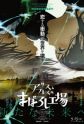



Mushi-shi: Next Passage Part 2
蟲師 続章
Ghostly, primordial beings known as Mushi continue to cause mysterious changes in the lives of humans. The travelling Mushishi, Ginko, persists in trying to set right the strange and unsettling situations he encounters. Time loops, living shadows, and telepathy are among the overt effects of interference from Mushi, but more subtle symptoms that take years to be noticed also rouse Ginko's concern as he passes from village to village. Through circumstance, Ginko has become an arbiter, determining which Mushi are blessings and which are curses. But the lines that he seeks to draw are subjective. Some of his patients would rather exercise their new powers until they are utterly consumed by them; others desperately strive to rid themselves of afflictions which are in fact protecting their lives from devastation. Those who cross paths with Mushi must learn to accept seemingly impossible consequences for their actions, and heal wounds they did not know they had. Otherwise, they risk meeting with fates beyond their comprehension. [Written by MAL Rewrite]
Главный
Второстепенный
Второстепенный
Второстепенный
Второстепенный
Второстепенный
Второстепенный
Второстепенный
Второстепенный
Veronin
May 9, 2015
It's a bit difficult to write about a series that has been hailed as one of the anime industry's greats. The first season was an atmospheric work of art, an enrapturing experience that sent chills down my spine with the end of every episode. But I'm not entirely sure that Mushishi's second season has necessarily lived up to those memories. It's still an excellent anime, and while it is better than almost anything that has come out in the past few years, there's this constant sense that something - just something - is missing. Perhaps that 'something' is the fact that the series has goneon for a long time now and no longer feels as fresh as it did at the beginning. Maybe it's just that I've gotten older since I watched the first season and am no longer capable of feeling those same emotions again. Or maybe the staff just haven't been able to fully reproduce the magic of the first season. Even so, whatever the case may be, it turns out that Mushishi's second season, even if it is a slightly inferior Mushishi, is still one of the most pleasant experiences I've had watching an anime in quite a long time. An interesting detail about Mushishi is how not all its stories end on a happy note. Many of them are bittersweet or flat-out depressing, which eliminates any of the predictability that often comes with storytelling. The episodes are not merely different in their content, but also deliver completely different emotions at the end of each episode, ensuring that the series never reaches the point of staleness. Mushishi always has something new to offer to its audience. And it never goes the route of preaching morals, as even its villains are deep and human enough to be empathised with. Nobody is inherently right or wrong in Mushishi; even Ginko cannot say for sure what the best path would have been. Not surprisingly, Mushishi delivers on the atmosphere front. It is minimalistic in nature and focuses once again on quiet rural life -- the supernatural issues plaguing a modest farmer or small group of villagers -- rather than the usual city problems we have seen in so many anime before. And that's for the better, I think, as there haven't been many other anime out there that have captured rural life in the quiet, subdued way that Mushishi has. It makes you want to roam around the woods or raise a family where things are calm and peaceful, even if those thoughts are only for a fleeting moment. There are only two minor issues I have with Mushishi's second season. First, the show focuses exclusively on mushishi incidents and the victims surrounding them and does surprisingly little with Ginko himself. The entire story is about Ginko's travels, yet at the endgame of the story, we know very little about him or his thought process. Secondly, the mushishi incidents feel far too numerous, perhaps owing to the episode count. It feels like Ginko just comes across some world-changing event every second day, which makes one wonder what he's doing in-between all the episodes. Showing those quiet moments, the moments when he's not dealing with mushishi, would be just as interesting as the supernatural. Mushishi continues to have some of the best scenery in anime. It looks absolutely fantastic, with nearly every shot of a forest or a lake being embodied by a simple sort of beauty, similar to the wabi-sabi aesthetic in Japanese culture. The animation itself leaves some room for improvement, though, as characters will sometimes have missing faces, and the show seemingly prefers panning shots far more than movement. It also has an incredible soundtrack, much like before. Mushishi is a master at timing its music. Often a quiet piece will start playing in the background without you even noticing, and gradually it will pick up and seamlessly lead right into the credits. Small little touches like this do a lot to enhance the emotional value of the show. And of course I would be silly to not mention the opening track, which is one of the most relaxing things I've perhaps ever heard. It is medicine for the soul. Mushishi's second season may be a bit weaker than its first, but that doesn't necessarily mean it's disappointing. It still delivers the same mature themes and atmosphere that you'd come to expect from the series. It just doesn't carry those same awing moments of before, the ones that screamed "I'm watching a masterpiece". But I don't think that is necessarily a problem. If its greatest sin is being merely great rather than a masterpiece, then Mushishi's second offering is already leagues ahead of its competition.
chesudesu
December 20, 2014
I have forgotten now how I came to watch Mushishi Zoku Shou. But whatever that reason is, I surely don't regret it. It may be appalling at first how it may seem slow-paced or even stagnant. Looking closely, we'll realize that it is this stillness and calm that give Mushishi its distinction, making it worthy to be called a masterpiece. After all the action and drama that anime can flaunt, Mushishi gives us a refreshing retreat, a break from the hustle and bustle of trite anime antics, and presents to us its own brand of action and drama enveloped in its unique and perhaps unpredictable storytelling. We followGinko, the main character, in his travels across Japan where he meets people affected by mushi, strange, ethereal creatures that coexist silently with every other living being. Interacting with different mushi has its implications and Ginko, as a mushishi, offers his help to those troubled by mushi to the best of his ability. The setting itself offers a horizon of opportunities. It is a captivating feat that each episode can be the darkest of tales reminiscent of Edgar Allan Poe (Fragrant Darkness, Lingering Crimson) or even the most lighthearted of stories (Banquet at the Forest's Edge). The story fills out every edge of possibility and leaves room for even more. The slow movement and breathtaking scenery are what absorb you and even more so when its superb musical arrangements come in to accompany it. Its masterful direction bring out the best of each scene - the deep-rooted characters, the intense emotions, the over-all mood (you'd have to take a closer look to see this). Mushishi couldn't ask for a better production. The whole experience takes you to a time when man and nature treated each other with respect and lived together in peace and harmony. With each episode told in a way that closely resembles the fable of Aesop and the parables of Jesus coupled with its magnificent art direction, Mushishi gives us an experience evocative of the ways of Shinto and Zen embedded in classical Japanese culture. And yet, Mushishi never tries to be grandiose and flamboyant in its ways. Its simplicity is its most favorable trait and it is in there that you will find its grandeur. "Mabaw nga kalipay" ("simple pleasure") is what we'd call it in Cebuano. It is not laden with complications and twists but that makes it all the more entertaining. Among the anime series I'm watching this season, Mushishi Zoku Shou stands out the most and is easily one of my favorites in my limited repertoire. I would very much recommend the series to anyone and everyone, especially to those with an open mind.
ZephSilver
March 15, 2016
As understood by most sensible viewers that dissect the content they watch, anime, throughout the years, has become an expressive form of art in its own way. It's a medium that utilizes and relies heavily on audiovisuals in accompaniment with a script to bring a story to life; a story that takes on new impressions and interpretations depending on the creative choices taken up by those involved. Sometimes this art is used as a vehicle to service self-indulgent shows, and other times, it's used for something that's worth its salt. Regardless of the quality of the title, or the effort on the part of thecreators, what remains true is that in some way or another, they can all be considered "art." Beauty is in the eyes of the beholder after all, and as long as an individual finds something to be aesthetically appealing, whether that be a visual experience with plot or a visual experience with "plot," that's all that really matters at the end of the day. But sometimes, among the clutter, you'll stumble across titles that take it a step further, it doesn't simply use audiovisuals as a tool to compensate for whatever is written, but rather, it embodies both breathtaking audiovisuals and proper storytelling to become something far loftier. It reaches an equilibrium that's usually unobtainable by many that strive for it. Finding a delicate balance that's almost ethereal in quality, something that can't truly be expressed and appreciated until it is experienced first-hand. And for many that actively follow the anime industry for an extended period of time, one title that reaches that benchmark in terms of quality is, with little dispute, Mushishi. While all anime could be considered "art" in its own way, Mushishi itself is like a master canvas being brought to life; it's art personified. The elegance and command in which it carries itself is both awe-inspiring and inviting. It doesn't take long before you're sucked into its universe, with vignettes of lush, layered color and soothing imagery that quickly breathes life into its folklore and characters living in it. Everything feels organic, undisturbed by human tampering. It's a feeling that many titles have attempted to emulate but very rarely coming close to sharing the same living quarters with Mushishi's level. Following our protagonist, Ginko, we find ourselves back on a journey that feels unwavering to the current anime climate that surrounds it. Almost a full decade after its first 2005 run, Mushishi shows no sign of compromise, containing the same dense melancholic atmosphere and simplistic, yet universal messages that made it a household name among anime fans, to begin with. Just this fact alone is impressive enough, given the market's current need to produce more self-indulgent works. Any fan of the first season will be more than satisfied with this follow-up. You could even inter-splice the episodes from both seasons and not notice any change in terms of quality, outside of a more gussied up art and animation output of course. But despite that fact, or maybe because of it, this follow-up season may technically reach the same heights as the first but can't help shake the feeling that there's just a sense of something being absent. This isn't to say this season wasn't a great sequel; on the contrary, it's one of the best entries of the 2010s, but rather, there was an element that the first had that didn't seem to transfer quite as well. It's a missing ingredient, an "aha" moment that seemed to have been lost in translation. This could be a result of the novelty of the mushi and their mysterious functions growing less intriguing after seeing it play out numerous times before or a case of the second season being stuck with less impactful storylines. Either way, there was a slight disconnect to be found. The essence was still there, just more watered down this time around. But don't let that deter you, as this bit of grievance only comes as a result of comparing what I consider being "the lesser of both greats." By comparison to almost everything else being produced around it, Mushishi still stands tall, reaching the apex of visual storytelling that lands it so highly on most critics' "best of" lists, to begin with. One of Mushishi's strongest suits is its ability to never take sides in any conflict. It presents the story as is, and like the mushi that populates the universe of the show, everything here is treated as occurrences outside of malice or forced circumstances. Nothing is ever painted in stark black or white, it's a show that constantly dabbles in the gray. Like Ginko, we are mere spectators to the occurrences that happen in any given situation. Life is never picking favorites and the show knows that. Instead of catering to what would be favorable, all incidents that pan out to any given end result are usually determined by basic cause and effect. It doesn't wrap things up in a tidy little bow, like everything else in this world, the show simply moves on, uninterrupted by the personal struggles of man and creatures alike. This unspoken understanding is what makes the case by case basis of each episode to feel so engrossing. You never know the outcome, there's no predictable line of thought; like nature itself, every occurrence simply... exists. But outside of the show's strong writing, the prominent feature of Mushishi that initially draws audiences in is without question the breathtaking scenery and haunting musical selection. Whether you like Mushishi or not, it cannot be denied that this title's prowess for crafting dense atmosphere is almost unrivaled. The blend of rich visuals and coaxing auditory cues brings forth a strong sense of pathos and satisfaction to whoever is consumed into the lore of its universe. Mushishi isn't simply something you watch, it's something you actively experience with each passing minute. The opening song "Shiver" by Lucy Rose is perhaps one of anime's most tranquil and transcending musical intros. It embodies everything Mushishi stands for in the brief 1:30 seconds it takes to lead us into any given episode. Capped off by the musical outros that transition itself with a seamless quality and you have yourself a complete package. This doesn't even touch upon the gorgeous soundtrack, which was comprised of a mixture traditional Japanese instruments with other ear-grabbing pieces; from the slow introduction of the Kugo harp that's later accompanied by the softly plucked strings of a Shamisen, to the less common Handpan bell that interweaves itself into the mix to create walls of textured sound. All instruments playing off the strengths of each other, a balancing act of synchronicity and purposeful calculation. The music here is simply therapeutic. There are many instances throughout the show where no word of dialogue is even uttered, but instead, leaves only long sweeping vistas of nature to keep the audience entranced in its world. Something that's properly exemplified with the introduction of each new episode, as the title banner slowly fades in, the landscape shifting behind it with steady ease. Not many shows can boast that ability of instant immersion. It's even elevated further when the music slowly chimes in without even bringing attention to itself. Working as the backbone to the scenes being presented but never overstepping its boundary; an act of complete unison, giving a voice to the textures and shapes that make up the feature presentation. It's these moments where Mushishi shines the brightest; these moments of uninterrupted serenity. Moments that hold onto you long after the credits roll, leaving an almost sticky and instantaneous feeling of nostalgia. Enjoyment: 10/10 There are very few shows that I think unquestionably deserve their place at the top of anime's podium and Mushishi is one of them. It's a title that never ceases to amaze me with its simplicity and beauty. Nothing is wasted here. Every aspect coalesces into an artistic goldmine, where great writing, visual presentation, and enjoyment completely harmonizes to give birth to an experience that forever stays with you. To me, it's a project that has transcended the medium altogether, becoming something far more significant as a result. It's an all time favorite, a show I can revisit at any time with the reassurance of its quality forever holding firm. Overall: 8.5/10 Mushishi isn't great for any complex philosophical pondering or sociological observations; what makes Mushishi so great is that it doesn't try to impress the viewer by subjecting some kind of birthright of importance. It doesn't draw attention to itself, it isn't an ostentatious try-hard screaming at the top of its lungs for a chance at the limelight. It simply shows what it has to offer and leaves it upon the viewer to take the initiative in exploring its layers. There's a zen-like quality that sweeps into every crevice of this anime, and those willing to get invested into it will surely find something worthwhile tucked between the folds of its narrative.
Akagi-kun
August 10, 2016
"Mushishi" - perhaps one of the greatest anime I've ever seen. "Masterpiece," as corny as it may sound, is the first word that comes to mind -- and not only regarding the second half of the second season, but regarding the entire franchise as a whole. There is, however, a catch: Mushishi is the kind of series that practically defines the phrase "not for everyone." First and foremost, there is nothing in here that you would usually expect to find in Japanese animation. In Mushishi, giant fighting robots, spaceship travels, and scantily clad schoolgirls are absent -- and if you expect or require your anime tocontain these elements, then Mushishi is not worth your time and will likely put you to sleep before the first credits roll. If you're partial to unexpected plot twists, subtle foreshadowing and hints that beckon you to unravel the meaning implied by the author, or meticulously crafted plots, then most likely you, too, will be disappointed. As you can see, it is easier to advise someone NOT to watch this anime, than to find those who might like it. When watching Mushishi, I felt as though what slowly unfolds on the other side of the screen begins to pull at the my heart strings, forcing think and ponder a lot and about many different things. I dive into an unknown world, one which is almost impossible to understand, a fantasy world superimposed on reality, and it is easy to get lost in this world. Seems to be, a bit of dynamics in the story, but while watching, time flies instantly. Is Mushishi a fairy tale? I do not know. It is too realistic to be a fairy tale, yet too fantastical to be true. Honestly, in the beginning I was pretty skeptical. I was troubled by the graphics shown in previews and screenshots, and troubled by the fact that each episode had and "independent" plot. I entered the show's first few episodes with some skepticism. But after watching a few episodes more i really popped out - no one episodes did cause me disgust. Beautiful, almost to tears in the eyes landscapes, I really was amazed. Differences in character designs were fairly subtle, as if the creators wanted to say, "this could happen to anyone," and yet every character also had some traits peculiar to him or her alone. Each character must deal with the mushi, under his or her own, unique circumstances and situation. Because of this, many viewers fault Mushishi for having the same secondary characters. However, this is not a minus, but a "vice-versa" - plus - almost like creators wanted to say us: all people are different, but at the same time, all people, in many aspects, are similar to each other, and Mushishi displays this brilliantly. All of peoples are "all" and "every". And the execution of these stories' design is just gorgeous. Rather than going the traditional anime route and using bright, eye-popping, multicolored landscapes, everything is drawn in soft pastels, with very simple color scheme reflecting the natural world and resembling watercolors. It is reminiscent of traditional Japanese ink painting. It seems that the first-season story of the artist who painted on the lining of his haori mountain from their native lands seems to be the essence of the series. There are mountains and valleys, the sky and the ocean, and with them another element, Mushi -- different and the same, neither good nor evil, the element that both feeds and kills. Just like history, there is neither bad nor good, just whatever the viewer feels each episode. All the same, everyone just lives their lives. There is no evil or good. Regarding Mushishi's music: On the screen, under the sound of bells, you can see the panorama of the fresh green forest; close your eyes, and you feel the same. The music blends with the picture, to become a "voice" of nature. Without its brilliant OST, I think, anime would lose its soul. At the end of each episode, it is simply impossible to cut the ending short, because it is the logical conclusion of each episode, where the visual image transforms into the music. Japanese philosophy is very ambivalent and are unlikely to be truly understood by our audience, but for anyone who has ever stopped to listen to the whisper of the forest, "Mushishi" will never be only a "passable" anime. Mushishi - an amazing anime. Simply amazing. One of those anime that really deserves its place in the top. P.S So here's the perfect anime for the night. Leaves behind a phenomenally light feeling and fleeting thought. And yet — it is filled with some all-consuming, though not hurting eyes, love of peace and love of one's neighbour. P.P.S I would like to mention a story from the second half of the second season, about a man who lived his life several times. So sad and at the same time, life-affirming interpretation of "Groundhog Day" I have never seen before. P.P.P.S English is not my native, so thank you so much my friend, for correcting my mistakes and sentence errors )
TyrAxe
May 8, 2021
It took me almost three months to complete the Mushishi series, the same time I needed to finish more than 900 episodes of one piece. Surprisingly I don't feel like I watched Mushishi, it's more like I ''experienced'' Mushishi. There's something so dark, something so melancholic about the whole thing yet it's astonishingly beautiful, soothing, and philosophical at the same time. It's like watching Tarkovsky's films. Mushishi is about Mushi, the mysterious beings that exist somewhere between life and death. well, it's not true! Mushi(s) have never been the central character of any episode. The show is all about us, humans and how to understand humansmore. It's about human compassion, empathy, emotion and acceptance. It also indicates the inseparable bond between us and nature. Every episode of the series is unpredictable and has its uniqueness. Not a single episode is rushed or incomplete. Each episode establishes characters and takes us on a journey to the unknown to create a unique complete story. Some episodes are thoroughly pleasant, some are heartbreaking and tear-jerker. Some episodes will put you into deeper thoughts about life, while others will make you speechless. Nonpareil storytelling, oddly relaxing visuals, and timeless music will make you lose yourself in the world. These are the things that establish Mushishi as an artistically crafted anime. Nonetheless, Mushishi is a very slow-paced show and it's not made for everyone. But for someone who wants to watch a slow relaxing story or someone tired of mainstream animes and wants to try something unique, Mushishi is a great option.
Ранг
#56
Популярность
#948
Участники
291,220
В избранном
1,579
Эпизоды
10