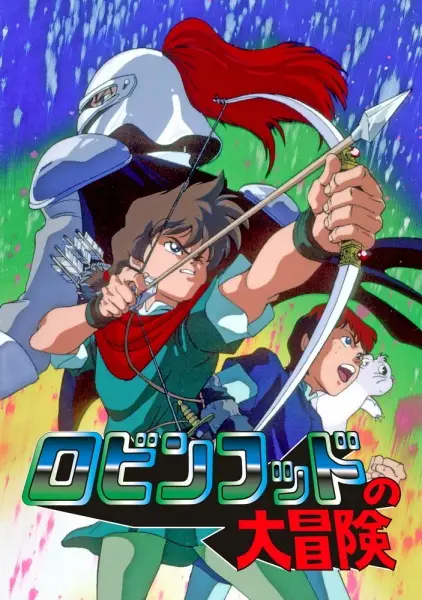

The Great Adventures of Robin Hood
ロビンフッドの大冒険
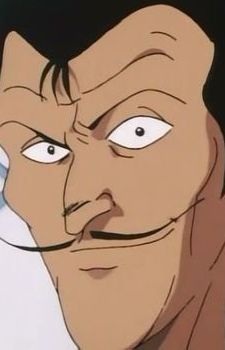
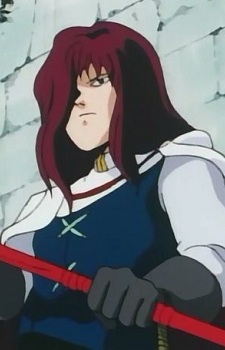
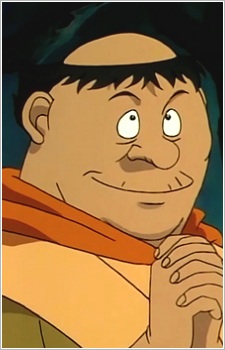
A variant of Robin Hood in which all the principal characters are teenagers. Several centuries ago in Nottingham County, a cruel and greedy baron by the name of Alwine ordered the destruction of the Huntingtons' castle—from the fire of which Robin and his cousins, Will, Winifred and Barbara, miraculously escaped. The youngsters sought shelter in Sherwood Forest, where, thanks to the wise guidance of the hermit better known as "Friar Tuck," they managed to face the difficulties of a life in the wilderness as as well as they could; however, in the forest there lived a fearless group of young bandits, led by Little John. Their first encounter with Robin and his cousins was at first rather stormy, as the two groups fought for the destiny of a young, noble maiden named Marian who had fallen into the hands of the bandits during an ambush. Their bitterness, however, rapidly lead the way to friendship, and Robin and John later realized they were all victims of the same fate. The youngsters thus mutually decided to help one another. Baron Alwine was not merely enemy of the Huntingtons—in fact, a couple years earlier he had forced Little John and his gang to seek protection in the forest to avoid forced labour. He would later seek Marian Lancaster for the secret carved on a cross the girl wore as symbol of her family line. The girl was to be adopted by the shady Bishop Herfort—Alwine's accomplice—who sought to attain the Lancaster's wealth. With all their strength, Robin and his friends were then compelled to fight against the baron's troops, led by Gilbert—a dangerous and fearless knight. When Winifred and Marian were then imprisoned in the castle's dungeons, our heroes tried in every way possible to enter until their ardour was finally rewarded with success. Thanks to his noble heart and heed for danger, Robin became rapidly known as the protector of the poor and oppressed. Beloved and highly esteemed not only by the villagers, but also and especially by the sweet and beautiful Marian he was. The boy who never parted from his loyal, magical bow, endlessly engaged in dangerous and unthinkable missions.
melisenth
July 16, 2015
At first, let's make it clear that the score I gave is based on the time this anime was made (1990-1992),which I always take into consideration. This is a tale about Robinhood as a teenager.I liked the way the story was enriched with fillers showing the beauty and the secrets of the Sirwood forest,as well as the radical development of the characters.That's why the story is more funny and interesting and let's not forget that this anime is addressed mainly to children.That's why I still like it :) The art is very beautiful,especially the sceneries of the forest,the village and thecastle.Medieval England is accurately shown in this anime. Many beautiful colours are used and the light plays an important role in this.However,the faces of some characters shouldn't be so round,they needed more attention to detail . As for the sound,the op/end in its english version is veery catchy!!In the story,suitable sounds are used for the atmosphere of the forest,the castle with its mechanisms and the people who live in it.For the main scenes,the music that is used is very nice too. Considering the characters,they developed quite well,although I would prefer to see them later in their adult version too just for curiosity.Lady Marion is a great example of this development. I really enjoyed this anime,which reminds me of my childhood and I 'm going to watch it again in the future.When it ends,you just want to take your friends and live in a forest forever!!! xD
nekonick777
July 19, 2025
First of all, I want to say that my rating is subjective and may be influenced by nostalgia and personal attachment. I loved watching this anime as a kid, and it brings back a lot of warm memories. Now, as an adult, I decided to rewatch it properly—and I’m glad I did. It felt like rediscovering a lost piece of my childhood. Story: Surprisingly, for an anime mostly aimed at children, the plot is quite engaging. The story follows the adventures of Robin Hood, who loses his home and title and is forced to live in Sherwood Forest. Over time, the characters are developed quite well, andthe plot includes intrigue, conflict, and tension. Still, there are some naive elements—for example, a group of kids managing to beat up armed soldiers. In the first half of the anime, there's also frequent use of Deus ex machina, where conflicts are resolved by some higher power or outside force. But overall, the story is meaningful and fairly captivating. The dialogue is excellent—educational and significant (if you watch the original version). Characters: The character designs are quite memorable, and it's interesting to follow their development—each one has a unique journey. Robin is kind and pure-hearted. Marian is an aristocrat who is forced to come to terms with the changes in her fate. Sir Gilbert is a knight constantly torn between the moral code of chivalry and the cruel orders of his master. Then there’s Little John with his gang, and others. The main villains—Alwyn, Cecil, and Bishop Hereford—may seem a bit caricatured at first, driven by greed and the thirst for power, but Alwyn actually proves capable of coming up with rather clever and evil schemes, and his motivations are partially revealed as the story unfolds. Soundtrack: The opening and ending themes in the English version are actually really good—but that’s about the only positive thing I can say for the dub. The original Japanese version not only had a different opening and ending, but also featured background music throughout the episodes that was completely missing in the English release. The Japanese ending, Hoshizora no Labyrinth, has become one of my favorites. Overall, the original soundtrack feels far more captivating and mysterious—it draws you in in a way the English version just doesn’t. Visuals: The art style is excellent, featuring beautiful, painterly backgrounds that vividly capture the atmosphere of Sherwood Forest. The animation quality is decent, and many scenes effectively bring the setting to life. Overall, the visuals add a great deal of charm and enhance the story’s mood. Overall, it was really enjoyable; you can feel it was made with heart. Even though it was clearly meant for kids and teens, it hits something in you as an adult: don’t forget that you were once a boy or girl, with the purest and most original dreams. -------------------------------------------------------- Lastly, I would like to strongly criticize the English version here. I highly recommend watching it in the original Japanese—despite there being only about 20 episodes with subtitles. Even if your Japanese is at a beginner level, it’s worth watching the original, which is available on YouTube. I’m genuinely glad I did, because the English dub loses an enormous amount of nuance and emotional depth. It often feels like the dubbers were just guessing what the characters might be saying based on context, inventing entire lines of dialogue out of thin air. And not only are the changes inaccurate—they’re often painfully cringy. Goofy or awkward lines are inserted even when the original characters are silent. The tone isn’t just altered, it’s completely derailed. Take this example: Original: Gilbert: “Do you plan to gather feathers and fly freely like a bird?” Marian: “I would be endlessly happy if I could.” English dub: Gilbert: “Allow me to return the feather you were trying to retrieve.” Marian: “Thank you. This is the second time you’ve helped me.” The poetic imagery is completely erased, replaced by flat, literal dialogue. Another example, an intense moment of inner conflict: Original: Marian (looking at the moon): “Knight, if you're out there looking at the moon, please lend me your strength.” Gilbert (also looking at the moon): “Who am I? A knight playing the jester, or a jester playing the knight? God, why do you mock me so? Why did you make me meet Marian? Why?!” Dub version: Marian: “It should be me, not Winifred, looking at the moon. I’ll go and surrender to the Baron.” Gilbert: “Lady Marian, you’ve confused me. My code of honor… But I was right to deceive the Baron and save you. I swear on my honor I’ll never harm you, Marian! Marian!” The philosophical monologue is reduced to bland, melodramatic lines. The subtlety, the struggle—it’s all gone. This scene also completely loses the original message: Original Japanese: Richard: “I wonder when a young boy becomes a man?” Gilbert: “As long as he follows his dreams, a man will always be a young boy.” English dub: Richard: “I pray they will always stay pure and young.” Gilbert: “Your Majesty, your heart will always be with them.”