ペリーヌ物語
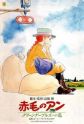
Perrine is a young girl who lives in Bosnia with her Indian mother and beloved father – that is, until her father passes away, leaving her mother with a single wish: travel to France to be with his father. The over 1,000 kilometer journey seems unfathomable, but Perrine and her mother have a plan: they will photograph people in the towns along the way to support themselves. With their hardy donkey Palikare and faithful dog Baron, the two set forth for Paris; along the way they encounter kind souls, barren villages, and a number of hardships; will Perrine and her mother survive the long journey to France? (Source: Anime-Planet)
Главный
Второстепенный
Второстепенный
Второстепенный
Второстепенный
Второстепенный
Второстепенный
Второстепенный
Второстепенный
Firechick12012
September 17, 2013
I love Japan's kids shows. Why? Because they have BALLS. What do I mean? To put it simply, the majority of their children's shows aren't just silly entertainment for kids or gigantic marketing commercials to sell toys. Just like with the majority of their adult and teenager aimed anime, their children's shows are refined and mature. They explore and discuss issues that most American children's shows don't even acknowledge! Not all of them are overly happy pieces of fluff meant to tell kids that all their dreams will come true. When things get serious in their kids shows, BY GOD DO THEY GET SERIOUS! Japan'skids shows take their audience seriously, don't treat them like morons, have much more refined and lavish animation than other kids shows from other countries, they're not afraid to show the dark sides of life like death or hardships, and they're not afraid to test their audience's patience. Ever since I realized what anime was, I always wondered: are fantasy shows and super hero shows full of action and fighting all American children really need to enjoy something? Who says children can't enjoy drama or slice of life shows where not much happens? Unfortunately, we Americans are under the stupid concept that the only shows American children will watch MUST have action, fighting, monsters, and overly preachy morals about friendship and making dreams come true. The people who make or advise the production of most American kids shows are afraid that if their show has death, hardships, and other dark themes, parents will go mad and say "we need to protect our children!!!" Personally, I think Japan has the right idea about saying, "Screw it!" to what kids shows SHOULD be and just do their own thing no matter how many kids they traumatize! So what if they're darker and more compelling than usual? I think shows like these are what American kids need! Kids will undergo some kind of hardship in their life anyway, so why bother trying to hide it from them? Perrine Monogatari is just one of Japan's many children's shows that I really like for its willingness to push boundaries and not fall to common children's show cliches. Perrine and her mother start off on a journey, leaving India to go to a city in France called Maraucourt, which is actually the place where her father grew up. Unfortunately, Perrine's father, Edmond, died on the journey due to pneumonia, leaving his daughter and her mother alone to travel together. But things get worse, as Perrine's mother gets sick as soon as they arrive in France, and later dies herself. But not before telling Perrine about Edmond's family: his father, Vulfran, is vehemently opposed to their marriage and as a result, Edmond ran away, furthering his father's rage against them. She tells her to continue on her way to Maraucourt, but her grandfather may not welcome her, so she has to make him love her before he realizes who she is. Perrine manages to get there and get a job in her grandfather's factory. But Vulfran is blind, old, and known to be a cold and solemn man who may still be angry at his son for what he did, so she isn't sure if she can do it. The show's animation is very dated, but it's still very impressive for a 53 episoded anime of its time. It looks significantly better than shows like Heidi or Dog of Flanders, probably because they managed to get the budget they needed. Not only that, the producers really went all out in making this show incredibly detailed and realistic. Everything, from uplifting events to tragic ones, come off as really realistic, in both the dialogue, the scenario, and the way the characters are animated, and the show itself is ridiculously and meticulously detailed. Even simple things like working and buying food are given plenty of time to signify their importance. None of the drama comes across as artificial, like most anime do nowadays. Plus, there's a butt-ton of effort into building up into the actual story. From what I've heard, everything up to episode 20 is anime original, yet, like Popolocrois Monogatari, all of these episodes are entirely character focused, detailing their journey from Bosnia to France and probably giving more background to Perrine and her family before the main events, and even when they get to the main story, the producers still take their time to further build upon the events leading up to them and make the journey as realistic and believable as possible during the time period the show takes place in. Kudos to you, Perrine! I especially liked the part of one episode where a character hurts herself when working in a factory and the managers say, "Oh, you brought it on yourself! It's your own fault for not paying attention! It's not that bad!" I learned a lot about factory workers in the 1880s back when I was young, and one thing I always remembered was that if someone was injured, the injury wasn't taken too seriously and they were told to just go back to work. If something like this happened in modern times, people would sue the factory like crazy! That really proved that these animators really did their research. However, much like many anime of the seventies, the music is unfortunately very dated and has seventies written all over it. However, it is significantly better than other soundtracks I've heard, like the 1975 Dog of Flanders anime and the 1977 Nobody's Boy Remi anime. The pieces do try to set the mood and create an atmosphere well and at times they really hit hard, while other times they tend to miss and come across as a little overdramatic, though not as bad as Dog of Flanders or Remi, mind you. It still hasn't aged very well, though. The characters are where this anime really shines. Instead of being portrayed as cardboard cut outs, they're portrayed as actual people with quirks, charms, and flaws alike, and it's not limited to the main characters either. Not only that, the character development here helps with exploring its themes about the importance of hard work, honesty, and how being good to others will influence them to be good to you. I honestly felt Perrine was a great main character with her strong will, her wits, the way she copes with the hardships she faces, and her being able to do what she needs to survive by any means possible in a very believable way, and this was before anime began to be swamped with idiot heroes, spineless harem kings, bumbling perverts, tsunderes, and ditzy females. More anime characters need to follow her example! However, I can see some people accusing her of being a Mary Sue, mostly because of how mature she acts for her age and a lot of talents like sewing and cooking, though this was the 19th century, so they probably don't know that a lot of kids were expected to act differently then than they do now, and girls at that time were expected to learn how to cook and do needlework in any situation, so I don't see any problem with it unless it involved forcing her to be submissive to a husband and squash her own dreams forever, which thankfully doesn't happen here. The only other flaws I can find are that some coincidences are a bit too convenient for the sake of moving the plot forward, and the language barrier gets ignored in the first half, only because the rest of the series is so down to earth in its presentation. If you're looking for a great, down to earth, moving slice of life anime about traveling, then Perrine is definitely the anime for you! But you'll need patience though, as it's very slow paced and tranquil. It's not an anime for those looking for action and mecha battles.
Nate515
July 1, 2018
I've watched a lot of the series in the World Masterpiece Theater. And this is by far my favorite. It starts out slow at first, however, once she arrives at her Grandfather's location, it becomes much more eventful and exciting. This became one of the most satisfying anime I've ever watched. It has a good balance of sad moments and moments that make you want to high five your invisible buddy. The voice acting was pinpoint in my opinion. The key thing to this anime is those eventful moments that make you feel good inside or when things are revealed, the anime really knows how to capture that moment.Some really memorable scenes that made me rewatch them many times over.
--Phantom
August 26, 2025
The vibrant lush of the gorgeous European countryside spreads across the canvas—dense forests, sparkling streams, and a colossal mountain looming on the horizon, its peak suffusing into the cerulean blue sky. Blistering rays of sunlight pierces through the feathery clouds, illuminating the sepia-colored solitary path where a ramshackle carriage is drawn by a decrepit donkey. Inside sits a mother, dressed in traditional Indian garments, beside her daughter who is cradling a dachshund sleeping lazily on her lap. Together they embark on a thousand-kilometer journey to France — one that would alter the trajectory of their lives forever. On paper, Perrine Monogatari’s initial premise doesn’t seem topromise anything grand or ambitious. There is no huge mystery that needs to be solved, no world-altering quest with tumultuous twists and turns, nor intellectually challenging philosophical dogmas embroidered in its storyline. And yet, within this simplicity, Perrine carves out something profoundly human. A tale that is intimate in scope yet subtly embellished with timeless, all-encompassing universal truths about compassion, resilience, bitterness, regret, and the many shades of humanity. It is precisely in its quietness that the series finds its power, making it one of the most criminally underrated gems I’ve had the pleasure of experiencing. Perhaps Perine’s greatest strengths is its subtlety and how it rewards patient viewers with a deeply moving emotional journey. None of the people inhabiting this world feel like “anime characters” — they feel like people. From the nuances in the dialogue down to the smallest mannerisms, everything is rendered with a restraint and grounded hyperrealism rarely seen in most shows today, especially in a medium like anime that is notorious for quirky, cotton-colored candy personalities. There's no melodramatic swell of music, no exaggerated expressions—just a quiet observation of people being people. And it is through this subtlety that the show crafts its sublime drama: one that is purged from the artificiality of conventional contemporary storytelling, where characters feel alive, not as pawns to push the plot forward, but as people from whom the plot organically grows. There are no shortcuts to emotion — no exaggerated tropes or fan service, no side-show theatrics or sensationalized gimmicks to maintain short-term attention spans. Instead, every moment of emotional punch is dealt with careful build-up to make it properly earned. The show also knows when to trust the audience: to pause and let moments of catharsis breathe, to know when to not explain everything, and let a look, gesture, or silence do the heavylifting. At the heart of the show is Perrine herself and her relationship with the people she encounters on her journey. She isn’t portrayed as some stoic, flawless heroine who is the paragon of human goodness but as a person who grieves and doubts like any other young girl placed in difficult situations of having to move forward after seemingly losing everything while still trying hard to carry herself forward with dignity and kindness. The hardships that she encounters are never dramatized for cheap sentimentality but are handled with tact as it unfolds in small, understated moments that steadily accumulate into something profoundly touching. True courage is not always found in dramatic victories but in holding yourself together without self-pity and to quietly persevere in the face of trials and tribulations of everyday life. And at the cornerstone of the show’s thematic and emotional power is Perrine’s grandfather, Vulfran. An icy, embittered industrialist whose heart has been roughened up by age, pride, and regret. He initially embodies someone who has shut himself off from the world—unwilling to swallow his pride or fully come to terms with his own emotions and failures as a father. The show never paints him as a one-dimensional tyrant; instead, it subtly peels back the layers of his character, revealing the deep wounds and loneliness that shaped him. Without giving away any spoilers, the way his character arc gradually unfolded has to be one of the most cathartic, tear-jerking, and incredibly satisfying emotional payoffs I’ve ever had in all the years I’ve spent watching anime. Period. There are no abrupt emotional breakthroughs nor manufactured dramatic epiphanies here—just the steady thawing of a frozen heart. The rest of the supporting cast are also painted with quiet authenticity. Each of them inhabiting a wholly lived-in world. A culture and lifestyle that is both corporeal and tacticle; a community that feels like it exists independent of the viewer's gaze. Each of them serve as threads to create a tapestry that depicts humanity in all its shades — kindness and compassion, bitterness and selfishness, and all the blurry line in-between. All of these encounters and detours that make up Perrine’s journey adds to the experience to create an unforgettable show that I will always cherish. Timeless, quiet, and profoundly moving, Perrine Monogatari will go down as an unsung classic for those fortunate enough to experience and fully digest everything it has to offer. In an age where so much of storytelling prioritizes grand spectacles and instant gratification, Perrine stands as a masterclass in restraint, sincerity, and emotional truths. It is not just one of the best entries in the World Masterpiece Theater lineup but one of the finest animated dramas ever made in general. And I hope that by writing this review, more astute viewers would be willing to give it a chance, as it deserves far more recognition than the quiet, hidden corner where it currently rests.
Ранг
#1848
Популярность
#8119
Участники
7,386
В избранном
35
Эпизоды
53