
Kamisama Kiss Season 2
神様はじめました◎
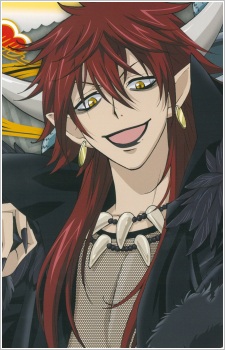
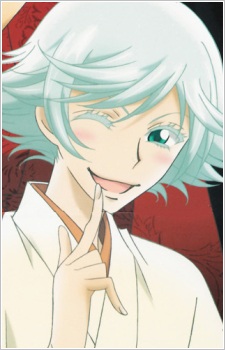
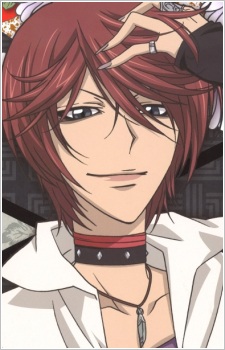
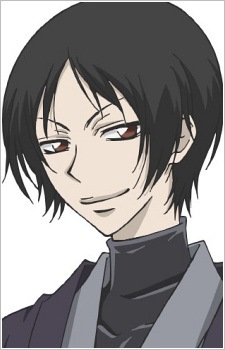
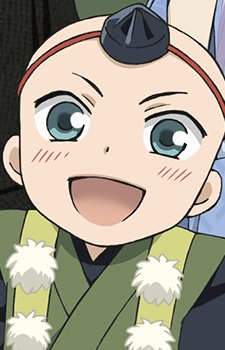
Nanami Momozono and her familiars Tomoe and Mizuki have survived quite a few challenges since Nanami took up the mantle of Mikage Shrine's patron god. Naturally, the wind god Otohiko comes to invite Nanami to the Divine Assembly in Izumo, the home of the gods, and Nanami chooses to take Mizuki with her, leaving Tomoe to pose as her at school. However, she has an ulterior motive for attending the Divine Assembly: to discover the whereabouts of the missing Lord Mikage, the former god of the shrine. After her adventures in Izumo, Nanami meets Botanmaru, a tengu child looking for someone she knows all too well—tengu turned goth idol Shinjirou Kurama. Botanmaru needs Shinjirou, their prince, to return home to Mount Kurama and stop the tyranny of Jirou, who has taken over the rule of their hometown. However, Nanami soon discovers a force much darker than Jirou is at work on the mountain. As a fledgling god becoming more accustomed to divinity, Nanami finds herself dealing with a tengu rebellion, her blooming feelings for Tomoe, and a strange man with ties to both Tomoe's past and Nanami's future. [Written by MAL Rewrite]
Главный
Главный
Второстепенный
Второстепенный
Второстепенный
Второстепенный
Второстепенный
Второстепенный
Второстепенный
Второстепенный
sunnierskies
March 30, 2015
Kamisama Hajimemashita was a really pretty and easy to watch anime. If you liked the first season, Kamisama Hajimemashita◎ did not disappoint at all; in fact, the romance portion got a little heavier, so all you romance lovers out there are sure to be saying "d'aww" at least three times an episode. I highly recommend it if you enjoyed S1. Story: 8 The story picks up right from where S1 ended, but it takes a bit of a break from Nanami "learning how to be a Land God" to more of a "Nanami being a boss God" approach. There are a ton of new characters, and reappearancesof older ones (i.e. Himemeko x Kotaro, the one and only Kurama, and Mizuki), making for a fairly diverse story line and change in direction. But it was a good change, so nothing was too stale. Nanami delves deeper into her duties as a Land God, such as visits and becoming a stronger deity. When she's figuring this out, she still carries support from her faithful familiars, Tomoe and the adorable snake Mizuki. They fight, Nanami breaks it up, and they go on with their lives. While this is happening, a variety of plots unfold, all leading to Tomoe having successive epiphanies about his cheerful human goddess. Characters: 9 The new characters were all pretty funny and added a nice touch to the whole atmosphere of the show, even though some of their stories were left hanging, like Kirihito, Tomoe's old companion from his wild fox days. But we also got a deeper look into Kurama's character, which was a sweet bonus. As for the main characters, Tomoe this season is ridiculously cute. Seriously, I could not get enough of him, with his revelations and inner monologue. There's actually a lot more focus on Tomoe this season as well, so you get more time to understand his thoughts, which was a good addition. And Nanami was still the same oblivious and happy-go-lucky Nanami as last season, but perhaps a bit more mature and refined as a deity. Yes, she continues her funny antics, like creating Mamoru, the adorable monkey child, who is added to the list of "Things/People that Antagonize Tomoe". But hey, that only serves to bring joy to us viewers, right? XP To sum it all up, character development was as strong this season as much as the last, if not more so. Art: 8 Okay, here's where it got a little different. With season one having 7 producers and season two having 3, the art style definitely took a turn. It wasn't bad at all; but it was really easy to tell the contrast. The colors are still charming and pleasant, but the style is a little simpler and there are a ton of close-ups each episode. As in, like 30 per episode. It wasn't exactly annoying, but it was a tad abundant for me. For the rest, I had no complaints. Still the same characters and designs we know and love. Sound: 8 The artist Hanae has provided both seasons of Kamisama Hajimemashita with adorable and awesome OPs and EDs, and I love it. The songs are cute and dancey, but they still tie in with the whole atmosphere of the show. Can't really complain, they just work. Also, I felt like the background music they used was very effective in each scene they used to get across the tone of the situation. It was nothing too fancy, but it was still satisfying. Enjoyment: 9 I realize I have been comparing S1 and S2 a whole lot this entire time, but don't get me wrong, Kamisama Hajimemashita is a solid show. Heck, S1 is in my favorites. S2 was just as good, and probably even better if you're just here for a ton of googly-eyeing. Which, I was, not gonna lie. The romance definitely got a lot stronger, as well as the story, and characters. There was so much cuteness in this show, and it did not fail to continue that legacy in this season. I went through episodes at a madman's pace, and I'm pretty sad that it's over already. :( Overall: 8.5 Absolutely watch this if you are having any doubts. This is by no means one of those shows with a terrible S2. Really, this season was nearly on par with the first, which makes it rather awesome and a good watch. If for no other reason, watch for Tomoe. Hey, I won't judge. Much.
xANIMExGEEKx
March 30, 2015
Story (8): The second season of kamisama hajimemashita contain Tomoe's past and the feelings that Tomoe has for his lady and mistress, Nanami. Like many other stories it's about a female girl who's poor life soon turns into a rowdy one filled with friends (as most of you already know this is mentioned in season 1) Season two is about the female lead, Nanami, meeting new gods and finally taking charge and developing into the proper Land Goddess. It has romance, comedy, and drama. The second season has many new settings, characters, music and moments where you'd laugh. Art(8): The art is the same as the firstseason, at least to me. Since this is a light hearted anime the colors are all pretty and go with the anime. It's pretty too look at with the light colors here and there. The details are also great, but they seemed to be less exact than the first season. This though didn't ruin the experience. Sound(9): I think the OP and ending are better than the first season. Reason why is because it's more up beat and goes with the anime. You have no idea how many times I ended up singing the OP at random times. "Kamisama no kamisama" by Hanae starts out with a flute which will already get you in the mood. (Laughs while remembering Mizuki trying to play the flute) The endings you want to watch the next episode because of the cliffhangers and cause of the song. Characters(10): Not only was there Nanami, Mizuki, Tomoe, and the shrines servants, but manyyy more amazing characters got introduced. The antagonist was introduced, Kurama's past was discovered which led to even more awesome characters. It was a character boatload!! Every character was awesome in their own way and you'd always want to see more of them. Even the antagonist. The quarrels between Tomoe and Mizuki over Nanami and over stupid little things always made me laugh. You can never get enough of these two. In my opinion, I think the character development and new characters was my favorite part of the entire second season. Enjoyment(9): I could never get enough of this. Ever since I finished watching the first season I've wanted more and I finally got it. I was so overjoyed when I started to watch the second season. Since it was ongoing when I watched I hated the fact that I had to wait a week to see the next episodes. Them cliffhangers are suspenseful! Overall(9): Even though it ended I still want more. *fingers crossed* hopefully there will be a season 3. Season 2 was better than season 1 in my opinion. Season 2 Op is more upbeat, has a handful of new characters(adorable ones too!), and I liked seeing the past of some of the main characters. I felt like I knew them even more than in season 1.
Stark700
March 30, 2015
To be honest, this show always had always been a sort of epitome for what shoujo is. The characteristics, backgrounds, and general premise all points to the direction of what the franchise has tried to be. And from the first season, it capitalized on every opportunity to craft shoujo. Season 2 isn’t far different by experiences as it will feel just like the first season. What that means is another charming trip with our supernatural familiar friends and the all adorable Nanami once again. Out of any show that got the news of receiving a season 2 in 2014, this one hit the mark. It tookme by surprise when the sequel was announced especially since it just popped out of nowhere. Make no mistake though. This sequel is something I welcome with open arms. Titled “Kamisama Hajimemashita◎”, the season 2 assumes that you have completed the first season. As it begins directly from where it left off, viewers should be familiar of what they may expect. The show hardly changes from where it had been from the beginning. There’s the familiars, humans, and society that are enveloped by a host of shoujo generics. But for what’s worth, the first few episodes crafts a more independent nature in Nanami. She’s here to prove herself and in fact takes action by attending a Divine Assembly, a meeting between Gods. Being a human herself, one can imagine how she will stand out as the “It Girl”. However, taking a close glance will show that Nanami has established herself as a strong spirited woman. She relies on almost no one and tries to become a better God while fulfilling her sacred duty. As such, this season focuses a lot more on story content rather than romance. The first half of the show easily sends this message as the series focuses on characterization. Not just for Nanami in this case but her partner Tomoe also gets a decent amount of spotlight. There are also some cryptic imagery regarding his past that viewers may be curious of. Because the story context become a rather tense focus, we also have conflicts brewing as well. Mysterious characters such as Kirihito will get viewers wondering about his motivations, goals, and role in this season. Furthermore, there’s a bit of interpersonal problems with our main characters as well. For Nanami, we get the idea that she is trying to become a better God but she still has some doubts here and there. Then, there’s Tomoe who finally seems to realize the depth of his feelings. But what do we get in return? Some cliché romance delivery where neither seems to tie the knot. What that means is that there’s a whole load of teasing but nothing in the end is resolved for their romance. I can’t say this is exactly surprising with shoujo content. It usually takes time for this to develop and the first season portrayed that quite clearly with its romance angles. But as for this show, romance itself should be a more prominent term. It’s like a heart of this show that needs to pump (almost literally in a way) to get the show moving. Sometimes, this season does that cleverly and other time moves back to square one For what’s worth, season 2 relies much more on its story context rather than romance focus. Despite this, the second season still has that soft feeling of charming elegance. Some episodes has that slice of life feel combined with shoujo themes. And while most of this is hardly original, it creates the essence of a satisfying shoujo. Adaptation wise, the show retains its comedy and drama. Most of the comedy is lighthearted with the expressive tones and scenarios that can be taken to heart. To say the least, this show always balances itself when it comes to all of its plot elements. From the cryptic imagery, dialogue, and plot developments to character building, this sequel is more or less of shoujo story book. Each page adds more context to some parts of the story while focusing on certain characters. In fact, Tomoe and Nanami aren’t just the only main characters we get to know more. There’s other prominent figures such as Kurama and Jiro that we get a nice bite out of their past lives. In retrospect, the franchise’s characters all stand out in some way along with this delicate story wrapped by shoujo. Technical production in regards to the artwork remains generally the same for the sequel. Nothing has changed in regards to the world fiction of this series. It’s marvelous and can even be breathtaking at times to see the difference between the spiritual and human world. In particular, the Netherworld brings a different mood to this charming shoujo. Character designs remains generally the same for all the main characters. While we do get some new cute characters such as a monkey familiar, hardly anything else has changed. Nanami does have a more independent nature in her for this season though as she becomes more determined than ever to become a better God. The expressive emotions she delivers gives credibility to quite just that. Soundtrack is mostly decent by standards. Sadly, it’s not really a strength for this season. OST still has that serene-like feeling although not memorable enough to leave a strong impression. On the other hand, the OP/ED songs has a really sharp focus with its shoujo style. Of course, we can’t forget the main characters who are able to express their thoughts and feelings with their voices. While nothing is largely memorable by experience, it’s still charming to watch the characters act out in their roles. By voice content, it is satisfying. At some point in this season, it won’t be a surprise to realize that the sequel drives its story by pushing its plot elements. While the first season has an intuitive focus on romance, this season takes the steering wheel to go with the context of the story. But there are still room for romance because every shoujo focuses a bit more on that. For what’s worth, Kamisama Hajimemashita◎ stands out as a way to show how much Nanami has changed from the beginning. The relationships she has with others is still a good focus in this season with its interpersonal perspectives. It has a convincing nature with everything it sets up from Nanami’s will to become a better God and to Tomoe’s realization of what he feels towards Nanami. Be prepared for a ride that blurs the line between humans and Gods.
BanjoTheBear
June 14, 2015
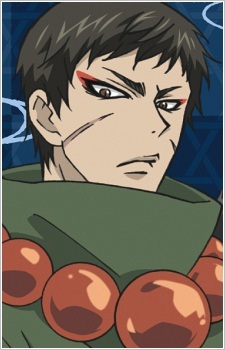
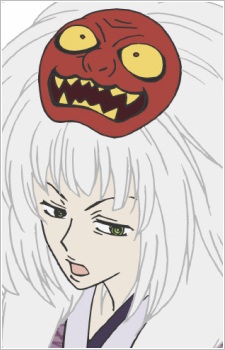
(This has been adapted from my blog/reddit thread. Spoilers ahead!) I’m thankful to have both of my grandmothers still alive. One, though, lives in a nursing home. She has bad ankles, memory loss, and internal issues that prevent her from living a normal, “everyday” life in the home she’s always known. My wonderful mother always visits her, not just because that’s her own mom, but because it helps to defeat something that is an unfortunate byproduct. And that’s loneliness. We all experience it at some point; it’s a strange feeling that causes a longing for companionship of any kind, be it a close friend, a dearlover, or a thoughtful family member. Yet it’s really easy to cure. You can visit them personally like my mom, or you can call to talk, send a text, or even mail a letter to show that somebody out there is looking out for them. No matter the size of the gesture itself, simply “being” there for another person in there time of need has a profoundly, positive impact on his or her life. This is the idea that Kamisama Hajimemashita 2nd Season works with, presenting an anime that at least doesn’t make you feel lonely. STORY Kamisama Kiss 2 follows a short period after the events of the first season. Nanami is still a land god, Tomoe is her familiar, and the two find themselves embarking on more heavenly journeys together. What’s interesting about this second season is that it really only has two main focuses: this theme of loneliness and indirect character exploration (which will be discussed later). Loneliness is very strange. Like coldness, it’s simply thelack of something else. In this case, it happens to be relationships or connections we share with the people around us. It, by definition, implies a sense of longing, of wanting to have that which we don’t. Because most people don’t actively seek to be alone; it’s human nature to want to be with and surrounded by others. To this end, Kamisama Kiss 2 sets up each of its three arcs with loneliness in mind. These three plot lines revolve around: Akura-ou, Jiro and Kurama, and Nanami, respectively. But it’s not that the show simply brings up the topic, but how it explores this theme that makes it so purposeful. Specifically speaking, the anime does a nice job of showing what causes loneliness,how we deal with it, and ultimately how it is cured. Assuming loneliness is something that is unwanted, it’s not always caused by our own devices. More often than not, it’s something that manifests through outside influences. Each arc demonstrates this aptly: Akura-ou lost and was betrayed by his best friend; Kurama was bullied as a child; and Nanami was affected by unfortunate circumstances. There is a correlation between each example, that being it is others that force such lonely feelings on another. It’s ironic, really – it’s precisely the very aspect of life that these people need that has generated it in the first place. Jiro’s case is the same but different; he willingly pushed those around him away despite the comfort they could provide to his stern heart. Just as each person’s loneliness was brought about in its own way, the anime also shows how these same characters handle the feeling they acquired. For Akura-ou, he turns it into revenge and rage, not just towards the friend who crossed him but towards all others. In a way, he wants people to experience the same feelings of loss and loneliness that he has felt. Kurama instead chooses to create a mask of sorts to attract people. He had always been alone, so being able to entice others to follow or idolize him was something he had never known – and always wanted. And Nanami is special. Her mother passed away when she was little and her father was a chronic gambler. Whether by bad luck or terrible coincidence, she had nobody to turn to. But rather than hurting or seeking others, her happy and active personality kept her both optimistic and adaptable. It turns out to be rather sad, seeing these characters succumbing to an emotion that leaves one feeling helpless or afraid. This is why the anime makes sure to alleviate these worries. Akura-ou, despite his anger, enjoys the niceties his “mother” directs towards him, proving that even the most evil of people revel in another’s company. Kurama had Suiro, the only other “tengu” to support him. Suiro’s physical saving of the boy wasn’t his greatest feat; it was being there to guide him when nobody else would. And while nowadays Nanami has her rambunctious crew to govern, Tomoe’s time spent with her kid-self implanted memories that trumped some of the more depressing ones. Her cure is a bit unrealistic, all things considered, but it hammers home a poignant statement: loneliness is not absolute. It can be defeated and it can be avoided; all that’s needed is a tiny bit of love. ANIMATION The art for Kamisama Kiss 2 remains relatively the same when compared to the first season. It’s usually soft, inviting the audience to relax in its sparkling backgrounds, fluffy locations, and serene environments. Other times, it gets drearier, with miasma-filled forests and darkened valleys. And it can go further still, providing locales fraught with danger, despondency, and despair. The blend of the godly settings with the more realistic ones is appropriately carried out, giving the anime a good sense of direction overall. On top of all this, the show also adopts a minimalist style that aides in making the comedy that much more hilarious. The character designs, like the art, keep their consistency. Nanami is once again strangely beautiful. It isn’t her large eyes, full smile, and long brown hair that make her grab one’s attention – but these simple details definitely don’t hurt her – but rather this aura she has about her that makes her more womanly and refined than she tends to behave. Other regulars like Tomoe and Himemiko maintain their white attire and purple persona, respectively. And the newcomers receive the same attention to detail; Jiro’s green cloak and red-painted eyes make him out to be as menacing as he is, whereas Yatori’s massive hair, funny mask, and crazy pupils capture his ridiculousness quite well. When it comes to actual animation, it sits somewhere around average. Much of the show focuses on the characters, their conversations, and the thoughts they are having. Meaning, lots of sitting and near still-frames are had. There isn’t too much action, and even when it does occur, its regular running or walking segments. CHARACTERS In the initial section, the notion of “indirect character exploration” was introduced. What does this mean? Essentially, the characters that Kamisama Kiss 2 sets its sights on might seem to be the ones gaining a lot of the focus. But in actuality, they use these characters to bolster those nearby – these close characters receive characterization and development indirectly through the ones that have the majority of the attention. This isn’t to say that the “bystanders” aren’t looked at individually; it’s that the indirect comparisons are stronger. Or to put it differently, they allow the viewer to see these characters in a roundabout perspective. An obvious contender for this approach is Jiro. Kurama’s arc takes up about half of the season, and initially it seems as if he is the focus. But Kurama’s experiences – and indeed many of the other “tengus” encountered throughout this segment – work towards bolstering Jiro’s person. There are distinct parallels between Jiro’s and Kurama’s upbringing. Both were ridiculed for their general weakness, with both wanting to become stronger than they were. Suiro’s relationship towards Kurama was initially seen by Jiro as a mistake; that it only brought about pain. But he sees that such pain gave way to something greater: elation. For as was talked about, Jiro and Kurama at one point had no friends to call their own. So Jiro sees Suiro’s relationship with the young Kurama as something to be revered and not something to be shunned. The little “tengu” brothers further make him understand the abusive stance he’s taken. He witnesses that he treats these “weak” children exactly in the same manner as he had been treated years prior, causing him to question his own goals. And even Nanami influences him. While he saves her from the thunder-beast – more parallels between Kurama and Suiro – its him seeing this young, “heretic” of a woman protect that which he was not that motivates him to see both the literal and figurative light around him. A fascinating detail about this sequel is in who it’s actually about. The first focused on Nanami and her rise to god-hood, all the while toying with the romantic connection between her and Tomoe. Here, though, and hearkening back to the idea of “indirect character exploration,” this isn’t a season about Akura-ou, Jiro, or even Nanami. It’s in reality about Tomoe. Every arc has him more or less on the sidelines, but the events that take place and subsequently the characters’ exploration leads to his development. For example, through Akura-ou, we come to learn more about Tomoe’s unsavory past and eventual change of heart. He also (indirectly) forces Tomoe to question the same connection that was already established previously. Jiro provides his own form of mirroring, with Tomoe seeing the same, inner-turmoil in the winged man. And Nanami’s past elicits, perhaps coincidentally, childlike wonderment. Her first-ever backstory gives Tomoe the wherewithal to push their relationship towards a place that he truly wants it to go. Because despite all of his abrasive words towards his master, and aligning with the themes of the anime, Tomoe is lonely. Nobody understands or loves him – the gods fear his powers and his closest “friend” Mizuki constantly quarrels with him. Nobody, that is, besides Nanami. In other words, the entirety of Kamisama Kiss 2 was structured to get Tomoe primed and ready for the feelings he’s always wanted, and to leave behind the loneliness he’s felt for way too long. SOUND The opening theme is quite dainty, with the flute, guitar, and vocalist creating more fun than it should. This keeps up for most of the song, even picking up in tempo and rhythm during the middle portions. Its conclusion ends on an oddly somber note, as an indication that the show isn’t just fun and games. And the motif on loneliness proves this without a doubt. The ending theme is very slow, contrasting with the OP with ease. Lyrically, it follows the theme of loneliness once more; the constant “Hello? Can you hear me?” phrase is similar to a call for help, to get someone to notice that he or she is there. It’s purposefully built, but the piece itself isn’t as catchy as its beginning counterpart. The rest of the soundtrack is heavily influenced by the culture of the world Namani and co. find themselves in. “Korin! Okuninushimikoto” is a lovely piece, filled with powerful movements and strong emotion. “Chigiri…Futatabi?” is melancholic in its presentation, yet strangely hopeful in feeling. And “Sarani Shisso! Taima Kekkai” is entirely upbeat, coinciding with the show’s general happy tones. It’s a pleasant OST containing beautiful and fitting arrangements alike. Voice acting for the anime is somewhere around average. A special shout-out goes to Suzuko Mimori as Nanami for her womanly voice and determined way of speaking, no matter the situation. ENJOYMENT This one sits in a precarious position. It’s pretty funny at times; the character interactions are repetitive but usually managed to make me laugh. And Nanami herself is hysterical when she wants to be. At the same time, a lot of the drama didn’t do much for me. The loneliness theme is executed well, but I never felt worried or concerned for Akura-ou, Kurama, or Jiro. In other words, I never felt invested in what the anime had to offer. Beyond this, I found the romantic parts of the show to be sorely lacking. Part of this is due to Tomoe searching to understand his own self, but because of this, the show chooses to forego any sort of worthwhile relationship between him and Nanami, acting more as a regress than as development in the bond they seemingly share. However, there were some pretty interesting scenarios. Nanami accidentally getting into Tomoe’s bed was tense to watch whereas Nanami as a toddler and a child was way too adorable to see. The overall experience was pretty flat, but very specific moments like these didn’t make the show entirely boring to watch to completion. Kamisama Hajimemashita 2nd Season performs at about the same level as its prequel. The narrative takes on loneliness to the best of its ability and the characters are developed in a peculiar way. But the alright animation and sound-work keep it from being something too good. There’s apparently still more to be said about the god and “yokai” pair, so hopefully any further continuations can capitalize on the foundations already crafted. If not, they really will become lonely. SUMMARY Story: Good, focuses on the theme of loneliness, exploring its causes, effects, and the ways in which it is defeated nicely enough Animation: Fine, nice art style, good character designs, average actual animation Characters: Good, Nanami and others see individual focus, but its Jiro’s and especially Tomoe’s indirect character exploration that matters most Sound: Fine, okay OP, okay ED, good soundtrack, average VA work Enjoyment: Fine, nice comedy, unemotional drama, not enough romance, but very specific scenes make this season not wholly boring Final Score: 6/10
mervollo
March 5, 2017
Okay. I have been watching lots of Anime recently. But my life changed completely when I started watching Kamisama Hajimemashita! I don't insist on telling what exactly but I got through lots of emotions while watching this incredible masterpiece. Tomoe is by far my favourite character and his mystery kept me on the hook. His voice... his strange manners... his lady and mistress Nanami was also a pretty amazing character. It left me craving for more. I'm not te type to obsess over characters but I am by far obsessed with him! The anime has a lot of characters and you sooner or later getattached to them. The story, art, sound, characters..... I can't find a flaw at all. I only wish they didn't rush the last 4 episodes from Kako-hen. IF you really like deep and intense anime then you should definitely watch Kamisama Hajimemashita!
Ранг
#376
Популярность
#555
Участники
465,532
В избранном
3,850
Эпизоды
12