
SHIROBAKO
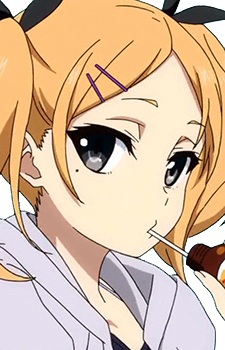
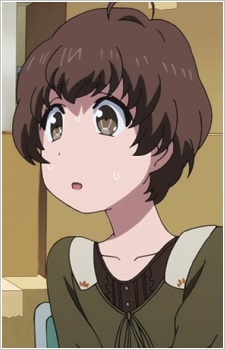
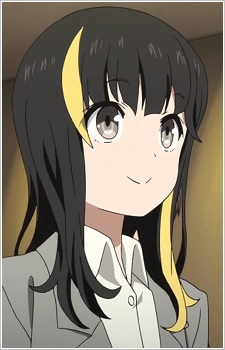
It all started in Kaminoyama High School, when five best friends—Aoi Miyamori, Ema Yasuhara, Midori Imai, Shizuka Sakaki, and Misa Toudou—discovered their collective love for all things anime and formed the animation club. After making their first amateur anime together and showcasing it at the culture festival, the group vows to pursue careers in the industry, aiming to one day work together and create their own mainstream show. Two and a half years later, Aoi and Ema have managed to land jobs at the illustrious Musashino Animation production company. The others, however, are finding it difficult to get their dream jobs. Shizuka is feeling the weight of not being recognized as a capable voice actor, Misa has a secure yet unsatisfying career designing 3D models for a car company, and Midori is a university student intent on pursuing her dream as a story writer. These five girls will learn that the path to success is one with many diversions, but dreams can still be achieved through perseverance and a touch of eccentric creativity. [Written by MAL Rewrite]
Главный
Главный
Главный
Главный
Главный
Второстепенный
Второстепенный
Второстепенный
Второстепенный
Второстепенный
Второстепенный
vegetablespirit
March 27, 2015
Sunlight desperately pours through the windows of Kaminoyama High School's Animation Club, illuminating only the figures of five girls with nothing but donuts in hand. An unmistakable tension fills the air, yet a short battle cry ensures it's tainted by the faintest hint of commitment -- one that will hopefully lead those present to their dreams. Cut to the same window drenched in rain, zooming out to reveal the same five (Ema, Zuka, Midori, Misa, and Miyamori) slaving away at their club's OVA in the shadows. Don't be mistaken by the gloominess of the scene, as it's clear their demeanour has changed: a glowof passion fills the girls' newly-inspired eyes as they discuss their lives and futures throughout the summer. Outside, even a wilted sunflower cracks a sly smile. At graduation, the five girls promise to work together on an anime again, but this time their donuts are raised in pride. What is it that awaits them out there? All of this happens within the first five minutes of the series, and it'd be hard to keep track of without some commendable observation skills. Mizushima is known for his extreme (and bizarre) attention to detail, but Shirobako brings this to a whole new level, all the while remaining funny, thrilling, and providing an experience all too heartwarming. The storyline is made up of two intertwining conflicts; one follows Musashino Animation's production troubles, where Ema also works, and the other focuses on Midori, Zuka, and Misa trying to find a job in the industry. The former is clearly more interesting, as aside from Miyamori, the other girls only serve as a backbone; their struggles are interesting to watch, but they're never really given much individuality, instead only differentiated by their career paths. Two of the main five don't really get enough time in the spotlight, and it's a little bothersome given how vital they are to the story. It does seem more due to time constraints than writing problems, however, as how they're executed is still somewhat meaningful. Some may even find their being pushed aside to be a nice thing because of how relatively boring they are. By relatively, I mean that the blunders of the main characters are made up for by an excellent supporting cast, consisting of anime staff from multiple studios, new hires, and freelance individuals. They're the source of a lot of the story's progression and humour, but also its intensity. Much like in real life, not everyone you encounter is flawless or friendly, and they're always prone to butt heads with others. A somewhat simple office bickering can lead to verbal infighting, or even escalate to some physical violence. It's not something that happens often, and it's not abused to the point in which it becomes ineffective; it's as shocking and scary to see as it would be to any employee. Even the more distant or obnoxious of the staff have some substance or reason to their rude behaviour, and it's pretty much all explained by the end of the run, creating some gratifying character development for one and all. A more unconventional aspect of this anime is its intelligent use of lighting, as I touched upon earlier. Even the fluorescent lights of an office gleam upon the squeaky-clean walls that surround them, and different areas keep vastly different atmospheres -- you begin to feel and understand the area without needing to be there. For example, the cozy orange sheen of a pub is rightfully unlike the frigid mess that may lie outside. Instead, it's more reminiscent of a scene in one of the homes Miyamori may visit. Shirobako's art itself follows suit, with frames as carefully detailed as those created by Musashino. In fact, you'll end up seeing a lot of their anime while it's still a work in progress. Everything from key animation to CGI is shown as it's constructed, and while it may be messy, it's an oddly charming way of displaying a fictional artist's hard work. I'm not as much a fan of the character designs, because while extremely nice, they're more or less on the safe side. Women in the show are largely more attractive than their male counterparts, which would usually be fine by me, but I find the characters are strong enough to make it unnecessary. To put it more bluntly, it sometimes feels that Shirobako relies too heavily on its more conventional appearance, and it lowered my expectations before watching. Also unexpectedly, its sound goes on to impress. The seiyuus of the main five were all very unpopular prior to the show, but it gave them all a chance to make their big breaks. Famous voice actors are given smaller roles in the show, and Zuka's struggle as a newbie seiyuu could be seen as a commentary on why this choice was made. There are four main theme songs, obviously, and each is greatly uplifting -- from soaring piano harmonies in Colorful Box to the simple yet catchy dance refrain of Platinum Jet, there's likely something to appeal to everyone. Even the background music is nice, but it doesn't tend to impress out of context. Not really a huge problem, I suppose. While definitely something that works best altogether, this is an anime that is just good in every aspect. It may not excel at one particular thing, but I probably wouldn't have it any other way; it seems a testament to the show's overall theme of hard work, and I'm more than satisfied with that. There are very few anime that I've enjoyed watching more, and funny story: this is the first time I've felt such a strong urge to vocalize my love for one. So despite what you may think of its appearance or synopsis, I urge you to experience it for yourself. I almost never watched Shirobako, and I still scold myself for that.
Второстепенный
CodeBlazeFate
October 24, 2016
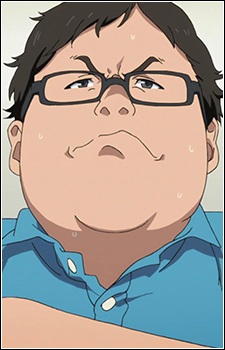
*MINUTE SPOILERS FOR SHIROBAKO* Anime is an interesting medium. Critics, fans, news spreaders, forums, directors, studios, products, songs, and animators. All of them exist in other mediums, and some exist in all entertainment mediums, but they all exist here, and this is obviously, a rich and interesting medium. The thing is, we tend to only really know the news of the anime, some the people working on the anime, and the final result that airs on tv. We never really get to see the real ins and outs of it unless we study in those fields, which many of us here won't. It seems Studio P.A.Works realized that as well and decided to make an anime that can teach us a bit of what goes into making our favorite shows. Did it teach us some valuable lessons on the industry while still being an entertaining and satisfying experience? Of course! Then again, chances are, you're not here to find out that part. You're probably wondering why. Well, I guess it's my turn to give it a go, so if you are one of those people, then let's find out, shall we? STORY: 9/10 Over the course of 24 episodes, we get to see Musashino animation work on two interesting anime while dealing with loads of bumps on the road. One such member is Aoi Miyamori, leader of the anime club her 4 other friends were in during high school, the group consisting of: Aoi, Zuka, Ema, Midori, and Misa. The 5 of them take versions jobs in the anime industry, and suffer stress trying to find their place and in some cases, suffering stress trying to make it out there. Their paths are separate while working on the first anime, Exodus, but most of their paths converge when working on Third Aerial Girls Squad, until towards the end, Zuka manages to land a role for the series. We get to see the ups and downs of not just these 5 girls, but everyone working on the two anime series over the course of 2 years. Each end to an arc (the arc being the production of one of the 2 anime) is satisfying in their own right, especially due to the sheer amount of anime references that increase the more each arc nears the climax. We also get to learn a bit about key-animation, CGI, voice acting, adaptation, editing, and so many other things that can really benefit someone trying to learn a bit about the inner workings of an anime. As for the last two episodes, they get absurdly over the top, but have some of the most satisfying and heart-warming moments in the series, like Ali crying when she hears Zuka reading her lines for Third Aerial Girls Squad, and the celebration of the anime's completion. It's not just educating us on anime, it's also giving us engaging and interesting stories with loads of references to real life studios, anime, and directors. Not to mention that the ending is great. CHARACTERS: 8/10 Aoi is a bit nervous and friendly but assertive at the same time, all of which are shown in full display during production, and she is a really pleasant protagonist to follow. Shizuka and Ema are usually friendly and upbeat, but get a bit down due to circumstances regarding their work, especially Shizuka until her insanely emotionally resonant big payoff at the end of episode 23.. Midori gets inspired by the other girls and eventually becomes the most diligent of them all. Misa is also friendly, but eventually wants something more out of her job as a CG animator. I'm sorry for these shallow descriptions, but putting them into descriptions is a bit hard given how real they feel at times. Sure, Ema gets needlessly melodramatic at times, but we still care about the girls' endeavors, and that's partly due to these guys... There is a gigantic cast of characters that work at Musashino and other studios, so I'll have to be a bit brief. Tarou is a bumbling idiot akin to the likes of Tamaki from Code Geass, but can still pull through here and there, and even has a pretty fun drunk scene with Daisuke. Seiichi and Honda are nervous wrecks that have to really pull through via pain in order for things to work at times given their flaws. Daisuke is a pessimist with terrible mindset of getting things done and nothing more: the mindset that allows works like Mahouka and Blazblue Alter Memory to spawn (not that I'm still angry about those series or anything), but we get to see just what horrible assholes pushed him that way, in the aforementioned really great drunk scene with Tarou, who often bugs hum about being buddies. So many of these characters have their own unique quirks, and are pretty fun to see, even if a lot of them butt heads, all except for Ai; she's annoying, and that's all I'm going to say about her botched attempt st a mute and shy character. They still can get work done when it gets down to the wire, no matter what he'll they go through in the process. Seiichi even gloriously goes to see the creator of the second anime and takes down the chronies that block his path, including that asshole "funny story" guy who keeps wrecking what they try to do by never doing his job right and being a pain in the dick. Hell, we get personified imaginations of a girl doll and a polar bear to entertain us and represent Aoi's thoughts occasionally. Talking about all of them will be daft given the given cast, but they're endearing and diverse, and all have at lest one moment in the spotlight, like Endou in episode 8 after his arc about trying to quit his position on Exodus. Also, try to guess which ones have real world parallels. I'll give you a hint. One of them is a reference to Hideaki Anno. ART: 9/10 Studio P.A. Works did a great job with this series. The animation during the normal scenes generally looks good, but the visual flares really kick in during the OPs and EDs, including some Ufotable level lighting. ED2 has it the best, with a packet that alerts which version of ED2 is being animated. Not to say that the animation in general isn't great, but it really stands out in the OPs and EDs. I love when they get into shading and coloring, and other animation moments since as you can no doubt guess, they do a great job at showing that. Why wouldn't they.It's a treat to be sure. Now if only the CGI were as good it kinda falters occasionally, but can still be decently done other times, like with the cars that are always speeding, and no, I will not dock points for the purposely clunky CGI in the CGI testing scenes since again, they were supposed to look like how bad CGI looks in anime. Regardless, it's a very pleasant show to look at, especially when they do such a great job at illustrating Re anime process, literally speaking of course. SOUND: 7/10 OP 1 "Colorful Box by Yoko Ishida" is an extremely charming OP, and is a perfect way to draw you into the series. It screams pleasantness, putting a smile on my face every time. OP 2 "Treasure Box by Masami Okui" isn't as good brbis still a nice OP. Never thought I'd hear the accordion in an anime OP. ED 1 isn't anything special at all though. ED 2, Platinum Jet, was actually preformed by the seyuus of the 5 main girls, and is amazing. It is beyond pleasant, and is perfect to cheer yourself up to during night time, and is course, it's very catchy as well. Like Gurren Lagann's second ED, this was what convinced me that I really loved the show even more than i thought I did. The rest of the OST isn't anything noteworthy aside from a few moments here and there (like the song hat plays in the final scene of episode 23), but it works decently enough for what we got. Also, the Andes Chucky theme is catchy for me. Shaddup. ENJOYMENT: 9/10 This is a very immersive show for me, so much so that at points, the scenes where characters get super stressed stress me out as well. I mostly grew out of that though, it tenimmersik was still their, as each moment of relief for the characters was a relief for me, as the troubles were over for now. Each success was satisfying, especially the finale. Also, that scene in episode 23 with Aoi and Zuka was so heart-warming, especially when Aoi cried. I enjoyed the humor as well, and don't even get me started in the references, like the Studio Sunrise reference, the Hideaki Anno reference, or the Mariyama reference. I kept belly-laughing at some of those references, and believe me, there's a lot of them. OVERALL: 9/10 RAW SCORE: 8.68/10 This is definitely an impressive and engrossing series to be sure. It teaches us some valuable things about anime while giving us some great stories and characters to get invested in. The references can be a real treat to almost anyone who has seen his fair share of anime and has some knowledge about certain studios and directors in the industry. This is easily recommendable to any anime fan, especially a seasoned veteran. Hell, show it to your local anime club if you have one, since it teaches a few things about the behind the scenes about anime. I'm sure it'll be worth it for the pleasant characters and amazing payoffs alone. Well, with all that said. I bid you adieu.
ZeroHumor
April 1, 2015
Shirobako is an anime about making anime. It portrays virtually every aspect of anime production with excellent detail, from the research and writing of a story, to the administrative operations and planning, to the making of 2D and 3D frames, to the animation process, to the voice acting and related auditions, to the sound effects and music recordings, to miscellaneous artistic contributions throughout the production. Sounds like a mouthful? You bet it is, and Shirobako has this tendency of cramming so much information in that your head will be spinning whether you paid full attention or not. But that's not all. Technical operations is onlyhalf the picture; the other half is much more universal to all work environments and industries: human relationships, interactions, and work-related issues. We're not dealing with robots that do all their jobs perfectly and on time; we're talking about people who get lazy, angry, demotivated, emotional, stressed out, make mistakes, and have other things in life to deal with besides their soul-crushing jobs. We're working with artists, each with their own aspirations, troubles, and outlooks on their careers. Not everyone is satisfied with their job, and heck, not everyone has a job. This is all taken into account in Shirobako's comprehensive look at the anime industry. Yet with all that, I've only scratched the surface of what Shirobako has to offer. The real heart of the show is in its characterizations, conveyed piece-by-piece in a rich narrative of powerful, heartfelt character moments. We are shown the traps of getting caught in the daily doldrums of work life, with characters losing sight of the initial passion that motivated them to join the industry in the first place. We are shown harsh disillusionment, as characters realize that their dreams are either not as wonderful as they originally thought, or straight-up unattainable. We are shown that in anything the characters do, there will always be someone who does their job better, faster, and seemingly with less effort to boot. That talent is absolutely a thing. That luck is absolutely a thing. That effort without proper direction gets you nowhere, but effort with direction still only gets you so far. Yet while Shirobako is unreserved in conveying these cold, hard truths, it never stops being an optimistic show. A beautiful poignancy is achieved whenever an industry veteran manages a light smile in recounting their earnest, yet tumultuous pasts. An inspiring piece is made whenever two quarreling characters settle their differences in a rekindling of passion. Whenever one character helps another with their artistic or professional troubles, that act of compassion is always nicely reflected in later episodes, whether that help is reciprocated, applied to great effect, or even passed on to the next generation of creators. And even as our characters get humiliated, beaten, and put down by their troubles, they continue onward. They push forth. They grow. Not everyone makes it, and those that do will always be plagued with stress and setbacks, but it's the fact that they put a genuine effort towards their passions that matters. Even for those with aimless direction, it's to continue working, creating, and helping others that they find a purpose. And at the end of the day, there will always be someone cheering them on in the background and giving them support. Understated moments like when Aoi's parents call Aoi to tell her how excited they were to see her name in the ending credits does wonders in bringing everything down to earth. As shown, Shirobako is ridiculously good at crafting characters from its flurry of scenes and subtleties, and substantiating a cast of over 50 named characters. How many of these characters have great scenes, distinctive personalities, and endearing quirks to attribute to their face (because I suck at remembering Japanese names)? In a rough count, I got at least 7 directors/producers/administrators, 8 animators and artists, 5 production assistants, and 4 miscellaneous roles. Do the math; it's absolutely nuts! The show also performs extremely well in its command of tone and general storytelling. It balances a fast-paced, detail-filled story with a burgeoning and competent character cast so effectively, when it sounds like it'd be a horrid mess on paper. The ever-stressful environment of Musani Animations is complemented by sharp, slick comedy, constantly making me tense with anxiety over the characters' mounting troubles, followed by some scenes so hilarious they have ZeroHumor doubled over in laughter. With its many character moments, Shirobako maintains powerful heartwarm colored with poignancy throughout its course, as it balances its realism perfectly with its idealism. It's also worth noting that realism itself isn't Shirobako's aim; rather, it is to convey something meaningful within its realistic ideas and emotions that truly matters. Yes, Shirobako has talking dolls, exaggerated drag racing, and dream-like visions. But none of that detracts from what is real about this show, and what is truly significant: the passions and pursuits of art, the emotions in dealing with stress, and everything that makes this show extraordinary. In the end, Shirobako proves to be an extremely well-written show. I was frankly shocked when I saw that this was an anime-original work, considering just how seamlessly this show flows from point to point, from theme to theme, from episode to episode. It's a really immersive experience, endowed with its outstanding cast of characters, engaging subject matter, competent storytelling, and filled to the brim with its own passion. You can clearly see just how much this work resonates with its own creators, and in turn, how much it emotionally resonates with its audience. It's one of the best, if not the best of 2014.
Finjas
April 4, 2015
We all love anime. Otherwise we wouldn't be on this site. Many of us dreamt to work in the anime industry, to create things we ourselves are interested in. Or if not to work, many of us still wanted to at least understand it, wanted to know how things are done and if it really is as great as we imagine it to be. It's no surprise, that Shirobako, the show that offers a glimpse into the production process of anime, created such resonance in the anime-loving community. And the way it tries to do that! Shirobako positions itself as an entertainment, a work ofart that could give you something else apart from the dry info about the technical process. The key words here are 'positions itself'. But does it manage to authentically convey the details of the process of making anime while remaining entertaining at the same time? The show definitely provides quite a bit of insight into the anime-making process. But let's be honest to ourselves: if we really wanted to know about how anime is made, we'd watch a documentary or google for some articles on the internet. The information can be found if you try hard enough, and if you didn't try, chances are that's not what will be the most important part of Shirobako for you, even if you think it is. What we really want in this kind of fiction is to root for characters, to worry if they'll manage to overcome the obstacles on the way to their goal. And Shirobako seem to understand this, but it doesn't go out of it's way to provide this. At least definitely not to the point of calling it 'Drama' as it's tagged here on MAL. Of course it has quite a bit of emotionally powerful moments, but they are by no means Dramatic. It's much closer to Slice-of-Life if anything. And sometimes Shirobako is focusing too much on this slice of life, the everyday job of the staff, while having little else going on. The start in particular can be called slow. It eventually starts to focus on important things: the characters, their motivations and determination, their views and methods to do things, their differences and their trials to overcome them, but those things are still provided in a very reserved way that some people won't be able to appreciate. For example, there's no life and death situations, sometimes even stakes don't seem to be high enough. The further story goes, the higher tension gets, the more crises and obstacles characters face, the more development they undergo, and by the end you become familiar with almost everyone in Musashino Animation staff, they grow on you, you sympathize with them. But you need to get there first. Because of this the show might come off as "Boring people doing boring job" for some. Especially if you don't like Slice of Life stories. But familiarizing yourself with characters takes time. If you ready to actually invest it, it will definitely become rewarding in the end. Because, once they develop enough, characters in Shirobako are great, and the Show tries really hard to give enough screen time to everyone (despite the fact that there are tons of them), and handle them as good as possible. And, as a bit of a personal commentary, I myself am not a fan of Slice of Life stories, and that was my major concern going into Shirobako, but in the end I really liked it. And I think if you like anime it is a good show for you to try and watch. Even if you won't like it in the end, it definitely is worth your time to try.
Yuusa
August 25, 2015
P.A Works has always been a company that reliably releases anime that keeps a consist quality of some sort, but when it came to the Summer season of 2014, Glasslip was a huge disappointment for the company, and for the fans. Yet, the season right after, Fall 2014, P.A Works took the initiative to air an anime to show the behind the scenes of creating just what the fans wait for. Isn't it amazing how anime has come so far to the point of releasing everything on a schedule of seasons and for fans to enjoy with a connection that is created through an industrythat's fairly new? The staff behind a "legendary" anime, or one that someone may enjoy, can be overlooked, but it wouldn't be the same without them, and Shirobako goes to show that. If speaking about Shirobako, you're given two ways to approach the anime and its message to the audience. In one hand, it could be seen as a SoL type of anime just following 5 ambitious girls pursuing their ideals of the anime industry after their animation club in high school got them interested. But in the other, Shirobako can be seen as a message to the audience of fighting the obstacles in life that chain down dreams and making them realistic through hard work and dedication. The under-lying theme of that end goal is a quality that can be overlooked in the anime with all the subtle jabs at the concept, but it ultimately kept the anime together. Numerous examples of dreams can be seen throughout the 24 episodes from characters talking about what got them into the industry, to their wisdom coming in hand when the new comers are having a slump or break down and experience is all that is needed. The staff in the series are often imagining their anime character's coming to life when in a hard time, or speaking about the future, which can be a personification of the hard work put into creating them and the pay off when finished. An odd quality that many people don't consider is the setting it has: young adult life. It seems as if many studios today are afraid of moving away from the typical high school setting and expanding on the adult life that many people are realistically having trouble dealing with. Without a doubt, the series does not hold back on the importance of keeping the job that the characters are currently holding. Countless times are the characters speaking about needing to provide food on the table to keep them alive with the job, and competition becoming more stiff as times are changing. 3D CGI vs hand drawn animation, lost in trust after massive blow out of production, the seemingly simple animation that we view actually has a intricate process behind it. Failures aren't taken lightly, as we view a studio going out of business, a voice actor struggling to get a role and debut, the industry isn't filled with rainbows and sunshine as some perceive it as. A lot of anime display the trope of characters being "prodigies" at a certain task, such as drawing or intellect, but the characters here display nothing of the sort. That doesn't mean they're talent-less, but rather, hard working and experienced. At one point in the show, Ema is having a roadblock in her creativity and art style, she's uncertain of how to approach it. It interferes with her work and shatters her confidence. The other artists assist in her issue and proclaim they've all been at that point, it's just a matter if she can find her muse to get out of it, or crash and burn. This alone creates a connection that many more people can enjoy as the series progresses through the trials and tribulations that they all face, knowing they weren't handed the job by talent alone while being fed with a silver spoon. When referring to the characters of the anime, it's amazing how only five of them are labeled as "main character", yet each individual one seem to make an impact that goes past the typical "side character" trope. All of them seemingly have the qualities that could take over and become the main focus at any moment, given the situation, but even without doing so, they have just enough air time to distinguish themselves from any stereotypical "regular" character that is in recent anime. Although some of them do make more of an impact than others, they're all equally needed completing a beautiful mural. To give light of some impressions and impact of the characters, some will be reviewed. ✿✿✿✿✿✿✿✿✿✿ "I kept remembering when I was being interviewed, and it's depressing". - Miyamori, Aoi. Miyamori, Aoi is the prime focus of the "main characters", as I would say, and definitely a realistic character. When she enters the industry, she's unsure about where she wants to pursue, unlike her co-workers. For example, her friend Ema has chosen the Artist path, Midori wants to become a Script writer, Shizuka strives to become a voice actor, and Misa wants to create 3D art. In more ways than not, Aoi is a character that many people can relate to, myself included. Her worry about a career and choosing a path is often taking over her outlook on things and indirectly steers her to be where she is now. Though her realism is quite stellar, it's her development that seems to be the biggest trait there is to offer. At the start of her job she's only a production assistant. Constantly making mistakes, apologizing to everybody, and even has a history of being denied job interviews from other studios. But throughout the entire 24 episodes, we witness what experience and support does to a person. Aoi becomes a person who's illuminating ambition as opposed to the wavering fragile girl she once was. The quote selected from her displays when she's put into a situation that requires her to become someone of high importance in the production team, and is constantly reminded of her failures, but overcomes her past to lead the studio she was accepted into. ✿✿✿✿✿✿✿✿✿✿ " "Well, I want to exceed the expectations, without betraying them". - Kinoshita "Director" Seichii. The director is an interesting character, as his overall personality seems to be more "have fun doing your job", rather than the serious tyrant. Throughout the series you learn that he's actually a person who has directed other anime in the past, but one bad mistake ended up ruining his image as a director, and ultimately his image in the industry. He has many philosophies in his work that can push him to become over the top to some staff members and to the audience, but in his mind, he's a child at heart. It's the free spirit that he has while also being able to take his own responsibility when times get tough that make him reliable. Whether it be his childish approach to getting around work or motivating ideals when beginning to actually do work, the director is a character that is used a comedy relief factor, yet impacts more than that. A fan of anime that stays true to what the audience wants, even if it has to stray from the creator's, a trait that seems to set himself apart from the other directors that appear throughout the run time. ✿✿✿✿✿✿✿✿✿✿ "I'm excited, too. No matter how long I've been doing this, the feeling I get when I see my drawings move... There are no words". - Iguchi, Yumi. Yumi is just one of many examples in the anime that show experience is everything. While not being one of the highest known artists in the industry, she's enough to keep the art department going to motivate and help them out when in need. When Ema was in her road block to clear her mind of troubles, Yumi gives her advice that she actually got while she was in the same situation and is more of a figure of assistance. Although there are many characters that are in the same role as her, she becomes an individual as the series progresses to set herself apart and really show what she has to offer to the entire staff and audience watching. ✿✿✿✿✿✿✿✿✿✿ For a studio like P.A Works to produce an anime about animating, art would be a pretty big factor in itself to keep the concept of how hard it is to create one running. Luckily enough, P.A has never failed to produce great art that has their own style that indicates it's their studio, yet Shirobako has the detail and attention that goes beyond what they usually do. It's amazing how they capture the idea of producers and staff members as just usual people by the snip of their home and office space. Little figures of characters, a family to go back home to when done with work, over sleeping, nothing is left out in a way that focuses entirely on art detail, but also detail in life. As for the sound department, we actually even got to see how certain sounds are made in the anime, and by the looks of it, technology has come a long way, but making them right on the spot seems more enjoyable. In all honesty, sound probably isn't too notable in a series such as this, though not because it wasn't clicking together, but because of it's eccentric focus on the characters. Although, "COLORFUL BOX" has definitely become a piece that never gets old when watching. While a facade is created to follow 5 girls and their quest to impact the anime industry together, Shirobako is much more than that. It's a present to the anime industry and audience of hard work and enjoyment for all ages. There was no melodramatic theme to plague the series and create hard feelings to connect with, but rather a realistic approach to almost every aspect that can be experienced by adults. Rooting the foundations of creating an anime and centering it around that may seem strange, but it's a ride to experience once beginning. It's more than what it may seem like; fitting the saying "Don't judge a book by its cover" has never been more true.
Ранг
#357
Популярность
#551
Участники
469,216
В избранном
6,247
Эпизоды
24