東京喰種√A
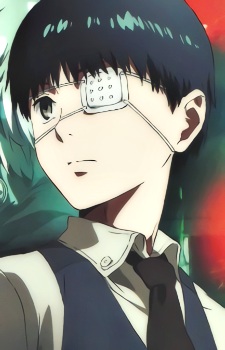
Ken Kaneki has finally come to accept the monstrous, flesh-craving part of himself that he has feared and despised for so long. After escaping captivity and torture, Kaneki joins Aogiri Tree—the very militant ghoul organization that had abducted him, leading his friends to question his true motive and loyalty. As tension between the government and the ghouls continues to rise, the Commission of Counter Ghoul, the government's specialized anti-ghoul agency, has intensified their efforts to completely purge Tokyo of ghouls. This threatens the transient peace of Kaneki's friends and former comrades—the ghouls at the Anteiku coffee shop. Aware of the dangerous situation, Kaneki faces several battles that puts his precious fleeting humanity on the line. [Written by MAL Rewrite]
Главный
Главный
Второстепенный
Второстепенный
Второстепенный
Второстепенный
Второстепенный
Второстепенный
Второстепенный
Второстепенный
Amaranthyz
October 25, 2015
I have heard a lot of hate for Tokyo Ghoul √A and I'll be honest, it triggered my brain to have very low expectations towards it when I first got into it. I did not really absorb the first season as it was incredibly rushed except for a few episodes so it only deformed my expectations for the second season. But boy, I was not disappointed. I have not read the manga and therefore, I entered this series completely blank and you may think of me as 'not a real fan of Tokyo Ghoul' for not reading the manga, but it definitely helped me enjoy the animeso I am not complaining. FACT: You CAN appreciate an anime without a religious standing with the manga. That is something I find in a lot of manga fans who are deluded into thinking that an anime would suck if it did not follow the manga. Tokyo Ghoul √A is one of the animes that prove this delusional thinking wrong. Even if the storyline did not completely follow the actual manga, it still delivered the suspense and melancholy of the characters' situations and for me, it was not as rushed as the first season and took its time building on the story of the CCG investigators' lives as well as following Kaneki's brutal growth while in Aogiri. It makes me appreciate both the lives of the ghouls and the humans fighting against them. And then the ending finished everything perfectly... I won't spoil it but the image of life, death and the struggles of both ghouls and humans were beautifully depicted and it becomes one of my favourite scenes in anime of all time. As for its art, sound and character, it is mostly consistent and plays along the psychotic melancholic nature of the anime. I have no additional comments other than how I am always captivated by the music of this anime; both this season and the prequel. My conclusion? To hell with all your gourmet expectations to anime based on the original manga. If an anime is executed well, it becomes amazing. If a manga is total trash, it is still trash. Don't be closed minded and you may be able to appreciate both anime and manga equally. Tokyo Ghoul √A receives a generous 9/10 from me~!
Tsuzanagi
March 26, 2015
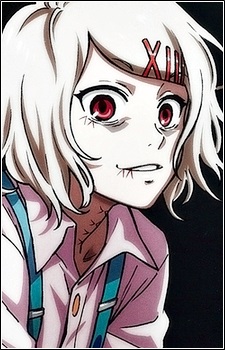
The first season of Tokyo Ghoul, while certainly not reaching the heights as the manga, was an enjoyable exposition to the series that was able lead newcomers like me to binge read the entire 143 chapter manga in two days. As a stand alone show, ignoring the quality of the manga, it was pretty good. Root A, however, is trash from an anime-viewer-only perspective and worse than trash if you've read the manga. It is a mess of unexplained plot points that insult the complexity of the source material it was adapted from. For all the hype generated by Sui Ishida creating an original plot linefor the anime to follow, Root A fell inconceivably short in almost all areas it could. Studio Pierrot proved itself completely inadequate to handling the franchise and we can only hope that the Tokyo Ghoul series gets the Brotherhood-esque 50-episode reboot with a much better studio. Despite a promising opening episode that immediately introduced a difference in story to the manga, Root A never seemed to be interested in actually developing an original story. From one episode to the next, content was centered around adaptations of the sidestory in the manga. I never got the feeling that there even was an original element to the story. Kaneki, who should've been the focal point of the so-called "original plot", is left thoroughly underdeveloped and recieves approximately half a minute of air-time per episode. I was excited for the prospect of a different take on perhaps the manga's weakest arc, but found myself disappointed by the lack of attention to the main character. For all intents and purposes, there are zero differences in plot progression between the anime and manga, besides the fact that the anime development of the characters is far inferior. Simply nothing comes of this original direction despite the many glaringly obvious routes it could add to the series. Instead, Root A follows a rather slow-paced development of the supporting cast with intermittent unexplained violence. The story somewhat resembles season 1 Aldnoah Zero - intriguing major plot points outlined but no content to flesh out the story and add impact to the plot's important events. A large part of the problem is no doubt due to the shortness of the adaptation. The first season, while not perfect, was able to a manage a somewhat coherent story condensing around 60 chapters of manga. Root A attempts to condense something closer to 75-80 chapters and royally screws it up. Major story arcs are melded together so that the overall picture is completely nonsensical. There is no coherent progression from one event to the next; the end result is that the series as a whole feels like a haphazard, condensed jumbling of the manga. With everything feeling rushed and coming from left field, it's nearly impossible to get invested or enjoy the story. That said, there are some legitimately good scenes of character development of the side characters. Suzaya Juuzou's character and his relationship to Shinohara is actually better done in the anime than the manga. Unfortunately, the rest of these character development scenes are mostly direct adaptations from the manga. If you've read the manga, you will very soon forget that this is supposed to be an original story, as 90% of each episode is cut from the manga. You really begin to question Studio Pierrot's priorities, as the main story arc is so sidelined by side stories (how ironic) that when bouts of action occur, you simply have no idea what the conflict is about. Pacing was an issue in the first season; however, Root A takes poor pacing to a new level. The major climax of the manga was impactful and well thought out but gets completely butchered in the anime thanks to a missing major fight as well as the larger issue of simply not adapting enough of the main story to really understand Kaneki's profound development as a character, which is what makes the final arc so epic. Once again, I really have to question the director's priorities - if you plan to adapt the epic, final showdown of the main story arc, why wouldn't you spend more time adapting the events of the main story? Animation-wise, Root A is fairly underwhelming. The art is nothing spectacular (aside from one beautifully detailed keyboard) and the animation hits power-point level quality during some fight scenes. With this show, Studio Pierrot proudly declares to the world that fighting scenes are not their forté and fills most major fights with smoke so nearly all art is obscured. Sound is a similar story. Pierrot should have kept the same opening song from the first season (Unravel by TK from Ling Tosite Sigure), which will undoubtedly be the most memorable piece of the Pierrot iteration of the franchise. This is pretty evident considering Pierrot even brought in an acoustic version was made specifically for the (rubbish) final episode of the show. The ED is a decent song but the series offers nothing spectacular when it comes to OST aside from the one standout song that came from the first season. Overall, this was an extremely disappointing follow-up to a semi-decent first season. I'm still having trouble comprehending the stupidity that was the decision to cram the brilliance of the 143 chapters of Tokyo Ghoul into 24 episodes; furthermore, the hint of a :re follow up is nothing more an insult to manga readers. Root A has some good moments of character development, but that is due entirely to a direct adaptation from manga scenes and should not be any way credited to Studio Pierrot. In fact, Root A has only shown that Studio Pierrot should not adapt any more Tokyo Ghoul material - or any material really. Story: 3/10 Art: 6/10 Sound: 6/10 Character: 7/10 Enjoyment: 5/10 Overall Rating: 5/10 TLDR; Read the manga from chapter 1, watch episode 12 of the first season, avoid all else. Or, wait for the 50-episode remake of Tokyo Ghoul it deserves with a competent studio.
BanjoTheBear
April 1, 2015
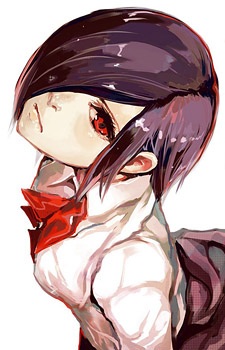
(This has been adapted from my reddit thread. Spoilers ahead!) Something that is inherent in all people is the need to protect the things you love. Doing whatever it takes to keep the stuff around you safe. Either by fighting or sacrificing, as long as what truly matters to you is unharmed, the rest doesn't matter. It might be family, friends, or your dearest of objects; it's not so much what it is but the act of protecting it that matters. But there are those times when, despite how hard one tries, such protection just isn't possible. Such is the idea that Tokyo Ghoul Root Aworks with. But without being kept safe itself, it merely implodes. STORY Root A (the name to be used from here on out) takes place immediately after the conclusion of the first season. Kaneki has become quite strong and through his own volition, has decided to join the "bad" ghoul group known as Aogiri. ...And that's as logical of a plot as Root A offers. From then on, the show adopts a completely nonsensical and disjointed front that, even upon closer inspection, follows no semblance of thought. Kaneki's underlying problems? Sorry, those aren't looked at in depth because it's much more important to have a terribly choreographed fight scene. What about that guy during said fight? Nope, ignored completely for some asinine reason. How about the encompassing battle that was occurring around them? Nuh-uh, nothing is revealed there either. Where were the girls who have only one ghoul eye like Kaneki? What became of Yoshimura, aka "Baby Owl"? What was Aogiri's true motive? Why did Touka literally do nothing for twelve straight episodes? There are no answers to these questions because the show doesn't bother to talk about any of them. And it's not as if they bring them up themselves to elaborate on; they sort of lazily occur, with the narrative progressing from one instance to the next without contributing even an ounce of credible evidence as to why anything that is happening is going down. Since Root A cannot support itself on the events that really matter, then it falls onto the fights themselves to attempt to salvage anything that remains. But even those cannot escape the downward spiral that is happening. Not counting the lackluster animation, there is an inadequate look at both sides -- the humans and the ghouls -- which causes zero emotional resonance with any of the cast. Thus making the outcomes of the fights a moot point. Touka's "presence" has already been brought up, but the entirety of the cast falls into the same unimportant boat as she does. Yoshimura is given an inconsequential flashback with Koma ("Devil Ape") and Irimi ("Black Dog") receiving the absolute bare minimum of background to constitute some form of morality. Takizawa complains about being second-best, Amon can't understand Kaneki, and Shinohara is a super-nice guy to Juzo; all three men, more or less, die at some point in the anime, but their deaths hold no value because, like the plot, they are given no attention or purpose. The same goes for Hide -- his death is supposed to be somber, but it's awkwardly placed and means nothing to the audience who's only interaction with Hide was him stalking around the Dove headquarters. This all says nothing of the fights in which neither side seems to be able to kill off primary characters after receiving the wallop of a lifetime. Hearkening back to the introduction and the established inability for the anime to craft relatable characters, one of Kaneki's supposed drives is to protect the people he loves dearly -- those at Anteiku. And to this end, he joins Aogiri, believing that by aiding them he can eradicate the people going after the only friends he has. Obviously, this notion sounds completely insane, but it at least makes sense for Root A. But (perhaps obviously again) it doesn't work: Anteiku burns and his friends are decimated. This is acceptable; as has already been discussed, sometimes protecting the things you love isn't possible. Yet Kaneki seems to just give up. So instead of continuing to try to protect his loved ones -- the whole reason the show began in the first place -- he stops, making his actions up to that moment mean as much as if he never parted ways in the first place. ANIMATION The art style for Tokyo Ghoul isn't that engaging. Many dark grays, browns, and greens are used all over the place, making the anime feel more depressing than beautiful. Granted, this may be what the show was going for, but it only makes everything seem muddy. Even worse, the fight choreography and direction is lackluster, where the duels seem like an amalgamation of blobs maybe striking at one another here and there. The character designs for Root A can be good at times, but are nothing too impressive. The Owl is quite intimidating, Kouma's ape mask, and many of the other ghouls are definitely unique and give the necessary feeling of being alien. Yet, actual animation pulls it all back down, being below average in most cases. The earlier episodes are the most egregious, with a loss in flow in movements, static characters, and simple facial expressions. The later episodes at times can go against these notions, but having to fight through the censoring, the bad camera work, and obstructing debris makes it hard to see much movement even when it is supposedly going on. CHARACTERS The problems continue for Root A when it comes to its characters. Besides being completely distant to the audience, their independent development is severely lacking. It's also difficult to pick any character to initially focus on. Not just because they are all incredibly weak, but because none of them are given enough spotlight to constitute a "main" status. Nevertheless, Kaneki is around once more this season. After his previous trauma at the hands of Jason, Kaneki is no longer the scared, helpless kid but instead a confident, strong ghoul. But following his beginning speeches and departure, his vocabulary is reduced to a lot of screaming and the occasional "Hide..." here and there. He has some kind of metamorphosis that essentially enwraps his mind but -- like most everything within Root A -- why this happens to him isn't clearly looked at. He manages to go around, attacking random human buildings and groups until "finally" realizing that he should have been there to protect Anteiku personally instead of indirectly. His character is supposedly killed (the ending is obscenely convoluted), and since his actions have been relatively unknown, his growth is nearly nonexistent. Somehow worse than Kaneki is Touka, the semi-in-love-but-not-really girl who is doing what she can to be by Kaneki's side. After fighting to save him and him suddenly leaving her and the coffee shop, Touka is somewhat crestfallen. In order to take her mind off of the situation, she opts to go to a college while simultaneously getting nearer to Kaneki. Her inner turmoil about fitting in and the struggles she faced against her brother and society are replaced with quasi-romance feelings, effectively killing any development she may have had. Which would have been at least tolerable, had they done something with such a turn of events. Instead, after working rather hard to be with him, the two times she comes "face-to-face" with him, what occurs is: her attacking him and her letting him go. The former can make sense in context; she is simply letting out her frustration against the boy who won't look her way. The latter goes against what Root A had started in her. By the end, the only thing she gained was a few facts from a college textbook. The rest of the cast, from both the human side and the ghoul side, are not even worth mentioning. Nearly all of the Doves are given one-note personalities, with their respective persons being more foreign than the ghouls that inhabit the show. Amon does nothing but fight and complain, Akira laments about her dead relatives, and Takizawa has some forced melodrama. Other members exist, but a passing show of their messed-up face or a single line from the enemy about their power doesn't tell the audience anything about their character, let alone what kind of experiences they might have had. And the same can be said for the ghouls. All of Aogiri is filled with characters that somehow seem to have pasts with their Dove counterparts, but such revelations are never given and subsequently their characters mean nothing. Names like Noro, Tatara, and Eto are just that; names without any fraction of message behind them besides that they are "really cool looking." The only character that maybe earns any sort of credibility is Juzo. He is a known psychopath working under Shinohara, with his background being explained in an exchange between the two. And after all of the time he spent with his pseudo-father, he shows some form of compassion and sadness for the only person who cared for him. Unfortunately, not even Juzo's markings are enough to keep the cast stitched together. SOUND The OP is extremely grating on the ears. The instruments are a mishmash of sound that doesn't seem to follow any kind of order, the singing is all over the place, and it isn't catchy at all. It's as mangled as the rest of what Root A gives. The only good thing about the anime is the ED. The drums and singing in the first half work nicely in tandem, rising and falling in power as it works its way to the halfway point. At that moment, the background singers kick in and the piano takes on a more prominent role, giving the whole a piece a presence that overtakes the whole anime. On top of all that, the various ending art for each of them is quite beautiful, too; more so than anything that the actual art for Root A used. The rest of the soundtrack often uses rather loud sounds and more pounding instruments for a higher feeling of creepiness and awe. But it can also tone down that feeling, incorporating a soft piano for those more heartfelt moments. The tracks fit the mood of the anime but aren't worth listening to outside of the anime itself. As for voice-acting, the cast performs generally around average. There are no special shout-outs to be had. ENJOYMENT This show prioritized the fighting and the "drama" before anything else, and it was not something that I could effectively get behind. All of the fights were boring, predictable, or honestly dumb. Akira getting bit on the leg while Amon just stands around for no apparent reason makes no sense. Arima being able to take on the Giant Owl by himself wasn't fun to watch, it made me question why in the world he wasn't doing anything before. And the Kaneki versus Amon fight had so much smoke billowing through the area, I barely got to see any of it. It has been mentioned briefly, and it has to be brought up at some point, but the ending to Root A is probably the worst ending to an anime that I've ever witnessed. At the minimum, it comes very close. Lots of hair, walking, and intentionally confusing camera work make the ending so painful to see that when it concluded I was happy that I wouldn't have to be watching this show any more. Tokyo Ghoul Root A didn't just fail at being an anime. It failed at being anything even remotely worthwhile. The story is abysmal, the characters are atrocious, and the rest is forgetful. Honestly speaking, this is one of the worst shows I have ever seen. SUMMARY Story: Terrible, nonsensical, pointless, and meaningless Animation: Bad, boring art style, okay character designs, below-average actual animation Characters: Terrible, Kaneki and Touka are awful while the rest of the cast means absolutely nothing Sound: Bad, lame OP, good ED, okay soundtrack, average VA work Enjoyment: Terrible, lame fights, unnecessarily confusing ending, and contains no value Final Score: 1/10
Comic_Sans
November 5, 2018
“I laughed... I cried... I experienced something that changed my life...” - LemonLyme about Tokyo Ghoul √A, 2015 Tokyo Ghoul √A is one of the most brilliant and intriguing anime I’ve ever had the pleasure to watch. With a breathtaking plot, well-developed characters and wonderful animation that leaves me speechless beyond measure it is definitely one of the greatest, if not THE greatest, anime that has been, and will ever be, made. The story centers around all of the many wonderful characters that appear in Tokyo Ghoul; Ken Kaneki (his hair is completely white now by the way. That’s badass!), the Anteiku ghouls and the not-so-evil police force that triesto eliminate the poor ghouls from the surface of the Earth. But does having an unnecessary gigantic amount of characters make the anime, in any way, messy and more than often really hard to follow? No! Not at all! I actually think it would have been harder to follow the story if they hadn’t decided that switching between mindless action scenes, yummy slice of life sequences and awkward gay sexual innuendos all the time was the best way to tell the story of Tokyo Ghoul √A. I mean, who wants to watch an anime with a well-paced, comprehensible and, Io and behold, well-written story? Not me at least, and I don’t see why anybody would like to watch something like that. Now, let’s move on to the best part of Tokyo Ghoul √A: the characters. Oh, how I love them! How I love all those unrealistic ghouls and police men who keep making moronic and unjustified decisions, those deep and multidimensional villains that pop up from nowhere and we don’t get to know anything about, those poor victims that also pop up from nowhere and die a tragic death ten seconds after their first appearance! I never knew such fantastic characters existed until I watched this anime. The best character is, without a doubt, our dear protagonist Ken Kaneki. He only gets around two minutes of screen time in the first nine-ten episodes or so, and yet he gets so much character development. When he rolls around on the floor while screaming we understand that he’s really sad. When he fights the good guys for the lulz we understand that he does that because he has to do it. When he joins the Aogiri organization we understand that he does that because he has to protect his friends (because the evil guys also want to protect his friends – that’s what enemies are for!). The other characters are also wonderfully fleshed out and get some brilliant development; some of them are so realistic that I even tried talking to them once and touched my computer screen to see if the characters weren’t real people after all. The art and animation are, likewise, absolutely fantastic. Especially the clumsily animated action sequences, the dialogue scenes where nothing but the mouths are moving and the derpy faces that appear in each and every scene - I can really feel that the animators put a lot of love in their work while animating this and that they definitely didn’t do it just because they needed the money. I'd even go as far as say that Tokyo Ghoul √A has changed my view on what ''good animation quality'' is; this anime's animation makes stuff like Suzumiya Haruhi no Shoushitsu and Fate/Stay Night: Unlimited Blade Works (TV) look like complete garbage. Last but not least: the sound. The voice acting is absolutely superb; whenever Kaneki or any of the other characters open their mouth and talk/whine/scream overdramatically I could hear angels chant somewhere far away. I can’t praise the voice actors enough (especially Natsuki Hanae who voiced Kaneki and Yuki Kaji who voiced Ayato. Such dramatic! Such sensitivity! Much feels!) – Or well, almost all of them. I simply can’t understand why they hired that unprofessional bastard Mamro Moyano to voice Tsukiyama. Seriously, why didn’t they hire a bad voice actor instead, like the dude who voiced Kiri-gay-a in Sword Art Online? The soundtrack is, of course, also great. Especially the opening theme; the lyrics are simply amazing. They are so deep that they are almost 2deep4me - “We gave our love to toys (…) The prostitute spat fire”. I believe that whoever wrote the song is the Japanese songwriter version of Shakespeare and that s/he will receive a Grammy for “Best Songwriter” in five-six years, and I will definitely try to support her/him and her/his songs about the terrible porn industry all the way. Conclusion? Tokyo Ghoul √A is, without a doubt, one of the best anime ever created. It will make you laugh, it will make you cry, it will scare the heck out of you, it will make you upset, it will change your life. Before I watched this anime I was nothing but an edgy emo teen that enjoyed watching mindless horror movies and being envious of the popular girls in my class. But Tokyo Ghoul √A made me see The Light. It made me understand that my current way of life was shameful and wrong, and that I should start living like a good person instead. This anime is the very reason why I am who I am today. God knows what would have happened to me if I hadn’t watched this show. Once again: this show will change your way of thinking, your way of life. I simply can't recommend this anime enough. Go watch this masterpiece immediately!
henyome
March 26, 2015
This series is essentially what you would expect to be the end product of 12 directors and script writers playing telephone together with each episode, which would mean no overarching consistency, lack of cohesion and continuity between episodes, little to no character development, and a poor narrative. Alas, although it has turned out like a poorly written fanfiction, Tokyo Ghoul √A does not suffer from its staff playing games in its production. It's just a lackluster adaptation on all fronts, even without comparisons to its source material. The plot is the biggest pitfall here, due to lack of clear direction and explanation. Even ignoring thatthe adaptation left out pivotal details from the manga, looking at it as a standalone, it still falls flat on its face because it leaves the viewer in a constant state of confusion. Questions arise from the very first episode and we expect them to be answered, they never are. We are left like outsiders looking in through a pane of glass, excluded from a narrative that should be feeding us something but instead we are left to guess. Why are things happening? Why are characters doing what they are doing? What are their motivations? We are given such limited information because the pacing is so rushed and for lack of ability to expound on the plot, the writers simply gave us bland fighting scenes. Although we grew to love and enjoy the characters in the first season where they were given some room for development, here we are suffocated by a narrative that refuses to allow us to reconnect with them. Kaneki receives no more development from the end of the first season than by the end of this season; we feel as disassociated from himself as he does – as he struggles with himself, we struggle to understand what is even going on with him because we have nothing to clue us in. It’s one great question mark. Touka is perhaps the only character whose actions, thoughts, and frustrations we can truly sympathize with because she receives enough lines and screen time to convey them. There were even several compelling scenes with Ayato, but ultimately these things amount to little when the plot can’t deliver. Perhaps the strongest point of this season is the animation, although I would argue that it’s not particularly spectacular. The animation is essentially acceptable which means that it is neither strong nor weak, but because it is average, it’s probably the best part of the series. It seems the majority of the attention was paid to the fight scenes and everything else is rather bland—and that’s giving some leniency for the fighting scenes which themselves waver between interesting to drawn out and boring. Even the sound is average at best. The tone of the opening scarcely matches the overarching themes of the season, which is a grand disappointment in light of how amazing the opening was for the first season. That comparison aside, the opening animation is just outright disappointing and elicits none of the excitement that we should be experiencing. It accompanies a song that doesn’t set the mood for the rest of the episode, by and large considering the majority of the series includes fighting, and the rest of the soundtrack occasionally sets the generally atmosphere but there is never anything particularly impressive or noticeable about any of it. Only the ending stands out as actually decent and fitting for the series. For all the complaints above about the end product, I wouldn’t be giving this even a mediocre rating if it hadn’t had some redeeming qualities. One of them was a solid premise and good potential—it may have not fulfilled that, but it did a decent job setting up plot points it just lacked on fulfilling them. It also has a solid cast, though not fully utilized as they should have been and not developed as they should have been, it has a good range of characters. On top of this, it does have an exciting and suspenseful final arc, though not as compelling as it promised to be, still manages to captivate interest. To summarize, this season was poorly executed on all fronts and a great disappointment. If you enjoyed it and have not read the manga, I highly recommend it as it further develops the empty husk that is the anime series. If you are wondering whether or not you should watch it, then I would say it’s a coin toss—you exchange your time for some minor moments of sincerity and animated battle scenes some of which are exciting others mediocre.
Ранг
#4524
Популярность
#54
Участники
1,888,147
В избранном
10,771
Эпизоды
12