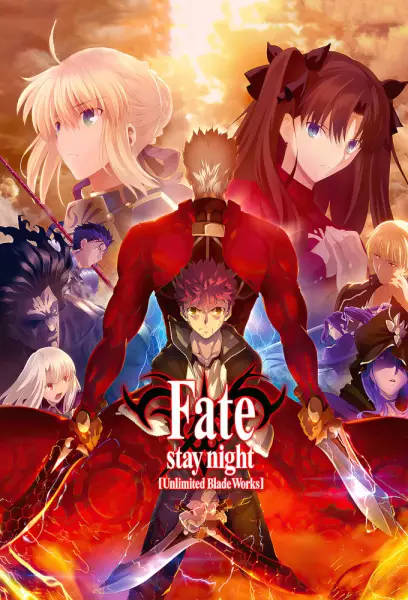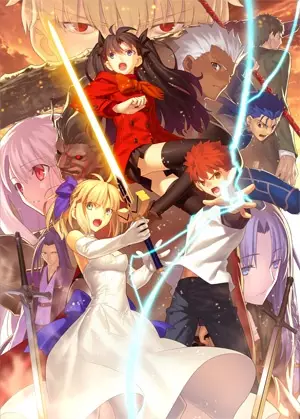

Fate/stay night [Unlimited Blade Works] Season 2
Fate/stay night [Unlimited Blade Works] 2nd シーズン
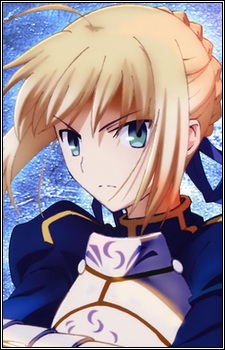
In the midst of the Fifth Holy Grail War, Caster sets her plans into motion, beginning with the capture of Shirou's Servant Saber. With the witch growing ever more powerful, Rin and Archer determine she is a threat that must be dealt with at once. But as the balance of power in the war begins to shift, the Master and Servant find themselves walking separate ways. Meanwhile, despite losing his Servant and stumbling from injuries, Shirou ignores Rin's warning to abandon the battle royale, forcing his way into the fight against Caster. Determined to show his resolve in his will to fight, Shirou's potential to become a protector of the people is put to the test. Amidst the bloodshed and chaos, the motivations of each Master and Servant are slowly revealed as they sacrifice everything in order to arise as the victor and claim the Holy Grail. [Written by MAL Rewrite]
Главный
Главный
Главный
Главный
Второстепенный
Второстепенный
Второстепенный
Второстепенный
Второстепенный
Второстепенный
Второстепенный
RakiRaki
December 17, 2015
I don't get it, guys. I don't. Why Unlimited Blade Works? Why this underwhelming, anticlimactic excuse for a spluttering car crash of a visual novel route? Did ufotable have to faithfully adapt every wheel-spinning two hour conversation in which Pollyanna protagonist Shirou is repeatedly called a dweeb for his goofy idealism? Did they have to make sure we were reminded what a complete loser Archer is every time he appears, legs spread like his balls are prickly pears, perched on some conveniently placed rubble? What is actually appealing about Archer when his only major personal distinction from fellow Fate/stay night snarkster Lancer is his adolescent moralnihilism? What is there to admire about a character who is so unimaginative that his inner world is literally a wasteland full of imitation swords? Why do people like Archer? Why did ufotable pick the route where the mid-boss is Caster and the teacher with the upside-down glasses? How did they fail so hard at making a pair of cynical murderers interesting? Why include a half-hearted tribute episode to the tragic homunculus Illya in the route where Illya and her Servant, Berserker, are a mere afterthought, as though ufotable realised that she deserved more attention than Caster ever did? Why couldn't we just have had the Berserker vs. Saber fight like in the Fate route? Why couldn't they at least have spared a thought for the narrative arc of poor neglected Saber, left to wilt after the misery she withstood in Fate/zero? Why did every free second of this show have to be filled with endless identical monologues about youthful idealism? On that note, what is even the point of adapting a route where breakout character and franchise cash-cow Saber is fully relegated to the background throughout and possesses barely any agency of her own? Why did they retain the awful premature ejaculation of an ending, in which school rapist Shinji turns into the Smooze and Shirou has the worst fight ever with the supposed King of Heroes, Gilgamesh, who can't even be bothered to change out of his chavvy streetclothes? What kind of action anime peaks with two angry men yelling repetitive dialogue at each other while swords fly everywhere? Why is Saber's only half-decent action scene a stilted sword battle with a literal fake Servant whose entire shtick adds up to a convoluted version of the air conditioner's dilemma in The Brave Little Toaster (I was designed to stick in a temple! I like being stuck in this stupid temple!)? Why was the last episode an OVA set in a twee version of London? Why is this new environment merely used to stage an oh-shucks cameo from Luvia and an extended moment of incredulous Jaden Smith-esque brain-death from Shirou as he spews all over Saber's dimly remembered non-heroics by wondering how it could be that history is real if English people aren't real? Why do people like Unlimited Blade Works? How was this better than the Studio DEEN anime besides its production values? Is it really any less slow and repetitive? What is there to like about Shirou's stupid, abortive psychodrama? Is it just Rin? Is that it? If so, how can you account for the horrible, horrible reality that this route isn't even about Rin so much as it is about Shirou literally talking to himself for hours and hours only to come to the same conclusion with which he began? Is she really worth it, guys? Is it really worth *this*? Really? I hope you're all happy, Tohsaka fans. Go cross-dress in some thigh-highs and hate yourselves, you failures. Roll on Heaven's Feel. Clarification edit: UBW does work well in the context of the VN, but holy holy it was a bad idea to adapt it straight.
Второстепенный
powerwog
July 24, 2015
A review for both S1 and S2 with spoilers Only having experienced Fate/Zero, I never encountered a Type-Moon written work before. But after watching UBW, I’m truly appalled at how terrible Type-Moon’s writing is. The basis of UBW’s plot is covered by its synopsis. In different wording, it’s a grandiose battle royale-like duel between seven masters who each get a servant to fight for them. The goal is to kill every servant to attain the Holy Grail, which can grant a master and servant any fathomable wish. This plot, even though basic on the surface, can become a masterpiece with proper execution, as seen in Fate/Zero withits large-scale fights, charismatic characters, and intriguing battles strategies. As the follow up to such an impressive series, UBW had a lot of weight on its shoulders to deliver the same grade, or possibly an even better, of quality. But unfortunately, not only did this series become a wreck within itself, but it also became one of the biggest disappoints that I’ve ever experienced. Both seasons of UBW suffer from the same pitfalls that include lacklustre characterisation, laughable battle strategies, and choppy protagonists. But the second season specifically has its own unique failures which I’ll get to throughout the review. Let’s get started: The characterisation was one of the most noticeable falls of the show. The show virtually revolves around our protagonist two-teamed quartet Rin Tohsaka and her servant Archer, and Shirou Emiya and his servant Saber, while the other characters don’t get the proper circumstances and/or screentime to become worth talking about. The show’s first problem child is the “intelligent” Rin Tohsaka, who is the strategist on the protagonist side. Rather than intelligent, the word perseverant describes her more accurately. Many people say that she’s smart, and while it’s shown that she’s book smart, she has no experience in applying it properly. Examples of these failures are shown in her “strategies” that she comes up with. She's capable of generating multiple theories that appear profitable, but in the end all of her elaborate strategies amount to repeatedly showing up to a servant’s base, provoking them until a battle breaks out, and ultimately losing in the end. On the off chance that she does manage to kill a servant, it’s with an unexpected factor or the assistance of another servant. For example, after the oh-so-many attempts of trying to kill Caster, in the midst of yet another failure, the only way Caster was killed was by Archer - after his contractual separation from Rin - who launched an attack on her off-guard master, anticipating that she come in to protect him. The remainder of her victories are due to even more outside assistance that would otherwise leave her and her team dead. Next we have Saber, one of the main servants of the show and on the protagonists’ team. Her gender bent character in Fate/Zero captured the eyes of many with her chivalric and powerful persona. But sadly, in UBW this strong personality was reduced to a slapstick tsundere and fanservice device. With erotic shots of her in BDSM-esque positions from her capture by Caster further corroding her character, it also gave the series an unintentional comical tone. And unfortunately, to finish off, we have Shirou: our dense protagonist that’s plagued with a terribly-conflicting Samaritan complex; to such a degree where it makes it appear like his character is a parody of the average shounen protag due to how flat, irritating, and stupid his character is in the show. His boring dialogues with Rin and idiotic remarks aside, the most obnoxious part about Shirou was his philosophical stance towards the end of the season. The latter end of season two held a philosophical discussion with Archer and Shirou’s battle about the pursuit of seemingly impossible ideals and its potential risks. The show took an interesting take on this by adding in an element that, in my opinion, serves as a device of self-reflection that further enhanced the potential of this discussion. Shirou faces the scorn of Archer who, as a future version of Shirou, is morally-crippled and dispirited as a result of the despair and anguish he faced due to Shirou’s far-fetched altruistic ideal of saving everyone while ignoring himself in the process. Archer, trying desperately to convince Shirou to quit pursuing this seemingly impossible ideal to avoid the future tragedy that is himself, brings up several opposing points, including the most obvious one that shows how his ideals are contradictory: “It's true that you can probably achieve your wish to save others. But there's no hope of saving yourself in doing so.” After Archer’s defeat in battle, Shirou fights Gilgamesh, who also adds onto Archer’s scolding by telling Shirou that his philosophy is contrived and “fake” as a result of trying to become like his father, Kiritsugu, who he essentially copied his ideals from him. Shirou concedes to all of the points given by Archer and Gilgamesh, but somehow manages to come to some sort of epiphany and unexplainably validates his ideals and insist that they are “right”, even in the presence of the overwhelming evidence that blatantly showcases that, without a sense of realism, his ideals will remain damaging and chaotic. The point this discussion was trying to sell was that the pursuit of one’s ideals and dreams is not in vain even with risks and failures up ahead. Where the discussion went sour was with Shirou’s final justification of his ideals, which none of it rebutted the statements and examples of Archer and Gilgamesh. His justification can literally be summarised with his new infamous quote “Just because you’re correct doesn’t mean you’re right.” With my expectations so high for this series, it pains me to write such a scathing review. I truly wished for the best and tried to ignore the faults, but they became too large in number for me to continue to be blind to. With the fights and animation as the only two saving graces, I can say that in some moments, UBW was truly entertaining. But the journey overall was a boring and painfully bleak one with this show.
myronator
July 19, 2015
This review covers the Prologue, Season One and Season Two. My ratings are 6/10, 6/10 and 5/10 respectively. There are spoilers in this review. The prologue/first few episodes of Unlimited Budget Works establishes the Fifth Holy Grail War; a battle royale between seven servants (made up of mythological figures such as Heracles) and mages where the last survivor is rewarded with being presented the Holy Grail which can grant them any wish they desire. During these episodes it is emphasized how dangerous this war is where even witnesses of the war will be murdered. Then in episode three the feeling of danger for our protagonists disappearsin an instant when Ilya decides to suddenly quit her battle with Rin and Shirou for no reason and go home. This doesn't get followed up on nor does it develop into anything. Perhaps my expectations were too high expecting fights to have an impact from the beginning, but these kinds of moments happen frequently. Some examples include; Archer's many chances to kill Shirou, Caster and Kuzuki not finishing off Shirou and Rin in episode ten and every fight where Gilgamesh is involved. With the characters not taking fights seriously, another way to create tension in these fights is to emphasize the stakes of the Holy Grail War. To an extent, this works in UBW. The mages and servants eventually get eliminated, there are stories of innocent people disappearing or dying and the end game for Gil involves attempting to kill everyone. But these aren't executed well. The mages and servants would have their backstories explained in the episode they are about to be defeated, making it predictable. The innocent people's deaths are left in the background and their effects are never seen. As for the end game, only a simplistic understanding can be gained from it due to the lack of explanation of the history, function and importance of the Holy Grail. All that's told by the show is that the Holy Grail may potentially be able to grant a wish of some kind, it can be used for evil, might not even require the war to be summoned and can be summoned by using a mage as a host. The Holy Grail itself appears as a pink blob. Most of these things get explained properly in other Nasuverse publications, however I believe that for a better viewer's experience they should have tried to address these problems in UBW. Nevertheless, they already have sequels planned so perhaps they will go into more depth then. The focus of UBW is the emergence of Shirou as a mage. As a protagonist, Shirou comes off as a generic anime male teen with a naive mindset. He is a self proclaimed "hero of justice" because apparently everyone needs saving and only he can do it... by murdering people. If this show had a darker tone he would sound like a crazier version of Batman. Sadly though, the only exploration of his naive ideas and any other themes in UBW comes during his battle with Archer, which mostly involves repeating lines ad nauseam. There is also a forced romance thrown in to attempt to show Shirou's progression. He's not terrible as a character, but he's nothing special either. The other characters in UBW lack development. Some characters will be given short backstories before dying, but no characters show any real change. The closest are Saber and Shirou deciding that they're proud of themselves. Rin simply stays as a typical tsundere for the whole show. An argument could be made that there wasn't enough time given to character development. However, there would be more than enough time if the pacing was improved. For example, the character monologues during fights (Shirou vs Archer especially) could be edited down or episodes such as Winter Days, Faraway Home could be condensed into a few minutes. While I feel the phrase "show, don't tell" is overused, I believe it is appropriate in this case. There are other issues and potential plotholes that could be nitpicked, such as Archer not having any knowledge of his earlier life, but I'd rather now look at the positives in UBW. The animation is incredibly fluid, especially during fight scenes. The incorporation of CGI feels natural and makes some scenes a real spectacle to watch. The sound effects are great and the voice acting is satisfactory. These technical aspects alone are enough to make UBW watchable. The soundtrack adds an extra level of enjoyment, especially the fan favourite OP Brave Shine by Aimer. Even with all the faults in UBW, the journey the characters go through is enjoyable enough to make this show satisfactory. Watching this won't be a special experience and other than the fight scenes, most of it will be forgettable. Nevertheless, unless you're a big fan of the Nasuverse, I wouldn't recommend going out of your way to watch it.
Stark700
June 27, 2015
The franchise of Type-Moon. Fate/Stay Night is a trademark for what the product has been with its key characters, premise, and setting. Fate Unlimited Blade Works is one of its major routes and returns for another season. A show about the Holy Grail sparkles into a pendulum of events and animated by the infamous Ufotable studio. Part 1 delivered what many fans wanted while part 2 attempts to do so yet again. With the way the first half of Unlimited Blade Works was handled, part 2/Season 2 essentially sets up major events for the story. As for those who remembers, Saber is taken by Caster, Rinleaves after telling Shirou not to get involved in the Holy Grail War anymore, while Shirou wonders what awaits him next. The process of this buildup is quite thrilling as it sets up many potential events. Along the way, there are also other characters that becomes imperative to the ongoing storyline. A good amount of focus is Archer, Rin’s former servant who apparently betrayed her. This season focuses a lot about his past, role, and purpose for what he is doing. As a show that’s indulged by ideologies, it’s interesting to see his arguments with others in particular Shirou. It defines their personalities and existence in this show not only but what they do but their reasons. From Shirou’s viewpoint, his father Kiritsugu has inspired him to become a hero of justice. This becomes a central theme of Shirou’s character as he tries to save the people he cares about. At the same time, there’s some romance development between him and Rin. As cliché it seems, it’s not entirely surprising given the amount of hints the two have been throwing around. Of course, the series’ main story still focuses on the Holy Grail War. Character building is important but at the same time, it allows the viewers to directly see their actions. While Illya isn’t the most powerful servant in the show, she does make quite an impression against Shinji’s servant, Gilgamesh. What comes around goes around and events that unfolds shows her devotion to Berserker. She even shows her genuine concern towards her maids. The show also does a decent job with characterizing her past including the Einzbern family. Do be warned that there will be some Fate/Zero spoilers involved. However, by this point, you should of watched Fate/Zero anyways. Later on, there are also some big reveals regarding Shirou and what his destiny may await him. It’s what really makes the show thrilling as it anticipate what viewers awaits next. What is holding the show back though is some of the omitted content from the visual novel. From what I understand, it added filler material (or so some fans call it anime original) and extended dialogue that makes some scenes unnecessary longer. A strong point of this series is also the character relationships. At the center of it is Shirou who builds connections with others. In season 1, he build a prominent relationship of trust and respect with Saber. In the second part, he plays an important role alongside Rin. The first half of the series neglects Saber’s prominence as the majority of the time, she is trapped by magic. And without a servant, Shirou is running around without a servant. He can only put trust in people such as Rin and at one point even admits that he has feelings for her. In essence, it shows how Shirou’s role can have profound influence on others through his ideology. In the meantime, other characters such as Illya/Berserker, Shinji/Gilgamesh, Caster/Kazuki all gets their screen time of relationship connections. There’s obviously some contrast between these especially with their climatic moments. But for what’s worth, Fate Unlimited Blade Works can really make some impact when it shows the way these relationships are executed. As the protagonist, Shirou’s ideal and growth is a pivotal part of the show. This becomes a bit controversial at some stages as some people may not agree with him. Furthermore, these put into conflicts with others such as Archer and Gilgamesh. His idealism is similar to his former servant, Saber in many ways as well. Unfortunately, the show doesn’t put much emphasis in Saber as much as part 1. It still gives her some time for development and evolves both her and Shirou, but just not them on a personal level or at least as much as Shirou and Rin. Similarly, Shirou’s battle against Archer seems more like the apex of the show to me rather than the final fights. Here, we can see that Shirou is fighting for an ideal rather than just winning the grail/fight. On the other hand, Shirou’s battle against Gilgamesh is stereotypical. Gilgamesh is a character that lacks strong characterization compared to the others although the show does flesh out his personality in full view. Egoistic, prideful, and arrogant are just a few words to describe him. But unlike some of the other servants, his relationships aren’t so well developed. Just look at Shinji for an example and see where how he ended up. As the latter half of this season unfolds, we’ll learn much more about each characters’ reasoning for their choices. And Fate being a show that emphasizes a lot on this with lectures and metaphors, it’s no surprise by this point. What I do have some issues with is the comedy and romance development. The comedy part seems like it has some improper timings. While it’s not a core part of the season, I feel like they don’t belong in this franchise at all except for some of the slice of life scenarios; mostly seen in season 1. The romance is also lacking. One of the episodes later on presents this in with a bit of symbolism. (yes I know what you are thinking, the infamous “dolphins”). However, what the fans got instead is a big question mark. On the contrary, the action bits of the show is a blockbuster hit. The climatic battles in the Unlimited Blade Works is a big part that was hyped from the buildup. Both times, Shirou shows his growth and what he has learned. Not to mention, he is a man that runs about his perspective ideologies so by some point, you’ll even remember his lines. Ufotable does it again. When it comes to artwork and visuals, the series shows why it’s a powerhouse. Action is fairly solid especially in some of the more exciting fights. The Unlimited Blade Works is also highly decorative with the countless swords and symbolism. The backgrounds also has a mythic feeling to it when it matches its fantasy elements. My favorite parts would be the flower garden in one of the earlier episodes as well as the Unlimited Blade Works world. They really gave the word elegant a worthy meaning. Furthermore, we get a bit of violence to go along with all the action. Shinji, Illya, Caster are among some of these character that becomes a prime sample of this. On the other hand, the show isn’t immune to censorship. Some of the more graphic content is censored by magical context while we get a rather obscure symbolism between Shirou/Rin’s bonding. Hey, it’s not like this was surprising though. Did you actually expect them to do it on screen? Soundtrack is a stronger point of the series. The OP and ED theme song has an eerie tune that matches with the coordination of its presentation. Shirou’s battle theme is also emphasized to show how much he has grown throughout the season. Finally, voice mannerisms is uniquely dynamic for the most prominent characters in this season. In particular, I find Gilgamesh’s narcissistic personality to be so matching with his voice. We can also feel the emotions that Saber expresses by her voice tone and Archer’s revelation. Unfortunately, I can’t say the overall soundtrack gets any better than that. In retrospect, it’s a strong technical aspect of the season but doesn’t exceed the expectations I got from part 1 either. So how does Fate ultimately deliver? Well, for a show about magic, grail wars, and drama, it’s certainly a chilling thriller that any Type-Moon fan should see. Director Takahiro Miura makes this story stand uniquely with its themes and style. And although some parts of the visual novel is omitted and replaced, it still ultimately lives up to its mature magic. That’s because the real magic comes from the story and characters. For a talky show like this, it’s often important to capture a viewers’ interest before they are bored to death. Thankfully, on most parts, the show knows its strategies. It’s also no surprise that the series continues to maintain its visual wonder. Suspenseful, thrilling, and crafted with emotional storytelling, the second season of Fate Unlimited Blade Works is a magical gift from Ufotable.
sayan002
June 20, 2015
When news about this series was launched, I somewhat had mixed feelings; the original Fate/Stay Night was so horrible, I pity myself for watching it, while Fate/Zero was absolutely fantastic, plus Ufotable, responsible for Fate/Zero, were producing it. That brings me to Fate/Stay Night UBW. In short, I'd say that this series was absolutely stunning. I'm so glad it didn't turn out like the 2006 one. Story- 8 Granted, the story was not as compelling as Fate/Zero. However, I was deeply surprised by the dark elements that were introduced. The 2006 one felt like a sad piece of shit, where viewers are supposed to feel sorry for Shiro throughout,for being the absolute dimwit he is. Rather than a hopeless romance that Stay Night (2006) was, UBW is more focused on progress and action sequences. UBW might not have an extremely good story line, but it is fairly entertaining, without the presence of any loopholes. Art- 10 One word. Beautiful. Ufotable probably produces the most beautiful and amazingly stunning visuals I have ever seen to date. If Fate/Zero amazed me, this has managed to surpass even that in terms of animation. Sound- 10 Both opening soundtracks, especially Brave Shine, have found themselves cemented on my playlist. Sound effects, outstanding. Character- 7 If this anime has even a small flaw, this might be it. Obviously, this was a HUGE step up from the 2006 version, but it did lack character depth. Characters like Kirei, Ilya and Saber could have added more to the show, and I would have preferred slightly more prominent roles (but then again, it might not have been that way in the visual novel). The apparent lack of a distinguished antagonist didn't help the cause. Kirei was the perfect antagonist in Fate/Zero, so I was expecting quite a lot from him in this as well (as this was supposed to be a direct sequel). Nevertheless, the annoying character of Tohsaka Rin has had a huge improvement, and she is pretty likable now. The most significant change I've seen in terms of character, is Shiro's. The hopelessly pathetic sorry piece of shit in Fate/Stay Night (2006) has turned out to be full badass in UBW; I hated him in the 2006 one, and was quite disappointed that he wasn't killed off by the end. However, his UBW character is the definition of a shounen anime/manga protagonist; it's as if his UBW character was finally provided with some balls, which the original clearly lacked. Enjoyment- 9 It's one of the few anime I've really enjoyed in 2014-15. Overall- 9 Give it a watch if you're in for a ride. (P.S. Some of the subs don't make even the slightest of senses, so bear with it, or wait for it to be updated with better translations)
Ранг
#291
Популярность
#220
Участники
915,985
В избранном
9,635
Эпизоды
13