

ヤング ブラック・ジャック
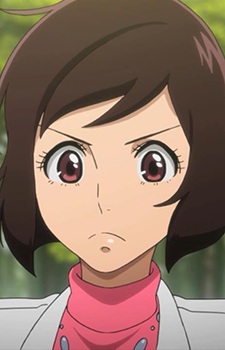
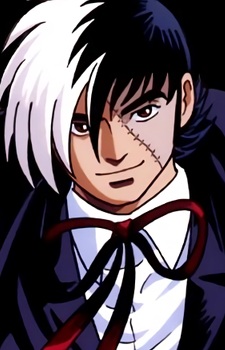
In the 1960s, a gifted young medical student tries to make a name for himself. Kuroo Hazama is a reserved young man with unusual black-and-white hair, a body covered with scars, and a dark past. Despite only being a medical student, his surgical brilliance starts to attract attention after he completes a seemingly impossible operation. Together with the spirited and honest intern Maiko Okamoto and Yabu, a close friend with a troubled life, Hazama devotes himself to the world of medicine. However, his path to becoming a respectable surgeon is a difficult one as student riots, war, and corruption are consuming Japan. Hazama quickly finds himself caught up in a series of nefarious circumstances that challenge his integrity as a person and his path towards becoming a surgeon. Young Black Jack chronicles the story of a man capable of performing unthinkable feats of medicine, and the journey that leads him to become the legend known as Black Jack. [Written by MAL Rewrite]
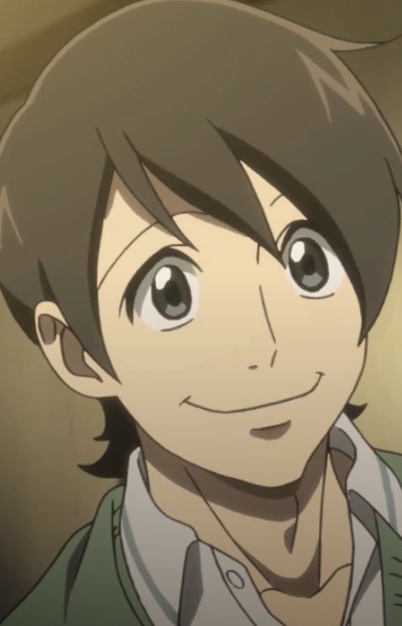
Главный
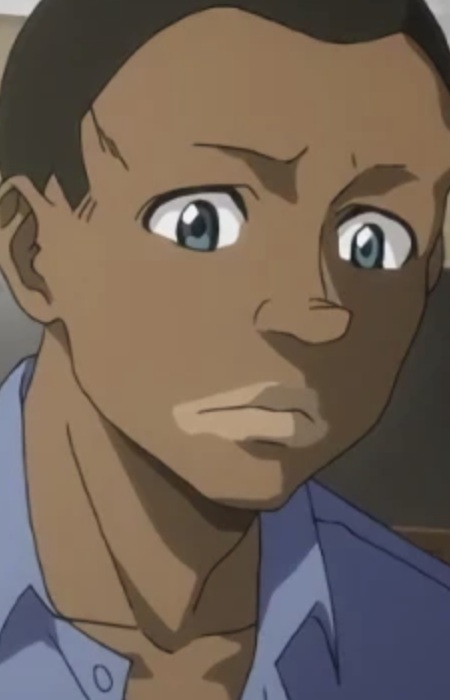
Главный
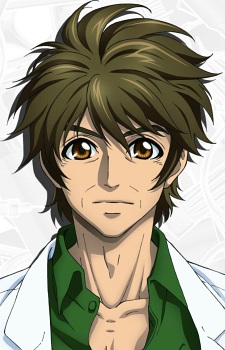
Главный
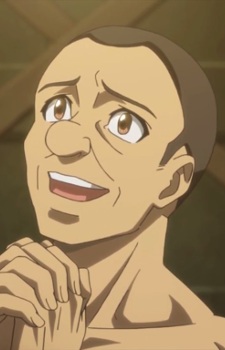
Второстепенный
Второстепенный
Второстепенный
Второстепенный
Второстепенный
Второстепенный
Второстепенный
Второстепенный
Vehemor
December 19, 2015
It's hard to make a prequel about one of the most iconic characters in anime and don't ruin the story, but luckily, that didn't happen with YBJ. An adult medical drama is a breath of frsh air amidst so many highschool harems, ecchi or overpowered characters. Story: 10/10 Being a sequel there are some limitations, you must tie this to the original, but as an origin story YBJ is really great. Set in the Vietnam war, in a convulsed Japan, Hazama goes through a lot in order to become the dark character we know. Maybe a 24 episode anime would have been better, but in 12 episodes theymanage to show Hazama's transformation. Art: 9/10 It's easier to draw a magical utopia than a realistic Vietnam era anime, trying to be accurate with technology and clothing, but that doesn't seem like a problem in YBJ. The series itself has a dark tone, neccesary for the character, but it's easy to watch. Sound: 8/10 For me, the best opening this season. The BGM helps, it's nicely chosen and adds a lot to the different settings and places the anime takes. Character: 10/10 Again, making a prequel about an iconic character with a very disctintive personality is hard. You are tied. You can't discover gunpowder again. There is some character development, that's the core of everything, and the darkening of Hazama is clear. Enjoyment: 9/10 Not a standard anime, it's a medical drama, it's a prequel, it's something you know how it's going to end and despite all of the above, you actually want to watch Hazam's growing. Maybe a bit of a light of hope, maybe because you love the original character, but it's easy tow atch the anime. Overall: 9/10 It was a great anime. I'd reccomend it for anyone working on the health area, from nurses to morticians. It's finally an anime you cna connect with, and maybe use it to confront your own ideals about medical ethics.
Nervin
December 18, 2015
Anime is certainly a medium that can portray any type of theme, be it cooking, swimming or even the profession of doctor, which is the case for Young Black Jack. It is an anime that is adapted from one of Tezuka Osamu's numerous works, including genres such as drama, thriller and psychological ones, which was in some cases well done. Although the concept may seem uninteresting for some viewers, it is surprisingly alluring, yet it is apparent that it has some major flaws, being the inconsistent and episodic story throughout the series the major issue, as these seem to have no real connection with eachother. ~Story~ It is the year of 1968, in the middle of the Vietnam war and student protests. The story of Young Black Jack is focused around the young Hazama, portraying his life before working as a clandestine underground doctor in which he will be known as Black Jack. He is a unparalleled genius with a strong sense of being a doctor, meaning he will save everyone even if it goes against the law. This will naturally bring numerous problems as a doctor, yet although these issues are shown to the viewer, the consequences are rather lackluster, albeit hinting at these. Personally I would have liked to see these more pronounced, hence being a bit of a drawback in my opinion. There are several interesting aspects the anime portrays such as politics and the display of activism. Several times throughout its duration these are portrayed through student demonstrations or worker strikes, whilst the political issues are shown through the darker side of politics or individuals driven by greed, as opposed to the main protagonists. Another thing to point out is the fact that surgeries and the likes performed were explained aforehand, yet its execution was lackluster and not shown to the viewer. This was a drawback, as it would have been pleasing to see the detail in the surgery, as the details surrounding it were well relaid as well as realistic (albeit delving a bit too much in the theoretical side) to the viewer, knowing that the author himself was once a doctor himself. The main issues with the series lay with the pacing of the series and its inconsistency throughout the series in addition to its episodic nature with no real connection with each other. The first few episodes are interesting to see, as it introduces the main characters and the dark side of the doctor world, meaning the politics and greed behind the scenes. However, the latter episodes were all disjointed, introducing a few characters with a problem, and naturally getting solved in the same episode. Consequently viewers are left with quite tensionless episodes, as well as being clueless as why to the characters were in sudden places, leaving viewers confused whether they missed a portion of the episode. Nonetheless, it must be said that the final episodes where much more intriguing, as it had a good story progression with the introduction of an interesting characters, as well as blending it fantastically with suspense and intrigue. ~Characters~ The cast of characters in Young Black Jack is small, focusing mainly on the main protagonists and their hardships throughout the different episodes. There are several character introduced in episodes, yet the majority lose are of no importance in the latter ones. From the ones that were kept, these underwent some character development as well some fleshing out, yet never really outstanding. There is the activist, Hazama's doctor friend, the supporting girl you name it. What must be mentioned that the behaviour of these were surprisingly human, showcasing greed, egoism, cowardice, insanity and the likes. Hazama himself is certainly the most interesting one, audiences observing his hardships and dilemmas faced when operating on people, in addition to its genius skills. What was sadly a bit lacking was a bit fleshing out of this character, as the very short flashbacks to his past left the viewers intrigued in it. ~Animation and sound~ The animation quality of Young Black Jack is well done, yet not outstanding; several inconsistencies in the character's could be found throughout the series, such as small changes in character's facial structure, or distant detail of these. The characters design is varied and very distinguishable from each other, yet there were some that were too ridiculous for the series, meaning too cartoonish. Although certainly a welcoming change, it is not befitting of the series: it makes it difficult to take the anime seriously, which is a shame, as it manages to create a serious and dark atmosphere. Other issue I might want to point out is the fact that the surgeries done are merely shown with some imaginary strings moving in air without displaying the actual surgery itself. While it certainly adds to the awe of the protagonists, it is rather lackluster when trying have some insight in its works. The soundtrack used in the anime matches at times with different scenarios, yet for others it felt either lacking or not befitting of the atmosphere; these were ultimately forgettable. The voice actors matched well with the different personalities, displaying correctly different emotions when the situation required it. ~Enjoyment~ Young Black Jack was overall an enjoyable anime, yet its heights and lows were definitely the major drawback of the series, in addition to the connectionless episodes throughout the majority of the series. The ideas implemented were certainly of interest, with some interesting characters and certainly some interesting display of the world of the doctors. However, when finally finishing the series I was wondering why it didn't take the way the final episodes were done: it would have been so much more interesting as a series. So do I recommend this anime? I do, yet only to a certain an extent, as it was throughout the majority of the story too episodic for my likes. Thank you for reading.
Stark700
December 17, 2015
A medical drama like Young Black Jack isn’t something we see often these days. Having a very small of series related to the medical field, the show is essentially a rare breed. As such, Young Black Jack is something that you won’t find these days easily. Branded as a prequel, it isn’t entirely necessary to watch the sequel. In fact, I came into this series as a newbie with little experience about the character or its story. What I got in the end though is more than what was expected. Based on the manga of the same name, the series takes place in 1968 where thestory also focuses on Hazama, a medical student with some unique and fascinating skills. It’s interesting to note that the show also focuses a bit on the war and political struggles as the time setting takes place roughly around the Vietnam War. If you’re a fan of historical fiction, then the show might also be a bit of extra treat for you. Hazama is the central character. His medical and surgical skills are invaluable as we see his capability of saving lives. The tasks he undertakes defines his skills especially during crude operations. It’s also intriguing to see a fusion of metaphoric imagery through imaginative and realism during these medical procedures. What the show succeeds about Hazama’s character is his brilliant mind. Every episode, he gets into some complicated affair where his medical skills plays some important role. The show also establishes Hazama’s personality as a mysterious individual. His actions aren’t usually heroic either as he doesn’t use his skills out of the kindness of his heart. In fact, he charges a fee (and a heavy one) for his skills. So in a way, Hazama is more of a mercenary hired to sell his abilities. Despite this, there are times when he risks his life to save others; most noticeably during his time at the heart of the Vietnam War. Young Black Jack’s character cast consists of a wide variety from diverse fields of expertise. While most of the main supporting characters have some medical expertise, some others play important roles that determines the fate of life and death. Two easily recognizable characters are Maiko and Yabu as they get involved with Hazama’s medical adventures that takes them to places of unimaginable danger. Such an example is Vietnam, where the war conflict becomes heated in the rough terrains of the jungle. We see what Hazama and his crew has to endure as they get involved with local militia forces. The reality of war can easily be recognizable with the death of soldiers and crude injuries. Luckily, there’s Hazama and this is where his abilities can really make a different between life and death. He isn’t the only one as we later meet another skilled medical expert who directly competes against him. Later on, we’ll also witness the darker side of the medical world after a freak accident leads to a chain of conflicting events. But on most parts, the story explores Hazama’s experience as a medical student. It’s a medical drama about this mysterious guy who does mysterious deeds. One really interesting concept that is explored in the show is the political and activist affairs. We got workers going on strikes or demanding a better wage for their work. There’s also a strong anti-war flair among the drama especially in Japan. What this brings into the series is a look at the historical drama that is surprisingly realistic. Activities such as student protests and worker strikes portrayed in anime brings realism into the story with their roles. Furthermore, the show approaches itself with antagonists that are mostly driven by corruption or self-greed. Characters with wealth and others who think they can get away with anything because of their social status are branded as an anti-thesis of the main characters. On the other hand, there’s also the soldiers and guerrilla units who plays more of the stereotypical bad guys. If we look at the Vietnam War, there’s also the Viet Cong who physically and mentally torture Hazama’s group. It’s a pretty damn cruel world out there. The overall adaptation of the artwork is suitable for a series taking place in the 1960s. It capture a modernized setting where technology is less sufficient compared to our today’s world but also functional, or at least enough for a medical student like Hazama to perform his operations. I also like how the show adapts supernatural-like imagery with Hazama’s medical skills. Although it seems gimmicky at first, it’s also quite artistic and makes us realize what is he is capable of. Speaking of which, Hazama’s character design is very noticeable with his well-toned body and facial features. Out of any character in the show, he is the most recognizable with his bishounen design and body that seems to have underwent through experimentation. Others are less impressive although there are a few that stands out from time to time. And finally, be aware of man service that is very noticeable, perhaps even far-fetched. The fan service comes from Hazama himself and you’ll have to see it to believe it. A lesser noticeable feature about the show is the soundtrack. For starters, it feels very much the same almost each episode that occasionally shifts between melancholic and thrilling. What I do find slightly impressive is the eerie OST they use for scenarios involving medical operations. It can send a thrill down your spine as viewers will have to anticipate if an operation will be a success or failure. Otherwise, the soundtrack is mostly mediocre besides the manly choreography of the OP song. The character voices aren’t so impressive either. By the end of the day, it’s not hard to see that Young Black Jack isn’t a show for everyone. It’s certainly a rare breed to see such a medical drama as it’s refreshing and explores themes that we don’t see too often in anime these days. It also invites attention to anyone who wants to see how the medical field is like. The idea of transplanting organs and operating on half-dead victims is an engrossing concept that can be fascinating. And thankfully, Young Black Jack gives a bit of such concept each episode. There’s not much comedy overall as in the end, the show is about so much more than just being a medical student. It’s about Hazama’s life as young Black Jack, a name that would later become infamous in the medical world.
THEAnimeHERO
December 19, 2015
This review is written by a Black Jack fan. Young Black Jack is the 4th anime series starring Black Jack, however its quality does differ significantly from the other related anime. Despite the obvious differences in tone and writing the series might serve as a gateway to the much better Black Jack stories and related material. This anime serves as a “possible” prequel story detailing the events of Black Jack’s origin and career as an underground doctor. The anime is set in Black Jack’s younger days where he went by his real name, Hazama Kuro, and is still in medical school. Upon doing some research, theYoung Black Jack anime is based on a manga which doesn’t follow a structure as seen in Osamu Tezuka’s original Black Jack manga. Young Black Jack in its initial visuals seems to cater to a sexualized or a fan service depiction of Black Jack especially when the opening displays him shirtless and in chains. Another change are the character designs as they are not “cartoony” as that’s how Tezuka would typically draw but instead the art style carries a more feminine/shojo flair mostly through their eyes and lips. The characters are almost drawn with realistic proportions with the exception of Mr. Mustachio & few others who resemble Tezuka’s art. Regardless of the imagery, the anime isn’t about sexualized eye candy (as I feared) but focuses mostly on medical drama as it should. This is where it gets compared to the other Black Jack series as the content in Young Black Jack varies from dull to great. I personally found most episodes to be lacking the same impact as seen in Black Jack OVA or Black Jack TV and much of the problem is Black Jack himself. Hazama Kuro isn’t Black Jack yet which is why his character should be portrayed differently. While it is natural for a character to behave differently I could not see an eventual Black Jack grow from this interpretation of Hazama Kuro. Hazama’s reactions to people suffering aren’t appropriate in some episodes specifically the Vietnam story (episodes 4-6). I noticed that Hazama’s emotions really vary per episode as in some he seems almost emotionless while in others episodes he’s clearly enraged and devastated. Most of the time he behaves cool and focused but I don’t think those professional traits should be present yet. In some scenes Hazama is presented as a tortured individual by being surrounded by thorns giving a really obvious messiah symbolism which comes off as more forced than sacred. While “Black Jack The Movie” does nickname Black Jack as the surgeon with the hands of god, Hazama isn’t at a level where he should be described as the next savior as he’s still inexperienced. For an origin story it would make more sense if Hazama made mistakes and learned from them, thus gaining knowledge as he matures into Black Jack. Episode 2&3 are perfect examples of Hazama being doubtful of his decisions which are suitable for this type of prequel anime. The real fruit of this rendition of Young Black Jack is the inclusion of two characters from other Tezuka series being Hyakkimaru from “Dororo” & Sapphire from “Princess Knight”. These characters possess different names in this continuity but they’re basically the same character especially with Hyakkimaru. Episodes 9-11 focus heavily on Hyakkimaru to the point where it felt like a modern reboot of the yokai manga he’s based on. In short, these episodes are easily some of the best in both writing and gruesome visuals as it plays a heavy toll in shaping Hazama’s character into Black Jack. Furthermore, the final episode guest starring Sapphire also affects Hazama’s mentality leaving for a very powerful ending to this Black Jack prequel. In summary, I think episodes 4-8 are very lackluster but that’s only because I can’t help but think of better Black Jack stories that covered similar topics and executed with more shocking drama. So I’ll end this review with some recommendations related to the Black Jack series which are the bare essentials. Young Black Jack isn’t a terrible anime by any means but it is a weaker installment in the whole Black jack franchise. The tone can be dark and emotional at times but it only shows that there are some characters whom aren’t well suited to be marketed in made-up prequels as it limits the true appeal of their peak in adulthood. Recommendations: Dororo & Hyakkimaru 1969 (26 eps) This black & white anime serves as a better introduction to the Hyakkimaru character. You could also read the manga which is 3 volumes. Black Jack OVA 1993 (12 eps) Black Jack’s first anime debut; taken in a seinen approach. English dub is recommended. Black Jack TV 2004 (76 eps) Episodes are based on the original manga. Black Jack 21 2006 (17 eps) Episodes are heavily plot related detailing Black Jack’s family; very similar to Naoki Urasawa’s Monster. Black Jack Two Doctors of Darkness 2005 (Movie) A movie centered on Black Jack & Dr. Kiriko The Black Jack manga is also recommended. Super Doctor K Manga Has nothing to do with Black Jack but carries a similar type of story structure just with more masculinity.
sorata861
January 21, 2017
[This review contains minor spoilers.] I am glad that I watched this. I probably wouldn't recommend this to others. I have watched this once, subtitled. I have only watched the anime. I have only watched this season. I won't watch this again. ---- Positives ---- The series starts off well. The first few episodes are fast-paced and interesting with a lot of information being thrown at the viewer. I was propelled through watching the series entirely off of the energy from the first few episodes, even though the later episodes dragged.Hazama has a way of pleasantly resolving issues. Especially in the earlier episodes, Hazama works miracles and find clever ways of dealing with surgical problems. With his perfect success rate, it's entertaining to see how he deals with the issues he faces - there's still tension even though you know things are going to work out in the end. Hazama is a male protagonist with backbone. He boldly takes action even when not in the operating room. He'll speak his mind to other characters even when it's something they don't want to hear. He almost has too much backbone in some cases, like when he shoves Okamoto out of the way because she's not performing first aid on a patient quickly enough. ---- Negatives ---- Hazama almost seems proud that he doesn't have a license. Throughout the series, the fact that Hazama is still just an unlicensed student comes up multiple times. At first, I saw it neutrally - "okay, he doesn't have a license, he's working on acquiring one, and he's just doing surgeries under special circumstances". However, after this became a refrain of the series, I stopped understanding why we find out so little about his progress to obtain his license, and what the requirements even are. Eventually, it seemed like the author was using the "genius without credentials" subject, painting the romanticized picture of someone who is so smart that they, for some reason, shun standard procedures. This plot aspect only works in certain cases - and it doesn't work too well here. Opportunity for cancel: Probably, partially. I haven't seen the main series, Black Jack, so this aspect of the story was probably a necessity given that this is a prequel. However, the series would have done better to spend just a few minutes explaining what he has to do to obtain his license and when he can expect to obtain it. The surgeries are entertaining, but overly fancy. When the surgeons play around with their scalpels and other tools, it makes for entertaining anime scenes, but to some point, I sure wouldn't want to be on the operating table with these circus acts going on. Opportunity for cancel: Yeah, sure. Without any of the fancy movements, the surgeries would probably be boring to watch. Later episodes drag. While the first few episodes were really interesting and fact-paced, later episodes took longer to get to the point, in comparison. There was also a diminished focus on surgeries and more of a focus on the politics of the medical profession and on war and protests. Opportunity for cancel: Probably. I haven't seen the main series, Black Jack, so the last few episodes of Young Black Jack probably provide a smooth transition to the main series, where I would expect similar themes regarding the darkness of the medical field that exists in-series.
Ранг
#3501
Популярность
#2552
Участники
88,466
В избранном
162
Эпизоды
12