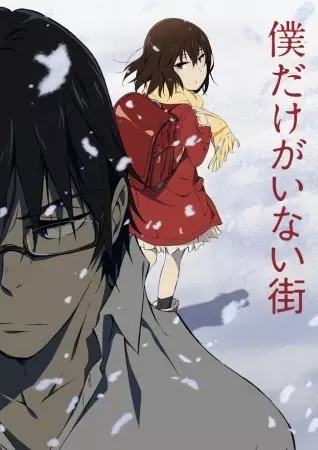

Erased
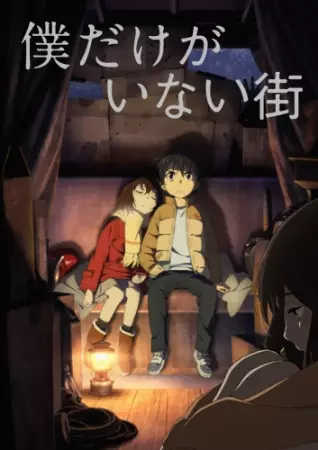
僕だけがいない街
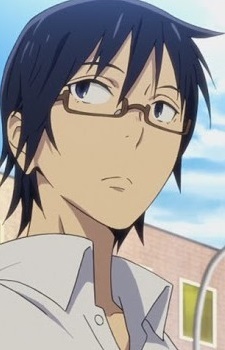
When tragedy is about to strike, Satoru Fujinuma finds himself sent back several minutes before the accident occurs. The detached, 29-year-old manga artist has taken advantage of this powerful yet mysterious phenomenon, which he calls "Revival," to save many lives. However, when he is wrongfully accused of murdering someone close to him, Satoru is sent back to the past once again, but this time to 1988, 18 years in the past. Soon, he realizes that the murder may be connected to the abduction and killing of one of his classmates, the solitary and mysterious Kayo Hinazuki, that took place when he was a child. This is his chance to make things right. Boku dake ga Inai Machi follows Satoru in his mission to uncover what truly transpired 18 years ago and prevent the death of his classmate while protecting those he cares about in the present. [Written by MAL Rewrite]
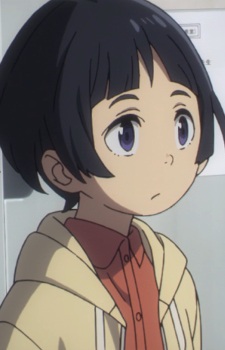
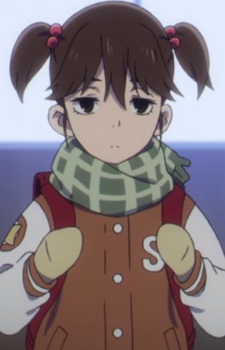
Главный
Главный
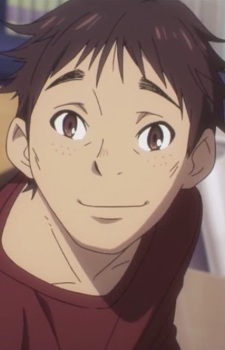
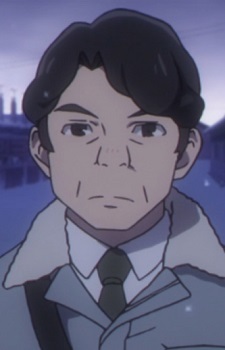
Второстепенный
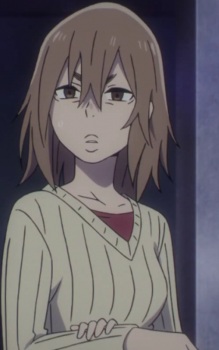
Второстепенный
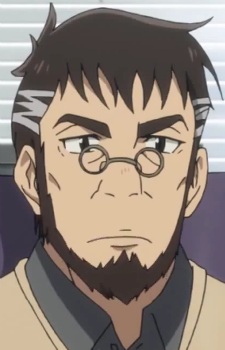
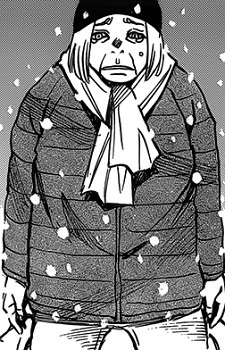
Второстепенный
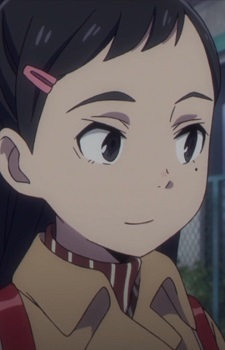
Второстепенный
Второстепенный
Второстепенный
Второстепенный
Второстепенный
Nervin
March 24, 2016
Losing a beloved person would certainly leave any person stricken with grief and confusion: self-condemnation and thoughts of preventing such death are things that would cross anyones mind. Luckily in the case Boku Dake Inai Machi, or Erased in its english title, the protagonist Satoru Fujinuma finds himself able to travel back in time to prevent such tragedy from happening; furthermore, he is set back at the time where a fellow classmate died. This is not everything: the mystery surrounding the death of the girl also seems to be tied to that of his very own family. Erased is a psychological mystery anime that portrayshuman drama, yet sadly was very disappointing, being the characters and numerous plot holes the main culprits. However, it must be mentioned that it has a great direction in animation and a good buildup in the first few episodes, which arguably was enthralling, pulling viewers into the show. ~Story~ The main problem in Erased lies in the little problems that become apparent as the show progresses: these ultimately are magnified by many others, which will be depicted. The concept of preventing occurrences through time travelling has been explored in numerous other works, yet a problem with the anime is the fact that these are completely random, allowing the author to make any necessary changes in direction when necessary. This is not bad on its own, yet instead of using it as means to develop the characters in the story, it utilizes it purely to change the direction in the narrative, which was not done in a subtle manner. Regardless of said issue, it managed to create some tension in the story as viewers never really could correctly anticipate the course of the narrative. As mentioned earlier, the protagonist is able to travel back in time to his 11-year-old self to prevent a certain death from happening, in a time in which one of his classmates died. However, it becomes soon apparent that the protagonist does not explore said option at all, and instead of going to the root of the problem, investigating the possible murder, he decides to protect Hinazuki, his classmate. Another complication is also associated with the mystery surrounding the murderer: it is very clear who it is, which is not a great issue on its own, but the anime does not offer any alternative that may leave viewers in doubt. In essence, this anime fails at being a good "mystery". The anime also presents human drama, yet was rather poorly portrayed because of the characters actions and all the events tied to those. These were often of very simple nature, such as parents beating their own child, deaths or betrayal just to name some. The main problem with these are that they're cheap, without ever sufficiently expanding on it in a satisfying manner. It must be said that it uses this to its advantage to create tension, but it is just that, tension and shock factor without any strong meaning behind it. In addition, the anime sets up a lot of things, time-travelling, possible consequences of his own actions, yet just never explores them in-depth. The problems are further magnified by the pacing of the work, which is rather lackluster as well. The introductionary episodes are satisfying, yet as the show progresses, it quickly becomes apparent that important segments that contribute to the overall plot are either too rushed or information is omitted, whereas the more "mundane" moments are too much focused upon. In fact, the majority of the show is centered around Hinazuki and her problems - but to this later. This actually brings into play the positive aspect of the anime, the interludes between the different occurrences, which are generally well executed portraying insight into the characters and their emotional state: however, this doesn't affect the important points of the story. There are just so many improbable events in the story that it just looses any credibility it has, going from nonsensical behaviour of the characters, or just the sheer amount of centering on the violence exerted by a second party - victimizing for the sake of it is not good writing. ~Characters~ The major issue that brought the whole series down were its cast of characters: they didn't act according to their age, their motives/goals were either very lackluster or were just a mess, and ultimately the abrupt changes in behaviour to accommodate the direction in story. There is the 29-year-old Satoru, a typical otaku protagonist being mostly indifferent to society, and has the power to prevent deaths by sneakpeaking into the future. The main problem with this character is his incomprehensible and irrational behaviour he displays throughout the series, such as fleeing from a crime scene he didn't commit or even attempt on murder. In addition, his main goal of seeking the killer just shifts from finding the murderer to protecting his classmate - which in turn brings up the pedophilic tendencies the protagonist displays towards the minor. The anime develops a light romance, which includes Satoru constantly thinking of either being together with said person, or even imagining things when in the bathroom. This came out of nowhere, and just felt very off-putting for obvious reasons. Character development is present, yet is lackluster and limited by the actions of the character himself; rather than resolving the issues on his own, it gets resolved by a second party, which is understandable due to his physical appearance, yet could have been expanded on. Then there is Hinazuki, a victim of child abuse, which throughout almost the whole series is treated as a mere plot device, rather than human being - it could be compared to seeing a soulless robot. Luckily enough, she gets fleshed out in which through subtle scenes her human side is displayed. Which is a nice change to the constant unnecessary abuse scenes. Other character of interest is the super intelligent psychoanalyst Kenya, who possesses an intellect far superior to that of Satoru despite being only 11 years old. He aids the main character in many instances, yet his motives behind why he supports the protagonist are rather lacking as well, as he apparently was smart enough to solve various issues. Finally, the last character of interest is the murderer: although he is portrayed to be a mastermind behind the scenes, avoiding detection over the span of several decades, he makes tremendous mistakes when the main character is concerned. He ultimately degrades to a simple one-dimensional villain with no convincing motive at all: furthermore, this also raises the question why said person took so many poor decisions and why he just didn't switch his killing target(s) when things became too heated and unfavourable. The various interactions between the cast are handled poorly in most cases, be it the one dimensional evil parent or perverted manager, or the supporting cast whose poor choices leads viewers questioning their mental age; or just the fact that most act as passive observers. Because of the stale personalities of the cast and their changes in behaviour, the interactions between them feel unnatural: however, this mainly affects the main plot points. For the slice of life moments, these were often well handled by the studio - those were often the most enjoyable parts of the anime, which is a huge disappointment, as it is not the main purpose of the show. ~Animation and sound~ One thing that can be given credit to the studio is its direction and use of animation: this was well done, displaying the various themes the anime had to offer such as loneliness, isolation, happiness, you name it. Through the art it is able to portray the different emotional states as well as physical conditions of the characters; despite executing this well, it is rendered useless when the narrative constantly shows constant abuse, making these little detail utterly pointless, which is a waste of resources. An example would be the focussing upon the bruises of Hinazuki. As for the art style itself, I personally didn't like it and found it off in some situations, be it in the character design or the different facial expressions. The anime also tried to mitigate the problem regarding the mystery behind the killer by applying red eyes to suspects, yet this is a cheap alternative to creating tension, and when everyone is can have those eyes, it loses its purpose. Concerning the soundtrack of Erased, it often uses the different compositions to its advantage to correctly portray the various atmospheres of the show, intertwining with the dialogue: piano, violins, xylophones, gloomy tones, you name it. There is fact a huge preference to classical instruments, which was a good choice. The opening and endings were equally well crafted, presenting the themes the anime had to offer with some pop tunes to it. As for the voice actors, these generally performed their tasks well, complying with the different personalities of the cast. This wasn't entirely the case with the protagonists, where no significant difference could be appreciated from his various emotional states. ~Enjoyment~ Erased had some potential, yet failed in executing the basic elements of the show, which was due to the little issues that ultimately snowballed into bigger ones - which is a shame, as its direction and usage of animation was befitting and well executed. I quite honestly did not enjoy the series at all, despite being intrigued by the first batch of episodes: the characters, lack of expansion upon key elements as the villain or time travelling gimmick are just a few of the many issues that made it a bad anime. It fails in providing a good mystery with cheap cliffhangers and shock factor to accomplish tension. It praises itself on being a human drama, but it equally lacks in said theme. Now I will admit I never have been a fan of drama, which made it more difficult to enjoy that genre. I personally do not recommend this anime, unless you aren't bothered by the above mentioned problems - which in turn, can make for an intriguing ride. Boku Dake Inai Machi is ultimately a show that feeds itself on cheap emotions and thrills. Thank you for reading.
Rkpandey
March 24, 2016
Note: Tl;dr at the end for the lazy ones. *MAY CONTAIN SPOILERS* Boku dake ga Inai Machi, or Erased in English, is clearly the most popular Winter Season Anime of 2016. With it's sky rocketing popularity and rank on myanimelist in such a small amount of time, Erased has successfully caught the attention of the crowd and everyone has probably watched it or thought of watching it soon. So here I'm writing a honest and positive review of Erased. Story: 8/10 Erased narrates the story of Satoru Fujinuma, who is a 29 years old and works as a pizza delivery boy. He posses a strange ability called 'Revival'. Thisability, 'Revival' sends him 2 to 5 minutes back in time, without his consent, whenever something dangerous happens around him. He usually tries to figure out what is wrong in his surroundings and tries to prevent that dangerous thing from happening. When he was wrongfully accused of murdering his mom, in the first episode itself, he is sent 18 years back in time when he was 11 years old in 6th grade where he tries to solve one mystery of serial abduction and murder going around the school to prevent his mother's murder in the future as they seemed related. I feel that the initial story (from first to fourth episode) is the reason why Erased became so popular and highly rated! It's thrilling! The suspense will really eat you and will left you wanting for more. You will probably want to binge-watch the show or jump onto reading the manga to know more. But after the first half of the show, I feel that the story starts moving in a wrong direction and it sort of becomes less thrilling. The studio was clearly rushing a bit to complete the anime in 12 episodes only. There are many things which are left unexplained. For example, Satoru's ability of 'Revival'. So yeah that's the reason why I have rated the 'Story' section 8 instead of 10. Art: 9/10 Erased clearly flaunts it's art in many ways. The backgrounds and scenes, like the Christmas Tree scene which was made using the stars in the sky, successfully delivers warm and entertaining moments. The way 'Revival' is portrayed by showing a blue butterfly across the screen and the way history or the future is compared with the timeline using movie reels makes Erased more interesting to watch. The suspenseful atmosphere which Erased is able to create, and the facial expressions which arouses suspicions on various characters are perfectly executed which supports it's mystery genre incredibly well. Sound: 9/10 Being a fan of Asian Kung-Fu Generation, I loved the opening of Erased, "Re:Re:" right off the bat. The ED "Sore wa Chiisana Hikari no Youna" by Sayuri is a beautiful song indeed. The OSTs are carefully played at crucial moments and is able to set the suspenseful mood very nicely. Coming to the voice actors, they have done an incredible acting. The way Satoru uses his adult voice to show his real mature self is interesting. Character: 8/10 There are some characters whom I really liked. And there are a few for whom I don't give a damn. Satoru Fujinuma, as an adult, is a very boring character. But he has a really good side which forces him to save people whenever 'Revival' is triggered, and sometimes he even hurts himself in that process. On the other hand, Satoru, as a kid, seems more interesting. His boring side is removed and he's got determination, sense of humor and a really cool and gutsy side which makes him a likable character. Kayo Hinazuki, the girl whom Satoru is determined to save from being the victim on the serial murders, gets a good amount of screen time and development. The circumstances which she is going through like being abused by her mother or bullied by her classmates makes us sympathize her. Sachiko Fujinuma, Satoru's mother, is another great character. She has been portrayed as a very honest, caring and courageous mother with high willpower. She cooperates with her son in saving Hinazuki from her mother's abuse and nursed his son for 4 hours daily for 15 years which emphasizes mother's love. Apart from these three characters, Airi Katagiri (a coworker of Satoru in a pizza shop), Kobayashi Kenya (smartest childhood friend of Satoru) etc are a few people who get a little amount of screen time but are still likable. On the other hand, I never became much attached to Nakanishi Aya or Sugita Hiromi (other two victims of the serial murders) and most of the other side characters. Enjoyment: 8/10 The idea of putting a supernatural ability like time travel is not a new one. I have seen Steins;Gate, Puella Magi Madoka Magica, Higurashi: When They Cry, Charlotte etc in which the character goes back in time to save his friend again and again. Erased, is actually different than all these titles above. It has a dominant mystery genre which is centered around realistic and old school mystery of serial abduction and murdering which makes it enjoyable. If you are into mystery and detective shows then this anime is pretty much recommended. In the initial episodes, the pacing was excellent. The show does an excellent job in creating suspense and leaves us wanting to know more. But in the second half, it starts to feel a little rush, but still it is able to maintain the the quality of it's genre. Erased maintains a good sense of humor which makes it fun to watch. For example, Satoru, in his young form, often speaks something out loud while thinking it which puts him into embarrassing or awkward situations. Overall: 8/10 While Erased is a very enjoyable anime, it still is far from perfect. There are many things left untold, for example, the origin behind Satoru's ability 'Revival'. And it makes even lesser sense in the whole Erased world that Satoru is the only one having this ability. Infact this ability is the only thing which makes this anime a part of Supernatural genre. Many realistic and thought provoking philosophical themes are offered by this anime. For example, mother's love for her child, child's love for his mother, frustrated parent's abuse on their child, loneliness in youth age, bullies in school, human's tendency to run away from problems, human's tendency to help other's in need, parent's situation whey their child is in a permanent bed rest for years, and I can go on and on. Tl;dr: +Very interesting and engaging premise +Great art and animation style which is suitable for a mystery anime +Main characters are realistic and interesting +Great OSTs, OP and ED, excellent voice acting +Lots of philosophical themes -Story becomes a little monotonous in the second half -It starts to feel a little rushed, especially in the last quarter -Many characters got a very little screentime and character development -Many things, including the ability 'Revival', are left unexplained -Sometimes it becomes predictable Erased is an anime, which you must watch this year. Though only one season has ended, I can guarantee that Erased is going to be one of the best, if not the best, anime of 2016. So if you haven't watched it already, then go for it!
SpaceEnjoyer
March 24, 2016
~ updated 03/24 ~ English is not my first language so I'm doing my best writing this review, sorry! Spoilers of the first episodes ahead! ✧ Introduction/the story: Someone travels through time to save a person he/she cares for. I've already seen this. Madoka Magica, Steins;Gate, Higurashi. No creativity in that aspect, and in the case of Erased it's even worse because the time travel has no explanation at all. This is not a deconstruction and does not present something we have not seen before. This would not matter if the premise was well executed, but this isn't the case either, let me explain why. ✧ The characters: The MC isa cold, edgy guy that is good on the inside, I'm not saying this is a bad thing, but it makes him cliche and boring. He is also terribly written, acting like the story needs him to act, he goes through traumatic situations as he goes to work every day. This would be excused if this was a fighting shonen, but we are talking about a seinen with mystery and drama. The main character even acts irrationally running out of his house when a neighbour saw him near the body of his mom and thought it was him who killed her, which is quite impossible too, why would he worry about being accused of homicide if there are some little things called inspection of the crime scene and evidence?, of course the MC has no absolutely no reason to kill his own mother, which poses the question: is the police brainless in this world or something? In spite of having a 29 year old mind, he still acts like a child most of the time. The excuse given to the viewers is that he wants others to like him (which is kinda contradictory too, because on the first episode he's cold with everyone), for example, instead of asking for all the help he can when he travels to the past, he thinks he can do everything on his own, which is childish and illogical. Nevermind that he is only a bit surprised when he travels 18 years on the past, when he should be extremely confused and overwhelmed by the situation. The other characters act like soulless robots too, especially the ones that talk to the MC about the murder of his mother like they were talking about the weather, they are also forgettable because most of them act like passive observers. The actual kids doesn't talk or act like kids in this show, which takes away all the credibility. For example, there's even a little boy who suspects that the MC is up to something, and when he decides to talk with him, it's like he just read the MC's mind. We are talking about a 10 year old kid, not about a private detective. ✧ Satoru's power: It's supposed that he "applies" his time travel powers to save his mom, but instead of focusing on that, he tries to save a girl he barely knew. Why would he care about her instead of worry more about his mom and his friend? I know the disappearance of the girl and the murder of his mom are kinda related, but there is not a direct factor between the two events, I mean, yes, he can save his classmate, but the kidnapper could abduct any kid they wanted and the events would end up being the same or simmilar. Also, if the MC's mind applies the time travel like in the first episode, why didn't this happen when he saw her full of bruises? the time travel has no rules or explanation so the writers can make up anything that is convenient for the plot. You can see the inconstancy of his power only on the first episode. ✧ The script: This anime also presents some themes through the dialogue, such as depression, or even existentialism, but never explores them properly, it feels like they were put there just to turn the dialogue into something "out of the ordinary" The show also presents pretentiousness by showing how a girl is hit by her mom, which is not even necessary and it's shock factor, only there for people who get emotionally manipulated easily. And no, the abuse is not there to delve into the psyche of the girl, it's just there to victimize her. These themes need to be explored with more delicacy and should not be thrown in your face like this. If you remove those scenes, the story would remain the same, just implying it with the bruises would have been enough, but no, you need to feel bad for a character about which you know literally nothing more than that she is a cute, but abused child. We can only conclude that this series also fails miserably on the psychological aspect. Erased also fails as a mystery series, because the murderer ends up being really obvious and they don't give us the opportunity of using our minds or feeling excited about the mystery itself because the way that is developed is very hard-set and they never give it too much importance. The drama on this anime is also forced and ridiculous sometimes, to the point that they want to convince us that a reason for a divorce could be something as improbable as an accusation of stealing a chocolate bar. And the viewers are supposed to take that seriously and feel bad for the characters. This was also an external excuse for the MC to have an ally. ✧ The villains: Another aspect in which Erased fails with its writing, are clearly the villains, we have two villains, Kayo's mom and the murderer who killed Satoru's mother and the kids. First, we're going to talk about Kayo's mom: At first, the show never gives any reasons for the abuse and Kayo's mom even looks happy while beating her own child. You may say that these things happens in the real world all the time, but that doesn't make them realistic or relatable, because not only was the girl murdered by a psychopath, but she was also abused by her mom with no motives at all. There's always a motive behind such acts in real life. For instance, does her mom have a mental illness? in other words, on why her mom hits her and not only on the act of abuse. Then, when it's already late for delving into real problems or motivations, the show explains in literally two minutes the "reason" of her being a abuser, this is presented very superficially and in a way that her, Kayo's mom, ends up being victimized too. Now, the main villain: I'm not going to say who they are, but their "reasons" for killing little children are also very bad excused through a very morbid metaphor. We never get to know him enough to know his true motives. People who are bad just because, are a big problem. ✧ Production values: This anime has a very good animation with delicate shadows and a soft color palette that mix perfectly with the bittersweet feeling that the story wants to transmit. It's also very interesting how they put 2 voices on the MC to differentiate between his old mind and his young body. The music is on point with the feeling of the characters and it mimetizes perfectly with the way that the characters interact. The cinematic effect that shows the memories of the MC is very nice and interesting, but they could have taken more advantage of it. It doesn't fit the story altogether. ✧ Conclusion: This anime is bad, it has poor theme exploration, it's full of conveniences, plot holes, fails on its psychological aspect and creating a good mystery, the tension and the drama are meaningless and the only good aspects are the production values.
Captain220
March 24, 2016
It's becoming more apparent to me by each passing season that if an anime gets any sort of recognition like this, it's bound to divide the community into 2 groups. The majority goes on to ride the hype train and hype the series in question up to the high heavens, while the other hops onto the hate train and then the shit-fest begins. I usually see myself not siding with any of these but frankly, the latter seems more reasonable to me than it ever was. I'll try to offer an unbiased opinion on this even though seeing its rating is kinda baffling. So let'sget into it, the most hyped up anime of the season and quite possibly the most overrated anime of the year (I'm asking to get shot, aren't I?) - Boku dake ga Inai Machi, otherwise known simply as Erased. This review won't spoil anything beyond the first episode. The story centers around a 29 year old emo Pizza Hut employee who is trying to become a mangaka. On the other hand, he also has a reset power, "Revival", that occurs a few minutes before an accident, lending him the ability to stop said accident before it ever takes place. So yeah, he's basically a Final Destination lead. One day, while stopping an accident from happening he gets injured and in that time his mother moves in to live with him. The next day in Satoru's absence, his mother is stabbed in the back and killed in his apartment by some random guy with a fedora. Do you see the problem here? I said the next day which is quite literally the next day. We don't even get a full episode to get to know or sympathize with this character. Instead we just know her for half of the first episode until she is brutally murdered. Oh no, it's almost like Attack on Titan. Who didn't cry at the first episode of Attack on Titan?! Anyway, we don't know the man who did it nor do we know his intentions. When Satoru arrives to the crime scene, someone conveniently finds him next to his mother's corpse with blood on his hands. Everything is going downhill for Satoru as the police arrives when he is suddenly, out of nowhere sent 18 years into the past to the year 1988, which at the time he was merely a 10 year old elementary school student. It definitely isn't too far of a stretch to say this is a lame plot device at this point, especially now that he has no control over it. Also, I'd like to mention how further down the line Satoru says that it will be his last Revival. So how does this thing work? Plot convenience, duh. Prior to this it is also shown that a few kids from Satoru's school were murdered at that time period, namely our loli heroine, Kayo Hinazuki. Hinazuki was a troubled and lonely girl who never got along with anyone and was often abused by her mother. Satoru decides that as well as preventing his mother's death, he will also save Hinazuki before her birthday which is on the 2nd of March. Considering it's already mid February he doesn't have much time. The accused murderer of these kids was 23 year old Jun Shiratori or known to the children simply as Yuuki due to his courageous nature. He was a person who would always approach the lone students around his house, which already raises a giant red flag. However, Satoru always remembered Yuuki to be a kindhearted and happy guy who would never commit a crime. So obviously the show's primary element is mystery, which I have mixed feelings about. If the mystery is done well it can really lead to a great series, but that usually isn't very easy to pull off and more often that not it just falls flat. The worst mistake a mystery series can make in my eyes is when it raises so many questions but in the end fails to answer them, or maybe just leave it off at a cliffhanger like Rokka no Yuusha. Erased done well in that aspect, seeing as it didn't raise that many questions to begin with. See, what I think is the main problem in Erased's mystery department is the amount of suspects it brings up, or lack thereof. 4 episodes in I was pretty confident in my guess on who the killer was as it was so easy to trace back once you actually think about it. I would of been surprised if my guess was wrong to be totally honest, and that's not because I'm some sort of super-genius. I seem to have a very obvious bias when it comes to works done by A-1 Pictures. I thought the art style resembled their previous works too strongly and therefore it derived from the series for me as it didn't strike me as dark enough in tone, especially for the kind of series Erased is. So, much like the opening and ending, the art and animation slowly grew on me the further it went on. It's very soothing and visually appealing. Combined with a decent musical direction and atmosphere it even felt cinematic at times. I wasn't a very big fan of the opening at first to be honest but it gradually grew on me and is easily the best opening of the season and even one of my all-time favorites. That also applies to the ending, it's neat too. As for the OST, I'm indifferent about it. There wasn't anything that struck me as good or above average, it all just felt like regular background music to me but it does it's role, for what it's worth. The voice acting is rather impressive as everyone had a great performance. Seeing as both of Satoru's seiyuu never done any previous work, regarding anime at least impressed me quite a bit. I especially like the guy that does the adult version, his voice is very soothing. Aoi Yuuki was also really good at portraying Hinazuki's character but that is to be expected. The characters in Erased are for the most part incredibly lackluster - from the protagonist to the supporting cast. Because most of the series takes place in the past, a lot of the characters are just 10 year olds, which leads me to my next point - Most of these kids don't even act their age! At parts they act like full-grown adults which really derives from the show, why even bother making them kids in the first place? Looking at you, Kenya, Hinazuki. Satoru, while being more interesting than your harem protagonist doesn't have that much going for him, which is fine to a point because the characters aren't really where the series shines but his character could have definitely been more solid or maybe had a stronger personality. He doesn't seem like he particularly enjoys the time resets, but he still decides to help out. What a nice guy! The series has a much heavier focus on the past than the present, so for the most part we just get kid Satoru. Well, he's just a normal 30 year old man who's trying to save his 10 year old girlfriend from her seemingly inevitable demise. Sounds about right. Hinazuki is a very reserved and closed off girl but she opens up more and more as the series progresses. She gets abused by her parents for some unknown reason aka SHOCK FACTORRRRR. She suffers from the same problem as Satoru, as she doesn't have a personality that defines her either. Instead (for the most part) we are simply supposed to feel sorry for her and like her because of the predicament she's in. She is pretty cute though - good character. The supporting cast is also very lacking, filled with 1-dimensional characters. The reasoning of a lot of characters can be pretty unreasonable and even ludicrous at times - people getting divorced because of a chocolate bar, etc. Then you have characters like Hinazuki's mother who, every time she is on screen tends to turn this show into a misery porn galore. Kenya is another instance of wasted potential. They done as much as they could to make us understand that he is incredibly intelligent and by the end of it all, he barely does anything and his character is awfully utilized. I feel the same way about the killer as I've heard his reasoning is a lot clearer and better explained in the manga. It's not that surprising though as they did try to bash 8 volumes into a 12 episode series. All in all, the characters aren't done very well. I can sit here all I want and point out the flaws of the show, but truth be told, I had quite a lot of fun with it! I think this is mostly due to how the pacing was handled as it is very fast for pretty much the entirety of the series, yet tends to not feel rushed for the majority of the first half. Only at about the halfway point does the pacing start to affect my outlook on it and turns for the worst. Despite this, I was still entertained for most of the show. The two major downfalls here are the tremendous amount of plot conveniences all throughout the story and the (in my opinion) poorly done mystery. Erased is mediocre in every sense of the word. Despite that, I'd still argue that it's one of the better titles of the season. Does it deserve the hype, praise and to be ranked higher than LotGH? NO. The characters are awfully lackluster + the story is not that great as it has to rely on an iffy plot device and a ton of plot conveniences throughout. I wanted to say that it has more good than bad but A-1 stayed true to their nature and managed to ruin a promising show for me, once again. In the end, I don't think Erased is neither as good as some praise it to be nor as bad as others make it out to be, it's simply average. It's like a rollercoaster and the further you go down, the messier it becomes. However, if you're not a critical watcher and just want to have some fun, Erased is definitely your go-to this season.

Goukeban
March 31, 2016
[Disclaimer: The arguments I've made for story structure and such I'd probably still stand by. However, events of the plot I didn't judge necessary to address when I first wrote this review I can't say if I'd defend now. I made the choice to let the review as it stands and make no further edits.] I was originally not planning in writing anything in regards to this anime in specific, as I thought I had nothing interesting to say about the title. However, after reading the analysis by Zephsilver, I managed to put together some thoughts in regards to Boku Dake ga Inai Machi (or Erased,if you are not fond of tongue-twisters) that I’d like to offer in addition to the debate. I also would like to say: Zeph, I appreciate and respect your text, since it had a rational depiction of your perspective that I could reasonably grasp, but I’d like to politely disagree. Before getting into the review, though, I want to give some context: before the beginning of the winter season I had read the synopsis of Erased and added to my Plan to Watch list, as it seemed mildly interesting. Later, after watching the first two episodes, I was hooked by the premise and highly invested in what could be the outcome of the story. Only then that I got to know about the hype surrounding the series and from that point I witnessed the internet go insane over its score. Story and Characters My reviewing method for this one will be somewhat different from the norm. By the time I’m writing this, the series itself is still surrounded by controversy with two sides with very questionable motivations either raising it as the best thing since Page 3 or clamming it’s an overrated abomination pandering to masses who want to think of themselves as smart (doesn’t that apply to 99% of humanity?). Here, besides commenting of the story and characters within the work, I’ll also discus some of the arguments brought up against Erased and offer my perspective if they are correct in any form or if they hold any water. The first thing I think it’s important to understand is that Erased is, at its core, a very simple story. Besides the time-traveling plot, it has a very streamlined narrative and it is focused almost exclusively on the actions of the main character, in accordance to the fact that he is the “strange element” in the child timeline (suddenly feels like I’m talking about Zelda!). What it avoids in complexity, it opts to use in character interaction, developing the drama and the motivations that move the story forward. Before I get to the meat of the argument, though, let’s talk about some of the characters. Fujinuma Satoru is the main protagonist. “Gifted” with the ability he calls Revival, he can go back a few minutes in time, whenever something bad is about to happen. Detached and constantly feeling unfulfilled, he holds a strong regret due to events of his childhood, when two of his classmates were murdered and one of his friends was incriminated. These feelings lead him to distance himself from his past, but he is forced by a Revival to go back to the days of his childhood in order to prevent those crimes. Hinazuki Kayo is the girl who Satoru wants to prevent from becoming the first victim. Frequently abused by her mother, she avoids interacting with her classmates and is usually seen alone. She initially tries to keep a distance from Satoru, not understanding his motives for trying to get close to her, but his friendly demeanor ends up softening her emotional barriers. Yashiro Gaku is Satoru’s teacher and one of the main agents in the narrative, as he seems interested in solving Kayo’s family situation. Satoru later comments on how Yashiro was an influence to him due to a speech he gave at school, before the story had began, and a specific moment in which Yashiro looked like what Satoru expected his deceased father to be. Shiratori Jun, mostly known as Courage, is an adult who was friends with Satoru in his childhood. Socially awkward and with a heavy stutter, he feels more comfortable interacting with children, which leads him to be framed for the child-murders Satoru tries to prevent. Besides feeding the motivations of the protagonist, the story also uses him to briefly comment in how his inability to be socially active and preferring the company of children led society to misjudge his intentions, especially when Satoru faces a similar situation in the future. While the thriller aspect of the anime is in the center of the driving forces of the narrative, the bulk of the emotional investment Erased strives to build is on the bonding between Satoru and the people he is trying to save, and his motivations within the story. Great focus is given to his interactions with his friends, who with the exception of Ken’ya, who seems unusually mature for someone of his age, are all very believable child characters. By that I don’t mean being as obnoxious as an inch-deep testicle wound, by the way, these kids are actually designed to be likeable. This aspect of the story is built upon until the conclusion, where they play a part in finally getting the killer arrested. Having all of this in mind, let’s tackle some of the complaints about the series. “The time travel element is underdeveloped” The time travel element is kept simple. Firstly, Satoru’s ability to go back in time is nothing more than a plot device to put him on the track of the murders and since it seems to be simply a supernatural element instead of the usual sci-fi occurring, keeping it simply is a better idea. The story in Erased isn't about time travel, it just features such element as the one necessary for kicking the narrative into motion. Stories that are centered around time travel usually stumble and fall when they decide to flesh out this element without paying proper attention to consistency, which leads to gross plot-holes. Maintaining this element simple and undetailed allows Erased to avoid major inconsistences and focus on the main drive of the story. Also, I know some people were upset by the second instance where Satoru goes back to his child-self as it seemed he had gained control over his ability. To that, I hope you can forgive me stepping out of my polite demeanor for a while to say: For fuck’s sake, that only happened ONCE and it doesn’t even look like he had much control over it! Being it a supernatural ability, and one that seems to have a mind of its own, nonetheless, the event itself isn't so out of place as one might think. “The identity of the killer is obvious and the reveal is underwhelming” This complaint is one that fans and detractors of the series seem to agree, although in different levels of importance. I mean, the opening itself tells you who it is. The point of contention here is not whether or not the average viewer can easily guess the killer’s identity, but the purpose that such attribute plays in the story. To some, working under the mindset that Erased’s genre is Mystery; such flaw would represent a sign of incompetent use of red-herrings, as well as inability from the writer to effectively create other suspects. In other words, hack writing. Fans of the series, however, work under the mindset that Erased is, in reality, a Thriller. Such idea is supported by an interview with the director of the anime, where he states: -“I see this story as a suspense thriller, or well, a human drama in the guise of a suspense thriller” By that definition, the tension within the story would come not from the mystery over the killer’s identity, which is constantly flashed throughout the story, but from the knowledge the audience has in opposition to the cast, since knowing who is the killer would raise tension whenever he and the main characters were close, and that emotion would then culminate when the villain finally reveals itself for the protagonist. Some of his attitudes could be very ambiguous, like the ones at episode 09, but they ultimately filled the role of driving him closer to Satoru, which would then lead to their connection in the years to come, finally bringing his downfall, as Satoru himself had become the killer’s weakness. “Erased becomes an unfocused mess in the latter half” This is the one argument to which my response is a categorical NO. Before I get into a fair explanation in relation to that statement, though, let give a better example of how to define lack of focus. For that, I’ll actually give the other face and throw under the bus an anime that just so happens to be one of my favorites, Ergo Proxy, because self-awareness is important. The first 8 episodes of the anime are some of the most tightly written episodes in anime, with barely any line of dialogue wasted and plenty of subtle details in character reactions. Right before the first half, though, the main characters go into a journey looking for the truth behind the main mystery of the series, and from that point on Ergo Proxy adopts a highly experimental structure, focusing plenty of episodes in isolated conflicts tied only to the theme it wanted to address in that specific episode (I apologize for the repetition). Very little of those episodes has connection to the main goal, and when the characters reach their destination it turns out to be a dead end, forcing them to return in order to find the truth. For all of that, it’s not unreasonable to say that Ergo Proxy specifically lacks focus on its narrative. From the point Kayo leaves the center of the plot, Satoru’s objectives change, from saving the girl to protecting the other victims and uncovering the identity of the assassin. As a result, the series follows along with such change and turns its eyes to him, in the same fashion as does the danger of attracting the attention of the villain, just like we would see later on, when Satoru’s actions lead him to be the new target. In that sense, the anime simply shifts its focus, it didn’t lose it and that was the natural root to take. That also leads us to another topic; “Erased lost its charm once Kayo left the picture” I always found questionable the idea of attributing the entire appeal of a story in a side-character, but that aside, let’s understand this argument: The idea here is that, since the anime spent so much time revolving around Satoru’s efforts to save Kayo, much of the audience’s investment was crafted around the girl, as she would be the one the viewer would immediately want to see shielded from harm. The series does many efforts to frame her in sympathetic light and give her endearing qualities, so when she is moved away from the plot many felt it had wasted their investment. This is a comprehensible thought, indeed, but I believe it ignores another important aspect of fiction: by maintaining focus on a character that has already fulfilled its narrative purpose, the work runs the risk of saturating such character, diminishing the values that made them endearing in the first place and ultimately compromising the story to make room for them. Moving Kayo away from the narrative not only makes sense from a logical point of view, as it completely places her away from the killer, but also preserves her from becoming a hindrance to the story and leaves her character with the emotional baggage that comes at play during the last episodes. There is a merit in avoiding wish-fulfillment if it prevents characters from becoming a problem to the flow of the narrative. "The ending is rushed and the villain's motivations are poorly explained" This criticism specifically I can understand on the basis of how the anime progresses in his final episodes, but I’d like to explain the reason for my disagreement by discussing one of the references made by the villain, the spider thread tale. This element is first brought up at the beginning of episode 11, when the antagonist comments that after a specific event during his childhood, he begins to see spider threads hanging above the heads of his victims, in reference to a tale about a criminal who gets the chance to escape from hell using the thread sent by Shakyamuni Bhudda, but is condemned once again when the thread breaks, in punishment for his selfishness. In this tale, the thread was the last source of salvation given by a superior being to a soul in despair, so seeing it above the heads of those he wanted to kill can be interpreted as the antagonist’s desire to be someone above his victims, to be an “entity” with the power to condemn or give salvation. When he is finally defeated by Satoru, he sees a spider thread above his own head be torn apart. This is the point when he realizes that he was powerless and susceptible to being manipulated and judged just like his victims, he realizes he’s not an entity in control. By the same line of thought, he takes an interest in Satoru, after the kid survives his first attempt to kill him, because Satoru was the one able to escape his judgment. Presentation I believe many of you heard Erased’s visuals being called “cinematic” and that is actually a statement that holds water, as the anime utilizes some techniques of traditional cinema in much more noticeable fashion, a result of the experience the director had working with other professionals like Hosoda Mamoru or Araki Tetsuro, this last one an expert on making anime with mainstream appeal. Now, another term I believe can be applied to the show’s presentation, in general, is minimalistic. The characters are frequently framed in wide shots within the scenery, with the fixed camera giving full comprehension of the environment while the figures are kept small and with minimal action. The purpose of this directing style is to avoid the viewer getting lost in the imagery and lead them to focus only on the details that are relevant to the narrative. In the other hand, it also serves to emphasize emotional moments and heighten the impact of scenes that display a little bit more of flare, giving them a whimsical feel. A minimalistic presentation, when executed effectively, can suscinctly drive home the emotional core of the scene, and i'd say that Erased uses that method with excelence. This trait also manifests in the characterization, as the shots stealthily introduce certain details and character motivations, like the hero’s Mask in Satoru’s bedroom, to show a figure that inspired him as a kid, or in the manner in which the killer is framed, from the point he’s fully introduced to the brief interactions that hint to his identity, like when the camera is focused upwards, mirroring Satoru’s perspective. These choices of framing serve to cut on the necessity of exposition, reducing the dialogue only to what is essential. This can also be noticed on the sound work: important scenes, like the moment Satoru makes the first impactful contact with Hinazuki, frequently opt for not having soundtrack, driving even more attention to the dialogue and giving full responsibility to the viewer to infer on what is going on between the characters. For an anime that has been accused of being heavy-handed, I’d say this directorial decision is pretty respectful towards the audience. The points that feature soundtrack, though, don’t tend to be impressive. Most of the noticeable tracks play their purpose, but are fairly generic, serving only to highlight the specific mood the scene wants to convey. Exceptions would be, of course, the highly catch opening, the fitting and mellow ending, and tracks such as “Only I am missing”, “I have to save her”, which is brief but very effective at crafting tension despite the upbeat vibe, “Reasoning” and “She was there, alone”. Hum, I’m noticing a pattern here! When it comes to the acting, it’s very consistent with character portrayal and overall quite solid, but one aspect that might raise disagreements, more than usual at least, is Satoru’s voice actor. Despite a solid performance, even taking into consideration it’s his first anime role, Shinnosuke Mitsushima is one of those actors who has a voice that is too singular, which can drive attention away from the acting itself. Personal Ramblings I think now we can address some of the external questions related to Erased. Is Erased the best thing since dark beer? No, I can myself point out more than a handful of titles that are better, without taking away from the anime itself. Was it overhyped? Sure! I mean, it’s hard to refute that an anime getting into MAL’s top 10 before it is even finished is quite a ludicrous event. Is the negativity warranted? My stance, at least, is “not really”. I believe it’s fair to ask how much of the negativity towards the series is a direct result of its hype, as some people might think it pressures them into a position. I’ve seen even better shows get attacked with far less meaningful arguments, as a result of public opinion being highly favorable towards them, so the attitude itself doesn’t surprise me. The most interesting question, though, seems to be: how did Erased of all anime become so hyped? Think about the most notorious titles of recent years that can be considered overhyped: Attack on Titan was a shounen with focus in drama and a high body count, with an overall gritty setting and story; Kill la Kill was a self-aware ride of nonsensical action with very little restraint; One Punch Man was a parody of superhero tropes centered around fast-paced action and comedy. To think that a slow-paced thriller like Erased, with such an emphasis in children interacting and very little action, would become the hit of the season is a very surprising event. I must admit that I somewhat enjoyed the polemic surrounding the anime, not so much for how it affected the show itself in the public eye, but because it rings specially close to one of my personal beliefs: fixation on scores is bullshit! People going crazy over one title’s score seemed ludicrous and drove the discussion away from the important elements by turning it into an exercise in group-think. Now you had to rate the show a certain way so that your opinion could be taken seriously by certain sections of the anime community. Now, however, the fires of the flame wars are on the rout to be tamed, so I thought it would be a good idea to offer my perspective on the anime, hoping that it can invoke some respect around. Since this is the section of the review I leave (specially) dedicated to self-indulgence, I’d like to talk about specific details about Erased that I really like: I like Satoru’s interactions with his mom as a child, showcasing that he still cared for her, even with the distance between them in his adult self; I like his interactions with his friends, both as a child and as an adult, when we can see the contrast their relationship takes; I like the lack of control Satoru has when talking as a child, showing the disconnect between his body and his mind; I like the meaning the title takes at the end of the series; I like the whimsical moments between Satoru and Hinazuki, which really drove home the meaning of his actions even at short term; I like the childishly awesome lines Satoru’s friends said; I like when he reads the text he had written as child, about his favorite hero; I like it, simple as that. With this review I don’t aim to change people’s opinions or scores about Erased (although if it leads more people to give the show a try it would be really cool!), I hope simply to showcase how this opinion in specific can be valid, because as minimalistic of a story as it was, it did something for me, and for that I appreciate it.
Ранг
#310
Популярность
#29
Участники
2,276,605
В избранном
51,065
Эпизоды
12