Concrete Revolutio The Last Song
コンクリート・レボルティオ~超人幻想~THE LAST SONG
Titans from outer space, life forms from a mystical world, phantoms and goblins from ancient times, cyborgs created by scientists, relics that rose out of the ruins of ancient civilizations. In another Japan, it's not just a question of "what if"—it's a reality. Some of the superhumans choose to keep their identities a secret, while others bask in their superhuman fame. Jiro Hitoyoshi, member of the Superhuman Bureau, keeps track of their doings. (Source: ANN)
Главный
Главный
Главный
Второстепенный
Второстепенный
Второстепенный
Второстепенный
Второстепенный
Второстепенный
Второстепенный
Второстепенный
somaisbatman
June 17, 2016
I've said it before and I'll say it again: Concrete Revolutio is one of the most underrated shows out there. It's a project that its creators clearly poured their hearts into. It's full of social commentary and critiques of post-war Japan, and it's satisfying to piece the story together while figuring out what it all means. So naturally, I've been very excited for the second season of this show. Did it meet my expectations and deliver a great product? Yes, but that's a qualified yes. Story: 8/10 Concrete Revolutio's most powerful aspect has always been its narrative, and that rings true for The Last Song aswell. The narrative picks up a few years after the events of season 1's final episode, and things have changed for the worst. Jiro, now an outcast, seeks to find justice, truth, and meaning in the contentious world of superhumans he lives in. While the first season used its narrative to craft a huge world full of complex characters and situations, the second season takes a more introspective approach. Each episode focuses primarily on Jiro and how he chooses to handle the superhuman-centric events he finds himself in. His former friends criticize his ideals and his actions. He goes from having a strong sense of what is right to deciding he doesn't know anything and is a monster. He is broken down and brought back up, but he still can't find a strong sense of justice to cling to. Jiro is a tragic hero through and through, and his transformation is exciting, but sometimes frustrating, as he can come off as wavering and unpredictable. But I think that's the point. Nothing is black or white in this world, and Jiro exemplifies this. The overarching narrative has an unusual format. The first two episodes move the story forward and explain the biggest events of the timeskip between the seasons. However, the next string of 4 or 5 episodes are essentially one-offs, episodes that don't contribute to the overarching plot. I was told that many of these episodes were written by guest writers, which would explain their lack of connections to the rest of the show. These one-offs aren't a bad thing for the most part. Each one tests Jiro's character in a different way and leads to his sense of justice further being challenged. My biggest gripes with the story have to do with the ending. Concluding a complex work like Concrete must be difficult, but I don't feel they did as good of a job as they could. I was satisfied with the ending messages and motifs at the very end, but the road they took to get there during the final episode was confusing and unsatisfying. Art & Sound: 9/10 Everything checks out here. The artwork is just as vibrant and unique as the first season's, with no noticeable lapses in animation quality. The Last Song's opening is simply phenomenal. It's got everything I could want out of an opening - hype-inducing visuals, a line or two spoken purely in broken English, and a dubstep breakdown featuring characters dancing (Dimension W's OP also checks every one of these boxes). The ED is good enough, although the first season's is a bit better to me. Characters: 7/10 In my review of the first season, I mentioned that there are a ton of characters in Concrete. However, this season focuses heavily on Jiro. Unfortunately, this means that the rest of the characters suffer a bit. While some characters are further fleshed out (mostly the ones allied to Jiro, like Earth-chan and Raito), the majority of the cast doesn't get much room to grow. The characters of Emi and Kikko suffered the most in this regard. Kikko spends nearly all of the Last Song futzing around without accomplishing much. And Emi --poor Emi-- stays mysterious and underdeveloped like she did in the first season. She plays a much more active role in the finale, but if that was meant to be her development, then I'm sorry Bones, but it wasn't enough. Enjoyment: 9/10 One of the main criticisms directed towards the first season of Concrete was that its story was convoluted and hard to follow. This was due to the episodes being set non-chronologically, and it was up to the watcher to piece the narrative's timeline together. If you fall in this school of thought, then you'll be happy to know that The Last Song has a linear timeline! Although there are gaps of time between episodes, they all play out in chronological order, so it's significantly easier to follow the story this time around. Events in previous episodes are still referenced frequently, but as long as you were paying attention, you shouldn't get too confused. Overall: 8+/10 The Last Song has been a wild ride, and for the most part it's been very good. It's caused me to think about the societal standards of Japan and the United States, past and present, and the fact that it inspires critical thinking places it above many, many shows. However, I am a reviewer who tends to linger on the ending of a show. As such, I can't say that this second season of Concrete Revolutio was as good as its first. The end of its story didn't blow me away like the first season, and I felt unsatisfied with how most of the supporting cast was handled. But don't get me wrong. Concrete Revolutio: The Last Song is still a great show very much worth your time. Even if you didn't enjoy the first season, I'd give this one a try and I guarantee that you'll be hooked. In addition, I'd recommend everyone who watches Concrete to think critically about it. Think about the events that occur in each episode, and what they are supposed to parallel in real life. Think about how the senses of truth and justice they discuss in the show impact individuals and society. And if you're feeling up to it, read up and talk to people about this show. There are multiple blogs that do great writeups on Concrete episodes, and multiple communities willing to have thoughtful discussions on what everything means. If you can watch the show alongside a friend and talk about each episode together, even better. Concrete Revolutio and The Last Song are definitely worth your time and I strongly recommend them to any one who enjoys their shows having value and meaning beyond the direct plot.
ZephSilver
June 17, 2016
Carving out a niche appeal for itself in the market, Concrete Revolutio stands as one of the more unique entries in the ever-expanding superhero genre. Unlike its contemporaries, it doesn't just glorify superheroes while vilifying certain ideals deemed unethical by most societies but chooses to question the very fabric of justice and what it means to those with the power to implement their version of it. With superhero related content being produced ad nauseam, Concrete's unfamiliar approach help subside the impending feeling of 'superhero fatigue', by allowing the subject matter to be seen through a fresh perspective. By treating superhumans and other supernatural entities asplaceholders for the man vs man parable, Concrete is able to delve into several topics that draw from real world issues involving ethical dispute, social critique of post-war Japan and civil rights in general. This isn't to say Concrete's position is set on uncharted waters; the X-men franchise has long adopted this stance before this show's inception. But what Concrete does hold over titles of this similar vein is the approach it opts out to take. It presents us with multifaceted ideas regarding justice and what it truly means to be a superhero. This is displayed through the course of actions taken on a micro and macro-scale. For a broader overview, it's the policies implemented by the overseeing bodies of the Superhuman Bureau, which, since the events of season one's climax, has been growing increasingly totalitarian towards their ideas of "managing" the superhumans. This directly dictates the actions taken on a micro-scale, which brings us back to Jiro Hitoyoshi and the storyline that finally resolved his reasoning behind abandoning the Bureau in season one. This time, he isn't alone, as Raito Shiba also goes turncoat with him, due to his idea of justice not coinciding with the Bureau's newly adopted forceful approach. With a seemingly 'concrete' (excuse the pun) foundation set forth by season one to build off of, it appeared that season two should have seen smoother sailing. Unfortunately, this wasn't the case. This final installment to Concrete's story is a mixed bag. On one hand they resolve a lot of plot lines that was left up in the air from the 1st season, as well as peeling back the layers of its initial concept to allow for more think-pieces to flourish; but on the other hand its parent studio's infamy shines through more than ever, with contrived and often undermined narrative threads that have become the bread and butter of most of Bones's efforts as of late. For every praiseworthy endeavor achieved by this follow-up, there's an equally headache-inducing add-on that didn't work in its favor. For one, if you were invested into Jiro's character arc then this 2nd season would satisfy you, as the show did a commendable job in fulfilling that end of the bargain (even in the cross-hairs of the sporadic narrative it's a part of) . However, if you were invested in more than just that, and was curious as to how some major plot points were going to be resolved, then you'll find yourself running into many roadblocks to your destination (sometimes containing no destination at all). It quickly became apparent that the creators wanted to cover certain story beats but just didn't know how to get there, which resulted in several events being retconned in order to achieve the end goal that was already set in stone. It became a show that offered one ultimatum: either you follow Jiro's character arc and negate everything else around it, or you take it all in and find yourself perplexed at the forced narrative choices the show took to reach that intended mark. Jiro's revelation is like a double edge sword, it becomes the biggest highlight and as well as crux that keeps the title from elevating any higher than the concept would allow. On one hand, it brings his personal arc full-circle, allowing for a sense of finality to his tale, but on the other, the revelations that serve Jiro's story indirectly dilutes the storyline that came up to that point. It's like an M. Night Shyamalan plot twist, great as a spectacle to gawk at, but contrived when you retrospectively go over the story by order of events. It made an already messy plot even more muddled. And where my previous stance defended the show's writing as simply being harder to follow than usual but not inherently bad, I can no longer in good conscious defend the show any further. Forced retconning will never be something I advocate for. This new stance isn't limited to the story either, as these issues also stemmed into the character department as well. In my review for season one, I stated "These are characters who's definitive personality traits are only as interesting as their superpowers. They're better defined by what they can do than who they are." When I wrote that, I did so with the hope that with the continuation of this show, I could discuss their growth as individuals. Since the 1st season began in medias res and had finally resolved the case of Jiro's betrayal, I was hoping that the follow-up season would have more room to fill in the personality of the main cast that was neglected up to that point. Sadly the statement I made regarding their personality in my first review still carries over in describing them here. Outside of Raito Shiba, no one else is given the limelight to allow for further introspection. They're very paper thin by the time all the storylines intermix into the final act. All they have going for them are personality quirks, and with a subject matter being used as a way to traverse different ideals of ethics and justice, it was a wasted effort. There's good to be found with these characters, but the show never brought it out with the time it unjustly denied them to flourish. But despite these blemishes, there are still things here worth praising. One of which is the idea revolving around what it means to be a superhero. Even with the distinction, the governing bodies make towards the difference between humans and superhumans, there is never any generalized statements to categorize superheroes in specific.They're always referred to as superhumans or beasts but rarely is that extended to the common terms of super"hero/villains". Nowhere is this clearer than with Jiro's personal beliefs. In episode 7, during a conversation with someone, Jiro was asked whether he was a superhuman, to which he replied "No, I'm just a human that looks up to superhumans... For me, superhumans are those that can do what no human can do." This simple, yet brilliant exchange explains the psyche of Jiro better than most shows are capable of attempting. He identifies superhumans not by ability but by intent, and despite technically being a superhuman by standard definition, he himself doesn't cast himself in that light. It's unattainable to him, something he could desperately seek after but could never truly obtain. There's so much weight behind these words, and by extension, so much weight behind Jiro's strife. So when the show finally reveals its hand in regards to Jiro's backstory, it's a poignant one. This way of viewing what true superhumans are in a world filled to the brim with them adds a new layer to the show's ideas up to this point. Another area in which Concrete excelled was undoubtedly the show's audiovisual front. Bones brings their A-game once again, delivering the same wall-to-wall color and comic book inspired stippling (halftone) effects. Regardless of how messy the script became at times, Bones never fails to impress on a visual front. The opening song "Wareru Doukoku by ZAQ was also a step up, possibly outpacing the first depending on your taste in music. Mixing EDM with pop-rock, it hightailed the viewer into every episode, getting you pumped for the events to follow. The ending also held its own fairly well, making the sound mixing and visual direction a complete package. Enjoyment: 6/10 Despite the issues that impeded on my enjoyment of the series, I was still glad I stuck with Concrete. It lost my interest at times, and I often dismissed its decisions, but despite everything I was still satisfied with the overall experience. It may be a title I hesitate to recommend to others but did enough that I would encourage giving it a chance if someone was interested in starting it. Overall: 5/10 With everything finally on the table, did Concrete Revolutio fully deliver on the early promise it demonstrated? Well not entirely. While it brought closure to some things, the revelations it made to push certain agendas forward often felt like spur of the moment solutions to a problem far out of the creators' hands. Many intriguing parts were simply cut prematurely, stunting the outcome of many of season one's build up. In the end, the show suffered from being overambitious. It shot for the stars and drifted off course. Had it been revised, or even extended further, the outcome could have been more satisfactory. Even with that in mind, the moments where Concrete shined through it did so in spectacular fashion. It may have just been glimpses of what could have been, but they were great qualities nonetheless. Concrete felt like a passion project from all those involved. It didn't come off as something concerned about profit first but instead wanted to display its ideas for the audience to consume and ponder over. It may not be high up on my suggestion list but for that "art first, profit later" mindset, I say it's a title worth keeping on your radar.
Burger-Meister
June 18, 2016
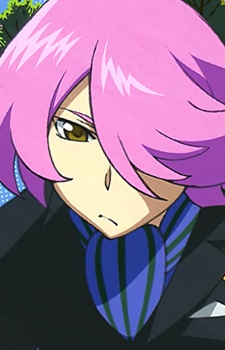
- This review contains my thoughts on both seasons of this series. It contains no story-important information from the series (though minor details may be discussed), so you can read this without feeling spoiled about the show itself - Superheroes, Kaijuu, Super Sentai (or Power Rangers for more western viewers). All 3 have been long cherished by comic book guys and nerds alike around the world. But what if they were real? What if they existed at the same time? That's the world Concrete Revolutio brings to us. Produced by Studio Bones, it was split between the Fall 2015 and Spring 2016 seasons, running for atotal of 24 episodes. Initially when I picked up the first half, Concrete didn't exactly impress me. It wasn't awful, but the early episodes were not exactly a great first impression for what was to come. And what did come is probably one of the most underappreciated anime of the past few years. The story primarily focuses on Jiro Hitoyoshi, a man whose most defining traits are his scarf and bright pink hair. He decides to join a group that is stated to protect beings known as Superhumans, which are basically the term used in-universe to describe fictional beings such as aliens, witches, ghosts, youkai, and the list goes on and on. However, as time goes by, he realizes that something is a bit fishy with the group, known officially as the Superhuman Bureau, and the world in general. Now, Concrete Revolutio's most (in)famous for the way it arranges its story. See, most anime generally tend to have a straight storyline, with occasional flashbacks to past events in-between. However, Concrete Revolutio has its story intentionally scrambled. This allows it to fully express the bizarre nature of its world via episodic adventures or even multi-episode arcs. However, in addition to the rather fast pacing, it comes at the cost of confusing newer viewers. This is a show best watched in a marathon setting, as such a viewing can make it easier for viewers to remember past events. The story has many underlying themes, discussing many topics, mainly morality, in a way that easily parallels the modern world. The tone is generally serious, but does bring in a bit of silliness. However, it doesn't put these lighter moments in places where it doesn't belong, which I appreciate. The show also utilizes grey morality to its finest. Both the government and its opposition do both admirable and despicable actions, which not only is decently realistic, but plays with your brain a bit. Concrete's cast of characters is rather typical in terms of personality, but they are handled extremely well with enough characterization and depth to make them stand out. Jiro is the voice of reason, and an advocate for justice, which in this universe, is basically an alternative way of saying ethics. He starts as a rather optimistic being, but slowly loses it once he realizes that superhumans are being used for government purposes (primarily slavery and use as weapons), thus reducing their freedom as individuals. He has the ability to attack with fire (even being able to summon to a dragon), and is able to drive a part-vehicle and part-mecha robot named Equus. He was the character that was the most focused on, and it was very interesting to see him change as a person over the course of several years, as it felt very relatable to me due to similar circumstances with my own past. Along with him is a witch known as Kikko. She is a rather shy love interest, and she uses magic to battle, particularly "Meteorterre", which not only allows her to transform, but allows her to transport objects or change their form entirely. She has a crush on Jiro, and stays with him even when the two of them are enemies at the moment, which I feel is actually quite neat. The only other major character I want to discuss is Emi, a youkai who can control other youkai, and has been with Jiro since his childhood. She is the mature "Ojou-sama" esque character, but gets easily pissed off, resulting is some rather badass moments. Her role starts out small, but gradually she gains more of a focus on in the story. Other notable characters include Fuurouta, a ghost who can shapeshift into basically everything and often serves as comic relief, and Hyouma Yoshimura (also known as "Jaguar"), a man who can shapeshift into a cat-like being and can also control time, which the latter was the focus of one of my personal favorite episodes of the 1st half. There are many other characters, but the cast is vast and varied, but each of them is memorable in their own way, whether it be by their abilities or actions. For a show like this, that's impressive to say the least. But perhaps the biggest accomplishment of Concrete Revolutio is its art-style and animation, which not only are able to bring both the cartoony and serious elements of the show to life, but also create some visually stunning fight sequences. The soundtrack fits the show well, with a big mention going the opening for the first season, showcasing bright visuals to engage the viewer, and a killer tune by ZAQ. So overall, while Concrete Revolutio may take a while to get the ball rolling, it tells a very competent story using a bright and colorful world and a surprisingly good cast of characters. The first few episodes may be off-putting to some (myself included), but I'd suggest giving it a chance past that. Who knows, you may find something interesting.
GoodnightSly
June 18, 2016
What does it mean to be a superhero? What is justice? Can good and bad be defined? Many shows and films have tried to tackle these topics only to get caught up in their predictable formula, get muddled into their beliefs, or just not try and shove “themes” in there. Concrete Revolutio is an exception that defines itself through the saturated genre through giving various answers to these questions with enough depth, ambition, and style. What It Does Right: +Interesting Concept and Ideas ConRevo is a show that has so much to tell, so much to ask, and so many answers. Almost every character in the showhas a belief they stand by and wish to follow. Then a conflict comes along that makes them question that belief and come up with a new conclusion or solution. That is the basic gist of the show from its main plot to its side stories. Morality and ethics are put to the test, justice is constantly questioned, the meaning of being a superhero is never clear cut. Despite being simplistic at times to sometimes overdoing it, ConRevo makes use of its timelines to provide its own alternate take on historical events to give social commentary to complement its themes and the result is always thought provoking. +Starts Strong and Ends Strong ConRevo’s strongest moments are within its main story which happens to be in the start and ends of both seasons. Each season premiere and finale brought up the highest stakes and revelations that would give us much needed answers that encompassed a lot of what the show was going for and fights that never ceased to amaze me. Expect many twists and turns, but they do make sense after some thought. The ending in particular is a satisfying grand spectacle that may seem absurd, but in the end wraps up the main leads arc quite nice and I probably wouldn’t have it any other way. +Interesting Main Lead From the pictures and PVs you may have seen, one might assume that our protagonist would be a typical raging, angsty dude. Our main lead, Jiro Hitoyoshi, is thankfully more than meets the eye and is in fact handled really well. He is a complex character with his own set of motives and actions driven by his constantly questioned beliefs. Paying attention to his dialogue rewards with poignant quotes that show his growth which feel natural to not just his character, but to the questions and themes that ConRevo brings up. While a fascinating subject, other side characters like Detective Shiba, Fuurouta, and Earth-Chan are worthy of mention. These guys bring up more insightful topics to ponder such as AI, grey morality, and seeing beyond childish beliefs. +Style is Straight Up Cool The presentation on ConRevo is a job well done as expected from Studio Bones. The art style is one of a kind and distinct. It has vibes that combine the usual anime style with a cool western comic-like blend. Character designs benefit from this as well and are a breath of fresh air from the typical mundane designs that plague many generic shows today. The colors palette for the backgrounds is worthy of note and shows as bold, bright, and wild. While its themes and ideas may be the forefront, the fights serve as a nice reward for paying attention. Each fight is an exhilarating and fast-paced blend of both mecha and superhero shenanigans. +Soundtrack is Straight Up Cool ConRevo’s soundtrack ranges from electronic to usual emotional tracks that fit in when needed. Nothing was out of place and I have no complaints, however I cannot get the main theme out of my head. It's epic, mysterious, and is tailor made for this show. Other than this specific track, the first two openings are great. Both have a strong build-up through electronic means, guitar riffs, and even dubstep! I don’t care for the endings, but hey at least they got cool trippy visuals. As far as I’m aware there is no dub for this show and I feel this show in particular will surely benefit from one. While I’m no expert at voice acting, the performances here were fine and each hit their typical and emotional moments equally well. What It Does Wrong: -Unconventional Narrative Probably the biggest complaint of Concrete Revolutio since the first episode is the erratic time jumps. While this opens up layers in storytelling for film, in a 24 episode show the task of paying attention and mental notes can get exhausting and thus dismissed as a mess. Because of this, I would advise taking some notes of each sequence. While this may seem to be a hassle, putting the pieces together will give you a better understanding the story and the characters who appear different in personality and appearance which are quite interesting to observe. I'm glad ConRevo was up for some risks, but a straightforward approach could have been fine and arguably better. -Semi-Episodic Format Gets in the Way ConRevo for me always shined when it was focusing primarily on Jiro and his journey. Too bad the majority of the show was one-off side stories. Nothing too wrong with that as they added a bit to Jiro’s character, but the small stories themselves weren’t anything memorable. The basic setup is the same as the main leads with each character having their own set of beliefs only to have it challenged and requestioned. It eventually became formulaic to a point where certain episodes became repetitive, muddled, or just forgettable. Don’t get me wrong, there were some highlights and events to not be dismissed, but ConRevo is always at its best when focused on the primary objectives. -Side Characters Don’t Get Their Time to Shine Besides Detective Shiba and maybe Fuurouta and Earth-Chan, the side cast was mostly neglected. I understand, the cast is HUGE with more and more characters introduced. Some were written to be one-offs and got their share of development, but others who play a bigger part like Kikko and Emi are no excuse. They needed more screentime and certainly more answers for us to care for their involvement. We don’t get the phantasmic beliefs that made the other characters interesting nor do we get enough backstory to explain their purpose. Without that, they come off as plain plot devices for deus ex machinas or moving the story forward. My Pointless Enjoyment: I really enjoyed the themes, social commentary, and questions ConRevo had to offer and it has a lot more depth than the basic stuff we get these days. Jiro’s and Detective Shiba’s arc were both engaging, pleasing, and satisfying to watch. It is a shame that the other important side characters couldn’t reach the level of quality, and while it wasn’t boring, it certainly wasn’t a highlight. My enjoyment did suffer a bit from the wonky narrative, but taking notes and putting together the pieces alleviated that somewhat. It definitely takes more brainpower to watch and while I can be too lazy to use my brain, the reward this show had made the effort worthwhile. Overall: ConRevo stands out from the crowd as a title that doesn’t glorify its “Heroes”, but rather delves into them and their beliefs. This is a title that is sadly underrated for obvious reasons and may never see the light of day, but if you are willing to put in the effort, please give it a chance. With its unique style, spectacular depth, and powerful lead one can see the ambition put into ConRevo. That ambition may be a bit much and maybe convoluted, but for what the show does right, I’m willing to say its positives outweigh the negatives. I give Concrete Revolutio: The Last Song a 7/10.
LucisKitsune
June 20, 2016
If you don't like the first part of this story, maybe you can reconsider see this part, my advice of course, even if you like the anime, it's: "See it as a Child and a Grown-Up at the same time". Yokai, Aliens, Kaiju, Robots, Witches, Ghosts, Superhumans! Some of the best things that we can use and we like to read and see in our shows everytime, because they are off of the normality in this world, imagination always gonna be the best at our hearts that want a rest of the normal things. The first part of this show told us about a present with thisbeings in a world that can't see a fitting role to these unnatural entities, for explaining the story, we saw the lives of some of them and how their coexistence create a future that we understand a little but can't understand completely because there are so much questions in the air. This second part, this last song, is the blend of the answers and questions, as its previous anime, this story have a present-future alternation, but with the past having a super heavy role played, so you will rejoice in every chapter seeing how you gonna receive the answers that are you waiting for with the action and fun, but maybe not in a totality. That I want you to understand it's that you can lost the track of the story easily if you don't have open mind or maybe you don't want to catch up the most important things, that is why I left the first advice. This story told us about the dreams and imagination that all kids and big kids like me have every morning, but with the requirement of a grown-up, because the story want you to think, think about humans, too, no only superhumans, tags as evil and justice, the soft and hard sides of a human that bring kindness, destruction and stupidity. If you have this open mind, waiting for the part of a kid for your child side, and deep things for your grown-up side, I promise you that you can enjoy this show at its fullest, even with its underestimated score by another users. You reached this point of the review? Thank you for read it all, I wish that you can do the same for this anime!
Ранг
#4725
Популярность
#4094
Участники
38,663
В избранном
89
Эпизоды
11