The Great Passage
舟を編む
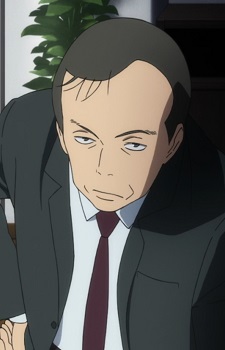
Kouhei Araki, a veteran editor of the dictionary editorial division at Genbu Publishing, plans to retire in order to better care for his ailing wife. However, before retiring, he must find a replacement to complete his latest project: a new dictionary called The Great Passage. But no matter where he looks, he cannot find anyone suitable, as making a dictionary requires a wealth of patience, time, and dedication. Mitsuya Majime works in Genbu Publishing's sales division, yet he has poor social skills and an inability to read the mood in most situations. In spite of this, he excels at having an enthusiasm for words thanks to his love of reading and careful personality. It is these skills that draw Araki to him and prompt him to offer Majime a position in the dictionary editorial department. As Majime accepts his new position, he finds himself unsure of his abilities and questioning whether he will fit in with his new co-workers. Yet amid the vast sea of words, The Great Passage will bring them together. [Written by MAL Rewrite]
Главный
Главный
Второстепенный
Второстепенный
Второстепенный
Второстепенный
Второстепенный
Второстепенный
Второстепенный
Второстепенный
Funguy24
February 10, 2017
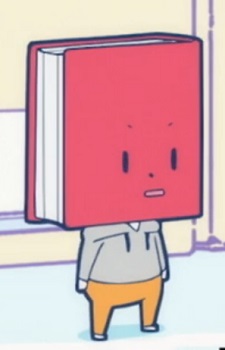
Human beings naturally seek companionship and bonds. It’s an innate desire of ours to form relationships (both negative and positive) in order to not only establish our own identity, but also to understand the world around us, and our role in it; and language is the lingua franca that allows these bonds to be formed. For all of us, words are the means by which we form these bonds. Not only is it the most readily available method of forming a meaningful relationship but, no matter how good an individual’s understanding of non-verbal cues are, they won’t learn about a person’s character or state of minduntil they engage them in conversation. Our use of words in everyday life means that a level of meaning is attached to the words we speak (subconsciously or consciously) which inevitably shapes how others view us as well as how we view ourselves. From using a certain word, to our construction of sentences, we are attaching a part of our personality onto the phrases we use. From politicians and world leaders to business executives, media moguls and everyone else in the public eye, their use of words to craft an answer designed to attract people towards them while also saying noting of any note is a skill in and of itself. As a student of ancient history I have studied some of history’s finest orators and their ability to master language is a prerequisite not only in convincing the masses, but also to convey one’s ideas as clearly as possible. It explains why some of the most charismatic and successful people in history all share the same trait: being excellent orators. For the wordsmith, their chosen tool for didacticism is the dictionary. With at least 500,000 words and more than a billion different ways to combine the words, the dictionary is vital for the one who wants to understand words. Even holding a dictionary is to feel not only the physical weight of it, but also its cultural and social weight; the culmination of centuries of compiling and editing, revising and perfecting to create a portfolio of every word that has ever been uttered in one language. For most of us, a dictionary is used to find a word’s definition. Unfortunately, not many of us use a dictionary anymore. The vast behemoth that is the internet, where everything (including a word’s definition) is at your fingers, using a dictionary is an anachronism of a bygone era consigned to the annals of history. Anyway, this is an anime about a group of people making a dictionary. This, as I’ll explain later, is simultaneously a good and bad thing. Mitsuya Majime is an excellent wordsmith, an individual capable of defining words in a myriad of ways, and is a walking encyclopaedic knowledge of language. The problem is that he cannot articulate himself in a meaningful way. A shy, unassuming man, Majime lives his life in the unremitting slog of daily mundanity as a salesman who works for a publishing company. A chance encounter with Araki, who is looking for someone to assist in the publication of a new dictionary, allows Majime to satiate his desire not only for words, but also to find a place to belong. Majime himself is a thoroughly human character, an individual who despite being handed his dream job, is still wracked with uncertainty about his ability to perform to the best of his abilities. His journey to not only understand how he fits in within the larger scheme of life, but also to express himself properly with the multitude of words at his arsenal, is both illuminating and thoughtful. His subtle evolution as a character makes him a far more realistic character. The best compliment I can give Majime is that he is thoroughly humane: you could imagine him existing as a real human being. His evolution is not drastic. He is still incapable of expressing himself for most of the series, but he is far more aware of his limits and of his strengths. Even without the skill to express himself, his love and passion for words comes across clearly to the viewer, and something about that almost childlike naivety made him more endearing to me as a character. Majime, like the rest of the cast, is not an especially complex character, but his passion for words and his inability to express them creates a conflict within him, which is aided by some lovely and deliberate animation to highlight this conflict within him. This conflict might not be fully resolved, but his recognition of his strengths and weaknesses, as well as his concession that he cannot overcome them but chooses to focus on his strength while having others compensate for his weaknesses creates a fully realistic and human portrayal of Majime. Here is a character that could really exist. Alongside Majime is a colourful cast of characters, including a female Majime (Kishibe) who turns up halfway through the series and the resident badass grandma Take. The other character of note, Masashi Nishioka, is your typical ‘life of the party’ character, but his evolution from comedy character to thoughtful character provides the perfect juxtaposition to Majime. Masashi is perfectly capable of expressing himself as a person, but lacks the same passion for words that Majime has, but the latter’s influence over the series can be seen as Masashi develops his own relationship with words, and continues to help with the making of the dictionary even when he is no longer a paid member. Either way, all the characters are handled with a level of maturity that I found utterly refreshing. This was a ‘slice-of-life’ in the truest sense, dealing with the trials and tribulations of completely human characters. The dialogue of the show was also expertly executed at times. Some of them might have waffled for a bit longer than necessary, but as someone who enjoys thinking about words, I found their discussions to be thought-provoking. It’s just a crying shame that they didn’t have those conversations more often, often eschewing conversations about the use of meanings of different words in favour of plot exposition. Accompanying the story is a visual and auditory treat. The show for the most part is fairly standard with certain occasions where they smooth out the animation to create some absolutely gorgeous scenes that are well-directed and accompanied by a varied soundtrack which enhances the scene, sets its tone, or/and compliments the scene. Just as important as the dialogue is the direction and special emphasis should be given to how the series showcases the importance of non-verbal cues, whether it is a stroke of the chin, a clench of the fist or a quick diversion of eye contact, the camera work is truly excellent. So a show with a realistic lead character, a colourful cast of characters, with some excellent direction and at times is a visual and auditory treat. So a 10/10 from me; right? Well, no unfortunately. Remember how I wrote that its plot was its biggest weakness as well as its biggest strength. Having a character that has a passion for linguistics and having them framed through the prism of composing a dictionary is a novel idea. Unfortunately, it is also a bit stale. I have a couple of other issues with the narrative as well, including a badly written romance sub-plot which is never expanded on, and a mid-episode cutaway featuring hand drawn dictionaries talking to each which constantly killed the tone of the episode. However, I believe the two problems above are causes of the type of show that Fune wo Amu is. Its primary concern is with the completing of the dictionary. I wrote that a dictionary is an anachronism, and it is true. How many people use a dictionary? Even the exploration of words is a niche subject. It always ran the risk of being stale and uninteresting. I predominately felt for much of the anime that both the romance sub-plot and mid-section ‘Dictionary Corner’ were tactics used by the writers to make the show more appealing, and break up the monotony of a primarily dialogue-driven show. This is a shame, because its premise is utterly original. Plus, I really enjoy thinking about linguistics, which makes the show's fear, or inability to take itself seriously a shame. It is a show with immense promise, which had the ability to be a serious work on the nature of linguistics and linguistics anthropology, but lacked the means and the belief to execute its ideas in a philosophical and thought-provoking manner. Nevertheless, I really did enjoy the series a lot. It has a lot of elements going for it: realistic characters, a great soundtrack, great visuals and camerawork and an excellent cast. It’s just a shame that it didn’t have enough faith in its own idea. Mind you, I would still recommend it, because the show still manages to execute its individual elements with a level of subtlety and nuance not always seen in anime.
felixlovesanime
July 28, 2019
Some anime series deserved more attention than it had. Fune wo Amu (a.k.a The Great Passage) is on top of such list. This is not your typical slice-of-life in vein of Non Non Biyori or Working!! which, in hindsight, might have been the reason why Fune wo Amu has been criminally underrated. If I could coin a brand new genre, I would say Fune wo Amu as a 'soulful' anime. Here we have a late-twenty-something Majime Mutsuya who has been employed against his true nature when, out of a sudden, he finds himself involved in a team filled with outsiders with one mission: creating the nextbig Japanese dictionary encyclopedia. Yes, it is not exactly saving the world or changing people back from being a stone but nonetheless, leave it to the good people of Zexcs to turn something unassuming into something deep and interesting. It is no overstatement to say that the characters, both main and supporting, are the best in recent memory. Every single one of them is multifaceted and when they support our hero in his quest, the support is never cliche or just-because. This time, both the characters and the plot balance each other like a subtle-yet-strong romance. No wonder it later on became an adaptation of a live-action feature which, later on, would be Japan's official submission for 2014 Academy Awards. However, the biggest draw of Fune wo Amu is how they present not just dictionaries in general, but also Japanese Language is a living, breathing deity and it is the duty of the tongues to both preserve and evolve such deity. Fune wo Amu successfully delivers the obvious-yet-hidden fact that language is important for the sake of capturing our histories and our emotions. Ironically, I had been having the hardest time concluding my review with just one word. Is it "Love"? Is it "Pride"? Is it "Light"? You know what, I just looked into my own dictionary and I got it-- "Masterpiece". #felixlovesanime
moozooh
December 22, 2016
I guess I'll be that guy. Oh well. Fune wo Amu, or The Great Passage, is a series that had the right to greatness. It took a mature premise, featured adult characters in a realistic setting, didn't include unnecessary comedy nor fanservice (except for the cartoony dictionary interludes, I suppose), and tried its best not to be insulting to a thinking person's intelligence. Besides, much like the protagonist of the story, I also love words and have worked in editing—among other things that directly correlate with the characters' mission. So, 10/10, right? I wish, but... no. See, I really wanted to like FwA more, and for thefirst few episodes I had been certain it would become the strongest contender for that elusive Anime of the Season title. But I tend to value works by how well they manage to achieve what they set out to do. Giving FwA a free pass just because it took a good premise and didn't try to pander to the statistical average would be disrespectful to both the title itself and the intelligent viewer seeking it out. And the things you seek out in a mature anime like this also have to be well-executed. FwA is anything but that. It's perfectly average—very content with the little it tries to do, playing it safe as if afraid of its own ambitions. By the final episode I'd become convinced that its director didn't really like the characters he wanted to show. Let me explain. The premise the show tries to execute is really good—no doubts about that. It's something an adult could see and think to themselves, "this is something I could relate to". Adult-oriented stories are generally harder to tell because they demand steady progression of plot and/or characters. You can't just throw in a beach episode and expect the audience to be satisfied (looking at you, every single high school anime ever). Even if it's a slow-burner, things should constantly be advancing, especially if the time span covered in the story is as long as it is in FwA. FwA, however, does something really weird with the concept: it grows so visibly bored of its own slow pace it ends up introducing some amateurish, haphazardly set up dramatic moments in an otherwise tight and methodically woven narrative, and balances them out with long uneventful lulls. Virtually all the plot "twists", if you could even use that term, can be seen from a mile away. They're predictable and lack emotional impact and dramatic consequences. When instead of feeling sad for the characters who are down on their luck you end up feeling sad for the show itself, you know there's something wrong with it. But it is ultimately a character study, so then, perhaps, it has memorable characters and clever, thought-provoking dialogue? Well... Take our protagonist, Mitsuya "Micchan" Majime, for an example. He is extremely introverted, stiff, reclusive, borderline autistic in his inability to comfortably socialize and relay his feelings directly and openly—but on the inside, he burns with passion for words as an instrument of mutual understanding. Actually a solid character conflict right there! So does Majime go through some sort of character arc that helps him become more fluent with words or otherwise be developed as a person who loves them? Does his research help other characters we see understand each other? No, NOT AT ALL—he basically just becomes a more accomplished dictionary editor—the job he took on at the very beginning. All Majime manages to accomplish over the course of the eleven episodes is to be a slightly more successful version of the Majime of episode 1. He just does what he *always* does, and tackles every mundane problem the same way for years. We never really get to experience the satisfaction for his accomplishments because we don't feel like he's putting any effort into self-development. Much like the metaphorical ship oft-referred to in the story, he just drifts along with token involvement in all the events happening around him, as if knowing that the sea current will carry him to where he needs to be regardless of his actions. His on-screen chemistry with other characters is nonexistent almost to the point of being a non-person, and you end up wondering what exactly is the reason they all stick with him so much. The relationship with his love interest Kaguya feels particularly forced. It could be that I just don't understand Japanese women, but my experience tells me that is *not* how romance works. I find it hard to believe that an accomplished, strong-willed, mentally healthy woman would be easy enough to jump on the first guy who professes his love for her, especially if it's a non-person with no attractive character traits. What did she find in him? His looks, wit, charm, power, strength of character? Does he have any of that? I don't think so. He's literally a silent roommate who loves books more than he loves other people and hence lacking in any communication skills that make him pleasant to be around. Then we have perhaps the most enjoyable character, the ever-charismatic Masashi Nishioka, voiced by that crazy-talented guy you hear every season. What pains me the most is that by the middle of the show you become completely convinced that the show would be far better if he were the main character. Indeed, he is the only well-written character in the story who goes through a proper arc, endures hardship and self-doubt, and emerges a better person as a result of his *own decisive actions*, unlike Majime. Note the important difference: Majime's accomplishments feel set up by the script—he just coasts along, and everything solves itself; Nishioka's, on the other hand, are the result of *overcoming* the challenges set up by the script. We feel his hardship and we have a reason to root for him. He is a real protagonist and deserves to be the main character of the story. However, he quickly gets shelved the moment his arc is finished, and we barely get to see him afterwards. One could say there isn't enough time to properly develop characters in a single-cour anime. This isn't the case at all. Just earlier this year we had a much more accomplished adult-oriented show that slowly and methodically told a mature, compelling story where people behaved like real people, drama was poignant but not forced, and it did so with a great deal of subtlety in a similar runtime of 11 episodes out of its total 13. If you haven't yet guessed what I'm talking about, you probably haven't seen it: Shouwa Genroku Rakugo Shinjuu. Needless to say, every good movie out there also manages as much in 90 to 150 minutes of total runtime. It's a matter of directorial prowess to show what needs to be shown and cut down on anything that doesn't. Prowess that Mr. Kuroyanagi, I'm afraid, does not possess. So, to sum up, would I recommend Fune wo Amu? The answer is: just barely. It does get its point across, however weak it is and however timidly it does so. It never really feels dumb, convoluted, or otherwise bad. You can definitely tell its characters and setting are grounded in reality. It's probably better than most anime out there—and that's it. You don't have to take pity on it for the rare breed it represents, nor pretend to enjoy it more than it deserves just because you're the target audience. In everything you do or experience, you should always strive for higher standards and never settle for something that only narrowly escapes mediocrity—I believe that is one of the more important lessons to take away from The Great Passage... even if its creators haven't done so. (By the way, I hear the live-action movie is much better received. I haven't watched it, though.)
FireEmblemIke24
December 22, 2016
DISCLAIMER: Amazon Prime have low-balled this series hard. Crunchyroll would have done better with advertising. This anime has gone under the radar, sure it may just revolve around the mundane task of creating a dictionary. However, the real beauty lies in its simplicity with it being complementary to its setting. This will appease slice of life fans but for those seeking something different, you may need to look elsewhere as nothing ground-breaking occurs. A dictionary is a ship that traverses the vast ocean of words. This tool that we take for granted enables us to search up any word we like. Now I can only representfor the English-speaking anime community but going by the Oxford dictionary, we roughly have 170,000 common words at our disposal. How does one compile such a large amount of information? The answer is a dictionary, which is our best companion during our education days and beyond. Compiling a dictionary is a complicated and time consuming process which is evident in the Great Passage. It should be noted than meanings of words can change with time, therefore words can be lost but will be balanced by the new words created. Majime Mitsuya who has been redeployed to the dictionary editorial department, finds himself in a challenging position. The amount of cross-checking between older dictionaries is emphasised to ensure no words are omitted. This burdensome job must be taken seriously as a single mistake can lead you back to square one, which would be hard to endure for those meticulous with their work. Truth be told this anime would get stale fast if it weren’t for the fact that it focuses on the business aspect as well. This is where the character Nishioka Masashi begins to shine, as he is witty and takes a no-nonsense approach to his job. The man who is blessed with excellent social skills always has a way with words to get the best results for his department. The high standard of work produced by Nishioka eventually gets him promoted to the public relations department, ironically where he got rejected when he applied to company. Nishioka had fantastic chemistry with Majime and the rest of the department. The news of the upcoming transfer came as a shock to the department but this did not sway Nishioka. On the contrary, this boosted his work ethic making him more committed as he devoted himself towards the creation of the Great Passage. Now going away from the dictionary creation process, Majime develops as a person considering he has now found an occupation that meets his strengths. Majime in the beginning is viewed as being timid and quite frankly dreadful at interacting with others. Working as a pitcher for the sales department only just exacerbated the problem, as it was a poor fit from the get go and only noticed by Nishioka. Majime is known to be quite an avid reader which has ultimately led to him possessing a great vocabulary ideal for dictionary work. He has a strange but unique hobby of observing people that exit the train stations. The key idea is observation, which is one of the skill sets required for being a dictionary editor. This anime knows when to be subtle, and paying attention to certain aspects gives for a wonderful experience. Majime is an individual who struggles to express his feelings and as a form of self-deprecation usually comments about being socially incompetent compared to Nishioka, who is far more of a smooth talker. Majime during the series has written a love letter to his crush Hayashi Kaguya, who conveniently happens to be his landlady’s granddaughter. The man retreats to his room after handing his love declaration, which to me is a sign of his lack of confidence due to the fear of being rejected. I’ve waffled on about Majime and Nishioka without mentioning other characters. Araki Kouhei is the employee who had to give up his full-time position to care for his spouse, who was hospitalised for some apparent reason. He mentions his regret having to leave all the work to Matsumoto-sensei who is clocking up the years. Matsumoto has the goal of wanting to finish the Great Passage, to the point that he overworks himself just to fulfil his objective. This alone suggests the amount of dedication put into the work and can only be achieved by those passionate enough to do so. Passion can be found in every job which was the case for Kaguya who aims to be a professional Japanese chef. There is a stigma attached to women working in this sector as it is a field dominated by that of men. Majime learning about her occupation gives him encouragement to complete his own task of making the dictionary. Kaguya as a romantic partner does not get as much screen time than Majime, which kind of leaves her in the dust in terms of character development. It would have been better for the series to explore more with her situation in the culinary field, as it is subject to sexism which quite frankly makes for a more interesting story than the Jisho-tanzu sequences that aren’t important. The time-skip came at the right time after Nishioka’s departure to take up his new position in PR. We get a new character introduced in Miyoshi Remi, who finds herself in the same position that Majime used to be in. Except this time that Majime is now the experienced editor and can lead his fellow colleagues convincingly. The work towards the completion of the Great Passage concludes in a satisfying way. It is realistic as few jobs can be done effectively without experience some problems occasionally. The animation by Zexcs is standard with there being no poorly animated sequences. The character designs are quite detailed and sufficient with it reminding me of the designs used in Shouwa Genroku Rakugo Shinjuu. The animation itself is very limited in the sense that it only takes place in the workplace and Majime’s house. I would have liked to seen a change in scenery but there are occasions when it does switch backgrounds, such as the restaurant that Kaguya works at. The sound is composed by Yoshihiro Ike (Ergo Proxy, Shingeki no Bahamut) who has quite the accolades considering his recent works. The opening “Shiokaze” is vibrant and engaging with the music being used as insert music that just gets me pumped up every time I hear it. The ending “I and I” is less memorable with it being more of a relaxing song to listen to. A slice of life does not need great music to carry it but it should be complementary to the situation. This anime won’t blow you away with flashy scenes but concepts like hard works pays off will sure to put a smile on your face. It has given me a different perspective on how one can find work enjoying even if it is the most mundane of tasks. This is a good show with strong characters making it easy to recommend.
Zerathus
December 22, 2016
Warm honesty. That’s how I would describe Fune wo Amu. It is one of the “non-anime anime” as in it doesn’t really feel like anime. There are no over the top situations or goofy characters. Now that doesn’t make this anime boring. Matter of fact I enjoyed it quite a lot. The absolutely best thing about this anime is its fantastic directing. Considering its premise and the fact that it is done by one of the lesser known studios, it’s just amazing how they were able to get a talented director to compose the storyboards like this. There are moments where I was legit amazed. Ifyou find the premise boring, at least give the anime chance and watch first two episodes to get a feel of the amazing directing (especially in episode 2). Plot of this anime is very simple, and yet it’s another strong point. As it tells a story of our main character’s journey across time the dictionary is worked on and published, we see a normal changes in life of somewhat normal person (albeit little socially awkward). Finding friends, falling in love, being challenged by your work. These things happen to everyone. By removing the aspect of unusualness, the series not only gains a lot of realism, but also allows us to observe real life situations and helps us providing possible solutions to said situations. But these solutions are not the universal right way. The series, while feeling very warm and honest, also has a little cold and sadness in it. Especially in the later episodes. And that is something I look for in anime. It has that real life feeling to it. While the characters are not goofy or over the top, they are still entertaining and pleasant. Especially Nishioka who might be one of the greatest wingman in anime I’ve seen. The guy is just great. He’s the kind of friend everybody deserves. Our main character Majime is at first little robotic and stoic. But as he begins to work on the dictionary and as time progresses we see him develop thanks to his work. He found something he was predisposed to do. Our female lead is Kaguya (voiced by lovable Maaya Sakamoto). Kaguya is very solid female character. She’s very supportive but at the same time she’s independent. She’s a person. She doesn’t function as Majime’s safety net or goal. She’s not plot device or fanservice bait. She is god honest woman without any goofiness. And that is something I haven’t seen much in a recent anime series. The character interactions are big part of why this anime works and flows so well. There is nothing holding it back. No boring moments, no boring expositions or dialogue. Everything flows well and I never had to check how much is left until the episode ends. It just grips you for 20 minutes. There are even cute interludes with dictionary mascots talking to each other. Production is pretty good. The animation for whatever reason reminded me of IG (the character designs). It’s nothing mind-blowing but considering what this series is about, it is pretty fantastic. It could’ve easily been much worse, with less care put into it. Music is also pretty good. Orchestral sounds make the scenes feel more impactful and bigger (for example the “Make a good dictionary” scene in episode 2). There is no particular role which leaves a lasting impression when it comes to voice acting, but considering the premise of the series that would be almost impossible. However that hardly means the voice acting is bad. As I already mentioned Kaguya is voiced by my personal favourite Maaya Sakamoto and Majime is voiced by veteran Takahiro Sakurai who’s having a great year when it comes to voice acting. Reigen, Noboru-Sensei, and Majime. Nishioka is voiced by Kimiya Hiroshi…wait…Remi (who’s character from later episodes) is voiced by Chiwa Saito…what the hell? What is the Monogatari gang doing here?!? In the end, there is hardly anything bad you can say about this anime. If you are not interested from the start because of the “boring” premise, and you don’t really care about good directing you won’t like this series. If you are okay with its premise definitely watch it. It’s like a tea, an anime which allows you to sit down, relax, and slowly enjoy it.
Ранг
#1616
Популярность
#1925
Участники
133,793
В избранном
560
Эпизоды
11