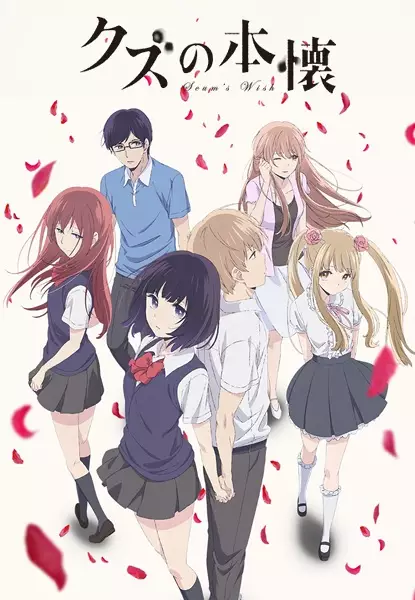
Scum's Wish
クズの本懐
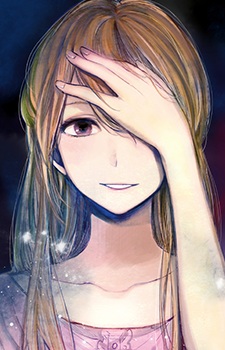
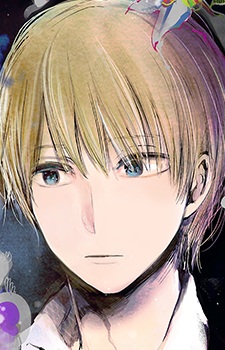
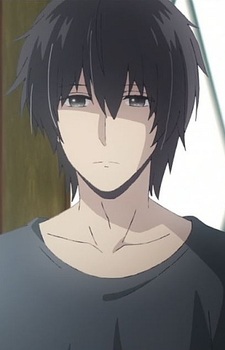
To the outside world, Hanabi Yasuraoka and Mugi Awaya are the perfect couple. But in reality, they just share the same secret pain: they are both in love with other people they cannot be with. Hanabi has loved her childhood friend and neighbor Narumi Kanai for as long as she can remember, so she is elated to discover that he is her new homeroom teacher. However, Narumi is soon noticed by the music teacher, Akane Minagawa, and a relationship begins to blossom between them, much to Hanabi's dismay. Mugi was tutored by Akane in middle school, and has been in love with her since then. Through a chance meeting in the hallway, he encounters Hanabi. As these two lonely souls spend more time together, they decide to use each other as a substitute for the one they truly love, sharing physical intimacy with one another in order to stave off their loneliness. [Written by MAL Rewrite]
Главный
Главный
Второстепенный
Второстепенный
Второстепенный
Второстепенный
Второстепенный
Второстепенный
Второстепенный
Второстепенный
Veronin
March 30, 2017
There aren't many anime as uncomfortable as Kuzu no Honkai. It introduces itself as a melancholic tale of unrequited love, and quickly transforms into something far more ugly. The characters are relentlessly trampled upon, until, indeed, as the title might suggest, they are reduced to human trash. It isn't necessary for a story to make you feel happy. There exist a wealth of fiction that, while depressing, and perhaps never even enjoyable, are still valuable for the message they are trying to make. Kuzu no Honkai doesn't have that message. It is misery for misery's sake, existing almost exclusively to make you feel like crap.If you found anime such as Aku no Hana and School Days difficult to watch, you might have yourself something of a challenge here, too. There is seldom a character within Kuzu no Honkai who behaves sensibly or is capable of thinking with any other organ except their genitalia. Hanabi and Mugi are lonely because they cannot be united with their loved ones, and so they seek to find some solace in each other. They can't love each other because they love someone else. They use sexual intimacy as an escape. But they still can't give up on the one they love. And so the cycle, their tedious lives continue. If that is where the series stood, all may have been fine. But it escalates, and they, and just about everyone else surrounding them, wants more, more, until nothing remains in their hollow lives but sex and sleaze. It becomes impossible to feel any empathy for them and the grief they are constantly plunging themselves into. They're beyond saving. They deserve everything that happens to them. And so I cannot bring myself to care when it tries to play Hanabi as the victim, the tragic heroine. The real victims are Norumi (the male teacher) and Noriko for being deceived by such deplorable people. Love is blind, as the cheesy proverb goes, but in this case they must also be blind in the literal sense. Most of Kuzu no Honkai's cast is comprised of hypocrites who get upset with their partner(s) for acts they have been committing themselves. They act nonsensically at times, and can change their attitude on a whim, giving up on their love at the end of one episode and then cheerfully encouraging each other to confess at the beginning of the next. They haven't the slightest idea of what they want. Maybe that is to be expected. Love is a tricky thing, after all, and teenagers are at their most confused stage in life. But it becomes a question if what they felt was ever love in the first place when they can so readily find someone else as a replacement, sleeping with anyone who shows them even the slightest affection. It's entirely possible that Hanabi and Mugi only fell in love with their respective partner because they were the first ones to give them that affection. And so how am I to feel bad for the two when their crushes end in disappointment? While women like Akane undoubtedly exist in the real world (having unfortunately encountered someone similar myself), she is possessed by such an intensely twisted and ugly worldview that it becomes a wonder how she is even able to fulfil her duties as a teacher. She eventually comes to a point of redemption, but makes it quite clear that she is there only to see, to try, potentially ruining a man's entire life merely for the chance of relieving her boredom. I didn't find that heartwarming as it was intended to be - I found it disgusting of her, and that's in the face of all the detestable things she had already done. The main theme of each episode is who is going to make out with or bang whom. It's an endless rotation, much like a hentai, the characters seemingly unaware of or passive to the concept of cheating, and incapable of guilt. Everyone loves someone else, and seemingly nobody in the world is capable of a happy, fulfilling relationship-- even Hanabi's friends (who are never otherwise shown) are revealed as having their partner cheating on them. Maybe it's a good thing I detest all the characters, as I don't think I would want a character I actually like to be in a story like this. Any time Noriko appeared, the one I disliked the least, I was dreading to see the mess she might be dragged into. And Narumi, while naive to painful extents, is never really deserving of the awful situation Akane puts him through. The only joy you could possibly extract from something like this is some sadomasochistic desire to see everyone in pain and despair. I can't say I possess that desire. The main rebuttal, I would imagine, is that the characters are meant to be human trash, and so it is okay that they are trash. I could concede to that point, as stories do not require respectable characters. But even trash are human, and so it is expected that they still behave like humans, a detail that Kuzu no Honkai seems so ready to forget. Sanae, for instance, has such an intense (and frankly creepy) attachment to her loved one that it almost seems a crime for her to not be locked away in some mental hospital. There can at times be a desire to stay with someone you love even when you know you cannot have them or that they are bad for you, but she long crosses the boundary of how real people would react in her situation. There is a difference between being a confused teenager who seeks sexual gratification, and being a psychotic almost-rapist who believes people are their property. If they have done as she does, then they've probably gotten to know prison life pretty well. It's also questionable why the author decided to complicate things further by giving Sanae someone who one-sidedly loves her as well, considering how little is ever done with them. You could write them out completely and it wouldn't affect much of anything. They exist solely, I would assume, to create more despair, as if the show hadn't enough of that already. Kuzu no Honkai's detestable cast is, if nothing else, well-realised, thanks to the frequent monologuing and backstories. Each of the main six get their turn to narrate on numerous occasions, which does well to explain their motivations and feelings and to make them feel like proper protagonists rather than mere accessories to the carnage, even if some (namely Sanae) receive significantly less characterisation than others. To merely show two characters having sex or making out with each other is not nearly as meaningful as when it is accompanied by narration. It leaves less to the imagination, but, unlike other intensely uncomfortable and cringe-filled anime such as School Days, gives substance to the scene and makes sense in the context of the characters. When timed with the anime's emotional soundtrack, some of the dialogue can almost feel captivating, and a kiss can carry power, even if it is between two people who really have no business kissing each other in the first place. It's nice to have an anime courageous enough to portray sex in an honest manner, as most use it purely for pornographic purposes, or seem afraid of touching upon it altogether, as if humans are somehow sexless creatures. I just don't think that real people are nearly as defined by it as they are in Kuzu no Honkai. I'll fully admit that I hated every second I spent watching Kuzu no Honkai, and felt relieved when it was over. This isn't because it is a particularly bad anime, but because it aims to say or do little else but make the viewer feel terrible. It pushes you, kicks you, and then throws another punch to your gut once that is over. It is filled with moments where you want to shout at the characters to stop, to not be stupid. There are times where you will have to pause and take a breather because of all the cringe and madness that is unfolding. Kuzu no Honkai is about as far from a pleasant anime as can possibly be, and it never really aims to fill that gap with much substance or meaning. Its starting and ending points are the same. It wants to say that people are stupid, that love hurts, and more than that, it wants you to hurt, too. Some people will be fine with that. Maybe they want to feel awful. Maybe they just want to feel emotion, any emotion. I'll give them that - it certainly makes you feel something.
HaXXspetten
March 30, 2017
Have you gotten sick of "romance" anime consisting of nothing but innocent teenagers blushing like tomatoes at the mere thought of holding hands yet? Are you sick of seeing "relationships" implying that there may or may not be a confession in the last minute of the final episode and nothing beyond that? Well then Kuzu no Honkai might be for you, because this anime has more romantic progression in its first five minutes than most romance anime do in their entire runtime, and it manages to break one, two, maybe even three taboos in the process as well. Kuzu no Honkai at heart represents the uglinessof human emotions and carnal base desires. It looks into the darker side of romance and tackles matters which romance anime basically never does. This is not a story about how to woo your would-be waifu of choice, but rather it deals with issues such as how to emotionally cope with having an impossible unrequited love, reflecting on yourself as a human being and opening your eyes to your own flaws, and considering what it must be like for the target of your unrequited affection if you force your own feelings onto them. It showcases how love truly is blind and that you can end up falling for the wrong person against your better judgement, and you just cannot help but desire them anyway. It is a very depressive and heart-wrenching story throughout, but also psychological and packed to the brim with moral lessons to be learned. And it all culminates in one of the most unique, artistic and legitimately fascinating romance anime I have ever seen. In many ways, Kuzu no Honkai is effectively the polar opposite of most romance anime. Mind you, that does not mean that it is too much more realistic; in fact Kuzu no Honkai is just as exaggerated except in the opposite direction. While the characters are all (more or less) realistic individually, the fact that they all happen to be such emotionally broken wrecks and that they are somehow all connected in one big messy love polygon at the same time is a bit too implausible. However, realism is ultimately not the main purpose of this story, but rather to provide a significantly less glorified outlook on romance that showcases that love is not always easy and not always as beautiful as anime generally likes to make it out to be. The first thing I really like about Kuzu no Honkai is how it does not beat around the bush. Whilst most anime characters seem scared to even hold hands with their respective crush, in this anime we have Mugi and Hanabi willingly tongue-wrestling with each other within the first three minutes of the first episode. This then proves to be nothing more than a prelude of what is to come as the anime has a lot of actual sexual interaction between numerous different characters over the course of the story. However, it is also done in a way which makes it seem like it is not really a big deal to have sex, and that it is something merely a natural part of relationships or even done just for the sake of emotional comfort. You are never given the impression that the sex scenes in Kuzu no Honkai are anything perverted or something out of the ordinary enough to freak out about. This is also largely attributed to the very artistic directing of the anime. What might otherwise have been written off as nothing but smut ends up coming across as something poetic and emotional, albeit perhaps not straight-up beautiful due to the anime's rather questionable morals. The visuals make great usage of the original manga's design by actually showcasing a lot of screens with multiple manga style panels instead of normal full screen animation. It is a bit difficult to explain without seeing it with your own eyes, but I personally found it very effectual and artistic, and it greatly helped to set the rather melancholic tone of the anime as a whole. At heart, the anime is mostly about hopeless affections. The two main characters Mugi and Hanabi are both in love with someone else who they know they can probably never have, and only utilize each other as replacements for their actual crushes. But they are not the only outcasts in this anime as amogst the other people involved in the love polygon we have a homosexual, a man-eating slut, and more. Everyone has some sort of deep-rooted emotional issue as for why their feelings are almost assuredly never going to transcend into mutual love along with their crush, and they all have different ways of trying to deal with it, such as self-denial, clouding of judgement, or just selfishly forcing their feelings upon their beloved regardless of the consequences. This all results in the whole situation becoming increasingly messy and entangled with each passing episode, which makes the story both unpredictable and dramatic, but it also fills you with some sort of sadistic pleasure by watching everyone's worlds continuously come crumbling down, solely to then be able to watch in fascination how the characters somehow try to climb out of the holes they themselves created. It is a pretty typical case of curiosity killed the cat. The main question you have to ask yourself whilst watching this anime is "what is the right thing to do?" in the characters' respective circumstances. More often than not, the logical answer and the emotional answer stand in direct contradiction to one another. Their heads tell them that they should try to let go of their hopeless feelings of affection, but their hearts say that they have to keep pushing forward, no matter the cost. And really, you cannot say that one option is any more or less "correct" than the other. Is it acceptable to sacrifice someone else's happiness in pursuit of your own, and is it okay to keep feigning ignorance of reality just because the current lie you are living in "feels good"? There is not really a right answer here, as regardless of what you do, someone is guaranteed to end up miserable and unhappy in the end no matter what, and Kuzu no Honkai showcases this dilemma to great effect. Of course that is not to say that there are not a couple of times where I feel like the writers go a bit too far whilst trying to overplay the misery that Kuzu no Honkai has to offer. Especially Akane--who is arguably the real bad guy in this mess (if you can call her that)--sometimes feels a bit *too* malicious. The way she just casually tries to break Hanabi's heart in the most sickening ways possible time and time again feels like it goes a bit beyond what her own motivations seem to rationally justify that she should want to, and there is also one scene where you can see her sadistically licking her lips the way a second-rate villain from some B movie would do... which seems like they writers are trying to force on the image that "this woman is evil" a bit too directly. That is not to say that Akane does not function as a villain though because she is certainly a character you love to hate, but I cannot help but find the way they reached that goal to have been a bit forced at times. In the grand scheme of things though, the hiccups of Kuzu no Honkai are rather sparse in comparison to how many good things there are about it. It is an unorthodox and exceptionally well-written show with very interesting characters. It also has some very artistic directing in general and even boasts with having some absolutely superb opening and ending themes. And while the story as a whole might still feel a bit implausible at times, it nonetheless gets its messages across in great fashion. Ultimately, what you are left with is one of the most memorable romance dramas in a very long time, and although it is certainly not an anime for everyone given its controversial themes, I think it is also one of those shows which if you manage to see it for what it truly is, then there really are not very many series quite like it. Overall, Kuzu no Honkai is probably the best romance anime I have seen in the last few years, and one I will eagerly recommend people for a long time to come as well.
Bebelman
March 31, 2017
This is the most cringey, edgy, 'look how deep and conflicted I am', garbage I've ever set my eyes upon. Absolutely no decency, no self-respect, no genuinety, no common sense, no nothing. It's just another reminder of a perpetually morally bankrupting society nowadays. Thanks! Characters are terrible - contrived, unlikable, and honestly just plain disgusting. No, I would not passionately make out with a random stranger as a substitute for my unrequited love. I guess that's just me, though. Throw in bunch of forbidden unrequited love (student-teacher, incest, lesbianism) in and envelop it with 'passion', a.k.a. perversion and you got yourself Kuzu no Honkai. And what's withthe completely out of place and unnecessary comedy? Is that an attempt to bring lightheartedness into this filth? Because it's not working. Sodom and Gomorrah - the anime. I would rather watch School Days on repeat and cringe for three days than feast my eyes on this trash for another second.
Stark700
March 30, 2017
Love is perhaps one of the most complicated feelings in the world. We may all have experienced sometimes in our lives. Whether it’s platonic, romantic, or parental, it’s something that humans feel because that’s who we are. As part of growing up, people learn to understand these feelings. Yet, there are also people who make stories out of their lives from such feelings, in ways that become so twisted and disjointed that they become scum. Welcome to Kuzu no Honkai, a show that gives the characters a chance to grow up. As a manga reader, I was already prepared although it’s easy to judge by thepremise that the story itself will be saturated with drama. Ever heard of ‘friends with benefits’? That’s pretty much how the premise sounds like. In the beginning of the story, we learn quickly that Hanabi and Mugi are engaged in a “relationship” that seems like those of a happy couple. Yet deep down, both suffers from pain because they are in love with someone else and are only using each other to ease their pain. It’s not hormone that’s driving these young folks into engaging in sex but that they simply want to feel something rather than pain. I have to admit, a show like this definitely takes on a more mature approach at romance than your typical high school rom-com. Make no mistake about it, Kuzu no Honkai is an emotional story that deconstructs romance in many ways more than one. The character cast is small yet complex because almost every character has their own personal issues. Some are more complex than others as the show focuses on them in their own twisted stories. A primary example is Akane, the seemingly lovable teacher. Yet, as the story progresses, you’ll quickly learn that she isn’t exactly what appears to be. Fans could easily label her as a bitch in sheep clothing and hard to accept. It’s also relatable too as Akane is a type of character that can easily be encountered in real life. That’s what also makes this show more realistic than some others as Kuzu no Honkai demonstrates a lot of realism. Relationships draws a line between love and sex. Can sex lead to actual love? Or is it just sex? In the meantime, character relationships in the show deconstructs what you’ll find in most romance stories. Yes, there are love triangles but Kuzu no Honkai has characters that uses others to satisfy themselves. Hanabi and Mugi is one but many examples. We’ll also learn in the show of how childhood friends will take the risk of being rejected and hurt. The fact is, no one is really safe of being happy in this series. Happiness is more like an illusionary word in the world of Kuzu no Honokai. Even when certain truths are realized and confessions are made, it is the stone cold truth that brings in even more pain. It doesn’t fall for every circumstance in the show as some characters are more willing to accept reality. However, the truth is still there that makes character relationships in this series seem like a losing battle. That’s a tough pill to swallow. As you can imagine, the show is drama heavy with a lot of emotions. Jealousy, regret, greed, hopeful, mistrustful, fear, are just a few to name. Action has consequences and this show brings out the worst out of human behavior. Think about it really. Kuzu no Honokai translates to Scum’s Wish as the title references to one’s interest to satisfy their own desires. Most of the characters does this and is drawn by humans emotions. At the core of these emotions is love. However, this show deconstructs love and very few characters actually understands it. Or perhaps there is no real answer because everyone has different perceptions. Narumi (Hanabi’s homeroom teacher) is a rare example in this show where he accepts certain people for who they are even after learning the truth. Still, the truth can hurt doesn’t it? Yes, don’t expect much comedy or humor from Kuzu no Honkai. It occasionally throws in some comedy from time to time but the majority of the show retains its mature feel. Now, the anime portrays sex as what it is and believe me, there’s a decent amount of it. The manga even has more explicit scenes to illustrate its point. So in essence, this show is not designed for a younger audience but suitable for those looking into a serious yet twisted story. The word ‘love’ doesn’t fit in there as that word is more or less an illusion. Still, I am happy that the adaptation captured the general idea of the original manga. It sticks to its point without derailing from its coming of age feel while inserting human emotions. Lerche surprisingly did a fairly decent job at crafting the artwork. Character designs look mature especially for the adults such as Akane and Narumi. Ebato has that pure nature lady look that makes her desirable. However, Moca’s character design can be bothersome to get used to as she looks like a child being stuck in a mature world. Be aware that the show has a lot of fan service such as make out scenes, sex, and other suggestive innuendos. One thing I am impressed by the artwork is how there are certain scenes in the show that captures the characters’ expressions at fullest. It accomplishes this with a more detailed visual of their feelings but importantly makes them look impactful. Soundtrack and music retains a somber tone. It’s a drama heavy story so what else did you expect? It has a feel of melancholy throughout the series along with light instrumental OST. Music director Masaru Yokoyama (Shigatsu wa Kimi no Uso, Mobile Suit Gundam: Iron-Blooded Orphans) does a fantastic job at the directing as expected. The OP and ED theme songs have some symbolism along with a drama-like tone. But in terms of voice mannerisms, this is where it gets sort of mixed. Characters such as Akane and Ebato are really hard not to feel attracted to with their mature voices. In the meantime, I have to mention again that Moca is a source of annoyance whenever she opens her mouth. Kuzu no Honokai is like walking into a world of twisted desires. It’s like going into a maze with endless doors and no way out. Behind every door is a truth or lie that brings anything but joy. However, I think the show does bring up a good point of showing the realism of love. Examples in this series can really happen to anyone and realistically, it does. It’s part of us being human as there’s no real answer to what love is. Or to put it simply…. Love hurts.
ZephSilver
March 30, 2017
When someone considers themselves or others to be connoisseurs of any storytelling media, there are specific prerequisites expected from that individual that's usually understood without the need to outright state it. These factors can include being well-versed with different genres within the medium in question, to more demanding things, like understanding the construct in which the medium expresses its ideas. But out of all these unspoken base requirements, I think the most important one is something that's usually acknowledged but often taken for granted. That something in question is a hands-on understanding of the subject matter itself. Without that attribute, an exhausted catalog ofliterary knowledge and understanding of narrative tools is rendered almost pointless. Being book smart amounts to nothing without practical experience, or at the very least, first-hand encounters. Think of it this way, knowing about an archetype or trope is only as valuable as understanding what worldly influence caused it to exist, to begin with. Anyone can comprehend a creator's intent all day, but without an inkling of relation to it, all diegetic information could only be taken for what it is at face value. Now, with that in mind, it's time to take a quick litmus test; ladies and gentlemen, Kuzu no Honkai (Scum's Wish) is average. Quickly, what was your initial thought after reading that statement? Did you think that was an outlandish claim to make? That Scum's Wish is far from average and that the claim made was purposefully contrarian or, for the lack of a better word, attention-seeking? How can an anime that explore sexual decadents with such unfiltered restraint be considered "average" by any means? Most relationship anime don't even get past first base, so how can that claim be justified? If you've already come to a similar conclusion regarding Scum's Wish before reading my statement, bear with me, as for everyone else that possibly rattled off something similar to the aforementioned thought process, time to explain why. One Tree Hill, Gossip Girl, The O.C, Dawson's Creek, 90210, Pretty Little Liars, Gilmore Girls; what do these live-action TV shows have in common? Well, for one, they're centered around teens or young adults dealing with relationship drama in very exaggerated ways. And secondly, and perhaps more important as well, they're usually understood by most astute viewers to be conventional television programming. No critical thinker or demanding viewer worth their salt is singing high praises about these shows. The reason why is pretty simple, apart from being well-cultured in several different mediums that is. The discernment for shows of this ilk ties back to that essential requirement I mentioned: having hands-on experience. If your firsthand encounter with the drama Scum's Wish wraps itself up in is close to none, praising it becomes easy to do. However, if you've ever been involved in any relationship, where you and the party in question were mutually in it for sexual gratification, then what Scum's Wish tries to depict gradually gets more juvenile and diluted with each passing episode. Anyone of the bottled off sexual/sensual encounters it indulges in can be believable on its own, but when meshed together to the degree in which every single character in immediate circles in the show is involved in a daisy chain of intimate depravity—at that point, it becomes wholly unrealistic; almost approaching the point of midday soap opera levels of contrived. This is sensationalized TV drama 101; the quintessential reason for why the phrase "sex sells" remain relevant for mainstay media. Simply put, Scum's Wish is an animated version of your typical live-action teen/young adult drama TV show. Now, before we go on any further, let's make this clear, teen/young adult drama shows themselves aren't inherently devoid of substance. There are live-action TV shows like Friday Night Lights and My So-Called Life, and even animated titles such as Nana and Beck that receive widespread critical acclaim for the same kind of things depicted in Scum's Wish. But instead of sensationalizing the subject matter for the sake of capturing audience attention, those shows decide to represent the relationships of the characters in naturalistic ways. The key takeaway here is that those shows did NOT rely on sensationalizing its content. That's the difference between media that use sex in an exploitative manner, and those that incorporate it as just another facet of life in the narrative at hand. Having relatable scenarios don't amount to much if it's unrealistically presented in the confines of the story. The show takes itself seriously, but the situations themselves are vapid at best. And that isn't even to say that theatrically sensationalized programming doesn't have its place in storytelling media either. There's no shortage of TV shows that use sensationalism to its advantage; such is the case with TV series like Shameless. A show that purposefully acknowledges the fact that it's all about sex, violence, drugs, and mayhem. And if the namesake didn't already make that clear enough, it "shamelessly" uses these aspects to tell its story. But that's the difference between something that's purposely sleazy like Shameless and the likes of Scum's Wish. One show is self-aware of its overblown content while the other operates with an aura of conceit and pretension. But enough with the long-winded preamble, let's discuss what the show is all about. Short answer: yearning for others and sexual depravity. Long answer: For as long as she could remember, Hanabi "Hana" Ysuraoka has been infatuated with her neighbor, Narumi Kanai. Due to their single parent upbringing, from a young age, they had quickly established a sort of family bond with each other, with Narumi becoming a frequent guest in Hanabi's household, to the point where she refers to him as her "big brother." Eventually, this infatuation Hanabi shares for Narumi slowly turn into a romantic interest. And as is the case with any story scenario of this nature, that love goes unnoticed as Narumi has his eyes set on someone else. That someone being the alluring music teacher and predestined rival, Akane Minagawa. Being the object of affection to any guy that attends Hanabi's high school, Akane has no shortage of men fawning over her at any given time. With her strawberry blonde hair, alluring smile, and an aura that just permeates femininity, Narumi became yet another lovestruck male caught up in her presence. With Akane and Narumi both being teachers, Hanabi's standing as a student further widens the gap between her and the one she loves, as she watches with each interaction they share slowly chipping away at her chances of ever having him to herself. Left in a state of emotional limbo, unable to do anything but watch as he gradually slips further out of reach; it's here, in this place of solitude that she finds out that she's not alone. A pair of eyes fixated with a familiar saddened gaze reflected in them stare at the cheerful adults as well. His name, Mugi Awaya. She may not know him personally, but that familiar bitter tinge of unrequited love that they mutually share leaves her a small glimmer of reassurance—"I don't have to suffer this alone." And so a pact is made by the pair, one signed with only physical comfort in mind. Sexual relief, mutual resentment, a promise of no strings attached; emotions left harbored off from each other for that promised day. Friends with benefits with only one intent in mind, to eventually gain the affection of the person they truly yearn for. A tragic, bittersweet, ill-fated romance. A setup that could take on so many avenues of exploration and be successful at all of them if done right. It doesn't have to do much, just simply show the consequence of that kind of entangled emotional dependence as it affects the characters involved. Anything that toxic and shortsighted is bound to cause psychological scarring to anyone that participates. A dangerous game that some of us may have personally felt the backlash for at some point in our lives, after foolishly thinking that we were above the consequences. That somehow the end-result that many faced before wouldn't apply to us. A foolhardy belief that we could handle it where others weren't capable. A continuous physical/sexual dependence on others will always come with a steep price of admission, whether it's immediately realized or comes on later in life during a silent night laying in bed, as thoughts of it creep in, festering in your idle mind. The foolishness of our now bruised ego, as we reflect on the stupid decisions of our past selves. Hubris in its purest form, with humility being the bitter pill we're made to swallow. And to the show's credit, it does a good enough job depicting that inevitability. The problem is that it doesn't just stop there, as it decides to go the whole nine yards, and then some. Instead of just settling with a believable depiction to carry this core message, Scum's Wish is too greedy to call it quits. It doesn't just want to depict that scenario; it wants to portray everything under the sun, exhausting every possible love/lust situation imaginable in an attempt to make every possible outcome into an attention-seeking circus act of sexual decadents. And it's because of this, what once started out as a reasonably believable scenario, has now been turned into a ludicrously overblown orgy fest. Without getting into specific names or details, I'm going to describe the general plotting of this show. And no, I'm not exaggerating here, this is what truly happens: Person A wants to be with person B, but person B wants to be with person C, and person C only desire attention, and person D wants to be with person C but settled for person A, while person E wants to be with person D, and person F wants to be with person A, and person G wants to be with person F, and person H wants to be with anyone who's willing, and person C uses person H, while person D uses person E, while person J and D use each other, and person A uses person F, and person H tries to use person A... and so on and so forth. And again, this isn't an exaggeration, this is what actually happens when you sit down to map out the plot for each episode. To say this story is insanely contrived would be an understatement. There are shows with fatalism in it that manage to feel less artificial. Any character that's recurring or has a name in this story is actively trying to bone each other. There is absolutely nothing realistic about this toxic nonagonal love-web. And it's this web that actively defeats any victory laps the show achieves with any one of the individual stories stuck inside it. This show does have genuine character beats and arcs, but when all that's mired in content that's essentially one big exploitative fuck-fest, it's hard to take any of it seriously. But to the show's credit, it does dedicate a decent amount of time framing the characters' mindsets so that the audience has an understanding as to what makes them tick, as well as why they carry themselves in the way they do. This is made all the more commendable given that a majority of them have despicable personalities. You don't necessarily have to like them, but you do understand how their thought process operates under certain circumstances. This is the definitive attribute it has over its much more cruddy sibling, School Days, where no time or effort was dedicated to any of the main lead's concubines. Scum's Wish, at the very least, gives the illusion that the characters presented are their own person, as with School Days, they were all just assembly-line fuck buddies. Not that it isn't the same case with Scum's Wish, in due time, they're all just reduced to sexual encounter cannon fodder as well. But with the time given beforehand to at least probe their psyche and reasoning behind their actions, they could still be considered to be "characters" by the end of it. And speaking of School Days, not surprising enough, this sleazy brainchild was also penned by the same scriptwriter as well, Makoto Uezu. The man tends to over exaggerate everything he writes, and where that proves successful with his efforts in comedy-centric shows, for dramas, they have the adverse effect, as demonstrated here, in Arslan Senki, Akame ga Kill and of course, everyone's favorite, School Days. Adequately written drama is not the man's forte. And speaking of dramas that became unintentionally funny or embarrassing, Scum's Wish is also plagued with random "comedic" cutscenes that began and ended with no discernable reason or benefit for the tone of the series. This usually occurred after an emotionally heavy scene, having the same terrible effect in the way Akame ga Kill would randomly cut to comedic hijinks after someone gets brutally murdered. Whether we could pin this similarity as another fault of Uezu is unknown, as this might just be a result of what the manga does than what the adaptation might be responsible for. Either way, it's a lousy attempt at levity that comes across as awkward the first handful of times it's used. Other than that, the actual art and animation of the show demonstrated some thoughtful consideration of how it was constructed. By incorporating panel strips to make scenes flow together—visually emulating manga image tiles—Scum's Wish was able to convey more information by not only accounting for the character's reaction towards a situation but also drawing attention to certain critical moments as they pertain to the people involved within the frame. This allowed the audience to get a general sense of the mood or mindset that's being conveyed by placing a fixated point of interest with things boxed off within the manga panel tiles as it relates to the overall scene. The talented duo behind this thoughtful bit of storytelling was Yukie Oikawa and Masaomi Andou, who's past collaborative efforts together created the technical wizardry demonstrated in Gakkougurashi, where they both made their best Satoshi Kon impression. Capitalizing off that, the art department showed a keen eye for color placement as well, with cool and warm colors striking a delicate balance, bringing with it visual chemistry on screen. Nothing overpowers the other unless it's done to insinuate a particular mood. An example of which is when they purposely chose to plunge the entire palette in monochromatic blues and dark purples to help give a feeling of isolation, only to use that same coloring technique with soft touches and color highlights to be used for times of intimacy. It's this firm grasp the creators had over color theory that allowed for selective color choices to serve dual purposes under the right guidance. They also used splodges of ink and watercolor paint during cutscenes to represent a myriad of emotions and ideas, like lustful desire and deflowerment. While done with no subtlety whatsoever, it was still a nice touch. And even when everything was more than likely digitally colored in, they didn't use that for shorthand around adding personal touches, often giving things soft pastel-like textures and occasional color-penciled-in still shots placed throughout for good measure. Even the character designs are an excellent standout, having anatomically believable body proportions that help the viewer buy into their placement as people within the story. With sharp edits used to juxtapose certain situations and letterboxing being applied to convey certain pivotal moments, every idea here was given careful consideration. Yukie Oikawa's acquired abilities from early documented work on Noir up to now has made this a show with a steady hand for cinematics, even if only on a smaller, manageable scale. And to be honest with you, this overall care given for its presentation might be the most significant saving grace for this show. Without it, the show's gimmicky content would be way more apparent than it is now. Well, at least for everything within the show, as for the opening and ending themes, however, things couldn't have been more ridiculous had it tried. Starting off with a goofily blaring vocal performance and a flurry of rose petals, the imagery and song throughout the opening were pretty overblown; especially when it hammered home symbolism that felt tacky in comparison to what was presented in the show. But to its credit, the tune wasn't bad on the ears if you just let it play out absent-mindedly. As bad as it may have gotten at times, it doesn't come close to touching the ending theme's issues. The ending theme's visuals were so blatant and try-hard that they actively made me cringe. It reminded me of Zayn's "Pillowtalk" music video, which is never a good thing since that was basically the equivalent of someone screaming: "Get it BRUH? The FLOWERS represent VAGINAS and WOMEN'S WOMB... and like SEX and stuff, ain't I clever fam?!"—like no, just stop, you're embarrassing yourself and society. It's the kind of imagery a 15-year-old going through their "emo phase" would create, as they wear their Sid Vicious necklace and blast Linkin Park and Pierce the Veil in youthful revolt. By using a mixture of kaleidoscopic visuals to create phallic images, the whole thing aims for contemporary sex appeal along the lines of an FKA Twigs music video but ends up falling incredibly short. It had the tone of a former Nickelodeon child star trying desperately to break free of their kiddie image by being super raunchy. Having "mature themes" and being "maturely handled" aren't the same thing. And when it comes to Scum's Wish, this is an applicable distinction to keep in mind, as the show crosses the line thinking they're one in the same on several occasions. And it's perhaps this issue that's the show's greatest downfall, as it relates to one of the bigger pending problems that need addressing; the character's awareness of themselves and each other. The characters all have this uncanny ability to not only know the inner-workings of their own thought process but also that of everyone around them as well, like if they were all psychology majors. The internal reflection was appreciated, but knowing the mindset and framework of everyone else was a bit ridiculous. Realistically speaking, there should only be two characters in the entire show with that kind of mental capacity, and that were the adults. As a teen, one's ability to discern self and the disposition of others are only achievable on a superficial level. This isn't an "opinion," this is a scientific fact. I've been in similar situations before as a teen, acting on sexual impulse, but was I fully aware of my decisions to the point of self-reflection? No, because I was horny, not some man musing about life and his choices. This anime treats teens like adults. The phrase "young, dumb and full of cum" isn't just passed around to describe youths for a good laugh, it's an expression born from the fact that during that turbulent time of change in your life, teenagers are shortsighted and driven by impulse. You don't start truly thinking with your prefrontal cortex—the rational part of your brain—until you've hit your early to mid-20s when it has fully developed. Whenever the characters experience emotional woes regarding their actions, that's natural, and again, commendable for the show for trying to depict that. But it's the moment they all become Dr. Phil that it loses touch with itself and reality. And I think I've danced around this long enough. I'm trying my best not to state the obvious here, but fuck it, time to state the ugly truth of the matter. If your closest thing to intimacy is the love you received from your family, with little to no experience in an actual relationship, then what Scum's Wish depicts may come across more realistic to you than what is actually true. If you only watch anime and haven't ventured out to other mediums, then Scum's Wish offerings may also seem more novel than what it is. However, if sexual relationships—especially in the form of "fuck buddies" that this title plays with—are something you've had some passing experience with or hell, if you've seen/read enough other media centering around the subject, then chances are, what Scum's Wish offers to you may be nothing more than animated sleaze. This anime's value could easily sway in either direction given the experience of the viewer that looks at it. As such, it's a show that's bound to cause contention among those that adore it and others that mock it. Of course, all of this doesn't even matter if you just want to be entertained, because if that's the case, there's nothing here worth reading that would dissuade you in the slightest. But if for some reason you happen to fall into that small camp that dissects and discuss the content they watch, this show would be met with coin toss results. Your level of acceptance for what the show depicts depends entirely on your tolerance or love for certain narrative decisions. As for me, I don't see any reason to get up in arms about it. If you see it for what it is, there's no reason to get upset. Scum's Wish lives in a vacuum. Real life is never so perfectly contrived. So instead of focusing on what it mirrors from societal norms, what should be looked at is what it does within the confines of its narrative. And when seen for what it is and not what outside influence it is not, the answer derived is pretty clear; Scum's Wish in its rudimentary form is quite literally animated smut. Meaningful at times but smut nonetheless. That age-old adage "sex sells" that's expressed by everyone, from your critics to your everyday viewer, isn't one to easily shake off. It's a commonly known truth for a reason. Sex in and of itself is not a bad topic to center around. It's a natural act we partake in. The issue is when sex is reduced to nothing more than a meal ticket to get audiences through the front door. At that point, any kind of message the show may have had becomes null and void. In the end, what saved me from entirely dismissing Scum's Wish was the overall care given for its presentation, the extra time dedicated to at least exploring the characters involved, and the fact that content of this perverse nature is easily digestible on a basic entertainment level. As far as anything content-wise is concerned, it falls incredibly short of any meaningful passages in its narrative, save for the individual pockets of occurrences that get drowned out in all the clutter. When everything is said and done, Scum's Wish is a pretty porcelain vase; something beautiful to look at for a while but when peered into, just turns out to be a hollow shell.
Ранг
#4316
Популярность
#315
Участники
731,872
В избранном
6,550
Эпизоды
12