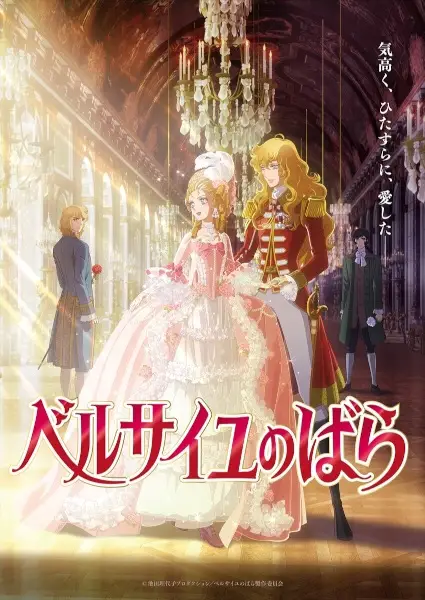

The Rose of Versailles
ベルサイユのばら
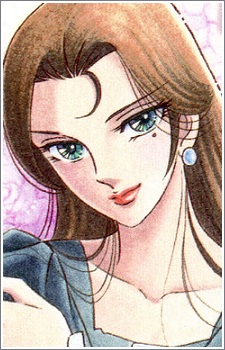
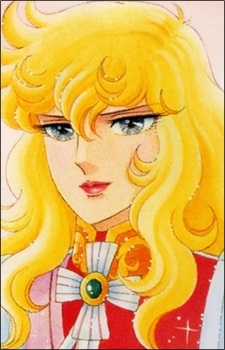
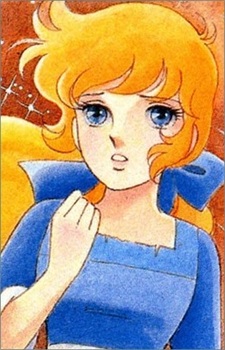
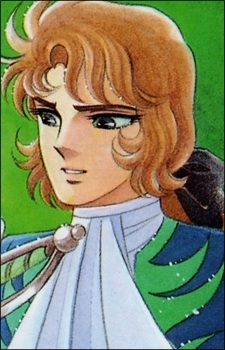
In a time of class stratification and rising tensions amongst the impoverished population, the Austrian Empire sends Princess Marie Antoinette to France to be wed to Crown Prince Louis XVI. The political marriage is arranged to strengthen the alliance between both countries, but the future queen is deeply unsatisfied with her fate being decided for her. Upon arrival in the country, Marie Antoinette is acquainted with Oscar Fançois de Jarjayes—Commander of the Royal Guard. Due to her father's desire for a son, Oscar is raised as a boy with an expectation to inherit his title as The Commander. Though she is revered by both men and women alike, Oscar cannot help but desire to live life as a woman instead of masquerading as a man. As Oscar reluctantly serves the young, spoiled queen, the growing resentment and suffering of the poor become harder for her to ignore—especially when Marie Antoinette frivolously spends her wealth. [Written by MAL Rewrite]
Главный
Главный
Главный
Главный
Главный
Второстепенный
Второстепенный
Второстепенный
Второстепенный
Второстепенный
Второстепенный
Solemnmind
July 14, 2012
The everlasting dilemma when you choose a historical setting for your story; is it more beneficial to aim for historical accuracy or inaccuracy? Pretentious historians would most likely point at "accuracy" and label it obvious while I personally think that a tone of creative liberty allows the narrative to soar into more admirable levels of grandeur. Rose of Versailles is not only famous for being among the first titles ever produced in the Shoujo genre and its strong female lead but also for the fact that it takes place before, during and after the French revolution using non-fictional characters like Marie Antoinette and Maximilien Robespierreas key figures. The inevitable ending is thus spoiled by one's standard knowledge of history, but the ride in itself and the terrific characterization is more than enough to still make the 40 episodes an entertaining ride. Story: 8/10 The story takes a closer look on Oscar Francois de Jarjeyes, a tragic character born as a woman but raised as a man in an environment of fencing, horseback riding and responsibilities. I'd never dream of calling Rose of Versailles story driven in comparison to the amazingly portrayed characters, but the narrative still boasts a pretty impressive combination of twists, melodrama and dialogue. Many historical events like the infamous diamond necklace affair are used as plot devices, though in slightly altered ways, ranging from heavily changed to slightly modified. My interest for history aside, the excellent transitions between accuracy and inaccuracy are one of the reasons that I derived so much entertainment from this watch. You could argue that the show dwells a little on its melodrama, or that a few repetitive scenarios (like Rosalie crying in front of Oscar while stuttering her name) turns the task of watching it into a tedious one, but if you look for a somewhat educational, though not entirely trustworthy, story about the tragic life of a woman pursuing honor and the fundamental facts about the revolution, then this might be right for you. Animation: 6/10 Compared to its temporary opponents like Galaxy Express 999, Rose of Versailles radiates extremely high production values for its time. It has since then faded into insignificance, but the relatively detailed character designs as well as a few decent moments of action are definitely impressive. Keep in mind though that this is more than thirty years old, and that you cannot expect the same quality that it's natural to do in modern times. Most moments of a more swifter haste tend to be slowed down to the point of abnormality in attempts to lower expenses, so it takes several seconds for the apple Andre throws to Oscar to reach her hands and whenever someone jumps a longer distance the same phenomena can be found. Another aspect of the visual frontier that I relished was the creative and occasionally beautiful art direction. Shocking revelations are followed by equally dramatic facial expressions complimented by metaphorical cracking mirrors that burst onscreen. In each episode there are at least more than two dramatic close-ups (though likely many more) and while this reaches serious depths of annoyance on a few occasions, you'll get used to it. Sound: 7/10 The opening theme was designed to be used in the show both verbally and instrumentally but works equally well in all cases. Worth to bring up though is that the show usually makes sure to decapitate the melody right before the chorus is about to make its entrance which seriously ruins the mood it has been so eager to establish. The soundtrack in itself is also good but does by no means deserve any praise. What does deserve an endless amount of compliments, on the other hand, is the voice acting of Reiko Tajima who portrayed the protagonist Oscar. Her voice radiates the kind of authority and dignity that will have women and men alike experience delight and appreciate the powerful potential in her character. Other voice actors are competent in most cases, but nobody is near the most impressing vocal performance of Reiko. Characters: 9/10 In the initiating paragraph of this statement, allow me to emphasize that I'm by no means a feminist. Not only has feminism reached the state in my nation where it's associated with the bizarre will to place women on pedestals and emphasize a non-existent oppression in favor of equality, but I also doubt that its followers even remember the nature of traditional feministic values. However, if there's one thing that gets to me in Anime it's when female characterization is successfully made. Shows like Kino's Journey, Haibane Renmei and Rose of Versailles where female protagonists exist for purposes that do not include fanservice or anything alike. And that's why I heavily enjoyed watching Oscar develop throughout this show. She struggles to live her life in honor and masculinity, confronts her womanhood and attempts to oppress it in favor for her military and patriotic way of life and ultimately ends up falling in love with a man named Andre whose humble origin complicates things. Likewise, the rest of the show is heavily influenced by powerful, yet usually malicious, ladies who yearn for nothing more than power and wealth. Rose of Versailles explores corruption in its most unpleasant form and does so through a large variety of characters. Not to mention its infamous portrayal of Marie Antoinette who's luxurious and wasteful ways attracted public hate which made the bloody revolution possible. Overall: 8/10 Historically significant as well as a prime example of strong female characterization, Rose of Versailles entertained me while simultaneously making me realize that I should watch more shows from this era. It enjoys spending its time modestly observing flowers, sparkles and beautiful dresses, but fulfills its grander ambitions by exploring the many obstacles of royalty, the struggle of sexual identification and most fundamentally; love. On its way it throws in characters who long for democracy and glory, only to end with the inevitably grisly revolution followed by the executions that we all know lie in the future. A most pleasant watch!
Второстепенный
kokuborou
April 8, 2017
Rose of Versailles review(it's biased af) Bara wa bara wa.......Oscar! Story 10/10 The story is about the France revolution from the 18th century and the events that lead to that revolution. Rose of Versailles depicts the fateful meeting of Marie Antoinette and Oscar, which is bound to influence history and change the life of the people facing the French Revolution as the clock ticks toward the end of the French royalty. The story has a slow pace in the begining but thats just a preparation for the big play that will occur later. We are introduced to the classic atmosphere of France 18th century, the stuning peisage carefully evidentiatedin this anime captivates our eye. The old chimney houses ,the beautifull gardens of roses from Versailles ,and the gourgeous arhitecture of old France palaces and castles all together forming our big stage where the actors perform the best play of their life called Rose of Versailles. The slow pace that the anime has in the begining is meant for the worbuilding of this anime which is magnificent. Another purpose is to get used with the characters their personalities ,habits and finally the way the act and interact with each other in a situation. The story most part in this anime occurs in the beautifull city of Versailles inside the royal palace where we follow Oscar and Marie Antoinete across the flowing time. But as a pleasent surprise this anime shows us not only the bright side of France but also the dark past were people lived in poverness and didn't afford a single piece of bread. As the story progreses we found out more details about our characters and how they influence each other directly or indirectly across time. One of the most beautifull unrequited love stories are told and offered by this anime to the viewer delivering a bunch of feelings and shred tears. What's marvelous again are the details that this anime carefully and steady at a slow pace builds up his world and characters leaving a strongfull impression for the viewer. Characters 10/10 These are the best actors that a play could hope for. Their character development is slowly but steady done and every detail is not missed at all building up a firm foundation for their character. Oscar one of the best female leads in the history of anime she is the best written character from this anime. She influences every character directly or indirectly because of her actions and desicions and has a great role for the progression of the story. She is brave she doesnt hesitate at all has a iron heart and a soft part too she cares for everybody and tries to help them as best as she can. Indeed a splendid character that many anime need. Andre is Oscars friend since childhood and the one that helps Oscar when in need . Another well written character from this anime. His character development is amazing and his loyalty towards Oscar is impressive never doubting or betraying her. He also keeps his promises and he is a trustworthy man. His actions influence the whole story. Marie Antoinete is the queen of France and her character starts of as a spoiled little child but after she experiences the sour part of life her character changes and becomes more mature and responsible. Other honorable mentions are Jeanne, Rosalie and Fernes who have a fantastic influence across the story and change and help Oscar during the entire anime. What is a good point in this anime is the interactions between the minor characters and main characters which is done so well that the minor characters shine too.Also the minor characters help the development of the main characters but the show doesnt cast them away after that instead they are offered a role in the "play"called the revolution of France. The interactions between all characters is well done and meaningfull for the plot and story every detail matters every action affects directly or indirectly each character and their influence across the story. Animation 9/10 Stuning visuals and character designs that are way better done than in the anime made nowdays and it's a 40 years old anime. Gorgeous. Sound 10/10 Impressive ost that brings shivers to my skin every time i hear it. Also it's well done within the most important moments from this anime at the exact time. Enjoyment 10/10 Every episode brought up new things the progression of the story was linear and the characters actions and decisions in a crisis situation impressed me and captivated me especially Oscar. Overall 9.5/10( its a 10 ffs) The ending was well done left a strong impact on the viewer and was according to the characters actions and interactions during the whole story. One of the best and firm characters that a anime could provide for the viewer with such an amazing an carefully crafted details to our characters to shine out their unique traits. Gladly recommand this anime one of the best History-Drama anime of all times.
PowerUpOrDie
April 29, 2015
They make magnificent cheese in France, and Japan can make a magnificently cheesy anime set in France. It's best to approach 'Rose of Versailles' the same way one would approach a Rafael Sabatini novel or the Errol Flynn 'Robin Hood' movie from the 1930's, as swashbuckling adventures, melodramatic romances, and cackling villains abound (oh, and somebody spilled a truckload of shojo glitter). This legendary anime is a grand old time. 'Rose of Versailles' is licensed by Nozomi Entertainment and can be legally streamed on Crunchyroll. -Story- Melodrama done right. I know I've lambasted other series for being melodramatic, but those cases involved situations where there were inexplicable toneshifts and all the scenery-chewing ham came from nowhere. 'RoV' incorporates its over-the-top emotions right from the beginning, and sets the stage properly so that the viewer is willing to accept it (it's a bit easier to get away with melodrama when the French Revolution is raging around you than it is in say, an average modern Japanese high school). When the first multi-episode arc centers around two pampered girls who are "totally not going to talk to each other", there's a limit to how seriously the story can be taken. But in spite of this, 'RoV' isn't completely without depth: for all it's Shojo-y tropes I personally saw some deconstruction of the idea of "Follow Your Heart". How? In this series, characters solely following their emotions often cause problems, not solutions, so I saw a message of " emotions are important, but it's critical to have some good sense as well". Go in expecting something along the lines of "Captain Blood" and this story will be thoroughly enjoyable. -Art- I have a personal preference for the old cell-animated look, the more washed-out colors have a certain vibe I find pleasing. It is tough to judge older animation as technological limitations made it effectively impossible for a lengthy series to have a level of quality comparable to modern productions, although I didn't see many still-frames or reused shots in 'RoV'. Aesthetically, however, the series excels. Backdrops have a high level of detail, character designs are appealing and distinct, and while there are plenty of traditional shojo special effect shots (in several scenes it looks like a glitter truck crashed headlong into a flower truck) there are some special dramatic shots that are very appealing (such as one image rendered entirely in red and black). Much like the story, if you appreciate the old-school stuff the art is excellent. -Sound- English sub only, with Japanese voice actors who do a good job of conveying the tone of their characters (at least to a native English speaker with next to no knowledge of the Japanese language). The soundtrack uses a large number of Baroque pieces, which is period appropriate. For more dramatic scenes it will use a variation of the OP, which is a combination of 18th century and modern influences. The ED uses a relaxing, fade-out vibe and is fine but completely forgettable. The OST has fairly limited range, but no complaints here. -Characters- Ham and cheese all wrapped up in croissant. The villains are deliciously over-the-top, often stopping to talk to themselves about how "I control the King, nothing can stop me now!" or "My noble rank makes me untouchable! Those peasant swine exist only to serve me!" The protagonists, on the other hand, will often make grand proclamations of loyalty or condemnations of injustice. Nobody is particularly subtle, everything they do is turned up to 11 and you KNOW what they're feeling or thinking at the time. And it's all played so unapologeticly straight that you just can't hate them for it. The characters aren't overly deep or complex, but they are entertaining and even surprisingly endearing at times. *Bit of character trivia: Marie Antoinette was originally the main character in the manga, but by the time the TV adaptation was in production Lady Oscar had become so overwhelmingly popular that the story was tweaked so that the anime would be told from HER perspective. -Enjoyment- If you go in expecting a historical melodrama, you'll absolutely love 'Rose of Versailles'. As a fan of historical fiction this series played into a lot of my biases and I found myself having to stop myself from binge watching. Also, given how influential this anime is, any fan looking to be seen as serious and knowledgeable should check this series out. -Overall- Sometimes you don't want an intricate work delving deeply into psychology and philosophy, sometimes you just want a simple, straightforward good time. To use an example from American cowboy films, 'Tombstone' may not be anywhere near as deep as 'The Searchers' but darn if it isn't incredibly entertaining. 'Rose of Versailles' is like that. It's an old school swashbuckling adventure combined with an old school Shojo romance, and it doesn't care what you think about that. Let other anime handle in-depth exploration of life in a certain time period, or debate complex philosophies and religious questions, or follow characters with more twists and turns than a mountain road. Lady Oscar and company are bombastic, melodramatic, unapologetic, and thoroughly entertaining.
dublincore
May 2, 2013
Age hasn't necessarily treated it well, but Rose of Versailles remains a compelling and gripping viewing experience for even modern, jaded audiences, as long as they enter into it equipped with a bit of patience, a fondness or tolerance for heavy-handed sentimentality, and open-mindedness with regards to their entertainment. Rose of Versailles tells the story (with a few deviations) of four people, living in the years leading up to the French Revolution. Two of them, Marie Antoinette and Hans Axel von Fersen, are fictionalized but nonetheless fairly 'real' portrayals of their historical counterparts. The other two, Oscar Francois de Jarjeyes and Andre Grandier, are (almost) whollyfictional characters who serve as sort of the emotional anchor for the series. Much of what happens, whether it is straight from history or an invention of the writers, is processed through these two characters before reaching the audience. I'm assuming that everyone who is reading this review already knows enough history to be aware of the fates of Antoinette and Fersen--just in case though, I'll avoid talking about them, other than to say that the writers do a fine job of making both characters sympathetic and very human. Antoinette is not the self-absorbed pleasure seeker here that she is so often portrayed as, and Fersen in particular benefits from thorough character development and a well-rounded depiction. Of all the characters though, it is Oscar who steals the show. The series begins with her (yes, her) birth into a prestigious military family. Her father, depressed by his lack of sons who he can pass on his family's military heritage to, decides at the moment of her birth to raise her as a boy and as his successor. Flash forward a few years and we see the results: Oscar has grown into a beautiful and somewhat haughty woman who is tremendously skilled in the ways of combat, and whose mannerisms and bearing straddle an interesting middle ground between femininity and masculinity. If you're familiar with Revolutionary Girl Utena, Oscar is very much a prototype for the titular heroine of that particular series--not only somewhat in disposition, but even, to some degree, in character design. Oscar quickly lands herself a commanding position in the royal guards, becoming a loyal friend and servant to Antoinette, and shortly thereafter finding herself ensnared in the high-society power-games that dominate life in the Court of Versailles. For roughly the first half of the series most of the plot arcs revolve around the emotionally-heightened 'combat' between the French nobles. And it is, to say the least, a bit silly. Shojo tropes are in full bloom here: expect lots of dramatic musical cues, name-calling, wide-eyed close-ups, sparkles, and pastel freeze frames. None of it is any worse than that which still happens regularly in modern girls' anime, but it is significantly clunkier, and is further stilted by the fact that it's all supposed to be happening in 1700s France. It's certainly not going to be to everyone's tastes: you either will just have to deal with it or learn to love it for its cheesiness and narmy charm. Things improve markedly as the half-way point of the series approaches. Oscar, with the help of her friend (and stable boy) Andre begins to take note of the plight of the commoner and is introduced to the would-be revolutionaries who will rise up against the rule of the nobles in the not-so-distant future. Oscar's loyalties are severely tested, and as the eve of revolution draws near, she has to make impossible decisions about who requires her sword arm the most: the common people of France or Antoinette and her court. This second half of the series borders on the masterful, marred only by some mistimed displays of melodrama and over-the-top sentimentality. These small flaws aside, one couldn't ask for more from any anime series: incredibly well-developed characters (it's remarkable how well the writers do with showing these characters grow over a couple decades' worth of time), brisk pacing, a lovely (and sad) romantic subplot, and a final arc of episodes from which few of the characters, if any, will remain unscathed; it's a complete package. It makes for serious edge-of-your seat viewing, and is topped off with a shockingly cold epilogue that is easily the most brutal and tragic concluding chapter of any 'girly' series I've ever watched. The last ten or so episodes are practically an emotional holocaust--even if you could care less about the interpersonal relationships between the primary characters at this point (you monster!), the large scale and clever interweaving of historical events into the plot should pretty much guarantee that you marathon Rose of Versailles's last fourth. Technically speaking, Rose of Versailles has aged pretty poorly in some aspects of its presentation. The score ranges from the laughably bad to the fairly decent, and the animation quality is all over the place. (Though it is surprisingly fluid and well-choreographed during the action sequences.) Nonetheless, I think the art design and attention paid to period detail will impress most viewers, as will the character designs, once you embrace their old-school charm and get past how many times the same face design is used on a huge chunk of the cast. Oscar, in particular, is something of a marvel, with the animators masterfully hitting exactly the right notes that the character requires. The team behind the series also puts her gender-bending to fantastic use, using it to satisfyingly explore gender politics and even (maybe?) same-sex relationships. They get a lot of comedic mileage out of Oscar too, particularly with regards to how the ladies of the court react to her. Less successful is the drama that they try to squeeze out of her gender-identity issues. Still, through it all, Oscar never suffers from being a plot-device; she remains a strong, believable character throughout, and it's easy to see how she's become such an icon. She really leaves a huge impression, and has very quickly become one of my favorite anime heroines, keeping company with Utena, Hawkeye, Holo, and Kino.(Modern anime needs less Tohrus and more Oscars, that much is for certain.) Another thing that has aged very well, in my opinion, is the Japanese voice acting. While required by the script to overact occasionally, most of the principal cast leave strong impressions, as do a lot of the minor characters. As if things couldn't get any better, each member of the cast even significantly steps up their performance as the series moves towards its finale, bringing a lot of earned pathos to their roles. If only a more subtle editing touch had been used during a few key scenes, I would say that the ending to this series would be pretty much absolutely flawless--which is something that one cannot say frequently about the ending chapters of too many series, period. Not only is its influence on modern shojo totally massive, but Rose of Versailles tells a fantastic historical tale in its own right, and does us all the great favor of populating it with characters who are a joy to spend time with. There are some significant missteps along the way (an almost complete lack of anything resembling subtlety is the biggest blow against it, in my opinion), but it nonetheless possesses remarkable power, and will really resonate with the right audience. It's not just a good series considering the time in animation history that it comes from; it's a good series period, and is perfectly capable of being compared favorably to many excellent modern series. Hugely recommended.
chaiskye
June 12, 2016
ROSE OF VERSAILLES (Anime TV Series) After I completed Rose of Versailles, I was trapped in a limbo and wished to stay there. This 40-episode anime is a good fictionalised version of French history, revolution and of the iconic but ill-fated Queen Marie Antoinette's life. For someone studying this subject, this is helpful in remembering certain points. Note that main characters Oscar Francois de Jarjayes—a girl her father raised as a man— and André Grandier are among the other fictional characters. Oscar and Andre, the very reason why I wanted time to stop. I like how Riyoko Ikeda masterfully put together the voices of the people and ofthe crown, showing both sides of the coin for us to sympathise with both—or hate both—and understand deeper whatever it is that's hidden; unlike other classic novels/anime out there which only clearly voices out the barks and cries of one side to mislead and gain sympathy. Of course, as I aforementioned, this is fictionalised but it sure can make us think, analise and realise that not all things we hear and see are what they actually are. Oftentimes, rumours are plainly rumours. Now, please pardon me for especially mentioning my impression about Queen Marie Antoinette based on this story. To her, she was a queen with her beauty, decorations and manners. She was too absorbed on being The Queen. I say Queen Marie Antoinette was kind, indeed; but capricious, immature... a failure—the cause of hunger, deaths and revolution. She innocently added fuel to the fire and it exploded. Queen Marie Antoinette was destroyed by her own whims. Nevertheless, I pity her. Rose of Versailles is deep, full of conspiracies and scandals, upsetting to watch... the romance is heart-rending and tragic, too! This is for those who like classic and/or historical anime such as "Daddy Long Legs", "Les Miserables", "Trapp Family", and many others. Overall Rating: 10/10 (A masterpiece)
Ранг
#272
Популярность
#2171
Участники
113,698
В избранном
3,400
Эпизоды
40