Time of Shura
陸奥圓明流外伝 修羅の刻
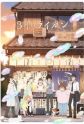
Legends tell of an invincible martial art known as Mutsu Enmei-Ryu, an unarmed style that allows the user to defeat any number of armed opponents using incredible speed and strength. This is the story of three generations of those who bear the name Mutsu, and their encounters and battles with the strongest fighters of their era. (Source: ANN)
Главный
Главный
Главный
Второстепенный
Второстепенный
Второстепенный
Второстепенный
Второстепенный
Второстепенный
Второстепенный
Второстепенный
Stormy_77
May 17, 2007
In a battle between an armed opponent and an unarmed one, does the armed opponent have an advantage? Not if the unarmed person practices Mutsu Enmei-Ryu. Shura No Toki (Age of Chaos) follows 3 generations of practitioners of the Mutsu Enmei-Ryu UNARMED fighting style. The animation is probably the weakest part of this series but the fighting more than makes up for it, this is the most "technical" martial arts I've seen in an anime, without any of the "style", "blood" and "special powers" elements interfering with the purity of the art. This alone elevates this series above any other martial arts type anime offerings. The firstarc is about famed swordsman Miyamoto who seeks nothing more than to find an opponent who can "challenge" him in a fight. He turns down a nobleman's bodyguard job offer and instead suggests the nobleman hire a ruffian eating at the nearby road side stall, a ruffian with a strong aura. The ruffian is Yakumo Mutsu, a member of the mutsu clan. When fights begin, Yakumo distinguishes himself by never using any weapons. One never knows what direction the first arc is heading in, but expects that Miyamoto and Yakumo will have a showdown ... sometime! The second arc is about ONE martial arts tournament. The story centers around revenge but I enjoyed this arc just for exposure to the various martial arts styles and methods of defeating opponents. The martial arts was so good in this arc that I rewatched it 3 times. While I normally like plots, in this arc I felt it got in the way of the martial arts tournament, which was a pure joy to watch. The third and final arc set during the Meiji Revolution is the most plot driven. At times I felt the plot twists detracted too much from the premise of Shura No Toki martial arts, and it did not seem to feature as much martial arts as the previous two arcs. In addition this was set in a later era where there were guns, sigh. No matter how good the plot I found myself comparing this to Rurouni Kenshin, and Shura No Toki's 26 episodes just can't deliver the same amount of storytelling that 100 episodes can. So the ending tried to be too "historical" and skimped on the martial arts action. All in all, I've never seen another anime like Shura No Toki. My buddies who are serious martial arts freaks were all majorly impressed by the fight scenes from a real life technical aspect. We all agreed it was the best example of hand to hand vs. (insert weapon) we've seen. The animation was ok, the sound was good, the story was great, albeit uneven. But everyone enjoyed the characters and action a lot. If you're into martial arts, you should try watching this little known but great anime.
Gobind
August 15, 2008
Story: I think the story is great because how it flows really. In this series they manage to pack so much into each episode without it feeling rushed at all. I really think they did well here because even though each episode was around 20mins it felt just right. The story was pretty good fitting these characters into history which I thought was really good the thing that got me was the 3 different generations, which I thought was awesome. Overall the story is really enjoyable but the last generation is the best. It kept me hooked. Art: Ok, first let me point out that thisseries didn't have a huge budget like other anime where they are able have amazing design due to great financial support. Even though this is the case they still do a good job of keep it presentable BUT i think the TRUE art style they wouldn't to use was the style from episode 24 which was stunning. I think it was unfortunate that the whole series wasn't like this Sound: I believe that the sound for this series was pretty good. The sound track was pretty decent overall. The piano piece I think was amazing personally but the other music was ok. Character: One thing about this series was that there weren't any characters that were straight up annoying like SOOOOO many anime. All the featured characters were pretty enjoyable to watch and through character development to started to care for them more and more even though each generation of people is only about 7-9 episodes each. Enjoyment: YES!!! I really enjoyed this anime and recommend it to anyone. As I said before there weren't any annoying characters which is a GREAT plus but also the way that everything flows keeps you wanting to watch and holds your attention. While the fighting isn't flashy due to super powers its still quite interesting seeing the main characters fight bare handed against legendary fighters. Overall: If you are reading this then WATCH THIS ANIME!!! I enjoyed it very much but as I said I think it would've been much better if they had more of a budget because then I think it would've been 10s all the way but can't have everything ^_^
scottro11
June 19, 2015
As someone who did karate and some other martial arts (albeit unskillfully), for many years, I loved this show. This series was a prequel to a manga about a modern day karateka (Karatepractitioner.) It has 3 distinct arcs, one around the beginning of the Tokugawa reign, where the hero meets Musashi, one in the time of Iemitsu, the third Tokugawa shougun, and one around the time of the Meiji rebellion. Historically, there probably wasn't a roundhouse using martial art in Japan till the 20th century, but if one suspends a bit of historical knowledge,the martial artist and history buff can both enjoy the series. It's far more respectful of history than say, Sengoku Basara. Almost all of the martial arts in the series are realistic. They sometimes use the popular martial arts movie technique of showing a move, then going back in slow motion to show what actually happened. The gerneral animation isn't spectacular. As has been mentioned in other reviews, during fight scenes, the background often disappears, but that's fine, it allows the watcher to pay more attenion to the action. The drawing of the martial arts movements is well done and realistic. The plots are relatively straightforward. In the first arc, a Mutsu Enmei practioner, Mutsu Yakumo meets the famous Musashi. The monk Takuan, known to those who have read up on Mushashi, or the Yagyuus, also makes a small appearance. In the second arc, Mutsu Takato, who is probably his son, drawn the same way though with a different voice actor, participates in a tournament and meets several of the Yagyuus, including Juubei and Munenori (who wrote a treatise that is still around in transation, the Sword and the Mind.) Those who are fans of Munenori may not like how he is portrayed here--he's not exactly evil, but he seems somewhat cowardly and political. Historically, Munenori once singlehandedly killed 7 assassins sent after the shougun, but, one does wonder about the actual circumstances as one swordsman against 7 usually only works in the movies. At any rate, Juubei is the heroic Yagyuu here in this series. The last arc seemed somewhat different. The plot seemed to go a bit more slowly, but I was moved by the fate of many of the characters. This one takes place around thetime of the Meiji restoration, and Mutsu Izumi, again drawn identically but with a different voie actor, becomes friends with the statesman Sakamoto Ryuu. He also runs into the Shinsengumi, including two of their most famous members, Okita Souji and Hijikata Toshizou. Although I did enjoy the third arc, it did seem to drag at times, and probably had less action. Some of the fights in this one stuck me as less realistic than the other two arcs. Although much of it was driven by the trope of skilled martial artist looking for a challenging opponent, one could care about almost all of the characters. I liked the interpretations of almost all of the historical figures. There was a certain lack of realism of course--for example, disrespect to a shougun was tolerated in a way that it wouldn't have been in that time, but I think that any martial artist will forgive its historical accuracy lapses and be glad of fight scenes that could actually happen. To go through the standardized ratings quickly. The art was fairly simple, but the fight scenes themselves were well-drawn. As that was one of the most interesting things for me, I didn't care about the background blanking out during the fights. I'll give it a 7, most for the fight scenes. However, the rest certainly wasn't terrible--it didn't (for me), detract from the show. As for sound, neither opening nor closing song really moved me, I usually skipped them, so it gets a 6. The characters get an 8. I think the trope of fighter looking for a challenge is overused, but I enjoyed each presentation of the historical characters. The enjoyment and overall rating are a 9 for me--I think it was probably greater than the sum of its parts. I don't know how much I would enjoy it had I not been involved in martial arts, but after seeing so many absurd fights in anime, realistic ones are a refreshing change.
chu-san
August 2, 2011
This, in my opinion is one of the most not known, yet the best anime that I've ever watched. I've started with Shura no Mon, and then towards Shura no Toki (in Manga). Soon after, I found out that there was an anime of it, and quickly rushed to my computer to watch it. This anime is quite unlike most of the martial arts animes, since this is pure fighting. No magic, no energy thingys, etc. This is one of the many factors that makes this anime one of my favorites. The story has 3 arcs, all involving one of the most famous Japanese Samurais. The first oneinvolves Miyamoto Musashi, very famous in Japan for his two sword style. The main character in the first arc (Mutsu Yagumo) ends up fighting against him. The second one is about 70% fighting. It involves many well known swordsman, including the son-in-law of Miyamoto Musashi, and Yagyuu Juubei, another well known, and famous swordsman. I personally think this was the worst out of the 3 arcs, but it was still great. The third one, is a paradise for Japanese History freaks like me. It involves the end of Edo Era, and many famous swordsman (Sakamoto Ryoma, Hijikata Toshizo, Okita Souji, etc.) This part rather focuses on a tragedy more than a martial art fight, but involves the best fighting combinations ever. For the art, it's not good, but it's not awful. The fighting and the story completely makes up for it. It's not something you can't watch, but it's definitely not one of those cute little anime girls playing around in a paradise. The art style is a little realistic. The sound is great also. Completely fits in with the story, OP+EP = amazing. What more can I say? The characters are another very good factor that helps make this anime amazing. All the characters seem very realistic and all the historical characters are very similar, if not same to themselves. Almost all the samurais love fighting(which was true for Japan) against strong people to make them stronger. All the Mutsu characters have a great, unique personality, making the 3 arcs unique and not redundant. Overall, I really loved this. I don't even know why many people don't know such a great show. If you've read the whole thing, thanks! I hope my review helps you. Also, read the manga if you enjoyed it. It has better arcs in my opinion (Nobunaga and Yoshitune) ------------------------------------------------------------------------------------- If you are a Japanese history freak, read this also: If you are worried that this anime will change what actually happened (history), don't worry. The best part about this is that the author solved many mysteries in this world (eg: Miyamoto Musashi writing in his diary/book that he has lost once, which he has never done in real history, the mystery behind Juubei's death, the mystery behind Ryoma's survival at Teradaya, the mystery behind Okita's death, and the mystery behind Hijikata's Death) by adding many characters that was behind the thing.
mitsirugi1
November 10, 2018
I have watched this series twice now and will probably go and watch it again at some point. The main reason this anime gets a 10 is because it delivers on what it sets out to do which is make a martial arts anime. It kept to its nature throughout and told the history of japan pretty well and more specifically of martial arts along with it. The action was amazing, the characters were likeable. If you're going into this show wanting something deep, dont. It's an amazing historical show but not some tear-jerking anime. Enjoy it as an action, martial arts, history anime.
Ранг
#1936
Популярность
#4880
Участники
26,310
В избранном
137
Эпизоды
26