Bottle Fairy
瓶詰妖精
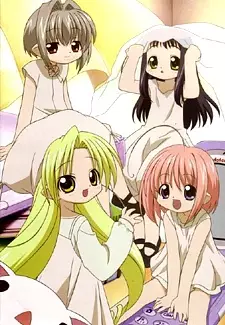
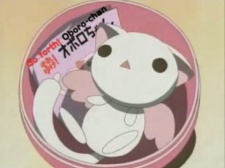
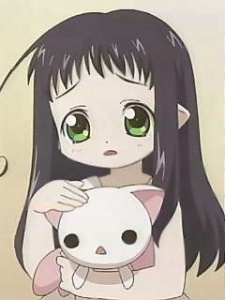
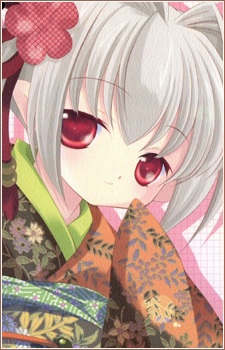
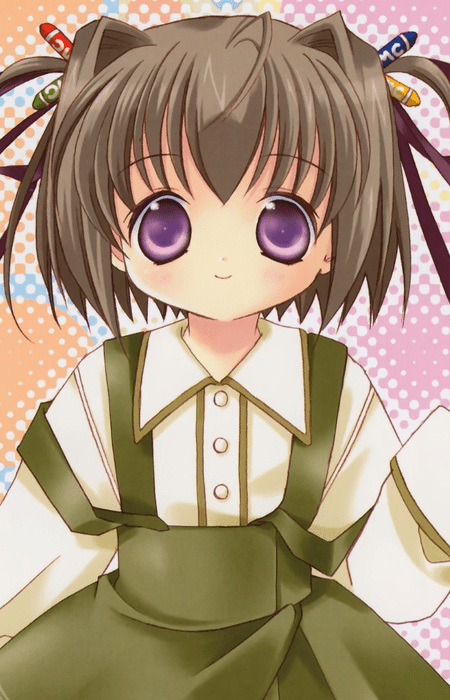
Set in the year 2004, Binzume Yousei is a slice-of-life fairy tale that revolves around four fairies, each represented by four unique colors as seen with their magical bottle jars. These fairies are the extremely peppy Kururu, the reserved and feminine Chiriri, the samurai-loving tomboy Sarara, and the quiet yet quirky Hororo. Fascinated by the human world, these fairies arrived from the fairy world in hopes of participating in the annual traditions and overall way of human life. However, they have a very limited understanding of the human world. Luckily, they are befriended and guided by two humans—"Sensei-san," a university student who they live with, and a first-grade girl they call "Tama-chan," who is sometimes as naive as the fairies themselves. Though these bottle fairies have strange ideas and sometimes have difficulty understanding this new world, they try to make the most of the human experience in their own cute little ways. [Written by MAL Rewrite]
Главный
Главный
Главный
Главный
Второстепенный
Второстепенный
Второстепенный
Второстепенный
Второстепенный
Splitter
September 17, 2008
Anime like this makes me think I'm going to have diabetes before I'm 30. Packed to the brim with saccharine sweetness, Bottle Fairy delivers a heaping helping of brain-rotting sugar... which can be a good or bad thing depending on what kind of anime you like. The story is set up quite well in the OP. Four fairy girls come to the human world to learn to become humans. They pin their hopes and dreams on a boy whom they call "Sensei-san". Living with "Sensei-san" and given advice by his neighbor, Tama-chan, the fairies try to learn as much about being human as they can. It's notthe best "let's make funny takes on everday life" story, but it's certainly not the worst. It's mildly humorous and with a 15-minute run time per episode, it's something you can swallow quickly and easily in between series or if you have time to kill. The plot is shapeless and the story is easily forgotten. Keep your expectations low and you should be fine. This transparent story is told from the perspective of the fairies, each given a generic personality that cater to moe fanatics in particular, but they come off so weak that the cliches that come with them are often just as weak in impact. Generic animation and music abound. Given how long it is, that's to be expected though. It looked like someone had this idea, wanted to make it a reality, but really didn't want to take it seriously. Thus this is a series I recommend if you watch, that you do not take seriously whatsoever. If you do that, Bottle Fairy is actually pretty fun. People who don't mind an unhealthy dose of super-deformed adorability will eat this up, but others who prefer more serious anime will probably want to steer clear. Still, if you're in the former category. It's a quick flash of sunshine you can enjoy and subsequently forget.
Zirgo
August 3, 2007
Bottle Fairy is all about going through each day and experiencing things. Four faeries want to become human but in order to do so they first need to understand what it means to be human. And so they take help from their human friend and Sensei to start their training. This series goes through the Japanese calender and bring up traditions and folklore. It is very funny most of the time as the different personalities of the faeries and the way they interpret situations vary a great deal. This, combined with the fact that the episodes are in a short format, about 11 minutes when neglectingopening and ending animation, make this series really worthwhile when you have a short opening in the schedule and want to have a good laugh at the same time. And ofcourse the faeries are so cute that you wish them luck all the way to "adulthood".
ktulu007
April 24, 2013
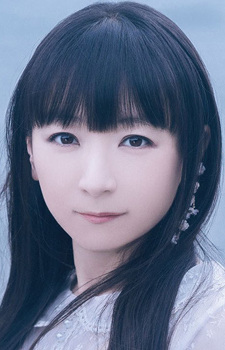
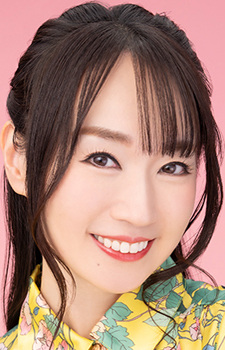
Xebec is one of those studios with a decent output that I've somehow managed to largely overlook. I've reviewed three of their works so far. The good Rinne No Lagrange, the mediocre Bakuretsu Hunters and the downright terrible Mnemosyne. One trend you may notice is that these works tend to be for older audiences. So, how does a studio like Xebec handle an anime with children as the primary audience? To find out let's look at Bottle Fairy. Bottle Fairy doesn't have a cohesive story so much as it does a scenario. Four faeries associated with the seasons come to Earth in bottles wherethey live with a bloke they know only as "Sensei-san" and try to learn about the human world. Unfortunately for them, most of their information comes from television dramas and the first grader next door, Tama-chan, who thinks she's more knowledgeable than she actually is. The main elements of comedy revolve around them finding out about an aspect of the human world, be it love letters, Golden week, a school's opening ceremony or something else, and trying to figure it out and explore it through imaginative play coloured by what they've seen on television and the misinformation they get from Tama-chan. It actually reminds me of Calvin and Hobbes in the way imagination is employed. Now, a lot of the humour in this is firmly based on Japanese culture. However, since the faeries are learning about the human world, I don't think the humour loses much in translation. The audience basically learns about the various aspects along with them unless the audience knows the information already. Except for possibly the jokes that work as plays on words, but there really aren't many jokes like that. Most of the humour comes from their imagined scenarios which are pretty hilarious. The only episodes that don't really work very well are the last two which don't have a lot of the imaginative play that defines the rest of the series in favour of doing a slightly more serious plot. They still have some funny moments, but the humour is much weaker. I do like the way they give each month it's own episode in order to explore a year of time and various events throughout. It's quite a clever setup, especially since there isn't much in terms of plot. The characters in this are quite simplistic. I know, it's shocking when an anime for kids has simple characters. That being said, they are a lot of fun and they interact well with each other. The weakest character is probably Sensei-san who tends to stay out of the humorous segments, returning to help wrap things up. He's not a horrible character, but he is pretty bland. The art in this is cutesy, which fits in with the series even if it's not an art style I tend to like that much, and kind of minimalistic. Don't get me wrong, there are some really good details in the imagination sequences and the costumes they wear during those sequences tend to be surprisingly intricate. However, they never do more than they really need to. So a lot of the backgrounds are pretty bare. This series got a pretty spectacular cast. Nonaka Ai, Horie Yui, Nazuka Kaori and Mizuki Nana take on the main roles as Hororo, Sarara, Chiriri, and Kururu and they're all fantastic. They give energetic performances with some emotional scenes, usually when the girls are over-reacting to something for the sake of humour. One odd thing about the music is that the series has five ending themes. This anime has all of thirteen episodes. I mentioned earlier that each month gets one but there's also a finale. Each faerie gets to sing her own seasonal based ending and the finale has an ensemble cast. So, while it's kind of odd to have that many endings, it does work for the series and they're all sung well. The music is mostly energised and pretty enjoyable. The yuri factor is a 4/10. Here's the thing, the faeries engage in a lot of different imagined scenarios. Some of which put them in the roles of love interests for each other. So you do get quite a few homo-erotic moments in the series. So, how is Bottle Fairy? Well, it's a creative work with a lot of imagination and a great sense of humour. Even with a few weak episodes, it's still really enjoyable. I'm going to give it an 8/10. Check it out for some light-hearted fun. You may just learn something about Japanese culture in the process. Besides, the episodes are less than fifteen minutes long so it's a quick watch.
Cheating
December 14, 2009
Bottle Fairy, cleverly disguised as a lighthearted and innocent comedy about four small fairies discovering the world around then and learning to become humans, also hides a dark side that may not be readily apparent. The man known only as 'Sensei-san' keeps these fairies in bottles on his desk. If you're like me, the first thing you think of is the Legend of Zelda, and you wonder if he sacrifices the fairies to restore his own life. Rather than that though, he uses them as his own personal harem, taking advantage of Stockholm Syndrome, causing a prisoner to develop affection for their hostage-taker. Furthermore, Sensei-sanfrequently has his next-door neighbor over to his house as a guest. Who is his neighbor? A first-grade girl. Imagine letting your first grade daughter go next door to spend time with an unmarried man living alone in his house. She even spends New Year's Eve sleeping over at his house! As if that's not enough, Bottle Fairy teaches poor morals. In addition to all the examples Sensei-san lays out, the fairies, and even his neighbor, Tama-chan, all set bad examples. In one episode, all four fairies marry the same man (polygamy). In another episode, Tama-chan is sitting on her front porch playing a video game, which would be fine, but it's a dating simulation game (usually suitable for 18+ only!) With that aside, the rest of the review... Story There is no story, really. Each episode stands on its own, and it keeps in mind the concept of 'During this month, we must do __________ in order to be human'. Acceptable, but not all humans follow those same traditions. Shortsighted and assuming. Story: 7/10 Art The animation itself is very simplistic, dressing the fairies often in nondescript white blobs, as a service for their painfully generic Sensei-sama. The only reason it got more points was because of the artwork during the ending themes, into which it appears as though they actually put effort. Art:8/10 Sound What, who pays attention to sound? Sound:7/10 Characters Probably one of the main draws to this show. The fairies, although all similar in that they have no idea about the human world, all have unique personalities, except for Kururu, who has absolutely no personality to speak of. It's rather typical of main characters, though, and not to be unexpected. Lost points due to Sensei-san being named Sensei-san. Characters:9/10 Enjoyment Easy to watch, funny enough to matter. Many of the jokes are puns off Japanese words, and may not appeal to people who don't care about Japan. The rest of the humor comes from the interactions of the fairies with one another, and Hororo's brain short-circuiting. Enjoyment:9/10 Overall:8/10 Do not, absolutely do NOT watch this show for moral value. It is a decadent, vile creation. Approach with caution. Also, the way they bury their bodies in food is just disgusting. But sorta cute.
TohkaShido
January 12, 2009
i found the anime Bottle fairy a really cute and anime seiries that can be enjoyed by anyone,the story maybe simple only showing 4 little fairies trying to learn and study the human way of doing so they can be human,but its easy to understand the character design are really cute nice song and graphics
Ранг
#7811
Популярность
#5366
Участники
21,049
В избранном
63
Эпизоды
13