ヴィンランド・サガ
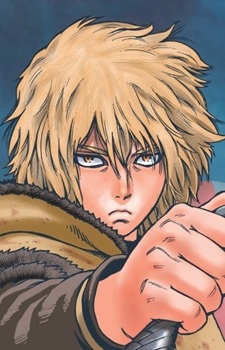
Young Thorfinn grew up listening to the stories of old sailors that had traveled the ocean and reached the place of legend, Vinland. It's said to be warm and fertile, a place where there would be no need for fighting—not at all like the frozen village in Iceland where he was born, and certainly not like his current life as a mercenary. War is his home now. Though his father once told him, "You have no enemies, nobody does. There is nobody who it's okay to hurt," as he grew, Thorfinn knew that nothing was further from the truth. The war between England and the Danes grows worse with each passing year. Death has become commonplace, and the viking mercenaries are loving every moment of it. Allying with either side will cause a massive swing in the balance of power, and the vikings are happy to make names for themselves and take any spoils they earn along the way. Among the chaos, Thorfinn must take his revenge and kill Askeladd, the man who murdered his father. The only paradise for the vikings, it seems, is the era of war and death that rages on. [Written by MAL Rewrite]
Главный
Главный
Главный
Второстепенный
Второстепенный
Второстепенный
Второстепенный
Второстепенный
Второстепенный
Второстепенный
Второстепенный
HellLyter
December 29, 2019
Tales of Vikings pillaging and plundering have always been exciting in my eyes, so the setting of Vinland Saga really grasped my attention. An anime produced by Wit Studio featuring a more historical take on the adventures of Vikings? What could possibly go wrong? A lot apparently. While it started off really promising, Vinland Saga got increasingly worse as it went along. And just like the serene land of England that the Vikings damaged and maimed, the Vikings did the same to the quality of this anime. Though it was primarily one Viking in particular. Frickin Thorfinn This dude is apparently the protagonist of the story,but he does absolutely nothing to deserve this title. No wait, he runs like Naruto and is OP for some inexplicable reason after receiving absolutely no adequate training throughout his young life, so I guess he does check off most of the boxes for "generic anime protagonist." Unfortunately, he has zero semblance of development until the very end of the anime. And his personality throughout the entire show is as stale as expired bread. Now I don't care if he evolves much more as a person in the much longer source material. I'm basing everything off of what I see in the anime, and what I see is a poorly written character whose total stagnancy is astounding. Also, Vinland Saga is considered to be a historical anime and boasts a more realistic take on Vikings. Now no one, least of all me, expected this anime to be entirely realistic. I mean come on, it's an anime after all. But when Thorfinn can accomplish feats like casually charging through hundreds of arrows shot at his head, leaping 12 feet in the air over a moat, sprinting up the side of a vertical castle wall, and running through dozens of trained soldiers in armor while making abrupt slashing motions with his knives that decapitate all of them with one slice, then I start to have a problem with the "realism" factor. Moments like these had deleterious effects on the quality of the anime in my eyes, and Thorfinn's inexplicable demigod-like feats of strength and skill when compared to the generally normal capabilities of the majority of the rest of the cast caused a disconnect with the historical direction that the anime seemed to be aiming for. Of course that loud, mountain of a man Thorkell is somehow worse when it comes to absolutely shattering any sense of realism that Vinland Saga was aiming for, but I don't even want to attempt to talk about that horrendously written character. Yes, I believe Thorfinn failed spectacularly as a protagonist. But thankfully, there's Askeladd. He's honestly much more of a main character than Thorfinn, and is actually quite compelling and given a believable reason for his actions. He's clearly the deepest character and most entertaining part of the show, and despite my issues with many aspects of the anime *cough* Thorfinn *cough* he kept things interesting. He's the type of character that you initially want to hate but then grow to appreciate as time goes on, and I have to commend Vinland Saga for writing him in such a compelling way. But even Askeladd couldn't save Vinland Saga from falling into mediocrity. And that's thanks to the inclusion of another certain character. Frickin Canute Canute is a Norse princess waifu...but he's a dude. The entire arc surrounding Canute can be summarized as Askeladd's vikings with Canute in tow march through all of England in fear of Thorkell's vikings who are in pursuit. It's terribly boring and is worsened by Canute constantly whining to his cone-headed adviser until even Askeladd gets annoyed by his character and tries to make a man out of him. Canute remains stagnant for many episodes until he has this incredibly pathetic and laughable epiphany about love that doesn't really make any sense and his character suddenly does a complete 180. His voice proceeds to drop an octave and his eyes get smaller and sharper to visually imply that yes, Canute's balls have finally dropped. His character transformation is so abrupt and nonsensical that I can only describe it as a monumental failure when it comes to development. This is especially sad because I know that the author of Vinland Saga has the ability to write quality characters. He did it with Askeladd after all. It just feels like he sort of gave up on trying to realistically develop Canute over a proper period of time and was just like "Screw it, he's a badass now!" Which is honestly quite unfortunate. I also find the narrative to be quite weak and lazily written. Sure, it shows on multiple occasions how harsh and cruel Vikings can be, but in reality it just depicts a bunch of dudes traveling around accomplishing not much of anything for like 20 episodes with a few "dark" moments sprinkled in to remind viewers that they're watching a medieval fantasy. I honestly couldn't find much depth or intrigue in this anime at all. It's just not interesting to me whatsoever and feels like a ginormous waste of time. And the whole revenge plot surrounding Thorfinn and Askeladd had about as much substance as the awful revenge plot featured in Masamune-Kun's Revenge. Which is to say that there's practically zero substance, as it never feels like Thofinn makes any progress whatsoever at getting back at Askeladd. Now this would be fine if the anime took the route of trying to develop their bond and bring them closer over the years, but it doesn't feel like that either. That is of course until the anime force feeds us that angle at the end in a last ditch attempt to derive some emotional impact...sorry, it didn't work. The whole show is just Thorfinn being perpetually angry at Askeladd and Askeladd being sort of indifferent to Thorfinn, which was quite disappointing for me. It made the whole anime feel sort of pointless. And when I can draw parallels to frickin Masamune-Kun's Revenge, which is in my opinion one of the poorest produced anime of the 2010s, you just know that Vinland Saga done goofed up somewhere along the line. Despite my harsh criticism of Vinland Saga, I don't actually hate the show or anything. It does have some solid visual and sound work (bar the jarring CGI), courtesy of Wit Studio. And there are some fun fight sequences included. I'm just disappointed that the anime squandered so much potential. While it admittedly starts strong with Thors and finishes strong with Askeladd, the rest...unfortunately isn't the best.
Stark700
December 29, 2019
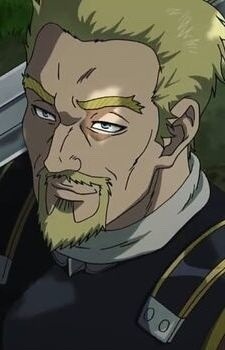
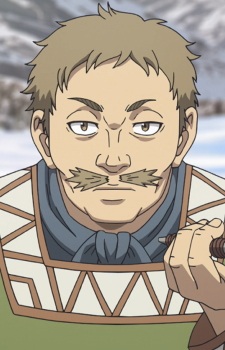
If Don LaFonaine narrated Vinland Saga from the start, he’d begin the show with “In a world….” In Vinland Saga, we are introduced to a Viking world, a world of historical fiction rich with culture and testing the limits of survival. Based on the manga of the same name, it’s a show that teaches more than about survival. If you’re ready to embark on this epic adventure, then be ready for a 24-episode saga like you’ve never experienced before. Thorfinn Thorsson is the Icelandic protagonist, a character with complex personality driven with an ambition. After the death of his father, he becomes a warrior, someone whowill do whatever it takes to get his revenge. In this 11th century, the audience must understand how barbaric life is. Every day is an adventure where possibilities are almost limitless. Vinland Saga is very engrossing with a rich culture and preaches to the elements of historical fiction. This anime adaptation adapts a story to get us familiar with its Viking world, the harsh life of Thorfinn Throsson, and what it means to survive. Besides Planetes, Vinland Saga is mangaka Makoto Yukimura’s most prominent work. The anime adaptation remains faithful throughout the series but the director does mention that “there will be some adjustments to the manga”. With that in mind, the audience shouldn’t need to worry too much because Vinland Saga is fundamentally an adaptation for fans of the original series. The first few episodes takes off to showcase the violence and barbaric nature of the 11th century. From the harsh weather to immense amount of bloodshed, it is obvious the producers wanted to make the anime feels as real as possible. Wit Studio managed to carry a caliber of high production quality throughout a great deal of this series. The landscapes and Baltic Sea are illustrated with gorgeous visual quality enhanced by its realism. The scenes in some episodes contains elements of photorealism, characteristics that makes this show’s visual quality nothing less than a near masterpiece. There’s a Viking culture that we must quickly adapt to such as the rough clothing, crude ships, and historical weapons. Vehicles are replaced by horses and technology is crafted by the hands of humankind. In essence, this anime retains a beautiful setting but with dark elements of complex storytelling. With the characters in mind, Thorfinn is the central protagonist as we focus on his rebellious life. During his childhood, he was happier like an ordinary kid before his life changed forever. Now, he carries a vengeful attitude with a rebellious nature while trusting almost no one but himself. He is what I describe as a survivalist, someone who is opportunistic, wild, and unpredictable. He is fundamentally a decent person although some of his actions are questionable throughout the series. It’s hard to judge his character altogether in this adaptation but based on his actions, you could say he is far from a heroic protagonist. What is important is the relationship he develops with others in particular, Askeladd, the man who manipulated Thorfinn into his service. This becomes a complex relationship because Askeladd was contracted to kill Thors, Thorfinn’s father. As leader of his own Viking band, he is an important figure because of his influence on Thorfinn. And the more you watch Vinland Saga, the more you’ll realize how much certain characters have influence over others. Taking some steps back, the audience should also be familiar with Thors, the father of Thorfinn. As one of the most powerful character in the franchise, Thors is a testament and symbol of warrior. And despite not being around as much as the other characters, Thors teaches us what it means to be a true warrior. This is somewhat in contrast to Thorkell, a barbaric man with inhuman strength and widely considered to be one of the most brutal warriors in the series. He loves the thrill of fighting, to always find powerful opponents, and tests his strength. After encountering Thorfinn, he comes to respect the boy for his inner strength and determination. He is even somewhat honorable in that when facing against worth opponents, he prefers to settle it in a fair fight, without interference or bias. In my eyes, he is a breakout character to always keep an eye on. But Vinland Saga isn’t just about barbarism and violence. It has a society ruled by order with laws and dictatorship. From within the story, we meet Canute, a prince with a cowardly personality and bishonen-like appearance. Created as a foil as some of the main characters, he starts off as a meek man but transforms into a strong headed prince after losing someone close in his life. And that’s what makes Vinland Saga so meaningful. Character deaths are impactful and causes people to change as in the way it’s meant to. I can honestly say from heart that character evolution in Vinland Saga is one of the core fundamentals of the series. It’s not just about evolving characters either but showing the reality of death. It’s a clever way to avoid character assassination by changing their personalities through events. As I watched more of the show, it becomes more and more intriguing to understand each one. Unfortunately, a 2-cour adaptation does limit the potential of full character development. There’s much more to be found in the manga but that’s for another story. If I said it once, I’ve said it a hundred times. Vinland Saga contains a cruel world and filled with moments of despair, emotions, and conviction driven by action. If you’re here to see fan service, it’s served with bloodshed and body horror, not half naked women. It has little time to humor as its time period isn’t an era to enjoy life. It’s to survive in it. What will seduce the audience to this series’ theme ultimately come down its hallmark of creative realism. It manages to be exactly what it advertised from the start and in Thors’ words, make a “true warrior with no sword”.
AndoCommando
December 29, 2019
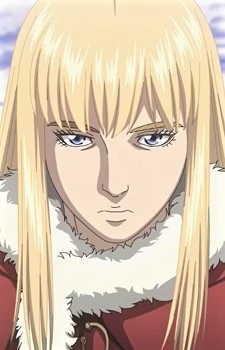
“From the distant north, beyond the frozen sea… They came, bringing with them the black clouds of war.” As the struggles between English and Danes grew worse each passing year, calls for peace had diminished, and death became commonplace. In the wake of these restless times were Vikings; violent raiders who reaped the spoils of war and marched to the beat of their drum. Brutal, merciless and unfeeling, they pillaged whoever they pleased and left only wreckage behind them. And raised by the band who murdered his father is Thorfinn, a young boy driven by hatred, longing to cut down the one responsible and avenge hispast. This is the tale of Vinland Saga, a sprawling epic penned by Makoto Yukimura that thrusts you into a world drenched in bloody violence and battle-hungry warriors. At least, that is what the manga first introduces readers to. Whereas the anime, produced by Wit Studio with director Shuuhei Yabuta at the helm, decides to take a different approach with the saga by telling its narrative chronologically. Aside from a short battle sequence, viewers aren’t subjected with carnage outright, but a calm and tranquil village on the coast of Iceland untouched by the remnants of war. In doing so, it trades the fast-paced feel of its original story for a more methodical slow burn that fortunately retains enough intrigue and uneasiness to keep it from becoming a tedious watch. Such a change carries significant implications for the remainder of its runtime, altering the show’s focus in such a way that brings more light to the world at large. Yukimura is often praised for his passion of technical realism as displayed in his previous work Planetes. Vinland Saga is no different, taking inspiration from Nordic tales that combine elements of culture, family and overarching philosophy into an engrossing plot. Here these features are given slightly more consideration, with early episodes providing a greater representation of the lifestyles embodied in this realistic setting. The nameless faces we encounter, though unimportant to the story at large do feel like real people, with their own goals, families and livelihoods. This level of realism is also found through various anime-only scenes later in the series, that both maintain the steady pace of the show between key events and help in conveying an appropriate air of verisimilitude for its interpretation of the saga at large. With a more methodical approach comes a better understanding of Vinland Saga’s characters initially. Some may be inclined to point out how this comes at the cost of cast members losing some degree of subtlety, feeling forced in the process. But what is important to note is that characters early on lay the foundation for the development of our protagonist. Thorfinn is easily impressionable and holds a curious eye from those he admires, most notably his father who he learned the concepts of honour and courage from. His actions when his morals are tested, and more importantly Thorfinn’s reactions aim to give viewers a clearer look at the bigger picture – a story of personal and global discovery. It is more than happy to let viewers dwell on the tender moments and melancholic scenery before the story inevitably shifts gears. As a child, Thorfinn sat at the feet of the great explorer Leif Erickson, captivated by his thrilling tales and in turn longed for adventure of his own. However, those youthful fantasies are soon shattered in a raid that leaves the boy craving revenge on the band’s leader, Askeladd. Vinland Saga thrives off the dichotomy between Thorfinn and Askeladd. A child’s innocence ruined with only vengeance left in its place, and a man that epitomizes what any Viking would want in a leader: strong, intelligent, calculated and charismatic. One wears his deadened heart on his sleeve, unfazed by the “comrades” around him and content with watching the world burn, while the other holds a silver tongue and laid-back demeanour, masking his desire for influence by any means necessary. Thorfinn is willing to take part in whatever atrocities asked of him if it means bringing him closer to killing his commander, even though he’s just a pawn in the greater game Askeladd is playing. Their relationship is one that walks on thin ice, giving each of their interactions a hint of uncertainty. Not only is it hard to predict how the plot will progress and subsequently where it'll take this band of misfits, but also how Thorfinn will be able to achieve his revenge, if at all. Consistent characterization is arguably the show's greatest strength, as within a story so epic in scope lies a profound study of character archetypes. The source material knows that historical stories often require authentic characters and the adaptation does not forget this. Vikings are neither vicious by nature nor are they depicted as idealized figures of legend, just men hardened through tough lives with dreams of making a fortune. The raids are done less out of malice but rather from the need to survive in a landscape where winters are long and resources are scarce. These warriors are humanized to an extent that prompts questions on the nature of war and those who voluntarily take part in such. The world and its inhabitants are considered for with a more holistic perspective than what anime normally offers, delivering on its rare setting that warrants a mature audience. There have been criticisms lobbied at the anime regarding some of the exaggerated feats of power and use of clichés as if it were a shounen story, which I find ironic given the manga was originally published as a shounen before being moved to a seinen magazine. Being a relatively faithful adaptation, the anime incorporates these parts but gradually grounds them into the plot, convincingly enough to where it slowly but surely no longer requires as much suspension of disbelief from the viewer. While Vinland Saga is rich in depth and subtext, it is still a story steeped in action and combat. Unfortunately, this is where the anime suffers most. It’s worth pointing out that this show does have its merits visually; art director Yusuke Takeda and his staff at studio BAMBOO boast some astounding digital background art that capture the gravity in times of mourning and sorrow. The voice acting performances – Thorfinn’s especially – are excellent in bringing the struggles and emotions to life. Character designs by Takahiko Abiru do well to imitate Yukimura’s artwork – albeit not with such excellent attention to detail or graphic displays of savagery, but still quite serviceable enough for a TV anime. There’s this myth that Vinland Saga is among the likes of Berserk, Kingdom and Vagabond as manga considered impossible to adapt. This is hyperbole, as apart from Vagabond’s aesthetic, these can all be realistically recreated in anime depending mostly on the staff, budget and scheduling. Fixating on atrocious efforts in the last decade only soils the standards that fandoms will have for future attempts. Thankfully, this adaptation is generally effective in transforming the majority of the manga’s illustrations and panel compositions to animated form... Expect for one key aspect: the action. The battles in Vinland Saga look about as disorderly as the computer-generated ocean that our cast frequently sail over. Of course, that isn’t the say that water is the only thing that is CG: the boats are always CG, the foot soldiers often turn CG, the entire environment in long-shots end up being CG, and all these examples of CG integration look especially jarring. It’s reminiscent of Shuuhei Yabuta’s work overseeing the 3D animation on Attack on Titan Season 3 Part 2, with short yet often noticeable faults. The direction overall is still an improvement over his last directorial effort on Inuyashiki, even holding flashes of excellence as the different animation styles, models and digital effects merge into great action sequences. But these moments are few and far between a multitude of scenes looking as though they were haphazardly worked on and do not coalesce well in comparison. Even the more experimental cinematography such as first-person perspective shots that appear great in concept pale in contrast to other anime that pulled off the same technique far better in the same year (Mob Psycho anyone?). By the time it finishes airing, there will be those eager to shower this series with immense praise for the art and animation, whilst forgetting to mention the inconsistent nature of its visuals. It’s tumultuous. There are great screenshots you can take of the anime at its most expressive and colourful – most of which are found away from the action. Likewise, there are short clips that highlight the visual blandness and worse portions that barely look as though they belong to the same season. The action still holds tension and weight when watching, but half the time you are probably better off glossing over them. These action scenes do gradually improve over the season, even if simply by not being as ambitious as before. However, there still lies various issues within the script that are worth mentioning, if only for their lasting effect on the project. Earlier I pointed out the importance of historical accuracy in Vinland Saga that pervades every corner of its setting. For the most part, the anime remains accurate in its portrayal of 11th century Northern Europe. But the screenplay is where most of its discrepancies exist. The staff in charge of writing such altered sections from the source material that acknowledge proper cultures, only to have such be overwritten for what I can only surmise as for the sake of localization. This furthermore muddles the various languages that characters are meant to speak throughout the story. There were never complaints about the manga including morsels of lore into the plot, and all these changes do is needlessly break immersion and consistency. This dialogue is also laden with telling the viewer actions that are clearly shown seconds beforehand. These could easily be brushed aside as nitpicking, but when these instances happen time and time again, it’s no longer a nitpick; it’s a recurring problem. But nevertheless, these problems do little to take away from the overall experience that makes Vinland Saga such a special piece of fiction in the realm of manga and now anime. While the premise does tell a tale of revenge, there is a balance ever-present. It rides a line which avoids getting too heady for its own good, but at the same time follows a linear path that realizes its potential to be intellectually stimulating. Drawing you in with its copious amounts of violence, before peeling back the layers to reveal something truly meaningful. Look beyond the strokes of bloodshed from mere pawns and see what caused these acts to occur. Vinland Saga casts a mirror over this time in history, on both famous figures and those forgotten overtime and simply asks us to think over what is shown. Consider if Thorfinn really has any enemies to justify his pursuit for vengeance. Ponder over the musings of a priest that fall on the deaf ears of most Vikings. And imagine if there were a land somewhere, far from slavery and the flames of war. Of all the clashing ideals of love, war and pacifism at play, the most fascinating comes from Prince Canute. Hard to fathom at first, being introduced as timid and weak, even drawn with a bishounen appearance. His inexperience in times of conflict and inability to function without his servant make him wholly unfit to rule over anyone, as demonstrated once held hostage by Askeladd. Every man is a slave to something: Thorfinn to his anger, Askeladd to the past, Thorkell to the battlefield and Canute to his own comfort. But it is once he loses the person closest to him when the shackles around him are broken. His preconceived notions about the world are shattered, leading to a startling epiphany where he is born anew as the strong leader history remembers. Canute’s ambition to spite God and create a utopia on Earth is chilling to watch develop, with heavy piano music accompanied that while ill-suited for the setting, hits all the emotional beats. His motivations not only serve as a compelling transformation of his character, but bring into question basic tenets of love and freedom with an intriguing yet complex theological framework. If the Vikings represent a struggle of maintaining independence, Canute's arc symbolises the first steps toward a nation state, where freedom is forcibly exchanged for stability – and the Prince is more than willing to cut his father down to achieve that dream. ‘Every action has a consequence.’ Behind the brutality and political scheming lies this constant message. They are felt by each character and echoed through the narrative. In part, this is what makes Vinland Saga such an unpredictable journey. Thorfinn’s past catches up to him and tries to sway him from the existence he chose after seeing his father slain with his own eyes. Askeladd’s craftiness and quick decision-making for years has brought him to serve under Canute as his right-hand man. And the Prince’s circumstances caused by the King’s order has resulted in the emergence of his greatest threat to the crown. From the beginning, the series has prepared its stage for an inevitable impasse, with each piece carefully positioned for their own personal growth. But despite all the planning and deliberation possible, the world may decide to deal you a different hand. The nature of the world is unflinching, with unexpected endings sometimes being peaceful, tragic and even undeserved, for better or for worse. After everything being built up to this moment, we are given more questions than answers, and left in shambles, unsure of what awaits these characters in the saga’s next entry. The prologue concludes. Such is life, and such is history. - - - - - - - For years, Vinland Saga has been proclaimed as a must-read classic manga, and here the anime does it justice. It’s a powerful tale with well-defined, palpable characters all living in a harsh yet beautifully captured world brought to life by rich colours, stellar landscapes and a varied selection of melodies that help convey a specific tone. Presenting the narrative in a different medium where it does falter on occasion, but essentially stays true to the heart of Vinland Saga, even providing original content that compliment the core material with a strong directorial voice and impressive execution. Some may be concerned for where the series can go after such an ending. But let me assure you that Vinland Saga knows what kind of story it’s telling, and it is nothing short of remarkable.
xGrenadier
December 29, 2019
The following will be more of a critique, rather than a review, so expect a lot of spoilers. As a foreword I'd like to say that, while I do realise that the historical tag doesn't contain within itself a "realistic" tag, the events that play out in Vinland Saga are an absolute farce, given the time period and historical background. Even the suspension of disbelief made out of titanuim would eventually crumble and collapse under the amount of stupidity this show contains. With that out of the way, let's begin. -Characters Thors The Troll (aka Thorfinn's dad) - he is the most ridiculous character in Vinland Saga, as hisbackground, decisions and moral stance make him seem simply insane in the world he inhabits. Thors is the former commander of the Jomsvikings, who, after the life full of war and bloodshed, decides to do a complete 180 after holding the hand of his newborn daughter. No meaningful setup, no explanation, no nothing. A man whose entire existance revolved around warfare, turns into a pacifistic buddha in less than a minute at the snap of the fingers. If you think that's acceptable, there's nothing I can say. Thors also shows his excellent decision making skills as early as the first episode, where he buys a runaway slave at a death's door. The payment? 8 sheep. Yes, a man that lives in Iceland of all places, during the winter, who also has a family, trades 8 sheep for a man that's about to die. If that's not a stunning display of stupidity, I don't know what is. He is also the strong proponent of childish morals on the level of: "If you kill your enemies, you're no better than them". Truly insipiring coming from a man who lives in 11-th century and who also happens to be a former leader of what is essentially a warband. Thors' death is yet again brought about by his inability to make well-thought out and weighted decisions, as he thinks that pirates(!) will honor his request, only to end up being shot down by a squad of archers. He also dies standing tall and proud, because of course he does. I also forgot to mention, that his ridiculous morals are further reinforced with the fact that he always fights unarmed and manages to defeat entire groups of fighters armed with swords, axes, shields and etc., as if he was Kenshiro from Hokuto no Ken. Thorfinn - a non-character that is defined by a singular trait and nothing else: a vendetta against Askellad, cause in his twisted logic - it's Askellad who is responsible for his father's death, and not his (Thors') stupidity. There's really nothing to say about Thorfinn, even if I wanted to. He's moody and edgy, talks primarily by barking out the same phrase over and over, or using edgy one-liners. Whenever someone mentions his dad he simple flies into a blind rage. As for his abilities as a fighter, he, for whatever reason, has an acrobatic fighting style with dual-wielded daggers (sometimes he weilds even 3 daggers, holding the third one in his mouth, as if he was Roronoa from One Piece), and, like a character that we'll get to soon, seems to be able to use shukuchi, as there's no other explanation for his sudden teleportations during fights. Askellad - a character that is hailed by fans as someone who is on par (depth and development wise) with such characters as Guts, Spike Spiegel, The Laughing Man, Shinji and etc., you get the idea. That is however, a blatant lie, though I will concur that Askellad is a lot better than the rest. He's a bastard son of Olaf, a local hero and greatest warrior of some city in Denmark, who once upon a time made "love" with a slave girl from Wales, which resulted in Askellad being born. This awful circumstances result in Askellad having one definitive trait and burning passion. The trait - hatred towards danes. The passion - to kill all said danes, or the very least subjugate them. Taking Askellad seriously was not too hard, until the flashback of his childhood occured in episode 22 or 23, where an 11 year old, who did nothing his entire life except clean the stables, clean the snow and taking out ash from the furnaces and fireplaces (that's where his name comes from, by the way), managed to hold his own in a duel against his father and local war hero Olaf. How was he able to go toe to toe with someone like that (eve if it was for no longer than 40 seconds) is never explained and the audience is just expect to accept it. Sorry, but that's not happening. Another thing he's known for is his "genius" schemes, in which he attempts to play his enemies, but achieves a pyrrhic victory at best, though he did manage to outwit Thors, but that's hardly an accomplishment. As he later states himself, most of his problems stem from the fact that his daddy (Olaf) didn't love him and his mom, and treated them like cattle. Canute - a young man, whose timid character and androgynous features lead others to mistake him for a woman. Like the rest of the cast, there's not much to say about Canute. Since his introduction and until episode 21, he was a sissy that did nothing except prayed to Jesus with his aide and a priest at his side, and abhorred war and everything that's moderately associated with it, which in turn led everyone else to point and laugh at them. In episode 21, he has a 3 minute discussion with priest about human nature and love, during which he arrives to the conclusion that humanty is flawed by it's nature, and that he'll be the one to right the wrongs and save everyone. This, together with the fact that Ragnar (his aide) was killed a few episodes prior, causes his metamorphosis from who he is into a discount version of Griffith from Berserk. Also, just like Askellad, the core of his issues comes from the fact that his father (the current king of Denmark) didn't spend a lot of time with him when he was a child and never loved him much nor accepted his unorthodox behaviour (for the times of the setting), which resulted in Canute treating Ragnar (his aide) as his actual father. Bjorn - another non-character and Askellad's right hand man. He's quite strong, and, in time of need, is known to consume mushrooms that cause him to enter a state of berserker rage, when he becomes violent to such an extentet that he is unable do distinguish between friend or foe. He's just there, but at one point he finds out that Askellad is not a pure dane, and that he actually hates them, which leads Bjorn to defect from Askellad. This conflict concludes in a duel which Bjorn loses, his last words being that he only wanted to be friends with Askellad *yawn*. Thorkell - an individual of exceptional stature, size and physical build, who is said on many occasions to be one of, if not the strongest warrior. In an interesting contrast to this is his behaviour, which is that of a child, as all he does is expresses glee and joy at the though of a battle, and wants nothing esle except that - more fighting. He is also the leader of an army that consisting of 500 men. How those 500 men can consider him a leader and follow him, when he has 0 leadership skills and also doesn't seem to rule over them with fear, is beyond me. Thorkell is also the character responsible for most damage done to one's suspension of disbelief, as he lifts boulders that weigh a couple tons above his head and hurls them. At one occasion throws a spear over what seems to be a distance of no less than 400+ meters and manages to impale 4 people on the said spear (somehow), and more. He used to serve under Thors during his time in Jomsvikings and has great admiration for the man, as he is the only one to ever beat him (how could that have happened is never shown, nor is it beliavble, but w/e). Therefore, he also expects Thorfinn (when he's confronted with him) to be up to par with Thors in that regard, something that Throfinn barely manages to deliver in their first bout. The rest of the cast do not warrant to be looked on individually in my opinion, as they can be summed up in a single sentence. -Plot Guess it's there? The titular Vinland is brought up about 4 times during the course of 24 episodes, some characters think it's heaven on earth and want to get there, and that's about it. The plot over the course of 24 episodes encompasses the following: How Thorfinn turned from the cheerful little boy in the first episodes into who he is now. Flashbacks to the past of the main cast, to establish them (which does a very poor job of that). A ring around the rosy between Askellad and Thorkell, which results in their alliance at the end of the day and Canute's transformation from who he is into a discount Griffith, and the following plotting against King of Denmark. I do undesrtand that it's a prologue, but in my opinion it's neither engaging nor interesting. -Sound As I always say, OST is mostly subjective. Some people will like a certain OST, others will not. What is not subjective however, are the awful sound effects that plague this show. This isn't the first intstance of horrendous sound effect, as currently running Fate/Grand Order Babylonia suffers from equally awful sound effects, as did many other anime that aired this year. As for OST, personally, I cannot remember a single track from it, though I do remember the very weird mix of what seems to be a typical orchestral music and hip-hop, which is a very strange choice, and doesn't work with the atmosphere or the setting. Both OPs and both EDs are pretty bad, especially the second ED, which is simply abhorrent. -Art This has been extensively adressed by a lot of people in preliminary reviews, but I will go over it briefly for the sake of it. The CGI is unbelievably bad, so bad in fact it's simply indefensible. Attempting to close the eyes on the quality of the CGI here is a disservice to the community and a blatant acceptance of awful mediocrty. The art and animation themself are nothing spectacular either, characters often have silly expressions, are off model and etc. The animation in fights, especially duels, is severly lacking and pairs awfully with the horrendous sound design. When you're shown a wideshot of a large scale battle, it's simply full of same looking 3D CG models that are stuck in a single animation loop. -Summary It's your average run of the mill shonen devoid of interesting characters and story, very much like Kimetsu no Yaiba that aired earlier this year. But at least Yaiba was done by ufotable and at least it had visuals going for it (2D characters on 3D background still look absolutely vile and awful though). Why is this hailed by majority of people as a better Berserk is something I cannot comprehend whatsoever. What hurts the most, is that it's from Yukimura Makoto, the original creator of Planetes, a manga that was highly acclaimed and praised for it's realistic depiction of space and things associated with it. Planetes also has a magnificient anime adaptation by Sunrise, and is one of the best anime out there. To say that I'm severely dissapointed by Vinland, is to put it very lightly. Final Score: I can't believe this is from the author of Planetes/10. (1/10). I would also like to thank my friend for proof-readind and helping with the editing.
Marinate1016
December 29, 2019
There was a time when Vinland Saga was considered unadaptable. Along with Berserk, Kingdom and Vegabond, no one would touch it for 15 years. Man, have WIT proved everyone wrong. Vinland saga was absolutely masterfully crafted from beginning to end in every aspect. The story follows a young Icelandic adventurer on his quest for revenge so of course there’s great fight scenes, but where Vinland succeeds is its absolutely amazing writing. When watching the series, I genuinely forgot that I was watching an anime at several times. The acting, OST, writing and direction create a very live action experience and just feel Oscar worthy and real. VinlandSaga also maintains a very grounded approach throughout. Everything feels realistic. This is not a series with crazy power-ups, energy blasts, superpowers, etc. It’s about a man on a journey of self discovery and the lessons learnt along the way. Lessons which are very applicable to all of our lives. The character interactions, development and world-building are some of the best I have ever seen. Of course the fights are well done, but you’ll find yourself being absorbed into the story and characters in a way that rarely happens. In conclusion, if you’re a fan of GOT, history, seinen, anime with character driven stories and historical dramas, you will love Vinland. It is undoubtedly the new anime of the year and with WIT seemingly not doing SNK season 4, should be their new crown jewel.
Ранг
#41
Популярность
#62
Участники
1,793,765
В избранном
56,637
Эпизоды
24