


Evangelion: 2.0 You Can (Not) Advance
ヱヴァンゲリヲン新劇場版:破
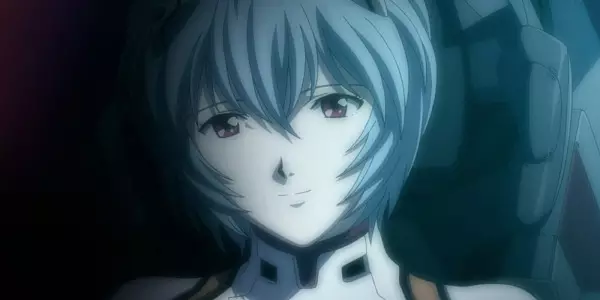
When the threat of the Angel menace escalates, mankind's defense force is pushed to its limits, with NERV at the forefront of the struggle. Shinji Ikari and his partner Rei Ayanami are assisted by two new pilots: the fiery Asuka Langley Shikinami and the mysterious Mari Illustrious Makinami. With the aid of their mechanized Evangelion units, equipped with weapons perfect for engaging their monstrous opponents, the four young souls fight desperately to protect their loved ones and prevent an impending apocalypse. But when startling secrets are brought to light, will the heroes' greatest challenge prove to be the monsters...or humanity itself? [Written by MAL Rewrite]
Главный
Главный
Главный
Второстепенный
Второстепенный
Второстепенный
Второстепенный
Второстепенный
Второстепенный
Второстепенный
Второстепенный
Touka
August 11, 2009
Every once in a while an anime movie is released to enormous widespread acclaim; the likes of Akira, Ghost in the Shell and Spirited Away were hailed as sublime, game-changing features. Evangelion 2.0 is no exception, a film perhaps not as innovative now as the original series was at the time of its release, but nevertheless an awe-inspiring work that raises the bar ever higher - an anime feature up there with the greats. While the first Rebuild of Evangelion movie followed the series closely, events are drastically changed in 2.0. The plot vaguely follows episodes 8 to 19 of the series (and picks up fromwhere the first Rebuild movie left off), but it's during this film that the 'remake' starts becoming the 'reimagining' Anno said the Rebuild tetralogy would be. A treat for fans new and old, the new canon material does not disappoint. Twists and turns - as expected - are ever present, new characters enter the fray and the plot takes fresh, astonishing directions while retaining its mysterious, engrossing aura. The pace is near flawless and both veteran fans and new audiences alike will be able to watch with wide-eyed excitement and suspense as the new plot unravels. The animation and art are one of the absolute stand-out elements in Evangelion 2.0. As in the first film, the Angels have been given a make-over, along with the Evangelion units, the futuristic, ever wondrous city Tokyo-3 and even the characters. Between them, the animation staff for the Rebuild tetralogy have worked on a huge number of highly acclaimed works, which includes the original Evangelion series. The team create an alarmingly beautiful world among all the chaos and destruction, with such intricate attention to detail, stunningly complex designs and action set pieces unlike anything before it. The art style is bold, clean and dazzling, and the animation is dynamic, majestic, smooth and ever fluid. Studio Khara have set a frighteningly faultless example to other animation studios - they've outdone themselves. The music was composed and arranged by Shiro Sagisu - who scored not only the first Rebuild film, but also the original series and The End of Evangelion - and recorded at the famous Abbey Road Studios with the London Studio Orchestra. Music has always been a very innate part of Evangelion; as integral as the Evangelion units themselves, and it's no different in Rebuild. Sagisu creates a fine amount of stunning compositions that further bring to life Tokyo-3, the characters and the phenomenal action sequences. Rebuild 2.0 even has it's own 'Komm, süsser Tod' moment where an upbeat song is played in contrast to a brutal sequence, with the lyrics adding a welcomed sense of irony, which is what we've come to expect and delight over from the Evangelion franchise. The ending song is provided by Japanese sensation Utada Hikaru, who offers a beautiful acoustic rendition of her famous track 'Beautiful World', a perfect companion piece to the ending, again in contrast. Rebuild 2.0 excels in its characterisation. The charismatic Asuka is introduced, who adds a whole different vibe to the film and there is yet more original material for fans of the series, as established characters such as Shinji and Rei develop significantly, the latter in directions you may not expect. A completely new character - Mari - also joins the fray. Much of her motivations are shrouded in mystery, which allows the film to stay at a consistent pace and prevents it from becoming bloated, considering the amount of characters and plot developments already at hand, but her presence adds yet another exciting new element, along with some comic relief. Despite a cast of characters that were established almost fifteen years ago, they come across in Rebuild as very fresh, very unpredictable. These aren't the same characters from the Evangelion series, they're new interpretations, new versions; with a clean slate comes new directions, new experiences - in areas the film becomes as fresh to long-time fans as it is to new audiences. Rebuild of Evangelion 2.0 is an absolute spectacle, as astonishing to the eyes as it is the ears. The second film is able to out-do the first installment in every aspect, all the while taking the story in thrilling new directions for fans both new and old. A remake would have been too easy for Anno and his team - instead they have gone above and beyond, recreating the Evangelion universe we've come to know and love, offering us new interpretations fifteen years on, proving - with some ferocity - that Evangelion is far from gone. Rebuild solidifies Evangelion as an absolutely exceptional franchise, continuing to awe-inspire fans the world over, reminding us all why we fell in love with it in the first place.
MikeOnHighway61
April 10, 2011
I've been trying to overcome the 'great depression 2.22' that came over me and lasted for over a week now after watching this movie and the only way I can do it is by writing this review. I hope you'll bear with me here, this is going to be a bit of a personal review, but I'll try to be fair. My anger has vanished in most parts although if someone says the words "sabisu sabisu" for a tease I still feel like kicking his butt delinquent-style. There never was an anime series in my entire life as an anime-consumer that moved, influenced and fascinated meas much as Hideaki Anno's original NGE series. I can not describe every single detail about the original series' ingenuity for it would take too much space in these few lines (since this is a review about the second rebuild film). Let's just say that I have never encountered another anime series with more finely written, intelligent, charismatic, understandable and individual (probably the most important characteristic considering the whole bunch of archetypes today) characters combined with an exciting and cleverly told plot and a superb atmosphere from which we can learn a message that is important in all periods of our lives. When I first heard about Anno and the old crew directing a series of Rebuild movies, I didn't really know what to say. He said that the old NGE series was not fit for newer generations and that he would have to update it for them. He probably meant problems that emerged in society nowadays, so I trusted him. I was quite happy after watching the first movie that stuck pretty much to the original first quarter of the series and was looking forward to the second movie which should integrate new elements (although I was REALLY afraid of that new character wearing a pink (!) plugsuit). Then I saw the ratings on MAL and my excitement grew. What did they change? The answer: everything. - The Characters: In general, we can say that every fascinating character from the original series just turned into some kind of stereotypical alternative version. There is not a single trace left of what once was a psychological profile given to them. Not only did they simplify the characters, but also gave away their backgroundstories in some kind of 'in-your-face!' manner, so that subtlety became a foreign word. Of course, you may say, this is a movie and you can not rebuild complex characters within such little screen time. It's not like they do not get any screentime in the movie, there's plenty of it around, but the creators don't use it at all (except for dull slice of life sequences and ecchi fanservice)! I'd like to take a look at the changes from the original series and analyze what the new character's personality is like, so as for people who haven't watched the thing yet I'll write down a [SPOILER TAG] here, so I can go into detail: Shinji Ikari: Original: Lost boy who gains some confidence while working for NERV but always feels left alone, feels rejected by everyone, trying to find a personality on his own, craving for affection from anyone ----- 2.22 Version: your typical shounen hero and also a harem lord 'I wonder who of my love interests can cook better?' Asuka Soryu Langley: Original: Lost girl who strives for affection from anyone by any means necessary, is still haunted by past, inferiority complex ----- 2.22 Version: Violent tsundere archetype randomly in love with the harem lord while being exploited for lots of fan-service: 'Kyaah ecchi!' (oh yeah, and she's talking to a sock puppet, now THAT's subtle) Rei Ayanami: Original: Scientific abuse incarnate, an artificial lifeform that is torn between substitutability and development of personal feelings towards society and her creator ------ 2.22 Version: Kuudere archetype who discovers her random love for the harem hero 'Whenever I think about him, my chest feels warm...' Misato Katsuragi: Original: Being left alone by her father's death, she has to encounter a harsh world after the second impact and makes her way to the top with discipline, although she hides an easy-going side inside which she only shows to people dear to her, craving for affection from anyone ------ 2.22 Version: Supporting cast who's just there to tell you EVERYTHING you need to know about the EVA mystery 'in-your-face!'-esque. Misato's fate is shared by every other character in this movie (except for Kaji, he's there to make you laugh with silly attempts to speak the english language, best scene in the whole movie), so I spare you the ranting here. and finally, my 'favourite' 'character' from this 'movie' (ok, that last quotation mark was just for fun) Mari Makinami Illustrious (yeah, that's her name, folks, I didn't know it either, but I read it on the package of the DVD after watching the movie): well, Mari, she... she's... yeah, she has a nice rack... and... aaannnd... she wears glasses and... a pink plugsuit... and she is the most UNFITTING 'CHARACTER' FOR THE BLOODY DAMN NEON GENESIS EVANGELION FRANCHISE!!!!! ... Ahem, sorry for that, but it's true, a 'character' who's there for the whole purpose of fanservice and hollywood action scenes has nothing to do with the (let's say) 'realistic' world of Evangelion. She's even enjoying the EVA fights, what's this?! they always depicted the war against the angels as a terrible burden for the youngsters (which it IS) and she's enjoying it?! And what about that parachute, ahh, nevermind, let's go on...-.- [END OF SPOILERS] - The Story: Now, what I can say about the story in general is that they really tried to create something different and the way the movie ends, it really is possible they are going to change it into something else. But this doesn't mean it's going to be good, really. The whole purpose of the background story in the original series was to be discovered by the audience bit by bit so that they could put all the pieces of the puzzle together and create their own interpretation of what's happening. Now, Hideaki Anno assumes that kids these days don't use their brains anymore so he presents the story with every bit and every little mystery directly in your face. You do not need to think about it, the characters will tell you everything you need to know. This simplification destroys everything the smartly presented plot of the original show stood for. - The Design: This is the most surprising thing about the whole movie. People tell me everywhere how great this thing looks and how smooth the 3D animations blend in. But you know what? It is not true, it's simply not true! The 3D evangelions look like ingame graphics from a poorly programmed ps3 game. Not only do the 'great' 3D effects make EVA02 blend in like Krauser II on a K-On concert, they also allow us to discover silly programming mistakes like transparent school desks (if you don't believe me, take a look at shinji's classroom). And for the design changes... sheesh, you shall see yourself... ('Test-Plugsuit' and 'Za biisuto' eh, gosh...-.-) Of course the drawings and character designs are ok, it's Yoshiyuki Sadamoto, the original designer, after all (he tends to go for the 'one piece' hip, but that's ok here). - The Final Conclusion: I am absolutely sad to say it, but 'Evangelion 2.22: You can (not) advance' is one of the worst pieces of celluloid anime movies I have ever seen, considering its predecessors. There is not a single shred of intelligence left in this bleak version of a once brilliant series. I trusted Hideaki Anno and his nakama, for I thought they were some of the few people left in the business taking their job seriously and trying to really give something to the audience instead of just taking their money for cheap entertainment. But that's what happened and that's what Evangelion 2.22 is, cheap entertainment. I still can't really believe it. And what's even more important: What's up with all the people who love this movie and call it masterpiece? I really could understand it if there are people who don't know or don't care about the original work (archetypes substituting real characters is common today) or watched it for tits, they will have their cheap thrills with the hollywood action and the countless fanservice ecchi moments and maybe really like it as the Gurren Lagann it wants to be (hey, GL is great, but NOT NGE!). But for the Neon Genesis Evangelion fans who loved the series for everything it stood for, all the attributes I mentioned before, everything that EVA 2.22 destroyed and spat upon, I do not understand them at all...-.- ---- Oh yeah, and here's a little speculation to round out the review that requires a [SPOILER TAG] Just a little conspiracy theory, my only hope that keeps me from screaming 'zetsubou shita!': All of this ridiculous nonsense could just be Shinji's first attempt of creating a new world, but based on his teenage dreams and thus filled with bullshit teenagers might find interesting and kakkoii. As a conclusion Hideaki Anno once again could draw the ace up his sleeve here and say: "This is nothing but fantasy bullshit, it doesn't have anything to do with reality! Get a life, kids!" kinda like he did in the original series. That wouldn't really make this movie much better, but it would not kill the whole franchise. Until the next movie comes out, I'll just pray every night that "sabisu sabisu~" was just an ironic hint to that outcome! [END OF SPOILERS] Thanks for reading
Ornette
June 27, 2009
Firstly, as if it needs to be pointed out, things in this movie have irrevocably changed from the TV Series. So different are the events in this movie, that, even with the 30 second preview at the end of the film, I have no clue what’s going to happen in the next movie (which will be called Evangelion Q, Quickening). Another thing is that things that were considered mysteries of the original TV series and movies are either gone altogether, changed, or spelled out. A lot of the visuals were eye popping stunning. However, there were times that it looked a bit grainy, kind of likean image that had been upscaled. The music was a bit hit or miss, with some corny music playing at seemingly inappropriate times. But when it was hit, it was really good, especially the music that played at the end of the Bardiel and Zeruel fight. The movie starts with pure action, and as expected from seeing the trailers, there was a good bit of action throughout this movie. To balance it all out, there is also some character interaction and development, enough to flesh out the characters like Asuka and Mari. I especially liked the cuts of Tokyo-3 bustling and filled with people doing their thing and living their lives. Asuka seemed much more likeable, probably closer to the definition of tsundere. Rei smiles a lot more and her caring of Shinji is made obvious. Asuka’s animosity towards Rei is, in no small part, due to Shinji. Mari is crazy, and she has a nice rack. Kaji got an unexpectedly large amount of screen time and seems to play a bigger role than in the TV series (whether this is true is yet to be seen). There’s also a good bit of Penpen, who does a bit of “almost” talking. Overall, great movie, I enjoyed it quite a bit.
ChrissyKay
March 28, 2015
Yup, that's a hot row of 10s right there, blatant and unabashed praise for the Evangelion Rebuild series, or as it should really be called; "Anno's Attack on Anime". Here's the truth: as an out-of-context standalone, this movie is a sack of shit. It's essentially harem-shonen-mecha-explosions with shallow characters all defined by their unexplained and nonsensical heart throbbings for Shinji, God of War. It doesn't present itself in this way, though: it's actually incredibly smart about it, sticking close to the original series in regards to content but constantly cutting and changing small things so that the end result is something that appears to bea blockbuster epic but is in actuality just a continuation of Sword Art Online with much subtler writing, fantastic pacing and directing, and a 30-billion dollar budget. Luckily, Evangelion 2.0 is not an out-of-context standalone: it's part of a series with a legacy, and its connected to two other movies. The first movie is essentially just a gorgeous recap, so there's no real reason to talk about it. It's the hook of the series. Look how pretty Evangelion is now! These giant robot fight scenes have suddenly gone from 'dated' to 'the prettiest goddamn shit you've ever seen'. It's a little fast-paced, but it gets the job done. Rebuild 2.0 is a whole lot more than that though. For starters, the original story gets scrapped. The movie vaguely follows the middle arc of the series, but by the end it's completely different. We have new characters, new character dynamics, new events, and a different ending. Some changes are subtle, others are not, but all of them work together to serve the story: and it sure is one hell of a brilliant story. It manages to juggle two different extremely contrasting goals at once and blend them together into something that works for both of them. On the one hand, Rebuild 2.0 is trying to gather as much of an audience as possible. It wants people to watch it and love it and crave a sequel. It's extremely clever about it as well: it doesn't just go for the Transformers appeal, it constructs scenes that are intended to be legitimately moving and others that come off as psychological horror. The characters are actually pretty vacant, but with the help of the absolutely stunning soundtrack and writing that walks perfectly on the line between dramatic and cheesy. It doesn't fall into any of the pitfalls that action-packed pitfalls are so readily criticized for: Shinji is not constantly overpowered but he's not exactly wimpy either, female characters are not entirely dependent on their male counterparts, the plot and pacing are concise and readily understandable, and the conversation is seemingly meaningful even if upon closer observation it's just an empty shadow of the original Evangelion's Words of Truth. The result is a Fullmetal Alchemist Brotherhood-type story that isn't really about anything but does an amazing job at filling out all those little MAL numbers on the quality checklist. It's "power of love" conclusion doesn't even seem cliche as it derives naturally as an interpretation of Shinji's character and his inability to make decisions for himself or make real connections with people. How inspiring! Shinji discovered that all he really needed was Rei Ayanami all along. Now this is where it gets absolutely F8ckign brilliant. Let's talk about anime for a moment. At this point, anime is more than a medium of storytelling: it's a culture, it's a genre, and it's a lifestyle. There are massive amounts of people who LIVE anime. With dozens of industry giants churning out hundreds of shows each year there's never a shortage of things to watch, and the producers know their audience. They know what the appeal is: the ability to live in a fantasy world that makes you feel powerful, cared for, and free from reality. You can escape into a world that is completely unbound by any of the aspects of our world: unlike live-action television which still uses actors and settings that are shot in real places with real people, anime is an entirely-constructed world. It's a fully immersive experience. Don't get me wrong: this can be an incredible feature used to tell stories that are profoundly effective and engaging. I love the genre for what it CAN accomplish and the brilliant and insightful pieces that it often produces. However, there is a lot of stuff that is not so brilliant, insightful, or useful. It strives not to inspire or enlighten its audience but rather to appease them, to make them feel more attached to their own fantasies and less attached to the real world. It seeks to disconnect them from real people and replace them instead with fictional characters that they can understand easily and behave in ways that are desirable and predictable. In truth, it's an incredible toxic and empty lifestyle and it can only replace reality for so long. Eventually, the tried-and-true tricks begin to run dry and the loneliness and emptiness sinks in once more, except now when you open your eyes and look around at reality, you find that it has left it behind completely. It's not just exclusive to anime, either: the driving factors that can make people so addicted to anime manifest themselves in many forms, from video games to online forums. The emotions that drive this sort of behavior are not limited to such a specific community, though. The original Evangelion sought to show people that it understood them: Shinji's fear of rejection, his uncertainty in who he was, his loneliness, doubt, frustration and powerlessness resonated within so many people because everyone could relate to these deeply honest human emotions. The Evangelion Rebuilds are more pointed than that though. They seek to attack anime itself. NGE could be universally appreciated, but the Rebuilds are designed and targeted at people who already have experience with the genre. These movies are anime that are about anime. And they are not happy with what the majority of the medium has become. WARNING: SPOILERS AHEAD Shinji is actually shouting at the end of the movie about how he doesn't care about his own life or the fate of the world, just about saving Rei. It may come off as inspirational, but it's not. That's because Rei is one of the multiple symbols that represent anime itself in the franchise. In the original series, Rei never became humanized: she was always a lifeless doll, because no matter how much Shinji willed it he was unable to make his fantasies come true. He had to face the real world: face himself, and what he really was, and defy the human instrumentality project in order to make any progress with his deep-seated issues. But now, there comes along a solution. An escape. Shinji no longer has to struggle with such difficulties as his hedgehog dilemma because there exists a way for him to live in his fantasies: he can turn to anime. Anime takes the form of Rei, it takes the form of his headphones, it takes the form of the Eva: each of them represents a different part of the phenomenon. His headphones show how he can use anime to tune out the real world, hearing only the soothing music of his own headset as opposed to the sounds of real people around him. The Eva itself shows how anime gives him the feeling of power: with anime, he feels special. Even if he's an unwanted child, the robot makes him feel needed and like he can make a difference. Rei demonstrates how anime gives him a simulated feeling of human warmth and connection, even though she's not actually human: she's an emotionless clone that he is breathing life into and treating as a real person, ignoring the actual people around him that want to get closer to him because Rei gives him what he wants: she unconditionally cares for him, loves him, will do anything for him. She's not real, but she allows him to live out his fantasy so he becomes obsessed with saving her and protecting her. In the movie, all of these different parts of the immersive anime experience keep bringing each other back to Shinji: the Eva robot helps him to protect Rei, Rei finds and returns his headphones to him when he tries to throw them away, and despite Shinji's attempts to leave altogether and reject this vacant and empty substitution for really living and true empathy, one or another piece of the anime experience keeps dragging him back into it, plugging in his headphones once more, getting in the Eva and going in search of Rei. The movie plays this off perfectly: on the one hand, it's an addicting anime experience for the audience. On the other hand, it's an addicting anime experience for Shinji. It's simultaneously subjecting its protagonist to the repetitive appeal of his own fantasies and subjecting the audience to the same thing. What it's really waiting for is the third movie, 3.0, which is now going to have a massive audience of 2.0-adoring fans lining up to see more of "Epic Blockbuster Evangelion". Obviously this is a review for 2.0 so I won't get too much into it, but I will happily recommend the third movie here as well. 2.0 is a movie about getting lost inside of the fantasy, whereas 3.0 is a movie about the cruel awakening, the moment when one has to open their eyes to reality all those years later and how difficult it is to start putting your life back together and move on without getting lost in regret or turning once more to the Eva that is anime in order to fill the void. Together, the two make an amazing statement without ever breaking face: the plot remains tight, the fan-service real, and the ironically flashy mecha-mosh as vibrant and explosive as ever. In summary, Eva Rebuild raises an extremely important question: WHY are you watching this movie, or anime in the first place? Is it because you appreciate good storytelling? seek to improve yourself as a person through the lessons of what you watch? Have some fun mindless entertainment at the end of a long week? Or is because you seek to escape from your real life and the who you actually are? In addition to this, it raises the question in the form of a piece of entertainment that is carefully constructed to appeal to the people who most need to ask themselves this question in the first place. It's certainly a question that I always want to keep in the back of my head lest I stray too far into the dangerous territory of escapism, and I will happily thank the Rebuild series for keeping that question grounded in my mind in the form of something tangible that I can refer back to.
Haeimdall
September 4, 2012
I know the Evangelion World since i was 11, and watched the whole serie for over 10 times, and when i knew that 4 more movies were about to come out, i couldn't wait for watch them. The only thing i have to say, is that this movies are PATHETIC. The real goal of the serie is to do a psychological analysis of the characters, ad in the movies that is simply ignored, the personalities changed, the music is simply awful, and the animation effects used are simply exaggerated. This movies will be enyojed only by people who didn't understand the serie.
#318
Популярность
#422
Участники
589,578
В избранном
3,598
Эпизоды
1