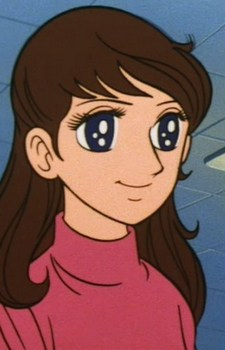

Nozomi In The Sun
さすらいの太陽
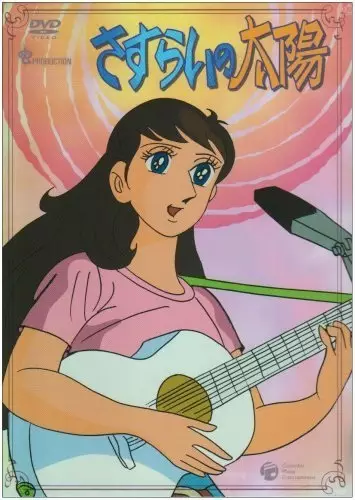
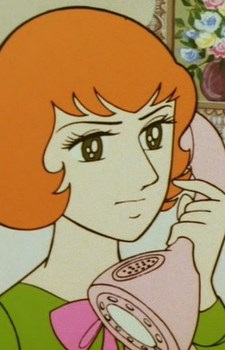
Two baby girls were born in the same hospital: one of them is the daughter of an aristocratic family while the other belongs to a deprived household which lives in the slums of the city. However, the nurse-in-charge, Michiko, secretly switches the two babies due to a personal grudge, resulting in a change of fates of the girls from then on. Many years later, the lives of the two girls continue to be intertwined with each other, with the rich Miki ill-treating the poor Nozomi, yet both of them hold similar dreams to become a singer. (Source: ANN)
Главный
Главный
Второстепенный
Второстепенный
Второстепенный
Второстепенный
Второстепенный
Второстепенный
Второстепенный
Второстепенный
yokoelf
March 30, 2022
Contrasting with 2020's anime, which commonly features average or unhappy protagonists that suddenly are teleported/have their lives changed and their frustrations are magically solved, anime from the 70's often features protagonists that come from unfavourable origins or poverty and that have to overcome their situations by themselves. They usually show an inspiring strength to endure the often exceedingly unfair circumstances they are put into, and courage to face all sort of hardships. You see such situations in anime like Attack No.1, Candy Candy or Ashita no Joe. Sasurai no Taiyou follows this trend, featuring the tale of a girl who, being switched from her rich birthfamily as a baby, ends up living in a poor house, and the story develops between her dream of becoming a singer/musician and the many hardships she faces in her life, which more often than not comes from her plain lack of money. Her "rival", and antagonist, Miki, who is the other switched baby, often uses her family's wealth and influence to bribe her way into success, while Nozomi has to face every sort of realistic difficulty. This is an anime that develops a believable story, with most events being authentic and engaging. While the focus is on Nozomi's late-teen professional, familial and, in a smaller measure, romantic life, there's also, in parallel, the underlying plot of the switched babies at birth. This story mostly stays unsolved and it keeps you in anticipation of its eventual resolution throughout the anime. And, of course, it has a musical subplot, considering Nozomi's dreams regarding music. If you liked any other 70's anime like the ones I mentioned, it's very likely you'll enjoy this one as well. This is a type of story you'll mostly only find in old anime like this.
Diogo_Gomes_1995
May 7, 2022
Well well well... What do we have here? Another obscure anime show from 1971 by Mushi Production. The same people that brought us many of Ozamu Tezuka's anime adaptations and Ashita No Joe? Why yes it is! Sasurai No Taiyou (Also known as Wandering Sun) is an anime show released in the early 70s made by Mushi Production. It's based off the manga of the same name by Keisuke Fujikawa, who was also involved in the anime industry as he worked on multiple anime shows in the 70s such as Mazinger Z and Cutey Honey. Like before, there's not much is known about this anime outside ofjapan since not that many people talk about this. So what could this anime be all about? Let's find out: First off, the story is the most interesting and the best part of the anime: It tells the story of two girls named "Nozomi" and "Miki" who were born from two different families. One is a rich family and the other is a very poor one who lived in the slums of the city. However, one individual by the name of "Michiko Nohara" secretly switched the two babies from each family due to a very personal grudge. 17 years later, Nozomi, now being transfered to the same school as Miki, finally met each others without noticing that they were switched from each of their families. Miki would treat her like crap due to coming from a very poor family and of course being a rich girl she is, while Nozomi tries to get to know better with her without holding any grudge againts her. And yet the one thing that both girls share is a dream to become a singer. So while Miki would do anything she can to become a very popular singer just to make Nozomi miserable, Nozomi would strive and do anything she can to become a singer. Going from bars, to taking a tour and helping others in needs. It's a story of hardships and tribulations of both girls striving to become a singer while not knowing the fact that they were switched from each family by one individual. And man, this story is very interesting! What i love about this story is that not only it tells a very interesting story and episodes of where theses girls trying to become singers, but also highlighting the darkside of the music industry and how becoming a singer is not as glamorous as it sounds. You get to see how Nozomi would be treated when she's involved in many situations. Whether it would be singing in any bars, working at a composer's house to get to learn to be a singer, going to tours without the composer's permission and among others. As the series goes on, things gets pretty dark and serious when awful things happens to Nozomi. Whether it would be her Father's serious injuries that he got from the Yakuza or how Fanny tries to hide her from his true identity. As it goes on, the story starts to get pretty serious and sad as noticed in many episodes. The same thing can be said about the characters themselves. You got two main characters of the show, Nozomi Mine and Miki Koda. Nozomi is a character that i truly admire. Despite coming from a poor family and despite being treated like crap by Miki and despite having many blocks that she has to get through, she does anything she can to become a singer, without giving up on it. From her personality to her looks and the history surrounding her, she's the one who stands out from the others in this anime. Miki on the other hand, serve as Nozomi's rival. She's the reason why Nozomi tries to be careful with her since Miki is not the type of character who would be expected to be nice to others. She always bickers at her and treat her like garbage to the point of doing anything she can to ruin her life and carreer. Both theses two characters are the reason that drive the story to continue to get interesting as it shows a huge rivalry between theses two in a way that it can get quite shocking and interesting as well. As for the rest of the characters, you have some that serve a purpouse to the story. Such as Fanni/Hisashi who would try to hide his identity from Nozomi about who he really is outside of being a friend to her. And also, you have Isao Egawa, the composer, who at first he only cares about Miki since he takes music lessons with her, but does deeply care about Nozomi's carreer as a singer. While others like Nozomi's uncle, Kumagoro, would serve as a supporting character who would do anything he can to help out Nozomi whenever she needs it. Each characters are also very interesting and also another factor why the story is great. The sound is good, too. You have many great musical scores and songs that are played through out the show. Kokoro no Uta is another beautiful song that was worth hearing it multiple times. Same thing the voice acting, they are great and do give life to the characters' voices. This includes the singer Junko Fujiyama as the voice of Nozomi. Who despite sounding pretty old for a very young character, does a nice job portraying the character the way it wants to be. But not all things comes off as great. There are a few flaws that can get pretty distracting. First off, you have the sound effects. Now, i get what they are trying to do with the sound effects. They are trying to give more life and suspense to certain scenes to make it stand out from what it wants to show. But i feel that there are some minor scenes that don't even need the sound effects to be played out all the time. Like for example, when someone finds out something fishy about a certain thing. But by far, the biggest problem with this show is of course the animation itself. *Sigh* Now, don't get me wrong, there's nothing wrong with Nozomi and some other characters' designs. They look fine as they are. But for some reason, the budget for the animation is waaaaaay too limited. And as a result, you're gonna get a few moments where the animation starts to act weird on it's own. Like when there's an extreme close up to Kumagoro, or how the camera shakes for no apparent reason, or how some of the people's character designs look very ugly and weird even by 70s standards. Of course i know that i should not expect anything marvelous about the animation since it was made in 1971. The budget is very limited and the technology just isn't that advanced. But they could, however, take some time to fix them. But instead, it feels very rushed and mediocre that i couldn't give this anime as much higher rating than it deserved. But yeah, even with thoses two issues i had with this anime while having an experience with it, overall, i loved the anime. The story is outstanding, the characters are great, the sound is great (Although mishandled) and the music is absolutely great as well. And for a anime that tackles on the Music industry for the first time in history, it was a nice piece of history to learn about it. I think this might be the first one to do so. Which would later become a plot point for many music animes like Creamy Mami, Wake Up, Girls! and Love Live!. It's also worth noting that the storyboard for this anime is done by Yoshiyuki Tomino. The man behind Mobile Suit Gundam and many other mecha shows that came after it. So it's very interesting to see how this anime turned out to be and it's almost great. So, it's not an perfect score to get, but i will give it an 8 out of 10. Aside from the mediocre animation and some weird uses of sound effects, i had a great time watching this one as well. The anime's already subbed by OldCastle fansubs. So i'd say you'll just have to torrent or watch it somewhere that has the subs for Sasurai No Taiyou like Gogoanime. But yeah, give this anime a shot. It's a wonderful and tragic show that i will not forget until the end of time. Anyway, that's my review of Sasurai No Taiyou (Or Wandering Sun as it's called). I'm José Diogo and i'll see you on the other side. ^^
Shadesukz
October 3, 2025
Final Score: 6.0 Intro: One of the earliest anime to tackle the struggles of chasing music dreams. It contrasts privilege vs raw talent, wealth vs hardship, in a way that’s direct but still relevant. For me, it stands out as a rare piece of 70s anime that dared to dig into the music industry. Animation: 5/20 The style is clearly dated, with stiff movements and unpolished detail. Still, considering it’s 1970s TV, it does its job. Modern audiences may find it slow, but if you adjust your expectations, the deliberate pacing and expressive character beats hold up decently, if a little awkward and cringy at times. Story: 10/20 The narrativedoesn’t shy from the harsh truths of its time, showing how money can grant careers while true talent struggles. Even predictable turns feel earned, with pacing that lets you sit with each choice. Character interactions are mostly believable, though occasionally they do seem to be a little backwards, and break the emotional weight. Music: 15/20 Recordings have aged poorly, but the core is still rewarding. Vibrato-heavy kayōkyoku vocals may feel odd for teenage leads, but they fit the era. Jazz mixed with Japanese instruments gives a unique sound. Catchy songs, though tragically hard to find outside of the anime. Uniqueness: 15/20 A bold mix of music, drama, and social critique from the 70s. While not the only anime with idols or musicians, its willingness to address systemic inequality in the arts makes it stand out. Its datedness also gives it a unique charm modern shows can’t quite replicate. Enjoyment: 15/20 I wouldn’t recommend it to everyone; it’s slow and niche. But if you like kayōkyoku, coming-of-age drama, or vintage anime, it’s worth giving a few episodes. If the style hooks you, you’ll find it rewarding to stick with it despite the rough edges of age and medium.
Ранг
#6772
Популярность
#11413
Участники
2,816
В избранном
12
Эпизоды
26