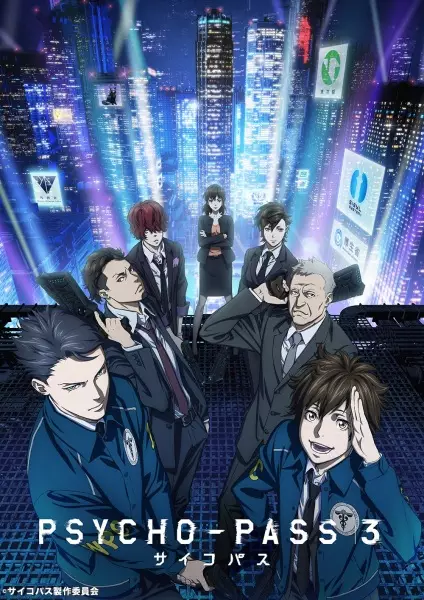

PSYCHO-PASS サイコパス 3
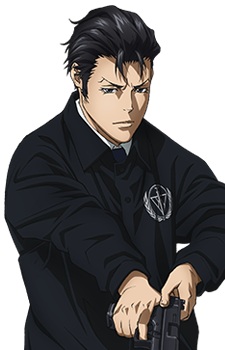
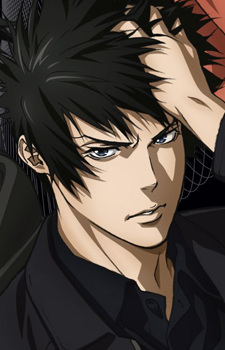
Thanks to the Sibyl System, the mental states of society can now be measured on a numerical scale. Using these "crime coefficients," a culprit can be apprehended before they ever commit a crime. But is it a perfect system? For Inspectors Kei Mikhail Ignatov and Arata Shindou, that remains to be seen, as their career with the Public Safety Bureau's Crime Investigation Department has only just begun. Shindou and Ignatov are assigned to investigate the crash of a ship carrying immigrants, but they begin to suspect that it was no mere accident. Meanwhile, a mysterious group called Bifrost is observing them from the shadows, but they are not the only ones who have taken an interest in the two new Inspectors. [Written by MAL Rewrite]
Главный
Главный
Второстепенный
Второстепенный
Второстепенный
Второстепенный
Второстепенный
Второстепенный
Второстепенный
Второстепенный
spaceaustralia
December 12, 2019
With Urobuchi gone, I didn't expect much of this season. It still failed my expectations. I expected to, much like the second season, for it to try and explore the themes set out by the first season at the base of Psycho Pass' world. Instead, we have a plot centered around the introduction of a completely new entity, Bifrost, that contradicts the position Sybil appeared to have when Urobuchi. I expected it to remain grounded in the world set out by the previous seasons, but, after 8 double-length episodes, Arata still appears to come up just short of clairvoyance, the perfect control of the Sybil System iscontradicted by the existance of intentional gaps in it's control, and the politics of Sybil controlled Japan, which were previously stated to be a sham, are suddenly an institution with actual power and influence, and all changes going unadressed. I expected the main characters from the previous season to be a constant presence in order to continue their stories. Instead, Shimotsuki appears to have undergone significant development almost entirely offscreen, and, for the longest time, Ginoza, Akane, and Kogami occasionally show up as barely a cameo, mostly to hint at further developments. I also found the plot overall harder to follow than when Makishima discoursed at length on philosophy and Sci-fi references for several minutes at a time. That might have to do with having to wrap my head around the inconsistencies in world building. The characters of season 3 can spend several minutes discussing the implications of a political elections and just leave me scratching my head, wondering why, under the totalitarian control of Sybil, that would be important. As a minor gripe, I wish we had seen the Dominators being used more often, but I guess that's a symptom of the smaller presence of the Sybil System in the world of Season 3. We did get some nice looking fist fights, but it's jarring for the inspectors, representatives and arbiters of Sybil's ultimate will, to have to engage in punch ups when any intent to beat an inspector to death should cloud one's hue enough for them to be justifiably used. I'm not sure we even saw the non-lethal paralyzer being used at all. In short, I doubt I'll be back to this series. My expectations were low, but the contradictions in worldbuilding, the lack of a concrete continuation of anything set by the previous seasons, and a complete lack of any conclusion amount to a complete lack of justification for the existence of another entry to the series. Considering the way the last episode felt, the post-credits scene, and the name of the next movie indicating that it might be a prequel, everything just make me feel like the intent here is to slap the Psycho Pass name on an unrelated sci-fi detective series rather than continuing what made it interesting back in 2012.
Isvi_Berserk
December 12, 2019
-Note: English is not my native language, I apologize for possible mistakes. (This review does not contain spoilers) After the enormous emptiness that excellent villain Makishima Shougo left us and that great first season of PP, we finally have an acceptable sequel that tries to bring new things, new characters and similar airs, but not the same. Although of course we will always miss our dear and handsome Kougami, right? Well, at least in my case if I love it too much. I generally liked how it was carried out this season, without making the mistakes of the second, without using protagonists of the previous season fora long time and using new protagonists, it has allowed the story to develop acceptably, something that the second season failed to start with the villain that without offending was and felt like a cheap copy of the first villain or at least I felt that, and I think a good percentage too, without demeriting the good things that the second season has, that there are. Also something to note is that each episode at the beginning has excellent fighting scenes and animated choreographies with incredible quality, and those scenes are in almost every episode. It's great and more considering that it lasts twice as much as the rest of the animes per week, 50 minutes per episode which was a surprise. I can criticize things, such as the small participing of the old protagonists although I liked it, felt this somewhat forced, there are also many loose ends from the beginning, events that occurred off-screen that keep the viewer's doubt at all times, especially when dealing with Akane Tsunemori. The series comes to feel somewhat episodic at certain times and very detective with various cases that do not stop feeling a bit like "Normal Cases" can be said that there are too many sub-plots developing in Psycho-Pass 3, remembering the anarchist Makishima in the entire first season of Psycho-Pass, this was touches more philosophical themes, not at all compared to the most detective theme the series has had since its second season. Here we are presented to Bifrost a criminal and clandestine organization that operates through this indirect gambling game for elitists to gain and power in the shadow of Sybil and the change of social paradigms. Makishima instead wanted to demolish social foundations and "faced Sybil" head on. However, the plots of past characters converge with that of the new ones to reach a climax, I love these kinds of stories, they do not stagnate with only one protagonist throughout the story and they explore the rest of the characters in depth to create tangles and secluded frames that are focused at the end for one thing in common. As a personal point, I want to write about Mika's character, I didn't like Mika much in Psycho-Pass 2 but she's quickly become such an amazing and funny character starting in the first Sinners of the System OVA & continuing strong throughout Psycho-Pass 3. Definitely one of more entertaining characters. As for the animation and the OST are excellent, if there is something that stands out a lot in PP, it's this incredible soundtrack which is always at the top, and as I said before its animation and especially its fight scenes are very remarkable. Finally, I think that Psycho-Pass 3 despite having twice as many minutes per episode, needed more chapters to be able to elaborate a story at 100% conditions.
Wonted666
December 12, 2019
Story The strength of this show, in my opinion, lies in the webs weaved by the unseen higher powers,i.e Bifrost and Sibyl. Each episode expanded the world to an extent, with immigration being the main issue at hand. Because of immigration, of for the sake of the issue , commit crimes as per their beliefs, whether it be using religious organizations as a front, creating/mass producing weapons, etc. The long run time of each episode allows the viewer to understand the issue at hand and end with a somewhat satisfying conclusion. There rarely is a cliff hanger and that is a great strength of this show.The show attempts to show the connection of all the minor antagonist, however it doesn't really get through until the end (and by the end I mean the eighth episode). In someways the Bifrost and the congressmen are still as confusing as they were in the first episode( I still don't know what they mean by relation). Character: The introduction of new characters as the viewers perspective allowed new watchers a reprieve from the old. The inclusion of the foreign bureau while important seems little more than cameos at this point, if the show does not have another season, as Kogami and Akane do very little in the main plot other than fight a little, and reference the plot(somewhat) of previous seasons.The new characters are semi interesting but as they have yet to finish their character arcs, and the anime was wholly dedicated on writing an intricate plot, sometimes the characters fall short of likable(as in my favorite character that I remember more than a few traits about). My one complain in the story is the constant attempts to bring up Arata's father, when Arata does it fine, but every other side character...why? It's a bit annoying to be honest... My very last nitpick is in the final episode Arata's mentalist powers have transformed from being able to figure out anyone's thought process by listening to the sound of rain, to being able to manipulate anyone(Maybe I misheard/read that but Kei's sudden accusations made no sense to me). Art: The art was fairly good, the characters were distinct and in action scenes their features were not lost, alongside the movements being fluid. My favorite parts were watch Arata doing parkour, or Kei beating up goons. The art otherwise is standard and very clear. Overall the tone was dark, matching the show's setting and intentions. Sound: The opening and ending are quite catchy with the animations following it quite fluidly. Other than that the soundtracks within the anime matched the pacing and tone of every scene, so while it did it's job, but maybe it's nothing to write home about. Overall the opening and ending are better than most of the openings and ending of this anime season. Enjoyment: A story with an air of mystery up until the end, answering some questions and leaving many others unfulfilled. The core of this anime is different than many others and because of it's uniqueness , as well as it's different perspective , it's fairly easy to enjoy.Though, you may need to strap down when watching because if you aren't pay attention, everything will go right over your head. Overall: The anime is dark, mysterious, and explores interesting themes and plot threads. The characters have a certain level of appeal to them and luckily they don't require much investment on the viewer's part. It's hard to follow if you aren't paying attention, and skimming is almost nigh impossible. It's best to watch this when your'ready to bunker down for suspense and drama.Note that this anime rarely if ever has notes of comedy, but at the very least it isn't going to bawl your eyes out(or maybe tear up for that matter). The sole focus of the show is it's story, and I believe , at the very least, it delivers an intriguing story. P.S if there was to be another season, this anime would overall only gain value, as of my writing this review I'm unaware if there is no following season as such , this is my grading without consideration of a following season.
LightningComet
December 13, 2019
If you've read any one of a third of my reviews, you will know that Psycho-Pass' first season is one of my favorite works of art/literature/entertainment/whatever of all time. It's a downright classic. That said, I was not particularly wowed by its second season (I read the manga and wrote a review on that) or the sequel film, which I found rather boring. Additionally, while I have yet to see the Sinners of the System films, I haven't heard the highest of praise for them. In short, I wasn't buying into the idea that the show's producers wanted this franchise to be as successful asGhost in the Shell (and boy was THAT property ever milked...), and I grew to accept that season 1 was really the only entry worth watching (also rewatching twice, apparently!) and buying on Blu-ray; I settled into a state of quasi-indifference toward the franchise, especially when I learned that Tow Ubukata was back from season 2 to work on season 3. That's not to say that Tow Ubukata is a bad writer; while it is true that Le Chevalier d'Eon did little to intrigue me and GitS Arise was (apparently) disappointingly bad, there is no denying that the man has ideas that are worth exploring. This even applies to Psycho-Pass 2, what may be considered the most hated project to which he was attached. Ubukata has gone on record in interviews detailing many of the problems he and the writing staff faced, most notably the atrociously tight deadlines (they would finalize the script DURING dubbing sessions), and it's clear that said deadlines (compounded by the show's insane brevity and need to copy season 1) was a main reason why it was unable to explore the few unique ideas that it could allow in a more nuanced and exciting way while telling a wholly new story, ideas like the Sibyl System having a direct opposer/rival that wishes to see it destroyed. Well, thanks to Tow Ubukata, a similar idea is in season 3. But, really, that's the least superficial difference between seasons 1 and 3; let's take a look at something more broad, like the show's genre. Season 1 was not a mystery series. It's got elements of neo-noir, dystopia, science fiction, police procedural, and thriller, but NOT MYSTERY. Season 3 is most definitely a mystery; we don't see how crimes are committed, characters' intentions are really only ever hinted at until the big reveal, etc. This show is more like GitS:SAC season 1 than other Psycho-Pass titles, and I think this was exactly the direction the producers' meetings took: "We need to stay true to the roots of why we wanted to make this franchise in the first place. What about its writing style made GitS:SAC so popular and how can we incorporate that style into Psycho-Pass?" "Well, it was more like a police drama you would typically see on TV, not anything revolutionary; just with cyberpunk." Did they only then realize that there was a gaping bullet hole in their project's foot? Probably, but I also wouldn't think it beyond them to realize that it was Gen Urobuchi, the season 1 head writer, who pulled the trigger. The problem with Psycho-Pass for so long has been that it simply wasn't sustainable. You can't take a fictional world so tightly constructed to be self-contained and revolutionary in just one season of television and make a franchise out of it, that's just not viable. They tried, but it was never going to work because a setting can only be geared toward a very specific set of themes, and season 1 covered that set very well already. Rather than attempt to recapture that same exact lightning in a different bottle, they finally started doing what I have been thinking they needed to do for a while now: change the setting. If the fictional world doesn't serve the purposes you need it to, change key details about that world so it does. Season 3 is the first entry in the franchise to do just that; the newly-incorporated anti-isolationist policies in Psycho-Pass' Japan has caused an influx of refugees from all around the heavily war-torn globe, and this adds a sense of tangible progression to the timeline as well as allowing for new stories with new themes to be told and the introduction of more problems that have been affecting us in the present, namely the rise of isolationist movements and more overt racism/bigotry and hate crime throughout the world. Also, Japan is absolutely notorious for their homogeneous society and staunch isolationism, so its sure to garner attention from at least some of the Japanese populace as well. On top of all of that, the writers also portray a solid understanding of why the Sibyl System is so well-received by the fictional world's populace and subsequently satirize the pursuit of convenience, comfort, and security over personal freedom. Episode 4 did that the best with the elevator scene. Is this show perfect? Well, no, of course not; some characters stay rather underdeveloped relative to others, but as the show is progressing, more is learned about each of the new cast. Additionally, I enjoy how the plot and mystery further thickens as we learn more about each character, and this is especially true for episodes 4 and 5. That aside, I'm not a big fan of how one of the main characters basically has a pair of superpowers considering how more-or-less realistic the rest of the show is. I also think that the pace is a bit slow in some scenes; if this show were in a more anime-standard 23-minute format, I would definitely feel that some episodes (excluding episode 4) were less action-packed than others. Perhaps the 46-minute format, in addition to even further evoking the feel of live-action TV police dramas, was meant to counter this, but because the characters are consistently entertaining and develop while simultaneously making good progress in their investigations, I'm not really bothered by how there are often long stretches of time with nary an action scene in sight. This isn't new to Psycho-Pass, either, as season 1 had interesting philosophical discussion in addition to its stylized and entertaining characters. Season 3, I think, suffers from only having some philosophical discussion, but what is present, verbal and nonverbal alike, is well-received and make the show more worthwhile. I just wish there was more of it. Its biggest problem for me, however, is that it is FAR, FAR from complete. The final episode brings in a lot of new plot elements and, while I totally saw the post-credits scene coming, it still had me wanting to see what would come next. Too bad we have to wait God-knows-how-long to see a 4th season. Getting back to more positive aspects, when we do see action scenes, they tend to look very, very good, although, to be fair, episode 4 was rife with action to the point where some of it looked good, but other parts were a bit rough. In spite of this, it was clear to me since first seeing that list of the key animators' names in the opening theme that this was a work that the staff were proud to present, because key animator names basically never appear in opening credits. They didn't even do that in Kabaneri of the Iron Fortress. Freaking... KABANERI didn't do that! The music and sound design are also as good as ever in the franchise; Yugo Kanno is back on the soundtrack with an almost completely original composition. Don't worry, though; they aren't afraid to play season 1 music when it's right for the scene. Also, the voice acting is as solid as in previous entries; newcomers Yuki Kaji and Yuichi Nakamura feel right at home in this show, and even Junichi Suwabe and Mamoru Miyano join the cast! I was pleasantly surprised to find them here. I am, however, a bit disappointed that Funimation could not get the license to this show and dub it. I can only guess who they would cast in all the new roles. Oh well. Maybe someday. And before you raise your pitchforks and scream "dubs should die", remember that some people are dyslexic and have trouble reading, or are unable to read as quickly as the subtitles demand them to; please be considerate of these individuals. All in all, in spite of its problems, Psycho-Pass 3 was a rather bright spot in a season that has left me rather disappointed for the most part. You don't NEED to have seen season 1 or the film to watch this show, but the juicy details and moments are present and fun to appreciate, even if they blatantly reskinned the famously climactic scene of "Saint's Supper" from season 1. This season did its job in engaging me and getting me to want more, but I can't help but feel a bit dissatisfied by how things didn't shake out at the end. Who is the man in the mask? What happened between the super-inspector's dad and the violent-inspector's brother? What proof does Sibyl have that Akane Tsunemori isn't criminally asymptomatic? All right, that last one is from me alone, but the point is none of these are answered. I don't know if there will be any kind of payoff in the future, and so I can't give this the original 8 out of 10 for which I had it pegged. A high 7 out of 10 (as opposed to a low 7) is in order: solidly entertaining, a slightly disappointing ending, but enough smarts to make it worth one's time, at least for one full watch. Happy Watching! - LC
LupinXXIII
December 13, 2019
PSYCHO-PASS 3's gambit is an initially promising one, a soft reboot with a cast of fresh faces and a new attitude with respect to its approach to thrills and stakes. Those who found previous seasons' penchant for cheap shock-value in the form of exploitative violence will probably find the slower and more politically-driven nature of this season to be refreshing, with maybe only two or three people meeting a messy demise at the end of a Dominator. Our inspectors seem to prefer ye olde fisticuffs in their dealings with the Sybil-defying underbelly of Tokyo instead, impractical as it is. Despite all this, PSYCHO-PASS 3 hasvery little of interest going on. The new inspectors are likable enough but don't add much to the proceedings. Arata Shindo has a cliche eccentric personality, quasi-supernatural "mentalist" abilities, and improbable intuitions that spoil the procedural setups. Kei Ignatov is the more stern and serious of the two, a family man. You've seen this stuff before. The overarching villains are opaque in their goals and methods. You get the sense they are finger-tenting puppetmasters and not much else. The animation and direction are as perfunctory as ever. Be prepared for lots of conventional scenes of talking, interrogating, and investigating. This all has the veneer of an intelligent procedural, but it is hollow. Worse, the story is hardly finished by the end of the eighth episode and comes with lots of additional story threads hanging here and there, a number of them involving what the old members of Unit One have been up to. This makes this season feel no more consequential than the SS movies or really anything we've gotten out of PSYCHO-PASS since the first season. It's just another piece of the franchise puzzle with no clear sense of purposeful evolution.
Ранг
#2344
Популярность
#935
Участники
294,713
В избранном
542
Эпизоды
8