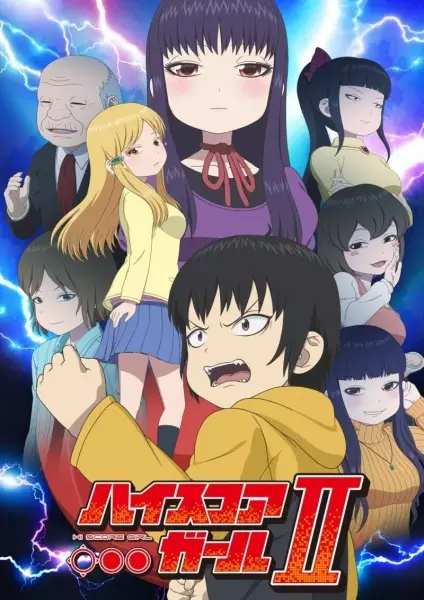

Hi Score Girl II
ハイスコアガール II
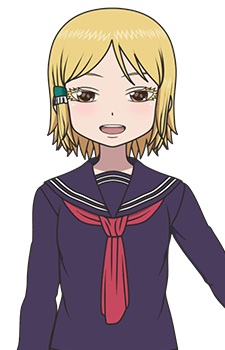
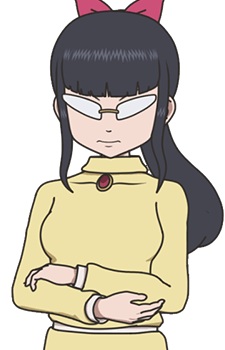
The year is 1996, and second-year high school students Haruo Yaguchi, Akira Oono, and Koharu Hidaka live their lives as passionately about video games as they were five years ago. Brought together by arcade games, what began as a healthy rivalry and friendship has turned into something more. As they endeavour towards understanding their unfamiliar feelings, they work with allies, navigate high school, and find that, although life has its many challenges, there's always a game or two they can rely on. [Written by MAL Rewrite]
Главный
Главный
Главный
Второстепенный
Второстепенный
Второстепенный
Второстепенный
Второстепенный
Второстепенный
Второстепенный
Второстепенный
robert788
December 22, 2019
High Score Girl II (2019) Well, what can be said about this but it for me is a 10/10. The show picks up right after the 'Extra Stage' and the story is just spectacular. It may not seem so since it is about video gaming in one sense. But this is really just a sideline matter since it really is a coming of age romance. The show has Haruo and Akira going through what can be only seen as the pivotal moment in their lives. They live in completely different worlds with the responsibility she holds and his immaturity. They go through some pretty intense situationsthat bring many emotions forward. Koharu also brings out her feelings openly towards Haruo. The story has a spectacular finale that really pulls the strings of the heart. You are on the edge of your seat waiting for the pivot of the episode that you hope ends as you want it too. The show is a CGI show that many would complain about. This however actually fits really well with the show. The crazy on-screen situations occurring because of the video games makes this work. It wouldn't also be right if it didn't because games like 'Street Fighter' are not done in the way of traditional anime but in a more CGI format look. The OP for the show is great. The ED is spectacular, 'Unknown World Map by Etsuko Yakushimaru' really is so fitting for the show. It is a great song too now on my personal playlist. I hope that she continues to do anime. Characters are pretty much as before but that is perfect. They are growing though, they change in as many ways as they don't. It is more you can just begin to see the more honest side of them. Akira is the most outstanding of the characters in that for a girl that doesn't speak you start to feel like Haruo in that you can almost hear her speaking like he does to understand her. Her emotions are just laid bare. Thankfully we have Koharu to keep reminding Haruo of a girl's feelings that he misunderstands. The show is just so enjoyable. Each episode had something new and unexpected and was tense and emotional. The show did not disappoint and is a triumph. Since this catches up the Manga it is the end. There is a new one 'High Score Girl Dash' that is about Koharu when she is a middle school teacher in the future. Hopefully, we get closure on Akira and Haruo in this. An OVA would be welcomed that shows the finale a few years later with its ultimate conclusion. That said I did wish for that with 'Toradora!' yet I still wait.
KANLen09
December 20, 2019
The high hats of the journeys of both Haruo Yaguchi and Akira Oono in Season 1, now include love-game rival Koharu Hidaka, that have been riled up in the Extra Stage moments, that all in all, have descended onto the continuation that is Season 2. Going through their torment of first-year high school which has concluded most of their misunderstandings and such in Season 1, here they are in the mid-90s 32-bit console era (of the PlayStation and Saturn), where the stakes have went higher, both in game and in real life. As both Oono and Hidaka fight it out for the right to bethe naive boy's girlfriend, Haruo is beginning to wonder that more than his gamer skills to pit against Oono, could he still possibly notice the battle of love between both girls and take charge before all hell goes loose. And I'd have to say that the romance aspect really takes up a notch here as the three kids age, so do their dreams and ambitions that could change within the short span of time. Most particularly for Oono, her family situation hasn't been the best from Season 1's build-up that slowly saw her getting more spoiled, and then forcing her to follow family protocol like she doesn't have a choice of rebuttal to conform to. Coming from Season 1, she has been pretty much quiet for the most part, but when with either Haruo or Hidaka, only does she respond like a human in her robot state. Haruo is always playing his gamer face as usual following Season 1, as games get more bigger and complex that turns his heads 360 degrees around for the latest trends. Same for Hidaka, as her love for Haruo grows stronger, so does the objective to defeat Oono with her much improved skillsets, and understanding the bond between the inseparable duo. This love triangle sure burns brighter than the sun....and the hotter it gets, the love shines forth. As for the other aspects, for veterans of the previous season, the CGI isn't too daunting this time, and I've just gotta give a shout-out to the animators over at Shogakukan Music & Digital Entertainment (or SMDE for short) managed to do a great job knowing how Season 1 turned out, and refined the missing pointers for improvement towards the sequel for a better experience, especially the arcade games and such. J.C.Staff's production standards still stands on par with Season 1, so it isn't a big surprise to see it withstand pretty greatly. What is a change though, is the music department. Obviously being a new season and such, the relevant music artists came back with another new song in their catalogue, and I'm afraid to say that while group artist sora tob sakana's 2nd OP is good, the 1st OP is infinitely better IMO, while Etsuko Yakushimaru this time, managed to top her own 1st ED song with the 2nd ED that are both great. This journey overall has been a fabulous one, and to think that this series spanned 1.5 years from start to finish really shows a lot about the dedication to a fast-dying genre, while keeping it modern. This show truly is a blessing not just as nostalgia but also to people who'd wanna see the replicas of the time of the 90s in anime form (that sadly no longer hooks). Instant recommendation for a binge if you're finally wanting to watch this all the way through.
PyraXadon
December 29, 2019
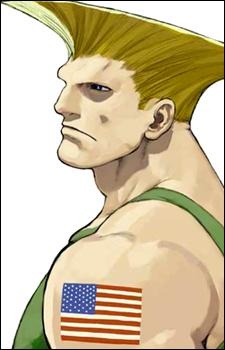
You know I would've at least liked some upgraded aesthetics and not an awkward length of 9 episodes, J.C. Staff, but hey, beggars can't be choosers. Story: Acting as a follow-up to Season 1 (and the three OVA episodes I think are actually important), High Score Girl II acts as the finale arc to the story of Yaguchi Haruo and his unconditional love for fighting games. Now starting their first year of high school, things like growing up and past rivalries flare up in this era of adolescence in order to finally put a cap on his long-standing rivalry with the girl that he's known from hisyouth, Akira Oono. High Score Girl is a series I describe as being several parts video game history, several parts character growth, one part romance, and a scarily large part physical abuse for comedic effect. The brunt of the story really is a focus on Haruo and his feelings on both life and the people around him now that he's in high school with more things to think about aside from just games. It's because of this that I find his sections of the story to be both rewarding and enjoyable to watch, as it's time dedicated to detailing and showing the audience the maturity and growth he's had over the course of his life, while sticking true to his roots as a Guile main. However the main selling point of High Score Girl is (apparently) its romantic story which unfortunately is a part of the series that misses a few beats with me. The story is good at building romantic tension. The rivalry between the two girls had motivations that felt like it had weight with Koharu especially feeling like she had something genuine to gain or lose by 'winning the guy'. While I'm not particularly a fan of these kinds of setups outside of generic harems, there were enough stakes for that subplot to come to fruition. Haruo also having agency in his decisions also make the romance a bit sweeter, especially after about a season and a half's worth of indecision (though that one's not really through any fault of his own.) Despite those positives, the romance is still not as great as I think a lot of people believe. For one thing, the season spends only the last third focused on the idea of Haruo having agency over his love life, whereas prior, both girls sent numerous mixed messages that really made me question whether or not this was supposed to be 'romantic'. With the punchline of the series being "Everyone beat up Haruo every time he does something stupid", that problem was only exacerbated with time. This problem is furthered by the show sporting a plot mcguffin at the end to achieve a kind of 'satisfying' conclusion that feels neither earned nor necessary. It feels like the creators wanted to add something to make the ending more dramatic, but really it just feels like a detail that comes out of nowhere in order to build tension that wasn't there to begin with. Regardless, the story of High Score Girl remains as a time capsule for a time long gone for veterans of the fighting game genre with a splash of romance added to the series for color. While I'm still of the opinion that the romance could've been way better than how it was portrayed, I'm at least still satisfied with the growth of (most) of its main cast and glad that Haruo is no longer that snot-nosed brat from the beginning of the series. Characters: I've praised Haruo's improvement as a character due to his agency in the latter halves of the season as well as the overall growth of his character from an annoying kid who finds everyone else around him just as annoying. His demeanor and attitude towards the rest of the cast is what sells him for me as a character, since his love of video games remains as a core part of his character, but mostly as a stool to step off of and slowly branch off into other avenues and interests as other things in his life start to become more important to him. It's nice, and I'm glad he developed the way he did. Oono though is a different story. So much of her character is aided by the use of side characters and Haruo that she almost feels like a non-factor to the series. Most of her interactions with the rest of the cast rely heavily on everyone else acknowledging her presence, and (towards Haruo only) physical violence. It gets to a point that the ending feels unearned because it makes it seem like, without saying a word, she gets everything she wanted and doesn't nearly do so much as struggle when comparatively, Haruo does whatever he can to better himself and defiantly decides what he wants out of life and who is the one that fulfills him in the end. Things just happen around Akira, and it irks me how this is considered 'romance' when at the end of the day, only one party is speaking. And then there's Koharu, the unfortunate heroine of the main trio who unceremoniously gets booted out of the series and barely shows her face in the last third of the season. Inverse to Akira, Koharu's presence and actions in the series are driven by her own desires and agency to get the things that she wants. Her struggle with coming to terms with her own feelings and the change that went along with it is one of the best arcs the series has made. And it's a shame that the show ends up doing her dirty the way it did. It feels like a slap in the face because the series basically asserts its authority by saying "You are not the ending" and cuts out what little significance she had left by not giving her so much as a consolation prize for her impact to the series. Side characters are surprisingly common this time around with a majority of the side cast having prominent roles in the lives of the main trio, and unnecessary characters were cut out to the series's benefit. Mainstays like the Oono family driver and Haruo's mom keep up prominent appearances while newer characters like Akira's older sister REALLY make a splash to make up for any lost time when they weren't in the series prior. My favorite supporting character however is Guile, Haruo's SF main, who acts as his spiritual advisor for all situations. Which is kind of amusing, since it makes it seem like Haruo's losing his mind from playing too many games. Aesthetics: As much as I had hoped, the aesthetics for High Score Girl have not changed, and J.C. Staff still sticking with the low budget 3-D model animation for the series still leaves something to be desired. Granted while it does reflect Oshikiri Rensuke's artstyle, the movement and overall budget of High Score Girl aren't really anything to note. It doesn't take away from the experience all that much, but I would've hoped they could've at least made some improvements from to make help the characters not move so...unnatural. The video game graphics are still good, and really help push for that nostalgic factor since the series is littered with pixel sprites and various fighting games from the 1990's that eventually bleed into the real world as Guile and similar characters make more and more cameos in the real world around Haruo. The OST was never something that I paid much attention to when I was watching the first season, which unfortunately spells for a similar story for Season 2. Flash sung by sora tob sakana is remarkably similar to the OP of Season 1 that I did a double take to make sure that they were two completely different songs. Personally I don't find it that memorable, but the retro sounds throughout the piece are at least a nice detail that I want mention. Yakushimaru Etsuko's "Unknown World Map" by comparison is better than its OP counterpart, sporting a quieter singer and a calmer, steady tempo that I personally find to be more pleasant. I still don't find this song to be all that memorable, but it's at least a nice song to listen to. Personal Enjoyment: I may have forgotten to watch the three OVA episodes before writing this review, but surprisingly enough, I don't think it's all that necessary? Yeah you miss on Makoto's introduction to the series, but she makes enough of a splash in S2 to negate needing to know who she is prior. High Score Girl is a series that I've seen being praised for being a great series with a great romance story that deserves all of the praise that it's gotten. Honestly...it's not. Maybe most of it, but in my opinion, it's a series that succeeds in some aspects, but falters in others. The history and progression of arcade cabinets and fighting games posing as the series's backdrop is one of the more interesting aspects of the series that I found myself weirdly engrossed in despite never delving into that genre of games. This, combined with Haruo and Koharu's characters being given time to develop made for the blueprints of a show with a lot of potential. Unfortunately due to some questionable plot choices and committing to the trope of the 'first girl', the High Score Girl ends up shooting itself in the foot as it stumbles to the end with a well executed, but unearned ending that feels satisfying, but hollow. High Score Girl still has my recommendation of being something that's worth watching. But that recommendation comes with the caveat with sections that I feel should've been different and/or the plot wasn't allowed to change from the rigid structure that it set itself in. Oono not saying anything up till the end is a narrative choice that I feel hurt the series more than helped, and I would've liked to see at least something, anything to make her more than just this mysterious, silent girl who just so happens to be an incredible Zangief main.
Stark700
December 20, 2019
Video games, a cultural phenomenon with a rich history. I look back into my early days of gaming and the very first console I got was a boyhood memory. Hi Score Girl II celebrates the video game culture in an old school fashioned style through personal experiences. With the final season here, we embark on an emotional journey between an avid gamer and a young girl in her youth. Haruo and Akira are the iconic duo and poster characters of this sensational rom-com. I call this a romantic comedy because this season has been a roller-coaster of plot about their relationship. Beyond the game competitions, thetwo face personal obstacles. But at the same time, Hi Score Girl still flirts with their relationship. With just 9 episodes, it had to make room for us to get invested into what it’s trying to sell. Luckily, it managed to do just that. If you remember the previous season and the extra episodes, Hi Score Girl had established Haruo as an avid gamer while Akira Oono is the silent game prodigy. Existing as polar opposites, the show bonds them together through their mutual passion of video games. Regardless how you think about them, it’s undeniable that the two share a close chemistry that began as video gamers but begins to transform into a genuine relationship. This type of bond isn’t uncommon in our world either considering how gamers become friends from the Internet to real life. In fact, Haru himself has made real friends because of his love of video gaming. On a realistic level, Hi Score Girl connects its themes together to formulate the video game culture and tell its story. It does add rom-com elements because of the core relationship between the two main characters. But if you’ve been following this anime closely, it’s where the show really shines. Somewhere in the middle, there’s also Koharu Hidaka, a classmate of Haruo. Unlike either character, she is more outgoing and in general more sociable as a main character. There’s a love triangle between her, Haruo, and Koharu and the series doesn’t waste much time showing that. Similar to the previous season, Koharu adds a breath of fresh air as it gives a chance for Haru to be more of himself. In respect, Koharu’s love for video games are amplified when she’s near Haru. She always wants to impress him and prove herself, especially when it comes to fighting games. It’s a genre that has been a mainstay of the show and this season raises the stakes. I’m not just talking about prize money either. It’s more about who can show how much they’ve changed or improved as a person. When you have a show a devoted to characters telling their story, it makes it that much more fascinating about the characters themselves. From a storytelling perspective, there’s drama, light comedy, emotions, and most of all, development. Without a shadow of a doubt, Haruo and Akira’s relationship is a key component that holds this season together. But if that wasn’t enough, this sequel does also add in an adequate amount of popcorn entertainment content. Thanks to additions such as Makoto Ono (Akira’s older sister) and Haruo’s friends, they make room for moments of sarcastic humor. Hi Score Girl has been a lighthearted show despite some of its heavy drama. I confess that I probably laughed more unintentionally than I should have thanks to the personality of the characters. In particular, Makoto exist as an almost complete opposite of her sister. With a rebellious attitude and sociable personality, she’s more of an outdoors girl. When interacting with Haruo, she displays a commanding presence that puts him to shame. On the other hand, Haruo’s friends are goofballs who gets made fun like nerds at school. The show uses its sarcastic humor and pokes fun of the game culture through these characters. In later episodes, there are also creative imaginations told through video game narratives. But yet, this humor never runs dry on its course. It uses just enough time to entertain us but not overextend itself. Hi Score Girl II is more than just a sequel. From this rom-com exists a character pair that made us see how important gaming is by bringing two people together. Gaming in modern years has been ubiquitous with battle royales, gacha, and long running sequels. Fighting games has been a niche field that spells nostalgia and this sequel brings that sensation back. With Haruo and Akira back for another season, it’s time to experience it one more time.
Kashiho
April 18, 2021
Simply put, this anime is 'surprisingly' well made. It's not plot twist, but a great turn of events and character development. I finished watching this and I can say that this anime is worth watching, 10/10 It caught me by surprise by reading the synopsis. I thought it's kinda like Karakai Jouzo no Takagi-san, Uzaki-chan wa asobitai, or other fun and chill anime. It is fun. Then, there's drama, romance, and a mix of everything along with its childish animation. When I checked the genre, it has "romance", and "seinen". So now it all makes sense :) I recommend to watch this. I got immersed in the anime thatI now feel a little lost after the anime ending. There's a lot of FEELS and EXCITEMENT. FUN AND INFORMATION. There's a lot to say but I'll keep this short cause I'm a lazy typer. This is a good one and it'd be a shame if you are not able to watch this.
Ранг
#806
Популярность
#1747
Участники
150,555
В избранном
889
Эпизоды
9