
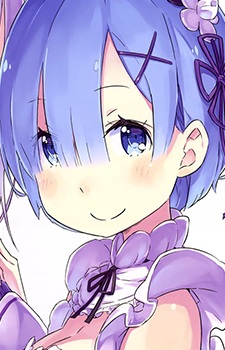

Re:ZERO -Starting Life in Another World- Season 2
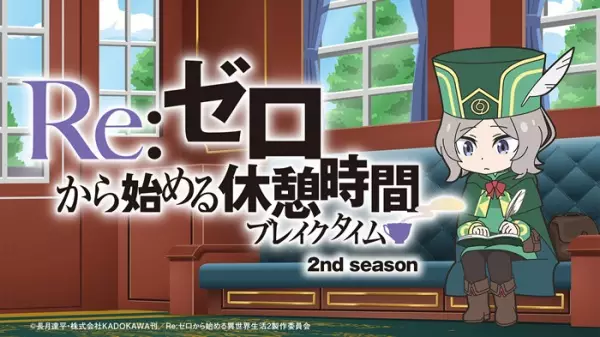
Re:ゼロから始める異世界生活 2
A reunion that was supposed to spell the arrival of peaceful times is quickly shattered when Subaru Natsuki and Emilia return to Irlam village. Witnessing the devastation left behind by the calamities known as Sin Archbishops, Subaru sinks into the depths of despair as his ability to redo proves futile. As the group makes their way to the Sanctuary in search of answers, Subaru has an unexpected encounter with the Witch of Greed—Echidna. Subjected to her untamed rhythm, he is forced to dive into the spirals of the past and future. At the same time, several mysterious threats set their sights on the Sanctuary, heralding a horrific fate for the hapless people trapped within. Everlasting contracts, past sins, and unrequited love will clash and submerge into a river of blood in the second season of Re:Zero kara Hajimeru Isekai Seikatsu. Pushed to the brink of hopelessness, how long will Subaru's resolve to save his loved ones last? [Written by MAL Rewrite]
Главный
Главный
Второстепенный
Второстепенный
Второстепенный
Второстепенный
Второстепенный
Второстепенный
Второстепенный
Второстепенный
Majorohminus
July 9, 2023
Everyone in this show is obsessed with dumb stuff that makes no sense. Every single character has the emotional and intellectual ability of a cardboard box. Subaru is just absolutely mind-numbingly reckless and makes the dumbest decisions endlessly and gets bailed out by the plot. He gets bailed out by a new powerful character's fancy for him or just because his power to return by death. It doesn't matter what happens, nothing matters. For some reason Subaru is the messiah now and everyone is waiting for him to save the day on every single situation. Emilia is useless now. Spends the whole season failing causeSubaru isn't there to help her I guess. How does this girl even tie her own shoes without Subaru to do it at this point? Witches are all obsessed with Subaru for some dumb reason. All of them like him, makes it a harem all the sudden when Subaru is so useless about everything. New characters are all terrible. Boring. One dimensional. Terrible world building. Final problem with this show, the author of this show doesn't seem to understand what love is. All of the depicted "love" is lust. Subaru lusts after Emilia. Rem is lusting for Subaru. Love isn't just doing shit for someone because you think they are special. Its a mutual understanding and emotional connection. If both parties aren't emotionally on the same page, which none of these characters are, then it just isn't love. Truly terrible show all around.
HanashiD4
September 30, 2020
Behold an unthinkable present! “I tried so hard And got so far But in the end It doesn’t even matter I had to fall To lose it all But in the end It doesn’t even matter” — In the End by Linkin Park“A fool thinks himself to be wise, but a wise man knows himself to be a fool.” — William Shakespeare Grief, trauma, sacrifice, burden, despair, depersonalization, and perseverance. This is what the dark and harsh reality of Re: Zero calls to wake Subaru up from his blind confidence and optimism before the light of hope and darkness of despair. It is a charm of suffering with a vicious substance in the depth of loneliness. The world with shine and gloom bestows one’s fate to realize before his eyes and crawl through the walls of fear. The horror of solitude craves him to curb his fancy by the answer of truth. With answers and consequences, what fate will judge Subaru according to his deeds? With his weak yet “immortal’’ ability called Return By Death, Subaru must determine if his hope will either remain him standing or cripple him out till the corner of despair. Lost in the new world, he found his hope to grasp away from the solitude and build up with his smiles and plays as Emilia and others share the bond together. He truly wants to save his friends and comrades to stay away or fight through it, but his fanciful determination will result either in miracle or collapse. His ability considers as a reset button to move forward through a solitary phenomenon for altering his fate and judgment; however, the price of it, such as others’ forgetfulness because of dimensional hopping and the restriction to expose his truth behind the curtain by himself, is intensely flawed — delivering the chance for an alternative resolution within the plot as if he acquitted himself for cleansing his own sins. Tappei did an outstanding job at applying the Law of Equivalent Exchange to his ability, especially his weak physicality — making it a simple yet intense thrill to catch the audience away from its boredom of perfection. The suspense is masterful and consistent based on every context, which makes Re:Zero intriguing to let more fans craft more theories and questions as a layer of curious engagement. Moreover, his character means to be morally gray as he doesn’t look at the other side easily, which means he can be once a foolish and casual person like us to aggress somebody to those who might threaten him or not. He has his own priority, flaws, pride, ways of resolve, and love for Emilia as his “knight in shining armor” personality drives him to be whoever he is. He can cry as a wimpy bastard or a try-hard hero of himself, but his determination grasps it ever since he had been gradually developing by chasing his grit even further with alternative resolution. Through his behavioral process, he manages to stay casual without forcing himself to be an uninvited guest in front of a pillar of society. That’s what makes Subaru a human person and a true knight — not his own heroic and fanciful delusions which most people like Ram, Priscilla, and Julius despised him for his amateur overconfidence by his self-importance back from the prequel of this anime adaptation. He manages his personality to be uptight and miserable; however, Rem volunteers to be as one whom Subaru will vent out his drastic feeling that flows within him as the time of Episode 18 snaps him out despite resulting in an expected rejection. His vulnerability strikes him to grasp his confidence, but his lack of self-esteem asserts the reason for his failure. For now, he frequently realizes that the world itself doesn’t fulfill his fanciful wishes to become reality at all, which fate matters based on the context he made in the first place. It only works if the ethical standard has been met, and then Subaru will come for the rest. Hence, he is a well-written character. He consistently had gone through the process of Dunning-Kruger effect in a psychological sense based on his character from the midway of Season 1, and right now, we’re still looking forward to its next level…. I mean, this second season. From the reference of Dunning-Kruger effect to the extent of Subaru’s Peak of Stupidity till his Valley of Despair in the first season, the second season projects more about his Slope of Enlightenment through the Trial of Sanctuary by Echidna’s lost soul. It tackles more about the diversity of its gloomy atmosphere. The mechanism of reality with unawareness of difference is crucially perilous. Without facing it, there will be no point to gain the courage against others with dreadful courage and competence. Compared to most isekai series, Re:Zero subverts the common trope into its substantial value for achieving the unique message and formulating the setting to an authentic extent. The overarching plot has been connected, and the premise of this series becomes more lucid. Most characters are compelling to provide their own ideals based on the contextual background, and there are little to no nonsensical tropes to be presented in a big picture. There are also new characters being set up to their motive, creating its thickness of plot development, and some side characters are well-reserved for their own plot progression. Most of them aren’t just here to boost Subaru’s morale, they usually have their own priority which provides the importance of their livelihood as the role of themselves and society. Sometimes can be friendly, and sometimes can be contradictory. The “power of friendship” trope is well done with proper foundation of each other’s relationship as if most students are sometimes doubting each other for some tentative reasons. They have their own stories which affect how they have been nurtured ever since behind Subaru’s back, making them relevant in most cases. With proper consistency, it is understandable for audiences to pique their curiosity and craft more hypotheses based on the observation throughout every significant scene. The slow pacing of this season did a great job of building up more worldbuilding, character interaction, and lore for serving the premise to its promising level as the plot thickens further with multiple ways to ensure and stabilize the core theme of the story into a complex understanding of every fundamentals in a gradual manner; however there are some scenes that are rushed yet sensible to assert its foundation. The story is written in Third-Limited narrative style, which Subaru always owns the spotlight of Re: Zero’s main storyline, and the narrative standpoint matches it up to deliver both contextual factors of shock and suspense. The plot follows in dimensional-hopping theory which most audiences think this is a time-travelling series; hence, it laughs me off whenever I mostly hear of its misconceptions. It fleshes out the message of the story and the concept of Subaru’s purpose and development for living in another world, especially Episode 4, which it also fills the space for making its premise to be more purposeful and adds the mystery or any substantial details on why Subaru was sent to this world to begin with. It also molds Subaru’s self-reflection during the time in his original world for projecting more leniency and understanding about his own character. The poignancy within Season 2 encapsulates and expands all the underlying feelings Subaru had before. There are a lot of minor details that have foreshadowed for the future occurrence within a big picture, and there will be more twists to come if you pay close attention to every little detail. These perceptible details throughout the series significantly matter the most for the plot progression to be understandable, and connecting each plot point with sensible pictures is worth engaging to liven the audiences up in a mindblowing extent. Moreover, the story puts so many obstacles and chilling aura as Subaru will face against the odds for his objective to pass the trial and deactivate the barrier of the Sanctuary. As a LN reader, I really hope this Arc 4 will give a proper and consistent adaptation since this is the best arc among the rest, and it did; however, there are some slight chances which disappoints me for a bit. Particularly, the animation quality and cut contents clouds me to clench my fist for a while; however, I don’t care about it since I’m all up for this beautiful and eerie story of a psychological drama and thrill in a visual manner because the rollercoaster is on the way. It also reminds me that they might cut some LN contents to avoid an excessive level of exposition dumps, and instead the anime adaptation prioritizes more into “Show, don’t tell” rule… or in other cases, “Show and tell” rule. There are also some episodes with dialogue-heavy standards, but it is essential and relevant to its case for building up more consistency and adding the layers of intensity and progression with more directional questions as the anime provides more exploration with subtle explanation. I wonder if some people say that the dialogues within Re:Zero are “systematically” jarring, then I totally disagree. First of all, dialogues are the key element to establish the characterization which provides what and how the characters are sharing and communicating in a way to create the social understanding between each other. If we say that the conversation is kinda “boring”, then have you tried chatting with others in serious times or listening to other people’s serious chat? If we often ignore the conversation from other people, then it doesn’t build up the social exposure to the point that we have to understand each other’s perception. That’s also the similar case to how Re:Zero achieved its dialogue system. It is systematically consistent to the point that every character has to articulate before it will become otherwise. Whether in hypothetical or moral sense, every human being is an inconsistent creature with limited thought process and biased morality/ideology, and with distinctions, there’s a serving purpose of your need to communicate. That’s why you need something to vent out your thoughts and feelings. If some audiences have reacted with their thoughts about the dialogue being “jarring, then that’s just a matter of your first subjective impression through how communication works. Anyway, the orchestral music hits the thespian or gloomy vibes with a phenomenal melody which enthralls more transverse atmosphere as it pleases our ears to render its theme with consistency. The symbolizing beats are presented well with contextual deliverance. It signals perfectly to every character’s tone as it builds up more aura and meaningfulness around them. Each scene comprises its suitable meaning, which it brings more vigor to express the stimulation between fear and courage. However, I despise that they mostly haven’t provided the time for opening and ending song to present within every episode, yet it also exchanges with more lengthy minutes to catch up the writing size into an essential and almost absolute extent for recognizing the plot progression into a comprehensible standard. Length-wise, it is appreciative to offer each episode with significant impact by providing more projection to adapt. In regards to the character section, please be aware of spoilers because I might go detailed for this. **WARNING: SPOILERS ALERT** At first, Frederica is introduced to be a new… or rather a recurring maid, as she formerly served Roswaal before the time of Ram’s duty. Her gentle personality has shown and explained about her professional experience of being Roswaal’s former and latter maid, so it suits her to be a person with decent help as a maid herself. Since there is an effect to forget someone’s existence, it also affects Roswaal to hire two maids, especially Petra. She also establishes a significance about her own character as she trains Petra to be a proper maid and also swear herself by the letter that she only got in her own hands as a hidden background about her — which we will get to know more about her later in the second cour. The twist of events is clear and connected between Rem’s occurrence and the purpose of their introduction; hence, it’s understandable. However, one problem in dialogue-wise, for example, is Petra’s inappropriate response which triggers something abrupt to progress the story in a silly way. Whenever I see her, I always cringe when she often baffles me and other compelling characters with awkward moments throughout every scene; nevertheless, I don’t hate her since she is a kid with potential. There is also another new character being introduced with relation to Frederica called Garfiel. Compared to Frederica, his older sibling, Garfiel appears to be a barbarous yet friendly character with strong finesse to begin with. At first, he remains intact and rational to the fact that he slightly cares for other people, especially Arlam Refugees, to have their sojourn. However, because of many loops from Subaru’s deeds, he alters his behavior to assault Subaru (and his other supporters/Arlam Refugees) because he senses an outgrown miasma throughout Subaru’s aura — dictating that he will protect the Sanctuary at all cost. He surely has his own deeds and priority with Ryuzu Shima’s help to establish his significance as a side character who will put himself as an obstacle against Subaru’s odds, making himself relevant to this case. On the other hand, Otto has the support for Subaru, Emilia, and the rest of Arlam Refugees. He has the role to provide them with transportation, but it’s not just for that. He also has more responsibility to build more wholesome interaction with Subaru and Garfiel, ensuring himself that he will be in a great place for them — especially Otto saves and impresses Subaru with his timid humor and personality. However, Otto’s wholesome development has been wasted and paid by Subaru’s death loops to alter his destiny for a greater cause, but it doesn’t mean for him to be just a neglected accessory to Subaru’s eyes since Subaru himself wants to hide his burden and lift it up by himself. For now, he has a good potential to be a prominent character, and I hope the second cour will give him more screentime to showcase his significant greatness by helping Subaru out and determining himself to develop out of his comfort zone of timidity. Roswaal has revealed his importance and plot progression for serving his purpose with the Gospel which also has it with Beatrice, uncovering their agency behind them. Surely, they have a long-time relationship between both of them since they have been residing within the mansion for a long time, and the context makes sense as it is according to the plan. Beatrice, however, has some share of problems with Subaru about her supposed role which clouds her from being isolated. How she conveys her emotional confrontation with Subaru grasps her outstanding chance to vent out her feeling of solitude within her own comfort zone, conserving it to build up more layers about her for the potential development. Beatrice also represents herself as a hermit which makes her an intriguing and realistic symbol of an isolated persona. Similar to Otto’s case of development, she can be a suitable candidate for that as well — looking forward to getting out of her comfort zone. Echidna is also introduced as the Witch of Greed and a transcendental character by letting Subaru enter the Castle of Dreams. Her cold yet charm-provoking personality shines her gloomy aura to be a likeable and knowledgeable character as if she perceives logic through emotions just as she provides Subaru to confront his own past through his memories for his self-reflection. Her mild support to Subaru by his reminiscence helps the audience to know more about his character and build up a connection between the fantasy and the reality, which makes Episode 4 so special to our own eyes. However, Echidna knows her own goal behind Subaru’s back and stabs it as she teases his intuition with her plan. Her sham and manipulative exaggeration hits the bullseye towards Subaru’s heart which surprises me by her deceiving plan, as her black-hearted aura impresses me more. Her greed and love for knowledge is intelligible. Her sense of hatred and dark humor conveys well, and we’ll see more about it. Thus, I really love her pride and competence of being the Witch of Greed which gives an impact of her neutral strength. Hence, she’s my favorite character. The rest of Witches have their unique characteristic based on their respective symbols. However, one of them doesn’t properly present their substance, such as Minerva’s obnoxious personality, and yet the charm of it is still there. The message delivers well to show how Subaru is judged by his own flawed nature and deeds, especially Typhon who projects Subaru’s sin within the depth of his inner core as being a “good” guy doesn’t mean to be truly a sinner. Each of their metaphors are simply considerable with their perceptible charm. Furthermore, we get to know more about Satella who isn’t entirely a “villain” character whom we thought to be, and her self-conflict is a minor point to recognize the value behind something we can’t see more about her. Meanwhile, Elsa has reappeared once again to achieve her goal by putting herself before Subaru and his friends as their obstacle, making herself as a well-reserved antagonist. From the prequel, we can understand that her goal failed to achieve Emilia’s badge as she retreated from Reinhard’s abrupt help; however, this second season made a reservation for her to reveal her Plan B in a hidden manner. We really don’t know her motives behind the curtain yet, but the second cour will open the curtain for more explanation in a suitable time. Meili Potroute is also reintroduced as a hostile character alongside Elsa, and a minor detail from Season 1 makes a plot twist understandable when you pay close attention to it. Her introduction in scene-wise, however, feels boring yet equitable to play her own part. It’s grueling for Subaru to learn from his mistakes and face against the odds as he needs a harsh and gradual realization for his endurance against his obstacles before his eyes. “I know hell” is what creates his words for him to act, and that “hell” is a laudable metaphor to describe his clasp of strength for shouldering the burden and moving forward despite its vicious outcome. The heavy impact throughout his experiences is understandable, which in return, most audiences can connect their empathy with Subaru — conveying more concerns regarding his own concerns. He has a lot of aims to set and stand by himself up for persevering through many ways to alter his fate against itself. He plays the puzzles in which one or multiple moves will tear him down into pieces if he stumbles on the wrong floor, welcoming him to the pit of despair. If not, then there will be a light of hope awaiting towards the end of Sanctuary. Because in the end, the only way for Subaru to fix the situation is to fix himself. Meanwhile, Emilia will also face the trial by facing her tragic past that is still behind the curtains yet. For this season, we finally see her worthwhile flaw from being a “perfect” girl. Its twisted helplessness cripples her pragmatic mind in a discordant extent from bearing what comes before her as if she has been taking a lot of Math exams and being overly preoccupied by her restless yet twisted cloud of effort. Her uncontrolled state gives the impact to pull her away from blind of kindness. There is no world where we can escape that loneliness without changing the core. ***SPOILERS END*** In regards to animation, there are some episodes, especially Episode 6 and 12, which have rigid proportions and movements as if some animators have a hard time rendering the sketches due to some bit of miscommunication amid the quarantine period. This is one of a problematic category which slightly baffles me to enjoy less than the quality in Season 1. Some erroneous frames and CGI renditions can be noticeable for most audiences to identify its upsetting quality. Whenever I rewatch these scenes, I’d rather grab my dumbbells and do the squats to sweat out my frustration, and I’m not also the type who will just cross my eyes and say “Fine!”. Nonetheless, it’s still fine if the adaptation is faithfully well-done which it is truly as it is. Overall, this anime adaptation has exceptional results to capture its aesthetic value to a further extent. As Season 1 delivers some weak conclusions within the second half, the first cour of Season 2 provides a high slope of twist to let the audience rise for an engaging rollercoaster ride. Oh, boy! It punches right through the feels with sensible foundation as this show serves like a dark chocolate with 25% of sweetness. The worldbuilding here is excellent as it builds up more atmosphere into a thematic balance between light and dark. Re: Zero is packed with epitome of suffering, perseverance for truth and doubts, horror of loneliness, and substantial depth of self-reflection through the mastery of melodrama with contextual deliverance. Forcing Subaru to confront the consequences of his many deaths is a masterstroke for the series, even before you consider the terrifying and heart wrenching way in which it was delivered. While Re:Zero is great at genuine horror and gore, it is in the psychological terror that this show truly shines. I can safely say that it deserves more acclaim because this season fills up more layers from what it lacks in Season 1, and it has fulfilled the promise. All I do right now is to sit back and relax to enjoy my smiles and frowns while connecting myself through its excellent narration with indulgence of an outstanding cliffhanger. If there will be a single teaser for Season 3 adaptation, I will moan and cry for it. Hence, it’s my all-time favorite anime. This show is highly recommendable if you already have watched Season 1. As the first cour offers more questions, will the second cour answer them? To be continued in Winter 2021!
Marinate1016
September 30, 2020
The term "peak fiction" often gets thrown around and has somewhat lost its meaning these days. Peak fiction, for me, is something that exemplifies masterful storytelling, world building and well written characters. The best of the best. The zenith of storytelling. Only a few series I've ever read/seen have reached those heights. Re:Zero is one of them and is in indeed, peak fiction. Disclaimer, I am a Light Novel reader and Re:Zero is one of my favourite book series of all time. For that reason, I had a proverbial magnifying glass out when watching S2 cour 1. Looking for any type of adaptation, animation and artisticerrors. I genuinely found none. This first cour was one of the best adaptations I've ever seen of a Light Novel and you can tell it was crafted with love and by fans of the series. The pacing and cinematography are done so well that it's apparent the staff fully understood the message of the 3 volumes adapted this cour and did an amazing job of translating it into the anime. Other than the second trial in episode 12, I can't really think of anything that was omitted or cut. White Fox continue to impress me as a studio. From Steins;Gate to Re:Zero they have consistently put out heat and it's great to see. Narratively, this season really starts the story of Re:Zero. Think of everything you saw in the first season as an appetiser of sorts for what we got in this cour and what's to come. The world and characters are so rich that you just get sucked in and want to uncover all of its mysteries. Speaking of getting sucked in, one really cool artistic choice that i enjoyed from this season was the omission of the OP and or ED on most episodes. White Fox prioritised storytelling over the intro and outro which allowed for much smoother transitions between episodes than most shows have. A minor thing that goes a long way for me. In conclusion, Re:Zero S2 first cour was one of the best LN adaptations I have ever seen and did an amazing job of laying the foundation for what's to come in the story. It's a fun, wild, painful and beautiful ride that will leave you wanting more and more. Scariest thing is, we're just getting started. Re:Zero S2 first cour gets 10 cups of Dona Tea out of 10.
Phasar2022
September 3, 2023
Re: Zero was aways a bad Isekai and that's a fact. The second season continues to remind us why despite the claims of it being a deconstruction of isekai, it’s still a power fantasy. Subaru is constantly hailed as a normal person thrown in an isekai, yet he is a NEET and a dork that the moment he realizes he is in a different world he doesn’t look for a way home and instead runs after waifus. And most of the girls are all over him; even the extremely young ones. Is that what a normal person is like in the minds of delusional otakus? And don’tget me started on the double standards of the return by death bullshit. Subaru is hailed as a protagonist who differs from other isekai protagonists by not being overpowered, and yet he has an OP power that nobody can counter. And if pain is a lot worse than death, which is why (supposed) he is not using it actively for resetting the plot every time he messes up, then why is he willingly ending himself? The big fuss everybody was yapping about during the first season was how painful it is every time he dies and therefore he does his best not to die. And here he is abusing that power by ending himself so he will not have to suffer through the negative consequences. It’s the definition of a copout. And even then, why is he not ending himself every time he messes up? Sometimes he does, sometimes he doesn’t. It’s almost as if he never learns and has no specific mindset so that the author can use him however he likes instead of how he should be acting. Or, in a more sinister way, Subaru forgets to off himself so a lot of gratuitous and otherwise needless goreporn can fill half the episodes. There is a hilarious scene he gets eaten alive by bunnies. I repeat, bunnies! L O L, where did that come from? Oh well, it’s something new and completely changes the plot because time resets when Subaru dies. Something he couldn’t do himself by just killing himself. You didn’t see that coming. By the way, those cannibalistic bunnies are really evil, ain’t they? Because of their evil act Subaru is now punished by going back in time when he is fully healed, his friends are alive, and the world hasn’t frozen to death. Man, such evil bunnies, did you see the harm they caused? And then it’s all that bullshit about his power not being a panacea to every problem because he cannot control the save point. He cannot reset everything that went wrong, such as being an asshole to Emilia or preventing Rem from getting magically forgotten. If that is true, then why has Emilia already forgiven him by abusing the very ability that is not supposed to be a copout? He defeated that whale monster by resetting his progress until he did it right and impressed her. So much for not being able to rely on that, and having to face the consequences of his actions. You can bet your sweet ass the same thing will happen with Rem. He will just keep failing until he has a perfect playthrough on how to wake her up and return everyone’s memories of her. There is no tension. Nothing is at stake. There is no time pressure. And holy smokes, what happened to plot progression? The entire season is a nonstop back and forth without even a resolution at the end. The story hasn’t budged an inch forward since all Subaru does is dying and going back to the exact same save point. I know a lot of casuals are going to say it moved a lot forward by constantly feeding you with new information and more revelations, even if the actual plot is not going anywhere. It’s building up the setting! It’s unraveling the mystery! It’s digging into the mindset of its characters! Yeah, all those are done through talking. The dialogues are ridiculously long and tedious, and worse of it all is that they get erased every time Subaru resets time. If talking is all there is to the mystery and the characters, then the show sucks. By the way, it’s insane how this lack of content makes many pretentious overthinkers to write essays that are longer than the show itself. I found 45 minute long videos about episodes where the only thing that happens is waifus infodumping boring shit. The absence of plot lets the pretentious overthinkers to talk about whatever bullshit comes to mind. Because as Peter Griffith has taught us “A boat is a boat, but a mystery box can be anything”. Lesson of the day. The less plot your show has, the more people will talk about it in order to add the plot that should have been there from the start. Regarding the suffering, dear lord, it’s tortureporn of the highest caliber. It has lolis begging to be brutally murdered by a neet otaku. It has more lolis who control monsters that butcher to death hundreds of innocent people. It has even more lolis, being gutted alive and their insides splattering all over the place. It has people turning to glass and then mercilessly smashed to pieces. It has people being sadistically stabbed in the eye and allowed to live so they can die by the hemorrhage and pain. It has people getting skewered through with hands when they least expect it by those they trust. It has people with their heads getting smashed to pieces when they are defenseless while trying to help someone else. It has people getting chopped to little pieces by killer bunnies. It has waifus turning to psychopaths who let Subaru sleep on their lap as they laugh hysterically and he is dying after his body got shred to pieces. Of course all that don’t matter since there are no consequences. No matter how many times someone gets brutally murdered, he will be fine when time resets. There is no perma death and anyone who says there is, is a complete retard. Not to mention how half the times he is not even freaking out every time he goes back in time. After a million times of doing it he doesn’t feel a thing anymore. Anyways, if you want to see torture, suffering and brutal killings, you will get them in spades. Extra spice for all the parts where Subaru doesn’t die immediately, because he gets saved by his friends who don’t know of his power, only to suffer and get brutally murdered anyways half an episode later. They try to make it seem like ‘oh shit, he didn’t die right away, which means the save point will change and everybody will remain dead’. Yeah, it’s trying to fool you into thinking his power is not fixing every problem, which is obviously a lie because time resets as normal and everyone is alive and well. Also can we at least admit we don’t care about any of the characters who constantly die and return to life a few seconds later? People end up remembering only the gruesome ways they die instead of their complex personalities and really meaningful actions, that are not undone in every episode. Such as all the good Subaru’s friends do when they save him. Really helpful and didn’t magically erase from the plot. Let’s face it, most watch Rezero for the suffering porn and the waifus. Speaking of waifus, we have many additions to Subaru’s harem. More maids for serving the supposed ‘normal MC’ and more witches that infodump at the same time they seduce the supposed ‘normal MC’. By the way, some of them are underage, because Japan. Did I mention the female ghosts? Subaru is so normal even ghosts want to have sex with him. And holy crap does the author treat women as objects or what? Every time he doesn’t know what do with a waifu, he knocks her unconscious so Subaru has to protect them. Because that’s the closest thing he has to an objective. Protecting sleeping beauties that, just like in the fairy tale, they will instantly be all over him the moment they wake up. Which is exactly what happened with the half elf waifu. First thing she does when she wakes up is yelling “Subaru is mine, get away from my master”. Remember when she hated him for treating her like shit? Where did that negative repercussion which can’t be fixed by his otherwise not broken power go to? You can already tell what Rem is going to do as soon as she wakes up. Remember when she butchered him to death in an earlier playthough? Thank goodness his otherwise not broken power didn’t negate that so he could make her fall in love with him when just a few minutes ago she chopped him to little pieces. By the way, I laugh over many tards of the show who are constantly getting worked up over all the progress Subaru loses every time he dies, as if something goes to waste. Why doesn’t anyone complain about all the edgy shit he’s undoing every time he dies? Like that serial box tiger. He saves Subaru’s life in one episode, while in the previous episode he wanted to kill everyone. Why are they not complaining about that getting lost, hm? And I’ll be damned, what happened to normal traveling? Subaru is now teleporting out of nowhere in weird places. It’s like the author doesn’t know how to make him go there normally and has to use cheap magic so whatever shit he has in mind can happen in any way he likes. Thank goodness these powers are not broken because they would make the MC not to come off as a normal person. There is a part where Subaru is in a fictional version of his real life back home and we are supposed to think he, supposed, realizes he is not special and, supposed, becomes a better person. Which is obviously a lie, since this is far from the first time Subaru realizes he is not special. It happens every few episodes, when things don’t go his way and he ends up crying on the lap of a waifu. Saying he just realized it now is a lie, because he constantly does before forgetting it and going back to thinking he is special for another three episodes. Rinse and repeat. Also, the scenes with his parents had no build up. This is the first time we see them and therefore there is little gravity behind what is going on. If they were introduced in the beginning of the story and half of what is going on now was established back then or during a few flashbacks, then there would be an actual reason to care about them and their relation with Subaru. Instead of that, we had dozens of episodes of a protagonist who doesn’t have a backdrop or established motivations that don’t go beyond chasing after waifus. Also, his parents are not real. He didn’t actually return to his world and he isn’t actually interacting with them. It’s all an illusion made by a witch. It’s fake, hot air, doesn’t matter. We are literally watching a show where the power fantasy is real and the real world is fake. That’s messed up. Also, what the fudge do you think is going to happen next? You honestly think Subaru is going to return to the real world and make friends? No, he hates reality and will do his best to run back to a magical fantasy land that has videogame save slots, and where sleeping beauties and maids and ghost witches love him for being normal and with not with broken powers at all. He will go back to chasing after waifus in this fictional power fantasy for ronery otakus. Which was the case since the very beginning. What value is there in his realization if nothing is going to change? That’s the hypocrisy of Rezero that so many are defending. It’s escapism fantasy that pretends to be a subversion when down to it it’s only fooling around with a done to death premise without actually changing anything. It’s the tenth time Subaru realizes he is not special, his supposed development came out of nowhere through characters that were just established, through magic that works however it suits the plot, and through illusions instead of real life.
SingleH
September 30, 2020
It’s not often I find myself with the experience to’ve been on both sides of the anime fandom regarding a show as contentious as Re:Zero. Whether you’re among the uncontrollable super-fans who’ve adored Re:Zero for the last four years or among its haters who’ve vehemently despised it for just as long and decried it with just as much fervor, I bet there was never a time when you were in the opposing camp, and while I suppose my position isn’t quite so polarizing, it’s definitely an awkward middle-ground of its own. What’s worse is the fact my opinions on the show as I knew it werenever actually changed, but the second season’s stark contrast to the first was so strong, that when it forced me to average the quality of both seasons, the results weren’t pretty. I think what makes Re:Zero so interesting to me is just how ostensibly bland it is. All the people who hate it are of the opinion Re:Zero is any other isekai, and if you think otherwise, you’re either blind to tropes or just plain stupid, and they are basically correct, just for incorrect reasons. Where Re:Zero is bland is in its proceedings, its moment-to-moment. While its setting is that of every isekai fantasy you’ve ever seen, the actual set design of the world and its many locations is where the uncharacteristic amount of effort put into the show’s production really begins to shine. The first season of Re:Zero is extremely well-produced for a White Fox show—White Fox being a relatively small studio with little industry purchasing power and few people to outsource from, which isn’t even mentioning how often they themselves are outsourced from, left with even less staff to work on in-house projects with—so the fact they could put out anything on the level of Re:Zero season one is honestly incredible. The world of Re:Zero wasn’t the same game-start village copy/pasted from Konosuba ad nauseam, it was a real world, and it felt like a setting with some thought put into its creation, even if said creation was ultimately somewhat basic. The background art was as inconsistent as any modern anime nowadays, but at their height they were fairly gorgeous, and the color work was fantastic, especially at the beginning of the show. Re:Zero was, all things considered, a technically cared for work of animation in a landscape of utterly soulless contemporaries. However, the tropes really started seeping through the cracks in its text. While there is more political intrigue in the world of Re:Zero than there is in others, said political intrigue is quite sophomoric and not even explored that extensively. It’s a royal succession, and each of the different candidates has the most distilled version of whatever archetypically opposing ideology the author assigned them to have. You’ve got your capitalist, your royalist, your anarchist, your chivalrist, and your token moderate in Emilia. What I’m getting at here is just how simpleminded the show is under a magnifying glass despite the heart and soul behind its presentation, which is why what ultimately rocketed the series to stardom was the addictive shock-value in its thrilling direction and the astounding breadth of tone it was able to command in persuading its audience to care. Subaru is, to the haters’ credit, just the otaku self-insert. He’s just your self-deprecating guy serving as a mirror to the audience, pandering until they find him relatable, but the subtle difference in Subaru’s characterization is in the fact he actually has a personality, whereas most of these kinds of characters don’t. Most of these characters are only self-deprecating in so far as their mere existence, and devoid of realism, they never get ugly. Subaru, genuinely, gets very ugly. When people claim every isekai protagonist is commenting on the otaku condition to some degree, they aren’t wrong, but those exemplars don’t dare get as personal as Subaru. Most isekai protagonists just go, “Oh, I’m this lazy bastard, but isekai turned my world upside down, and now I’m a god because, well, it’s like a game world, and I’m an epic gamer,” so on and so forth, but this admittance of having lived a pathetic life is still within the viewer’s comfort zone, because the show then commits itself to shameless escapism which justifies the indulgent lifestyle it just called pathetic with a fantasy world who’s sole purpose is to reify skills once worthless in the real world. While Re:Zero has all the same tangible elements in its many waifus and MMO RPG style setting, Subaru’s life is by no means worth being envious of because his super power is a curse. It’s not the most creative subversion in the world, but nevertheless, it is an intentional difference clearly meant to make a point, because instead of empowering him, his life in another world mercilessly tears him down. People hate Subaru even though—let’s be honest—they’re otaku of the anime community the same as he is, because they don’t have the perspective to acknowledge the fact he just hit way too close to home. I love Emilia memes aside, when people say they hate Subaru because of episode thirteen, what they’re really saying is it got too real. Most hack isekai authors imbue their protagonists with one rule and one rule only: keep it funny. The anxieties of their main characters are exclusively addressed through wry, self-deprecating humor, and their issues only effect them in their own minds and never become physically destructive, but with Subaru, the otaku’s problems have suddenly been manifested into stress, anger, and any other realistic emotional response, so it stopped being funny and just showed how sad the condition really is. If you hate a character merely because they’re impure, either you’re too immature to accept a fictional character being as complexly flawed as a real one, or you’re made uncomfortable by the fact you clearly see yourself in them, in which case you’re just a fucking coward. Subaru is proof a generic character can still be human, and when he endures such torture, those who empathize with his weakness invest in his struggles easily because he is the archetype easiest to connect with. He is the otaku boy, he is the self-insert, and the fact he’s depicted with such a beating heart elicits a genuine emotional reaction from his audience comprised of individuals much like himself. Personally, it was endearing to see a show with such an honest protagonist finally tackle the themes others like it had avoided or made light of, and it made the show feel like something a little more special and meaningful than the rest in its shallow genre. The first season’s crowing jewel, though, is definitely its directing. The way that beautiful color design—the color balance in particular, and the gradients in the shading—informs the aesthetic; the tone shifts triggered by the atmospheric coloration and the brilliantly timed musical queues; and the audio editing and sound design, which themselves are facets of production very much overlooked in genres as cheap as isekai. It all has such attention to detail put into its presentation, it makes the show as a whole a more immersive experience. Re:Zero never feels too edgy because of how artfully crafted its scenes are, even when they are, by all rights, way too edgy. Almost in spite of this, though, the script behind the cinematography—not the sincere themes weaved throughout the script, but the writing itself—is always at odds with this directing style, and this is the problem with Re:Zero season one and the exacerbated problem with Re:Zero season two. What makes the script the problem is it’s so much more childish than the actual psychological core of the show is. I just discussed how Subaru is a character who makes his audience face reality in a lot more poignant a fashion than his contemporary self-inserts commenting on the audience watching them, but the way in which he goes about this is utterly juvenile, because he just over-explains himself in such petty detail way too much. When people criticize, for example, Mari Okada shows for being melodramatic, all I can think is, “Well, you’re not wrong, but if THIS is your bar for melodrama, then you yourself must be one hell of a drama queen.” Listen, Re:Zero is melodramatic, okay? The average anime is melodramatic. “Melodramatic” just means what is more dramatic than is realistic, and in real life, no one rants about their emotions as much as characters do in this show, in most anime, and in most casual entertainment in general, be it animation, live-action, or god damn puppet shows. I know the counterargument to what I’m saying right now is going to be one big fat middle finger, because if 99.9% of anime write themselves in this way, then why even bother bitching? But my argument to that is, well, 99.9% of anime aren’t masterpieces. Yes, a lot of them do have this problem, but that doesn’t make it not a problem, especially for someone my age who by all accounts should’ve quote-unquote “grown out” of this genre quite some years ago. Yes, it is a show for made for teenagers and young adults and it comments on issues of teenagers and young adults with teenage and young adult characters, so in that sense, it fits the market perfectly, and its massive success with those demographics proves this, but from a writing standpoint, I can’t help but feel like so little happens only because so much is being said…and in particular, in the second half of every arc. The first half of every arc in Re:Zero season one is infinitely better than the second half because the first is where everything of interest actually happens, by which I mean, where the artistic substance, narrative intrigue, personal stakes, and thrilling pace of the show all lie. The first arc of Re:Zero is the four episodes spent in the capital where many of the principle characters are introduced and much of the foundational world building is set up, and these episodes are kept engaging by the thrillingly directed death scenes and fascinating hints at the greater mysteries to come. This is what intrigues viewers, this and nothing else, at least not yet, but after these hooks are sunk into our attention, it just becomes a generic fantasy action-adventure show where they defeat Elsa having finally learned of her general motive and identity. This wasn’t a problem in my opinion, because it’s only four episodes, and even being as impatient of a viewer as I am, an episode and a half of generic TV anime isn’t that hard to sit through when it was preceded by two and a half episodes of one of the most unexpectedly captivating opening acts to a show I’d ever seen going in with such low expectations. Where I stop being so lenient, though, is in the second half of each of the following arcs comprising the remainder of season one. I would consider the second arc to be the mansion and the third and final arc to be episodes thirteen though twenty six. I know most people would take that to be two arcs seeing as there’s two checkpoints, but since the conflict in both sections is centered around the ultimate goal of reaching Roswaal’s Domain with enough resources to protect Emilia, I consider it one big arc. Anyway, the first part of the mansion arc is so damn good because it’s just a super compelling mystery box which you pull back the layers on only to find yet another super competing mystery box hidden inside again and again, and you’re constantly in a state of learning a lot whilst seeing a lot. Most anime will just explain the thing, but season one of Re:Zero always committed to showing you the thing, enchanting you with the thing, then tactfully meting out natural answers to explain the thing over time. But once the thing is explained, the characters just kind of deal with it, almost monotonously, and while one would argue this to be inevitable, that’s where the bloated script becomes a problem. While I’d agree to a certain extent you can’t just introduce hurdle after hurdle without demonstrating the successful loop which actually made the leap over, I’d also assert the resolution to not strictly be necessary in such superfluous detail when said resolution is ultimately not all that dense. The thing about death loops is how overpowered the main characters are when considered objectively. On paper, the only thing stopping someone who can reset the events of any conflict until they or the side they’re fighting for becomes successful is psychological damage, because while they aren’t invincible, they are theoretically immortal. All an antagonist can do to stop a protagonist from looping is to break their spirit and make them give up, so any story with a death loop can only approach the conflict therein in one of two ways: either by limiting the properties of the loop to essentially void the fact the protagonist is immortal, like in Higurashi no Naku Koro ni where Keita doesn’t actually keep his memories between loops, or by making the protagonist’s mental state vulnerable to collapse, like in Steins;Gate where Okabe is constantly toeing the line between sanity and despair throughout the course of his struggles. And Re:Zero very much takes the latter route. This melodramatic insistence on constantly monitoring the emotions of every major character leaves the slower paced conclusions to each arc absolutely overblown with inflated dialogue and soapy fluff since the author feels the need to cram all the relevant character development into the successful timeline to guarantee its permanence. Seeing as Re:Zero just loves to have its cast stand around and talk about the plot when the plot needs to be resolved, the show as a whole gets so boring and becomes a never-ending exchange where characters who know more about the world than Subaru does exposit the relevant mechanics to him so he can solve the problem, and in turn, he exposits his overemotional analysis of himself and the surrounding characters so the young audience can keep up and get the point, even though the technicalities of both are in no way intricate or deep respectively. I wouldn’t go so far as to call the shaman dog cringeworthy, but only because if it was, I wouldn’t have been able to fall asleep during those episodes, and while I acknowledge Rem’s backstory was engaging in so far as it adequately explained why she was such a static character, thusly justifying her self-effacing worldview on some level, it was just as predictable and emotionally immature. When I think of the mansion arc in Re:Zero, I don’t think of Subaru and Ram running around a generic forest which robbed the show of its beautiful color balance whilst expounding their adolescent emotions, interspersed with a collection of tensionless battles against an army of CG dogs. What I think of is Subaru staying awake all night, clutching his blankets in absolute terror of whatever—he knows—will kill him during the night, only for it come from inside his own body and compel him stumbling out into the dark, empty hallway, dazed and desperate, grasping at anything he can to try and call for help only to have his arm ripped off—and you see it with the haunting beauty of an expertly framed first-person perspective shot—hanging from the chandelier just long enough for you to experience the same horrifying realization the threat is coming from inside the house, and hearing the sound of the chains as—boom!—he dies and wakes up in the bed, dreading the thought of the days to come yet again. I think of him agonizing in confusion and sadness as he witnesses Rem emerging ominously from the forest with the mace and chain in hand, panicked in thoughts of why she’d ever do this to him and how he could ever reconcile with an enemy he only ever saw as an ally, just in time for her to mercilessly lunge forward and brutalize him as she had before, berating him with all these seemingly directionless insults and foreign accusations, all of which I knew nothing of, and Subaru knew nothing of, choking with blood as he insists just that and as I myself learn of all these crazy implications regarding his connection to the Witch—and then getting hit with that exhilarating lightbulb moment—that’s what the power is, that’s who brought him here, and I’m learning all these things from a character who knows more than I or my main character, and who’s not just sitting around explaining it to he or I, but who’s doing something spectacular, motivated by this knowledge I desperately want to learn, and which she is delivering to me with all the flair in the world. THAT’S what I think of when I think of the mansion arc, not just saving the day and watching teenagers coddle their emotions into some level of catharsis with unsubtle dialogue. This praise and subsequent critique can be stated of the final arc as well, because episodes fourteen, fifteen, and sixteen have—and I think anyone would agree, whether they like this show or not—become truly iconic. In the last four years, the shot of Subaru’s head getting snapped off by frostbite as Puck bursts out the roof of the Mathers’ estate has become nearly as iconic as the head of the Colossal Titan peeking over the walls of the Shiganshina District in episode one of Attack on Titan…okay, maybe not that iconic, but whether you like Re:Zero or not, there’s no denying these episodes have cemented themselves in modern anime history with their incredible imagery and their exciting delivery of information the likes of which I just described, like in this case, Betelgeuse holding up the Gospel to a catatonic Subaru asking if he is the one called Pride, implying not only the existence of Seven Deadly Sins as living threats, but the open possibility that Subaru was brought to this world and equipped with Return by Death by the Witch with the expectation he’d join her ranks. All these naturalistic yet narratively juicy dialogue moments delivered while cool shit is happening on screen is how you should be learning and progressing the story. You shouldn’t be progressing by standing around and expounding your emotions so everyone knows why you’re doing what you’re doing and why you want to solve the plot, then having subsequent exposition dumps on how to solve said plot, because no one cares. Realistic characters just shut up, do the thing, and have people judge them upon the merits of their actions like an adult. This was the downfall of Re:Zero season one in my humble opinion, and while I use a word as dramatic as “downfall,” I still liked that show quite a bit. It had problems, but they were nuanced, and they were problems shared by a great majority of anime, so they weren’t too egregious to sit through, and at its highest heights, it was borderline masterful. Re:Zero season two is analogous to the second half of an arc from Re:Zero season one over the course of its entire run, and this is why Re:Zero season two has converted me into one who can no longer say they like Re:Zero. Re:Zero season two is a constant exposition dump. It is Subaru, coming off the heels of his last victory having secured all his relationships, realizing he’s made enough waves in the world to—minor spoilers—get the attention of the other Sin Archbishops. With the Witch’s Cult now coming after Emilia in full-force, this is no longer a radical cell led by Betelgeuse to try and assassinate her in her own domain. This is now a small-scale war against a terrorist organization and a coalition of militarized nation-states within a kingdom which Subaru has essentially started and leaders such as Roswaal and Crusch now have to conduct. Yet, despite all this, the stakes have, if anything, lowered drastically. The death loop which occupies the entirety of this cour, first of all, only comes into play around half way through the show, because the first half is dedicated to a deluge of banal conversations, but once the pieces finally begin to move on the board, even then, it just falls flat, lacking all its past mystique and therefore all its past intrigue. When Subaru finally dies, he sees not only what kills him, but who kills him, and we know this person, so we know why they did it. We also know why he’s going to do what he’s doing because it’s a location we’re already familiar with, so we can also extrapolate why they were there to do what they did. And even when he’s killed by something which is in any way shocking or new, he’ll wake up, and immediately have someone with the relevant knowledge info-dump everything he needs to know about said thing instead of letting him experience it himself like he did in season one oh-so intensely. While Re:Zero is not strictly a mystery, its mysterious elements were what made it such an addictive thriller. And that’s not even mentioning the fact those first few hours of wasted screen-time to get the ball rolling again were spent demystifying obscured elements of the world and storyline which didn’t tell us anything new in an interesting fashion. Skipping over the fact they ruined characters such as Roswaal and Beatrice by retroactively writing over their motivations from season one, there are a whole new set of characters, but they have no direct relevancy we know of and exist only to profess to Subaru mechanics which he didn’t already know, some of which include the six ancient Witches who were overpowered by the one Witch of Envy, only to make them all random waifus who demand no respect and inspire no fear. There are new locations, but none of them are visually interesting as set pieces, and the vast majority of our time is spent on familiar grounds anyway. Ultimately, the entire experience just drones on with very little pulse and a hell of a lot of dialogue. If season one endeared you to these characters to the point you can stomach them all standing around talking and arguing and going through over-emotional spiritual transformations that mean nothing, then I suppose this season will not only be engaging to you, but will also be emotionally gratifying, because the fact the trials and tribulations of the principle death loop have become more emotionally stressful than psychologically stressful suggests that’s what the author was going for, but when the emotions at hand are so callow, the stakes simply cannot be taken as pressing. To me, it just feels like the author thought of a way to begin a narrative in an organic and excitingly spontaneous fashion sparking questions you wanted answered, only to lead you along with exciting developments, thoughtful characters, and a meticulously created world wrapped in a familiar exterior, slowly giving you small answers to the most promising parts of the bigger questions, until he realized this could only ever be act one. When I said Re:Zero season two is analogous to the second half of an arc from season one, I meant it to imply just how much season two has put season one into perspective. I can now say that on the whole, even though the arcs from within season one are structured the way I discussed, season one as a whole when compared to the second is like “part one” of an arc from within it. Season one is overwrought with exhilarating moments of thrilling direction and expertly timed, densely packed, narratively rich dialogue, and driven by multifarious, multifaceted characters who you want to get to know, and season two is just the following, flat proceedings. Season two is just the flat proceedings of a show which has exhausted its once tantalizing wheelhouse of concepts to capture its audience with. It’s just, we’ve set the board, we know the players, we know the objective, we know the rules, and I guess the author just had nothing left up his sleeve, so now we’re just doing the thing. We’re just going and learning about all the witches with flat exposition dumps, we’re learning about more aspects of the world with more exposition dumps, we’re meeting new characters and learning about their emotions through more long conversations. We’re just talking, and talking, and talking, and talking, and when we’re moving, we’re still talking and the actions we’re talking have lost their intrigue even when they honestly shouldn’t have. I mean, the new death loop only takes up the entire season because it’s so unfathomably complicated when compared to the previous loops, which I know sounds awesome, but the author must’ve thought his ambitiously large set-up would go over the heads of his young audience, so he decided to undercut the mystique of the deaths with instant explanations and continue to undercut the genuineness of his cast with constant clarifications of their already unsophisticated emotions. As I stated at the beginning of this mess, I know Re:Zero is a very contentious show, and for that reason I’ve tried to shut up about it, because even though I largely don’t care what people think of me, the last thing I want is to have a bunch of enraged teenagers spamming my MAL page because I expressed what they perceive to be the incorrect dissenting opinion. After all, I’ve written reviews which have done exactly that, and even though I don’t care about my reputation, I do care about my sanity, and I’d hate to proverbially stir the hornet’s nest yet again. But I think I can express my disillusionment with Re:Zero season two in good faith because I’ve made clear the fact I’ve now been on both sides. Re:Zero season two is a fundamental disappointment which failed to deliver on the expectations which the first beget, and frankly, I have no more expectations for this series going forward. I was not particularly vulnerable to season one emotionally, but from a directorial and stylistic perspective, I respected what it did right which countless others like it have done and continue to do so very wrong, and the fact it would just kind of peter out into what the haters always said it was is honestly something I can say I’m sad about. Thank you for reading.
Ранг
#298
Популярность
#128
Участники
1,264,920
В избранном
12,424
Эпизоды
13