


フルーツバスケット 2nd season
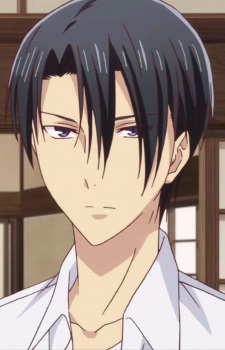
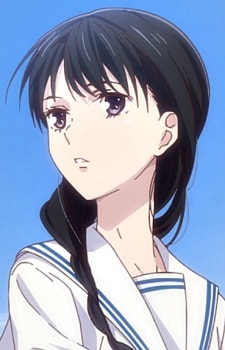
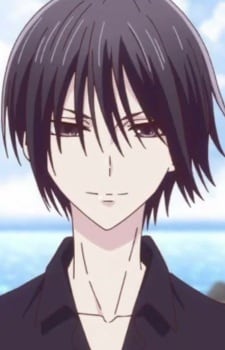
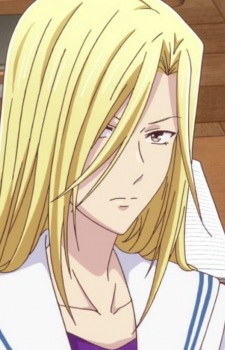
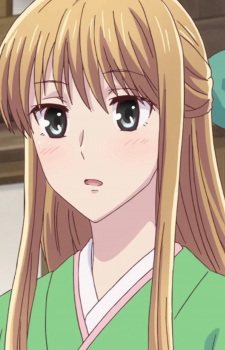
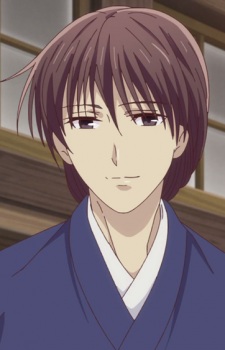
A year has passed since Tooru Honda began living in the Souma residence, and she has since created stronger relationships with its inhabitants Shigure, Kyou, and Yuki. She has also grown closer to the rest of the Souma family and has become familiar with their ancestral secret, having helped them with many of their personal issues. The closer Tooru gets, however, the more she begins to realize that their secret holds a darker truth than she first presumed. Summer is approaching and Tooru is invited to spend her days with the Soumas, mainly Kyou and Yuki. Tooru wishes for an easy-going vacation, but her close relationships with the two boys and the rest of the Soumas may prove to cause trouble. As they grow more intimate, their carefree time together is hindered by older hardships and feelings from the past that begin to resurface. The Eternal Banquet also dawns on the members of the zodiac, and they must tend to their duties alongside the unnerving head of the family, Akito Souma. With the banquet approaching and a plethora of feelings to be solved, will Tooru's life with the Soumas remain peaceful, or will she find herself in a situation from which she cannot escape? [Written by MAL Rewrite]
Главный
Главный
Главный
Второстепенный
Второстепенный
Второстепенный
Второстепенный
Второстепенный
Второстепенный
Второстепенный
Второстепенный
Ookam1Matt
September 27, 2020
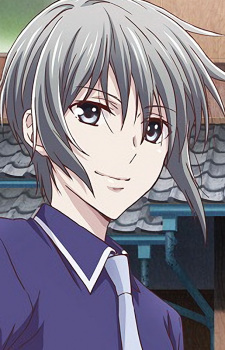
In this second season there is more focus on the members that interest us the most, so if you have already seen the first season, look at this second season with more scarves. Thanks to Kamisama, the series maintains the quality in everything, and they give us an ending that will make you doubt your sexuality, if you have not done it with those characters, see what Yuki is please, that silver-haired boy I love him. /////////////////////////////////////////////////////// En esta segunda temnporada se hace mas foco en los integrantes que mas nos interesan, asi que si ya viste la primer temporada, mirate esta segunda temporada con mas pañuelos. Gracias aKamisama mantiene la calidad en todo, y nos dan un ending que va hacer que dudes de tu sexualidad, si ya no lo hiciste con esos personajes, mira lo que es Yuki por favor, ese nene de pelo plateado lo amo.
Stark700
September 21, 2020
A year has passed since Tooru Honda began living in the Souma residence, and she has since created stronger relationships with its inhabitants Shigure, Kyou, and Yuki. She has also grown closer to the rest of the Souma family and has become familiar with their ancestral secret, having helped them with many of their personal issues. The closer Tooru gets, however, the more she begins to realize that their secret holds a darker truth than she first presumed. Summer is approaching and Tooru is invited to spend her days with the Soumas, mainly Kyou and Yuki. Tooru wishes for an easy-going vacation, but her close relationships with the two boys and the rest of the Soumas may prove to cause trouble. As they grow more intimate, their carefree time together is hindered by older hardships and feelings from the past that begin to resurface. The Eternal Banquet also dawns on the members of the zodiac, and they must tend to their duties alongside the unnerving head of the family, Akito Souma. With the banquet approaching and a plethora of feelings to be solved, will Tooru's life with the Soumas remain peaceful, or will she find herself in a situation from which she cannot escape? [Written by MAL Rewrite]
I’m not the first to say it and certainly not the last. 2020 has been one of the worst years in modern history with natural disasters, the global pandemic, and social issues. Even the anime industry was hit hard by the various delays and production issues. But if there’s one anime that gave hope for a chance to rise up, a chance to be something special, something that connects to the audience, it’s Fruits Basket. The modern remake has already graced us with a wonderful span of 25 episodes since its previous run. With the news that the anime would be a full adaptation, we areonce again given the chance to explore the Fruits Basket universe at its full potential. Being another 2-cour show, Fruits Basket touches upon important elements such as dealing with character identity, emotional connections, and realizing one’s own mistakes. It’s a heavy show with emotional drama but exemplifies the best for what a shoujo can offer. This is why the Fruits Basket is still celebrated as a successful franchise to this day. Back to the characters, it shouldn’t take long for the audience to get comfortable with the main cast again. Of course, we’re talking about Tohru, Kyo, and Yuki. As the core cast, these characters contrasts greatly between each other yet all can be identifiable by their vulnerabilities. No character in this show is perfect and some greatly suffers from events in the past that emotionally impacts their present lives. One of the most prominent example outside of the core cast is Rin, the horse Zodiac. When she first made her appearance in season 1, we are shown an emotional withdrawn character who isn’t keen on making friends with anyone. But in season 2, we also learn exactly why she behaves such way. The second season explores sensitive topics such as parent abuse that shapes the character that Rin becomes in the present. She is emotionally distant and in her past, only one character was kind enough to offer a helping hand. That would be Haru, the Ox Zodiac whom she falls in love with. However, love and relationships comes at price as viewers will find out with their connection to Akito. That being said, she represents a darker side of Fruits Basket and a character who had been mentally broken. Even on the human side, there exists individuals such as school council treasurer Machi Kuragi. As one of the recurring characters, she is emotionally distant as influenced by events of her past and mother. It would seem Fruits Basket balances the way parents treat their children and how much impact they have on their lives. On one side, we have the loving mother of Tohru and on the other, the overbearing guardian of Machi. Speaking of Tohru, she has grown to be more and more confident this season. She’s still a compassionate girl who cares deeply about those who are close to her such as Yuki and Kyo. Even during their troubled times, Tohru remains optimistic and offers to help others with her selfless nature. Yet, in this season, she’s able to speak up for herself more. With every progressing episode, Tohru becomes less naïve and more of herself. It’s one of the strengths of her character, being able to speak her mind towards others without bias. Even during times of distress, she’s able to be honest about her feelings. Meanwhile, Yuki and Kyo still continuously deals with their own personal demons and the Zodiac curse. As one of the most prominent plot elements of the show, this curse plays a central role through family generations. It’s as if the Sohma family is trapped by destiny, which one cannot escape from. The story explores more details through the consequences of the curse and how it affects the Sohma family. Watching Fruits Basket Season 2 also reminds me how relatable characters are. From the main cast alone, you can draw similarities to real life characteristics such as the selfless nature of Tohru or Kyo’s charisma. Like real people, the cast undergo changes. Kyo is one of the most prominent examples as he evolves from a brash individual to a calmer and more mature person thanks to Tohru’s influence. Rin’s change to becoming more accepting others is also due to Tohru’s kindness and showing that there is a light in the dark tunnel. This list goes on so you’ll see for yourself how the cast evolves. Fruits Basket’s ability to make us understand these characters is one of the most important draws of the show. The ever expansive story of Fruits Basket continues to be more mysterious with the biggest culprit being Akito. Menacing and always seemingly being the root of trouble in the story, we continue to learn more about Akito’s relationship with others such as Yuki, Kyo, Rin, and other members of the Sohma family. Furthermore, Tohru’s encounter with Akito shows how much the two characters contrast between each other. As Tohru treats her friends with love, Akito treats those close with contempt, hate, and intimidation. It draws a line between how characters raised under different circumstances can be so different. Unfortunately, this season alone doesn’t conclude Akito’s full story so be prepared for a lot more thrown into our way. Even as a show with so much emotional drama, Fruits Basket does know its lighter side with its innocence and charm. Remember Yuki’s fan club from the first season? Well guess what, they return full fold with their leader Makoto still fawning for their prince. Other main supporting characters such as Arisa and Saki makes their return as well. We are also introduced with new faces such as student council members Naohito and Kimi. The latter brings in a large amount of comic relief moments with her childish personality. Furthermore, let’s not forget that the show loves to often poke fun at its character interactions whenever it gets the chance. With Kimi antagonizing Prince Yuki’s club as her hobby, you can see plenty of comedy this season. I’m not going to lie, watching this season’s animation quality feels like a cinematic experience. In particular, this season’s second theme song is among one of the most realistic I’ve seen, almost like a painting that came to life, like a poetry in motion. Character expressions carries a great deal of realism to make their emotions feel real, such as Rin, Machi, and Kagura. Ultimately, I believe this season’s animation quality not only improved but also able to show how exactly modern remakes should be made. If you made it to the final episode of Fruit Basket Season 2, then congratulations. You just followed an emotional journey crafted from the brilliant mind of the author, Natsuki Takaya. Series director Yoshihide Ibata is also able to show us how the world of Fruits Basket can be so elegant with what it has to offer. But seriously, after 50 episodes of this modern remake, it’s a matter of time before we get to experience perhaps even the best of what’s ahead.
Danielle
September 21, 2020
[This review assumes you’ve seen S1. This review is spoiler free for S2, but not S1.] [TL;DR at bottom] When discussing the Fruits Basket anime, I almost like to regard season one as a prologue. This is not because the story and themes shift heavily from where they begin, but rather due to a dramatic tone shift that occurs roughly a quarter into Fruits Basket S2. While S1 had its flashes of more sobering, dark moments, for the most part, the series maintained a comedic and lighthearted tone. S2, after a brief set of episodes designed to set up events for later episodes, essentially reverses this—FruitsBasket becomes a character drama, with flashes of comedy to relieve tension. If you enjoyed S1 for cute zodiac antics and are uninterested and uncomfortable with themes of domestic abuse and a whole lot of trauma, you probably don’t want to continue with Fruits Basket. With that said, however, the tone shift does not come out of nowhere. As Fruits Basket is a character drama, it develops along with the characters, and strengthens the themes established in S1. It dives deeper into its complex and quite frankly beautiful characters. Excellent characters are complicated people who feel real and motivated—their goals are clear, and what they need to grow and change is evident to the viewer as they witness their arcs. Season 2 expands on these characters’ wants and needs as it begins to answer the series’ questions of family and the future. Tooru is perhaps the best example this. In Season 1, what Tooru wanted was to find a place where she is needed and to care for the ones she loves. Now that Tooru integrated into Shigure’s makeshift home, her motivations expand to wanting to hold onto that, in spite of everything that comes her way. This is also how we, the viewer, learn more about the inner workings of the Souma family and the motivations behind the cursed characters and their own familial ties. In this way, Tooru’s motivations contrasts the cursed Soumas—in them, she found solace and family, and yet, for the zodiac members themselves, such a curse ties them to their family and restricts their futures. This contrast is what creates the true conflict in Fruits Basket… Tooru working to maintain the life she loves against the familial ties that work to ruin it. While Tooru’s arc continues, the cursed characters get a lot of expansion on their own characters as they approach their future as a cursed zodiac. Among the supporting cast, certain Soumas, like the briefly introduced Isuzu, get more of a focus than others, though all tie neatly together in a beautiful, complex patchwork that is the Souma family. In terms of the main cast, the show quickly gets to addressing Kyou’s own feelings directly after the True Form Arc that wrapped up season one, discussing how he contrasts his own role as the exiled cat with someone like Tooru caring for him. This results in some beautiful episodes and moments that were, for me, some of the highlights in an incredibly strong season. In particular, though, most of the latter half of season two gives some much-needed development to Yuki. While Yuki was never a simple character, season one focused more on Tooru and Kyou than Yuki. Season two gets very deep into Yuki’s own perceptions of himself and his role as the “strongest” zodiac member. Yuki’s arc is excellent and filled with some incredible turns throughout. They really inform his character and even recontextualize his actions in season one. This arc introduces Yuki’s student council duties, as well as the four colorful characters who make up his staff, including the ever lovable Kakeru. Kakeru is a great new foil to Yuki, and seeing their relationship grow into one of the most likable and interesting dynamics in Fruits Basket was an excellent experience. In particular, though, what I really love about Yuki’s arc is the way that Fruits Basket addresses the age-old romance trope of the “flawless prince” character. It goes deep into how and why Yuki would present as such a person, and what it does to his own ideas of self-worth. One thing I love about all of these arcs is Fruits Basket’s approach to link them all. Instead of covering one character’s growth before switching to the next, Fruits Basket opts to show bits of arcs between others, making one, connected interpersonal story. While this might bother those who prefer faster pacing or feel character moments must have instant gratification to be meaningful, Fruits Basket shows how strongly such characterization can work to expand the complexity of a story. In fact, I’d consider certain moments from this season to be a masterclass in setup and payoff—every important moment from the start of the season (and even things from season one!) return to inform the story and reinforce its themes. This makes the series feel incredibly gratifying. In terms of visuals, Fruits Basket remains gorgeous. While its animation is nothing too complicated (there’s not many action scenes here to show off), the visual design is detailed and consistently great. Characters are expressive, and the show compliments its dialogue with great, subtle indications of emotion. The backgrounds remain stunning as well, and the show’s lighting and color design have some standout moments, like the numerous beach scenes in the first half of the season. Music also remains well-utilized in the series, as it often serves as a means to cue and foreshadow upcoming events. The first opening as well is a great song, and one I highly suggest listening to all the way through! The seiyuu work is equally strong as last season’s, with Nobunaga Shimazaki’s Yuki and Takuya Eguchi’s Kakeru being particular standouts. The series also has a dub, and, as someone who tends to be quite lukewarm on dubs, I’m happy to say this dub is excellent. I was incredibly impressed with the quality as I watched it alongside the sub, and even prefer some dub performances to their sub counterparts. Laura Bailey’s Tooru comes to mind in this regard. One unfortunate note I have add is that the main translation floating around, Crunchyroll’s subs, have a number of awful mistranslations that vary from removing character vocal quirks to blatantly rewriting lines. This changes their meaning and harms the characterization of the speaker. As dialogue matters so much to this series, this is incredibly upsetting. To emphasize how bad certain translations got, Natsuki Takaya, author of the original manga, found out about one particular mistranslation and commented on it. The dub, somehow (I’m assuming they work from a different, better translation?) managed to actually fix most of these issues, putting character quirks back in and fixing mistranslations. So, if you’re the kind of person who can stomach dubs, I would suggest it on translation alone as the more accurate version of the series. If you do opt for the sub, I would make note that if a character said something wildly out of character, it’s probably a mistranslation. Overall, though, Fruits Basket’s ability to expand on its sweet, episodic first season into a complex character exploration is something you rarely see executed this well. The show’s combination of fully realized characters growing and changing over the course of their arcs set the stage for an upcoming bombshell of a third season that will (hopefully) live up to what’s established in season two. If you can handle the darker themes, I cannot suggest this series enough. [TL;DR] + Excellent, fully realized characters who grow more complex as their arcs continue. + Strongly paced arcs that weave together naturally. + Great visuals, with good character expression and stunningly detailed backgrounds. + Well-utilized music with good OP and ED themes. + Excellent voice cast who add to their characters and a solid dub. - Crunchyroll’s subtitles are horribly mistranslated at certain parts, harming characterization for a number of important characters. Dub translation corrects these. - Transition from comedy-leaning to drama-leaning results in some much darker themes that might upset certain viewers who prefer their anime lighthearted. Recommended? Yes 9/10
KANLen09
September 21, 2020
"It's okay to feel weak sometimes. It's okay to be afraid. The important thing is that we face our fears. That's...that's what makes us strong." - Yuki Soma It shouldn't come as a surprise that the re-adaptation of Fruits Basket under mangaka Natsuki Takaya's supervision aims to go far and beyond her own work, and now into Season 2, we're two-thirds of the way through of the complete manga adaptation, with the imminent finale of the soon-to-be Season 3, which will conclude the remainder as a whole. As is what is known in Season 1, it was mostly a set-up between Tohru and the eventual reveals ofthe Soma family members according to their zodiacs. And if you'd think that Season 1 was already very emotionally mixed in happiness and some solemn moments, wait till Season 2 here blows the predecessor out of proportion, and definitely out of whatever we're thinking of how crude can Tohru's relationship with the Somas be manifested in such a way that the Soma Curse is pretty much a leading cause of enigma, and the fight for change is set in stone. Without further ado, let's dissect on what Season 2 here continues where Season 1 left off. The Soma Family Holiday: If you'd know the head god of the family Akito by now, she is more than just the figure of lashing hurts and defciencies, and there's a reason why even as a big family together, just her presence alone makes the family members shudder at their feet (except Hatori and Shigure). Furthermore, Tohru's first meeting with the zodiacs that we haven't seen and yet revealed in Season 1 only drives the exacerbation of the problem that is Akito. ANYTHING and everything is connected to her, and each member has severe consequences for disobeying the traditions of the family. And need I say that Tohru is NO exception to the rule? Inter-Family Romance: Anyone who've watched Fruits Basket by now should know that the romance/relationship part is pretty much taboo in the Soma Family, and that at least we saw the many scars that drive the intention of a god that wants to "command and conquer" the family, and let no one control it from the outside. One example this season showed is the complex relationship between Hatsuharu and Isuzu "Rin", and if you'd thought that what Akito conflicted and wrestled control of Hatori concerning his failed-and-broken relationship in Season 1, you ain't seen nothing just yet. The only way to best experience the sheer horror of Akito is to watch it yourself, because that's how we can relate with the travesty of a control freak that's desiring to have more control over the family until what's left of them are empty husks of emotionless hearts. That is easily a summed up personalition of character development for everyone concerned. The centre Trio: Kyo, Tohru and Yuki Fruits Basket, for its entirety, focuses mainly on the centre trio that we've come to expect from the beginning, but what is shown in Season 2 here, really can't be drawn in comparison to how Season 1 has very uniquely set-up a give-or-take function between the two chads and one girl. Think with me on this: a family to love, and a family to care about. While Tohru has been with the both of them every step of the way, this season expands upon their character development and directs them to a new path of light, wherever they chose to shine, like it or not. The biggest revelation is how both chads see Tohru each in their individual light, and that is easily one of the game-changers of the entire Fruits Basket manga. What do I really mean from all of these, you'd have to watch to find out, because this is a very spoiler-heavy section that I won't divulge! School Life - Student Council: Without a doubt the singularity of the season itself, Tohru, Kyo and Yuki brace through school, but in a totally different mindset. Kyo is the same as always, but Yuki being the popular figure in school and landing himself into the Student Council, things start to change amidst the drab atmosphere. Nothing is full of bed and roses for similar characters, and there'll be outcasts in the process (just like how we've seen Arisa Uotani and Saki Hanajima fuse together with Tohru, becoming BFFs in Season 1). One such character is the mysterious Machi Kuragi, and this is where Yuki, in a nutshell, manages to find his solace within her for being similar in their parental upbringings. All I can say is, there is truth in wine, and for the valiant efforts to reach out and save someone from despair, Yuki is one character that has outpaced his character growth and begun to change his life from the inside out. That's all for pretty much what Season 2 had in content, and Season 1's set-up was magnificently done for a wonderful follow-up for the issues and situations left in store to build up to the finale season that's coming very soon. In other aspects of the show, Fruits Basket sure knows how to have good songs that are approporiate for the measures that this re-adaptation run has dealt with. Great double set of OP/EDs for this seasonal run, though I'd much prefer the mellow EDs more in contrast to the OP pairings. The art style has basically been the same for the most part with TMS Entertainment and subsidiary 8Pan's bright and lush environment that is still gorgeous to look at, no shit Sherlock here. If I have to commend anything about Season 2, is it character development truly takes up a notch as compared to when Tohru and Co. first started out being strangers-turned-friends. The amount of vibrancy of each and every one of the characters has improved, and hopefully they can be reconciled by the end of Season 3. An exemplary follow-up to Season 1, and I honestly can't wait for Season 3 to drop soon in the future to wrap up the entire series to close the entire Fruits Basket conjecture for satisfaction.
Klabautermann
April 21, 2022
Fruits Basket Season Two can brag itself to be one of the worst anime I have ever seen, which is not a small thing. In direct comparison, the first season, which I thought comfortably average, seems almost like a masterpiece - there is an actual plot, and actual characters, and actual investment you get from watching the first season play out. Alas; Season Two decided to take a step away from all that ‘actual plot that makes me want to watch more’ and instead takes us on a metaphorical twenty-something-episode school trip through absolutely unnecessary points of… of something I can’t quite call plot, because itultimately added so little to the overall Fruits Basket experience, that I couldn't help feeling tricked. Mind you, I watched every episode of it, and I, generally speaking, remember it all. But you know how anime have those episodes where a class goes to a trip? Or the protagonists go to the beach, and it’s an entire 'thing'? I’m not kidding when I tell you nearly the entire season had felt like that. The constant, *constant* melodrama, the both pessimistic and optimistic musing of main characters, the countless inner monologues, narration after narration after narration of one’s feelings and memories and very insubstantial flashbacks - it sounds like a good way to delve into a character… but not so much when that's literally all there is. Like I said, I wouldn’t find this so bad if there was some, some payoff by the end of the episodes or at least the season. But there is quite literally none, and you know why? Because inner monologues always stay inner monologues. No matter what inner revelations, fears, concerns or breakthroughs develop in the hearts and minds of the character the episode is focused on, hardly any of it matters because the characters refuse, for the drama’s sake, to trust each other with more than a bare minimum of their true being. I know this vulnerability is part of the plot but everything has its limits, and so does my patience. Again, ultimately, it feels as if quite literally nothing had happened. If I'm looking for a single word to describe it, it’s boring. It is simply boring. … The saving grace of this painful experience is that the season decided to pick up the actual plot about four episodes before it ends, and it is, almost literally, the only part worth watching, and the only reason why this isn’t rated with a ‘1’. The last few episodes reveal a lot of interesting information and propels the plot into motion - and it makes the entire experience incredibly frustrating, because if I knew that’s how it was going to be, I would simply skip the entirety of the rest of the season easily. Which would bring is to season three and its, uh… humble way it ended things.
Ранг
#145
Популярность
#431
Участники
579,209
В избранном
6,454
Эпизоды
25