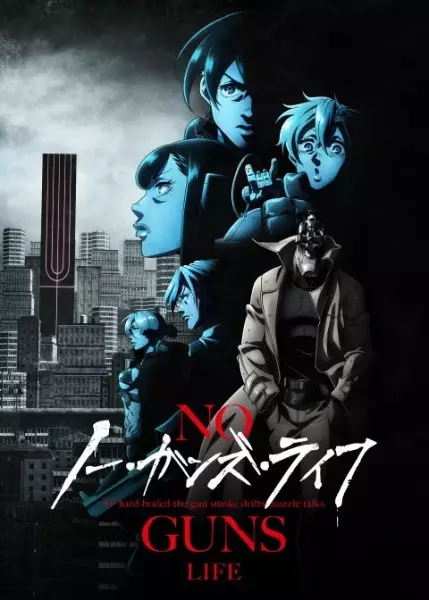

No Guns Life Season 2
ノー・ガンズ・ライフ
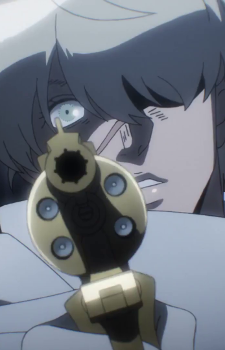
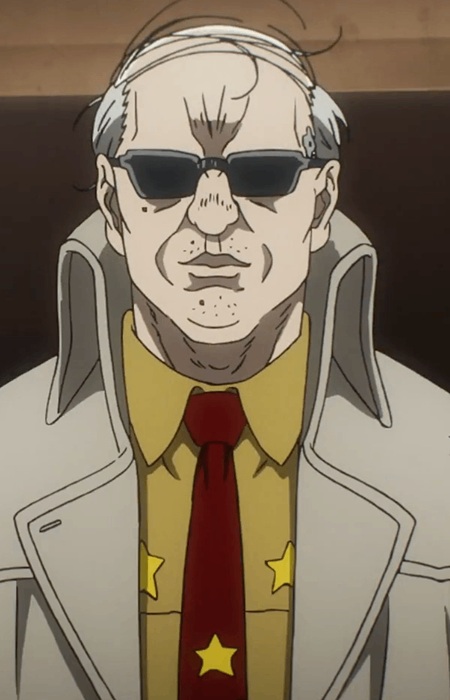
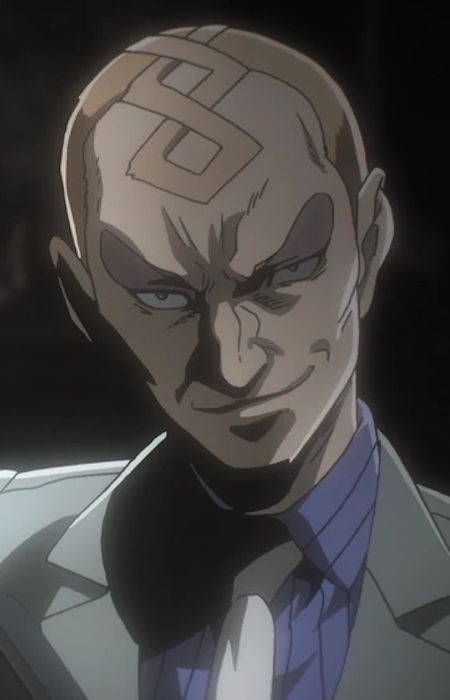
Picking up where season one left off, Juzo Inui (Gun Slave Unit Device 13) has Rosa's data. Although it seems like everyone wants it, either to expose it or to destroy it, really no one is interested in it. Wachowski, the leader of the anti-Extended terrorist organization Spitzbergen, attempts to coerce Tetsurō to use Harmony to command Juzo to destroy Gun Slave Unit Device 7, who works for Berühren. Juzo does eventually fight Seven, but -- between corruption and double-crosses -- Berühren still pulls all the strings. (Source: ANN)
Главный
Главный
Главный
Второстепенный
Второстепенный
Второстепенный
Второстепенный
Второстепенный
Второстепенный
Второстепенный
Второстепенный
Skarvalin
September 24, 2020
Even though the first season of No Guns Life had a lot to give with it’s presentation it ended up tremendously average. It offered a cool setting with interesting themes and characters, but didn’t deliver it in an engaging way. It had at least some things to appreciate like the soundtrack, decent visuals and aforementioned setting, all of which are present here in a similar quality. The setting being the most prominent thing about the first season but needed a lot more focus on fleshing out the world and its inhabitants. It was a good enough foundation to improve from all things considered, which itnow thankfully did, but only to a certain degree. Whereas the first season went all over the place in it’s narrative, here it’s more focused. Giving enough time to expand on the main leads. Mary got her own arc which focuses on her relationship with her long lost brother. Giving her otherwise rather dull character some extra flare. Juzo’s past is also explored more in depth which was one of the more intriguing mysteries of the first season. Even Tetsuro, who I thought was one of the weaker characters, has his own development starting to take root. And is overall not as useless this time around. But while it is an improvement, it’s not with a big enough margin to make up for it’s flaws. Most of which were also present in the previous season. The exposition and dialogue in general felt forced and dumb downed. Likely making anyone watching feel like Einstein’s offspring in the process. It may not be as jarring for some as it was for me. But I feel like with a show that has so much potential for interesting and meaningful dialogue, it’s sad that they didn’t go that extra step. Another issue that has stayed the same is that the characters remain static without experiencing any sort of character growth. They have been more fleshed out, no doubt. However, When their character arcs are finished, they return to their same old self without having changed much from it. They also barely push the story forward themselves. It’s usually the villains or random side characters that forces it to progress. It’s not an ideal approach to make compelling characters and as such they leave a lot to be desired. But while it still contains a lot of the previous seasons' negatives, it improves on its strengths enough so fans of the first season should be satisfied. If you aren’t then this probably won't do anything to get your hopes up. The chances for a third season is also slim so that’s another catch. Go in with this in mind if you think it’s still worth a shot.
KoraxCatalyst
September 24, 2020
No Guns Life is a show that knows exactly what it is. Don't watch this show expecting a mind opening experience because you aren't going to get it. No Guns Life is just solid, decent characters, decent story, memorable character designs, it's like if you got your favorite item from a restaurant you think is kind of mid but gives you a lot of food for cheap. Coupled with Madhouse behind the wheel and you have yourself a worthwhile experience. I will say that this season focused on aspects of the show that I didn't find as necessarily interesting as season one but it was definitelyfar from mediocre. Speaking of Madhouse, I think one of the first things people said about the show is also its biggest weakness, this feels like a Madhouse show from 15 years ago. And because it does it has this out of time sort of feel where this really isn't an era for this show to come out despite the transhumanist messaging. I think this show needed a good ten years for it to have the impact it could've had. Something else that is a bit of a shame is that this season in particular serves to set up events to come but there most likely won't be a season three because Madhouse doesn't do sequels and I'm sure this didn't do amazing. Obviously having the second half of your a split cour show be delayed definitely doesn't help your ratings I'm sure. Even writing this review I wish I had more to say about No Guns Life but I think I will finish off by saying, if you think contemporary anime has gotten too meta and pretentious then this is the story for you. If Hideo Kojima, Creator of the Metal Gear franchise, being a fan of this series doesn't tell you anything about the show, then I don't know what will.
KANLen09
September 24, 2020
It's the same No Guns Life you know and love, but with the ante shooting high from 0 to 100 very quickly with each passing episode. Needless to say that if you've watched the 1st cour of No Guns Life that aired back in Fall last year, this should be more of the same that is the continuation from back then, only expect that the story and worldbuilding is fleshed out more with character lore and the constant set-up for what's to come to set the finale in stone. Juzo and the rest of the company are back, but the obvious difference is that of morebackstories and high stakes accompany the characters as they go. The one thing that must not be taken away with the 2nd cour is Juzo's backstory of him being a Gun Slave Unit, and how he has pursued his fight from being a partner in crime to someone who's truly set free from the troubles of having an accompanying partner to make decisions for him. That is some character development to warrant a close watch, and it has been the anchor for the 2nd cour for the most part to define who Juzo is not only as the Gun Slave Unit Device 13, but who he is as a person as the last few remaining GSUs. Once again, Madhouse takes the helm for finishing Part 2, and while the art and animation has been the same for the most part, the one impressive part I can give is the CGI, which has been rendered in Unreal Engine (since the very beginning). While this may not set the animation world on fire, I can appreciate how a different use of proven CGI can work wonders to keep my investment alive and prove that the journey is worth the wait. The one upgrade is in the sound department, and a new pairing for the OST, and I'd have to say that it's a mixed bag. SawanoHiroyuki hits this season's top banger OP out of the park collaborating with Man With a Mission (MWAM)'s lead singer Jean-Ken Johnny on "Chaos Drifter", and it's a song worth the many repeats of listening. As for THIS IS JAPAN's "new world" ED, while I don't like the song that much, I can remember it for one thing: character twerking. Part 1's ED is much better song-wise IMO, even if the visuals are drab. As a whole, No Guns Life won't set the world on heels of suppression of folklore, but it teaches me one thing: Funke Faust! Pull the trigger that you are meant to use, and use it wisely on someone you trust.
SentiOnikawa
September 24, 2020
No Gun's Life Season 1 was a forgettable romp through what was basically a detective noir story about a man with a revolver for a head and no memory of his past. The season did little to explore anything aside the rift between Extended's and the rest of the world, and introduce characters and concepts that, for the most part, fell flat. What it did excel at was giving us a story similar to stuff like Dick Tracy, where our stoic, straight-faced hero stops the bad guys and saves the day. Season two doesn't tread too far off the beaten path, although it does workhard to keep from going too deep into shounen territory in order to maintain its own personality. While the action does seem to follow the Law of Escalation (as famously applied in Power Rangers, for all you 90's kids) in terms of how much damage two revolver-headed persons can cause, it does not hesitate to keep to its roots. This is a detective noir, after all, and the author is clearly aware of that fact as each frame is translated to the screen. Juzo's backstory is front and center for much of the season, though other characters are given spots where their own histories are touched upon and provided focus. Where most other series stumble, though, is where NGL finds a good balance. Key points of each characters history are given focus, rather than examining every passing moment of how they got to where they are. Perhaps one of the best moments where this is presented is during Mary's backstory, where we are given brief glimpses into her and her brother's history throughout the episode where it's relevant, and then left to fill in the gaps with what we know. The soundtrack just works. Starting from Sawano Hiroyuki collaborating with Man with a Mission's Jean-Ken Johnny opening, reaching through to This is Japan's New World (both of which are absolute bangers), the soundtrack seems to want to do all the heavy lifting. Thankfully, the characters feel as real as you would expect for people living in a cyberpunk noir, and their relationships feel authentic. The animation is fairly well-done as well, though there are scenes where the use of the Unreal Engine are obvious. Thankfully, it's not so distracting that you'll be pulled out of the more immediate story. If I had to call season two out on one flaw, it would be that it suffers from some pacing whiplash once the final trio of episodes roll around. What should be an emphasis on Juzo rising to his role as the hero and Tetsuro finding his own path can at times feel slow and plodding, while at other times rushing through some scenes and action just to get to the more desirable parts. Also, there is a pervert that is given focus for an entire episode that adds nothing to the larger plot at play, but maybe he'll return..? Either way, I highly recommend No Guns Life.
HenriqueNeves
November 14, 2020
I was able to notice a very visible improvement in the approach as director Naoyuki Itou (also director of the first season of No Guns Life) seeks to relate in a decentralized way with space, characters and also with machines in a harmful and almost sad universe. Not that I need to approach the first season to develop an idea of the second, but if I correlate them visually, it would be possible to say that the two parts are exactly the same. My biggest problem with the first part was how the director used some inventive ideas in a way that sounded formalistic and manneristwith no relation to the rest of the artistic unit, however in this continuation he did not bring great news that differentiate both in aspects, but in his approach with some artificialities. There is a search in No Guns Life that always tries to find ways to humanize our relationship with machines in a very personal way. Again, they have feelings, obligations, traumas, fears and also relationships. The protagonist Juuzou goes through a dramatic arc again involving his relationship of being a separate individual or a tool, and the same is done with other Extended ones that appear during the series. The objective is to link both qualities and defects in this relationship, while at the same time, it also dehumanizes that same relationship with other supporting actors in the plot. The funniest thing is how the direction really frames the faces of these machines, which even without any kind of human expression, still manage through simple gestures and sometimes exaggerated (exaggerated in a good sense) to attribute to the viewer a discernment for each of these characters. Through CGI, which is used organically and is somewhat immersive at various times, as if those spaces had a life of their own. The scenarios and the palette of colors darker and more dirty represent very well a harmfulness of the reality of this universe. The anime uses cinematography that literally puts us in the perspective of the characters, it is an inventive form of the director again, but that works better in this continuation. I could even say it was perfect, but the management still has some free technical virtuosity. I see no need for the anime to use lighting filters or a more elegant landscape in some specific moments, since in most of the work it tries to show a more harmful side of this universe, so this spontaneity actually ends up going against unity the rest of the work. The director has what he needs, he managed to improve in all points the way he related to his stylistic elements in this continuation, but it is still not perfect.
Ранг
#4226
Популярность
#2578
Участники
87,175
В избранном
94
Эпизоды
12